Downloaded 10 times
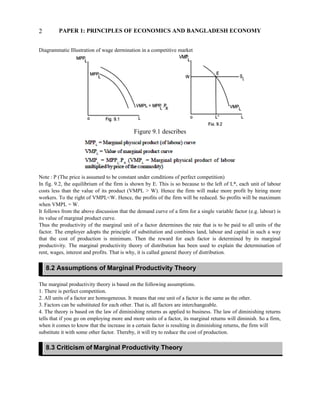
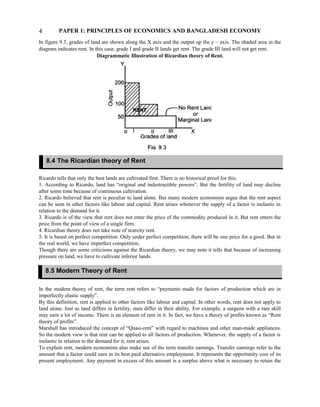
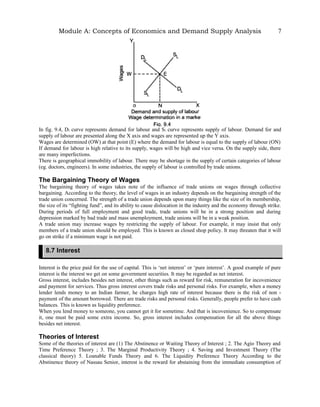

The marginal productivity theory of distribution states that in a competitive market, each factor of production will be paid a price equal to the value of its marginal product. The theory explains that firms will employ factors up to the point where the marginal productivity of the last unit equals its price. Demand for factors is derived from the demand for final goods. The Ricardian theory of rent argues that landowners receive economic rent for more fertile land due to differences in land quality and scarcity of the best land. Rent is a surplus over the costs of cultivating the least fertile land.


