UNIT-II(M.SC I FIRST YEAR)
ECOSYSTEM(CHN)
DR.ANJALTCHI M.SC(N),MBA(HA),
MD(AM)
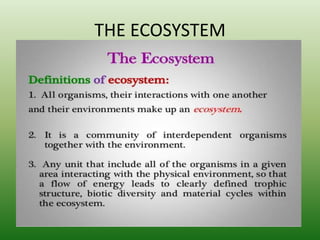
THE ECOSYSTEM
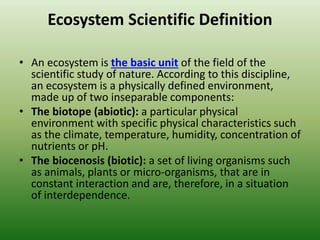
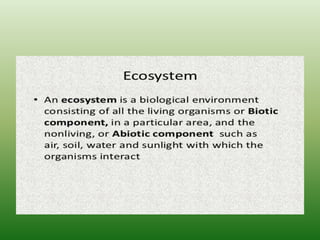
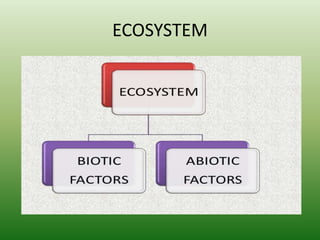
Ecosystem Scientific Definition
• An ecosystem is the basic unit of the field of the
scientific study of nature. According to this discipline,
an ecosystem is a physically defined environment,
made up of two inseparable components:
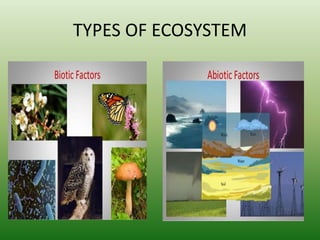
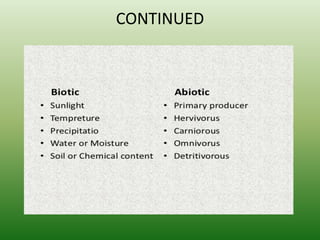
• The biotope (abiotic): a particular physical
environment with specific physical characteristics such
as the climate, temperature, humidity, concentration of
nutrients or pH.
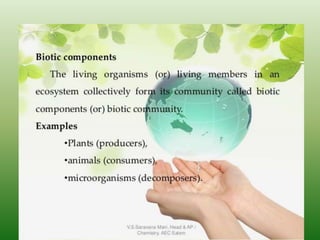
• The biocenosis (biotic): a set of living organisms such
as animals, plants or micro-organisms, that are in
constant interaction and are, therefore, in a situation
of interdependence.
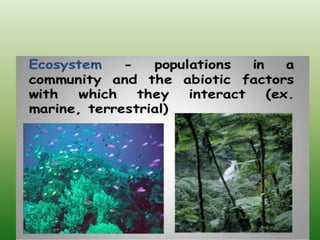
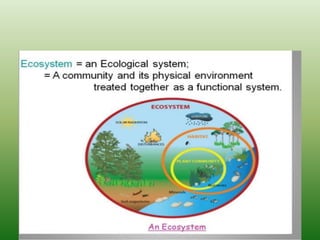
Definition of ecosystem
• definition of an ecosystem is that it is
a community or group of living organisms that
live in and interact with each other in a
specific environment.
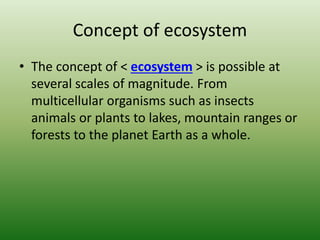
Concept of ecosystem
• The concept of < ecosystem > is possible at
several scales of magnitude. From
multicellular organisms such as insects
animals or plants to lakes, mountain ranges or
forests to the planet Earth as a whole.
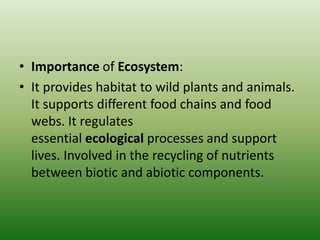
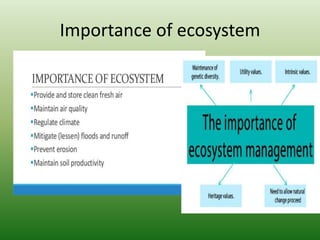
• Importance of Ecosystem:
• It provides habitat to wild plants and animals.
It supports different food chains and food
webs. It regulates
essential ecological processes and support
lives. Involved in the recycling of nutrients
between biotic and abiotic components.
Importance of ecosystem
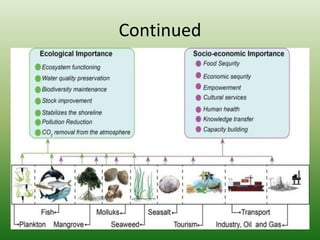
Continued
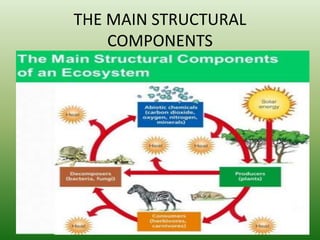
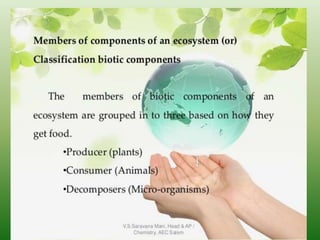
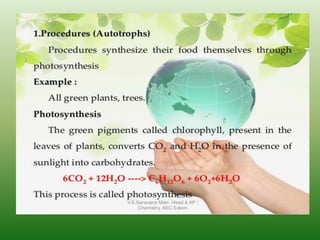
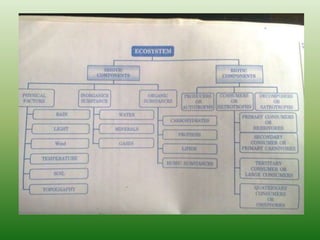
THE MAIN STRUCTURAL
COMPONENTS
ECOSYSTEM
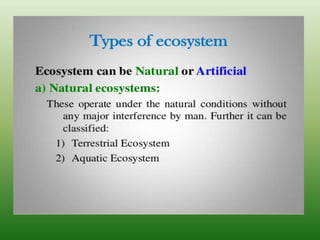
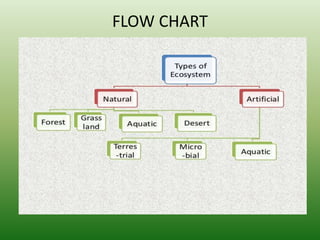
TYPES OF ECOSYSTEM
CONTINUED
TYPE OF ECOSYSTEM
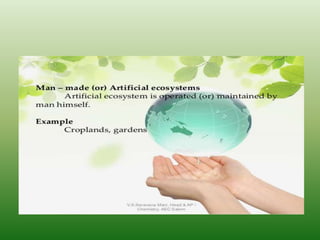
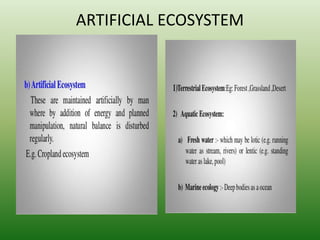
ARTIFICIAL ECOSYSTEM
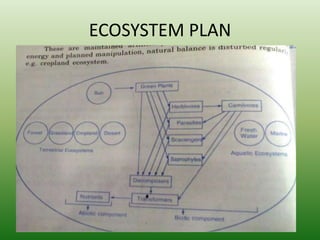
ECOSYSTEM PLAN
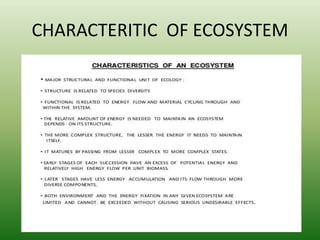
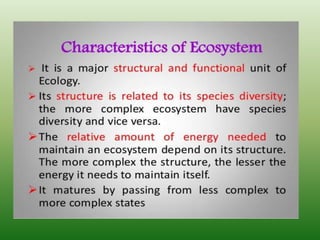
CHARACTERITIC OF ECOSYSTEM
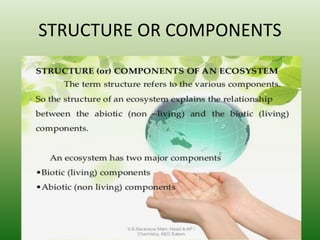
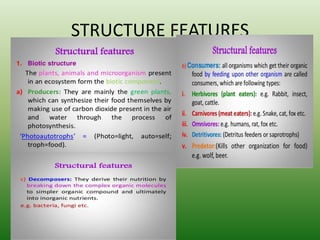
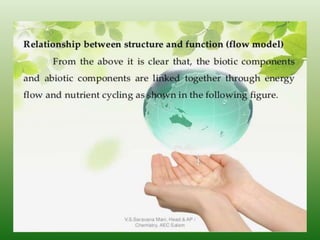
STRUCTURE OR COMPONENTS
STRUCTURE FEATURES
FLOW CHART
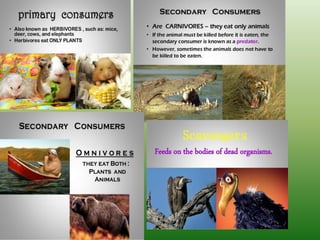
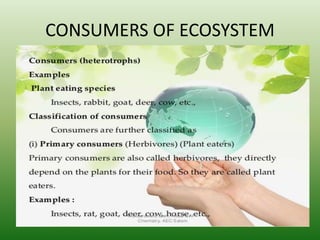
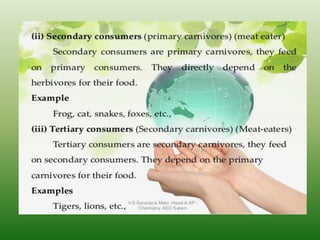
CONSUMERS OF ECOSYSTEM
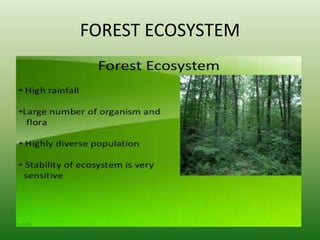
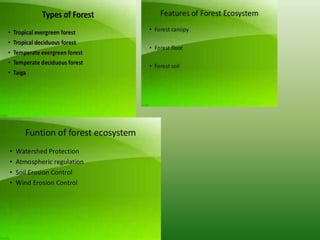
FOREST ECOSYSTEM
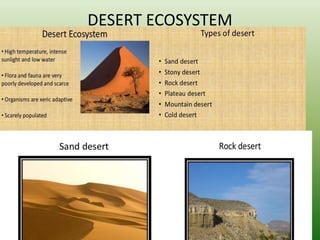
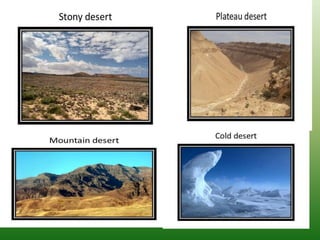
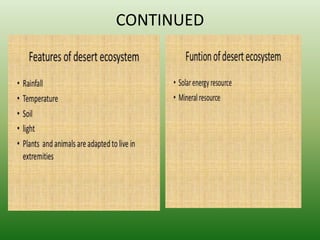
DESERT ECOSYSTEM
CONTINUED
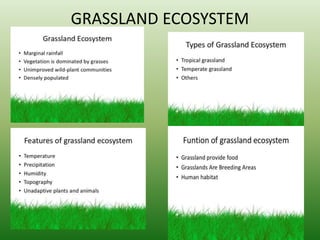
GRASSLAND ECOSYSTEM
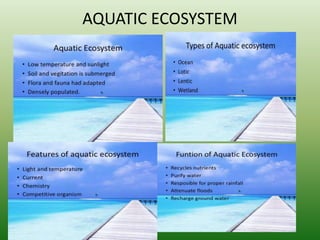
AQUATIC ECOSYSTEM
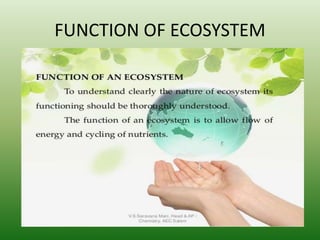
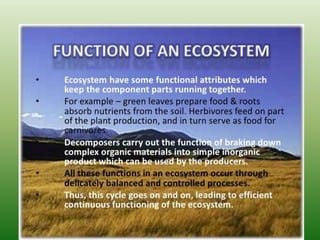
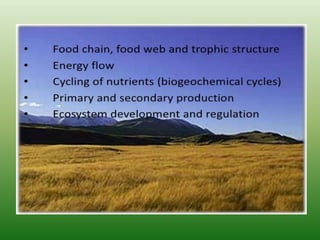
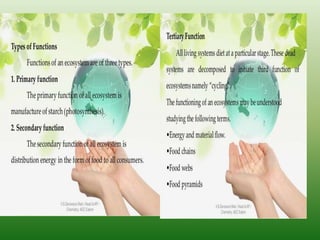
FUNCTION OF ECOSYSTEM
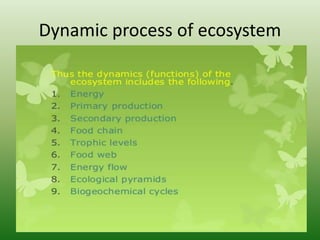
Dynamic process of ecosystem
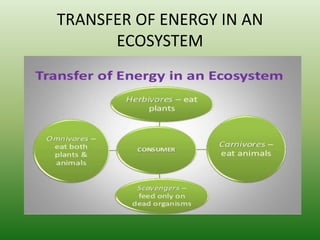
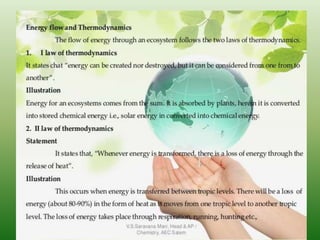
TRANSFER OF ENERGY IN AN
ECOSYSTEM
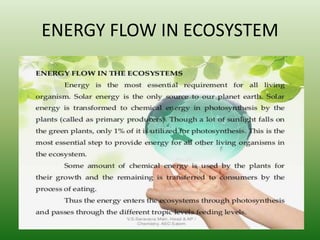
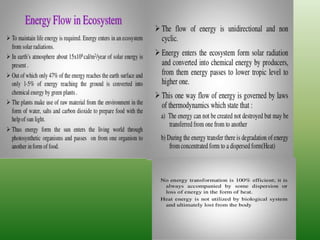
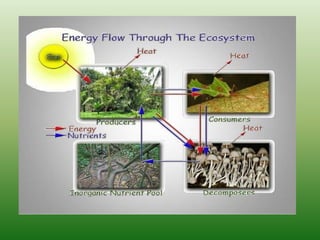
ENERGY FLOW IN ECOSYSTEM
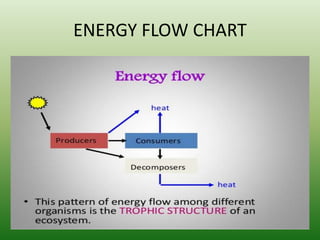
ENERGY FLOW CHART
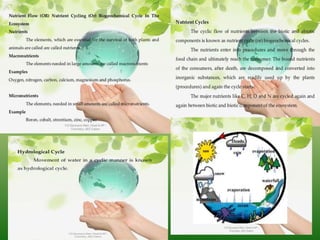
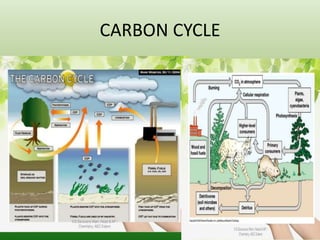
CARBON CYCLE
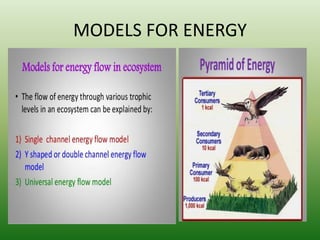
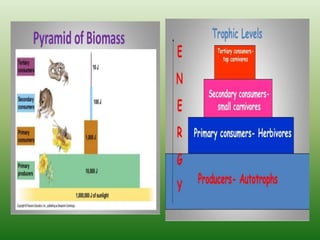
MODELS FOR ENERGY
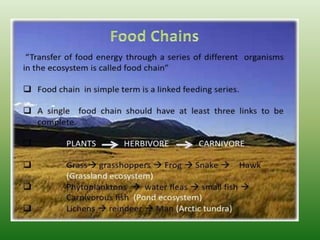
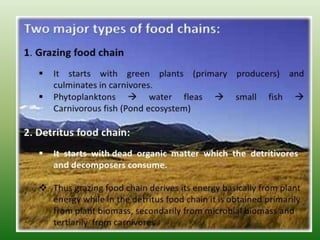
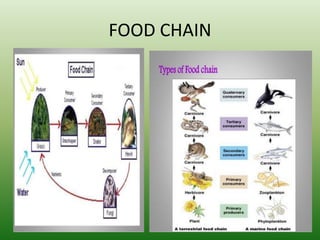
FOOD CHAIN
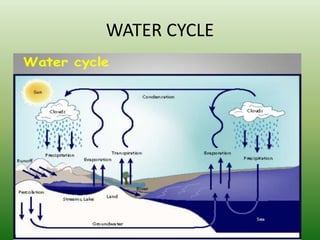
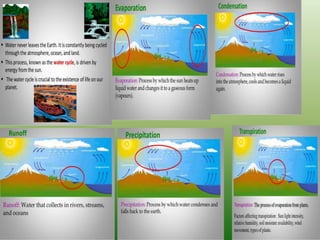
WATER CYCLE
Ecosystem Services: Examples
• Without ecosystem services, life on Earth as
we know it wouldn’t exist. There are four main
categories of ecosystem services:
• Provisioning services refer to the products
secured by ecosystems. These include:
• • Water• Food (including cattle and seafood)•
Pharmaceuticals, biochemicals, and industrial
products• Energy (sunlight, hydropower,
biomass)
• Regulating services are the ecosystem services
that allow the regulation of ecosystem processes
such as:• Climate regulation (and carbon
absorption and storage via the oceans, trees,
soil)• Waste decomposition (one of the most
essential microbial process happening in soil)•
Crop pollination (performed by agents such as
bees that contribute to the reproduction of
flowering plants)• Water and air purification and
regulation• Control of pests and diseases
• Supporting and habitat services refer to the
ability of ecosystems to give habitat for
migratory species and to support the viability
of gene-pools.This is possible thanks to:•
Primary reproduction• Nutrient and seed
dispersal
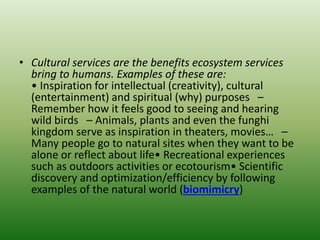
• Cultural services are the benefits ecosystem services
bring to humans. Examples of these are:
• Inspiration for intellectual (creativity), cultural
(entertainment) and spiritual (why) purposes –
Remember how it feels good to seeing and hearing
wild birds – Animals, plants and even the funghi
kingdom serve as inspiration in theaters, movies… –
Many people go to natural sites when they want to be
alone or reflect about life• Recreational experiences
such as outdoors activities or ecotourism• Scientific
discovery and optimization/efficiency by following
examples of the natural world (biomimicry)
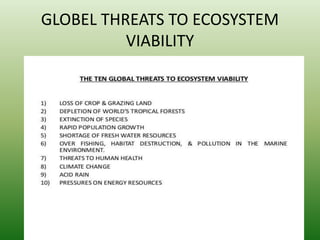
GLOBEL THREATS TO ECOSYSTEM
VIABILITY
SUMMARY
• Till now we discussed about ecosystem like ,
introduction, definition, types, structure,
components, model of ecosystem, function
and global threat etc
CONCLUSION
• I hope you all understand about the
ecosystem and its functions. If you got chance
to work in ecosystem in future will you able to
apply the above knowledge with confidently.
QUESTION RELATED TOPIC
• Definition of ecosystem
• List out the type of ecosystem
• Discuss the components or structure of
ecosystem
• Describe the function of ecosystem
• Explain the global threats viability of
ecosystem.
• Write the nurses role in ecosysem
REFERENCES
• K.PARK COMMUNITY HEALTH NURSING
PUBLISHED BY JAYPPEE BROTHERS ,NEW
DELHI.
• B.T.BASAVANTHAPPA TEXT BOOK OF
COMMUNITY HEALTH NURSING , JAYPEE
BROTHERS, NEW DELHI.
• WWW.ECOSYSTEM SLIDE SHARE
Eco system power point presentation

Eco system power point presentation

  • 1.
    UNIT-II(M.SC I FIRSTYEAR) ECOSYSTEM(CHN) DR.ANJALTCHI M.SC(N),MBA(HA), MD(AM)
  • 2.
  • 3.
    Ecosystem Scientific Definition •An ecosystem is the basic unit of the field of the scientific study of nature. According to this discipline, an ecosystem is a physically defined environment, made up of two inseparable components: • The biotope (abiotic): a particular physical environment with specific physical characteristics such as the climate, temperature, humidity, concentration of nutrients or pH. • The biocenosis (biotic): a set of living organisms such as animals, plants or micro-organisms, that are in constant interaction and are, therefore, in a situation of interdependence.
  • 4.
    Definition of ecosystem •definition of an ecosystem is that it is a community or group of living organisms that live in and interact with each other in a specific environment.
  • 5.
    Concept of ecosystem •The concept of < ecosystem > is possible at several scales of magnitude. From multicellular organisms such as insects animals or plants to lakes, mountain ranges or forests to the planet Earth as a whole.
  • 6.
    • Importance ofEcosystem: • It provides habitat to wild plants and animals. It supports different food chains and food webs. It regulates essential ecological processes and support lives. Involved in the recycling of nutrients between biotic and abiotic components.
  • 7.
  • 8.
  • 12.
  • 13.
  • 14.
  • 15.
  • 16.
  • 19.
  • 20.
  • 21.
  • 23.
  • 27.
  • 28.
  • 31.
  • 38.
  • 40.
  • 42.
  • 43.
  • 44.
  • 45.
  • 48.
  • 50.
    TRANSFER OF ENERGYIN AN ECOSYSTEM
  • 51.
    ENERGY FLOW INECOSYSTEM
  • 52.
  • 57.
  • 59.
  • 63.
  • 64.
  • 66.
    Ecosystem Services: Examples •Without ecosystem services, life on Earth as we know it wouldn’t exist. There are four main categories of ecosystem services: • Provisioning services refer to the products secured by ecosystems. These include: • • Water• Food (including cattle and seafood)• Pharmaceuticals, biochemicals, and industrial products• Energy (sunlight, hydropower, biomass)
  • 67.
    • Regulating servicesare the ecosystem services that allow the regulation of ecosystem processes such as:• Climate regulation (and carbon absorption and storage via the oceans, trees, soil)• Waste decomposition (one of the most essential microbial process happening in soil)• Crop pollination (performed by agents such as bees that contribute to the reproduction of flowering plants)• Water and air purification and regulation• Control of pests and diseases
  • 68.
    • Supporting andhabitat services refer to the ability of ecosystems to give habitat for migratory species and to support the viability of gene-pools.This is possible thanks to:• Primary reproduction• Nutrient and seed dispersal
  • 69.
    • Cultural servicesare the benefits ecosystem services bring to humans. Examples of these are: • Inspiration for intellectual (creativity), cultural (entertainment) and spiritual (why) purposes – Remember how it feels good to seeing and hearing wild birds – Animals, plants and even the funghi kingdom serve as inspiration in theaters, movies… – Many people go to natural sites when they want to be alone or reflect about life• Recreational experiences such as outdoors activities or ecotourism• Scientific discovery and optimization/efficiency by following examples of the natural world (biomimicry)
  • 70.
    GLOBEL THREATS TOECOSYSTEM VIABILITY
  • 71.
    SUMMARY • Till nowwe discussed about ecosystem like , introduction, definition, types, structure, components, model of ecosystem, function and global threat etc
  • 72.
    CONCLUSION • I hopeyou all understand about the ecosystem and its functions. If you got chance to work in ecosystem in future will you able to apply the above knowledge with confidently.
  • 73.
    QUESTION RELATED TOPIC •Definition of ecosystem • List out the type of ecosystem • Discuss the components or structure of ecosystem • Describe the function of ecosystem • Explain the global threats viability of ecosystem. • Write the nurses role in ecosysem
  • 74.
    REFERENCES • K.PARK COMMUNITYHEALTH NURSING PUBLISHED BY JAYPPEE BROTHERS ,NEW DELHI. • B.T.BASAVANTHAPPA TEXT BOOK OF COMMUNITY HEALTH NURSING , JAYPEE BROTHERS, NEW DELHI. • WWW.ECOSYSTEM SLIDE SHARE