Global Knowledge Management Framework: Understanding Knowledge Management in Globally Distributed SettingsECKM 2011Jan M. Pawlowski, Markus Bick02.09.2011
Licensing: Creative Commons You are free:to Share — to copy, distribute and transmit the work to Remix — to adapt the work Under the following conditions:Attribution. You must attribute the work in the manner specified by the author or licensor (but not in any way that suggests that they endorse you or your use of the work). Noncommercial. You may not use this work for commercial purposes. Share Alike. If you alter, transform, or build upon this work, you may distribute the resulting work only under the same or similar license to this one. http://creativecommons.org/licenses/by-nc-sa/3.0/
…Jyväskylä, Finland…Source: [http://www.jyu.fi/, http://www.jyvaskyla.fi/]
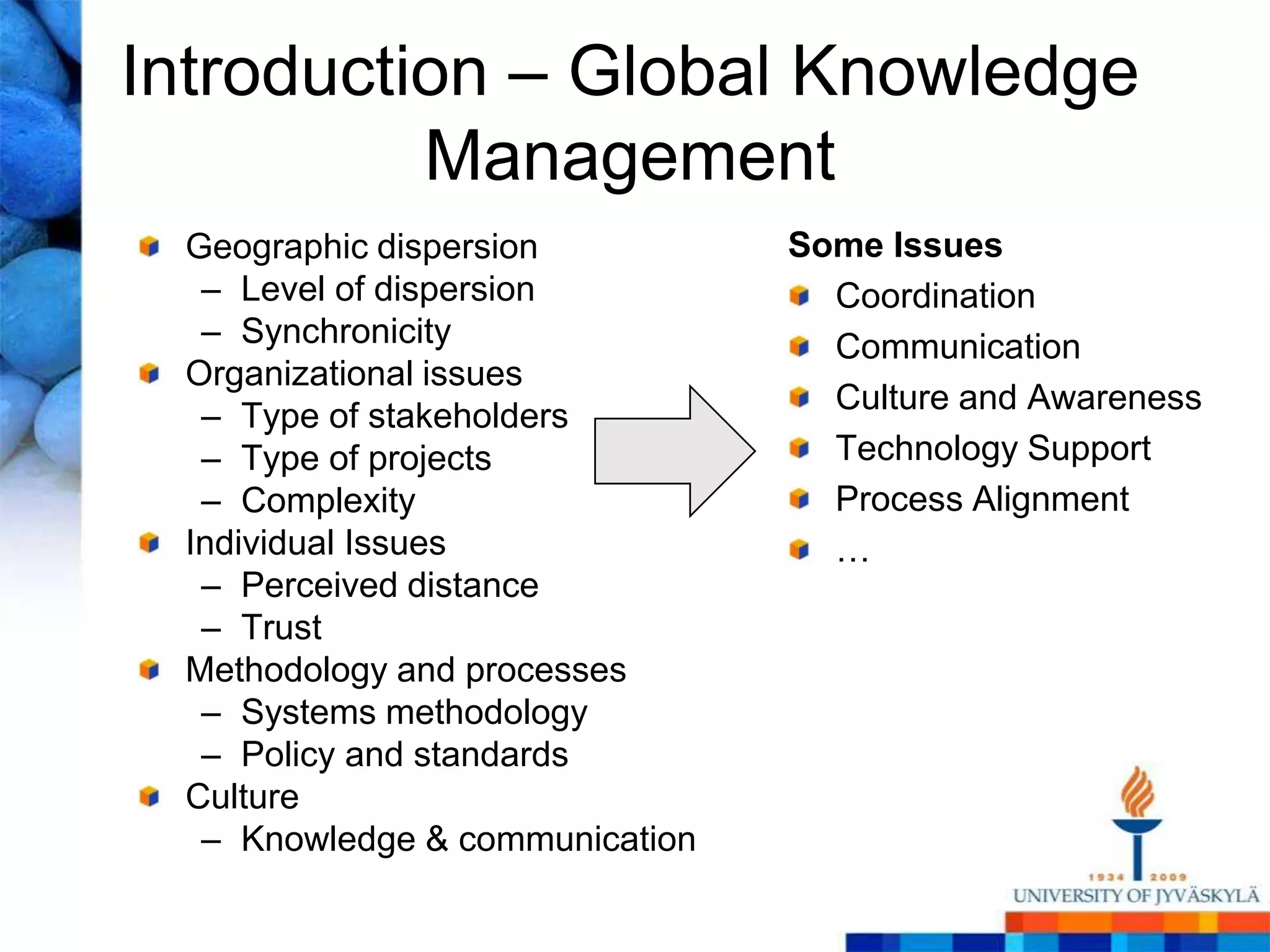
Introduction – Global Knowledge ManagementSome IssuesCoordinationCommunicationCulture and AwarenessTechnology SupportProcess Alignment…Geographic dispersionLevel of dispersionSynchronicityOrganizational issuesType of stakeholdersType of projectsComplexityIndividual IssuesPerceived distanceTrustMethodology and processesSystems methodologyPolicy and standardsCultureKnowledge & communication
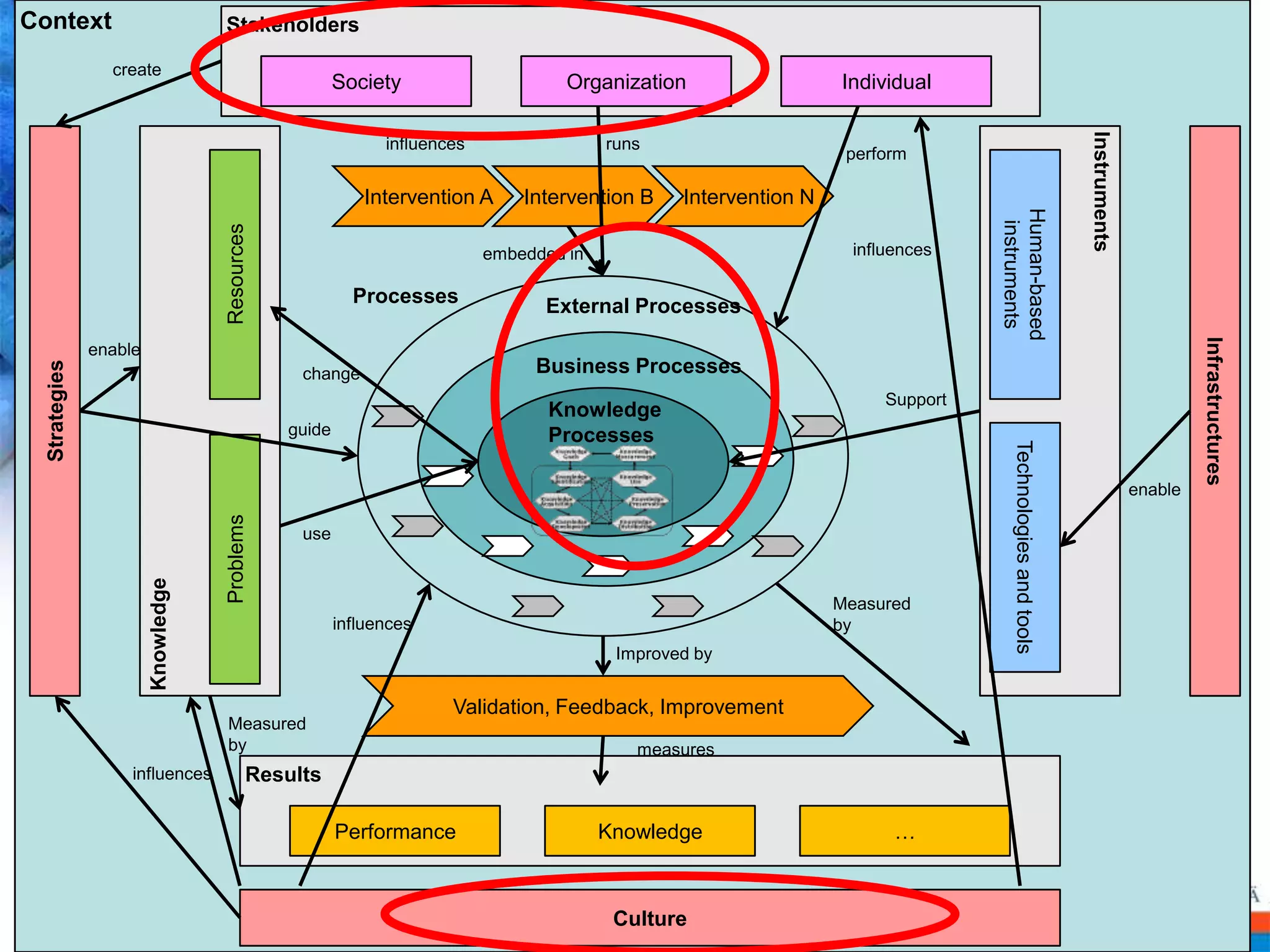
Global Knowledge Management FrameworkJust another Framework? Describing and relating potential influencing aspects, such as systems, processes or instrumentsUnderstanding the inter-relations in global settingsLearning how to apply in in practice…Utilization: Guideline which aspects should be taken into accountResearch toolSpecific for global KM
ContextcreaterunsinfluencesStakeholdersperformSocietyOrganizationIndividual  Intervention A  Intervention B  Intervention Ninfluencesembedded inenableProcessesExternal ProcesseschangeSupportInfrastructures StrategiesBusiness ProcessesguideHuman-based instrumentsResourcesKnowledge ProcessesenableInstrumentsKnowledgeuseMeasuredbyinfluencesImproved byTechnologies and toolsProblemsMeasuredbymeasuresValidation, Feedback, ImprovementResultsinfluencesPerformanceKnowledge…Culture
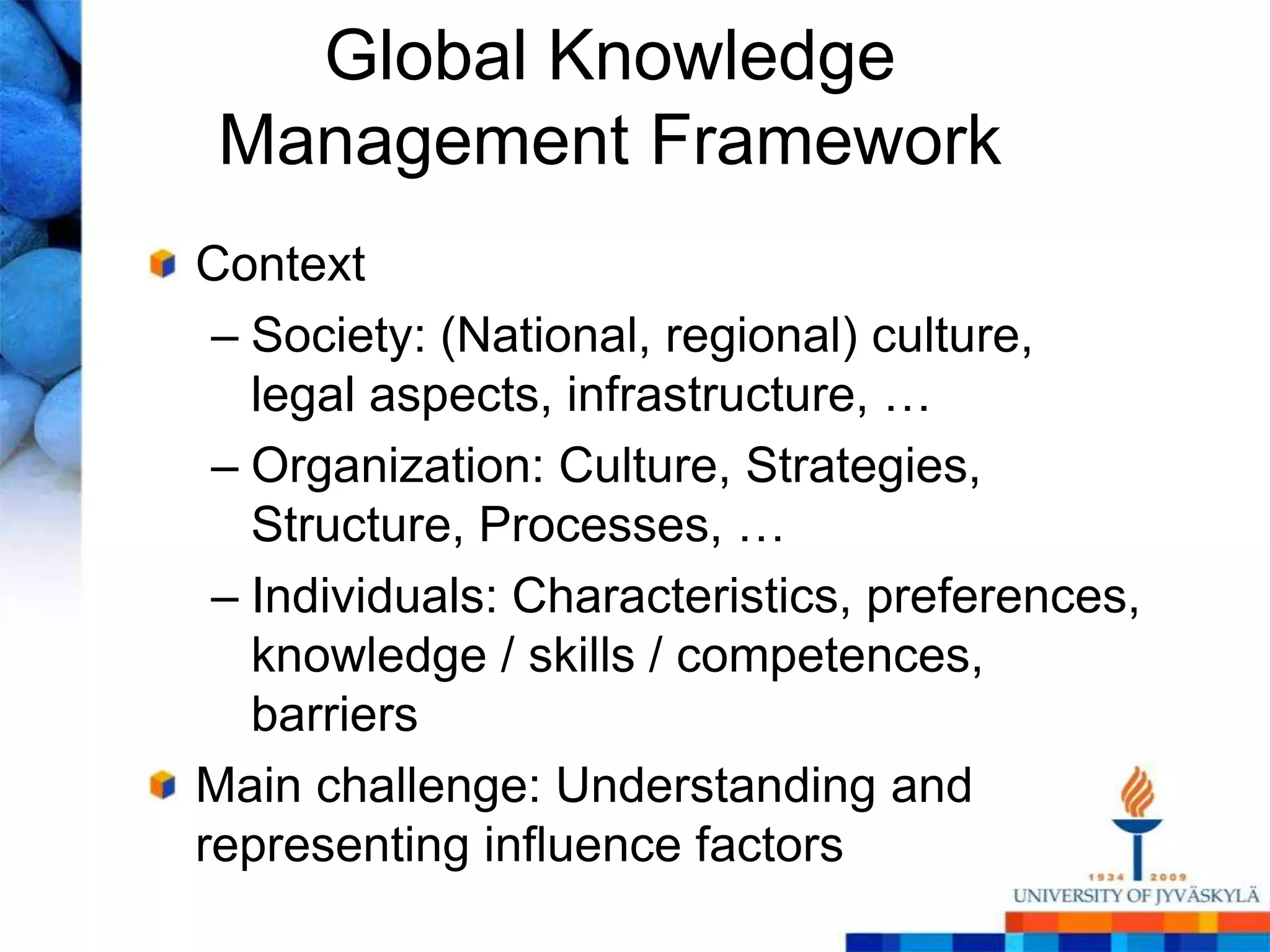
Global Knowledge Management FrameworkContextSociety: (National, regional) culture, legal aspects, infrastructure, …Organization: Culture, Strategies, Structure, Processes, …Individuals: Characteristics, preferences, knowledge / skills / competences, barriersMain challenge: Understanding and representing influence factors
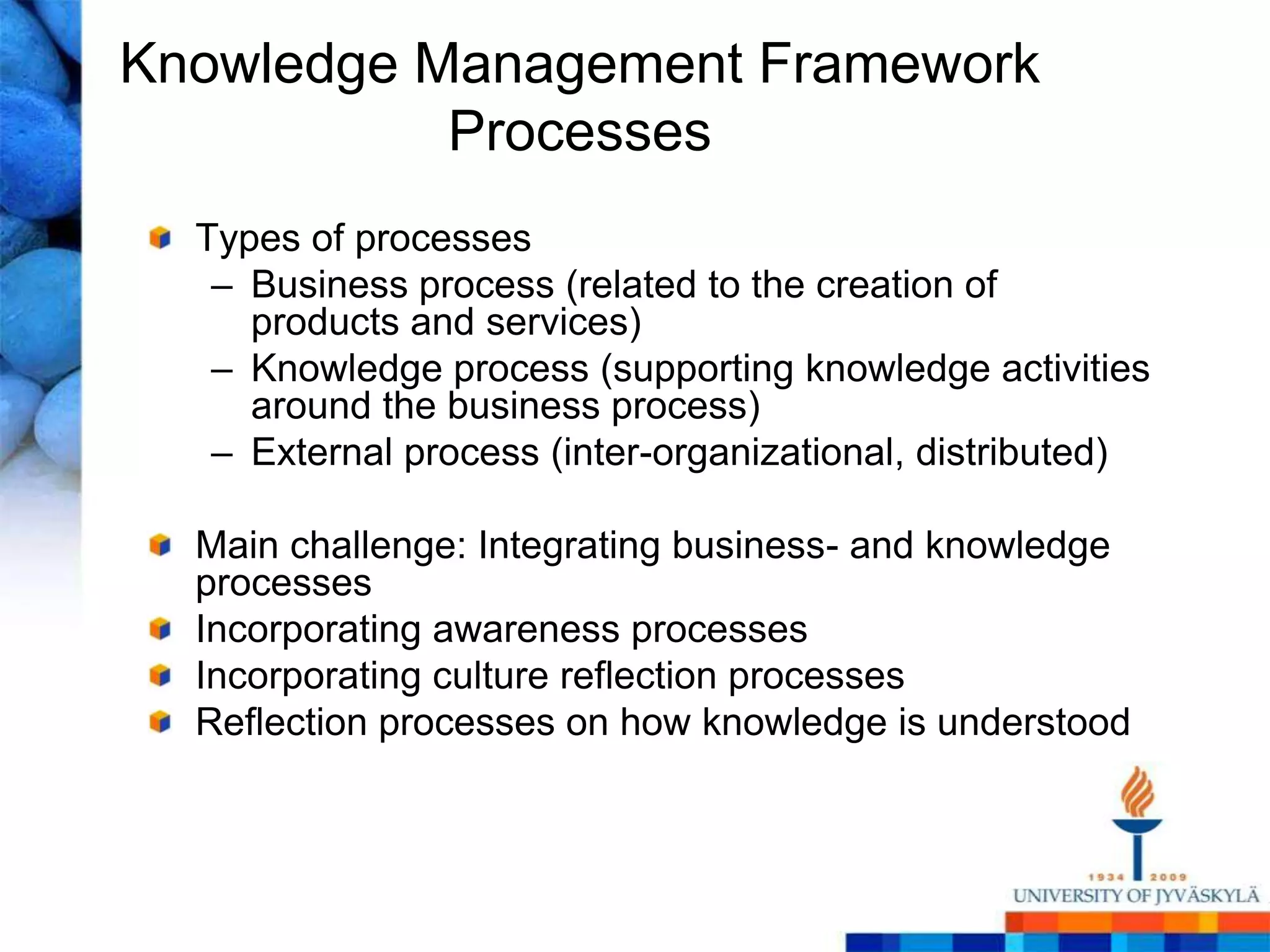
Knowledge Management FrameworkProcessesTypes of processesBusiness process (related to the creation of products and services)Knowledge process (supporting knowledge activities around the business process) External process (inter-organizational, distributed)Main challenge: Integrating business- and knowledge processesIncorporating awareness processesIncorporating culture reflection processesReflection processes on how knowledge is understood
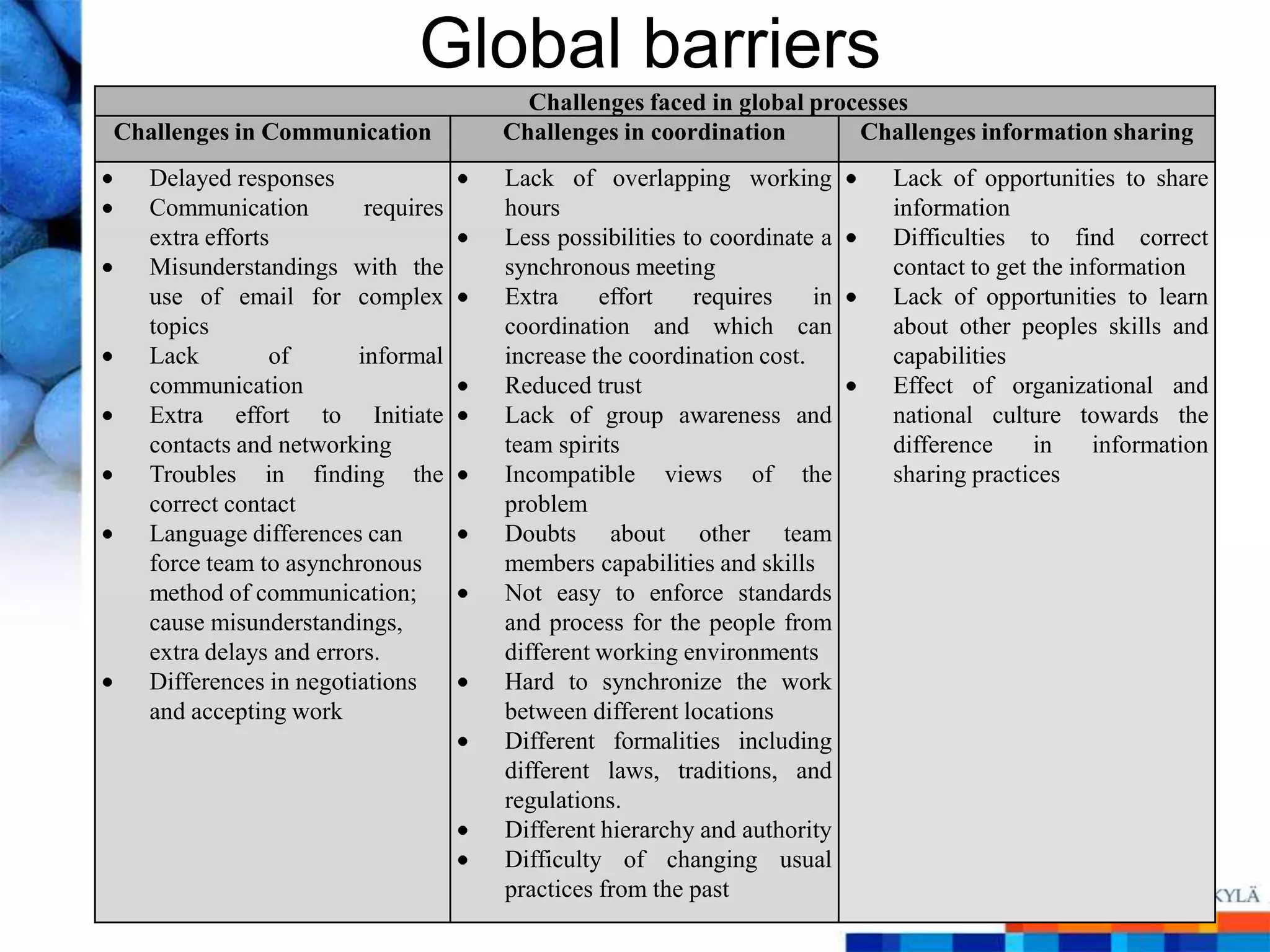
Global barriers
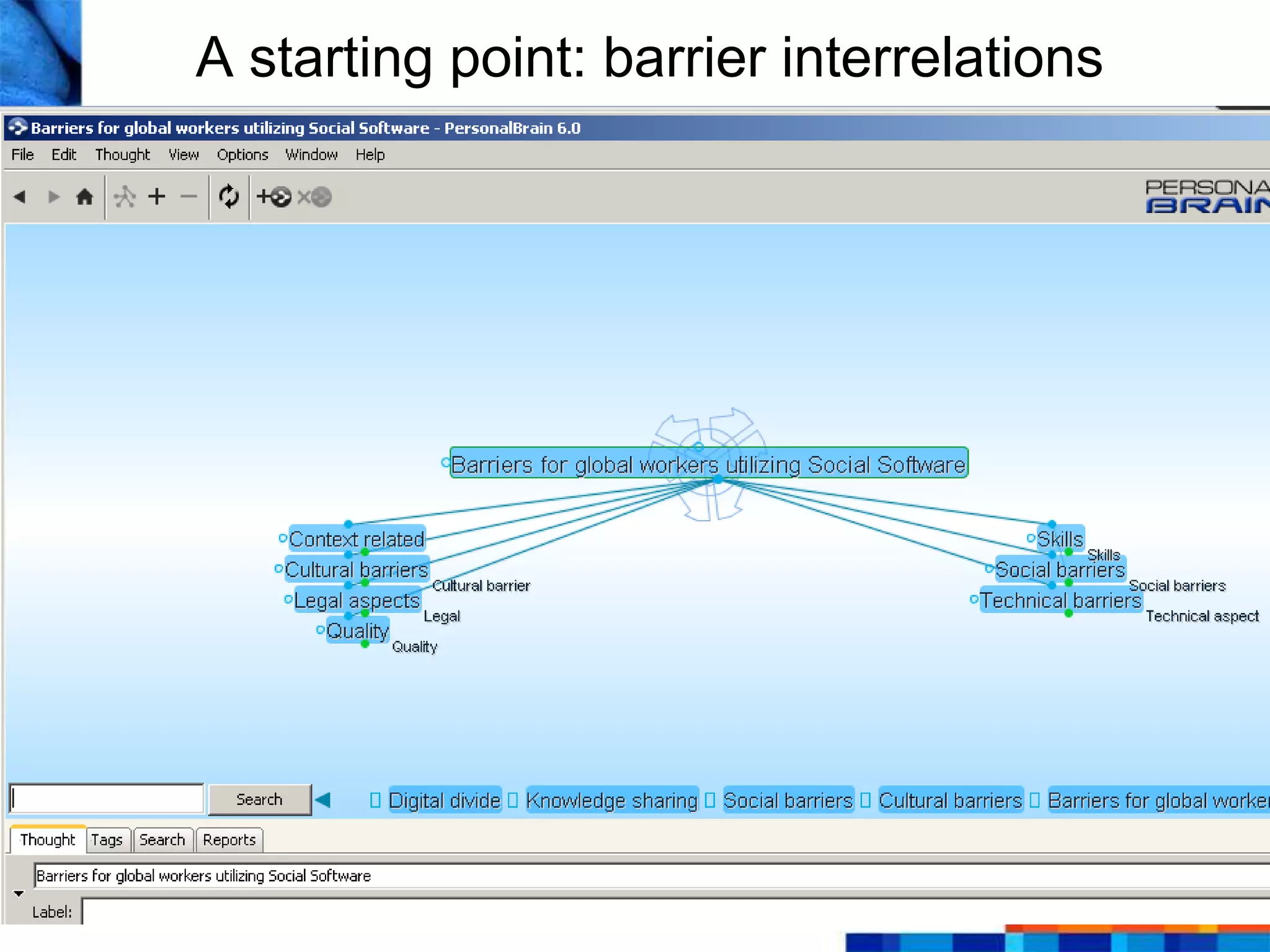
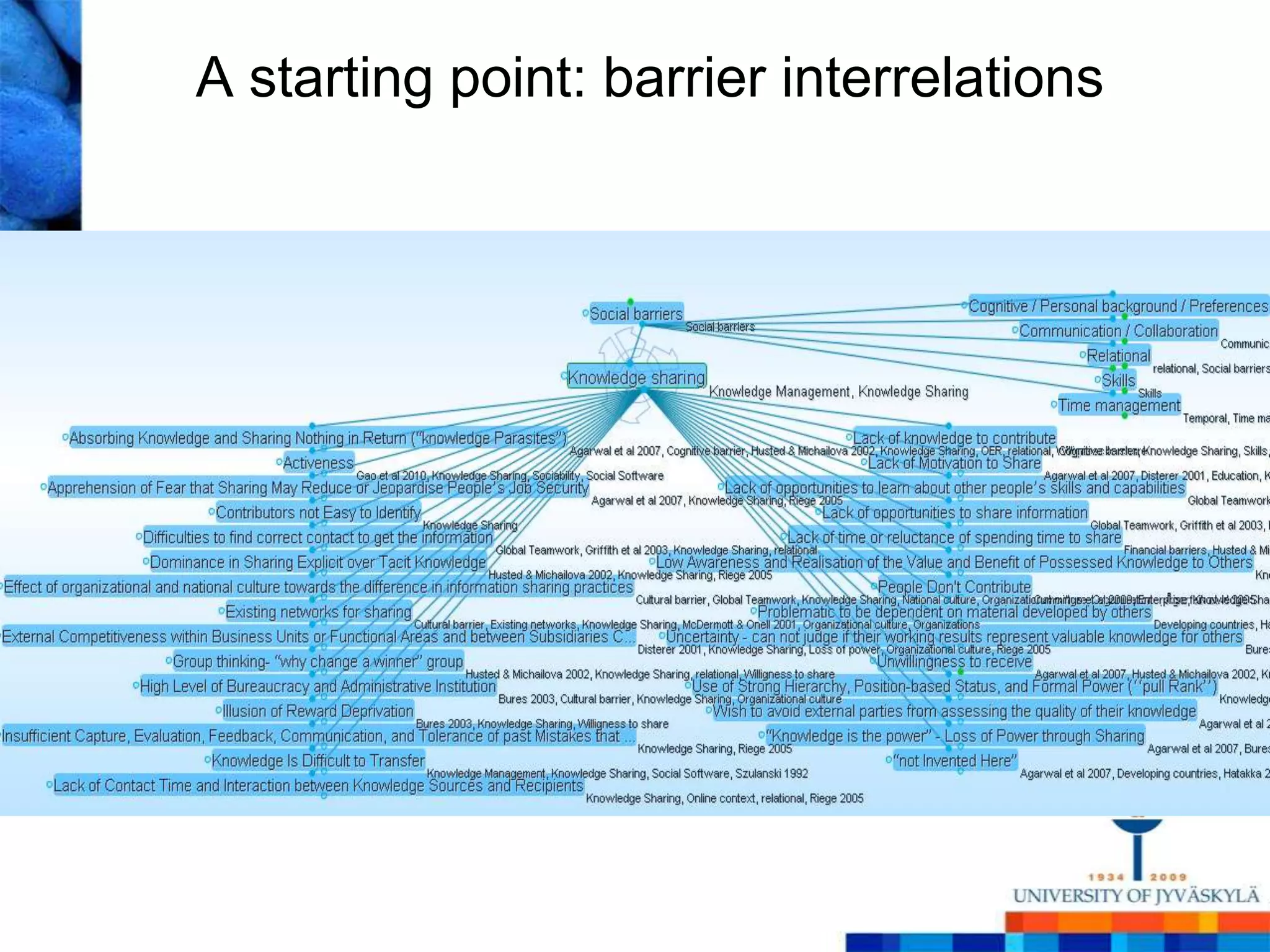
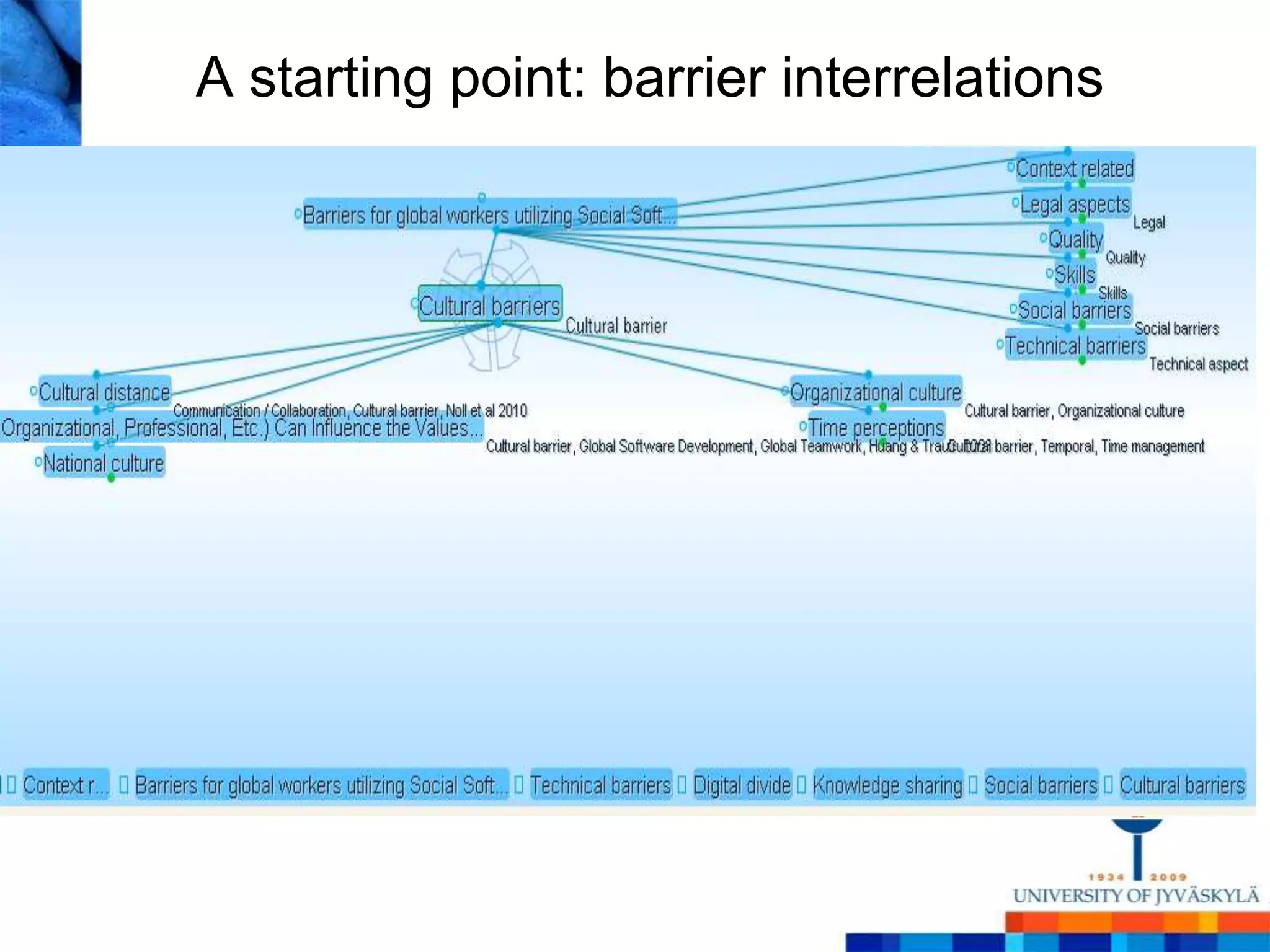
A starting point: barrier interrelations
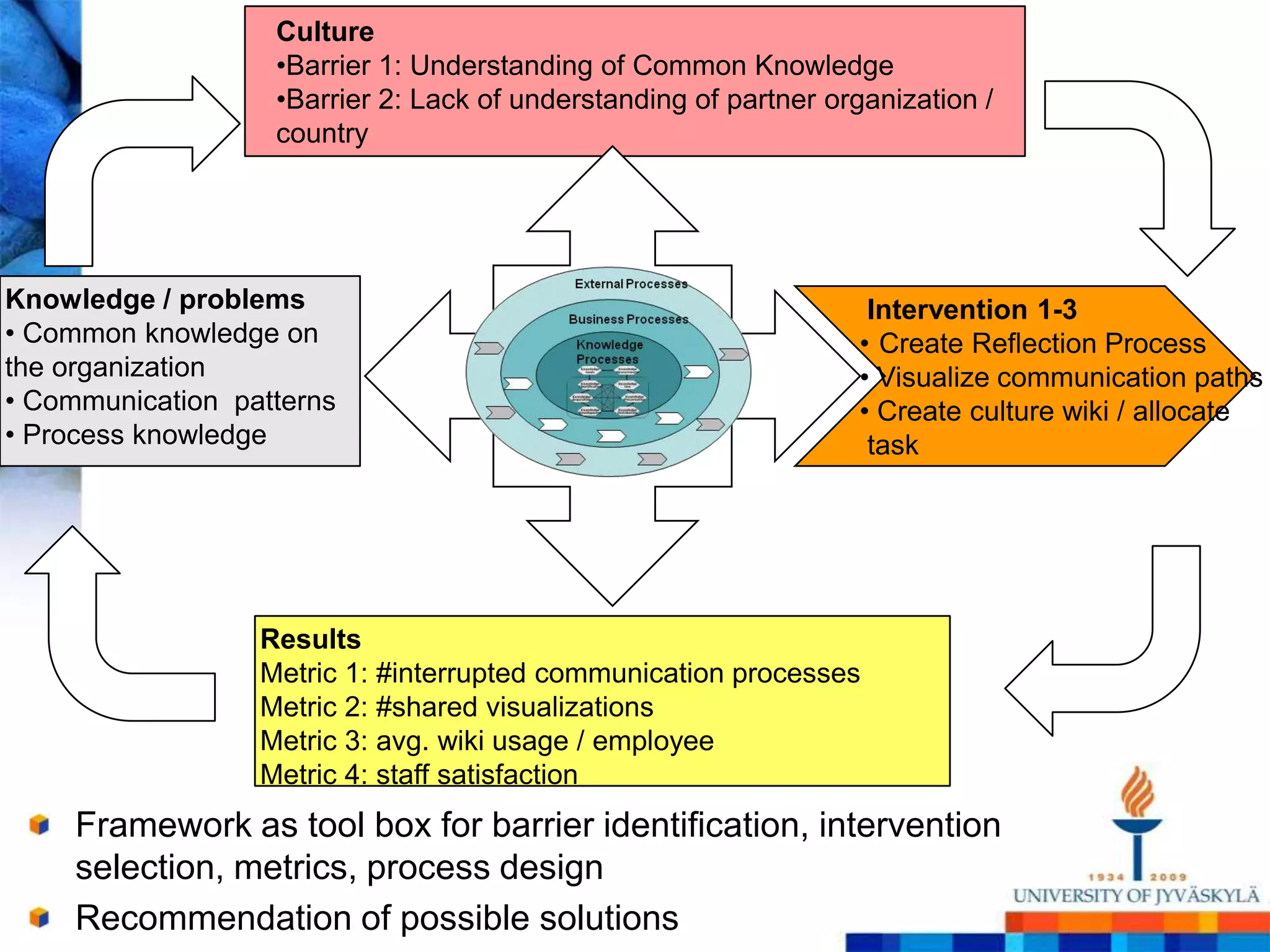
CultureBarrier 1: Understanding of Common Knowledge
Barrier 2: Lack of understanding of partner organization / countryKnowledge / problems Common knowledge on the organization
 Communication  patterns

Eckm gkmf 20110901

  • 1.
    Global Knowledge ManagementFramework: Understanding Knowledge Management in Globally Distributed SettingsECKM 2011Jan M. Pawlowski, Markus Bick02.09.2011
  • 2.
    Licensing: Creative CommonsYou are free:to Share — to copy, distribute and transmit the work to Remix — to adapt the work Under the following conditions:Attribution. You must attribute the work in the manner specified by the author or licensor (but not in any way that suggests that they endorse you or your use of the work). Noncommercial. You may not use this work for commercial purposes. Share Alike. If you alter, transform, or build upon this work, you may distribute the resulting work only under the same or similar license to this one. http://creativecommons.org/licenses/by-nc-sa/3.0/
  • 3.
  • 4.
    Introduction – GlobalKnowledge ManagementSome IssuesCoordinationCommunicationCulture and AwarenessTechnology SupportProcess Alignment…Geographic dispersionLevel of dispersionSynchronicityOrganizational issuesType of stakeholdersType of projectsComplexityIndividual IssuesPerceived distanceTrustMethodology and processesSystems methodologyPolicy and standardsCultureKnowledge & communication
  • 5.
    Global Knowledge ManagementFrameworkJust another Framework? Describing and relating potential influencing aspects, such as systems, processes or instrumentsUnderstanding the inter-relations in global settingsLearning how to apply in in practice…Utilization: Guideline which aspects should be taken into accountResearch toolSpecific for global KM
  • 6.
    ContextcreaterunsinfluencesStakeholdersperformSocietyOrganizationIndividual InterventionA Intervention B Intervention Ninfluencesembedded inenableProcessesExternal ProcesseschangeSupportInfrastructures StrategiesBusiness ProcessesguideHuman-based instrumentsResourcesKnowledge ProcessesenableInstrumentsKnowledgeuseMeasuredbyinfluencesImproved byTechnologies and toolsProblemsMeasuredbymeasuresValidation, Feedback, ImprovementResultsinfluencesPerformanceKnowledge…Culture
  • 7.
    Global Knowledge ManagementFrameworkContextSociety: (National, regional) culture, legal aspects, infrastructure, …Organization: Culture, Strategies, Structure, Processes, …Individuals: Characteristics, preferences, knowledge / skills / competences, barriersMain challenge: Understanding and representing influence factors
  • 8.
    Knowledge Management FrameworkProcessesTypesof processesBusiness process (related to the creation of products and services)Knowledge process (supporting knowledge activities around the business process) External process (inter-organizational, distributed)Main challenge: Integrating business- and knowledge processesIncorporating awareness processesIncorporating culture reflection processesReflection processes on how knowledge is understood
  • 9.
  • 10.
    A starting point:barrier interrelations
  • 11.
    A starting point:barrier interrelations
  • 12.
    A starting point:barrier interrelations
  • 13.
  • 14.
    Barrier 2: Lackof understanding of partner organization / countryKnowledge / problems Common knowledge on the organization
  • 15.
  • 16.
    Process knowledge Intervention 1-3 Create Reflection Process
  • 17.
  • 18.
    Create culturewiki / allocate taskResultsMetric 1: #interrupted communication processesMetric 2: #shared visualizationsMetric 3: avg. wiki usage / employeeMetric 4: staff satisfactionFramework as tool box for barrier identification, intervention selection, metrics, process designRecommendation of possible solutions
  • 19.
    Useful for analyzingthe cultural, organizational, and individual contextIdentifying barriers and potential success factorsChoosing and creating solutions (=interventions / methods)ChallengesMapping of research resultsAdapting to the context Large scale validationExperiences and Outlook
  • 20.
    Contact InformationProf. Dr.Jan M. Pawlowskijan.pawlowski@jyu.fiSkype: jan_m_pawlowskiOffice:Room 514.2Telephone +358 50 4432389http://users.jyu.fi/~japawlow