
Free Open Source as Technology Transfer tool in the Arab world Jamil Khatib
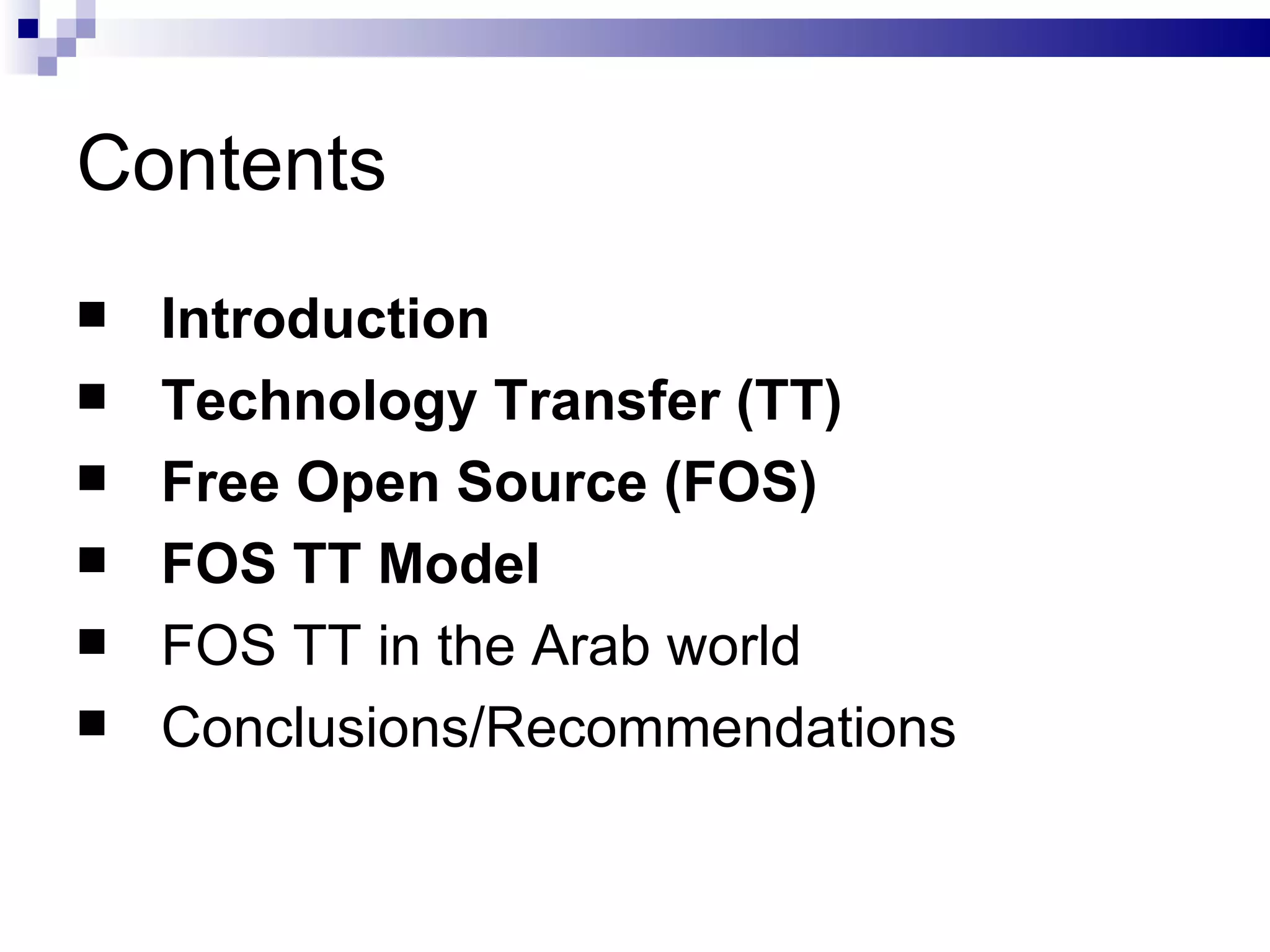
Contents Introduction Technology Transfer (TT) Free Open Source (FOS) FOS TT Model FOS TT in the Arab world Conclusions/Recommendations
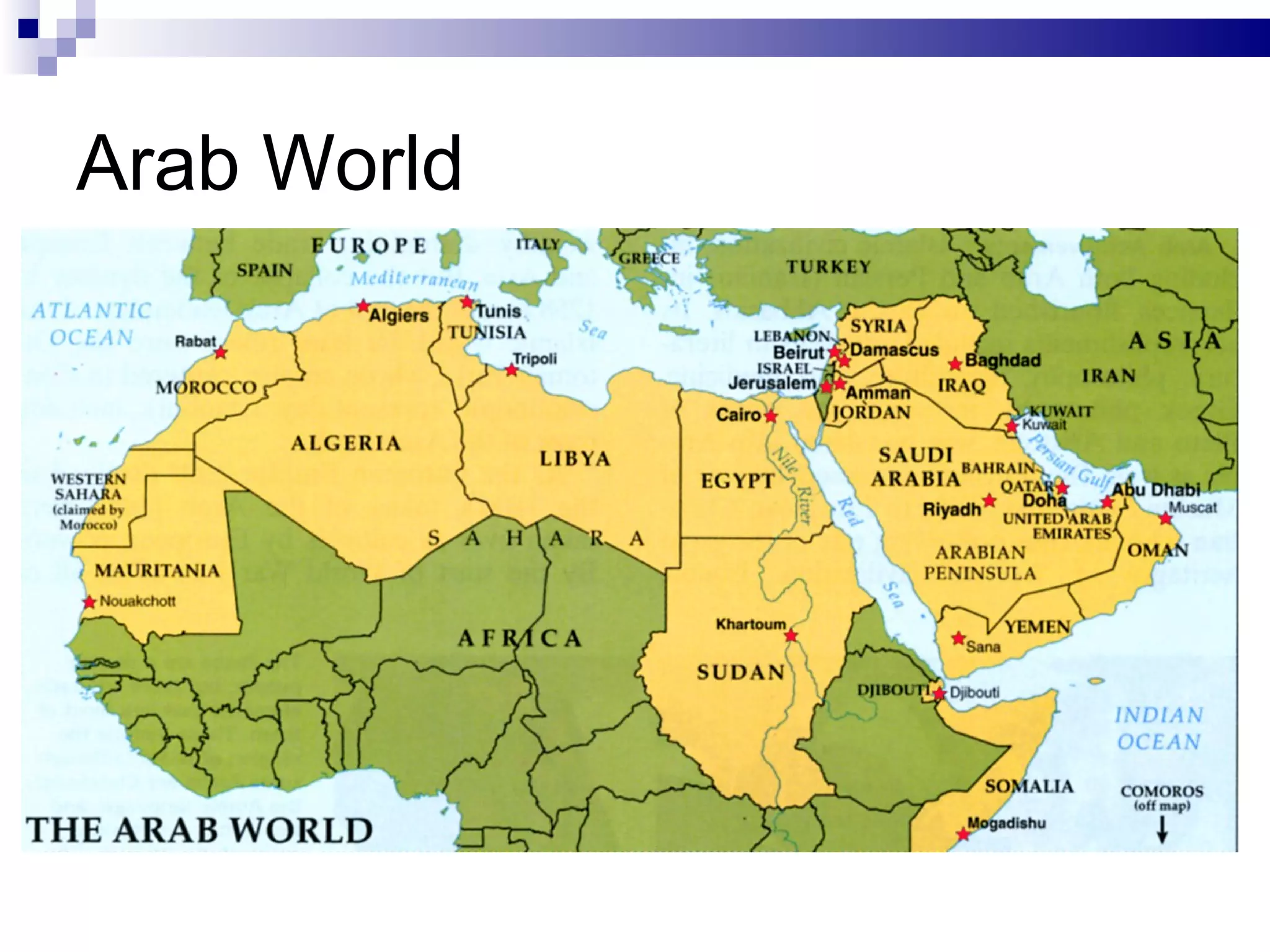
Arab World
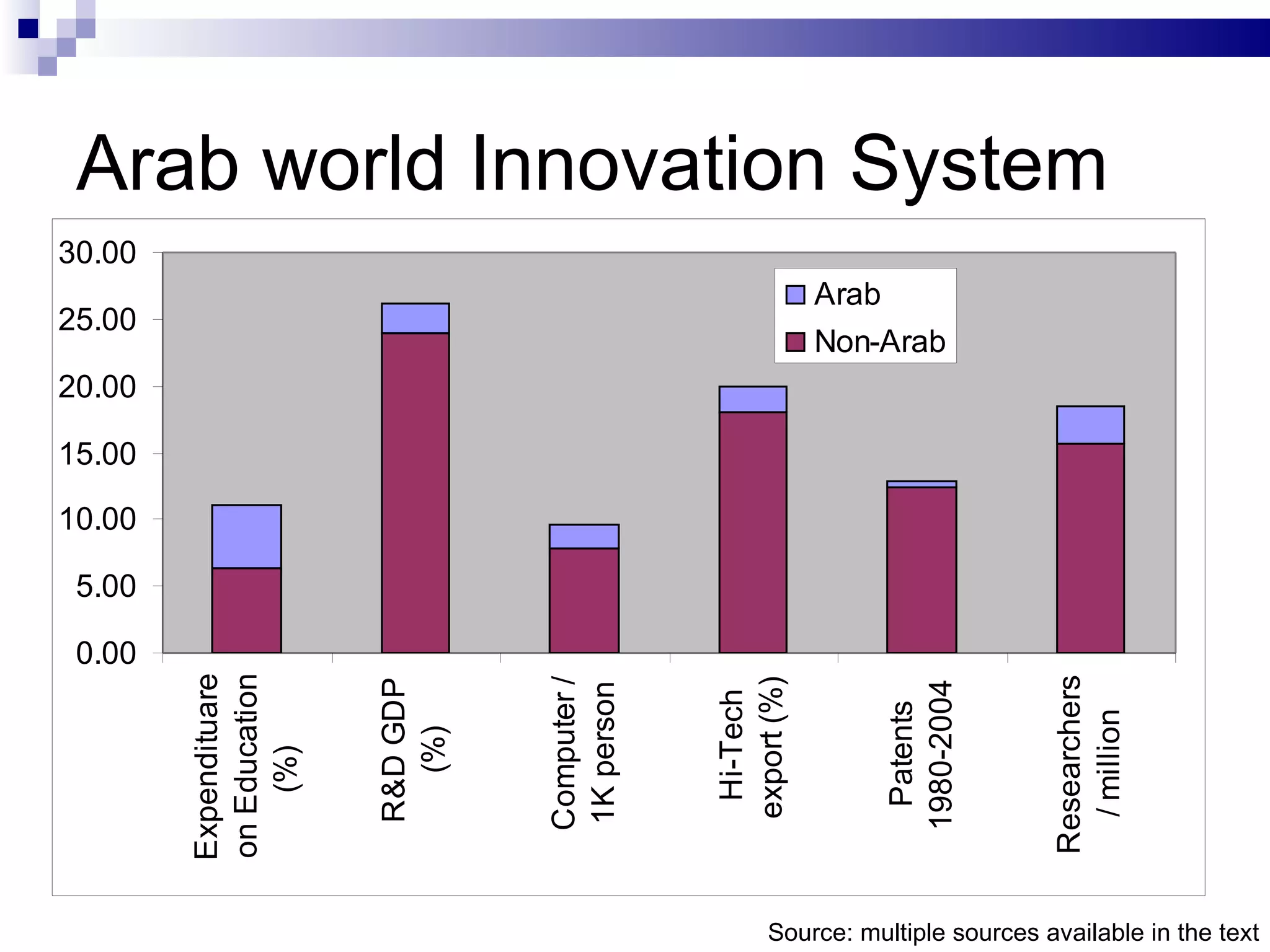
Arab world Innovation System Source: multiple sources available in the text
Major Problems Absence of National ICT R&D funding Technology industry based on import & use (No development) Lack of links between Research/Education and industry Brain Drain
Core Questions The study will discuss the Effectiveness of FOS related processes to improve the cooperation between the industry and Research institutes in the Arab world  What can be learned from FOS for technology transfer in the Arab world?
Contents Introduction Technology Transfer (TT) Free Open Source (FOS) FOS TT Model FOS TT in the Arab world Conclusions/Recommendations
Technology Transfer (TT) “ The conventional conception of technology transfer is that it is a processes through which the  results  of basic and applied  research  are  put into use  by receptors” (Rogers, 2003, p.150) TT main Factors Industry Science Relation  Knowledge and Know-how component Multi-way of information flow Industry  ↔  Research
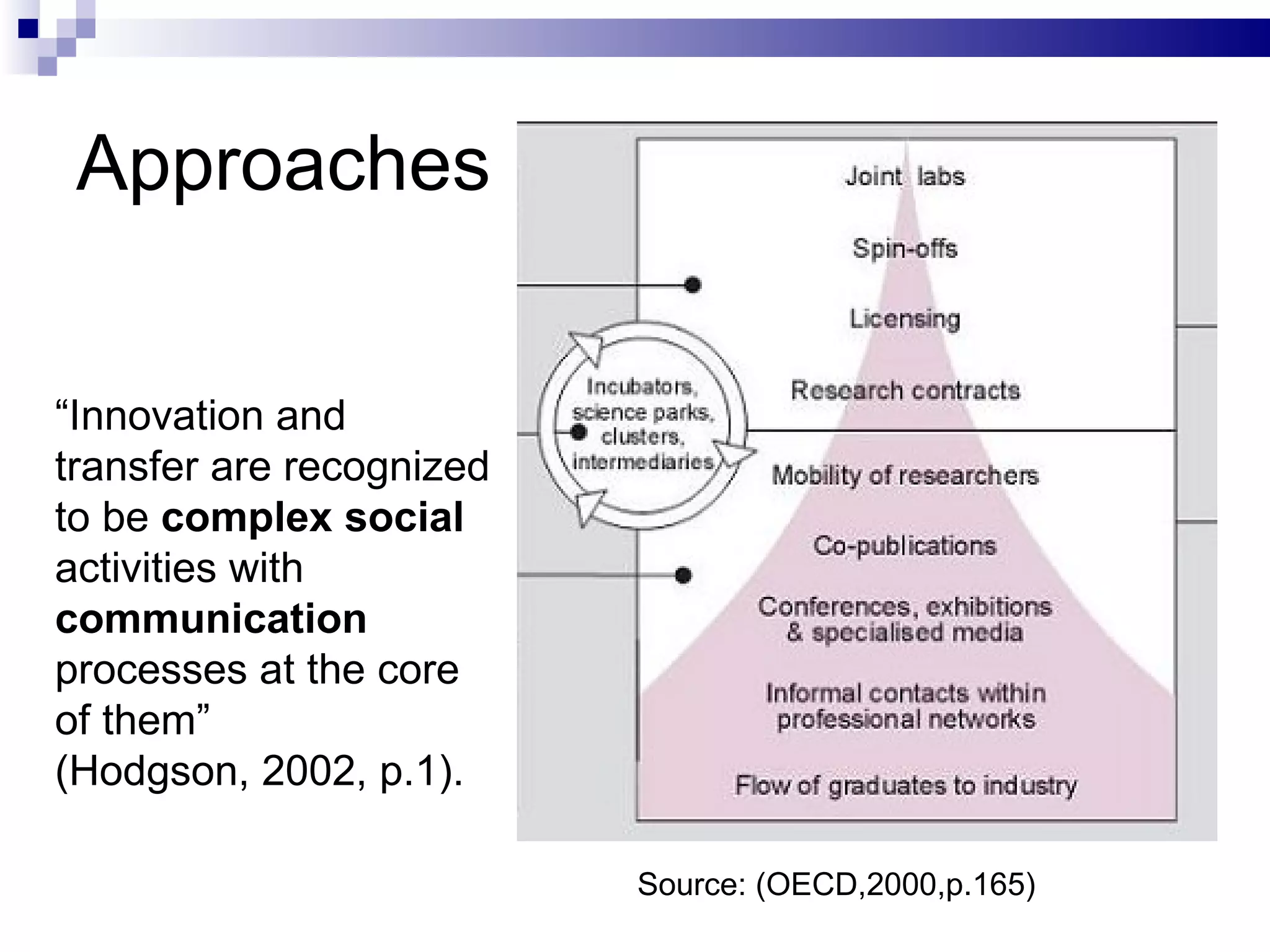
Approaches Source: (OECD,2000,p.165) “ Innovation and transfer are recognized to be  complex social  activities with  communication  processes at the core of them” (Hodgson, 2002, p.1).
Some TT Measures / effectiveness Shared licenses, publications & contracts Clear rewards system for cooperation Direct Contact with knowledge holders
Contents Introduction Technology Transfer (TT) Free Open Source (FOS) FOS TT Model FOS TT in the Arab world Conclusions/Recommendations
FOS (Software) philosophy Cheap software + community of volunteers Freedom  to Use Redistribute Information Access (open source code) Develop, Modify and Improve Joining/leaving the development Source FSF and OSI
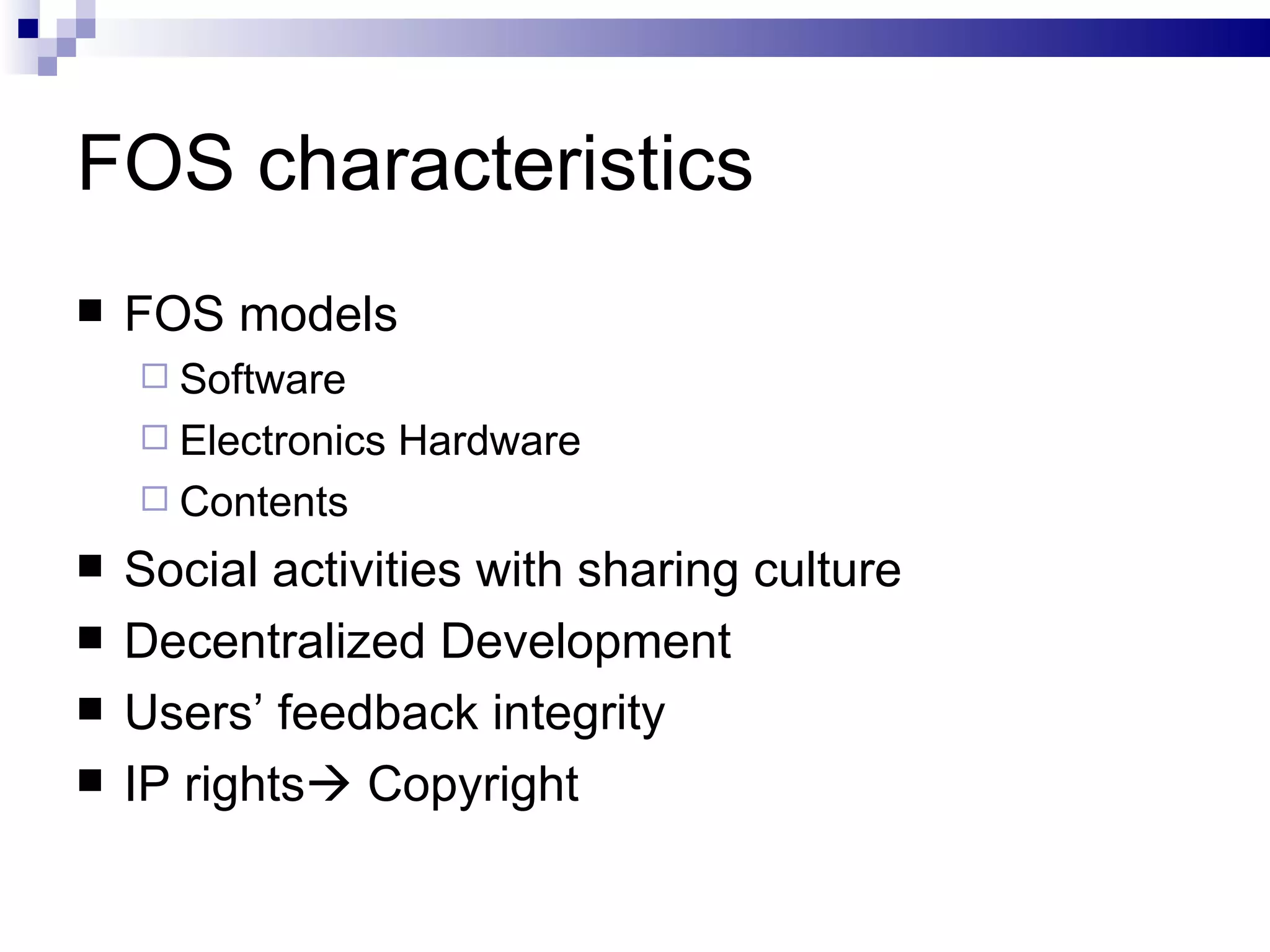
FOS characteristics FOS models Software Electronics Hardware Contents Social activities with sharing culture Decentralized Development Users’ feedback integrity IP rights   Copyright
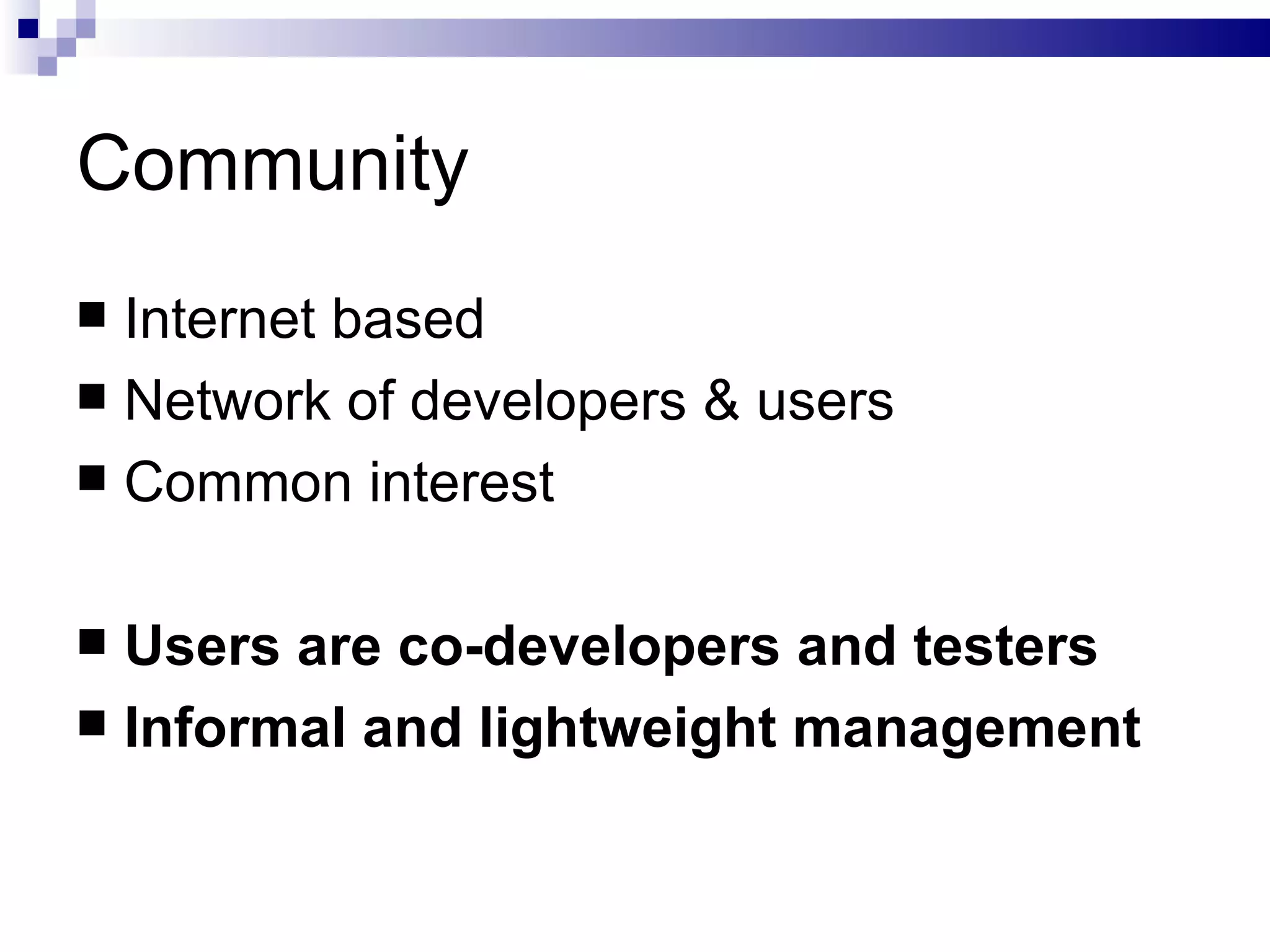
Community Internet based Network of  developers  &  users Common interest Users are co-developers and testers Informal and lightweight management
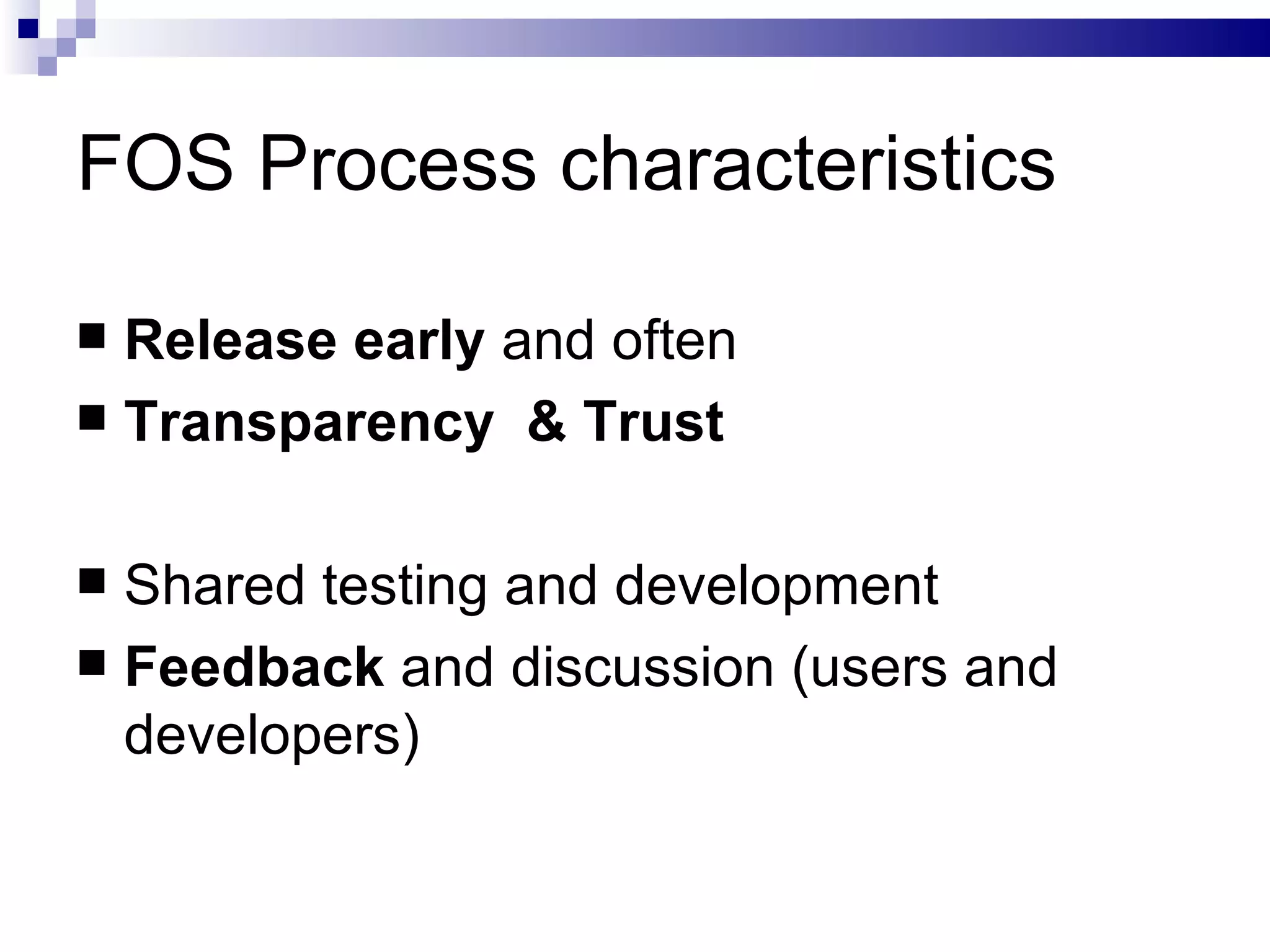
FOS Process characteristics Release early  and often Transparency  & Trust Shared testing and development Feedback  and discussion (users and developers)
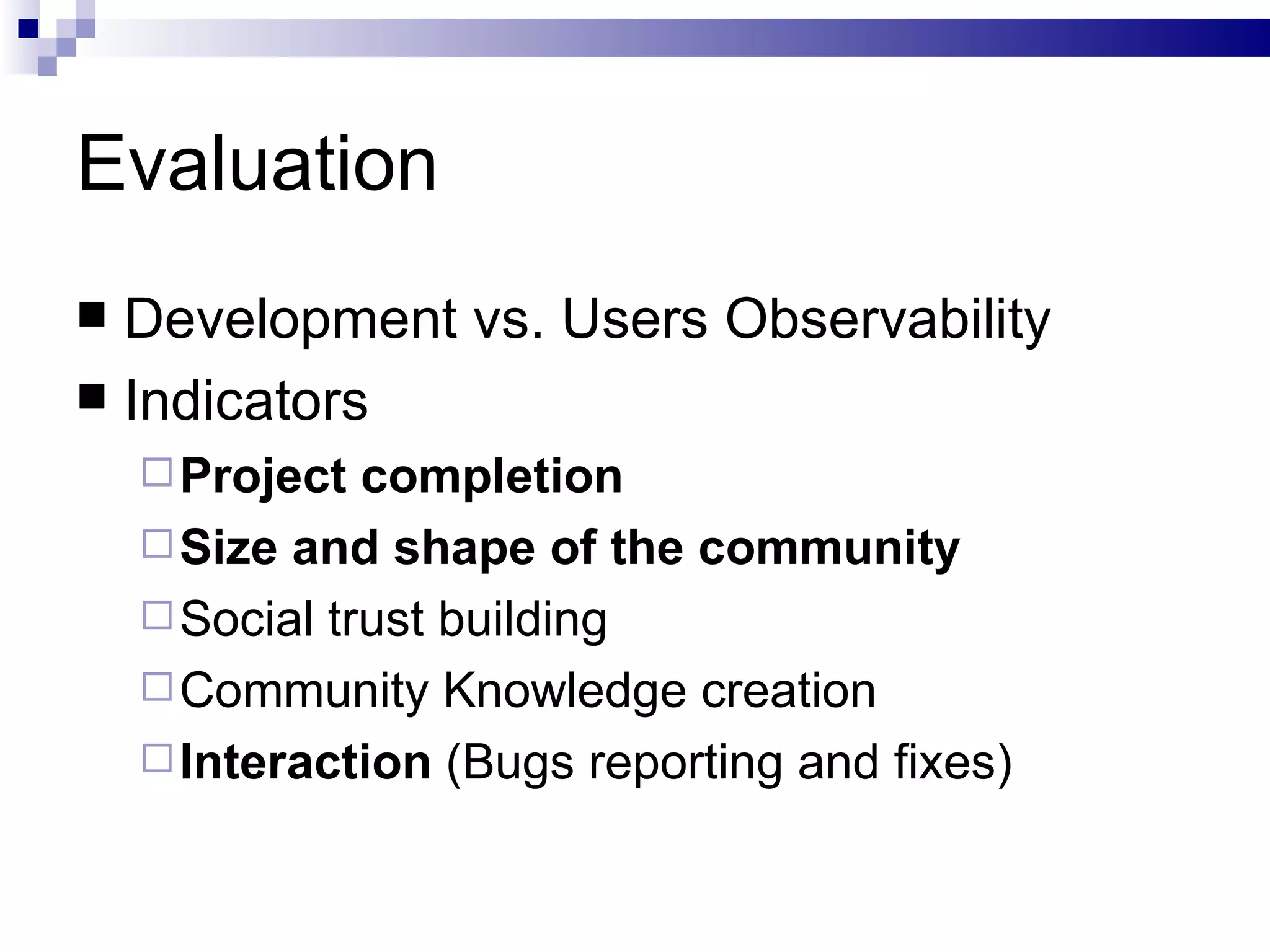
Evaluation Development vs. Users Observability Indicators Project completion Size and shape of the community Social trust building Community Knowledge creation Interaction  (Bugs reporting and fixes)
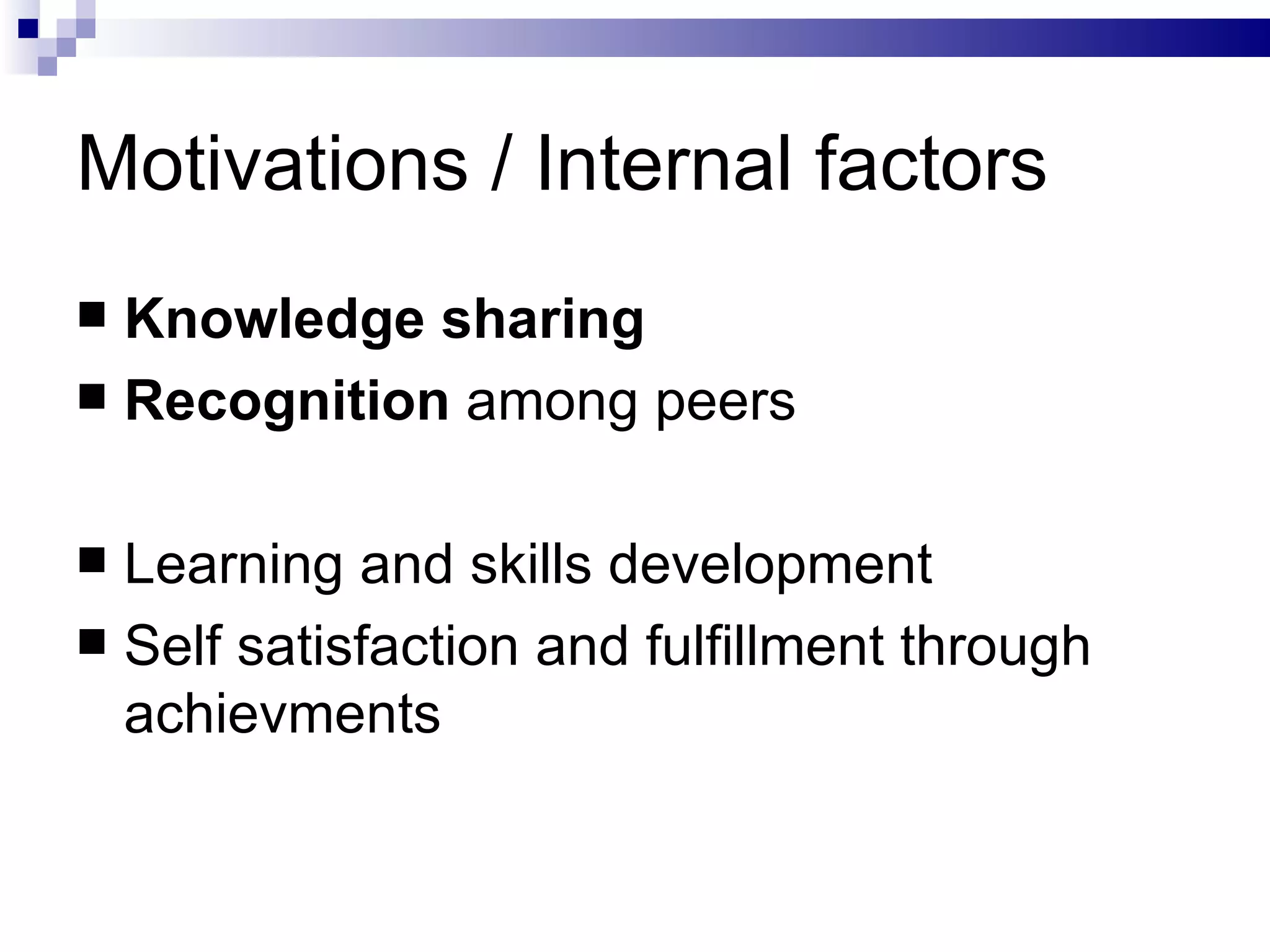
Motivations / Internal factors Knowledge sharing Recognition  among peers Learning and skills development Self satisfaction and fulfillment through achievments
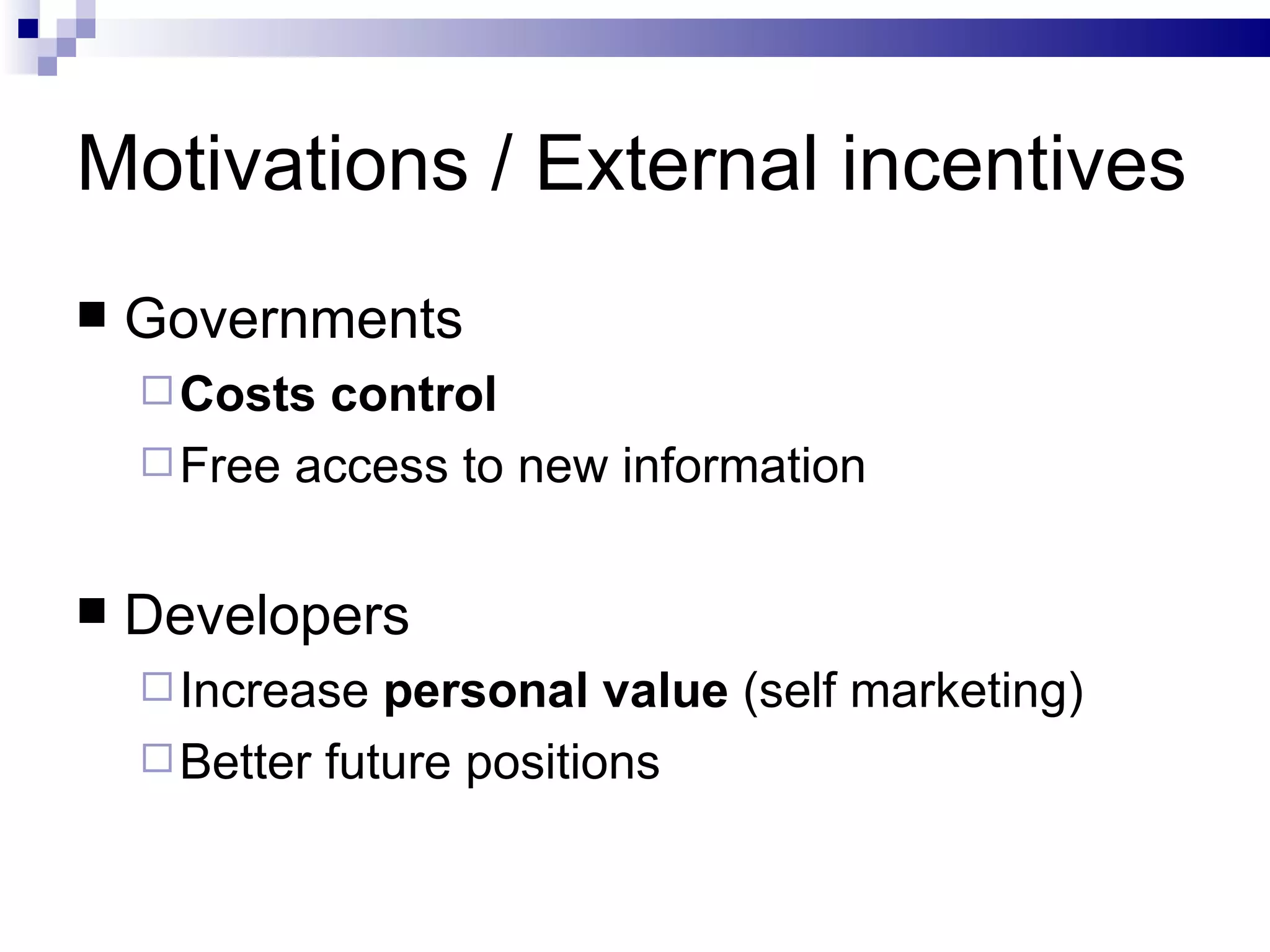
Motivations / External incentives Governments Costs control Free access to new information Developers Increase  personal value  (self marketing) Better future positions
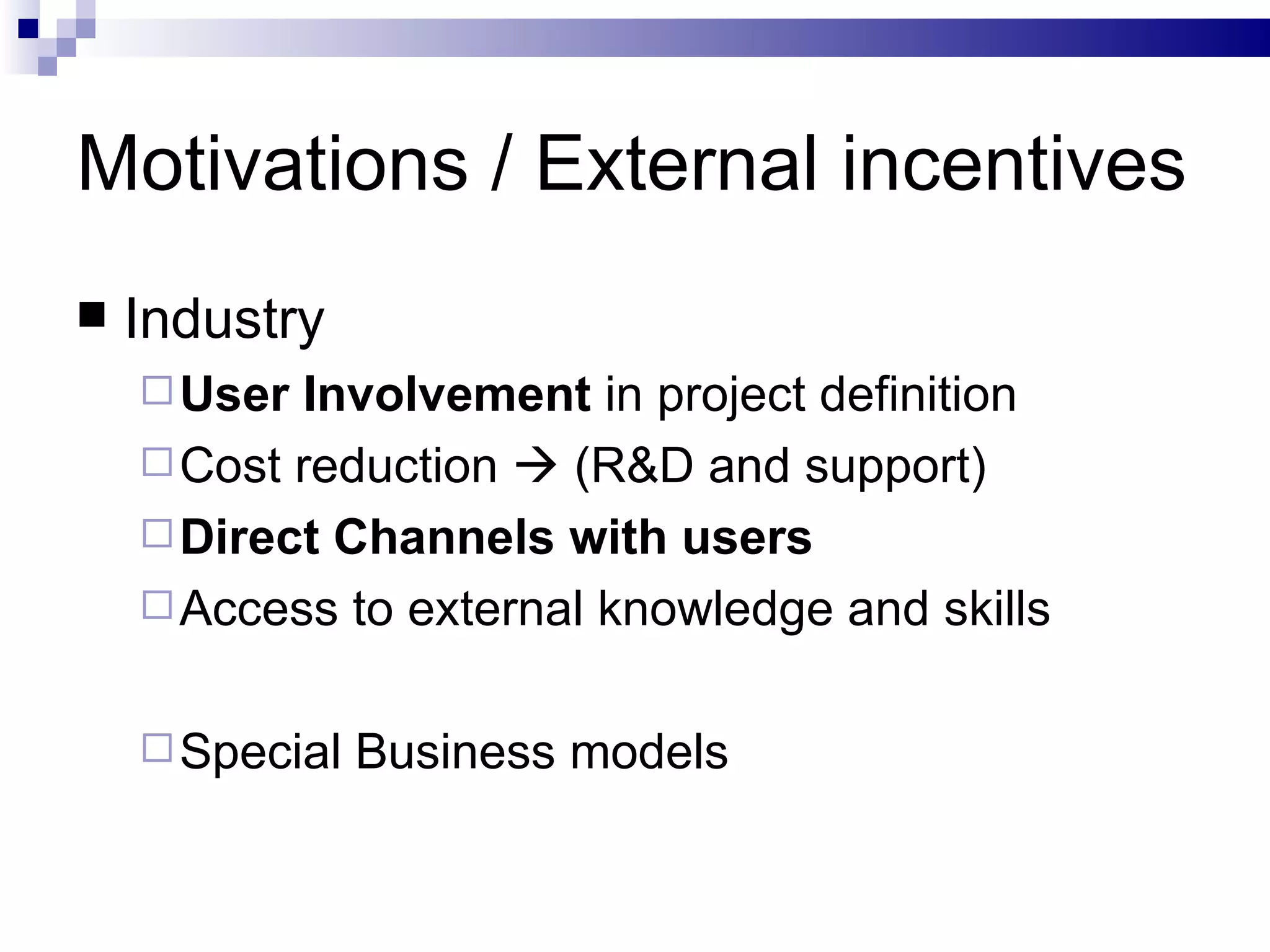
Motivations / External incentives Industry User Involvement  in project definition Cost reduction    (R&D and support) Direct Channels with users Access to external knowledge and skills Special Business models
Contents Introduction Technology Transfer (TT) Free Open Source (FOS) FOS TT Model FOS TT in the Arab world Conclusions/Recommendations
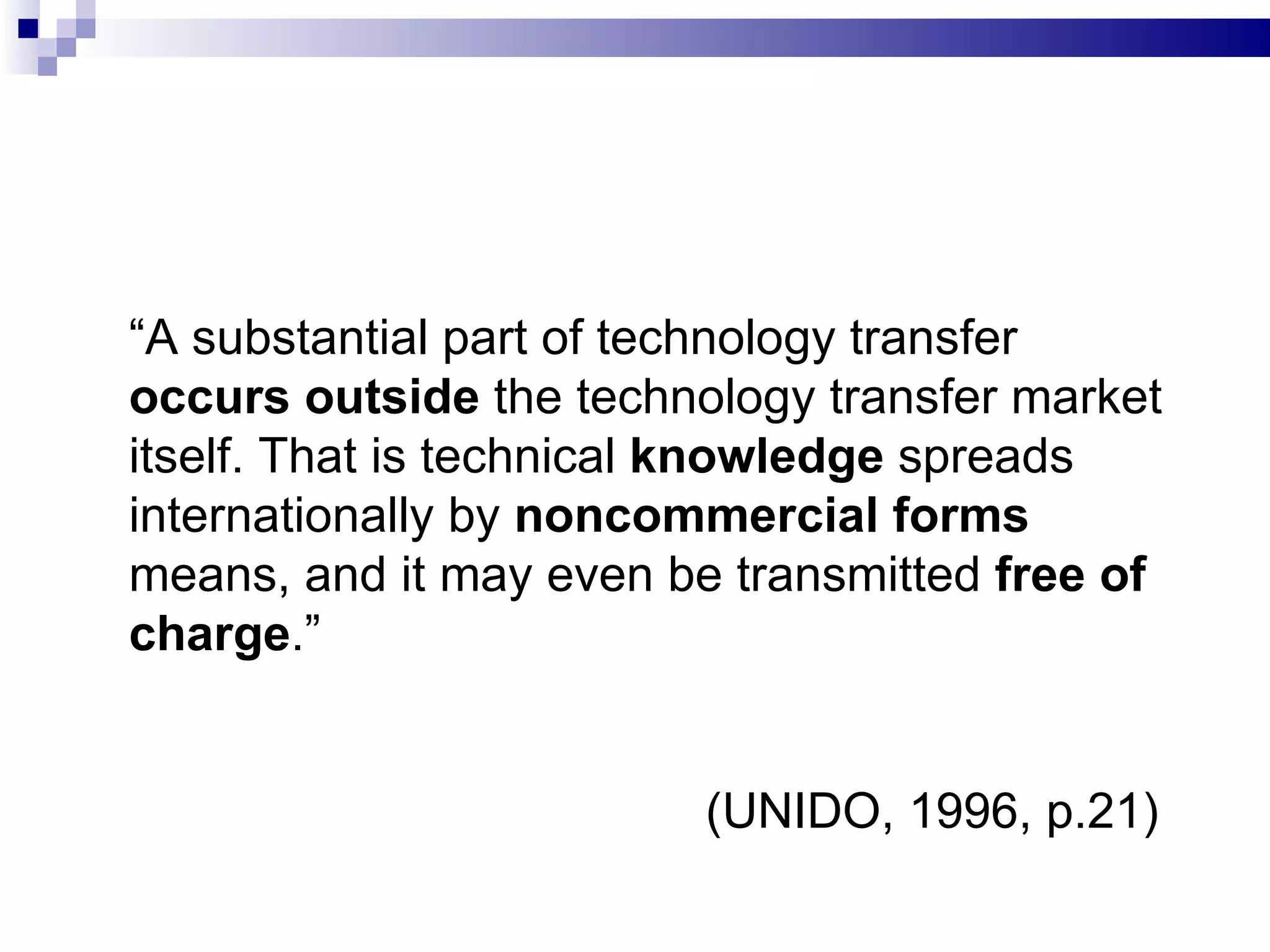
“ A substantial part of technology transfer  occurs outside  the technology transfer market itself. That is technical  knowledge  spreads internationally by  noncommercial forms  means, and it may even be transmitted  free of charge .”   (UNIDO, 1996, p.21)
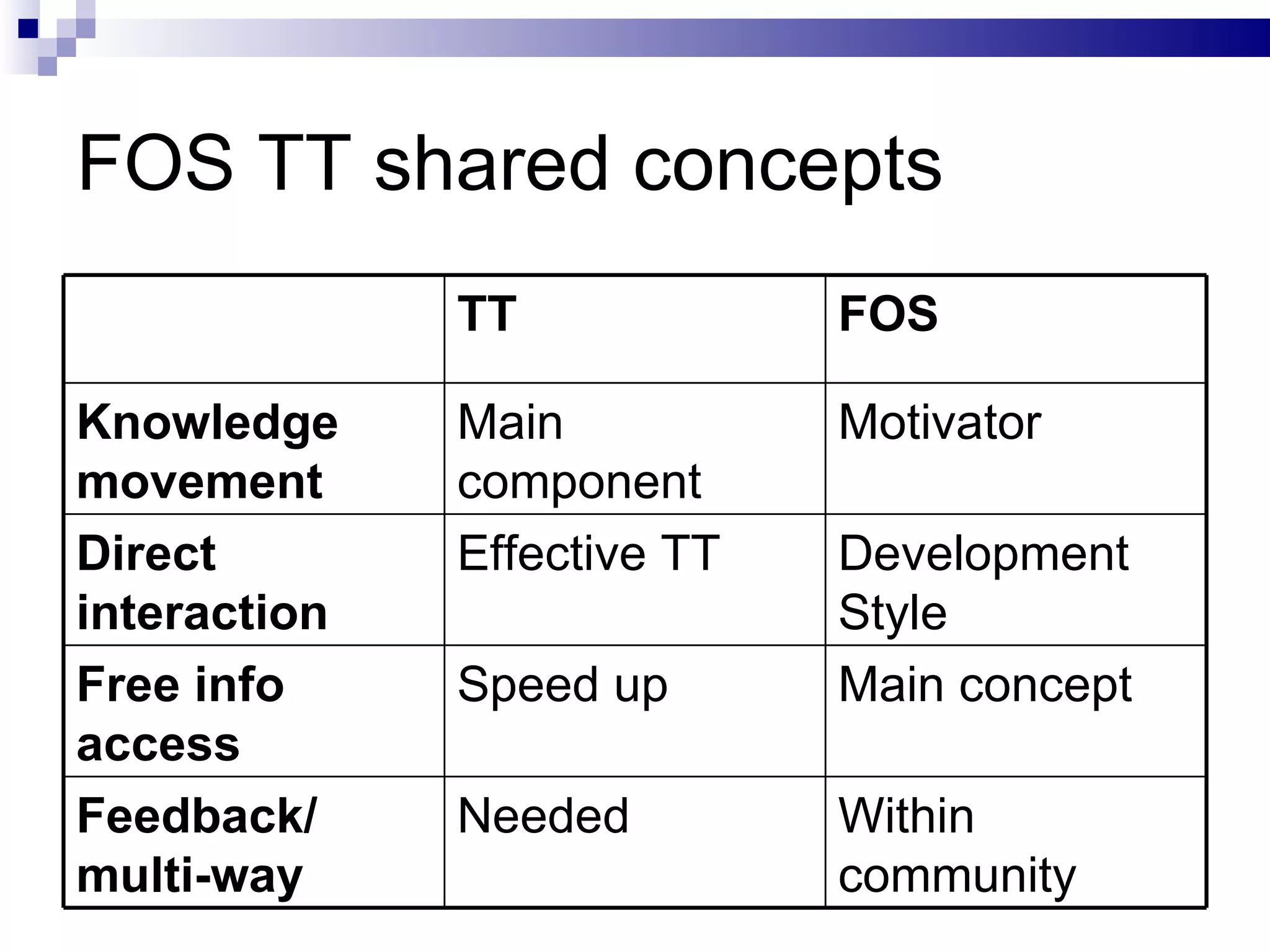
FOS TT shared concepts TT FOS Knowledge movement Main component Motivator Direct interaction Effective TT Development Style Free info access Speed up Main concept Feedback/ multi-way Needed Within community
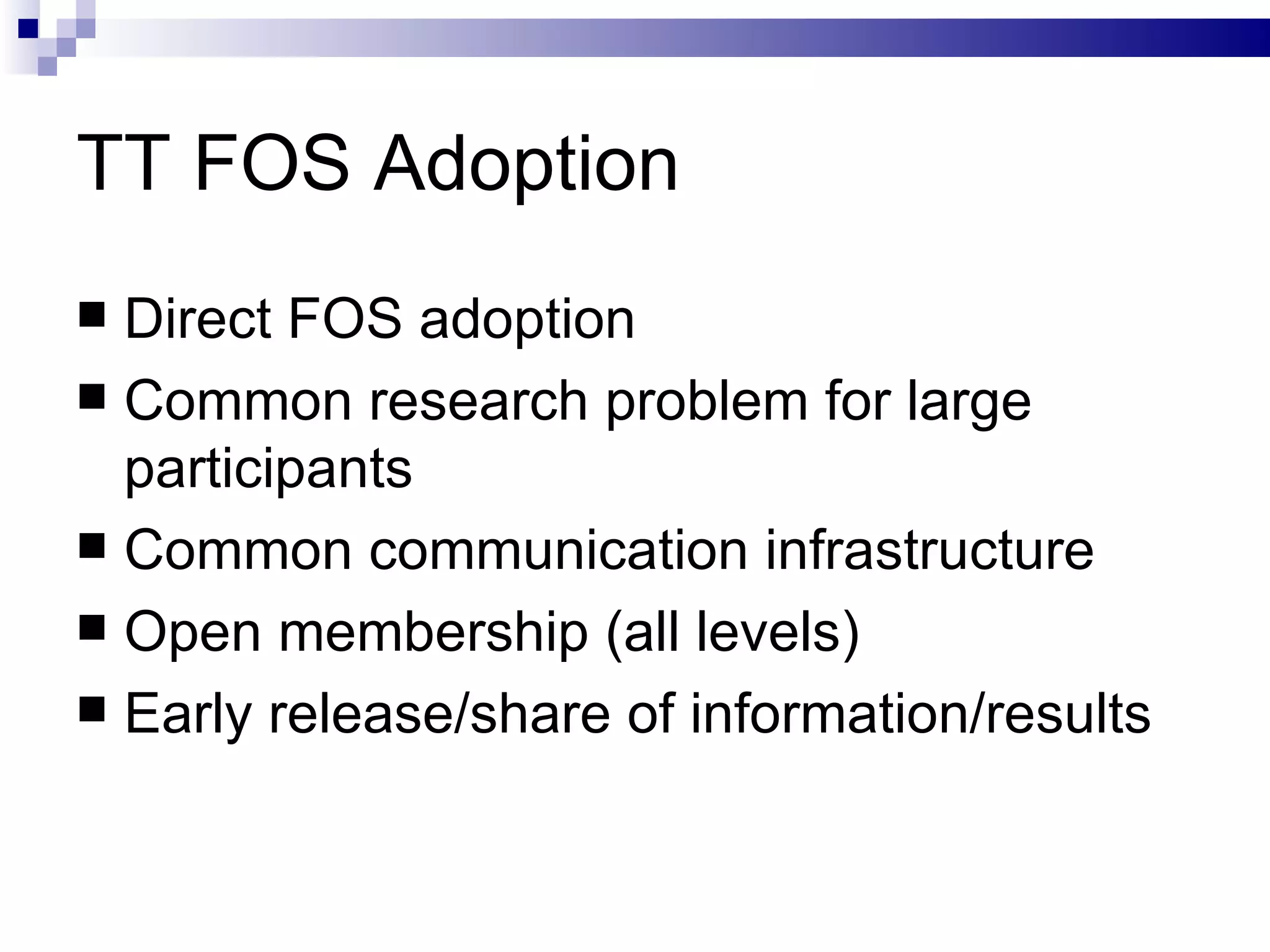
TT FOS Adoption Direct FOS adoption Common research problem for large participants Common communication infrastructure Open membership (all levels) Early release/share of information/results
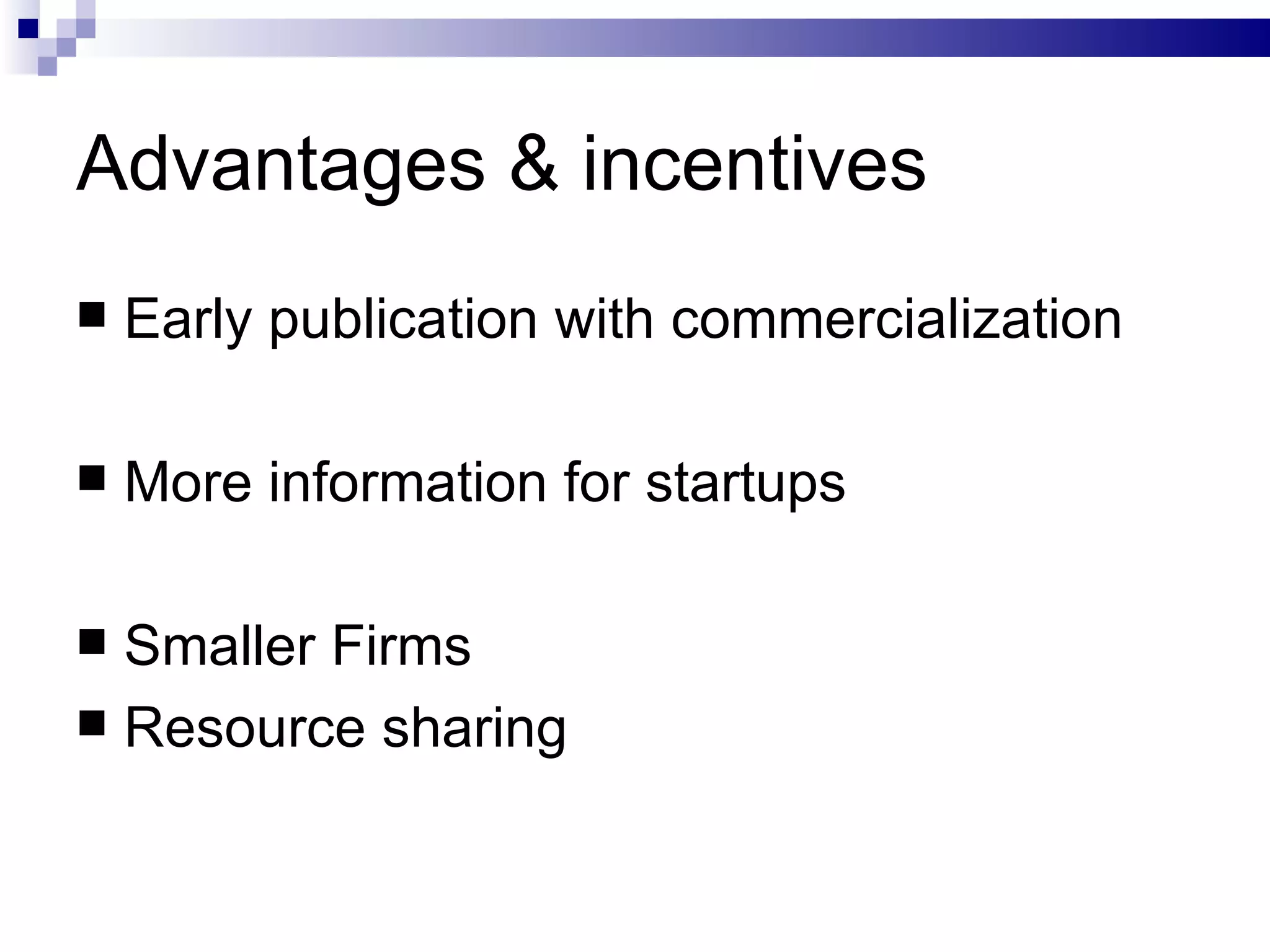
Advantages & incentives Early publication with commercialization More information for startups Smaller Firms Resource sharing
Measures Diversity of participants Community size Size and quality of exchanged information Knowledge created
Contents Introduction Technology Transfer (TT) Free Open Source (FOS) FOS TT Model FOS TT in the Arab world Conclusions/Recommendations
FOS in the Arab world Still in infancy stage Small community Focus on use and Translation not development No clear national strategies for FOS Lack of promotion to FOS products Lack of knowledge of existence
Arab world TT No (weak) links between industry & uni. Curricula based on international unis. Researches based on personal objectives Weak research cooperation with outside
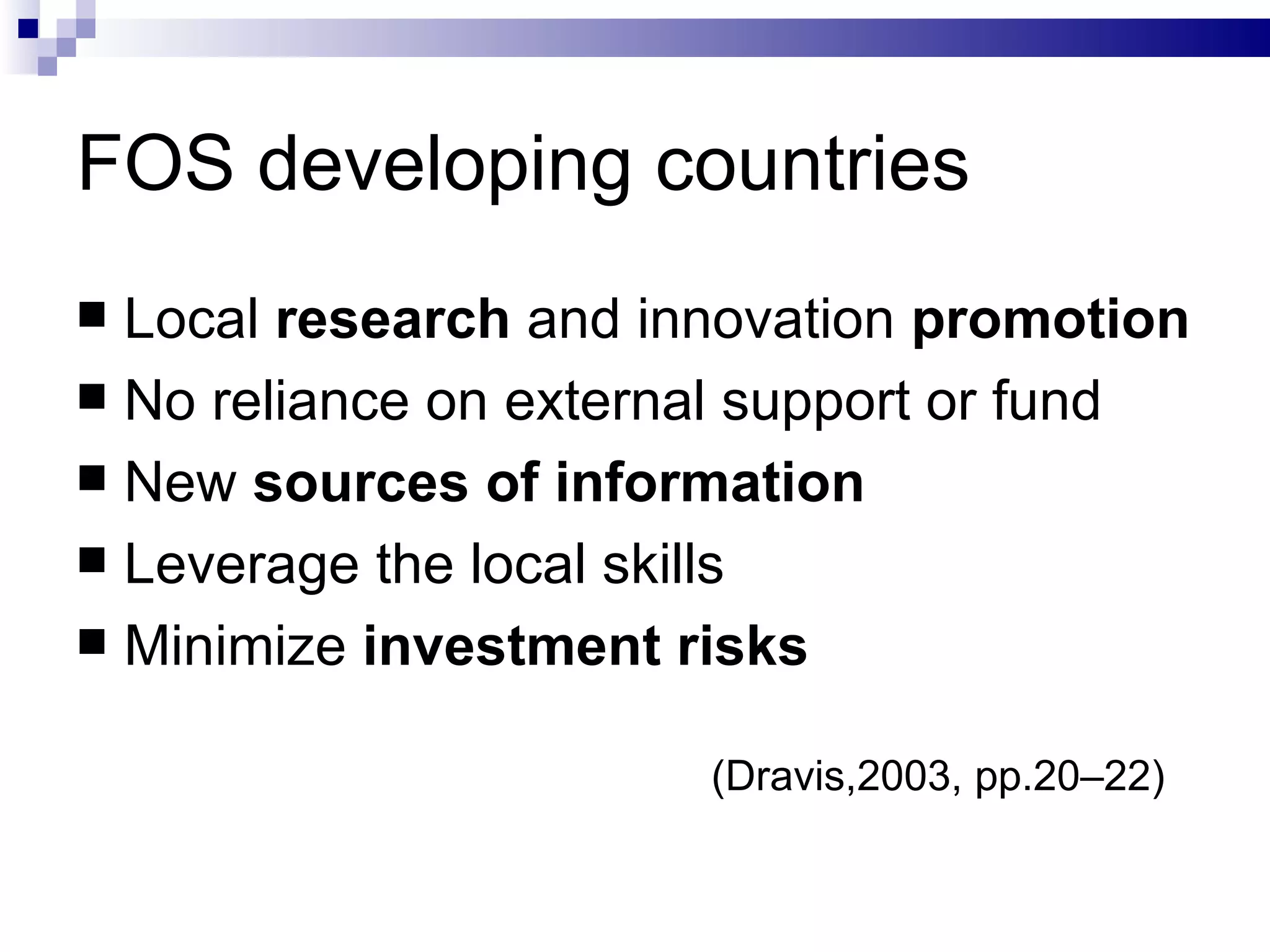
FOS developing countries Local  research  and innovation  promotion No reliance on external support or fund New  sources of information Leverage the local skills Minimize  investment risks (Dravis,2003, pp.20–22)
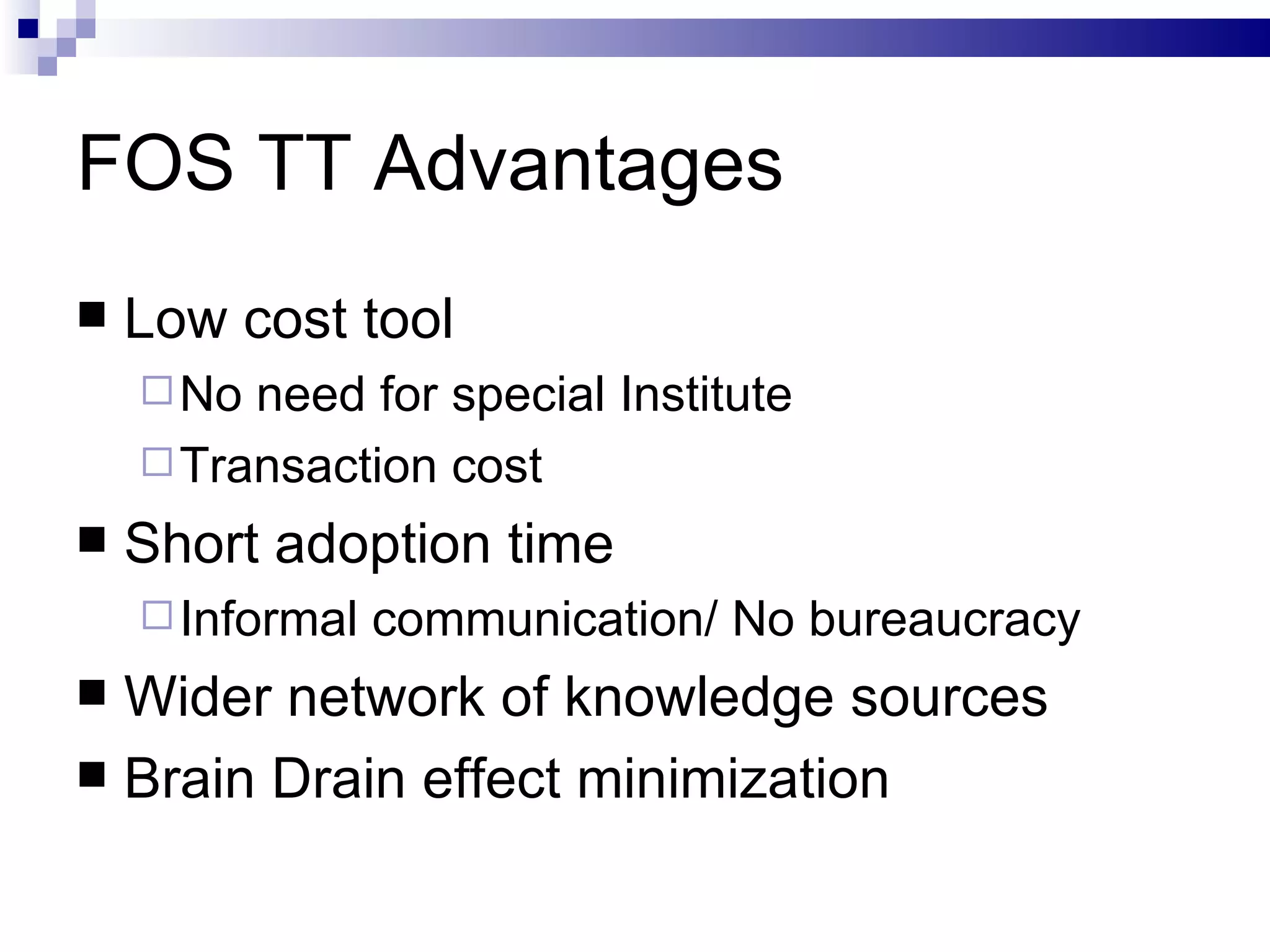
FOS TT Advantages Low cost tool No need for special Institute Transaction cost Short adoption time Informal communication/ No bureaucracy Wider network of knowledge sources Brain Drain effect minimization
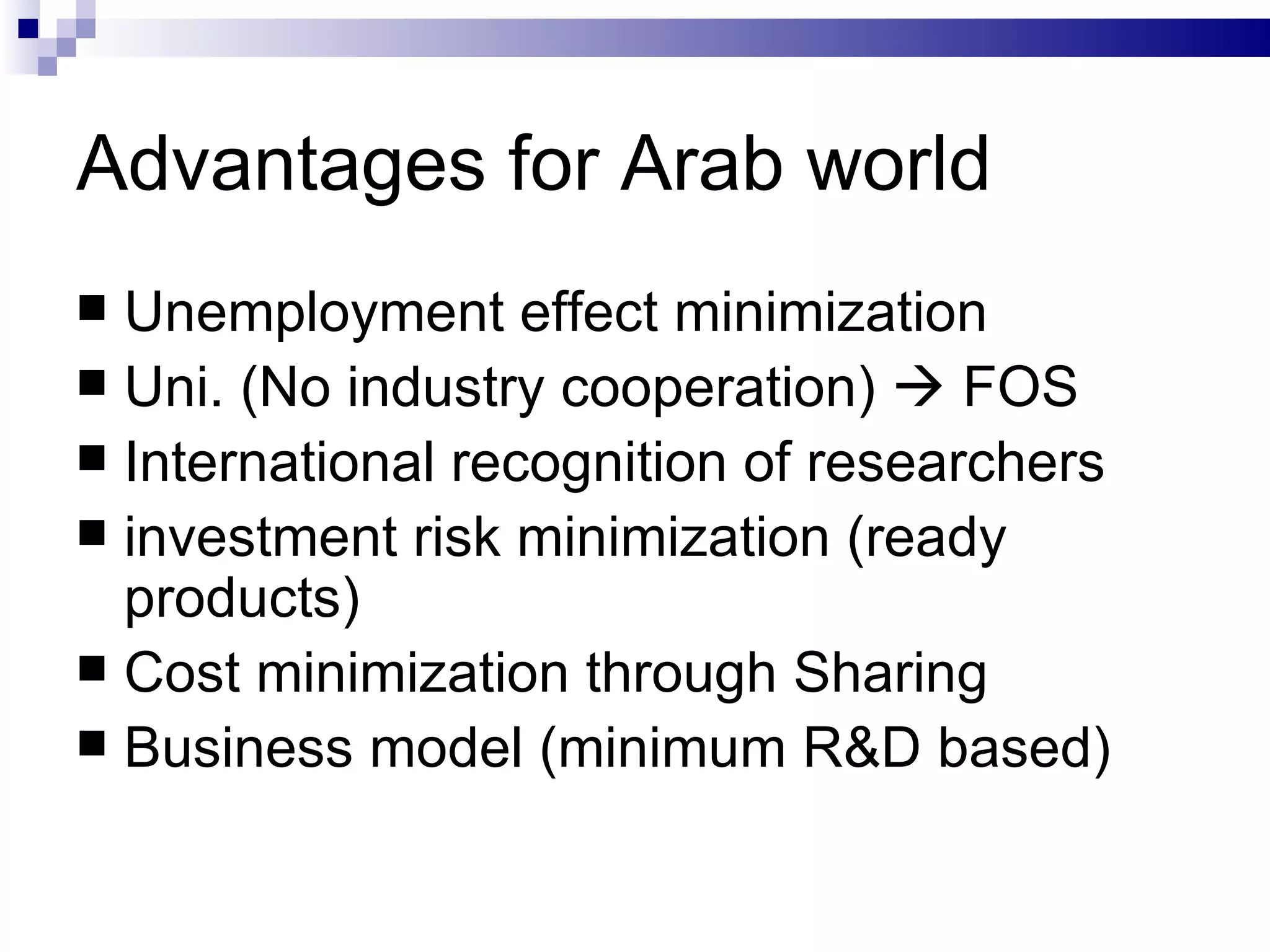
Advantages for Arab world Unemployment effect minimization Uni. (No industry cooperation)    FOS International recognition of researchers investment risk minimization (ready products) Cost minimization through Sharing Business model (minimum R&D based)
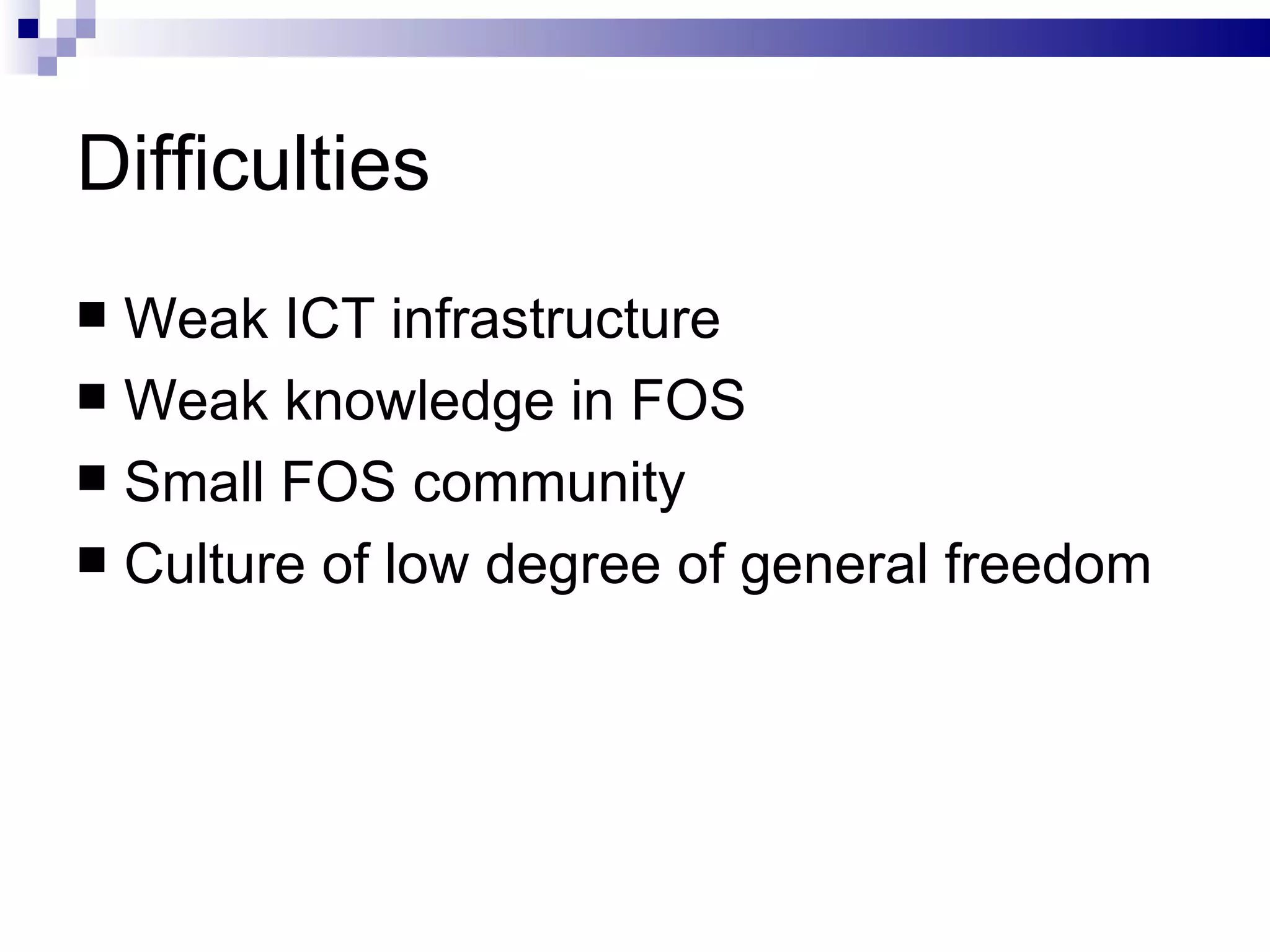
Difficulties Weak ICT infrastructure  Weak knowledge in FOS Small FOS community Culture of low degree of general freedom
Conclusions Time & speed efficiency Need for strategic plans & policies Social values in education & industry Valuing individual participations (Reward system) Freedom Sharing
Thanks for your time and interest

Free Open Source as Technology Transfer Tool in the Arab world

  • 1.
    Free Open Sourceas Technology Transfer tool in the Arab world Jamil Khatib
  • 2.
    Contents Introduction TechnologyTransfer (TT) Free Open Source (FOS) FOS TT Model FOS TT in the Arab world Conclusions/Recommendations
  • 3.
  • 4.
    Arab world InnovationSystem Source: multiple sources available in the text
  • 5.
    Major Problems Absenceof National ICT R&D funding Technology industry based on import & use (No development) Lack of links between Research/Education and industry Brain Drain
  • 6.
    Core Questions Thestudy will discuss the Effectiveness of FOS related processes to improve the cooperation between the industry and Research institutes in the Arab world What can be learned from FOS for technology transfer in the Arab world?
  • 7.
    Contents Introduction TechnologyTransfer (TT) Free Open Source (FOS) FOS TT Model FOS TT in the Arab world Conclusions/Recommendations
  • 8.
    Technology Transfer (TT)“ The conventional conception of technology transfer is that it is a processes through which the results of basic and applied research are put into use by receptors” (Rogers, 2003, p.150) TT main Factors Industry Science Relation Knowledge and Know-how component Multi-way of information flow Industry ↔ Research
  • 9.
    Approaches Source: (OECD,2000,p.165)“ Innovation and transfer are recognized to be complex social activities with communication processes at the core of them” (Hodgson, 2002, p.1).
  • 10.
    Some TT Measures/ effectiveness Shared licenses, publications & contracts Clear rewards system for cooperation Direct Contact with knowledge holders
  • 11.
    Contents Introduction TechnologyTransfer (TT) Free Open Source (FOS) FOS TT Model FOS TT in the Arab world Conclusions/Recommendations
  • 12.
    FOS (Software) philosophyCheap software + community of volunteers Freedom to Use Redistribute Information Access (open source code) Develop, Modify and Improve Joining/leaving the development Source FSF and OSI
  • 13.
    FOS characteristics FOSmodels Software Electronics Hardware Contents Social activities with sharing culture Decentralized Development Users’ feedback integrity IP rights  Copyright
  • 14.
    Community Internet basedNetwork of developers & users Common interest Users are co-developers and testers Informal and lightweight management
  • 15.
    FOS Process characteristicsRelease early and often Transparency & Trust Shared testing and development Feedback and discussion (users and developers)
  • 16.
    Evaluation Development vs.Users Observability Indicators Project completion Size and shape of the community Social trust building Community Knowledge creation Interaction (Bugs reporting and fixes)
  • 17.
    Motivations / Internalfactors Knowledge sharing Recognition among peers Learning and skills development Self satisfaction and fulfillment through achievments
  • 18.
    Motivations / Externalincentives Governments Costs control Free access to new information Developers Increase personal value (self marketing) Better future positions
  • 19.
    Motivations / Externalincentives Industry User Involvement in project definition Cost reduction  (R&D and support) Direct Channels with users Access to external knowledge and skills Special Business models
  • 20.
    Contents Introduction TechnologyTransfer (TT) Free Open Source (FOS) FOS TT Model FOS TT in the Arab world Conclusions/Recommendations
  • 21.
    “ A substantialpart of technology transfer occurs outside the technology transfer market itself. That is technical knowledge spreads internationally by noncommercial forms means, and it may even be transmitted free of charge .” (UNIDO, 1996, p.21)
  • 22.
    FOS TT sharedconcepts TT FOS Knowledge movement Main component Motivator Direct interaction Effective TT Development Style Free info access Speed up Main concept Feedback/ multi-way Needed Within community
  • 23.
    TT FOS AdoptionDirect FOS adoption Common research problem for large participants Common communication infrastructure Open membership (all levels) Early release/share of information/results
  • 24.
    Advantages & incentivesEarly publication with commercialization More information for startups Smaller Firms Resource sharing
  • 25.
    Measures Diversity ofparticipants Community size Size and quality of exchanged information Knowledge created
  • 26.
    Contents Introduction TechnologyTransfer (TT) Free Open Source (FOS) FOS TT Model FOS TT in the Arab world Conclusions/Recommendations
  • 27.
    FOS in theArab world Still in infancy stage Small community Focus on use and Translation not development No clear national strategies for FOS Lack of promotion to FOS products Lack of knowledge of existence
  • 28.
    Arab world TTNo (weak) links between industry & uni. Curricula based on international unis. Researches based on personal objectives Weak research cooperation with outside
  • 29.
    FOS developing countriesLocal research and innovation promotion No reliance on external support or fund New sources of information Leverage the local skills Minimize investment risks (Dravis,2003, pp.20–22)
  • 30.
    FOS TT AdvantagesLow cost tool No need for special Institute Transaction cost Short adoption time Informal communication/ No bureaucracy Wider network of knowledge sources Brain Drain effect minimization
  • 31.
    Advantages for Arabworld Unemployment effect minimization Uni. (No industry cooperation)  FOS International recognition of researchers investment risk minimization (ready products) Cost minimization through Sharing Business model (minimum R&D based)
  • 32.
    Difficulties Weak ICTinfrastructure Weak knowledge in FOS Small FOS community Culture of low degree of general freedom
  • 33.
    Conclusions Time &speed efficiency Need for strategic plans & policies Social values in education & industry Valuing individual participations (Reward system) Freedom Sharing
  • 34.
    Thanks for yourtime and interest