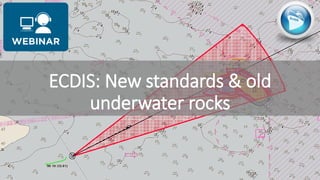
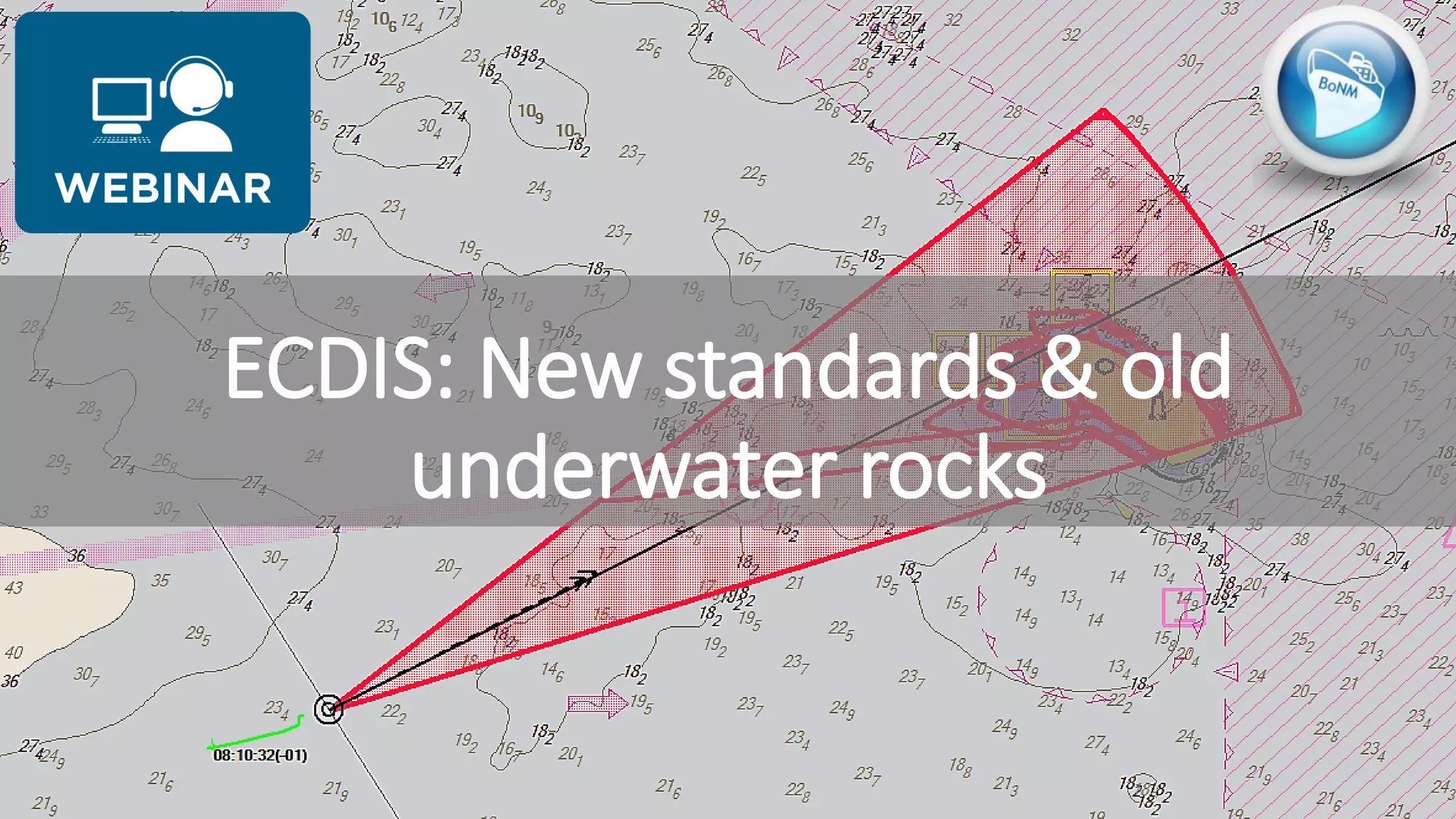
ECDIS: New standards & old
underwater rocks
Tokyo and the Paris (MoU) on PSC joint Concentrated
Inspection Campaign (CIC) on SAFETY OF NAVIGATION
• This inspection campaign will be held for three months, commencing from
1 September 2017 and ending 30 November 2017. A ship will only be
subject to one inspection under this CIC during the period of the
campaign.
• Port State Control Officers (PSCOs) will use a list of 12 questions to assure
that navigation equipment carried onboard complies with the relevant
statutory certificates, the master and navigation officers are qualified and
familiar with operation of bridge equipment, especially ECDIS, and that
navigation equipment is properly maintained and functioning.
ECDIS Carriage Requirements
•SOLAS CH5-REG19:
“.4 nautical charts and nautical publications to plan and display the ship's route for the
intended voyage and to plot and monitor positions throughout the voyage. An electronic
chart display and information system (ECDIS) is also accepted as meeting the chart carriage
requirements of this subparagraph. Ships to which paragraph 2.10 applies shall comply
with the carriage requirements for ECDIS detailed therein;
.5 back-up arrangements to meet the functional requirements of subparagraph .4, if this
function is partly or fully fulfilled by electronic means;**”
** Refer to appendix 6, Back-up requirements of Performance standards for electronic chart display and information systems
(ECDIS) (resolution A.817(19), as amended). An appropriate folio of paper nautical charts may be used as a back-up
arrangement for ECDIS. Other back-up arrangements for ECDIS are acceptable.
ECIDS standards
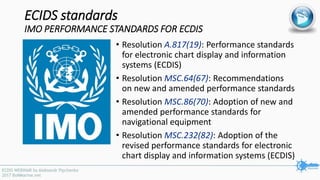
IMO PERFORMANCE STANDARDS FOR ECDIS
• Resolution A.817(19): Performance standards
for electronic chart display and information
systems (ECDIS)
• Resolution MSC.64(67): Recommendations
on new and amended performance standards
• Resolution MSC.86(70): Adoption of new and
amended performance standards for
navigational equipment
• Resolution MSC.232(82): Adoption of the
revised performance standards for electronic
chart display and information systems (ECDIS)
ECIDS standards
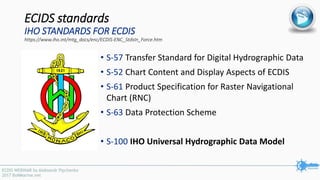
IHO STANDARDS FOR ECDIS
https://www.iho.int/mtg_docs/enc/ECDIS-ENC_StdsIn_Force.htm
• S-57 Transfer Standard for Digital Hydrographic Data
• S-52 Chart Content and Display Aspects of ECDIS
• S-61 Product Specification for Raster Navigational
Chart (RNC)
• S-63 Data Protection Scheme
• S-100 IHO Universal Hydrographic Data Model
ECIDS standards
IHO STANDARDS FOR ECDIS
https://www.iho.int/mtg_docs/enc/ECDIS-ENC_StdsIn_Force.htm
IHO S-52 Presentation Library 4.0
Set of new IHO standards address the following main areas:
• New design of Chart object info functionality (Pick report) makes access to ENC chart
information easier and understandable for user
• Reorganization of alert management resulting in less alarms being generated by ENC
objects
• Crossing navigational hazards (isolated dangers and aids to navigation) as well as areas
with special conditions (TSS, anchorage areas, etc.) will generate only visible alarms now
• Safety contours continue to create audible and visible alarms
• Standardized way of making ENC update status report will allow mariners and Port State
Control inspectors to confirm that the ENCs installed in an ECDIS are up-to-date
• Chart management and ENC status reports
• ENC test data sets
• Other modifications - new symbols, names of fairways and anchorage areas, highlighting
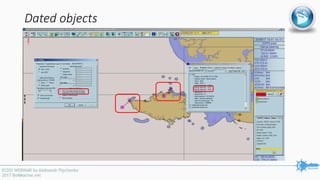
ENC updates, date dependent objects, new chart display layers, and some more
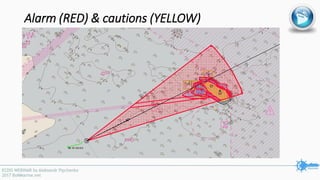
Alarm (RED) & cautions (YELLOW)
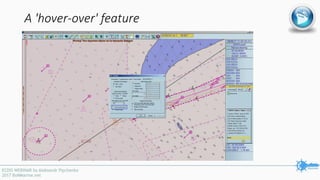
A 'hover-over' feature
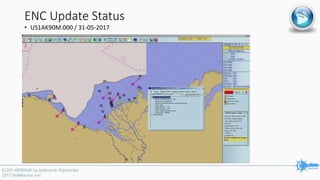
ENC Update Status
• US1AK90M.000 / 31-05-2017
Dated objects
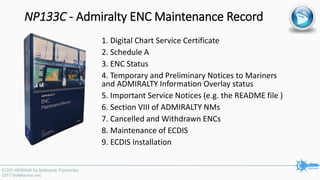
NP133C - Admiralty ENC Maintenance Record
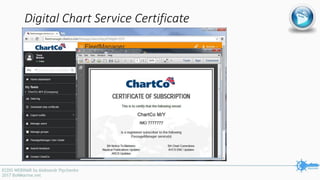
1. Digital Chart Service Certificate
2. Schedule A
3. ENC Status
4. Temporary and Preliminary Notices to Mariners
and ADMIRALTY Information Overlay status
5. Important Service Notices (e.g. the README file )
6. Section VIII of ADMIRALTY NMs
7. Cancelled and Withdrawn ENCs
8. Maintenance of ECDIS
9. ECDIS Installation
Digital Chart Service Certificate
Admiralty NTM’s and Readme.txt
https://www.admiralty.co.uk/maritime-safety-information/admiralty-
notices-to-mariners#
• Admiralty NTM ch. VIII
• ENC_Root/readme.txt
ENC Update Status
• https://www.primar.org/primar-enc-download
• https://www.admiralty.co.uk/digital-services/digital-charts/admiralty-
vector-chart-service?selectTab=Support
• NP133C - Admiralty ENC Maintenance Record
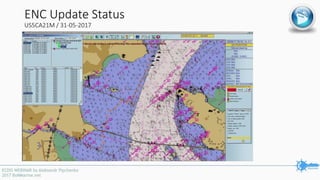
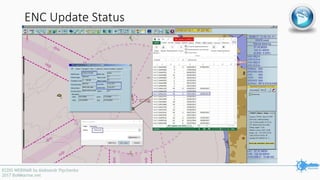
ENC Update Status
US5CA21M / 31-05-2017
ENC Update Status
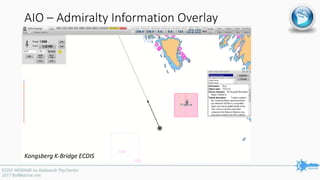
AIO – Admiralty Information Overlay
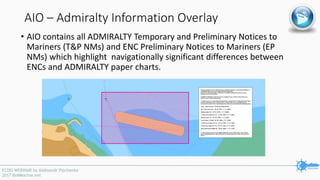
• AIO contains all ADMIRALTY Temporary and Preliminary Notices to
Mariners (T&P NMs) and ENC Preliminary Notices to Mariners (EP
NMs) which highlight navigationally significant differences between
ENCs and ADMIRALTY paper charts.
AIO – Admiralty Information Overlay
Kongsberg K-Bridge ECDIS
AIO – Admiralty Information Overlay
• Not all ENC producers include Temporary and Preliminary (T&P)
Notices to Mariners (NMs) in their ENCs. The following table lists the
confirmed status of T&P NMs in the ENCs that are available in AVCS
and the ADMIRALTY ECDIS Service.
• https://www.admiralty.co.uk/AdmiraltyDownloadMedia/AVCS/ENC-
TandP-NM-Status.pdf
Also, ECDIS has to be compatible with AIO.
What about Primar?
https://www.primar.org/t-p-notices
T&P availability list
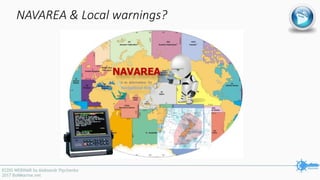
NAVAREA & Local warnings?
IMO accuracy standards
• IMO mandatory requirements to carry ECDIS & GPS (SOLAS, Ch. V,
Reg. 19)
• together with standards given in resolutions A.953(23) & A.817(19) /
MSC232 (82)
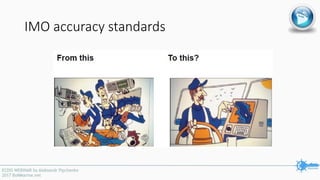
made revolution of the mind in navigation
IMO accuracy standards
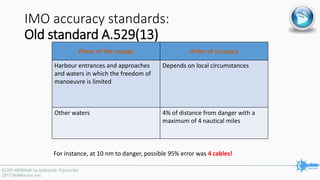
IMO accuracy standards:
Old standard А.529(13)
Phase of the voyage Order of accuracy
Harbour entrances and approaches
and waters in which the freedom of
manoeuvre is limited
Depends on local circumstances
Other waters 4% of distance from danger with a
maximum of 4 nautical miles
For instance, at 10 nm to danger, possible 95% error was 4 cables!
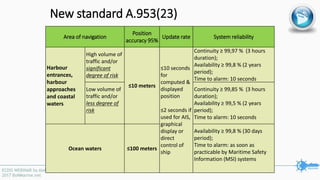
New standard А.953(23)
Area of navigation
Position
accuracy 95%
Update rate System reliability
Harbour
entrances,
harbour
approaches
and coastal
waters
High volume of
traffic and/or
significant
degree of risk
≤10 meters
≤10 seconds
for
computed &
displayed
position
≤2 seconds if
used for AIS,
graphical
display or
direct
control of
ship
Continuity ≥ 99,97 % (3 hours
duration);
Availability ≥ 99,8 % (2 years
period);
Time to alarm: 10 seconds
Low volume of
traffic and/or
less degree of
risk
Continuity ≥ 99,85 % (3 hours
duration);
Availability ≥ 99,5 % (2 years
period);
Time to alarm: 10 seconds
Ocean waters ≤100 meters
Availability ≥ 99,8 % (30 days
period);
Time to alarm: as soon as
practicable by Maritime Safety
Information (MSI) systems
STCW code, Ch. VIII standard:
• “… Fixes shall be taken at frequent intervals, and shall
be carried out by more than one method whenever
circumstances allow. When using ECDIS, appropriate
usage code (scale) electronic navigational charts shall
be used and the ship’s position shall be checked by an
independent means of position fixing at appropriate
intervals.”
Analysis of chart information
• Before using a chart to plan or navigate a passage, mariners should
make themselves aware of the quality of the survey data that has
been used to place the soundings and contours on the chart, since
not all sea areas have been surveyed to modern standards or even
systematically surveyed at all.
Analysis of chart information
• Indeed large areas of sea, especially in offshore areas, have never
been systematically surveyed to any standard.
• The chart will have been compiled from the best data available but
this does not mean that shoal areas dangerous to navigation will
not exist.
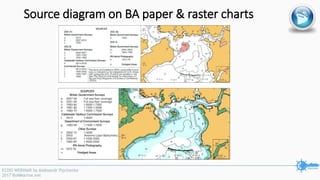
Source diagram on BA paper & raster charts
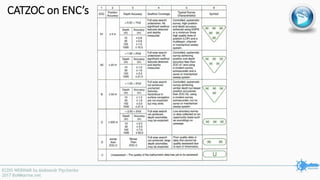
CATZOC on ENC’s
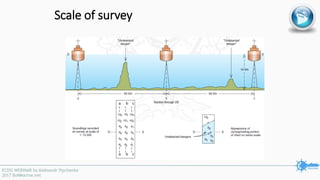
Scale of survey
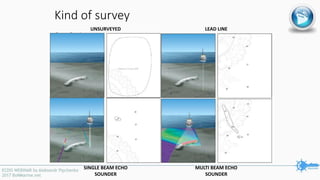
Kind of survey
UNSURVEYED LEAD LINE
SINGLE BEAM ECHO
SOUNDER
MULTI BEAM ECHO
SOUNDER
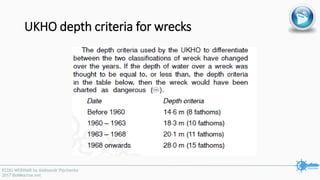
UKHO depth criteria for wrecks
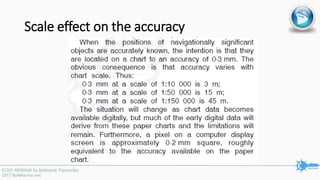
Scale effect on the accuracy
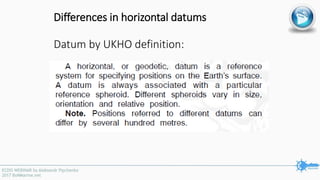
Differences in horizontal datums
Datum by UKHO definition:
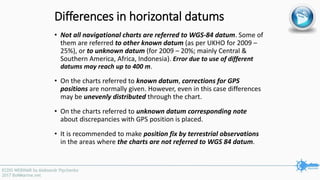
Differences in horizontal datums
• Not all navigational charts are referred to WGS-84 datum. Some of
them are referred to other known datum (as per UKHO for 2009 –
25%), or to unknown datum (for 2009 – 20%; mainly Central &
Southern America, Africa, Indonesia). Error due to use of different
datums may reach up to 400 m.
• On the charts referred to known datum, corrections for GPS
positions are normally given. However, even in this case differences
may be unevenly distributed through the chart.
• On the charts referred to unknown datum corresponding note
about discrepancies with GPS position is placed.
• It is recommended to make position fix by terrestrial observations
in the areas where the charts are not referred to WGS 84 datum.
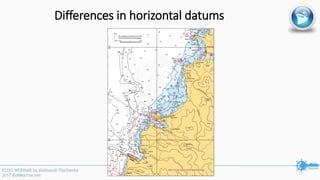
Differences in horizontal datums
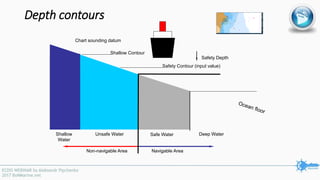
Depth contours
Chart sounding datum
Shallow Contour
Safety Contour (input value)
Safety Depth
Shallow
Water
Unsafe Water Deep Water
Navigable AreaNon-navigable Area
Safe Water
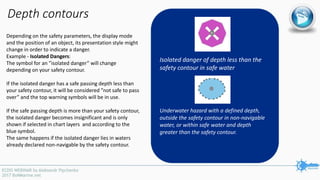
Depth contours
Depending on the safety parameters, the display mode
and the position of an object, its presentation style might
change in order to indicate a danger.
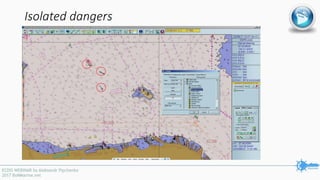
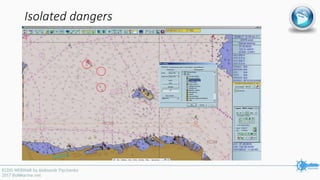
Example - Isolated Dangers:
The symbol for an ”isolated danger” will change
depending on your safety contour.
If the isolated danger has a safe passing depth less than
your safety contour, it will be considered ”not safe to pass
over” and the top warning symbols will be in use.
If the safe passing depth is more than your safety contour,
the isolated danger becomes insignificant and is only
shown if selected in chart layers and according to the
blue symbol.
The same happens if the isolated danger lies in waters
already declared non-navigable by the safety contour.
Isolated danger of depth less than the
safety contour in safe water
Underwater hazard with a defined depth,
outside the safety contour in non-navigable
water, or within safe water and depth
greater than the safety contour.
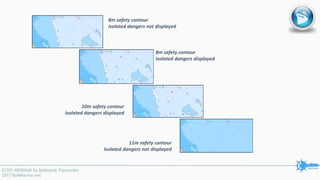
8m safety contour
Isolated dangers not displayed
8m safety contour
Isolated dangers displayed
10m safety contour
Isolated dangers displayed
11m safety contour
Isolated dangers not displayed
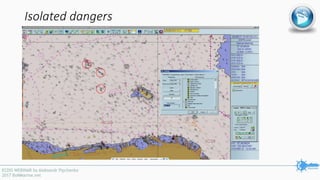
Isolated dangers
Isolated dangers
Isolated dangers
SCAMIN
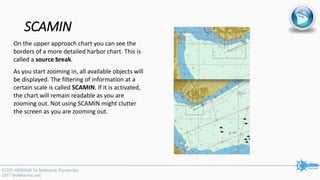
On the upper approach chart you can see the
borders of a more detailed harbor chart. This is
called a source break.
As you start zooming in, all available objects will
be displayed. The filtering of information at a
certain scale is called SCAMIN. If it is activated,
the chart will remain readable as you are
zooming out. Not using SCAMIN might clutter
the screen as you are zooming out.
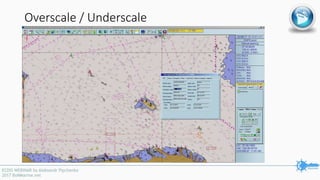
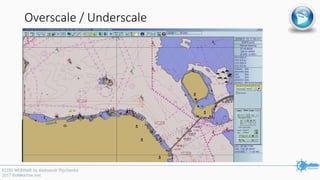
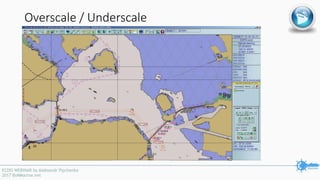
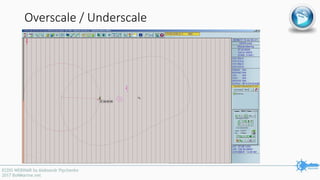
Overscale and underscale
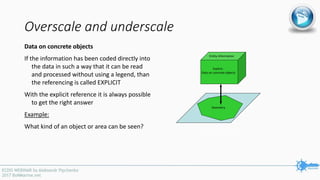
Data on concrete objects
If the information has been coded directly into
the data in such a way that it can be read
and processed without using a legend, than
the referencing is called EXPLICIT
With the explicit reference it is always possible
to get the right answer
Example:
What kind of an object or area can be seen?
Entity Information
Explicit :
Data on concrete objects
Geometry
Explicit :
Location and coordinates data
Overscale / Underscale
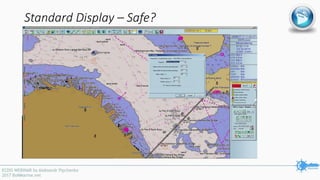
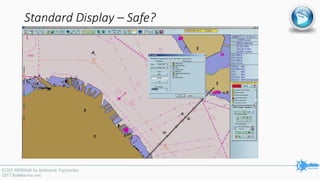
Standard Display – Safe?
IMO MSC 232(82) 3.4 :
“Standard Display is the display mode intended to be used as a
minimum during route planning and route monitoring.”
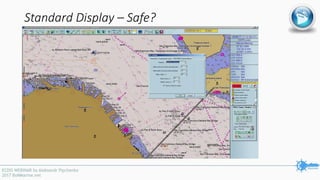
Standard Display – Safe?
IMO MSC 232(82) 3.4 :
“Standard display consisting of:
.1 display base
.2 drying line
.3 buoys, beacons, other aids to navigation and fixed structures
.4 boundaries of fairways, channels, etc.
.5 visual and radar conspicuous features
.6 prohibited and restricted areas
.7 chart scale boundaries
.8 indication of cautionary notes
.9 ships’ routeing systems and ferry routes
.10 archipelagic sea lanes.”
Standard Display – Safe?
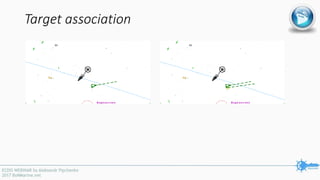
Target association
Key4Mate ECDIS sources
http://key4mate.com/tags/ecdis
Книга: Есть вопросы по ECDISу
Автор: Евгений Богаченко
BoNMarine.net
• E-learning platform for mariners
• Tests and courses
• Blog, news and events
facebook.com/bonmarine.net
Instagram.com/bon_marine

ECDIS: New standards & old underwater rocks

  • 1.
    ECDIS: New standards& old underwater rocks
  • 2.
    Tokyo and theParis (MoU) on PSC joint Concentrated Inspection Campaign (CIC) on SAFETY OF NAVIGATION • This inspection campaign will be held for three months, commencing from 1 September 2017 and ending 30 November 2017. A ship will only be subject to one inspection under this CIC during the period of the campaign. • Port State Control Officers (PSCOs) will use a list of 12 questions to assure that navigation equipment carried onboard complies with the relevant statutory certificates, the master and navigation officers are qualified and familiar with operation of bridge equipment, especially ECDIS, and that navigation equipment is properly maintained and functioning.
  • 3.
    ECDIS Carriage Requirements •SOLASCH5-REG19: “.4 nautical charts and nautical publications to plan and display the ship's route for the intended voyage and to plot and monitor positions throughout the voyage. An electronic chart display and information system (ECDIS) is also accepted as meeting the chart carriage requirements of this subparagraph. Ships to which paragraph 2.10 applies shall comply with the carriage requirements for ECDIS detailed therein; .5 back-up arrangements to meet the functional requirements of subparagraph .4, if this function is partly or fully fulfilled by electronic means;**” ** Refer to appendix 6, Back-up requirements of Performance standards for electronic chart display and information systems (ECDIS) (resolution A.817(19), as amended). An appropriate folio of paper nautical charts may be used as a back-up arrangement for ECDIS. Other back-up arrangements for ECDIS are acceptable.
  • 5.
    ECIDS standards IMO PERFORMANCESTANDARDS FOR ECDIS • Resolution A.817(19): Performance standards for electronic chart display and information systems (ECDIS) • Resolution MSC.64(67): Recommendations on new and amended performance standards • Resolution MSC.86(70): Adoption of new and amended performance standards for navigational equipment • Resolution MSC.232(82): Adoption of the revised performance standards for electronic chart display and information systems (ECDIS)
  • 6.
    ECIDS standards IHO STANDARDSFOR ECDIS https://www.iho.int/mtg_docs/enc/ECDIS-ENC_StdsIn_Force.htm • S-57 Transfer Standard for Digital Hydrographic Data • S-52 Chart Content and Display Aspects of ECDIS • S-61 Product Specification for Raster Navigational Chart (RNC) • S-63 Data Protection Scheme • S-100 IHO Universal Hydrographic Data Model
  • 7.
    ECIDS standards IHO STANDARDSFOR ECDIS https://www.iho.int/mtg_docs/enc/ECDIS-ENC_StdsIn_Force.htm
  • 8.
    IHO S-52 PresentationLibrary 4.0 Set of new IHO standards address the following main areas: • New design of Chart object info functionality (Pick report) makes access to ENC chart information easier and understandable for user • Reorganization of alert management resulting in less alarms being generated by ENC objects • Crossing navigational hazards (isolated dangers and aids to navigation) as well as areas with special conditions (TSS, anchorage areas, etc.) will generate only visible alarms now • Safety contours continue to create audible and visible alarms • Standardized way of making ENC update status report will allow mariners and Port State Control inspectors to confirm that the ENCs installed in an ECDIS are up-to-date • Chart management and ENC status reports • ENC test data sets • Other modifications - new symbols, names of fairways and anchorage areas, highlighting ENC updates, date dependent objects, new chart display layers, and some more
  • 9.
    Alarm (RED) &cautions (YELLOW)
  • 10.
  • 11.
    ENC Update Status •US1AK90M.000 / 31-05-2017
  • 12.
  • 13.
    NP133C - AdmiraltyENC Maintenance Record 1. Digital Chart Service Certificate 2. Schedule A 3. ENC Status 4. Temporary and Preliminary Notices to Mariners and ADMIRALTY Information Overlay status 5. Important Service Notices (e.g. the README file ) 6. Section VIII of ADMIRALTY NMs 7. Cancelled and Withdrawn ENCs 8. Maintenance of ECDIS 9. ECDIS Installation
  • 14.
  • 15.
    Admiralty NTM’s andReadme.txt https://www.admiralty.co.uk/maritime-safety-information/admiralty- notices-to-mariners# • Admiralty NTM ch. VIII • ENC_Root/readme.txt
  • 16.
    ENC Update Status •https://www.primar.org/primar-enc-download • https://www.admiralty.co.uk/digital-services/digital-charts/admiralty- vector-chart-service?selectTab=Support • NP133C - Admiralty ENC Maintenance Record
  • 17.
  • 18.
  • 19.
    AIO – AdmiraltyInformation Overlay • AIO contains all ADMIRALTY Temporary and Preliminary Notices to Mariners (T&P NMs) and ENC Preliminary Notices to Mariners (EP NMs) which highlight navigationally significant differences between ENCs and ADMIRALTY paper charts.
  • 20.
    AIO – AdmiraltyInformation Overlay Kongsberg K-Bridge ECDIS
  • 21.
    AIO – AdmiraltyInformation Overlay • Not all ENC producers include Temporary and Preliminary (T&P) Notices to Mariners (NMs) in their ENCs. The following table lists the confirmed status of T&P NMs in the ENCs that are available in AVCS and the ADMIRALTY ECDIS Service. • https://www.admiralty.co.uk/AdmiraltyDownloadMedia/AVCS/ENC- TandP-NM-Status.pdf Also, ECDIS has to be compatible with AIO.
  • 22.
  • 23.
    NAVAREA & Localwarnings?
  • 24.
    IMO accuracy standards •IMO mandatory requirements to carry ECDIS & GPS (SOLAS, Ch. V, Reg. 19) • together with standards given in resolutions A.953(23) & A.817(19) / MSC232 (82) made revolution of the mind in navigation
  • 25.
  • 26.
    IMO accuracy standards: Oldstandard А.529(13) Phase of the voyage Order of accuracy Harbour entrances and approaches and waters in which the freedom of manoeuvre is limited Depends on local circumstances Other waters 4% of distance from danger with a maximum of 4 nautical miles For instance, at 10 nm to danger, possible 95% error was 4 cables!
  • 27.
    New standard А.953(23) Areaof navigation Position accuracy 95% Update rate System reliability Harbour entrances, harbour approaches and coastal waters High volume of traffic and/or significant degree of risk ≤10 meters ≤10 seconds for computed & displayed position ≤2 seconds if used for AIS, graphical display or direct control of ship Continuity ≥ 99,97 % (3 hours duration); Availability ≥ 99,8 % (2 years period); Time to alarm: 10 seconds Low volume of traffic and/or less degree of risk Continuity ≥ 99,85 % (3 hours duration); Availability ≥ 99,5 % (2 years period); Time to alarm: 10 seconds Ocean waters ≤100 meters Availability ≥ 99,8 % (30 days period); Time to alarm: as soon as practicable by Maritime Safety Information (MSI) systems
  • 28.
    STCW code, Ch.VIII standard: • “… Fixes shall be taken at frequent intervals, and shall be carried out by more than one method whenever circumstances allow. When using ECDIS, appropriate usage code (scale) electronic navigational charts shall be used and the ship’s position shall be checked by an independent means of position fixing at appropriate intervals.”
  • 29.
    Analysis of chartinformation • Before using a chart to plan or navigate a passage, mariners should make themselves aware of the quality of the survey data that has been used to place the soundings and contours on the chart, since not all sea areas have been surveyed to modern standards or even systematically surveyed at all.
  • 30.
    Analysis of chartinformation • Indeed large areas of sea, especially in offshore areas, have never been systematically surveyed to any standard. • The chart will have been compiled from the best data available but this does not mean that shoal areas dangerous to navigation will not exist.
  • 31.
    Source diagram onBA paper & raster charts
  • 32.
  • 33.
  • 34.
    Kind of survey UNSURVEYEDLEAD LINE SINGLE BEAM ECHO SOUNDER MULTI BEAM ECHO SOUNDER
  • 35.
  • 36.
    Scale effect onthe accuracy
  • 37.
    Differences in horizontaldatums Datum by UKHO definition:
  • 38.
    Differences in horizontaldatums • Not all navigational charts are referred to WGS-84 datum. Some of them are referred to other known datum (as per UKHO for 2009 – 25%), or to unknown datum (for 2009 – 20%; mainly Central & Southern America, Africa, Indonesia). Error due to use of different datums may reach up to 400 m. • On the charts referred to known datum, corrections for GPS positions are normally given. However, even in this case differences may be unevenly distributed through the chart. • On the charts referred to unknown datum corresponding note about discrepancies with GPS position is placed. • It is recommended to make position fix by terrestrial observations in the areas where the charts are not referred to WGS 84 datum.
  • 39.
  • 40.
    Depth contours Chart soundingdatum Shallow Contour Safety Contour (input value) Safety Depth Shallow Water Unsafe Water Deep Water Navigable AreaNon-navigable Area Safe Water
  • 41.
    Depth contours Depending onthe safety parameters, the display mode and the position of an object, its presentation style might change in order to indicate a danger. Example - Isolated Dangers: The symbol for an ”isolated danger” will change depending on your safety contour. If the isolated danger has a safe passing depth less than your safety contour, it will be considered ”not safe to pass over” and the top warning symbols will be in use. If the safe passing depth is more than your safety contour, the isolated danger becomes insignificant and is only shown if selected in chart layers and according to the blue symbol. The same happens if the isolated danger lies in waters already declared non-navigable by the safety contour. Isolated danger of depth less than the safety contour in safe water Underwater hazard with a defined depth, outside the safety contour in non-navigable water, or within safe water and depth greater than the safety contour.
  • 42.
    8m safety contour Isolateddangers not displayed 8m safety contour Isolated dangers displayed 10m safety contour Isolated dangers displayed 11m safety contour Isolated dangers not displayed
  • 43.
  • 44.
  • 45.
  • 46.
    SCAMIN On the upperapproach chart you can see the borders of a more detailed harbor chart. This is called a source break. As you start zooming in, all available objects will be displayed. The filtering of information at a certain scale is called SCAMIN. If it is activated, the chart will remain readable as you are zooming out. Not using SCAMIN might clutter the screen as you are zooming out.
  • 47.
    Overscale and underscale Dataon concrete objects If the information has been coded directly into the data in such a way that it can be read and processed without using a legend, than the referencing is called EXPLICIT With the explicit reference it is always possible to get the right answer Example: What kind of an object or area can be seen? Entity Information Explicit : Data on concrete objects Geometry Explicit : Location and coordinates data
  • 48.
  • 49.
  • 50.
  • 51.
  • 52.
    Standard Display –Safe? IMO MSC 232(82) 3.4 : “Standard Display is the display mode intended to be used as a minimum during route planning and route monitoring.”
  • 53.
    Standard Display –Safe? IMO MSC 232(82) 3.4 : “Standard display consisting of: .1 display base .2 drying line .3 buoys, beacons, other aids to navigation and fixed structures .4 boundaries of fairways, channels, etc. .5 visual and radar conspicuous features .6 prohibited and restricted areas .7 chart scale boundaries .8 indication of cautionary notes .9 ships’ routeing systems and ferry routes .10 archipelagic sea lanes.”
  • 54.
  • 55.
  • 56.
  • 57.
  • 58.
    Key4Mate ECDIS sources http://key4mate.com/tags/ecdis Книга:Есть вопросы по ECDISу Автор: Евгений Богаченко
  • 59.
    BoNMarine.net • E-learning platformfor mariners • Tests and courses • Blog, news and events facebook.com/bonmarine.net Instagram.com/bon_marine