IALA Buoyage Systemand Visual Aids to Navigation 
by Aleksandr D. PipchenkoPROMO VERSION FIND 55 SLIDES COMPLETE VERSION AT 
www.key4mate.com.ua
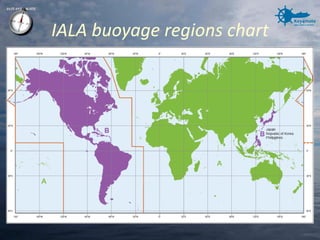
IALA buoyage regions chart
Which types of marks are provided by the system? 
Six types of marks provided by the system: 
•Lateral Marks: indicate the edge of a channel 
•Cardinal Marks: indicate the position of a hazard and the direction of safe water 
•Isolated Danger Marks: indicate a hazard to shipping 
•Safe Water Marks:indicate the end of a channel and deep, safe water is ahead 
•Special Marks: indicate an area or feature such as speed restrictions or mooring area 
•Emergency Wreck Marking : to indicate a wreck which is not fully surveyed 
Lateral Marks are the only marks that differ by region, the other four marks are common to both Region A and Region B.
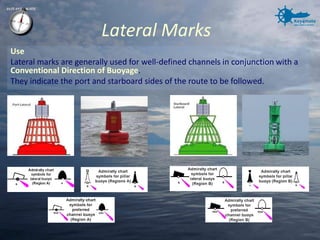
Lateral Marks 
Use 
Lateral marks are generally used for well-defined channels in conjunction with a Conventional Direction of Buoyage. 
They indicate the port and starboard sides of the route to be followed.
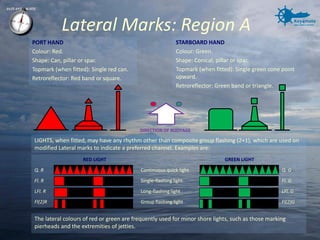
Lateral Marks: Region A 
PORT HAND 
Colour: Red. 
Shape: Can, pillar or spar. 
Topmark(when fitted): Single red can. 
Retroreflector: Red band or square. 
STARBOARD HAND 
Colour: Green. 
Shape: Conical, pillar or spar. 
Topmark(when fitted): Single green cone point upward. 
Retroreflector: Green band or triangle. 
DIRECTION OF BUOYAGE 
LIGHTS, when fitted, may have any rhythm other than composite group flashing (2+1), which are used on modified Lateral marks to indicate a preferred channel. Examples are: 
RED LIGHT 
GREENLIGHT 
Q.R 
Continuous quick light 
Q.G 
Fl. R 
Single-flashing light 
Fl. G 
LFl.R 
Long-flashing light 
LFl.G 
Fl(2)R 
Group flashing light 
Fl(2)G 
The lateral coloursof red or green are frequently used for minor shore lights, such as those marking pierheadsand the extremities of jetties.
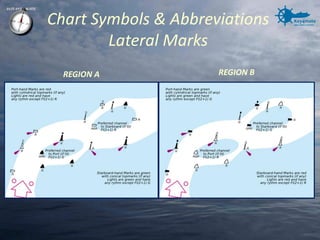
Chart Symbols & AbbreviationsLateral Marks 
REGION A 
REGION B
Safe Water Mark 
Safe Water Marks may be used mid-channel, as a centrelineor at the point where land is reached. These buoys (as the name suggests) indicate the presence of safe, navigable water all around the buoy. They may also indicate the best point of passage under a fixed bridge. 
RETROREFLECTOR 
Light (when fitted): White, Isophase, or Occulting, or Long-Flashing every 10 seconds, or Morse Code (A) 
Colour: Red and White 
Shape: Pillar or spar 
Topmark: Red sphere 
Retroreflector: Red and White 
OR 
Iso 
Oc 
LFl.10s 
Mo(A) 
UNLIT MARKS 
LIGHTED MARKS 
USEFUL TIP. SAFE WATER BUOYS OFTEN INDICATE BEGINNING OF THE CHANNEL. SO-CALLED “SEA BUOY”
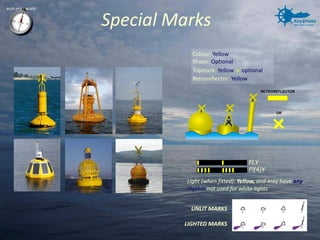
Special Marks 
RETROREFLECTOR 
Light (when fitted): Yellow, and may have anyrhythmnot used for white lights 
Colour: Yellow 
Shape: Optional 
Topmark: Yellow ×optional 
Retroreflector: Yellow 
OR 
Fl.Y 
Fl(4)Y 
UNLIT MARKS 
LIGHTED MARKS
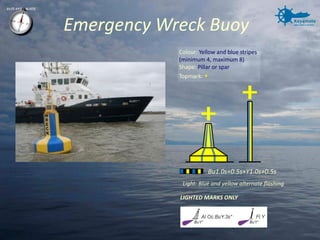
Emergency Wreck Buoy 
Bu1.0s+0.5s+Y1.0s+0.5s 
Light: Blue and yellow alternate flashing 
Colour: Yellow and blue stripes (minimum 4, maximum 8) 
Shape: Pillar or spar 
Topmark: + 
LIGHTED MARKS ONLY
Buoys and Beacons 
There is some great difference between buoys and beacons. 
Beacons are fixed structures, driven into the sea bed or standing on concrete footings in shallow water. 
Buoys are floating chambers of various shapes, anchored to the seabed where it is too deep for a fixed structure. 
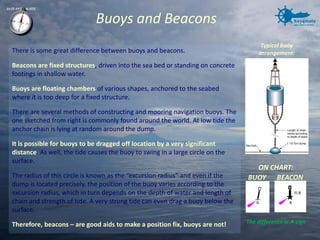
There are several methods of constructing and mooring navigation buoys. The one sketched from right is commonly found around the world. At low tide the anchor chain is lying at random around the dump. 
It is possible for buoys to be dragged off location by a very significant distance. As well, the tide causes the buoy to swing in a large circle on the surface. 
The radius of this circle is known as the “excursion radius” and even if the dump is located precisely, the position of the buoy varies according to the excursion radius, which in turn depends on the depth of water and length of chain and strength of tide. A very strong tide can even drag a buoy below the surface. 
Therefore, beacons –are good aids to make a position fix, buoys are not! 
ON CHART: 
R 
Fl.R 
The difference is sign 
BUOY 
BEACON 
G 
Typical buoy arrangement:
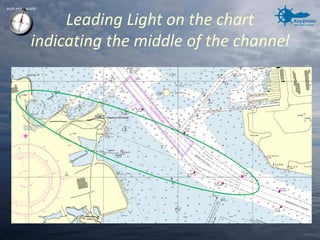
Leading Light on the chartindicating the middle of the channel
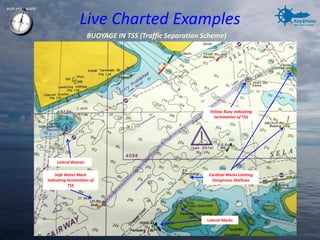
Live Charted Examples 
BUOYAGE IN TSS (Traffic Separation Scheme) 
Safe Water Mark indicating termination of TSS 
Lateral Beacon 
Yellow Buoy indicating termination of TSS 
Cardinal Marks Limiting Dangerous Shallows 
Lateral Marks
THANKYOU FOR ATTENTION! Bon Voyage!

IALA Buoyage System and Visual Aids to Navigation

  • 1.
    IALA Buoyage SystemandVisual Aids to Navigation by Aleksandr D. PipchenkoPROMO VERSION FIND 55 SLIDES COMPLETE VERSION AT www.key4mate.com.ua
  • 2.
  • 3.
    Which types ofmarks are provided by the system? Six types of marks provided by the system: •Lateral Marks: indicate the edge of a channel •Cardinal Marks: indicate the position of a hazard and the direction of safe water •Isolated Danger Marks: indicate a hazard to shipping •Safe Water Marks:indicate the end of a channel and deep, safe water is ahead •Special Marks: indicate an area or feature such as speed restrictions or mooring area •Emergency Wreck Marking : to indicate a wreck which is not fully surveyed Lateral Marks are the only marks that differ by region, the other four marks are common to both Region A and Region B.
  • 4.
    Lateral Marks Use Lateral marks are generally used for well-defined channels in conjunction with a Conventional Direction of Buoyage. They indicate the port and starboard sides of the route to be followed.
  • 5.
    Lateral Marks: RegionA PORT HAND Colour: Red. Shape: Can, pillar or spar. Topmark(when fitted): Single red can. Retroreflector: Red band or square. STARBOARD HAND Colour: Green. Shape: Conical, pillar or spar. Topmark(when fitted): Single green cone point upward. Retroreflector: Green band or triangle. DIRECTION OF BUOYAGE LIGHTS, when fitted, may have any rhythm other than composite group flashing (2+1), which are used on modified Lateral marks to indicate a preferred channel. Examples are: RED LIGHT GREENLIGHT Q.R Continuous quick light Q.G Fl. R Single-flashing light Fl. G LFl.R Long-flashing light LFl.G Fl(2)R Group flashing light Fl(2)G The lateral coloursof red or green are frequently used for minor shore lights, such as those marking pierheadsand the extremities of jetties.
  • 6.
    Chart Symbols &AbbreviationsLateral Marks REGION A REGION B
  • 7.
    Safe Water Mark Safe Water Marks may be used mid-channel, as a centrelineor at the point where land is reached. These buoys (as the name suggests) indicate the presence of safe, navigable water all around the buoy. They may also indicate the best point of passage under a fixed bridge. RETROREFLECTOR Light (when fitted): White, Isophase, or Occulting, or Long-Flashing every 10 seconds, or Morse Code (A) Colour: Red and White Shape: Pillar or spar Topmark: Red sphere Retroreflector: Red and White OR Iso Oc LFl.10s Mo(A) UNLIT MARKS LIGHTED MARKS USEFUL TIP. SAFE WATER BUOYS OFTEN INDICATE BEGINNING OF THE CHANNEL. SO-CALLED “SEA BUOY”
  • 8.
    Special Marks RETROREFLECTOR Light (when fitted): Yellow, and may have anyrhythmnot used for white lights Colour: Yellow Shape: Optional Topmark: Yellow ×optional Retroreflector: Yellow OR Fl.Y Fl(4)Y UNLIT MARKS LIGHTED MARKS
  • 9.
    Emergency Wreck Buoy Bu1.0s+0.5s+Y1.0s+0.5s Light: Blue and yellow alternate flashing Colour: Yellow and blue stripes (minimum 4, maximum 8) Shape: Pillar or spar Topmark: + LIGHTED MARKS ONLY
  • 10.
    Buoys and Beacons There is some great difference between buoys and beacons. Beacons are fixed structures, driven into the sea bed or standing on concrete footings in shallow water. Buoys are floating chambers of various shapes, anchored to the seabed where it is too deep for a fixed structure. There are several methods of constructing and mooring navigation buoys. The one sketched from right is commonly found around the world. At low tide the anchor chain is lying at random around the dump. It is possible for buoys to be dragged off location by a very significant distance. As well, the tide causes the buoy to swing in a large circle on the surface. The radius of this circle is known as the “excursion radius” and even if the dump is located precisely, the position of the buoy varies according to the excursion radius, which in turn depends on the depth of water and length of chain and strength of tide. A very strong tide can even drag a buoy below the surface. Therefore, beacons –are good aids to make a position fix, buoys are not! ON CHART: R Fl.R The difference is sign BUOY BEACON G Typical buoy arrangement:
  • 11.
    Leading Light onthe chartindicating the middle of the channel
  • 12.
    Live Charted Examples BUOYAGE IN TSS (Traffic Separation Scheme) Safe Water Mark indicating termination of TSS Lateral Beacon Yellow Buoy indicating termination of TSS Cardinal Marks Limiting Dangerous Shallows Lateral Marks
  • 13.