EVALUATION


        Presented by,
        Jayshri Makwana,
        M.A- sem – 4
        Roll-14
        Dept. Of English.
Evaluation:-
          Evaluation is the systematic collection and analysis of evidence in order
to improve understanding of, and to make judgments about, the object being
evaluate. It is a learning and action- oriented management tool and organizational
process for improving both current activities and future planning, programming, and
decision- making.

             Evaluation entails consideration of the following issues : participants,
kinds of information, information collection, and of purposes of evaluation, and
analysis and interpretation of information.


Why do Evaluation?
         Because evaluation serve many purposes, before assessing a program.
Purposes of Evaluation:-

Accountability
    An important purpose of evaluation is accountability means to
demonstrate that students are learning to the standards expected of them or
programme of instruction is working the way it should be.


Summative:-
      summative is occurs at the end of an extended period of instruction; the
resulting decisions tend to have high stakes attached.

Formative :-
      There is a growing emphasis on ongoing formative evaluation for
curriculum and programme development, that the evaluation serves to
individualize the educational treatment of students to optimize their
achievement.
To make placement:-
              Another important purpose of evaluation is to
make placement, advancement, promotion or related
decision about student status in a programme, course or unit
within a course.

To guide classroom:-
              classroom based evaluation, while considered
informal relative to most programme evaluation, is taking on
increased importance as evaluation experts recognize the
importance of day to day decisions teachers make on student
learning and the effectiveness of educational programmes.
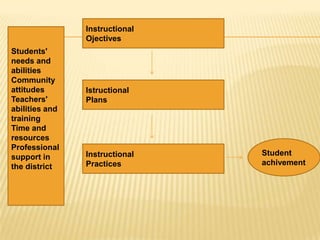
Instructional
                Ojectives
Students'
needs and
abilities
Community
attitudes       Istructional
Teachers'       Plans
abilities and
training
Time and
resources
Professional
                Instructional   Student
support in
                Practices       achivement
the district
Conclusion:
             Valuation is essential to successful education because it
forms the basis for appropriate and effective decision – making.
Evaluation in TESOL is the purposeful collection of information to
assist decision – making about teaching and learning in ESL/EFL
classrooms and programmers Classroom-based evaluation is a tool
that teachers can use to hone decision-making skills for the benefit
of students.

Ec. 402 jayshri makwana

  • 1.
    EVALUATION Presented by, Jayshri Makwana, M.A- sem – 4 Roll-14 Dept. Of English.
  • 2.
    Evaluation:- Evaluation is the systematic collection and analysis of evidence in order to improve understanding of, and to make judgments about, the object being evaluate. It is a learning and action- oriented management tool and organizational process for improving both current activities and future planning, programming, and decision- making. Evaluation entails consideration of the following issues : participants, kinds of information, information collection, and of purposes of evaluation, and analysis and interpretation of information. Why do Evaluation? Because evaluation serve many purposes, before assessing a program.
  • 3.
    Purposes of Evaluation:- Accountability An important purpose of evaluation is accountability means to demonstrate that students are learning to the standards expected of them or programme of instruction is working the way it should be. Summative:- summative is occurs at the end of an extended period of instruction; the resulting decisions tend to have high stakes attached. Formative :- There is a growing emphasis on ongoing formative evaluation for curriculum and programme development, that the evaluation serves to individualize the educational treatment of students to optimize their achievement.
  • 4.
    To make placement:- Another important purpose of evaluation is to make placement, advancement, promotion or related decision about student status in a programme, course or unit within a course. To guide classroom:- classroom based evaluation, while considered informal relative to most programme evaluation, is taking on increased importance as evaluation experts recognize the importance of day to day decisions teachers make on student learning and the effectiveness of educational programmes.
  • 5.
    Instructional Ojectives Students' needs and abilities Community attitudes Istructional Teachers' Plans abilities and training Time and resources Professional Instructional Student support in Practices achivement the district
  • 6.
    Conclusion: Valuation is essential to successful education because it forms the basis for appropriate and effective decision – making. Evaluation in TESOL is the purposeful collection of information to assist decision – making about teaching and learning in ESL/EFL classrooms and programmers Classroom-based evaluation is a tool that teachers can use to hone decision-making skills for the benefit of students.