Curriculum Mapping & Analysis:
        Basic Definitions


         Dr. Suad Alazzam
      suad [at] portlandstate.org
           © 2011 All Rights Reserved
Terminology Introduced:

- Curriculum Mapping
- Curriculum Alignment
- Vertical Curriculum Alignment
- Horizontal Curriculum Alignment
Curriculum Mapping

An ongoing process of documenting curricular data
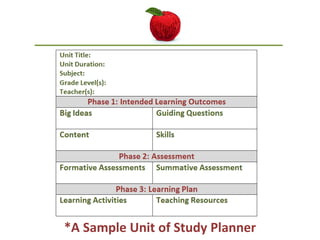
through a unit of study planner* that consists of
categories such as content, skills, assessments,
learning activities/instructional strategies, resources,
etc. Documentation of curricular data could be done
collaboratively or by individual teachers for all taught
courses in a given curricular program for the purpose
of capturing the full picture of the curriculum.
*A Sample Unit of Study Planner
Curriculum Alignment
A process of analyzing curricular data such as
content, skills, assessments, etc. to determine the
degree of congruence between the different
curricular elements and to discover gaps and
repetitions for the purpose of ensuring a high quality,
comprehensive, and integrated school or program
curriculum. Curriculum alignment could be
conducted vertically (analyzing curricular data for
one subject across grade levels) or horizontally
(analyzing curricular data for different subjects at the
same grade level).
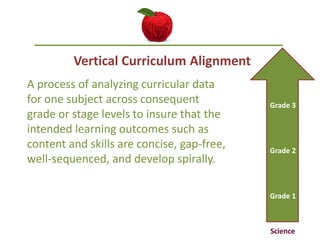
Vertical Curriculum Alignment
A process of analyzing curricular data
for one subject across consequent           Grade 3
grade or stage levels to insure that the
intended learning outcomes such as
content and skills are concise, gap-free,   Grade 2
well-sequenced, and develop spirally.

                                            Grade 1


                                            Science
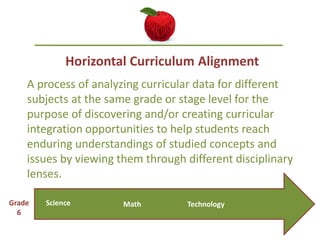
Horizontal Curriculum Alignment
    A process of analyzing curricular data for different
    subjects at the same grade or stage level for the
    purpose of discovering and/or creating curricular
    integration opportunities to help students reach
    enduring understandings of studied concepts and
    issues by viewing them through different disciplinary
    lenses.

Grade   Science        Math        Technology
  6
Thank You!
   Dr. Suad Alazzam
suad [at] portlandstate.org
     © 2011 All Rights Reserved

Curriculum Mapping & Analysis: Basic Definitions

  • 1.
    Curriculum Mapping &Analysis: Basic Definitions Dr. Suad Alazzam suad [at] portlandstate.org © 2011 All Rights Reserved
  • 2.
    Terminology Introduced: - CurriculumMapping - Curriculum Alignment - Vertical Curriculum Alignment - Horizontal Curriculum Alignment
  • 3.
    Curriculum Mapping An ongoingprocess of documenting curricular data through a unit of study planner* that consists of categories such as content, skills, assessments, learning activities/instructional strategies, resources, etc. Documentation of curricular data could be done collaboratively or by individual teachers for all taught courses in a given curricular program for the purpose of capturing the full picture of the curriculum.
  • 4.
    *A Sample Unitof Study Planner
  • 5.
    Curriculum Alignment A processof analyzing curricular data such as content, skills, assessments, etc. to determine the degree of congruence between the different curricular elements and to discover gaps and repetitions for the purpose of ensuring a high quality, comprehensive, and integrated school or program curriculum. Curriculum alignment could be conducted vertically (analyzing curricular data for one subject across grade levels) or horizontally (analyzing curricular data for different subjects at the same grade level).
  • 6.
    Vertical Curriculum Alignment Aprocess of analyzing curricular data for one subject across consequent Grade 3 grade or stage levels to insure that the intended learning outcomes such as content and skills are concise, gap-free, Grade 2 well-sequenced, and develop spirally. Grade 1 Science
  • 7.
    Horizontal Curriculum Alignment A process of analyzing curricular data for different subjects at the same grade or stage level for the purpose of discovering and/or creating curricular integration opportunities to help students reach enduring understandings of studied concepts and issues by viewing them through different disciplinary lenses. Grade Science Math Technology 6
  • 8.
    Thank You! Dr. Suad Alazzam suad [at] portlandstate.org © 2011 All Rights Reserved