

Teaching and Learning in a
Digital World
Eastern High School
Principals Roundtable
January 6th, 2012
by Jonathan P. Costa, Sr.
EDUCATION CONNECTION © Corwin Press - 2011
The Goal
To prepare
EVERY student
for learning, life,
and work
in the 21st century.
© Corwin Press - 2011
Truth # 1
The future of
learning and
work
is digital.
© Corwin Press - 2011
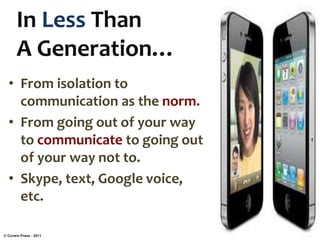
In Less Than
A Generation…
• From isolation to
communication as the norm.
• From going out of your way
to communicate to going out
of your way not to.
• Skype, text, Google voice,
etc.
© Corwin Press - 2011
The Apple
Effect
Redefining
software as
lean, focused
and task
oriented.
© Corwin Press - 2011
The Google
Effect
Driving the cost of
software down and
consumer
expectations up.
© Corwin Press - 2011
The Cloud
& Browser
The Cloud is the tool
and the browser is
the portal.
A new era of
portability and
flexibility.
© Corwin Press - 2011
Truth # 2
Limited access
equals
limited mastery.
© Corwin Press - 2011
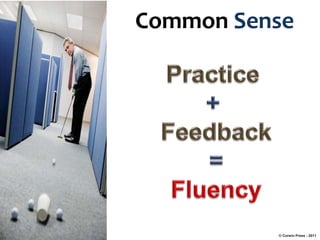
Common Sense
© Corwin Press - 2011
2011 NEASC Standards
A rating of DEFICIENT is
appropriate…
(if there are) …insufficient
opportunities for all students to
practice and achieve each of the
21st century learning
expectations.
© Corwin Press - 2011
Truth # 3
Every
printed page
is a
waste.
© Corwin Press - 2011
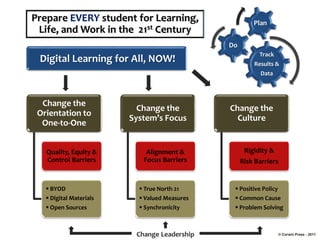
Track
Results &
Data
Do
Plan
Change the
Orientation to
One-to-One
Quality, Equity &
Control Barriers
Change the
System’s Focus
Alignment &
Focus Barriers
Change the
Culture
Rigidity &
Risk Barriers
Digital Learning for All, NOW!
Change Leadership
 BYOD
 Digital Materials
 Open Sources
 True North 21
 Valued Measures
 Synchronicity
 Positive Policy
 Common Cause
 Problem Solving
© Corwin Press - 2011
Prepare EVERY student for Learning,
Life, and Work in the 21st Century
A Change in the Culture
Articulating how well we expect
learners to perform and measuring for it.
A variety of reliable and consistent
Assessment tools that are aligned with the
identified goals for learning.
Improving the methods through
which we create learning.
A variety of teaching strategies that are
aligned with the identified goals for learning.
Articulating what we want
learners to know and be able to do.
What are the most critical skills and
attributes a learner will need
to be successful?
Improved
Student Learning
© Corwin Press - 2011
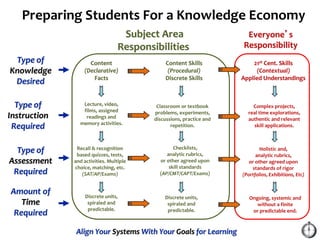
Preparing Students For a Knowledge Economy
Align Your Systems With Your Goals for Learning
Type of
Assessment
Required
Subject Area
Responsibilities
Everyone’s
Responsibility
Content
(Declarative)
Facts
Content Skills
(Procedural)
Discrete Skills
21st Cent. Skills
(Contextual)
Applied Understandings
Type of
Knowledge
Desired
Type of
Instruction
Required
Lecture, video,
films, assigned
readings and
memory activities.
Classroom or textbook
problems, experiments,
discussions, practice and
repetition.
Complex projects,
real time explorations,
authentic and relevant
skill applications.
Amount of
Time
Required
Discrete units,
spiraled and
predictable.
Ongoing, systemic and
without a finite
or predictable end.
Discrete units,
spiraled and
predictable.
Recall & recognition
based quizzes, tests,
and activities. Multiple
choice, matching, etc.
(SAT/AP/Exams)
Checklists,
analytic rubrics,
or other agreed upon
skill standards
(AP/CMT/CAPT/Exams)
Holistic and,
analytic rubrics,
or other agreed upon
standards of rigor
(Portfolios, Exhibitions, Etc)
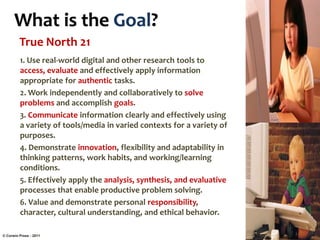
What is the Goal?
True North 21
1. Use real-world digital and other research tools to
access, evaluate and effectively apply information
appropriate for authentic tasks.
2. Work independently and collaboratively to solve
problems and accomplish goals.
3. Communicate information clearly and effectively using
a variety of tools/media in varied contexts for a variety of
purposes.
4. Demonstrate innovation, flexibility and adaptability in
thinking patterns, work habits, and working/learning
conditions.
5. Effectively apply the analysis, synthesis, and evaluative
processes that enable productive problem solving.
6. Value and demonstrate personal responsibility,
character, cultural understanding, and ethical behavior.
© Corwin Press - 2011
CCSS Instructional Shifts
1. Focus - Invest time and energy and don't role through topics.
Focused instruction for all students - open the door for all
students. Focused, thoughtful, reflective planning.
2. Coherence - Build knowledge in years and across years - how
areas connect to each other(learning progressions).
3. Fluency - Fluency is an expression of understanding. It doesn't
stop in the lower grades.
4. Deep Understanding - Prepare for flexibility - surprise shouldn't
make you helpless.
5. Application - Accessing layers of knowledge. The ability to solve
a variety of problems without a given step by step plan or
directions.
6. Intensity - Intense engagement on the topics. Intense planning
and the courage, as the teacher, to ask for help understanding the
math.
© Corwin Press - 2011
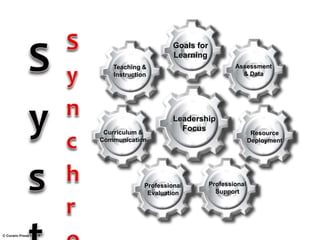
Goals for
Learning
Assessment
& Data
Professional
Support
Professional
Evaluation
Curriculum &
Communication
Teaching &
Instruction
Resource
Deployment
Leadership
Focus
© Corwin Press - 2011
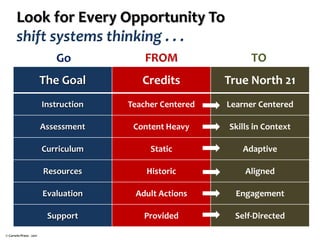
The Goal Credits True North 21
Instruction Teacher Centered Learner Centered
Assessment Content Heavy Skills in Context
Curriculum Static Adaptive
Resources Historic Aligned
Evaluation Adult Actions Engagement
Support Provided Self-Directed
Look for Every Opportunity To
shift systems thinking . . .
FROM TO
© Corwin Press - 2011
Go
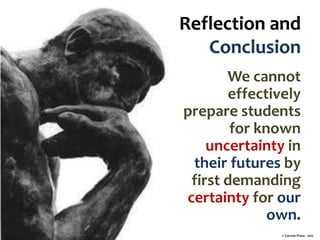
Reflection and
Conclusion
We cannot
effectively
prepare students
for known
uncertainty in
their futures by
first demanding
certainty for our
own.
© Corwin Press - 2011
Contact Information
Jonathan P. Costa, Sr.
Director, School/Program Services
EDUCATION CONNECTION
costa@educationconnection.org
860-567-0863
To view slides:
www.slideshare.net/jpcostasr
Book Questions:
info@digitallearningforallnow.com
Book Web Page:
www.digitallearningforallnow.com
Book Order:
www.sagepub.com/books/Book237875
© Corwin Press - 2011

Eastern High School Principals Presentation

  • 1.
    Teaching and Learningin a Digital World Eastern High School Principals Roundtable January 6th, 2012 by Jonathan P. Costa, Sr. EDUCATION CONNECTION © Corwin Press - 2011
  • 2.
    The Goal To prepare EVERYstudent for learning, life, and work in the 21st century. © Corwin Press - 2011
  • 3.
    Truth # 1 Thefuture of learning and work is digital. © Corwin Press - 2011
  • 4.
    In Less Than AGeneration… • From isolation to communication as the norm. • From going out of your way to communicate to going out of your way not to. • Skype, text, Google voice, etc. © Corwin Press - 2011
  • 5.
    The Apple Effect Redefining software as lean,focused and task oriented. © Corwin Press - 2011
  • 6.
    The Google Effect Driving thecost of software down and consumer expectations up. © Corwin Press - 2011
  • 7.
    The Cloud & Browser TheCloud is the tool and the browser is the portal. A new era of portability and flexibility. © Corwin Press - 2011
  • 8.
    Truth # 2 Limitedaccess equals limited mastery. © Corwin Press - 2011
  • 9.
  • 10.
    2011 NEASC Standards Arating of DEFICIENT is appropriate… (if there are) …insufficient opportunities for all students to practice and achieve each of the 21st century learning expectations. © Corwin Press - 2011
  • 11.
    Truth # 3 Every printedpage is a waste. © Corwin Press - 2011
  • 12.
    Track Results & Data Do Plan Change the Orientationto One-to-One Quality, Equity & Control Barriers Change the System’s Focus Alignment & Focus Barriers Change the Culture Rigidity & Risk Barriers Digital Learning for All, NOW! Change Leadership  BYOD  Digital Materials  Open Sources  True North 21  Valued Measures  Synchronicity  Positive Policy  Common Cause  Problem Solving © Corwin Press - 2011 Prepare EVERY student for Learning, Life, and Work in the 21st Century
  • 13.
    A Change inthe Culture Articulating how well we expect learners to perform and measuring for it. A variety of reliable and consistent Assessment tools that are aligned with the identified goals for learning. Improving the methods through which we create learning. A variety of teaching strategies that are aligned with the identified goals for learning. Articulating what we want learners to know and be able to do. What are the most critical skills and attributes a learner will need to be successful? Improved Student Learning © Corwin Press - 2011
  • 14.
    Preparing Students Fora Knowledge Economy Align Your Systems With Your Goals for Learning Type of Assessment Required Subject Area Responsibilities Everyone’s Responsibility Content (Declarative) Facts Content Skills (Procedural) Discrete Skills 21st Cent. Skills (Contextual) Applied Understandings Type of Knowledge Desired Type of Instruction Required Lecture, video, films, assigned readings and memory activities. Classroom or textbook problems, experiments, discussions, practice and repetition. Complex projects, real time explorations, authentic and relevant skill applications. Amount of Time Required Discrete units, spiraled and predictable. Ongoing, systemic and without a finite or predictable end. Discrete units, spiraled and predictable. Recall & recognition based quizzes, tests, and activities. Multiple choice, matching, etc. (SAT/AP/Exams) Checklists, analytic rubrics, or other agreed upon skill standards (AP/CMT/CAPT/Exams) Holistic and, analytic rubrics, or other agreed upon standards of rigor (Portfolios, Exhibitions, Etc)
  • 15.
    What is theGoal? True North 21 1. Use real-world digital and other research tools to access, evaluate and effectively apply information appropriate for authentic tasks. 2. Work independently and collaboratively to solve problems and accomplish goals. 3. Communicate information clearly and effectively using a variety of tools/media in varied contexts for a variety of purposes. 4. Demonstrate innovation, flexibility and adaptability in thinking patterns, work habits, and working/learning conditions. 5. Effectively apply the analysis, synthesis, and evaluative processes that enable productive problem solving. 6. Value and demonstrate personal responsibility, character, cultural understanding, and ethical behavior. © Corwin Press - 2011
  • 16.
    CCSS Instructional Shifts 1.Focus - Invest time and energy and don't role through topics. Focused instruction for all students - open the door for all students. Focused, thoughtful, reflective planning. 2. Coherence - Build knowledge in years and across years - how areas connect to each other(learning progressions). 3. Fluency - Fluency is an expression of understanding. It doesn't stop in the lower grades. 4. Deep Understanding - Prepare for flexibility - surprise shouldn't make you helpless. 5. Application - Accessing layers of knowledge. The ability to solve a variety of problems without a given step by step plan or directions. 6. Intensity - Intense engagement on the topics. Intense planning and the courage, as the teacher, to ask for help understanding the math. © Corwin Press - 2011
  • 17.
    Goals for Learning Assessment & Data Professional Support Professional Evaluation Curriculum& Communication Teaching & Instruction Resource Deployment Leadership Focus © Corwin Press - 2011
  • 18.
    The Goal CreditsTrue North 21 Instruction Teacher Centered Learner Centered Assessment Content Heavy Skills in Context Curriculum Static Adaptive Resources Historic Aligned Evaluation Adult Actions Engagement Support Provided Self-Directed Look for Every Opportunity To shift systems thinking . . . FROM TO © Corwin Press - 2011 Go
  • 19.
    Reflection and Conclusion We cannot effectively preparestudents for known uncertainty in their futures by first demanding certainty for our own. © Corwin Press - 2011
  • 20.
    Contact Information Jonathan P.Costa, Sr. Director, School/Program Services EDUCATION CONNECTION costa@educationconnection.org 860-567-0863 To view slides: www.slideshare.net/jpcostasr Book Questions: info@digitallearningforallnow.com Book Web Page: www.digitallearningforallnow.com Book Order: www.sagepub.com/books/Book237875 © Corwin Press - 2011

Editor's Notes

  • #3 This is the defining challenge of our times in public school.
  • #4 This inescapable truth sets the direction
  • #6 “App Store” opens on July 11, 2008In the first 2 months, 100,000,000 applications were downloaded.The average cost of an iPhone App is $3.87Billions of downloads later, we see software as lean, focused, and specific task oriented.
  • #7 A company whose primary business strategy is to provide all of their primary consumer services for free.Taking the TV network add revenue model into the21stcentury.Driving the cost of software downand consumer expectationsup.Looking toward the cloud…
  • #9 Adequate preparation for a higher order thinking digital environment requires one-to-one access by staff and students.Not equipment competency here – we are talking about the ability to use devices in authentic environments to solve important problems through critical and creative thinking.
  • #11 In this generation of standards this extends to the identification, formal assessment of, and the systemic support of 21st century skills across the board.
  • #12 Continued investment in a print-based infrastructure and the lack of strategic transitional planning for a complete move to digital are ultimately counter-productiveboth educationally and fiscally.
  • #17 fluency=speed and accuracy