High Leverage Skills for a Digital Age
1:1 Pilot – Brewster Public Schools
Jonathan P. Costa, Sr.
May 4th, 2015
http://digitallearningforallnow.com
http://www.slideshare.net/jpcostasr
costa@educationconnection.org
Jonathan P. Costa
Our Mission
To prepare
EVERY student
for learning, life,
and work
in the 21st century.
Our world has changed…
1. It is digital, flat, open
and pluralistic.
2.It is unpredictable and
volatile.
3.It is increasingly
unforgiving to those
who are unskilled.
Less
paper,
more
pixels.
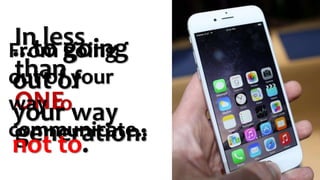
In less
than
ONE
generation:
From going
out of your
way to
communicate..
...to going
out of
your way
not to.
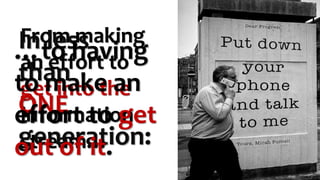
From making
an effort to
get into the
information
stream…
In less
than
ONE
generation:
…to having
to make an
effort to get
out of it.
Job ONE
is getting
to
1:1
Until everyone can
have the same
thing, no one can
have anything.
Equitably deficient.
Less about
what device
you have,
more
about what
you do with it.
Your
browser
is the
equalizer.
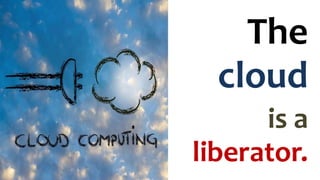
The
cloud
is a
liberator.
Adequate preparation
for a higher order
thinking digital
environment requires
one-one access by staff
and students.
It Takes Access
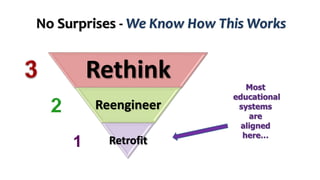
No Surprises - We Know How This Works
1
Rethink
Reengineer
Retrofit
Consider the Shift from Retrofit to Rethink
Retrofit
“Read the part of
Chapter 6 in the online
text that describes the
Boston Massacre and
be prepared to answer
the review questions.”
Rethink
1. Team One find 5 historical
narratives by different authors
2. Team Two find 5 primary source
documents from the trial
3. Team Three find 5 British history
references and opinions
4. Team Four find 5
contemporaneous editorials.
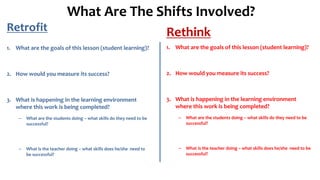
What Are The Shifts Involved?
Retrofit
1. What are the goals of this lesson (student learning)?
2. How would you measure its success?
3. What is happening in the learning environment
where this work is being completed?
– What are the students doing – what skills do they need to be
successful?
– What is the teacher doing – what skills does he/she need to
be successful?
Rethink
1. What are the goals of this lesson (student learning)?
2. How would you measure its success?
3. What is happening in the learning environment
where this work is being completed?
– What are the students doing – what skills do they need to be
successful?
– What is the teacher doing – what skills does he/she need to be
successful?
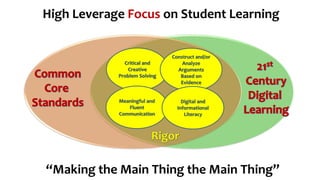
High Leverage Focus on Student Learning
Critical and
Creative
Problem Solving
“Making the Main Thing the Main Thing”
Construct and/or
Analyze
Arguments
Based on
Evidence
Meaningful and
Fluent
Communication
Digital and
Informational
Literacy
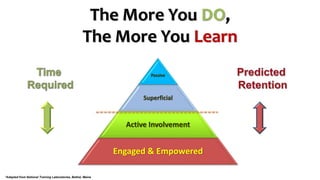
The More You DO,
The More You Learn
Passive
Superficial
Active Involvement
Engaged & Empowered
*Adapted from National Training Laboratories, Bethel, Maine
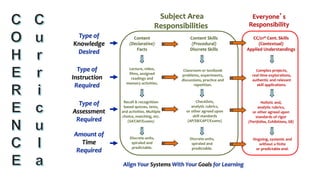
Align Your Systems With Your Goals for Learning
Type of
Assessment
Required
Subject Area
Responsibilities
Everyone’s
Responsibility
Content
(Declarative)
Facts
Content Skills
(Procedural)
Discrete Skills
CC/21st Cent. Skills
(Contextual)
Applied Understandings
Type of
Knowledge
Desired
Type of
Instruction
Required
Lecture, video,
films, assigned
readings and
memory activities.
Classroom or textbook
problems, experiments,
discussions, practice and
repetition.
Complex projects,
real time explorations,
authentic and relevant
skill applications.
Amount of
Time
Required
Discrete units,
spiraled and
predictable.
Ongoing, systemic and
without a finite
or predictable end.
Discrete units,
spiraled and
predictable.
Recall & recognition
based quizzes, tests,
and activities. Multiple
choice, matching, etc.
(SAT/AP/Exams)
Checklists,
analytic rubrics,
or other agreed upon
skill standards
(AP/SB/CAPT/Exams)
Holistic and,
analytic rubrics,
or other agreed upon
standards of rigor
(Portfolios, Exhibitions, SB)
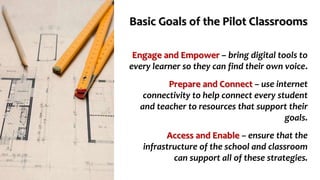
Basic Goals of the Pilot Classrooms
Engage and Empower – bring digital tools to
every learner so they can find their own voice.
Prepare and Connect – use internet
connectivity to help connect every student
and teacher to resources that support their
goals.
Access and Enable – ensure that the
infrastructure of the school and classroom
can support all of these strategies.
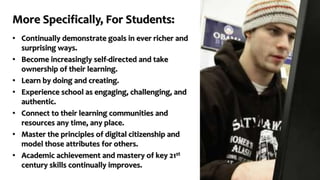
More Specifically, For Students:
• Continually demonstrate goals in ever richer and
surprising ways.
• Become increasingly self-directed and take
ownership of their learning.
• Learn by doing and creating.
• Experience school as engaging, challenging, and
authentic.
• Connect to their learning communities and
resources any time, any place.
• Master the principles of digital citizenship and
model those attributes for others.
• Academic achievement and mastery of key 21st
century skills continually improves.
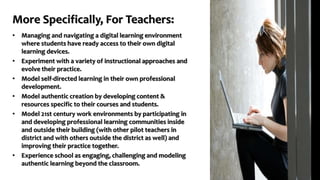
More Specifically, For Teachers:
• Managing and navigating a digital learning environment
where students have ready access to their own digital
learning devices.
• Experiment with a variety of instructional approaches and
evolve their practice.
• Model self-directed learning in their own professional
development.
• Model authentic creation by developing content &
resources specific to their courses and students.
• Model 21st century work environments by participating in
and developing professional learning communities inside
and outside their building (with other pilot teachers in
district and with others outside the district as well) and
improving their practice together.
• Experience school as engaging, challenging and modeling
authentic learning beyond the classroom.
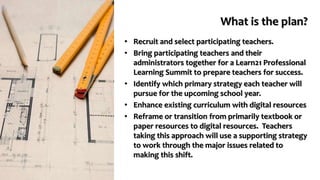
What is the plan?
• Recruit and select participating teachers.
• Bring participating teachers and their
administrators together for a Learn21 Professional
Learning Summit to prepare teachers for success.
• Identify which primary strategy each teacher will
pursue for the upcoming school year.
• Enhance existing curriculum with digital resources
• Reframe or transition from primarily textbook or
paper resources to digital resources. Teachers
taking this approach will use a supporting strategy
to work through the major issues related to
making this shift.
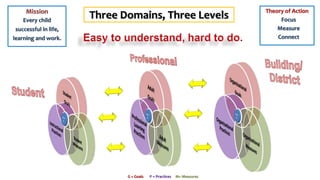
Three Domains, Three Levels
G = Goals P = Practices M= Measures
Mission
Every child
successful in life,
learning and work.
Theory of Action
Focus
Measure
Connect
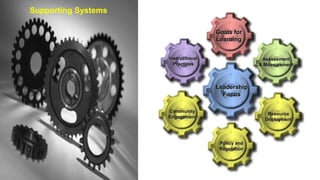
Goals for
Learning
Assessment
& Measurement
Policy and
Regulation
Community
Engagement
Instructional
Practices
Resource
Deployment
Leadership
Focus
Supporting Systems

High leverage brewster post

  • 1.
    High Leverage Skillsfor a Digital Age 1:1 Pilot – Brewster Public Schools Jonathan P. Costa, Sr. May 4th, 2015 http://digitallearningforallnow.com http://www.slideshare.net/jpcostasr costa@educationconnection.org Jonathan P. Costa
  • 2.
    Our Mission To prepare EVERYstudent for learning, life, and work in the 21st century.
  • 3.
    Our world haschanged… 1. It is digital, flat, open and pluralistic. 2.It is unpredictable and volatile. 3.It is increasingly unforgiving to those who are unskilled.
  • 4.
  • 5.
    In less than ONE generation: From going outof your way to communicate.. ...to going out of your way not to.
  • 6.
    From making an effortto get into the information stream… In less than ONE generation: …to having to make an effort to get out of it.
  • 7.
  • 8.
    Until everyone can havethe same thing, no one can have anything. Equitably deficient.
  • 9.
    Less about what device youhave, more about what you do with it.
  • 10.
  • 11.
  • 12.
    Adequate preparation for ahigher order thinking digital environment requires one-one access by staff and students. It Takes Access
  • 13.
    No Surprises -We Know How This Works 1 Rethink Reengineer Retrofit
  • 14.
    Consider the Shiftfrom Retrofit to Rethink Retrofit “Read the part of Chapter 6 in the online text that describes the Boston Massacre and be prepared to answer the review questions.” Rethink 1. Team One find 5 historical narratives by different authors 2. Team Two find 5 primary source documents from the trial 3. Team Three find 5 British history references and opinions 4. Team Four find 5 contemporaneous editorials.
  • 15.
    What Are TheShifts Involved? Retrofit 1. What are the goals of this lesson (student learning)? 2. How would you measure its success? 3. What is happening in the learning environment where this work is being completed? – What are the students doing – what skills do they need to be successful? – What is the teacher doing – what skills does he/she need to be successful? Rethink 1. What are the goals of this lesson (student learning)? 2. How would you measure its success? 3. What is happening in the learning environment where this work is being completed? – What are the students doing – what skills do they need to be successful? – What is the teacher doing – what skills does he/she need to be successful?
  • 16.
    High Leverage Focuson Student Learning Critical and Creative Problem Solving “Making the Main Thing the Main Thing” Construct and/or Analyze Arguments Based on Evidence Meaningful and Fluent Communication Digital and Informational Literacy
  • 17.
    The More YouDO, The More You Learn Passive Superficial Active Involvement Engaged & Empowered *Adapted from National Training Laboratories, Bethel, Maine
  • 18.
    Align Your SystemsWith Your Goals for Learning Type of Assessment Required Subject Area Responsibilities Everyone’s Responsibility Content (Declarative) Facts Content Skills (Procedural) Discrete Skills CC/21st Cent. Skills (Contextual) Applied Understandings Type of Knowledge Desired Type of Instruction Required Lecture, video, films, assigned readings and memory activities. Classroom or textbook problems, experiments, discussions, practice and repetition. Complex projects, real time explorations, authentic and relevant skill applications. Amount of Time Required Discrete units, spiraled and predictable. Ongoing, systemic and without a finite or predictable end. Discrete units, spiraled and predictable. Recall & recognition based quizzes, tests, and activities. Multiple choice, matching, etc. (SAT/AP/Exams) Checklists, analytic rubrics, or other agreed upon skill standards (AP/SB/CAPT/Exams) Holistic and, analytic rubrics, or other agreed upon standards of rigor (Portfolios, Exhibitions, SB)
  • 19.
    Basic Goals ofthe Pilot Classrooms Engage and Empower – bring digital tools to every learner so they can find their own voice. Prepare and Connect – use internet connectivity to help connect every student and teacher to resources that support their goals. Access and Enable – ensure that the infrastructure of the school and classroom can support all of these strategies.
  • 20.
    More Specifically, ForStudents: • Continually demonstrate goals in ever richer and surprising ways. • Become increasingly self-directed and take ownership of their learning. • Learn by doing and creating. • Experience school as engaging, challenging, and authentic. • Connect to their learning communities and resources any time, any place. • Master the principles of digital citizenship and model those attributes for others. • Academic achievement and mastery of key 21st century skills continually improves.
  • 21.
    More Specifically, ForTeachers: • Managing and navigating a digital learning environment where students have ready access to their own digital learning devices. • Experiment with a variety of instructional approaches and evolve their practice. • Model self-directed learning in their own professional development. • Model authentic creation by developing content & resources specific to their courses and students. • Model 21st century work environments by participating in and developing professional learning communities inside and outside their building (with other pilot teachers in district and with others outside the district as well) and improving their practice together. • Experience school as engaging, challenging and modeling authentic learning beyond the classroom.
  • 22.
    What is theplan? • Recruit and select participating teachers. • Bring participating teachers and their administrators together for a Learn21 Professional Learning Summit to prepare teachers for success. • Identify which primary strategy each teacher will pursue for the upcoming school year. • Enhance existing curriculum with digital resources • Reframe or transition from primarily textbook or paper resources to digital resources. Teachers taking this approach will use a supporting strategy to work through the major issues related to making this shift.
  • 23.
    Three Domains, ThreeLevels G = Goals P = Practices M= Measures Mission Every child successful in life, learning and work. Theory of Action Focus Measure Connect
  • 24.
    Goals for Learning Assessment & Measurement Policyand Regulation Community Engagement Instructional Practices Resource Deployment Leadership Focus Supporting Systems