William Sutton et al.
11/01/2015
SEAFWA Asheville
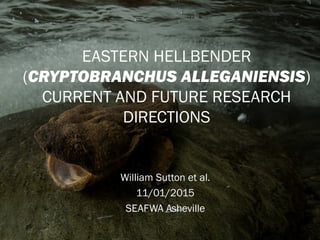
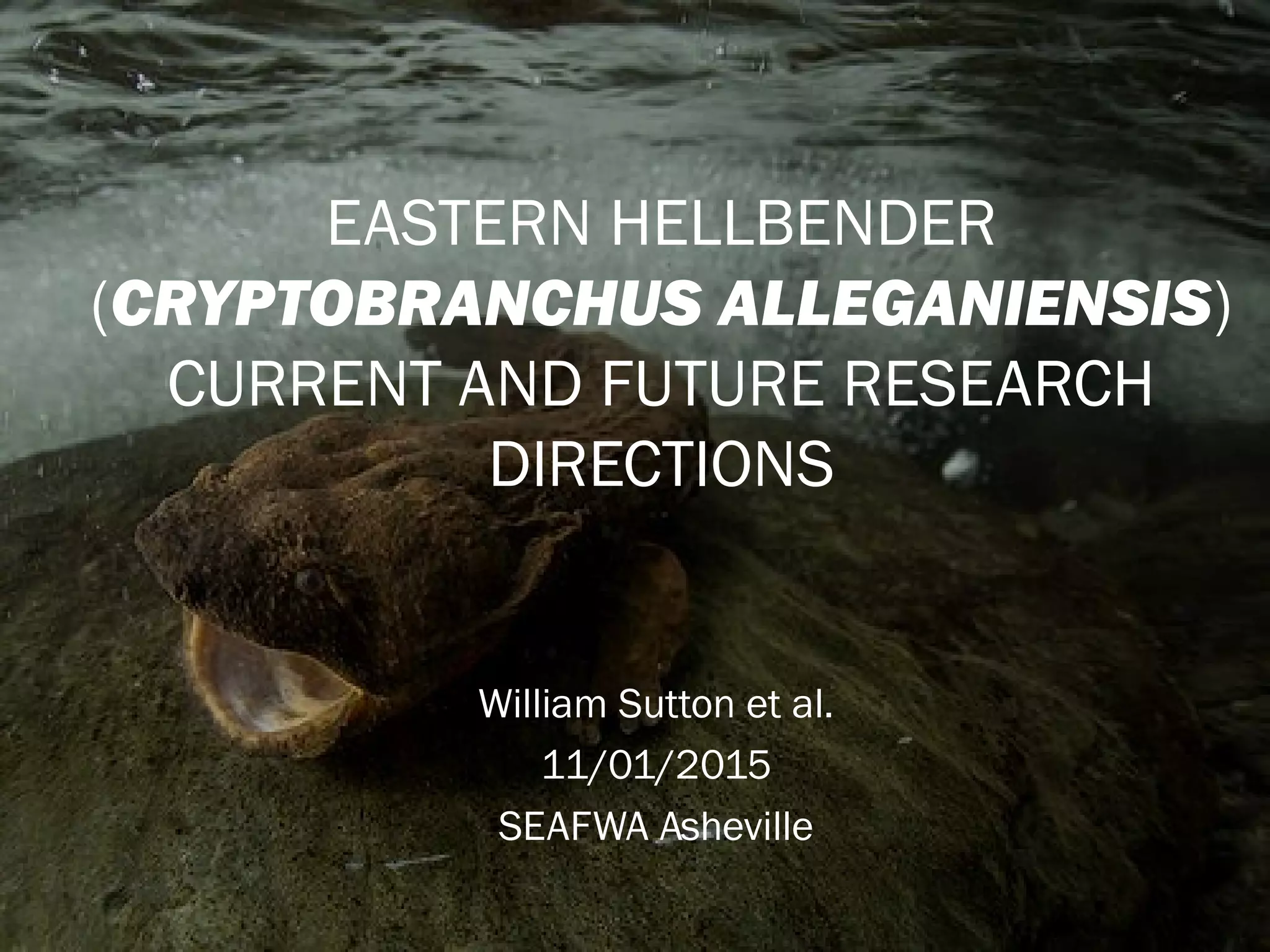
EASTERN HELLBENDER
(CRYPTOBRANCHUS ALLEGANIENSIS)
CURRENT AND FUTURE RESEARCH
DIRECTIONS
Talk Contributors
Dr. Brian Miller (Middle Tennessee State University)
Dr. Michael Freake (Lee University)
Dr. Stephen Speare (Orianne Society)
Dr. William Sutton / Jeronimo Silva (Tennessee State
University)
Dale McGinnity (Nashville Zoological Park)
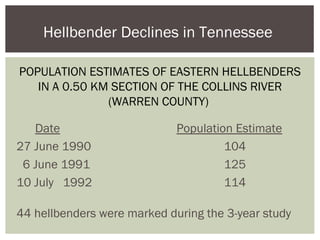
Date Population Estimate
27 June 1990 104
6 June 1991 125
10 July 1992 114
44 hellbenders were marked during the 3-year study
Hellbender Declines in Tennessee
POPULATION ESTIMATES OF EASTERN HELLBENDERS
IN A 0.50 KM SECTION OF THE COLLINS RIVER
(WARREN COUNTY)
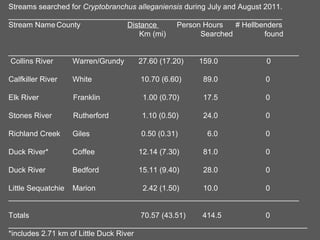
Streams searched for Cryptobranchus alleganiensis during July and August 2011.
_________________________________________________________________
Stream Name County Distance Person Hours # Hellbenders
Km (mi) Searched found
_____________________________________________________________________
Collins River Warren/Grundy 27.60 (17.20) 159.0 0
Calfkiller River White 10.70 (6.60) 89.0 0
Elk River Franklin 1.00 (0.70) 17.5 0
Stones River Rutherford 1.10 (0.50) 24.0 0
Richland Creek Giles 0.50 (0.31) 6.0 0
Duck River* Coffee 12.14 (7.30) 81.0 0
Duck River Bedford 15.11 (9.40) 28.0 0
Little Sequatchie Marion 2.42 (1.50) 10.0 0
_____________________________________________________________________
Totals 70.57 (43.51) 414.5 0
_______________________________________________________________________
*includes 2.71 km of Little Duck River
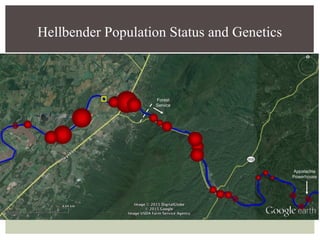
Hellbender Population Status and Genetics
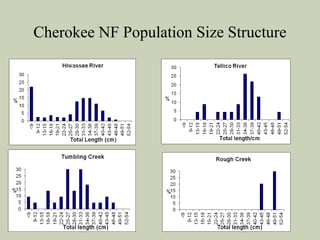
Cherokee NF Population Size Structure
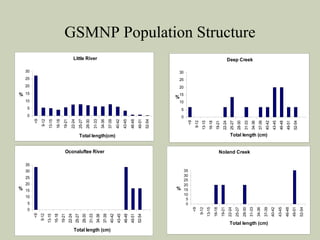
GSMNP Population Structure
Little River
0
5
10
15
20
25
30
<9
9-12
13-15
16-18
19-21
22-24
25-27
28-30
31-33
34-36
37-39
40-42
43-45
46-48
49-51
52-54
Total length(cm)
%
Deep Creek
0
5
10
15
20
25
30
<9
9-12
13-15
16-18
19-21
22-24
25-27
28-30
31-33
34-36
37-39
40-42
43-45
46-48
49-51
52-54
Total length (cm)
%
Oconaluftee River
0
5
10
15
20
25
30
35
<9
9-12
13-15
16-18
19-21
22-24
25-27
28-30
31-33
34-36
37-39
40-42
43-45
46-48
49-51
52-54
Total length (cm)
%
Noland Creek
0
5
10
15
20
25
30
35
<9
9-12
13-15
16-18
19-21
22-24
25-27
28-30
31-33
34-36
37-39
40-42
43-45
46-48
49-51
52-54
Total length (cm)
%
Buffalo/Duck
Hiwassee/Ocoee
Hiwassee
Little Tennessee/
Holston/
Watauga
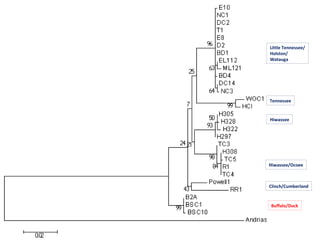
Mitochondrial relationships
in the Tennessee Valley Tennessee
Clinch/Cumberland
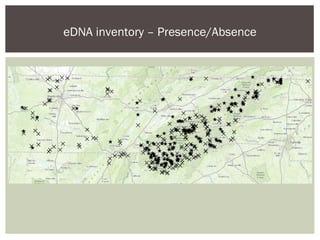
eDNA inventory – Presence/Absence
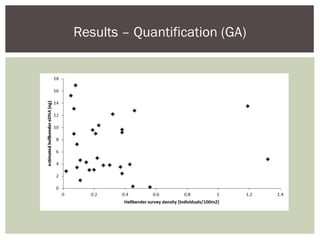
Results – Quantification (GA)
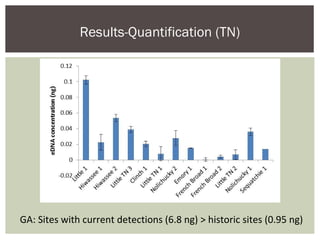
Results-Quantification (TN)
Reproducing
Survey captures No recent captures
GA: Sites with current detections (6.8 ng) > historic sites (0.95 ng)
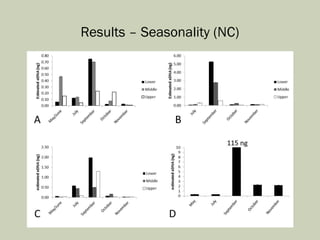
Results – Seasonality (NC)
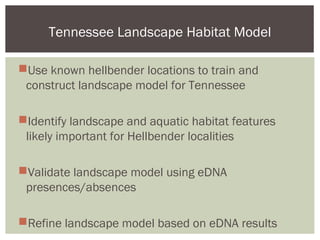
Tennessee Landscape Habitat Model
Use known hellbender locations to train and
construct landscape model for Tennessee
Identify landscape and aquatic habitat features
likely important for Hellbender localities
Validate landscape model using eDNA
presences/absences
Refine landscape model based on eDNA results
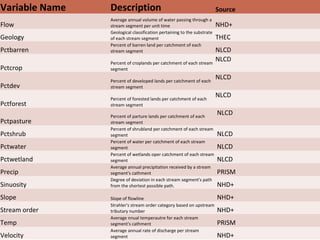
Variable Name Description Source
Flow
Average annual volume of water passing through a
stream segment per unit time NHD+
Geology
Geological classification pertaining to the substrate
of each stream segment THEC
Pctbarren
Percent of barren land per catchment of each
stream segment NLCD
Pctcrop
Percent of croplands per catchment of each stream
segment
NLCD
Pctdev
Percent of developed lands per catchment of each
stream segment
NLCD
Pctforest
Percent of forested lands per catchment of each
stream segment
NLCD
Pctpasture
Percent of parture lands per catchment of each
stream segment
NLCD
Pctshrub
Percent of shrubland per catchment of each stream
segment NLCD
Pctwater
Percent of water per catchment of each stream
segment NLCD
Pctwetland
Percent of wetlands oper catchment of each stream
segment NLCD
Precip
Average annual precipitation received by a stream
segment's cathment PRISM
Sinuosity
Degree of deviation in each stream segment's path
from the shortest possible path. NHD+
Slope Slope of flowline NHD+
Stream order
Strahler's stream order category based on upstream
tributary number NHD+
Temp
Average nnual temperautre for each stream
segment's cathment PRISM
Velocity
Average annual rate of discharge per stream
segment NHD+
West Virginia off exhibit hellbenders
1. collected 3.1 Hellbenders in WV.
2. Purchased 4 used 120 gallon lobster
tanks
3. Goal to breed hellbenders in tanks
with temperature and photoperiod cycling
then Hormonal induction.
2012,2013
1. Produced 2 offspring in 2012 and 14 in
2013 with Hormonal induction and
artificial fertilization.
2007
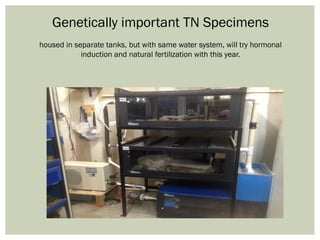
Genetically important TN Specimens
housed in separate tanks, but with same water system, will try hormonal
induction and natural fertilization with this year.
Egg collection from the Wild
Used in other states for head start programs.Used in other states for head start programs.
Best if eggs have been with den master for atBest if eggs have been with den master for at
least two weeks before collection.least two weeks before collection.
Zoo hatched 100% of 66 eggs collected forZoo hatched 100% of 66 eggs collected for
disease trial studies last year. All surviveddisease trial studies last year. All survived
while at Zoo, except 1.while at Zoo, except 1.
Benefits of egg collection for Headstarting
1) Little impact on wild populations.1) Little impact on wild populations.
2) Much more cost effective, still takes raising animals for 32) Much more cost effective, still takes raising animals for 3
years.years.
3) Can increase genetic diversity by collecting eggs from3) Can increase genetic diversity by collecting eggs from
different nests.different nests.
4) Easier to maintain biosecure facility because less space4) Easier to maintain biosecure facility because less space
required.required.
TranslocationTranslocation
1)1) Faster, less resources.Faster, less resources.
2)2) New avenue for research studyNew avenue for research study
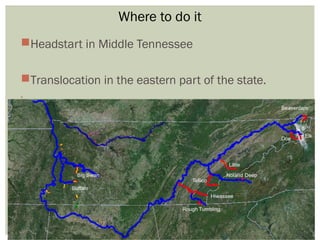
Where to do it
Headstart in Middle Tennessee
Translocation in the eastern part of the state.
.

EASTERN HELLBENDER (CRYPTOBRANCHUS ALLEGANIENSIS) CURRENT AND FUTURE RESEARCH DIRECTIONS

  • 1.
    William Sutton etal. 11/01/2015 SEAFWA Asheville EASTERN HELLBENDER (CRYPTOBRANCHUS ALLEGANIENSIS) CURRENT AND FUTURE RESEARCH DIRECTIONS
  • 2.
    Talk Contributors Dr. BrianMiller (Middle Tennessee State University) Dr. Michael Freake (Lee University) Dr. Stephen Speare (Orianne Society) Dr. William Sutton / Jeronimo Silva (Tennessee State University) Dale McGinnity (Nashville Zoological Park)
  • 3.
    Date Population Estimate 27June 1990 104 6 June 1991 125 10 July 1992 114 44 hellbenders were marked during the 3-year study Hellbender Declines in Tennessee POPULATION ESTIMATES OF EASTERN HELLBENDERS IN A 0.50 KM SECTION OF THE COLLINS RIVER (WARREN COUNTY)
  • 4.
    Streams searched forCryptobranchus alleganiensis during July and August 2011. _________________________________________________________________ Stream Name County Distance Person Hours # Hellbenders Km (mi) Searched found _____________________________________________________________________ Collins River Warren/Grundy 27.60 (17.20) 159.0 0 Calfkiller River White 10.70 (6.60) 89.0 0 Elk River Franklin 1.00 (0.70) 17.5 0 Stones River Rutherford 1.10 (0.50) 24.0 0 Richland Creek Giles 0.50 (0.31) 6.0 0 Duck River* Coffee 12.14 (7.30) 81.0 0 Duck River Bedford 15.11 (9.40) 28.0 0 Little Sequatchie Marion 2.42 (1.50) 10.0 0 _____________________________________________________________________ Totals 70.57 (43.51) 414.5 0 _______________________________________________________________________ *includes 2.71 km of Little Duck River
  • 6.
  • 7.
    Cherokee NF PopulationSize Structure
  • 8.
    GSMNP Population Structure LittleRiver 0 5 10 15 20 25 30 <9 9-12 13-15 16-18 19-21 22-24 25-27 28-30 31-33 34-36 37-39 40-42 43-45 46-48 49-51 52-54 Total length(cm) % Deep Creek 0 5 10 15 20 25 30 <9 9-12 13-15 16-18 19-21 22-24 25-27 28-30 31-33 34-36 37-39 40-42 43-45 46-48 49-51 52-54 Total length (cm) % Oconaluftee River 0 5 10 15 20 25 30 35 <9 9-12 13-15 16-18 19-21 22-24 25-27 28-30 31-33 34-36 37-39 40-42 43-45 46-48 49-51 52-54 Total length (cm) % Noland Creek 0 5 10 15 20 25 30 35 <9 9-12 13-15 16-18 19-21 22-24 25-27 28-30 31-33 34-36 37-39 40-42 43-45 46-48 49-51 52-54 Total length (cm) %
  • 9.
  • 10.
    eDNA inventory –Presence/Absence
  • 11.
  • 12.
    Results-Quantification (TN) Reproducing Survey capturesNo recent captures GA: Sites with current detections (6.8 ng) > historic sites (0.95 ng)
  • 13.
  • 14.
    Tennessee Landscape HabitatModel Use known hellbender locations to train and construct landscape model for Tennessee Identify landscape and aquatic habitat features likely important for Hellbender localities Validate landscape model using eDNA presences/absences Refine landscape model based on eDNA results
  • 16.
    Variable Name DescriptionSource Flow Average annual volume of water passing through a stream segment per unit time NHD+ Geology Geological classification pertaining to the substrate of each stream segment THEC Pctbarren Percent of barren land per catchment of each stream segment NLCD Pctcrop Percent of croplands per catchment of each stream segment NLCD Pctdev Percent of developed lands per catchment of each stream segment NLCD Pctforest Percent of forested lands per catchment of each stream segment NLCD Pctpasture Percent of parture lands per catchment of each stream segment NLCD Pctshrub Percent of shrubland per catchment of each stream segment NLCD Pctwater Percent of water per catchment of each stream segment NLCD Pctwetland Percent of wetlands oper catchment of each stream segment NLCD Precip Average annual precipitation received by a stream segment's cathment PRISM Sinuosity Degree of deviation in each stream segment's path from the shortest possible path. NHD+ Slope Slope of flowline NHD+ Stream order Strahler's stream order category based on upstream tributary number NHD+ Temp Average nnual temperautre for each stream segment's cathment PRISM Velocity Average annual rate of discharge per stream segment NHD+
  • 19.
    West Virginia offexhibit hellbenders 1. collected 3.1 Hellbenders in WV. 2. Purchased 4 used 120 gallon lobster tanks 3. Goal to breed hellbenders in tanks with temperature and photoperiod cycling then Hormonal induction. 2012,2013 1. Produced 2 offspring in 2012 and 14 in 2013 with Hormonal induction and artificial fertilization. 2007
  • 20.
    Genetically important TNSpecimens housed in separate tanks, but with same water system, will try hormonal induction and natural fertilization with this year.
  • 21.
    Egg collection fromthe Wild Used in other states for head start programs.Used in other states for head start programs. Best if eggs have been with den master for atBest if eggs have been with den master for at least two weeks before collection.least two weeks before collection. Zoo hatched 100% of 66 eggs collected forZoo hatched 100% of 66 eggs collected for disease trial studies last year. All surviveddisease trial studies last year. All survived while at Zoo, except 1.while at Zoo, except 1.
  • 22.
    Benefits of eggcollection for Headstarting 1) Little impact on wild populations.1) Little impact on wild populations. 2) Much more cost effective, still takes raising animals for 32) Much more cost effective, still takes raising animals for 3 years.years. 3) Can increase genetic diversity by collecting eggs from3) Can increase genetic diversity by collecting eggs from different nests.different nests. 4) Easier to maintain biosecure facility because less space4) Easier to maintain biosecure facility because less space required.required. TranslocationTranslocation 1)1) Faster, less resources.Faster, less resources. 2)2) New avenue for research studyNew avenue for research study
  • 23.
    Where to doit Headstart in Middle Tennessee Translocation in the eastern part of the state. .

Editor's Notes

  • #8 These graphs show the age structure in the Hiawassee and Little Rivers. The x-axis is the size of the hellbender and the y-axis is the percentage of hellbenders in that range. All of the age classes are represented in both of these rivers and that demonstrates that these are reproducing populations. These graphs show the population age structure in the Hiwassee and Little Rivers. And what we are looking for is: Are all age classes represented here? In these two rivers, they are all present. So this leads us to believe that there is current reproduction and recruitment and, therefore, these rivers should be stable over a longer term.
  • #10 Two principal groups within the Tennessee Valley are Buffalo/Duck river clade and everyone else. Some evidence of weak differentiation between Hiwassee/Ocoee river groups and rivers north of Tellico, but the differences are very small