R E B E C C A H A R D M A N
U T C V M
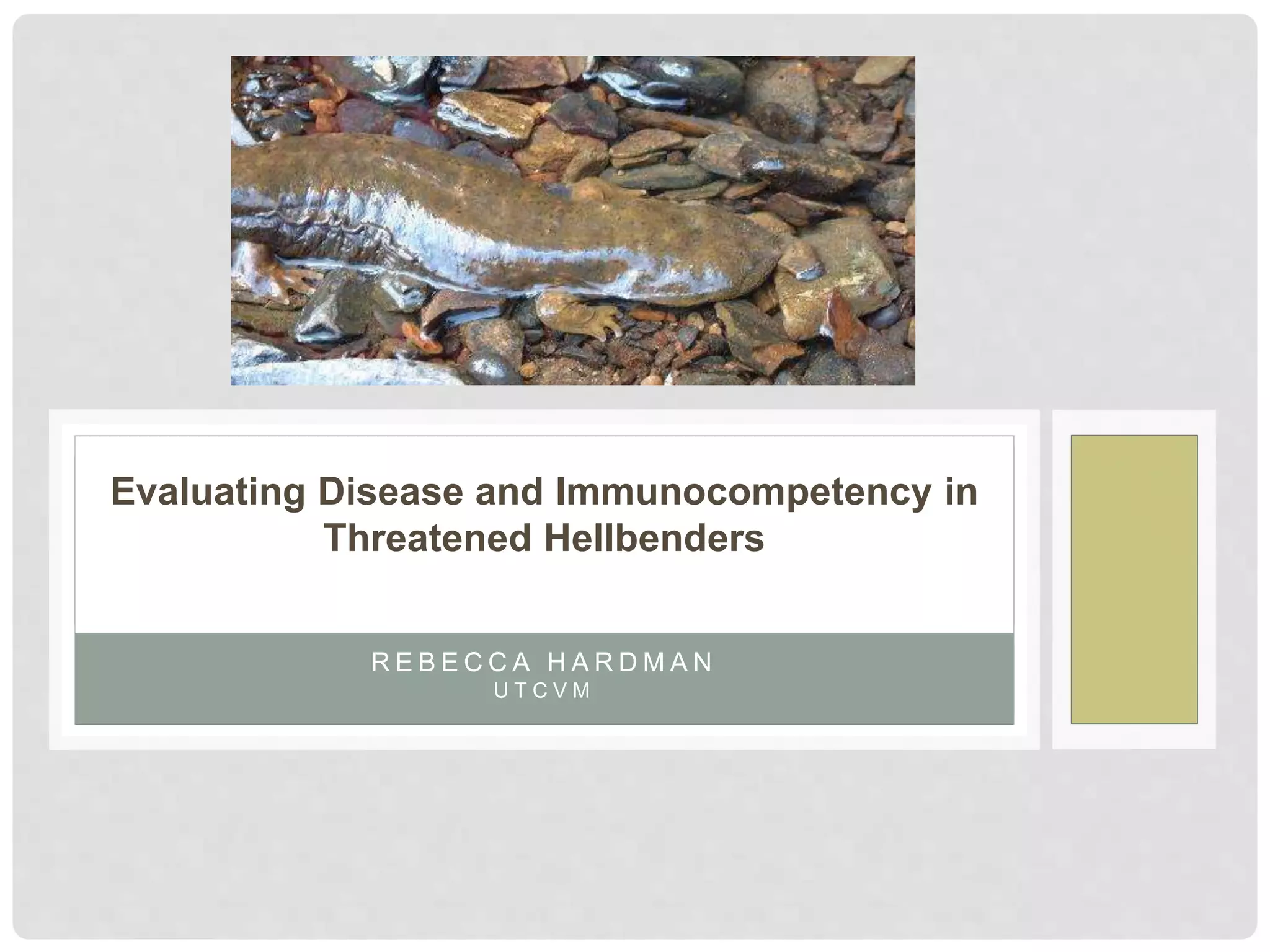
Evaluating Disease and Immunocompetency in
Threatened Hellbenders
THREATS
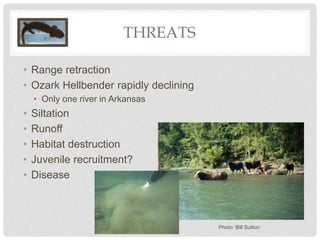
• Range retraction
• Ozark Hellbender rapidly declining
• Only one river in Arkansas
• Siltation
• Runoff
• Habitat destruction
• Juvenile recruitment?
• Disease
Photo: Bill Sutton
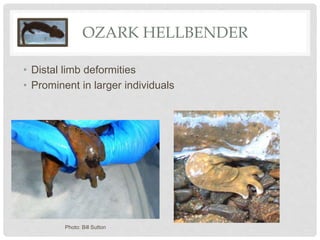
OZARK HELLBENDER
• Distal limb deformities
• Prominent in larger individuals
Photo: Bill Sutton
DUCK RIVER 2015
AMPHIBIAN PATHOGENS
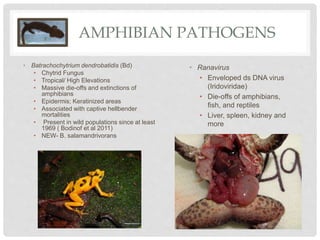
• Batrachochytrium dendrobatidis (Bd)
• Chytrid Fungus
• Tropical/ High Elevations
• Massive die-offs and extinctions of
amphibians
• Epidermis; Keratinized areas
• Associated with captive hellbender
mortalities
• Present in wild populations since at least
1969 ( Bodinof et al 2011)
• NEW- B. salamandrivorans
• Ranavirus
• Enveloped ds DNA virus
(Iridoviridae)
• Die-offs of amphibians,
fish, and reptiles
• Liver, spleen, kidney and
more
PREVIOUS COLLECTION
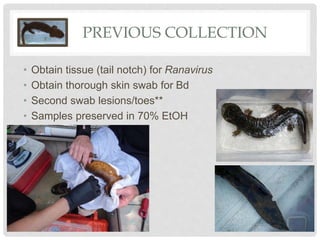
• Obtain tissue (tail notch) for Ranavirus
• Obtain thorough skin swab for Bd
• Second swab lesions/toes**
• Samples preserved in 70% EtOH
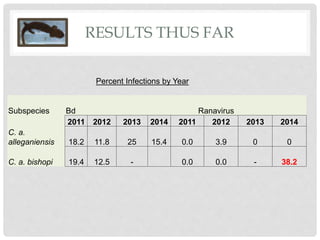
RESULTS THUS FAR
Subspecies Bd Ranavirus
2011 2012 2013 2014 2011 2012 2013 2014
C. a.
alleganiensis 18.2 11.8 25 15.4 0.0 3.9 0 0
C. a. bishopi 19.4 12.5 - 0.0 0.0 - 38.2
Percent Infections by Year
PLAN
• Application of metagenomics
• unidentified pathogens and changes in communities
• Batrachochytrium salamandrivorans
• Recently finalized assay- results soon
• Immune function
• AMPs
• Antibody production
• Challenges against pathogen growth
• Wild chytrid characterization
• Continued targeted PCR sampling
• **Terbinafine implants for headstart?

Evaluating Disease and Immunocompetency in Threatened Hellbenders

  • 1.
    R E BE C C A H A R D M A N U T C V M Evaluating Disease and Immunocompetency in Threatened Hellbenders
  • 2.
    THREATS • Range retraction •Ozark Hellbender rapidly declining • Only one river in Arkansas • Siltation • Runoff • Habitat destruction • Juvenile recruitment? • Disease Photo: Bill Sutton
  • 3.
    OZARK HELLBENDER • Distallimb deformities • Prominent in larger individuals Photo: Bill Sutton
  • 4.
  • 5.
    AMPHIBIAN PATHOGENS • Batrachochytriumdendrobatidis (Bd) • Chytrid Fungus • Tropical/ High Elevations • Massive die-offs and extinctions of amphibians • Epidermis; Keratinized areas • Associated with captive hellbender mortalities • Present in wild populations since at least 1969 ( Bodinof et al 2011) • NEW- B. salamandrivorans • Ranavirus • Enveloped ds DNA virus (Iridoviridae) • Die-offs of amphibians, fish, and reptiles • Liver, spleen, kidney and more
  • 6.
    PREVIOUS COLLECTION • Obtaintissue (tail notch) for Ranavirus • Obtain thorough skin swab for Bd • Second swab lesions/toes** • Samples preserved in 70% EtOH
  • 7.
    RESULTS THUS FAR SubspeciesBd Ranavirus 2011 2012 2013 2014 2011 2012 2013 2014 C. a. alleganiensis 18.2 11.8 25 15.4 0.0 3.9 0 0 C. a. bishopi 19.4 12.5 - 0.0 0.0 - 38.2 Percent Infections by Year
  • 8.
    PLAN • Application ofmetagenomics • unidentified pathogens and changes in communities • Batrachochytrium salamandrivorans • Recently finalized assay- results soon • Immune function • AMPs • Antibody production • Challenges against pathogen growth • Wild chytrid characterization • Continued targeted PCR sampling • **Terbinafine implants for headstart?

Editor's Notes

  • #2 BD- say the scientific name early on
  • #5 Little is known on pathogenicity of these agents within wild Hellbender populations
  • #6 Little is known on pathogenicity of these agents within wild Hellbender populations
  • #9 Comparing results with marcy souza Mention importance of leech