EARTHQUAKE
AN EARTHQUAKE IS THE SHAKING OF THE
SURFACE OF THE EARTH, RESULTING FROM
THE SUDDEN RELEASE OF ENERGY IN THE
EARTH’S LITHOSPHERE THAT CREATES
SEISMIC WAVES.
VIBRATION OF EARTH DUE TO RAPID
RELEASE OF ENERGY,
WHAT ARE THE CAUSES OF
EARTHQUAKES?
 Earthquakes are usually caused when rock underground suddenly breaks
along a fault. This sudden release of energy causes the seismic waves that
make ground shake. When two blocks of rock or two blocks or two plates
are rubbing against each other, they stick a little. When the rocks break,
the earthquake occurs.
 Volcanic eruptions, The main cause of earthquake is volcanic eruptions.
 Tectonic Movements. The surface of the earth consists of some plates,
comprising of the upper mantle.
 Geological faults
 Man Made
 Minor causes
HOW DOES EARTHQUAKES OCCUR?
 Earthquakes are usually caused when rock underground suddenly breaks
along a fault. This sudden release of energy causes the seismic waves that
make the ground shake. When two blocks of rock or two plates are rubbing
against each other, they stick a little. They don't just slide smoothly; the
rocks catch on each other. The rocks are still pushing against each other,
but not moving. After a while, the rocks break because of all the pressure
that's built up. When the rocks break, the earthquake occurs. During the
earthquake and afterward, the plates or blocks of rock start moving, and
they continue to move until they get stuck again. The spot underground
where the rock breaks is called the focus of the earthquake. The place right
above the focus (on top of the ground) is called the epicenter of the
earthquake.
WHERE DO EARTHQUAKES OCCUR?
AND WHY?
 Earthquakes occur all the time all over the world,
both along plate edges and along faults.
Most earthquakes occur along the edge of the
oceanic and continental plates. The earth's crust (the
outer layer of the planet) is made up of several
pieces, called plates.
EARTHQUAKE INTENSITY
 The intensity is a number (written as a Roman numeral)
describing the severity of an earthquake in terms of its
effects on the earth's surface and on humans and their
structures. Several scales exist, but the ones most
commonly used in the United States are the Modified
Mercalli scale and the Rossi-Forel scale. There are many
intensities for an earthquake, depending on where you
are, unlike the magnitude, which is one number for each
earthquake.
EARTHQUAKE MAGNITUDE
 Earthquake Magnitude geology. a measure of the
size of an earthquake based on the quantity of
energy released: specified on the Richter scale.
The magnitude is a number that characterizes the
relative size of an earthquake.Magnitude is based on
measurement of the maximum motion recorded by a
seismograph.
WHAT TO DO BEFORE AN
EARTHQUAKE?
 Make sure you have a fire extinguisher, first aid kit, a battery-
powered radio, a flashlight, and extra batteries at home.
 Learn first aid.
 Learn how to turn off the gas, water, and electricity.
 Make up a plan of where to meet your family after an
earthquake.
 Don't leave heavy objects on shelves (they'll fall during a quake).
 Anchor heavy furniture, cupboards, and appliances to the walls or
floor.
 Learn the earthquake plan at your school or workplace.
WHAT TO DO DURING AN
EARTHQUAKE?
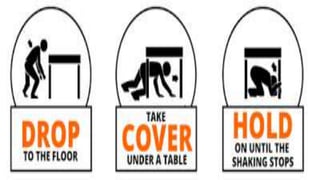
 Stay calm! If you're indoors, stay inside. If you're outside, stay outside.
 If you're indoors, stand against a wall near the center of the building, stand in a
doorway, or crawl under heavy furniture (a desk or table). Stay away from
windows and outside doors.
 If you're outdoors, stay in the open away from power lines or anything that
might fall. Stay away from buildings (stuff might fall off the building or the
building could fall on you).
 Don't use matches, candles, or any flame. Broken gas lines and fire don't mix.
 If you're in a car, stop the car and stay inside the car until the earthquake stops.
 Don't use elevators (they'll probably get stuck anyway).
WHAT TO DO AFTER AN EARTHQUAKE?
 Check yourself and others for injuries. Provide first aid for anyone who needs it.
 Check water, gas, and electric lines for damage. If any are damaged, shut off the valves. Check
for the smell of gas. If you smell it, open all the windows and doors, leave immediately, and
report it to the authorities (use someone else's phone).
 Turn on the radio. Don't use the phone unless it's an emergency.
 Stay out of damaged buildings.
 Be careful around broken glass and debris. Wear boots or sturdy shoes to keep from cutting
your feet.
 Be careful of chimneys (they may fall on you).
 Stay away from beaches. Tsunamis and seiches sometimes hit after the ground has stopped
shaking.
 Stay away from damaged areas.
 If you're at school or work, follow the emergency plan or the instructions of the person in
charge.
 Expect aftershocks.
WHY IS THE PHILIPPINES CONSIDERED AS
AN EARTHQUAKE PRONE AREA?
 The Philippines has suffered from an
inexhaustible number of deadly typhoons,
earthquakes, volcano eruptions and other
natural disasters. This is due to its location along
the Ring of Fire, or typhoon belt – a large Pacific
Ocean region where many of Earth's volcanic
eruptions and earthquakes occur.
LISTS OF EARTHQUAKE IN THE
PHILIPPINES
In a stadium or theater: Drop to the
ground in front of your seat or lean over
as much as possible, then Cover your
head with your arms (as best as possible),
and Hold On to your neck with both
hands until shaking stops. Then walk out
slowly, watching for anything that could
fall during aftershocks.

earthquake.pptx

  • 1.
    EARTHQUAKE AN EARTHQUAKE ISTHE SHAKING OF THE SURFACE OF THE EARTH, RESULTING FROM THE SUDDEN RELEASE OF ENERGY IN THE EARTH’S LITHOSPHERE THAT CREATES SEISMIC WAVES. VIBRATION OF EARTH DUE TO RAPID RELEASE OF ENERGY,
  • 2.
    WHAT ARE THECAUSES OF EARTHQUAKES?  Earthquakes are usually caused when rock underground suddenly breaks along a fault. This sudden release of energy causes the seismic waves that make ground shake. When two blocks of rock or two blocks or two plates are rubbing against each other, they stick a little. When the rocks break, the earthquake occurs.  Volcanic eruptions, The main cause of earthquake is volcanic eruptions.  Tectonic Movements. The surface of the earth consists of some plates, comprising of the upper mantle.  Geological faults  Man Made  Minor causes
  • 3.
    HOW DOES EARTHQUAKESOCCUR?  Earthquakes are usually caused when rock underground suddenly breaks along a fault. This sudden release of energy causes the seismic waves that make the ground shake. When two blocks of rock or two plates are rubbing against each other, they stick a little. They don't just slide smoothly; the rocks catch on each other. The rocks are still pushing against each other, but not moving. After a while, the rocks break because of all the pressure that's built up. When the rocks break, the earthquake occurs. During the earthquake and afterward, the plates or blocks of rock start moving, and they continue to move until they get stuck again. The spot underground where the rock breaks is called the focus of the earthquake. The place right above the focus (on top of the ground) is called the epicenter of the earthquake.
  • 4.
    WHERE DO EARTHQUAKESOCCUR? AND WHY?  Earthquakes occur all the time all over the world, both along plate edges and along faults. Most earthquakes occur along the edge of the oceanic and continental plates. The earth's crust (the outer layer of the planet) is made up of several pieces, called plates.
  • 5.
    EARTHQUAKE INTENSITY  Theintensity is a number (written as a Roman numeral) describing the severity of an earthquake in terms of its effects on the earth's surface and on humans and their structures. Several scales exist, but the ones most commonly used in the United States are the Modified Mercalli scale and the Rossi-Forel scale. There are many intensities for an earthquake, depending on where you are, unlike the magnitude, which is one number for each earthquake.
  • 6.
    EARTHQUAKE MAGNITUDE  EarthquakeMagnitude geology. a measure of the size of an earthquake based on the quantity of energy released: specified on the Richter scale. The magnitude is a number that characterizes the relative size of an earthquake.Magnitude is based on measurement of the maximum motion recorded by a seismograph.
  • 7.
    WHAT TO DOBEFORE AN EARTHQUAKE?  Make sure you have a fire extinguisher, first aid kit, a battery- powered radio, a flashlight, and extra batteries at home.  Learn first aid.  Learn how to turn off the gas, water, and electricity.  Make up a plan of where to meet your family after an earthquake.  Don't leave heavy objects on shelves (they'll fall during a quake).  Anchor heavy furniture, cupboards, and appliances to the walls or floor.  Learn the earthquake plan at your school or workplace.
  • 8.
    WHAT TO DODURING AN EARTHQUAKE?  Stay calm! If you're indoors, stay inside. If you're outside, stay outside.  If you're indoors, stand against a wall near the center of the building, stand in a doorway, or crawl under heavy furniture (a desk or table). Stay away from windows and outside doors.  If you're outdoors, stay in the open away from power lines or anything that might fall. Stay away from buildings (stuff might fall off the building or the building could fall on you).  Don't use matches, candles, or any flame. Broken gas lines and fire don't mix.  If you're in a car, stop the car and stay inside the car until the earthquake stops.  Don't use elevators (they'll probably get stuck anyway).
  • 9.
    WHAT TO DOAFTER AN EARTHQUAKE?  Check yourself and others for injuries. Provide first aid for anyone who needs it.  Check water, gas, and electric lines for damage. If any are damaged, shut off the valves. Check for the smell of gas. If you smell it, open all the windows and doors, leave immediately, and report it to the authorities (use someone else's phone).  Turn on the radio. Don't use the phone unless it's an emergency.  Stay out of damaged buildings.  Be careful around broken glass and debris. Wear boots or sturdy shoes to keep from cutting your feet.  Be careful of chimneys (they may fall on you).  Stay away from beaches. Tsunamis and seiches sometimes hit after the ground has stopped shaking.  Stay away from damaged areas.  If you're at school or work, follow the emergency plan or the instructions of the person in charge.  Expect aftershocks.
  • 10.
    WHY IS THEPHILIPPINES CONSIDERED AS AN EARTHQUAKE PRONE AREA?  The Philippines has suffered from an inexhaustible number of deadly typhoons, earthquakes, volcano eruptions and other natural disasters. This is due to its location along the Ring of Fire, or typhoon belt – a large Pacific Ocean region where many of Earth's volcanic eruptions and earthquakes occur.
  • 11.
    LISTS OF EARTHQUAKEIN THE PHILIPPINES
  • 13.
    In a stadiumor theater: Drop to the ground in front of your seat or lean over as much as possible, then Cover your head with your arms (as best as possible), and Hold On to your neck with both hands until shaking stops. Then walk out slowly, watching for anything that could fall during aftershocks.