


Earthquake Preparedness
Earthquake
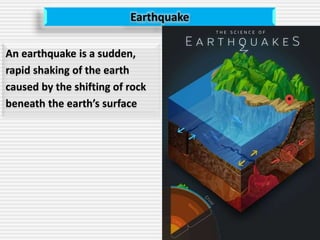
An earthquake is a sudden,
rapid shaking of the earth
caused by the shifting of rock
beneath the earth’s surface
Earthquake
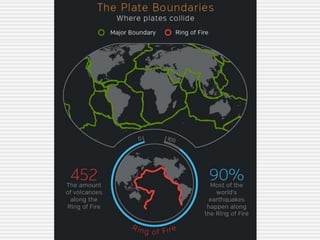
Earthquakes happen along cracks in the earth's surface, called
fault lines, and can be felt over large areas, although they
usually last less than one minute. Earthquakes cannot be
predicted- although scientists are working on it!
Earthquake
Because earthquakes happen without warning, being prepared
in advance is critical to minimize damages and loss. Emergency
kit and disaster plan are important.
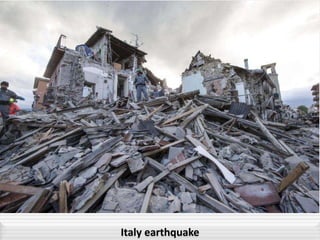
Italy earthquake
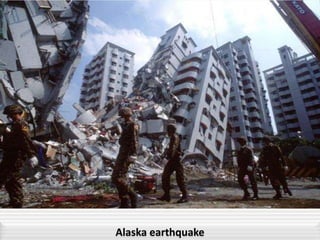
Alaska earthquake
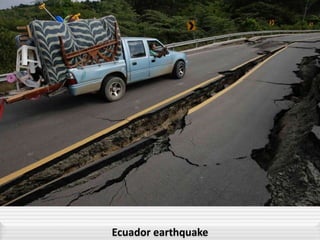
Ecuador earthquake
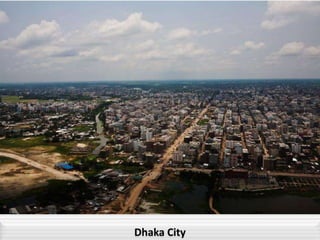
Dhaka City
Dhaka City
Before an Earthquake
Before an Earthquake 1/2
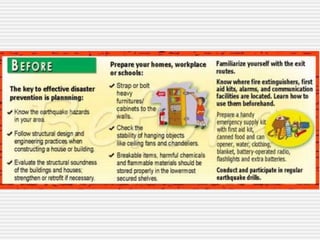
o Become aware of earthquake plans for the buildings you
occupy regularly
o Pick safe places in each room of your home, workplace and
school
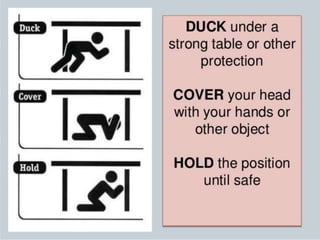
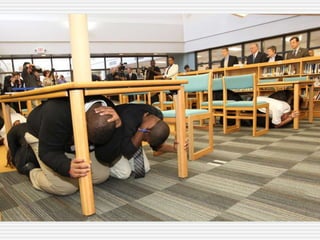
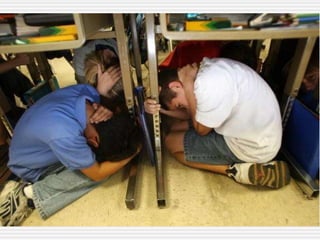
o Practice drop, cover and hold on in each safe place
o Keep a flashlight and sturdy shoes by each person's bed
o Make sure your home is securely anchored to its foundation
o Bolt and brace water heaters and gas appliances to wall
studs
Before an Earthquake 2/2
o Bolt bookcases, cabinets and other tall furniture to wall
studs
o Hang heavy items, such as pictures and mirrors, away from
beds, couches
o Brace overhead light fixtures
o Install strong latches or bolts on cabinets
o Learn how to shut off the gas valves in your home
o Learn about your area's seismic building standards
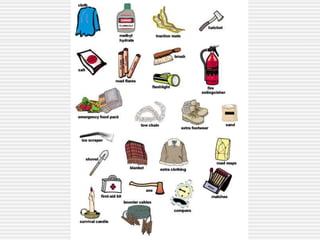
o Keep and maintain an emergency supplies kit
During an Earthquake
During an Earthquake-Staying Safe Indoors 1/2
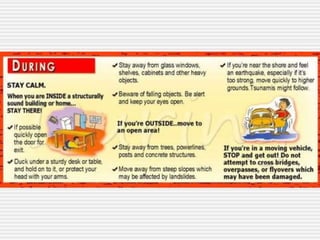
o DROP, COVER and HOLD ON! Move as little as possible -
most injuries during earthquakes occur because of people
moving around, falling and suffering sprains, fractures and
head injuries. Try to protect your head and torso
o If you are in bed, stay there, curl up and hold on, and cover
your head
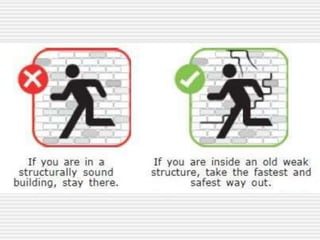
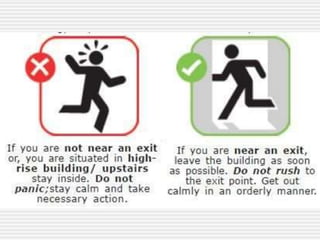
o Stay indoors until the shaking stops and you are sure it is
safe to exit
During an Earthquake-Staying Safe Indoors 2/2
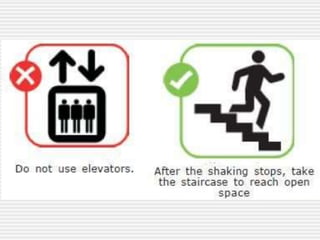
o If you must leave a building after the shaking stops, use
stairs rather than an elevator in case of aftershocks, power
outages or other damage
o Be aware that smoke alarms and sprinkler systems
frequently go off in buildings during an earthquake, even if
there is no fire
o If you smell gas, get out of the house and move as far away
as possible
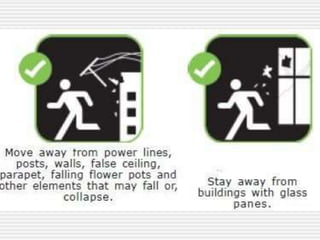
o Before you leave any building, check to make sure that there
is no debris from the building that could fall on you
During an Earthquake-Staying Safe Outdoors 1/2
o Find a clear spot and drop to the ground. Stay there until the
shaking stops
o Try to get as far away from buildings, power lines, trees, and
streetlights as possible
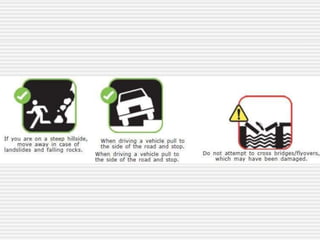
o If you are in a vehicle, pull over to a clear location and stop.
Avoid bridges, overpasses and power lines if possible
o Stay inside with your seatbelt fastened until the shaking
stops
During an Earthquake-Staying Safe Outdoors 2/2
o After the shaking has stopped, drive on carefully, avoiding
bridges and ramps that may have been damaged
o If a power line falls on your vehicle, do not get out. Wait for
assistance
o If you are in a mountainous area or near unstable slopes or
cliffs, be alert for falling rocks and other debris as well as
landslides
During an Earthquake-If you are in a moving vehicle
o If you are in a moving vehicle, stop as quickly and safely as
possible and stay in the vehicle
o Avoid stopping near or under buildings, trees, overpasses,
and utility wires
o Proceed cautiously once the earthquake has stopped
o Avoid roads, bridges, or ramps that the earthquake may
have damaged
After an Earthquake
After an Earthquake 1/4
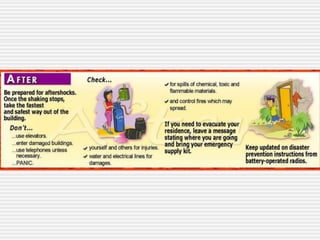
o After an earthquake, the disaster may continue. Expect and
prepare for potential aftershocks, landslides or even a
tsunami
o Tsunamis are often generated by earthquakes
o Each time you feel an aftershock, drop, cover and hold on.
Aftershocks frequently occur minutes, days, weeks and even
months following an earthquake
o Check yourself for injuries and get first aid, if necessary,
before helping injured or trapped persons
After an Earthquake 2/4
o Put on long pants, a long-sleeved shirt, sturdy shoes and
work gloves to protect against injury from broken objects
o Look quickly for damage in and around your home and get
everyone out if your home is unsafe
o Listen to a portable, battery-operated or hand-crank radio
for updated emergency information and instructions
o Check the telephones in your home or workplace to see if
you can get a dial tone. Make brief calls to report life-
threatening emergencies
After an Earthquake 3/4
o Look for and extinguish small fires. Fire is the most common
hazard after an earthquake
o Clean up spilled medications, bleach, gasoline or other
flammable liquids immediately
o Open closet and cabinet doors carefully as contents may
have shifted
o Help people who require special assistance, such as infants,
children and the elderly or disabled
After an Earthquake 4/4
o Watch out for fallen power lines or broken gas lines and stay
out of damaged areas
o Keep animals under your direct control
o Stay out of damaged buildings
o If you were away from home, return only when authorities
say it is safe to do so. Use extreme caution and examine
walls, floors, doors, staircases and windows to check for
damage
o Be careful when driving after an earthquake and anticipate
traffic light outages
Video clip
Earthquake preparedness

Earthquake preparedness

  • 1.
  • 2.
    Earthquake An earthquake isa sudden, rapid shaking of the earth caused by the shifting of rock beneath the earth’s surface
  • 3.
    Earthquake Earthquakes happen alongcracks in the earth's surface, called fault lines, and can be felt over large areas, although they usually last less than one minute. Earthquakes cannot be predicted- although scientists are working on it!
  • 4.
    Earthquake Because earthquakes happenwithout warning, being prepared in advance is critical to minimize damages and loss. Emergency kit and disaster plan are important.
  • 6.
  • 7.
  • 8.
  • 9.
  • 10.
  • 11.
  • 13.
    Before an Earthquake1/2 o Become aware of earthquake plans for the buildings you occupy regularly o Pick safe places in each room of your home, workplace and school o Practice drop, cover and hold on in each safe place o Keep a flashlight and sturdy shoes by each person's bed o Make sure your home is securely anchored to its foundation o Bolt and brace water heaters and gas appliances to wall studs
  • 14.
    Before an Earthquake2/2 o Bolt bookcases, cabinets and other tall furniture to wall studs o Hang heavy items, such as pictures and mirrors, away from beds, couches o Brace overhead light fixtures o Install strong latches or bolts on cabinets o Learn how to shut off the gas valves in your home o Learn about your area's seismic building standards o Keep and maintain an emergency supplies kit
  • 15.
  • 17.
    During an Earthquake-StayingSafe Indoors 1/2 o DROP, COVER and HOLD ON! Move as little as possible - most injuries during earthquakes occur because of people moving around, falling and suffering sprains, fractures and head injuries. Try to protect your head and torso o If you are in bed, stay there, curl up and hold on, and cover your head o Stay indoors until the shaking stops and you are sure it is safe to exit
  • 18.
    During an Earthquake-StayingSafe Indoors 2/2 o If you must leave a building after the shaking stops, use stairs rather than an elevator in case of aftershocks, power outages or other damage o Be aware that smoke alarms and sprinkler systems frequently go off in buildings during an earthquake, even if there is no fire o If you smell gas, get out of the house and move as far away as possible o Before you leave any building, check to make sure that there is no debris from the building that could fall on you
  • 19.
    During an Earthquake-StayingSafe Outdoors 1/2 o Find a clear spot and drop to the ground. Stay there until the shaking stops o Try to get as far away from buildings, power lines, trees, and streetlights as possible o If you are in a vehicle, pull over to a clear location and stop. Avoid bridges, overpasses and power lines if possible o Stay inside with your seatbelt fastened until the shaking stops
  • 20.
    During an Earthquake-StayingSafe Outdoors 2/2 o After the shaking has stopped, drive on carefully, avoiding bridges and ramps that may have been damaged o If a power line falls on your vehicle, do not get out. Wait for assistance o If you are in a mountainous area or near unstable slopes or cliffs, be alert for falling rocks and other debris as well as landslides
  • 21.
    During an Earthquake-Ifyou are in a moving vehicle o If you are in a moving vehicle, stop as quickly and safely as possible and stay in the vehicle o Avoid stopping near or under buildings, trees, overpasses, and utility wires o Proceed cautiously once the earthquake has stopped o Avoid roads, bridges, or ramps that the earthquake may have damaged
  • 22.
  • 24.
    After an Earthquake1/4 o After an earthquake, the disaster may continue. Expect and prepare for potential aftershocks, landslides or even a tsunami o Tsunamis are often generated by earthquakes o Each time you feel an aftershock, drop, cover and hold on. Aftershocks frequently occur minutes, days, weeks and even months following an earthquake o Check yourself for injuries and get first aid, if necessary, before helping injured or trapped persons
  • 25.
    After an Earthquake2/4 o Put on long pants, a long-sleeved shirt, sturdy shoes and work gloves to protect against injury from broken objects o Look quickly for damage in and around your home and get everyone out if your home is unsafe o Listen to a portable, battery-operated or hand-crank radio for updated emergency information and instructions o Check the telephones in your home or workplace to see if you can get a dial tone. Make brief calls to report life- threatening emergencies
  • 26.
    After an Earthquake3/4 o Look for and extinguish small fires. Fire is the most common hazard after an earthquake o Clean up spilled medications, bleach, gasoline or other flammable liquids immediately o Open closet and cabinet doors carefully as contents may have shifted o Help people who require special assistance, such as infants, children and the elderly or disabled
  • 27.
    After an Earthquake4/4 o Watch out for fallen power lines or broken gas lines and stay out of damaged areas o Keep animals under your direct control o Stay out of damaged buildings o If you were away from home, return only when authorities say it is safe to do so. Use extreme caution and examine walls, floors, doors, staircases and windows to check for damage o Be careful when driving after an earthquake and anticipate traffic light outages
  • 37.