By: Lindsey Krowiarz
 One-thirdof all accidental fires in
 restaurants faulty electrical wiring and
 equipment or improper use of equipment
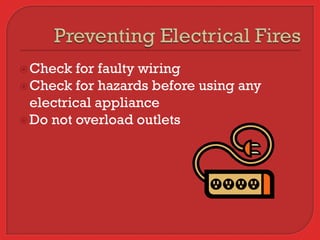
 Check   for faulty wiring
 Check for hazards before using any
  electrical appliance
 Do not overload outlets
 Cleananything that comes in contact with
 grease regularly
  • Walls and work surfaces
  • ranges
  • fryers
  • broilers
  • microwave and convection ovens
  • heating, air-conditioning, and ventilation units
  • hoods and filters
 Keep  all flammable items and materials
  away from heat sources
 Store all linens and food in dry storage
  boxes
 Store paper goods away from corrosive
  materials
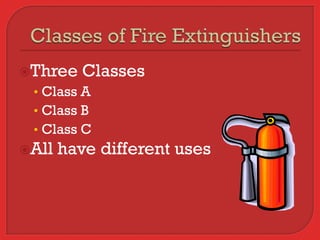
Three    Classes
 • Class A
 • Class B
 • Class C
All   have different uses
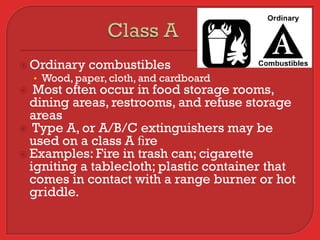
 Ordinary combustibles
  • Wood, paper, cloth, and cardboard
 Most often occur in food storage    rooms,
  dining areas, restrooms, and refuse storage
  areas
 Type A, or A/B/C extinguishers may be
  used on a class A fire
 Examples: Fire in trash can; cigarette
  igniting a tablecloth; plastic container that
  comes in contact with a range burner or hot
  griddle.
   Flammable liquids
    • gases, grease, oil, shortening, pressurized cans
 May occur in kitchens (deep-fat fryers) and
  maintenance areas
 Only B/C extinguishers with the dry chemicals
  sodium bicarbonate or potassium bicarbonate
  should be used on deep-fat fryer fires
 If a class B fire does not occur in a deep-fat
  fryer, any A/B or B/C extinguisher can be used
 Examples: Flames from a grill igniting grease
  deposits on a hood filter in the kitchen; aerosol
  cans stored near a heat source exploding.
 Electrical equipment
 Live electrical equipment, cords, circuits,
  motors, switches, wiring
 Only those B/C and A/B/C extinguishers
  containing nonconductive materials, such
  as carbon dioxide, should be used on
  electrical fires
 Examples: Fire in a toaster; frayed cord
  igniting while a machine is operating; fire
  in the motor of a grinder.
 Water-Based
 Aqueous Film-Forming Foam
 Carbon Dioxide
 Dry Chemical
 Rechargeable  from a clean water source.
  All recharging and testing should be
  done by an approved fire extinguisher
  servicing company.
 Use on class A fires only
 Reduce  temperature and supply of
  oxygen to the fire
 Must be protected from freezing
 Use on class A or A/B fires
 Do not use on deep-fat fryer fires
 contain a gas-based mixture that leaves
  no residue
 limited in range
 may deplete the user’s oxygen supply
 Use on class B or C fires
 Interrupt  the chemical action that
  sustains fire.
 They are available in A/B/C and B/C.
 Only B/C types should be used on deep-
  fat fryer fires.
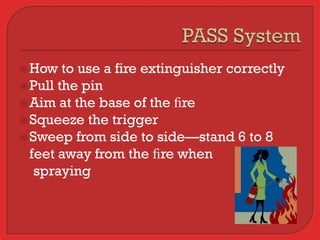
 How   to use a fire extinguisher correctly
 Pull the pin
 Aim at the base of the fire
 Squeeze the trigger
 Sweep from side to side—stand 6 to 8
  feet away from the fire when
   spraying
 Operate   even when no one is in the
  facility
 Automatic sprinklers provide an early
  and effective response to fire.
 Special kitchen sprinkler systems are
  required by the National Fire Protection
  Association (NFPA) for deep-fat fryers,
  ranges, griddles, and broilers.
 Smoke detectors-
   • require a flow of air in order to work well, so they
    should not be located in “dead” spaces
  • should not be used in food preparation areas.
 Heat detectors-
  • detect fires where there is no smoke
  • activated by the significant increase of
    temperature associated with fire
 Flame detectors-
   • react to the movement of flames.
 The smoke is extremely thick.
 The fire is too hot for you to get close
  enough to fight it effectively.
 The fire is greater than 3 feet across.
 There are potentially hazardous substances
  near the fire.
 You do not have the correct type of fire
  extinguisher for the fire at hand.
 You do not know how to use the fire
  extinguisher.
 1. Call the fire department.
 2. Begin evacuating staff and guests.
 3. Turn off the gas valve to prevent
  escalation
 4. Meet other employees at the preassigned
  meeting place.
 5. Make sure that all persons have safely
  escaped.
 6. When the fire department arrives, inform
  a firefighter if anyone is missing;
 do not reenter the building yourself.
 Regularly check electrical equipment
 Maintain proper fire safety equipment
 Follow correct steps to put out fires and
  evacuate the building

Fire Hazards

  • 1.
  • 2.
     One-thirdof allaccidental fires in restaurants faulty electrical wiring and equipment or improper use of equipment
  • 3.
     Check for faulty wiring  Check for hazards before using any electrical appliance  Do not overload outlets
  • 4.
     Cleananything thatcomes in contact with grease regularly • Walls and work surfaces • ranges • fryers • broilers • microwave and convection ovens • heating, air-conditioning, and ventilation units • hoods and filters
  • 5.
     Keep all flammable items and materials away from heat sources  Store all linens and food in dry storage boxes  Store paper goods away from corrosive materials
  • 6.
    Three Classes • Class A • Class B • Class C All have different uses
  • 7.
     Ordinary combustibles • Wood, paper, cloth, and cardboard  Most often occur in food storage rooms, dining areas, restrooms, and refuse storage areas  Type A, or A/B/C extinguishers may be used on a class A fire  Examples: Fire in trash can; cigarette igniting a tablecloth; plastic container that comes in contact with a range burner or hot griddle.
  • 8.
    Flammable liquids • gases, grease, oil, shortening, pressurized cans  May occur in kitchens (deep-fat fryers) and maintenance areas  Only B/C extinguishers with the dry chemicals sodium bicarbonate or potassium bicarbonate should be used on deep-fat fryer fires  If a class B fire does not occur in a deep-fat fryer, any A/B or B/C extinguisher can be used  Examples: Flames from a grill igniting grease deposits on a hood filter in the kitchen; aerosol cans stored near a heat source exploding.
  • 9.
     Electrical equipment Live electrical equipment, cords, circuits, motors, switches, wiring  Only those B/C and A/B/C extinguishers containing nonconductive materials, such as carbon dioxide, should be used on electrical fires  Examples: Fire in a toaster; frayed cord igniting while a machine is operating; fire in the motor of a grinder.
  • 10.
     Water-Based  AqueousFilm-Forming Foam  Carbon Dioxide  Dry Chemical
  • 11.
     Rechargeable from a clean water source. All recharging and testing should be done by an approved fire extinguisher servicing company.  Use on class A fires only
  • 12.
     Reduce temperature and supply of oxygen to the fire  Must be protected from freezing  Use on class A or A/B fires  Do not use on deep-fat fryer fires
  • 13.
     contain agas-based mixture that leaves no residue  limited in range  may deplete the user’s oxygen supply  Use on class B or C fires
  • 14.
     Interrupt the chemical action that sustains fire.  They are available in A/B/C and B/C.  Only B/C types should be used on deep- fat fryer fires.
  • 15.
     How to use a fire extinguisher correctly  Pull the pin  Aim at the base of the fire  Squeeze the trigger  Sweep from side to side—stand 6 to 8 feet away from the fire when spraying
  • 16.
     Operate even when no one is in the facility  Automatic sprinklers provide an early and effective response to fire.  Special kitchen sprinkler systems are required by the National Fire Protection Association (NFPA) for deep-fat fryers, ranges, griddles, and broilers.
  • 17.
     Smoke detectors- • require a flow of air in order to work well, so they should not be located in “dead” spaces • should not be used in food preparation areas.  Heat detectors- • detect fires where there is no smoke • activated by the significant increase of temperature associated with fire  Flame detectors- • react to the movement of flames.
  • 18.
     The smokeis extremely thick.  The fire is too hot for you to get close enough to fight it effectively.  The fire is greater than 3 feet across.  There are potentially hazardous substances near the fire.  You do not have the correct type of fire extinguisher for the fire at hand.  You do not know how to use the fire extinguisher.
  • 19.
     1. Callthe fire department.  2. Begin evacuating staff and guests.  3. Turn off the gas valve to prevent escalation  4. Meet other employees at the preassigned meeting place.  5. Make sure that all persons have safely escaped.  6. When the fire department arrives, inform a firefighter if anyone is missing;  do not reenter the building yourself.
  • 20.
     Regularly checkelectrical equipment  Maintain proper fire safety equipment  Follow correct steps to put out fires and evacuate the building