EARTHING
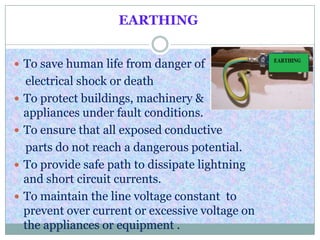
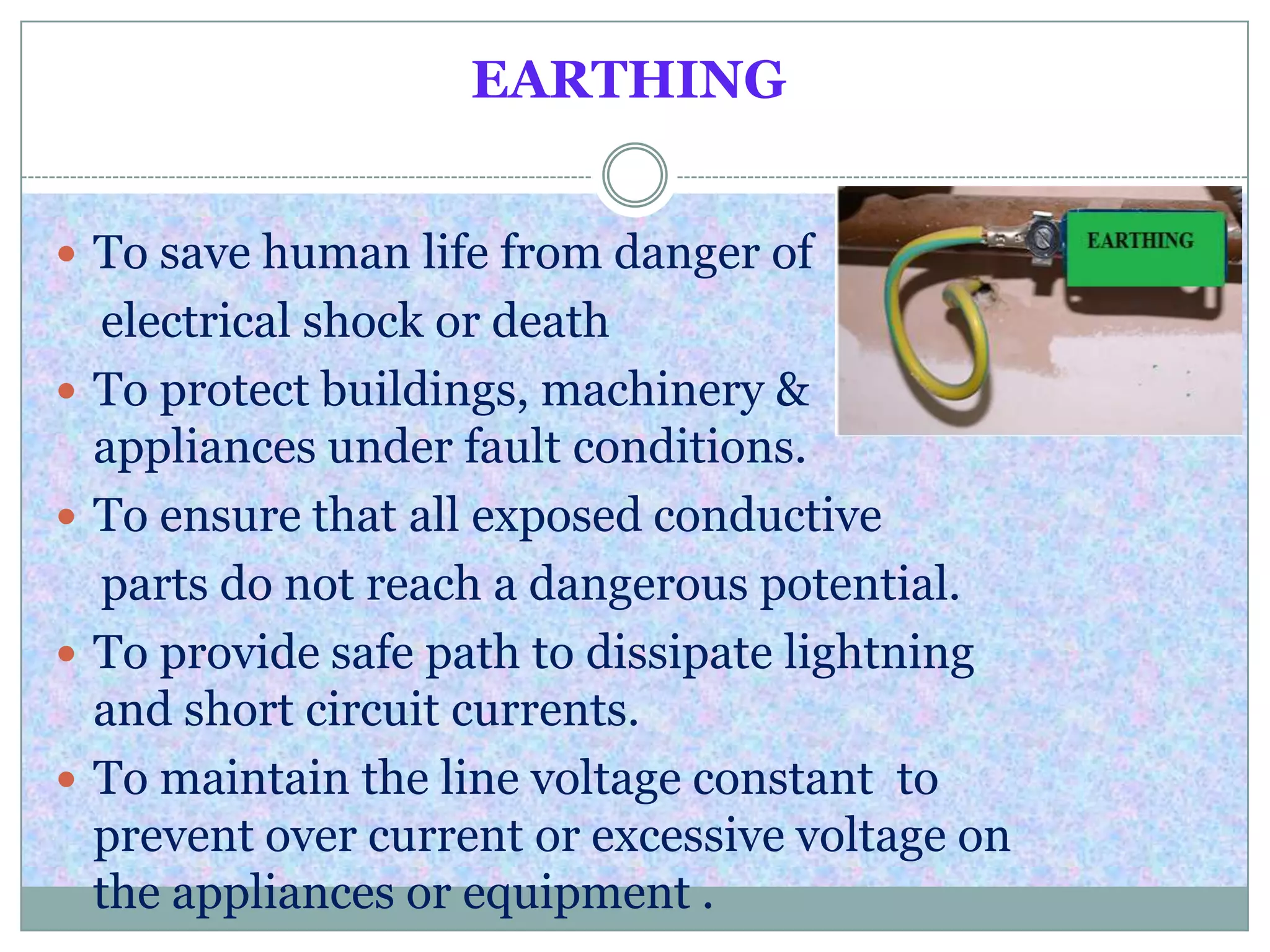
 To save human life from danger of
electrical shock or death
 To protect buildings, machinery &
appliances under fault conditions.
 To ensure that all exposed conductive
parts do not reach a dangerous potential.
 To provide safe path to dissipate lightning
and short circuit currents.
 To maintain the line voltage constant to
prevent over current or excessive voltage on
the appliances or equipment .
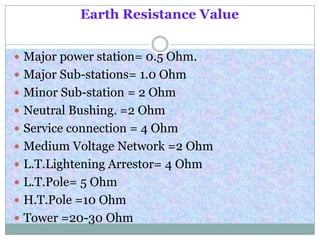
Earth Resistance Value
 Major power station= 0.5 Ohm.
 Major Sub-stations= 1.0 Ohm
 Minor Sub-station = 2 Ohm
 Neutral Bushing. =2 Ohm
 Service connection = 4 Ohm
 Medium Voltage Network =2 Ohm
 L.T.Lightening Arrestor= 4 Ohm
 L.T.Pole= 5 Ohm
 H.T.Pole =10 Ohm
 Tower =20-30 Ohm
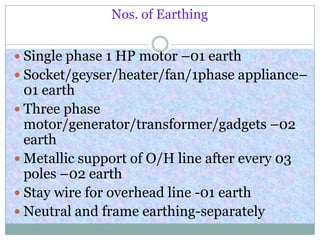
Nos. of Earthing
 Single phase 1 HP motor –01 earth
 Socket/geyser/heater/fan/1phase appliance–
01 earth
 Three phase
motor/generator/transformer/gadgets –02
earth
 Metallic support of O/H line after every 03
poles –02 earth
 Stay wire for overhead line -01 earth
 Neutral and frame earthing-separately
While doing Earthing
 Distance –from the equipment not more
than 1.5 meter
 Cross section of earth continuity conductor-
not less than 14 SWG copper wire
 Cross section of earth wire-not less than
half of the main wire
 Voltage between Earth Pit conductors to
Neutral of Mains Supply 220V AC 50 Hz it
should be less than 2.0 Volts.
Factors Affecting Earth Resistance
 Soil resistivity
 Soil condition
 Moisture
 Dissolved salts
 Climate conditions
 Physical composition
 Location of earth pit
 Effect of grain size
 Effect of current magnitude
 Area available
Type Of Earthing
 Plate earthing :where digging is easy
 Pipe earthing :very common, used for
domestic, small substations
 Strip earthing :where earth bed have
rocky soil
 Rod earthing: done is sandy area/small
lamp post
Pipe Earthing
 GI pipe [C-class] of
75 mm diameter
 10 feet long welded
with welded flat
having 4 numbers of
holes for connections
 Earth pits are
generally filled with
alternate layer of
charcoal & salt or
earth reactivation
compound.
Strip Earthing
 Strip earthing :where
earth bed have rocky soil
 Copper strip size 5 SWG
or 25mmX1.6mm is
buried in horizontal
trenches
 Earth resistance remains
high i.e. 5 ohm
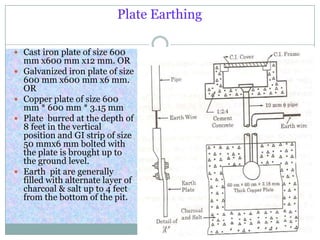
Plate Earthing
 Cast iron plate of size 600
mm x600 mm x12 mm. OR
 Galvanized iron plate of size
600 mm x600 mm x6 mm.
OR
 Copper plate of size 600
mm * 600 mm * 3.15 mm
 Plate burred at the depth of
8 feet in the vertical
position and GI strip of size
50 mmx6 mm bolted with
the plate is brought up to
the ground level.
 Earth pit are generally
filled with alternate layer of
charcoal & salt up to 4 feet
from the bottom of the pit.
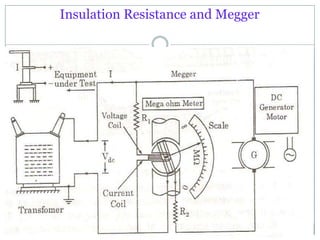
Insulation Resistance and Megger
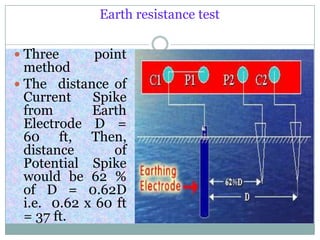
Earth resistance test
 Three point
method
 The distance of
Current Spike
from Earth
Electrode D =
60 ft, Then,
distance of
Potential Spike
would be 62 %
of D = 0.62D
i.e. 0.62 x 60 ft
= 37 ft.
Difference between Insulation Resistance and
Earth resistance
 Insulation Resistance :measured
between earth and conductor, value in
tens/thousand/mega ohm, in built DC
generator
 Earth resistance: measured for a
earthed body or neutral point by earth
resistance tester, value less than 10 ohm
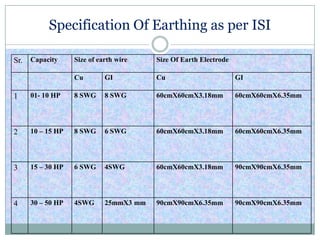
Specification Of Earthing as per ISI
Sr. Capacity Size of earth wire Size Of Earth Electrode
Cu GI Cu GI
1 01- 10 HP 8 SWG 8 SWG 60cmX60cmX3.18mm 60cmX60cmX6.35mm
2 10 – 15 HP 8 SWG 6 SWG 60cmX60cmX3.18mm 60cmX60cmX6.35mm
3 15 – 30 HP 6 SWG 4SWG 60cmX60cmX3.18mm 90cmX90cmX6.35mm
4 30 – 50 HP 4SWG 25mmX3 mm 90cmX90cmX6.35mm 90cmX90cmX6.35mm
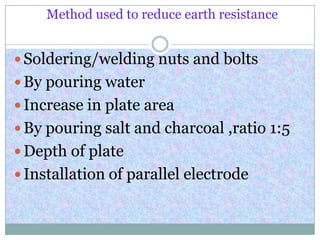
Method used to reduce earth resistance
 Soldering/welding nuts and bolts
 By pouring water
 Increase in plate area
 By pouring salt and charcoal ,ratio 1:5
 Depth of plate
 Installation of parallel electrode
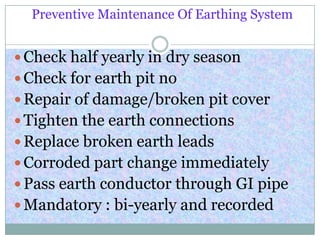
Preventive Maintenance Of Earthing System
 Check half yearly in dry season
 Check for earth pit no
 Repair of damage/broken pit cover
 Tighten the earth connections
 Replace broken earth leads
 Corroded part change immediately
 Pass earth conductor through GI pipe
 Mandatory : bi-yearly and recorded
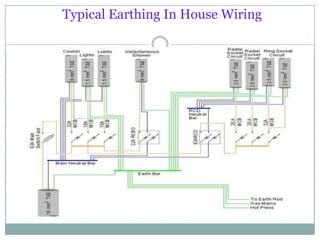
Typical Earthing In House Wiring
THANK YOU

Earthing in electrical network

  • 1.
    EARTHING  To savehuman life from danger of electrical shock or death  To protect buildings, machinery & appliances under fault conditions.  To ensure that all exposed conductive parts do not reach a dangerous potential.  To provide safe path to dissipate lightning and short circuit currents.  To maintain the line voltage constant to prevent over current or excessive voltage on the appliances or equipment .
  • 2.
    Earth Resistance Value Major power station= 0.5 Ohm.  Major Sub-stations= 1.0 Ohm  Minor Sub-station = 2 Ohm  Neutral Bushing. =2 Ohm  Service connection = 4 Ohm  Medium Voltage Network =2 Ohm  L.T.Lightening Arrestor= 4 Ohm  L.T.Pole= 5 Ohm  H.T.Pole =10 Ohm  Tower =20-30 Ohm
  • 3.
    Nos. of Earthing Single phase 1 HP motor –01 earth  Socket/geyser/heater/fan/1phase appliance– 01 earth  Three phase motor/generator/transformer/gadgets –02 earth  Metallic support of O/H line after every 03 poles –02 earth  Stay wire for overhead line -01 earth  Neutral and frame earthing-separately
  • 4.
    While doing Earthing Distance –from the equipment not more than 1.5 meter  Cross section of earth continuity conductor- not less than 14 SWG copper wire  Cross section of earth wire-not less than half of the main wire  Voltage between Earth Pit conductors to Neutral of Mains Supply 220V AC 50 Hz it should be less than 2.0 Volts.
  • 5.
    Factors Affecting EarthResistance  Soil resistivity  Soil condition  Moisture  Dissolved salts  Climate conditions  Physical composition  Location of earth pit  Effect of grain size  Effect of current magnitude  Area available
  • 6.
    Type Of Earthing Plate earthing :where digging is easy  Pipe earthing :very common, used for domestic, small substations  Strip earthing :where earth bed have rocky soil  Rod earthing: done is sandy area/small lamp post
  • 7.
    Pipe Earthing  GIpipe [C-class] of 75 mm diameter  10 feet long welded with welded flat having 4 numbers of holes for connections  Earth pits are generally filled with alternate layer of charcoal & salt or earth reactivation compound.
  • 8.
    Strip Earthing  Stripearthing :where earth bed have rocky soil  Copper strip size 5 SWG or 25mmX1.6mm is buried in horizontal trenches  Earth resistance remains high i.e. 5 ohm
  • 9.
    Plate Earthing  Castiron plate of size 600 mm x600 mm x12 mm. OR  Galvanized iron plate of size 600 mm x600 mm x6 mm. OR  Copper plate of size 600 mm * 600 mm * 3.15 mm  Plate burred at the depth of 8 feet in the vertical position and GI strip of size 50 mmx6 mm bolted with the plate is brought up to the ground level.  Earth pit are generally filled with alternate layer of charcoal & salt up to 4 feet from the bottom of the pit.
  • 10.
  • 11.
    Earth resistance test Three point method  The distance of Current Spike from Earth Electrode D = 60 ft, Then, distance of Potential Spike would be 62 % of D = 0.62D i.e. 0.62 x 60 ft = 37 ft.
  • 12.
    Difference between InsulationResistance and Earth resistance  Insulation Resistance :measured between earth and conductor, value in tens/thousand/mega ohm, in built DC generator  Earth resistance: measured for a earthed body or neutral point by earth resistance tester, value less than 10 ohm
  • 13.
    Specification Of Earthingas per ISI Sr. Capacity Size of earth wire Size Of Earth Electrode Cu GI Cu GI 1 01- 10 HP 8 SWG 8 SWG 60cmX60cmX3.18mm 60cmX60cmX6.35mm 2 10 – 15 HP 8 SWG 6 SWG 60cmX60cmX3.18mm 60cmX60cmX6.35mm 3 15 – 30 HP 6 SWG 4SWG 60cmX60cmX3.18mm 90cmX90cmX6.35mm 4 30 – 50 HP 4SWG 25mmX3 mm 90cmX90cmX6.35mm 90cmX90cmX6.35mm
  • 14.
    Method used toreduce earth resistance  Soldering/welding nuts and bolts  By pouring water  Increase in plate area  By pouring salt and charcoal ,ratio 1:5  Depth of plate  Installation of parallel electrode
  • 15.
    Preventive Maintenance OfEarthing System  Check half yearly in dry season  Check for earth pit no  Repair of damage/broken pit cover  Tighten the earth connections  Replace broken earth leads  Corroded part change immediately  Pass earth conductor through GI pipe  Mandatory : bi-yearly and recorded
  • 16.
    Typical Earthing InHouse Wiring
  • 17.