ELECTRICAL ENGINEERING DEPARTMENT
TOPIC NAME : DIFFERENCE BETWEEN EARTHING AND
GROUNDING
Content of topic
 What Is Earthing ?
 Concept of earthing
 Purpose of Earthing
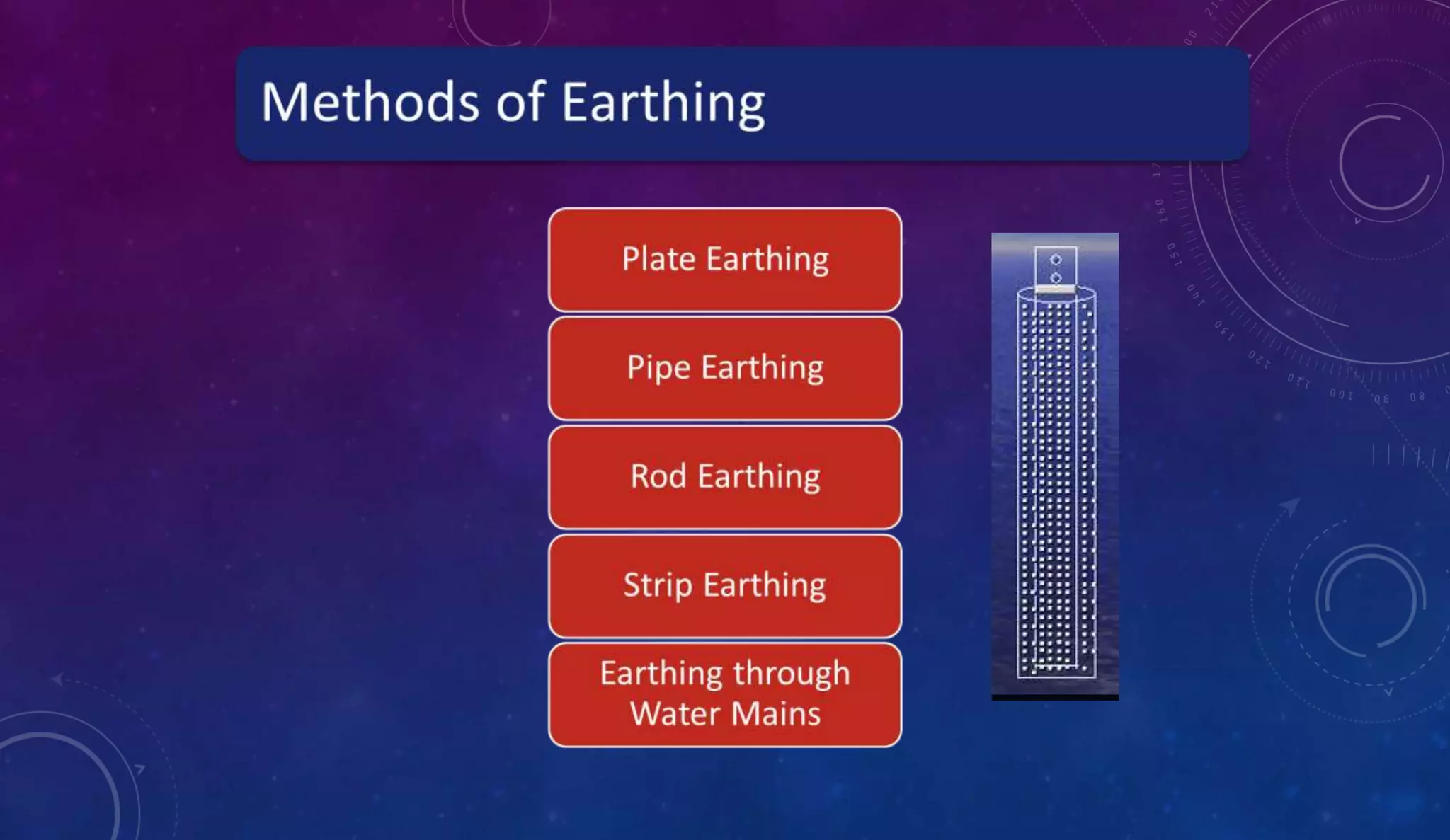
 Methods of Earthing
What Is Earthing ?
The process of connecting metallic bodies of all the electrical apparat
us and equipment to huge mass of earth by a wire having negligible re
sistance is called Earthing.
Concept of Earthing Systems
All the people living or working in residential, comm
ercial and industrial installations, particularly the operators a
nd personnel who are in close operation and contact with elect
rical systems and machineries, should essentially be protected
against possible electrification.
To achieve this protection, earthing system of an i
nstallation is defined, designed and installed according to t
he standard requirements.
PURPOSE OF EARTHING
• To save human life from danger of electrical shock or death by blowing a fuse i.e. To pr
ovide an alternative path for the fault current to flow so that it will not endanger the user
• To protect buildings, machinery & appliances under fault conditions
• ie. To ensure that all exposed conductive parts do not reach a dangerous potential.
• To provide safe path to dissipate lightning and short circuit currents.
• To provide stable platform for operation of sensitive electronic equipments i.e. To main
tain the voltage at any part of an electrical system at a known value so as to prevent over
current or excessive voltage on the appliances or equipment .
• To provide protection against static electricity from friction
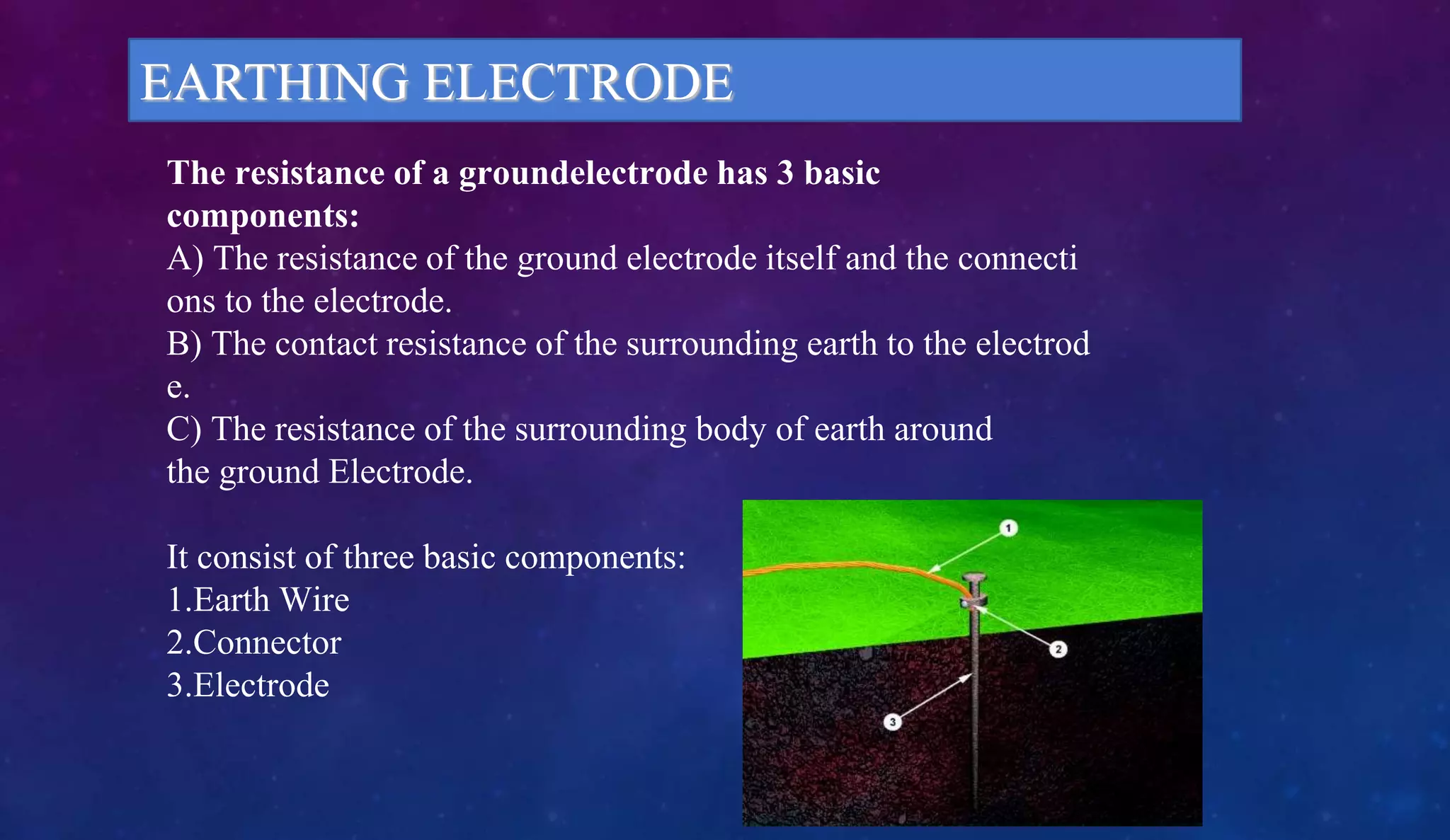
EARTHING ELECTRODE
The resistance of a groundelectrode has 3 basic
components:
A) The resistance of the ground electrode itself and the connecti
ons to the electrode.
B) The contact resistance of the surrounding earth to the electrod
e.
C) The resistance of the surrounding body of earth around
the ground Electrode.
It consist of three basic components:
1.Earth Wire
2.Connector
3.Electrode
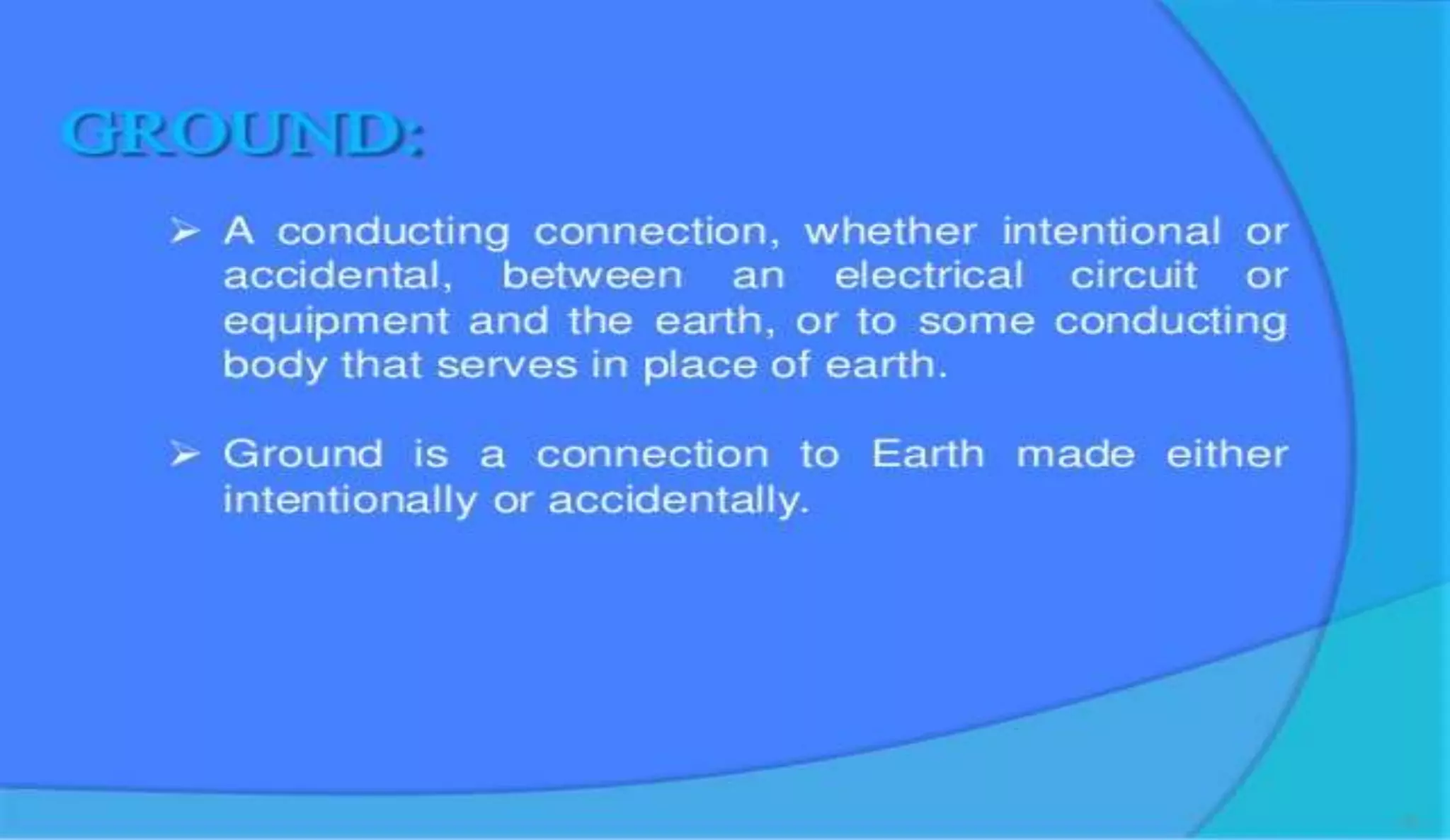
GROUNDING
Contents of Grounding
 Defination of grounding
 Connections of grounding
 Why we need of grounding
 losses due to improper grounding
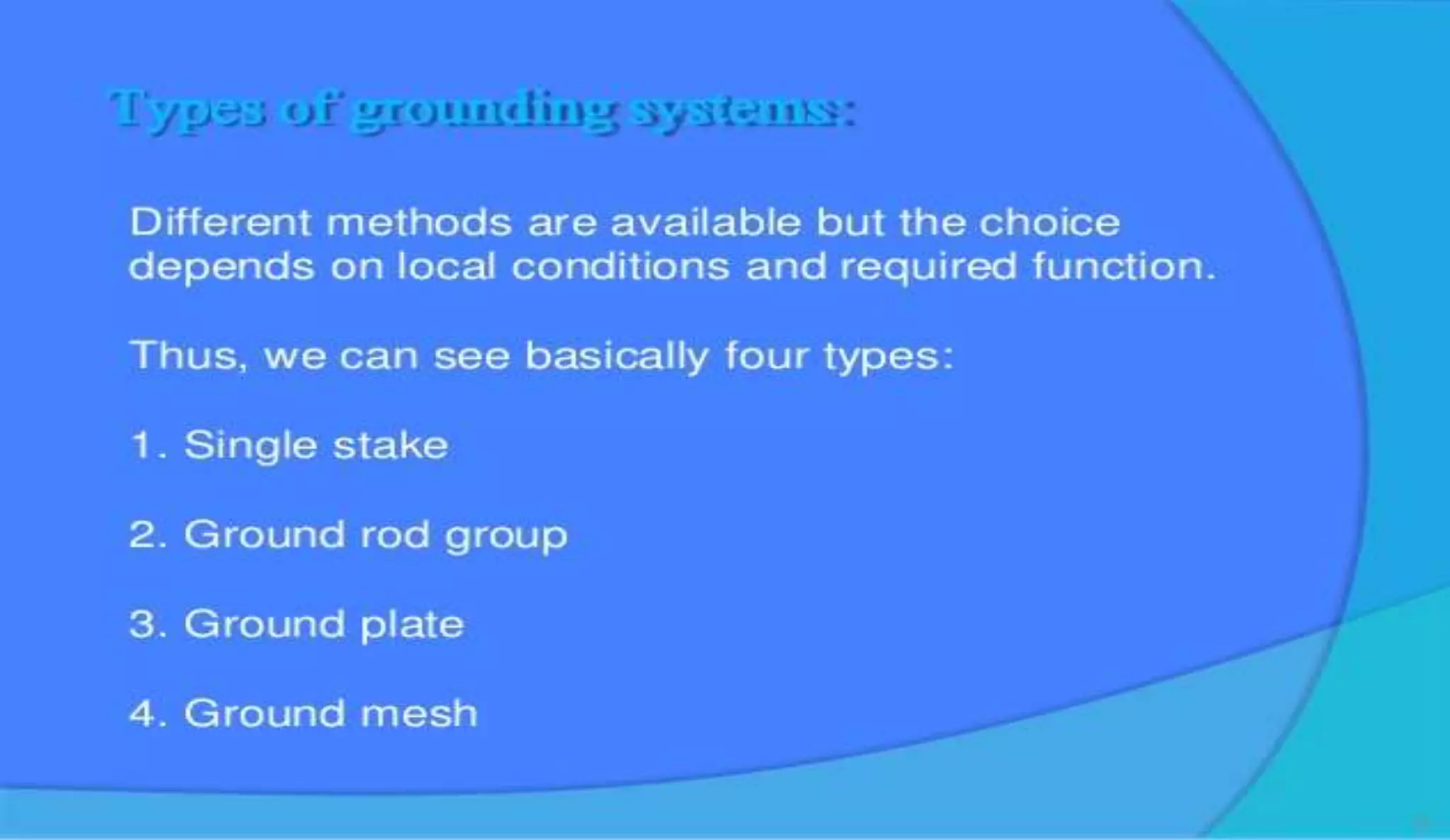
 Types of grounding systems
 How to do grounding
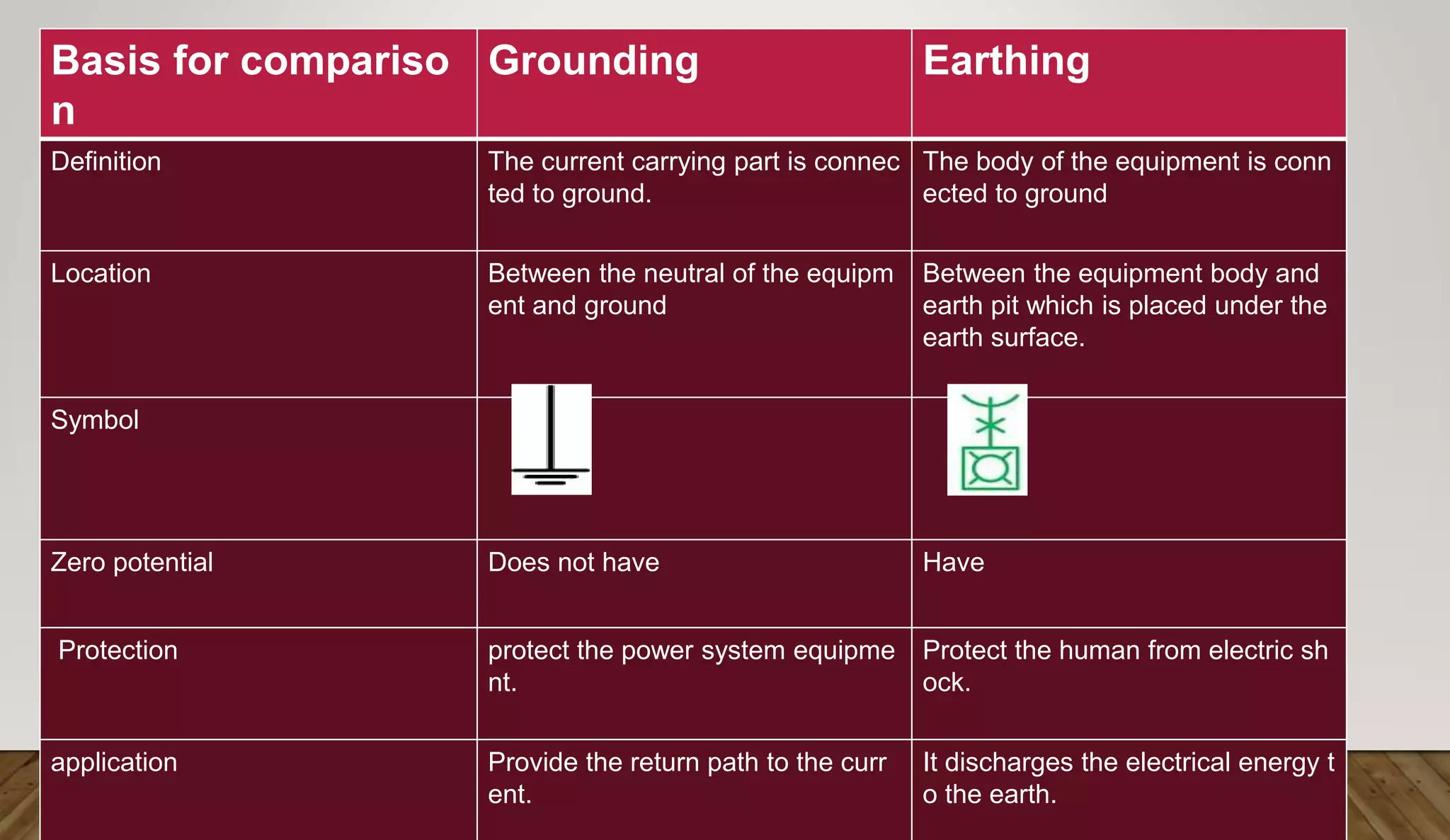
Basis for compariso
n
Grounding Earthing
Definition The current carrying part is connec
ted to ground.
The body of the equipment is conn
ected to ground
Location Between the neutral of the equipm
ent and ground
Between the equipment body and
earth pit which is placed under the
earth surface.
Symbol
Zero potential Does not have Have
Protection protect the power system equipme
nt.
Protect the human from electric sh
ock.
application Provide the return path to the curr
ent.
It discharges the electrical energy t
o the earth.
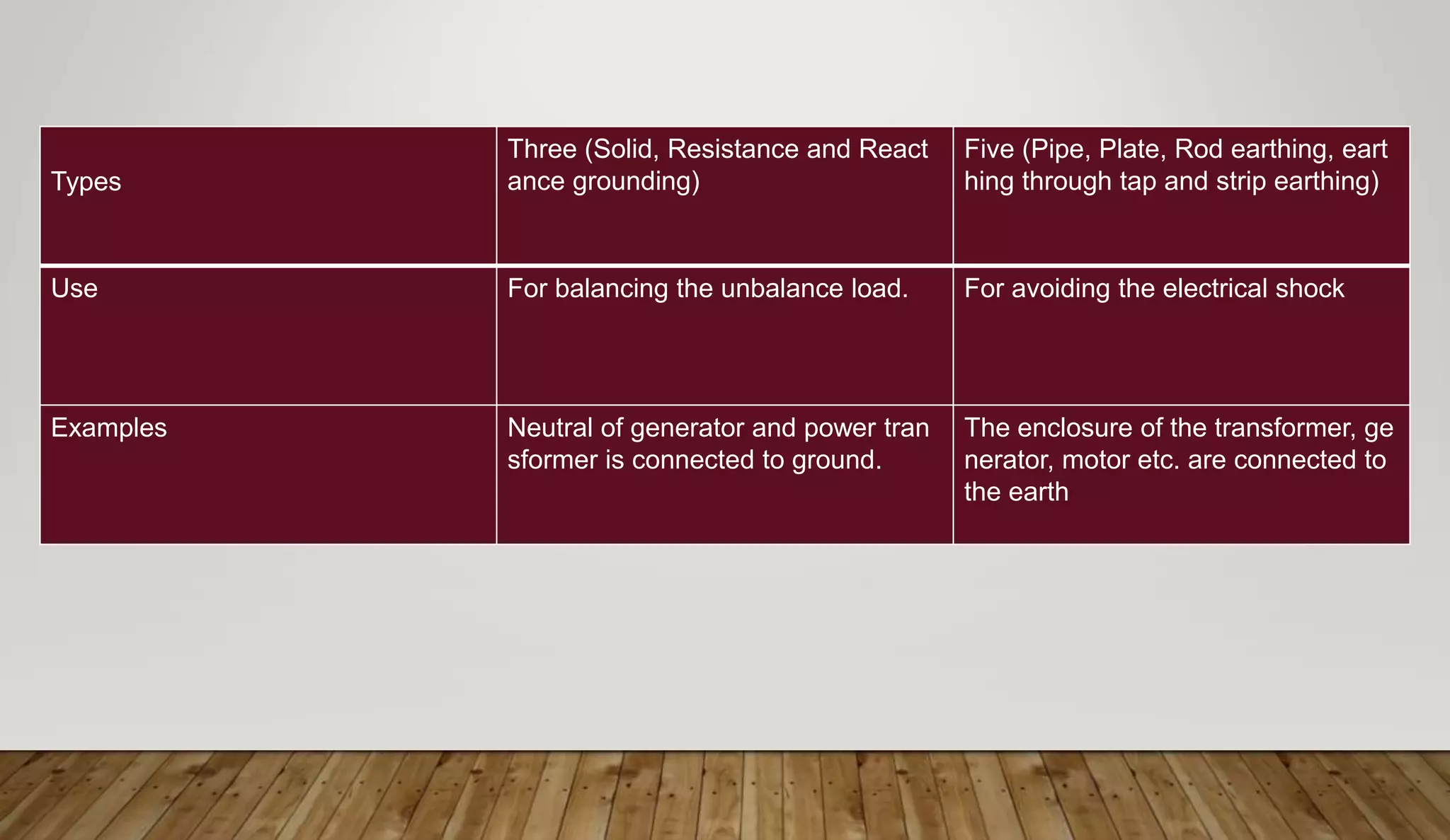
Types
Three (Solid, Resistance and React
ance grounding)
Five (Pipe, Plate, Rod earthing, eart
hing through tap and strip earthing)
Use For balancing the unbalance load. For avoiding the electrical shock
Examples Neutral of generator and power tran
sformer is connected to ground.
The enclosure of the transformer, ge
nerator, motor etc. are connected to
the earth
Earthing and grounding

Earthing and grounding

  • 1.
    ELECTRICAL ENGINEERING DEPARTMENT TOPICNAME : DIFFERENCE BETWEEN EARTHING AND GROUNDING
  • 3.
    Content of topic What Is Earthing ?  Concept of earthing  Purpose of Earthing  Methods of Earthing
  • 4.
    What Is Earthing? The process of connecting metallic bodies of all the electrical apparat us and equipment to huge mass of earth by a wire having negligible re sistance is called Earthing.
  • 5.
    Concept of EarthingSystems All the people living or working in residential, comm ercial and industrial installations, particularly the operators a nd personnel who are in close operation and contact with elect rical systems and machineries, should essentially be protected against possible electrification. To achieve this protection, earthing system of an i nstallation is defined, designed and installed according to t he standard requirements.
  • 6.
    PURPOSE OF EARTHING •To save human life from danger of electrical shock or death by blowing a fuse i.e. To pr ovide an alternative path for the fault current to flow so that it will not endanger the user • To protect buildings, machinery & appliances under fault conditions • ie. To ensure that all exposed conductive parts do not reach a dangerous potential. • To provide safe path to dissipate lightning and short circuit currents. • To provide stable platform for operation of sensitive electronic equipments i.e. To main tain the voltage at any part of an electrical system at a known value so as to prevent over current or excessive voltage on the appliances or equipment . • To provide protection against static electricity from friction
  • 8.
    EARTHING ELECTRODE The resistanceof a groundelectrode has 3 basic components: A) The resistance of the ground electrode itself and the connecti ons to the electrode. B) The contact resistance of the surrounding earth to the electrod e. C) The resistance of the surrounding body of earth around the ground Electrode. It consist of three basic components: 1.Earth Wire 2.Connector 3.Electrode
  • 9.
  • 10.
    Contents of Grounding Defination of grounding  Connections of grounding  Why we need of grounding  losses due to improper grounding  Types of grounding systems  How to do grounding
  • 18.
    Basis for compariso n GroundingEarthing Definition The current carrying part is connec ted to ground. The body of the equipment is conn ected to ground Location Between the neutral of the equipm ent and ground Between the equipment body and earth pit which is placed under the earth surface. Symbol Zero potential Does not have Have Protection protect the power system equipme nt. Protect the human from electric sh ock. application Provide the return path to the curr ent. It discharges the electrical energy t o the earth.
  • 19.
    Types Three (Solid, Resistanceand React ance grounding) Five (Pipe, Plate, Rod earthing, eart hing through tap and strip earthing) Use For balancing the unbalance load. For avoiding the electrical shock Examples Neutral of generator and power tran sformer is connected to ground. The enclosure of the transformer, ge nerator, motor etc. are connected to the earth