Grounding in Power
System
PRESENTED BY
• N.K.Harikrishna (1011703006)
• U.Govardhan (1011803904)
• What is Grounding?
• Importance of Grounding
• Types of Grounding
• Applications of Grounding in
power system
• Instruments employed in
Grounding
• Grounding procedure &
calculations
• Hazards due to lack of
Grounding
• Good Grounding practice
• IEEE rules regarding Grounding
• Conclusion
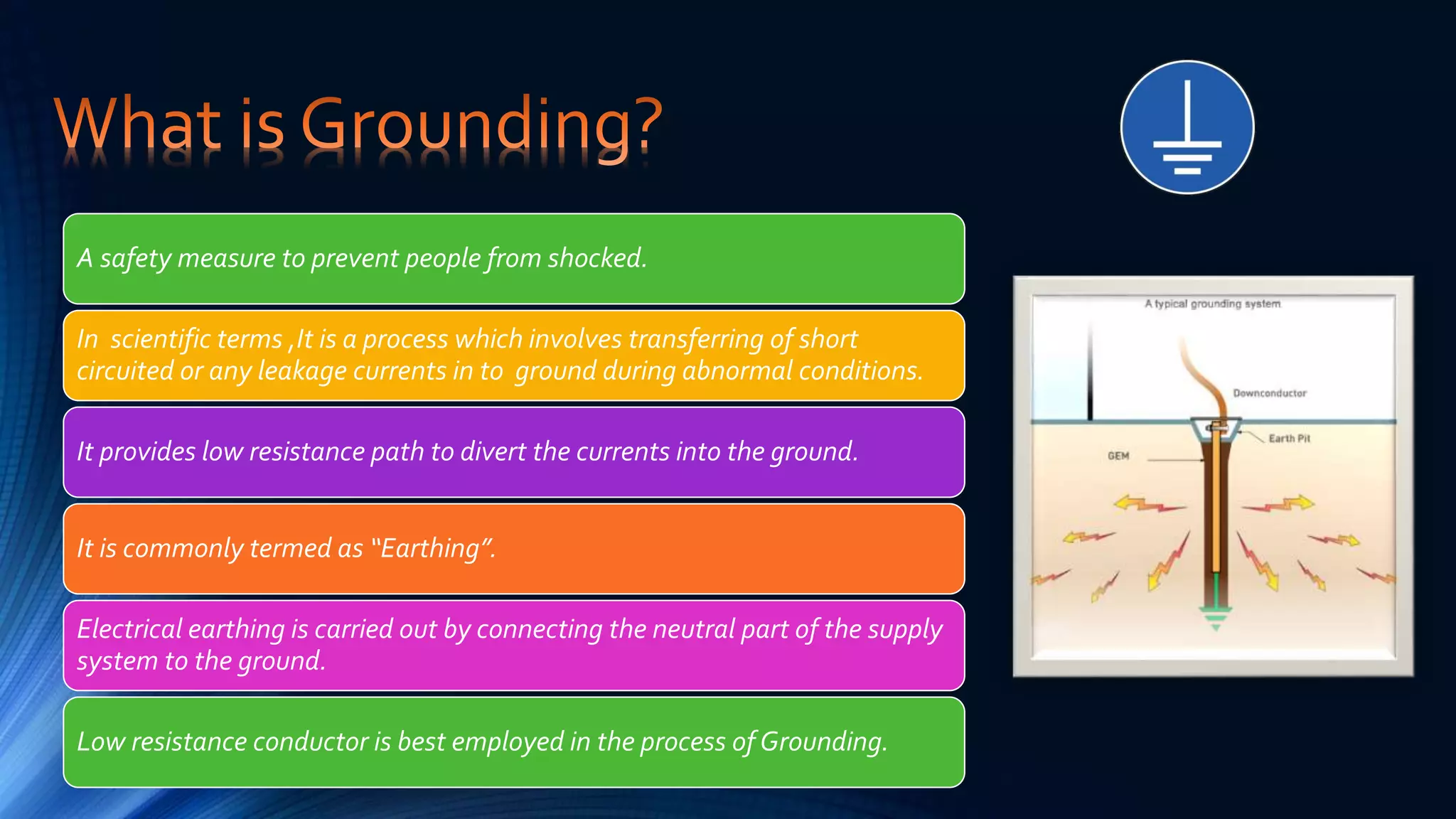
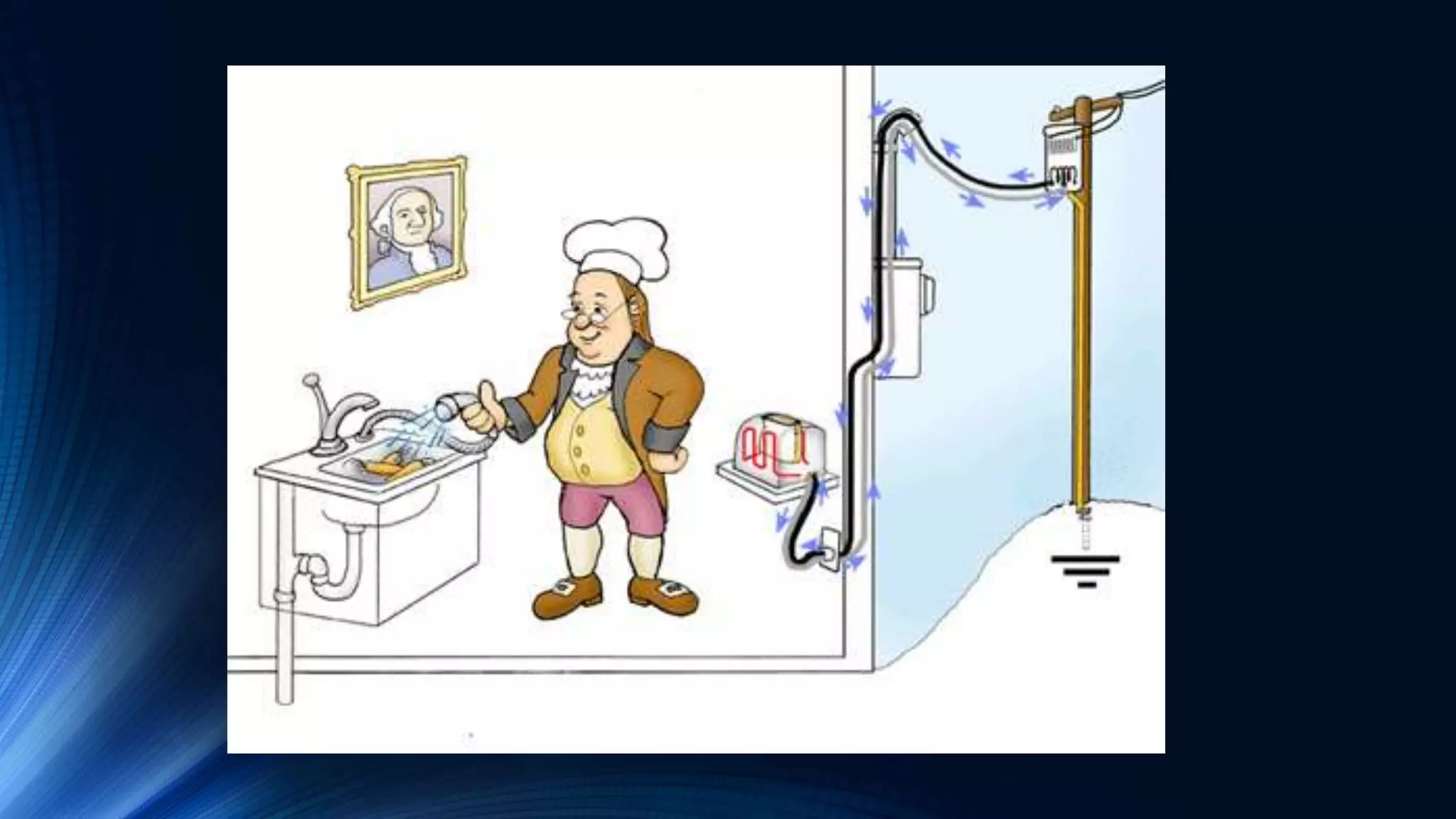
A safety measure to prevent people from shocked.
In scientific terms ,It is a process which involves transferring of short
circuited or any leakage currents in to ground during abnormal conditions.
It provides low resistance path to divert the currents into the ground.
It is commonly termed as “Earthing”.
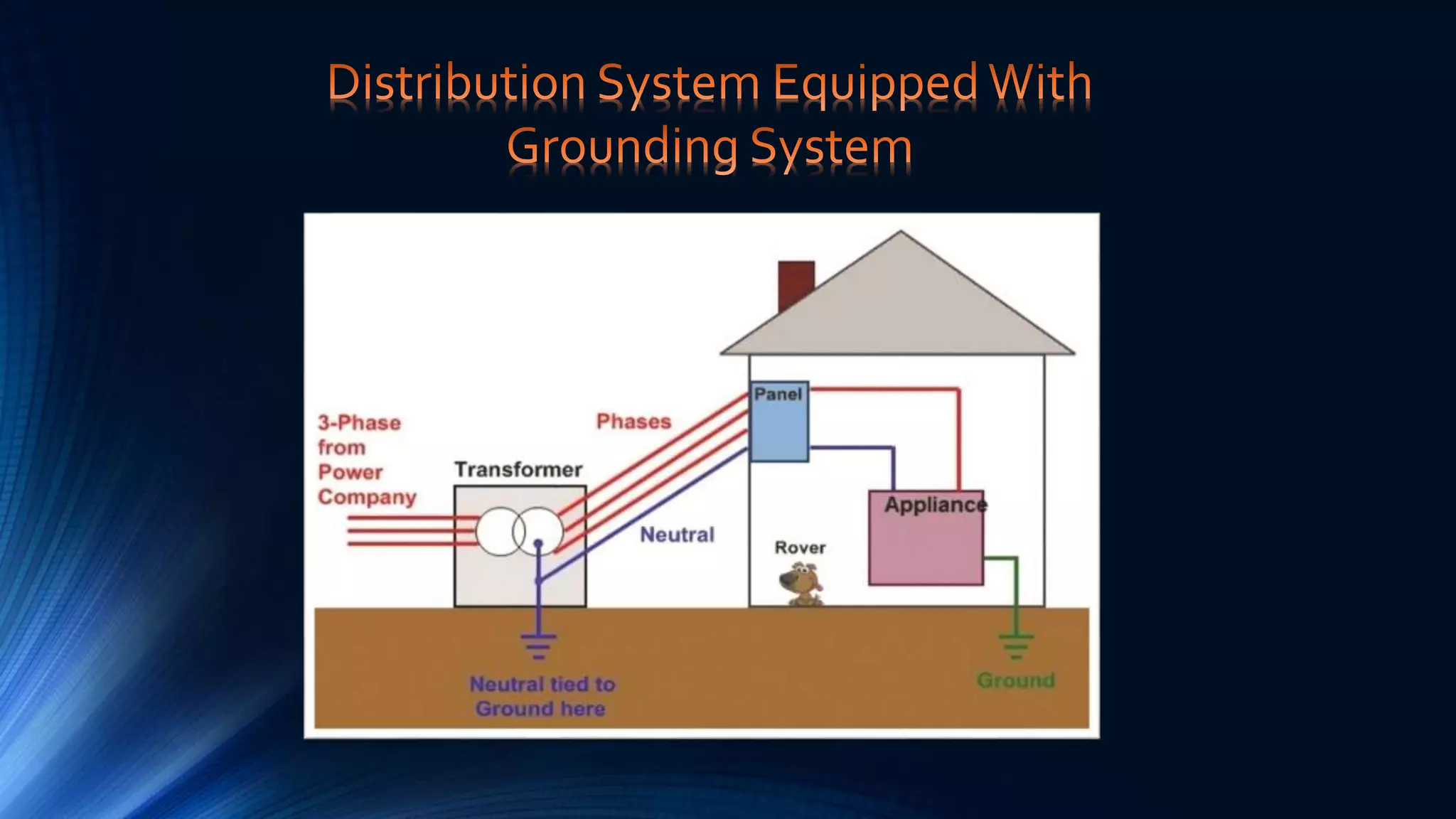
Electrical earthing is carried out by connecting the neutral part of the supply
system to the ground.
Low resistance conductor is best employed in the process of Grounding.
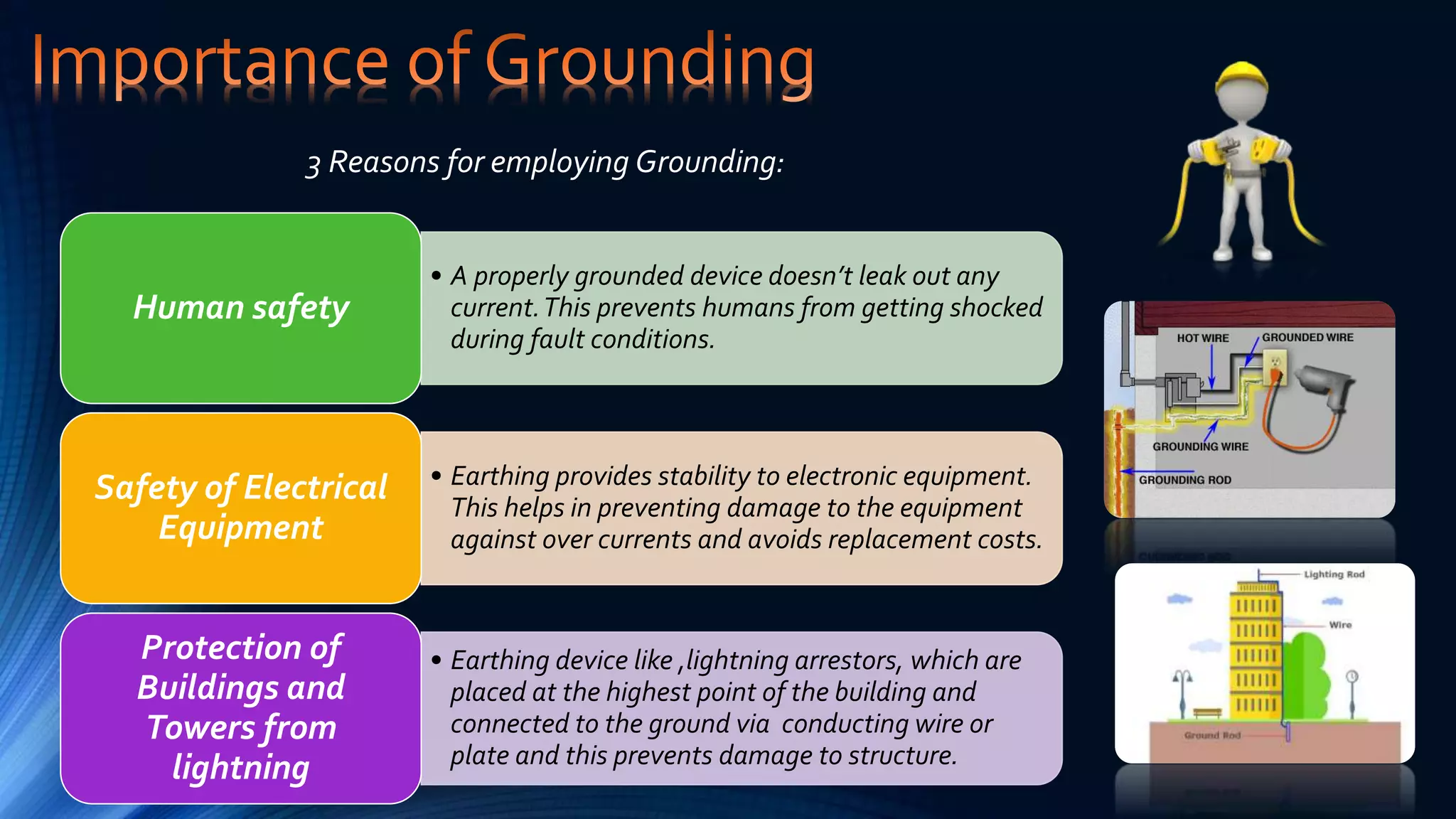
• A properly grounded device doesn’t leak out any
current.This prevents humans from getting shocked
during fault conditions.
Human safety
• Earthing provides stability to electronic equipment.
This helps in preventing damage to the equipment
against over currents and avoids replacement costs.
Safety of Electrical
Equipment
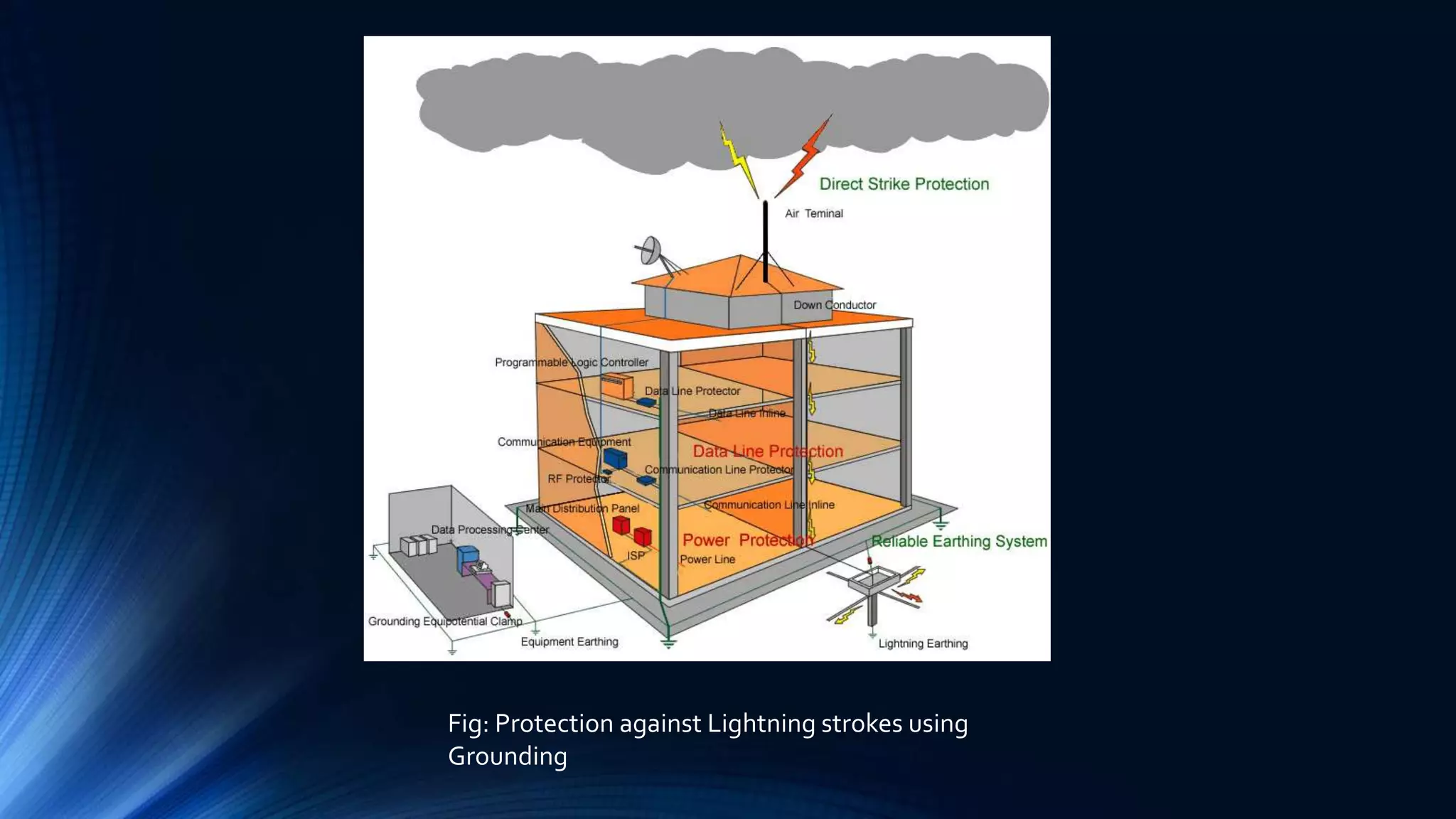
• Earthing device like ,lightning arrestors, which are
placed at the highest point of the building and
connected to the ground via conducting wire or
plate and this prevents damage to structure.
Protection of
Buildings and
Towers from
lightning
3 Reasons for employing Grounding:
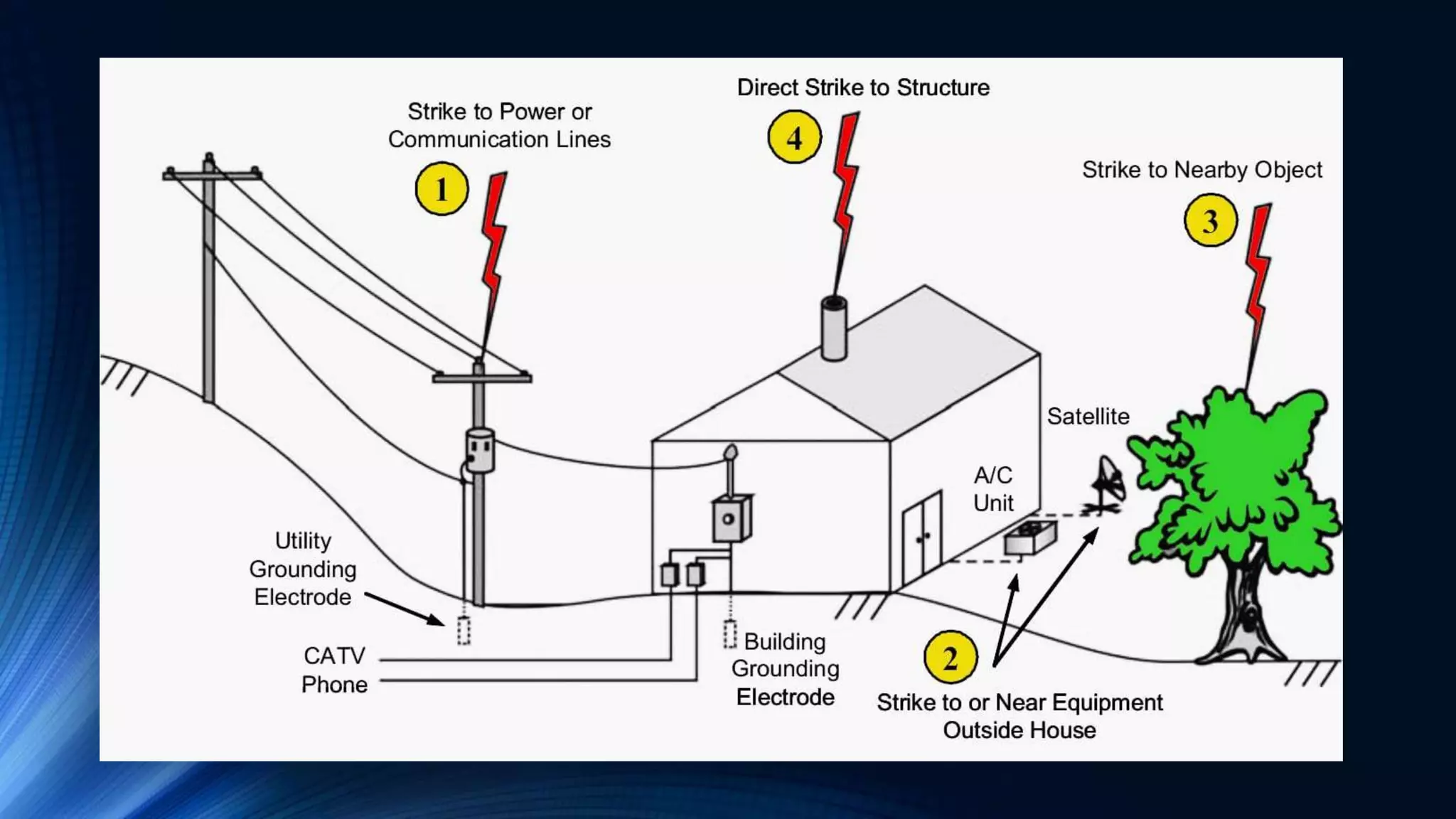
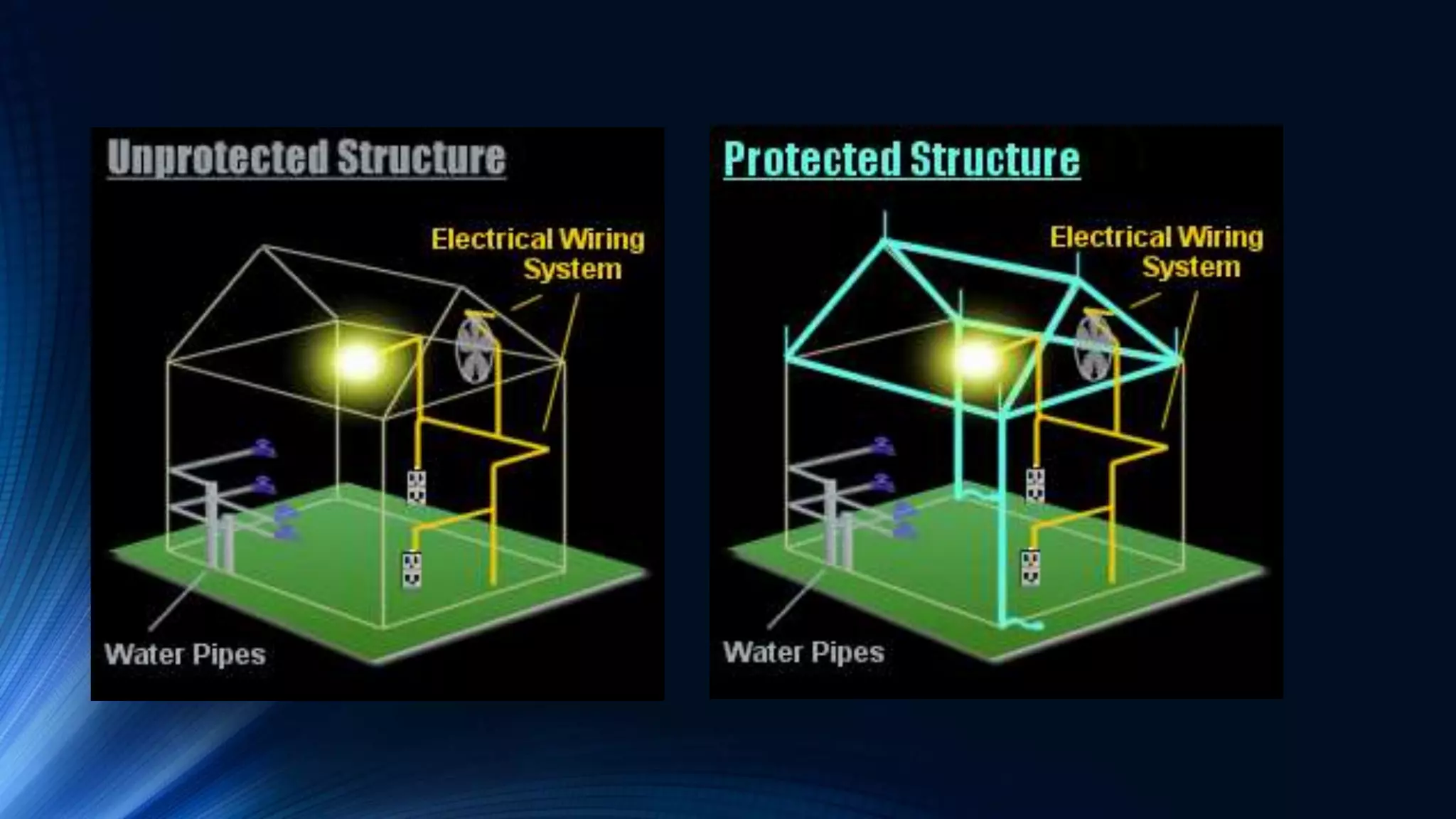
Fig: Protection against Lightning strokes using
Grounding
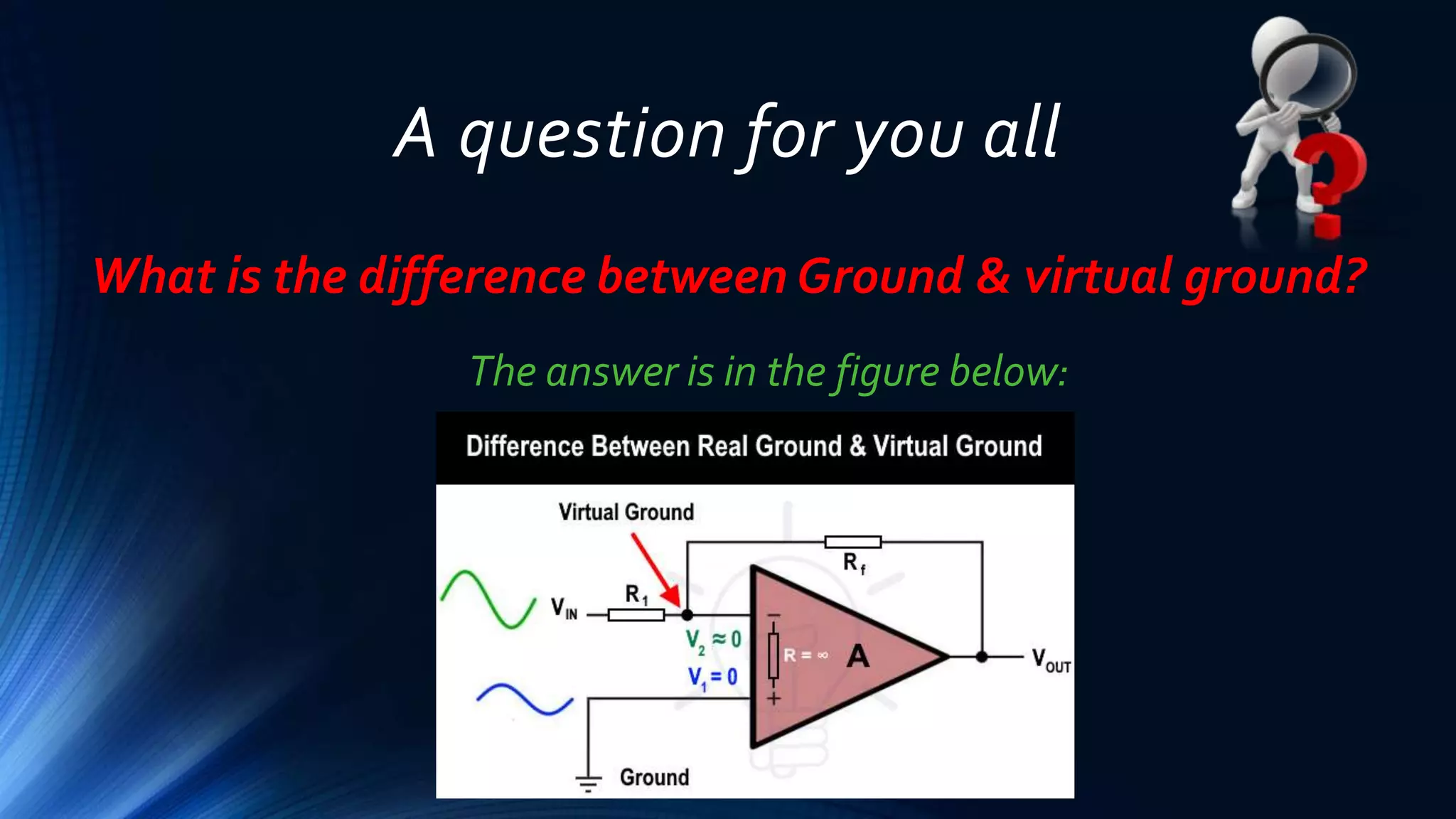
A question for you all
What is the difference between Ground & virtual ground?
The answer is in the figure below:
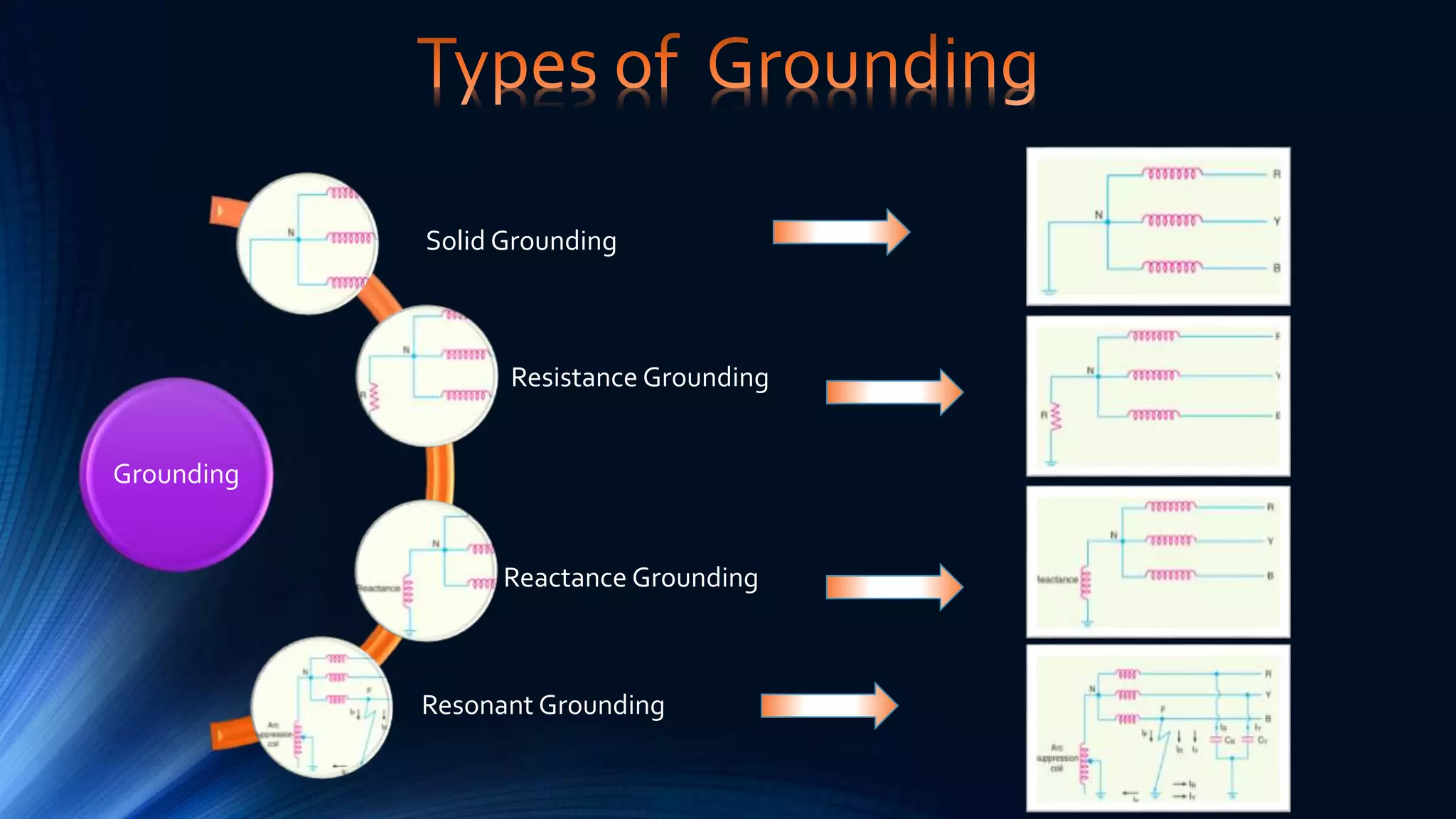
Grounding
Solid Grounding
Resistance Grounding
Reactance Grounding
Resonant Grounding
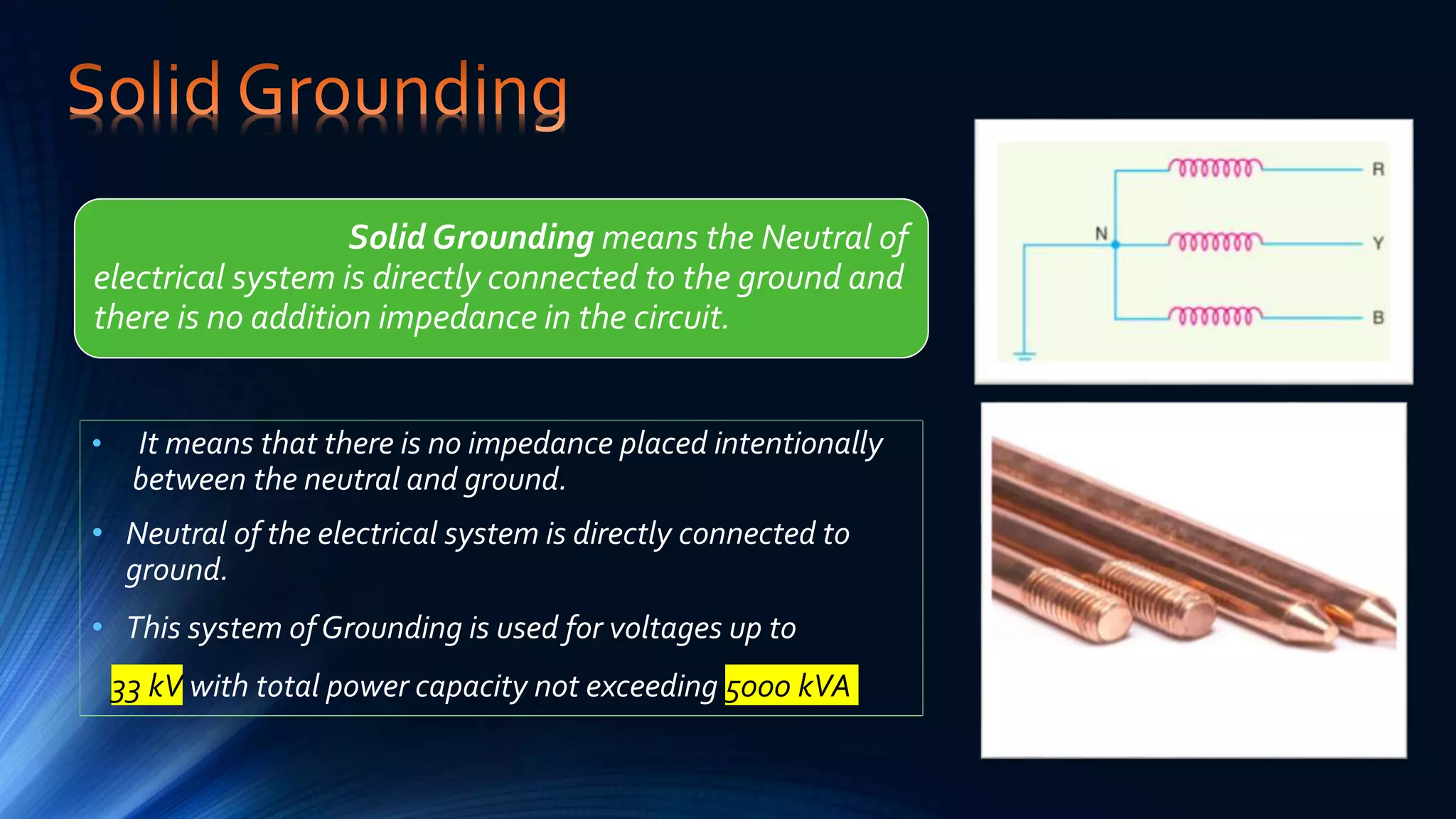
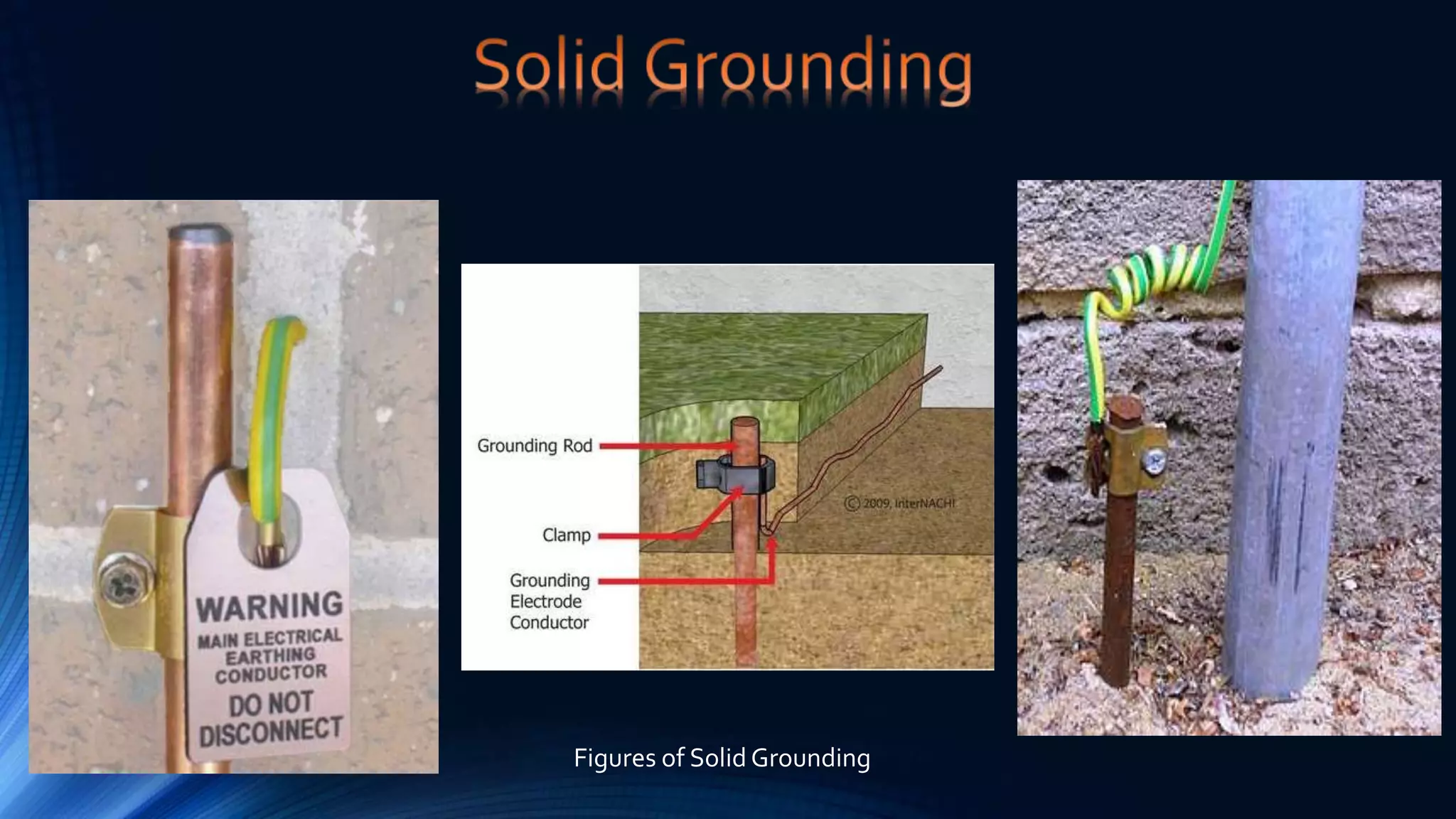
• It means that there is no impedance placed intentionally
between the neutral and ground.
• Neutral of the electrical system is directly connected to
ground.
• This system of Grounding is used for voltages up to
33 kV with total power capacity not exceeding 5000 kVA
Solid Grounding means the Neutral of
electrical system is directly connected to the ground and
there is no addition impedance in the circuit.
Figures of Solid Grounding
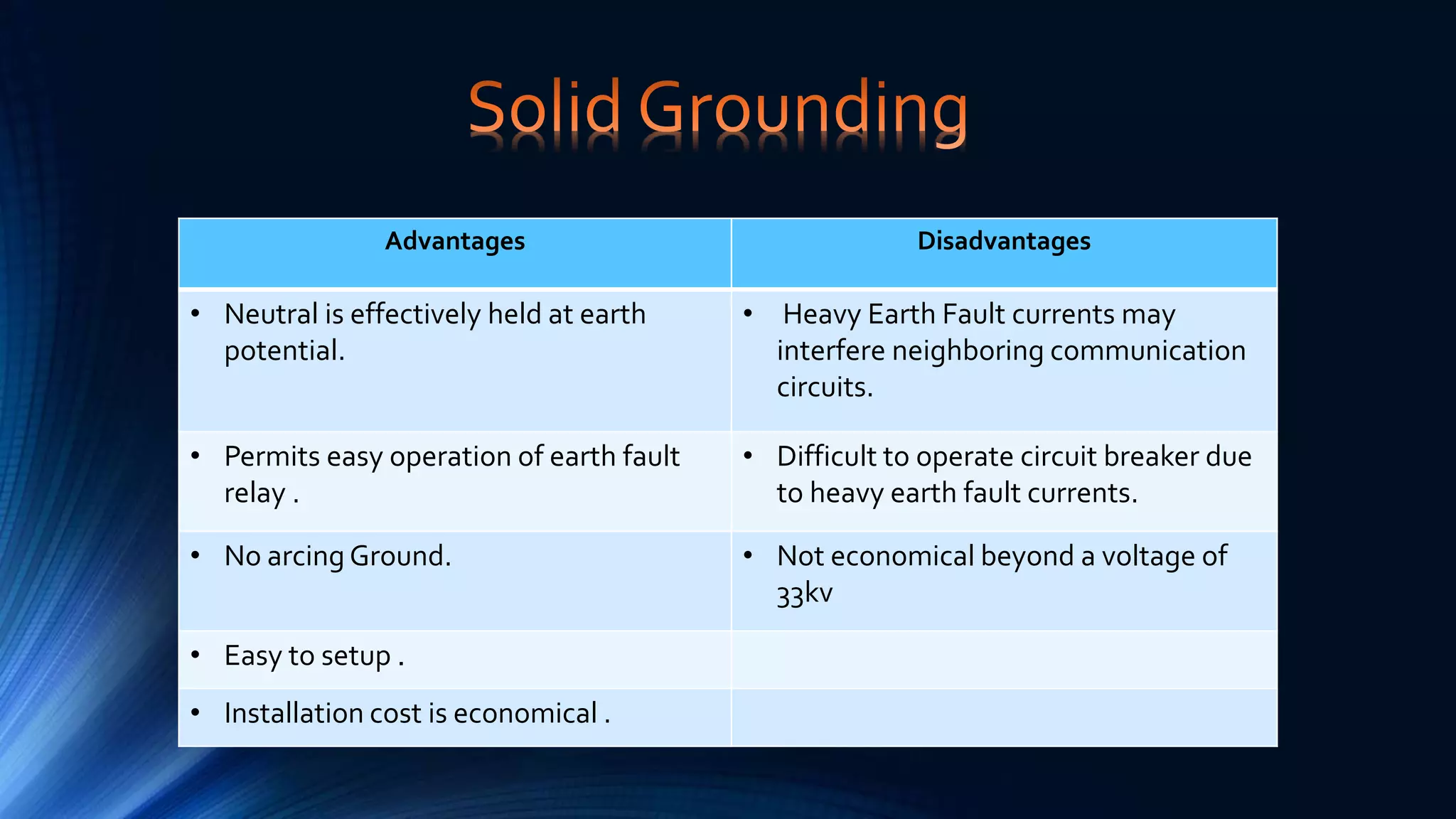
Advantages Disadvantages
• Neutral is effectively held at earth
potential.
• Heavy Earth Fault currents may
interfere neighboring communication
circuits.
• Permits easy operation of earth fault
relay .
• Difficult to operate circuit breaker due
to heavy earth fault currents.
• No arcing Ground. • Not economical beyond a voltage of
33kv
• Easy to setup .
• Installation cost is economical .
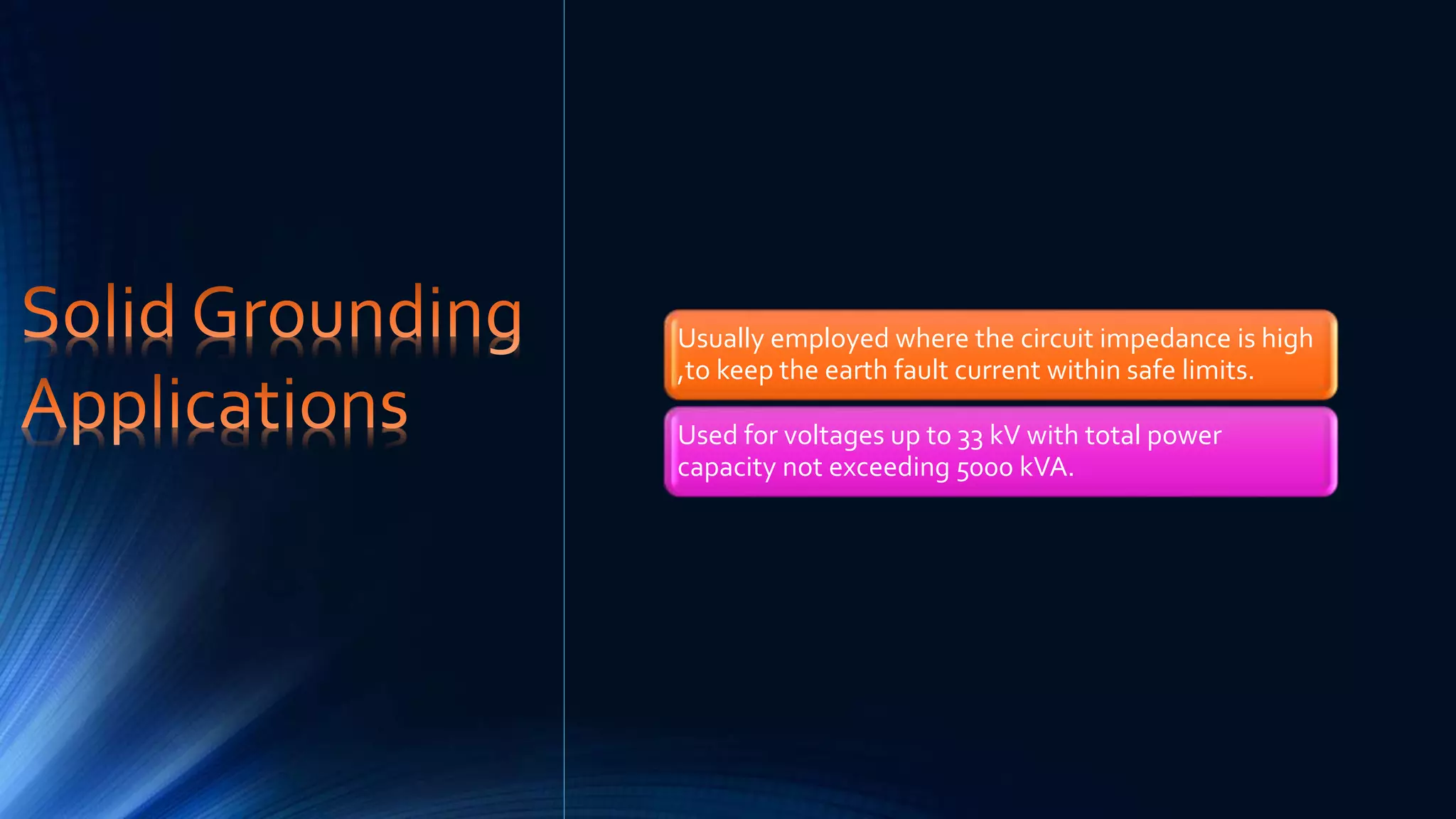
Usually employed where the circuit impedance is high
,to keep the earth fault current within safe limits.
Used for voltages up to 33 kV with total power
capacity not exceeding 5000 kVA.
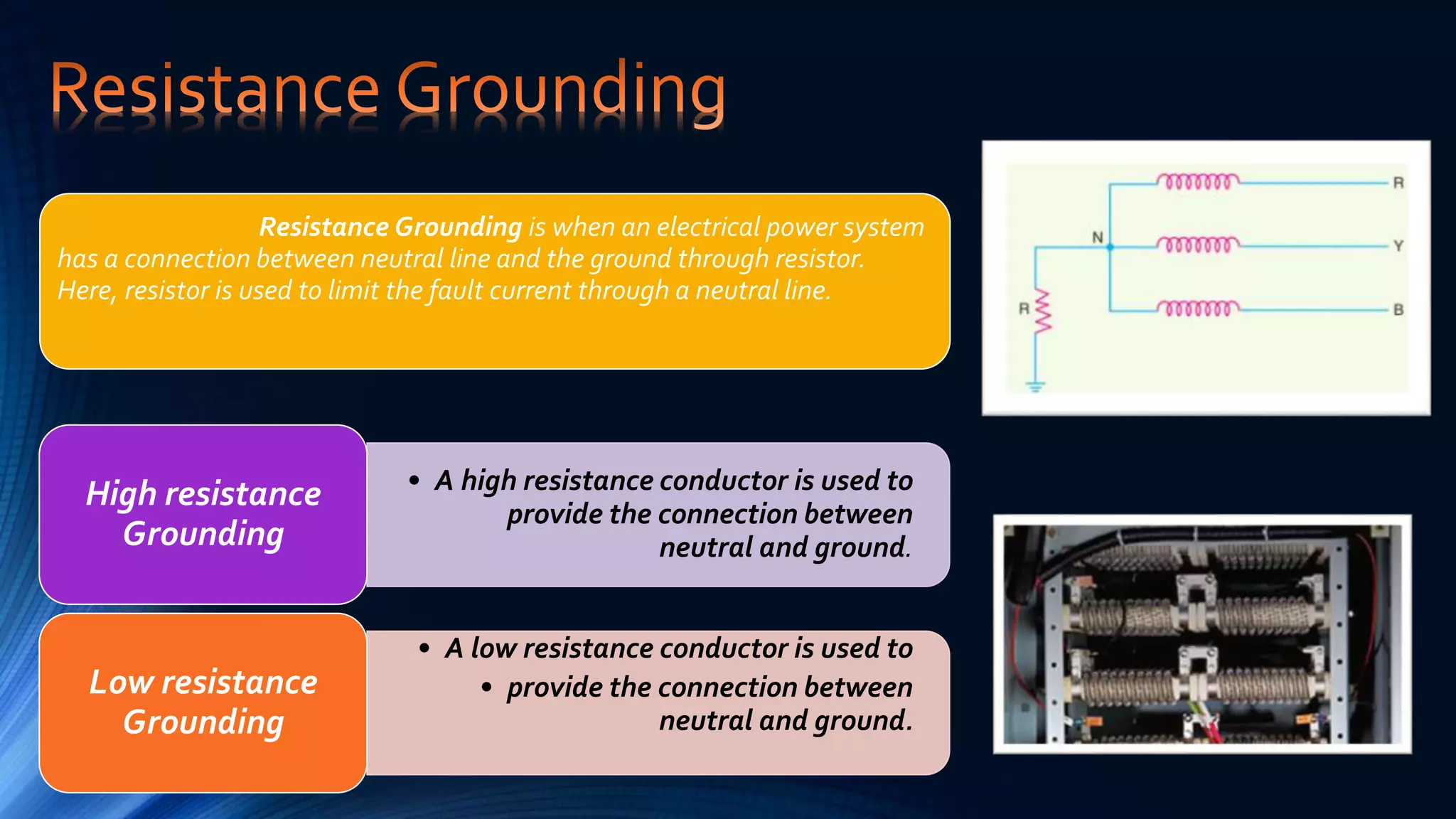
Resistance Grounding is when an electrical power system
has a connection between neutral line and the ground through resistor.
Here, resistor is used to limit the fault current through a neutral line.
• A high resistance conductor is used to
provide the connection between
neutral and ground.
High resistance
Grounding
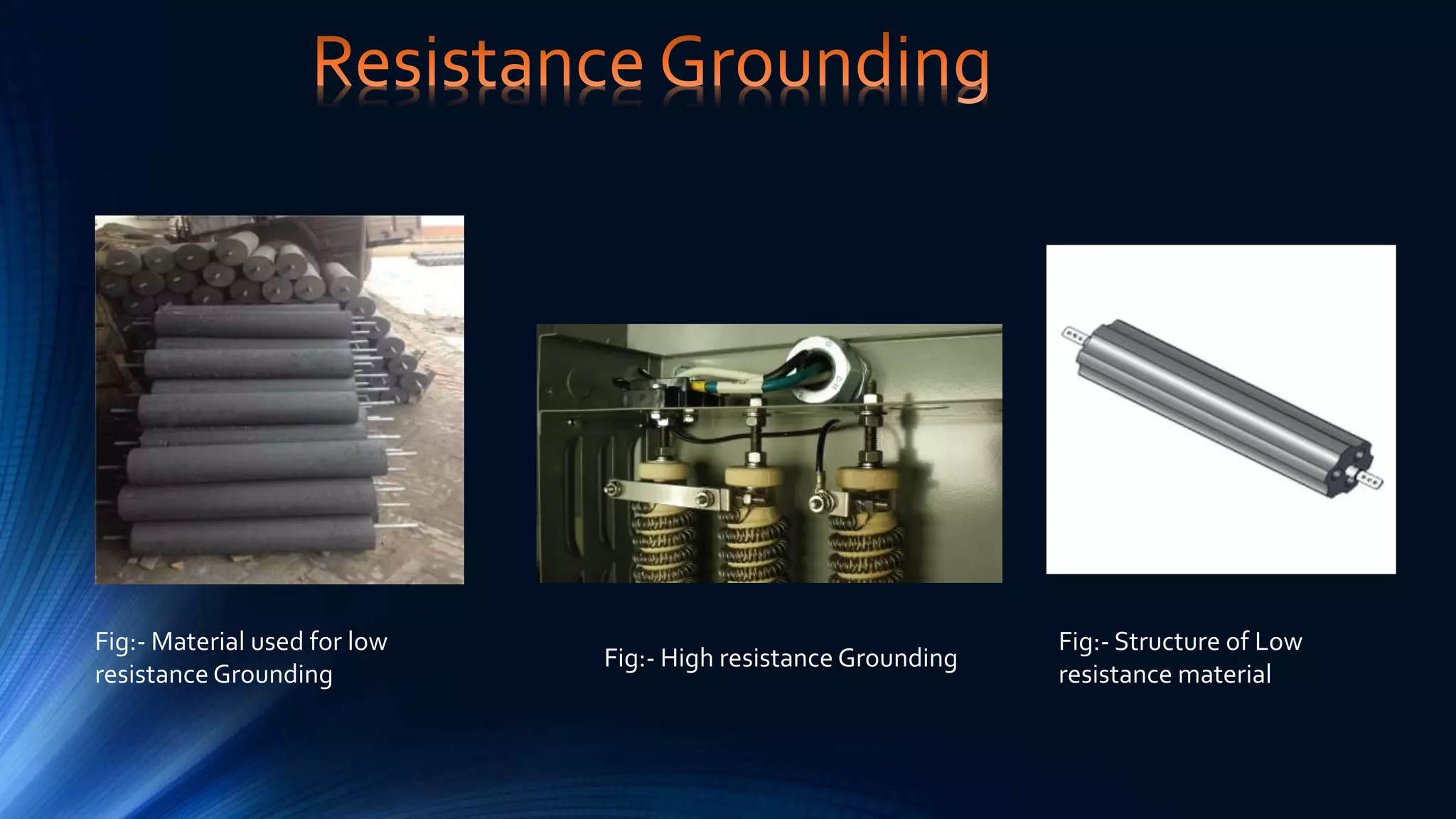
• A low resistance conductor is used to
• provide the connection between
neutral and ground.
Low resistance
Grounding
Fig:- Material used for low
resistance Grounding
Fig:- High resistance Grounding
Fig:- Structure of Low
resistance material
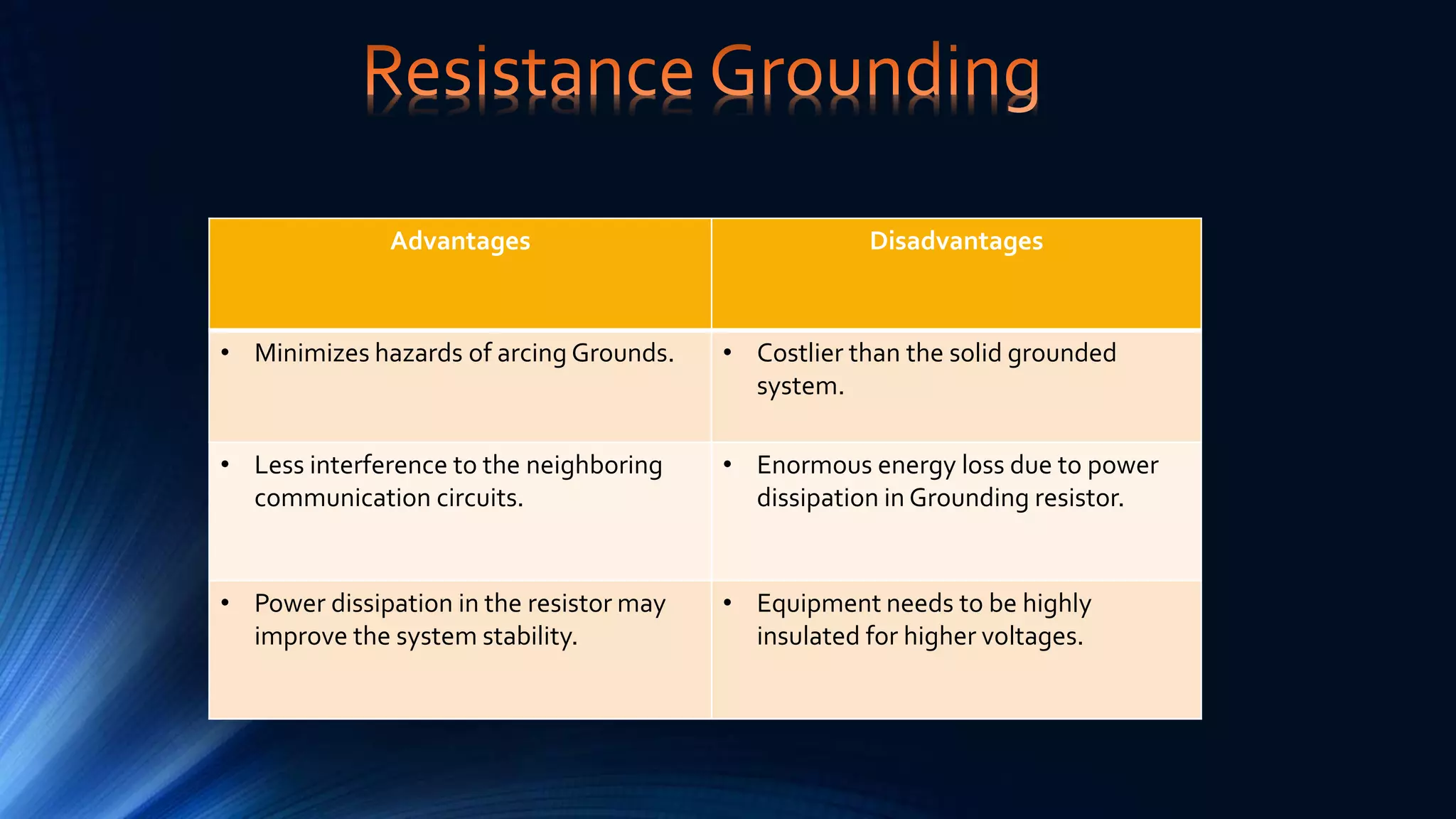
Advantages Disadvantages
• Minimizes hazards of arcing Grounds. • Costlier than the solid grounded
system.
• Less interference to the neighboring
communication circuits.
• Enormous energy loss due to power
dissipation in Grounding resistor.
• Power dissipation in the resistor may
improve the system stability.
• Equipment needs to be highly
insulated for higher voltages.
It is used on a system operating at
voltages between 2.2 kV and 33 kV
with power source capacity more
than 5000 kVA.
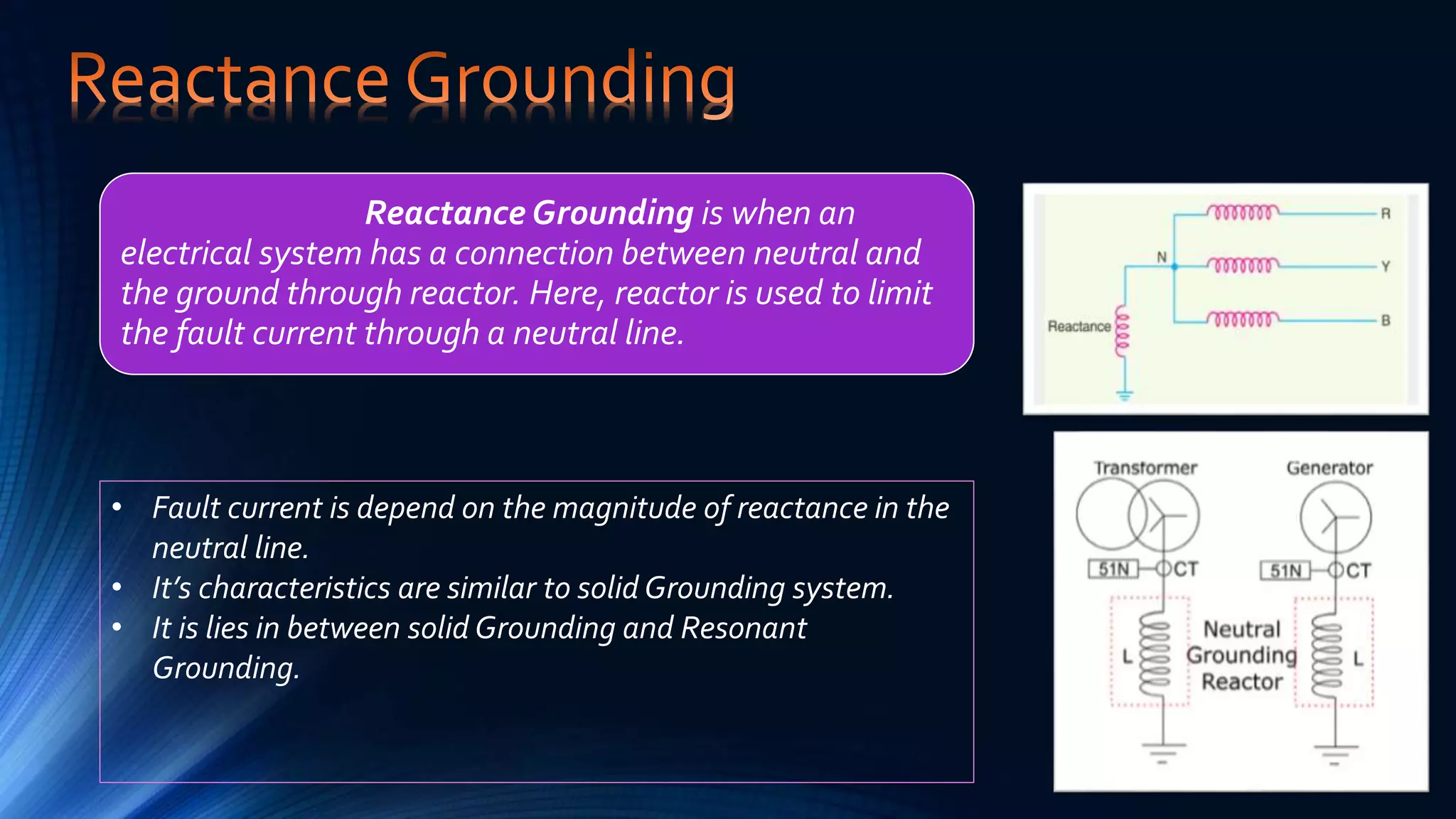
Reactance Grounding is when an
electrical system has a connection between neutral and
the ground through reactor. Here, reactor is used to limit
the fault current through a neutral line.
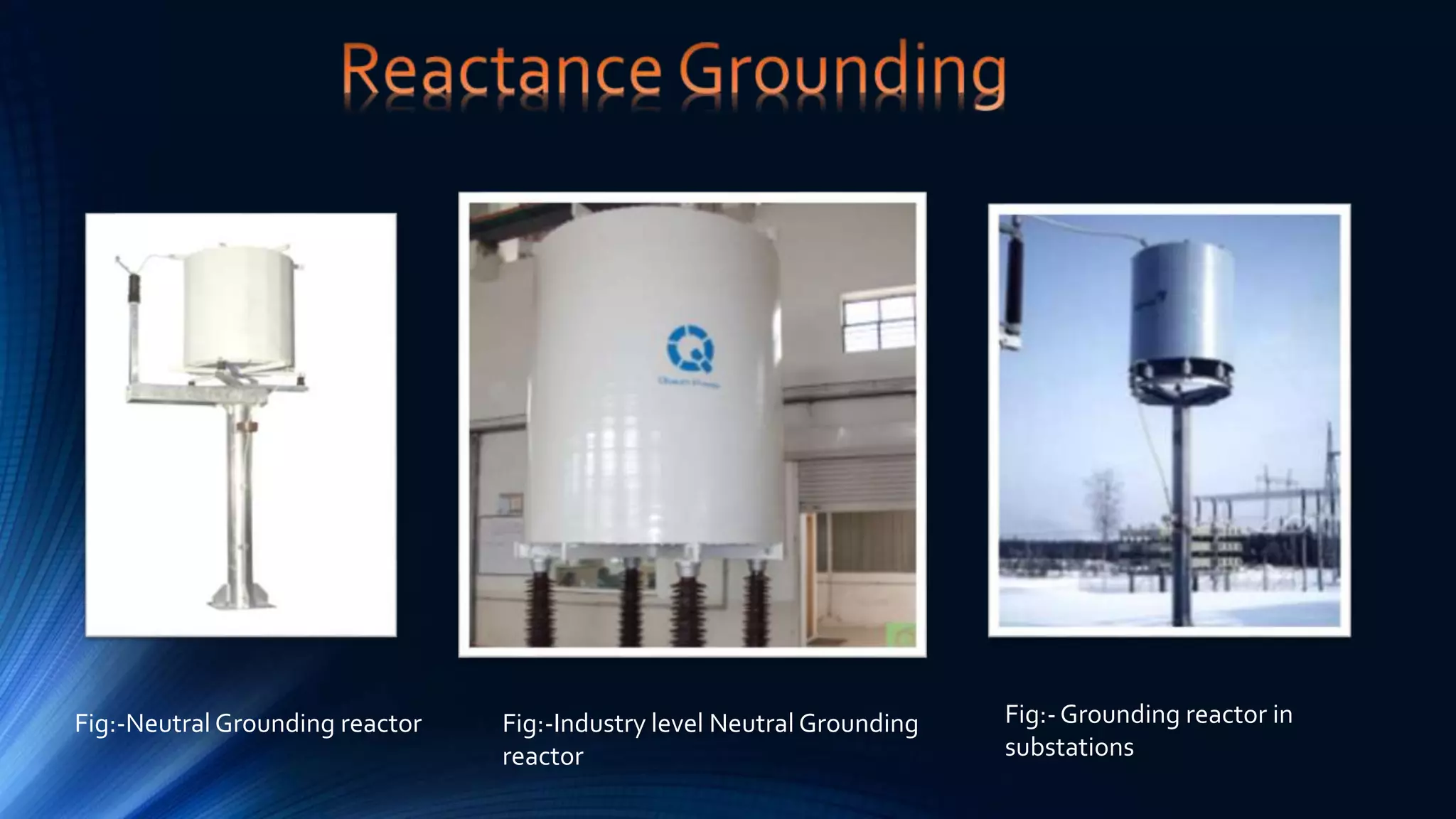
• Fault current is depend on the magnitude of reactance in the
neutral line.
• It’s characteristics are similar to solid Grounding system.
• It is lies in between solid Grounding and Resonant
Grounding.
Fig:-Neutral Grounding reactor Fig:-Industry level Neutral Grounding
reactor
Fig:-Grounding reactor in
substations
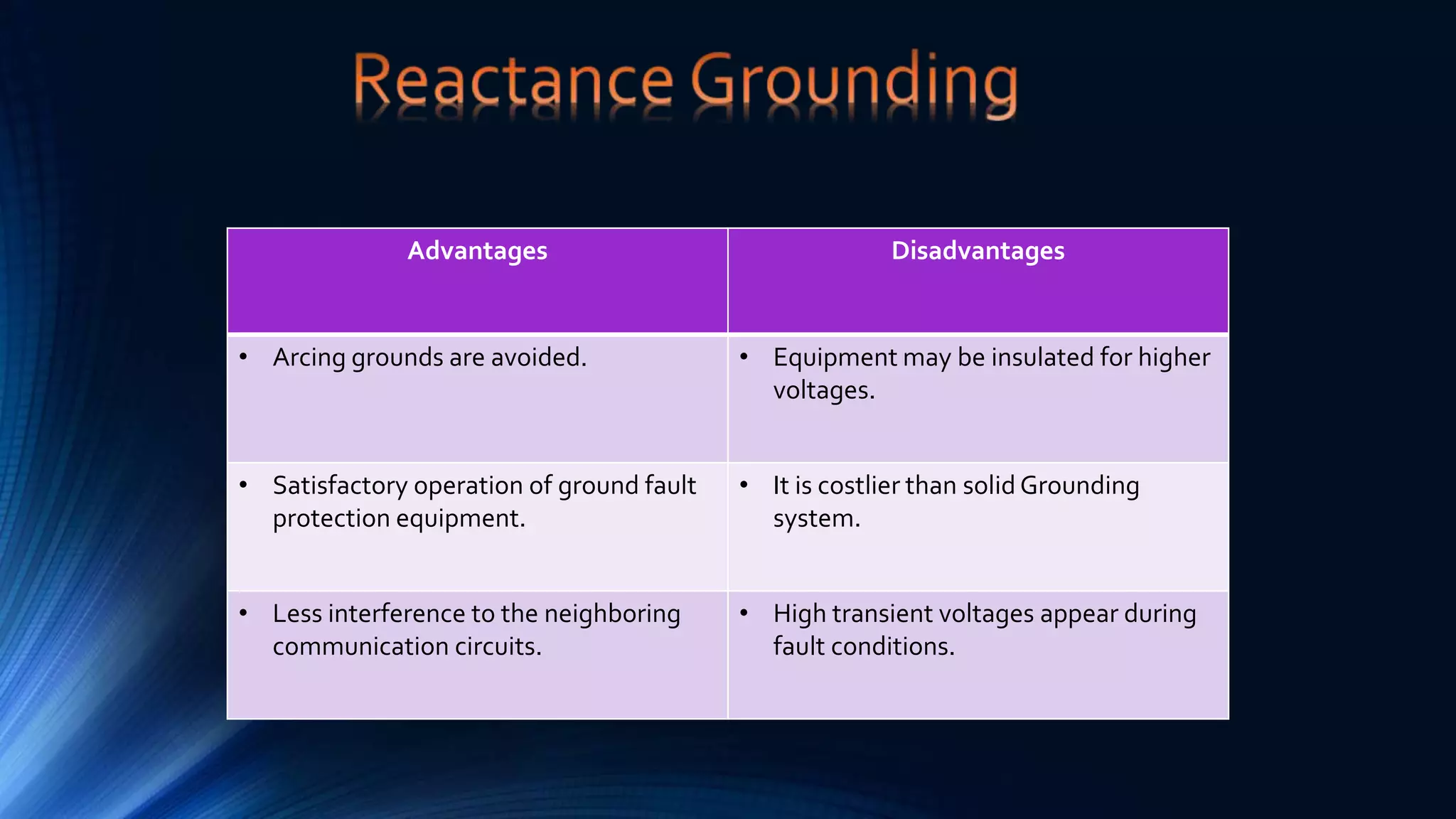
Advantages Disadvantages
• Arcing grounds are avoided. • Equipment may be insulated for higher
voltages.
• Satisfactory operation of ground fault
protection equipment.
• It is costlier than solid Grounding
system.
• Less interference to the neighboring
communication circuits.
• High transient voltages appear during
fault conditions.
Used for the neutral of circuits where high
charging currents are involved such as
transmission lines, underground cables,
synchronous motors, synchronous
capacitors etc.
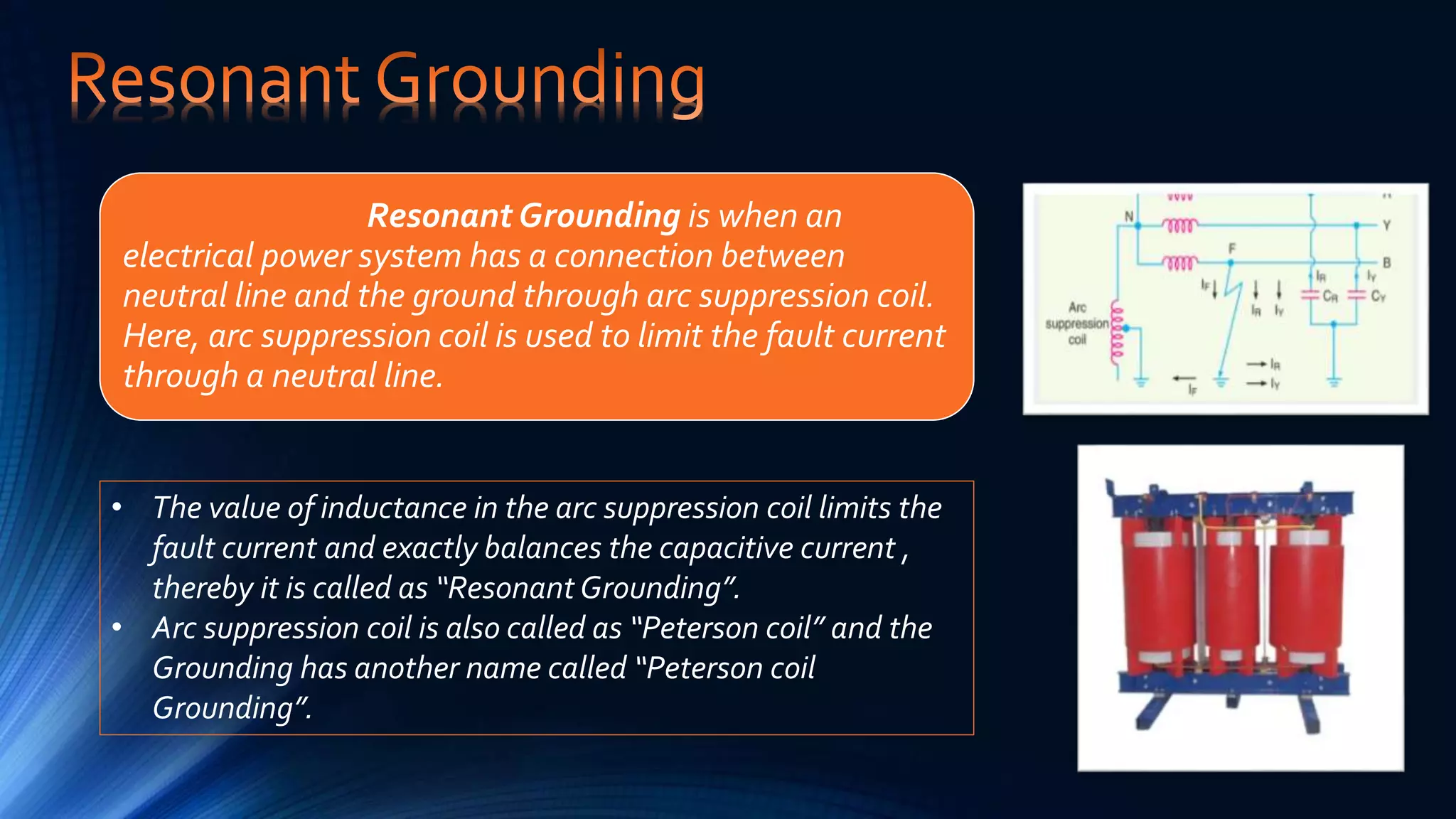
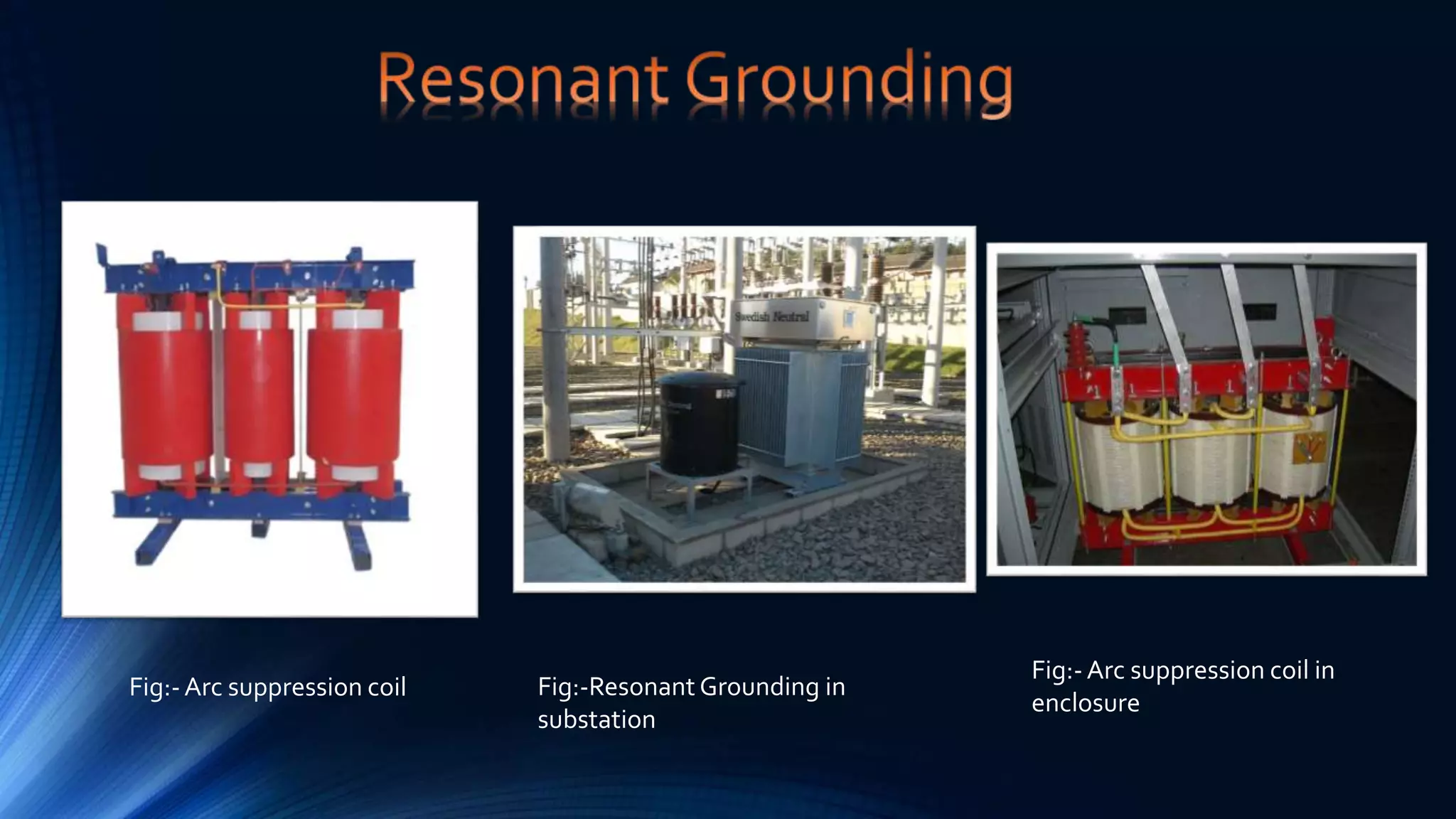
Resonant Grounding is when an
electrical power system has a connection between
neutral line and the ground through arc suppression coil.
Here, arc suppression coil is used to limit the fault current
through a neutral line.
• The value of inductance in the arc suppression coil limits the
fault current and exactly balances the capacitive current ,
thereby it is called as “Resonant Grounding”.
• Arc suppression coil is also called as “Peterson coil” and the
Grounding has another name called “Peterson coil
Grounding”.
Fig:-Arc suppression coil Fig:-Resonant Grounding in
substation
Fig:-Arc suppression coil in
enclosure
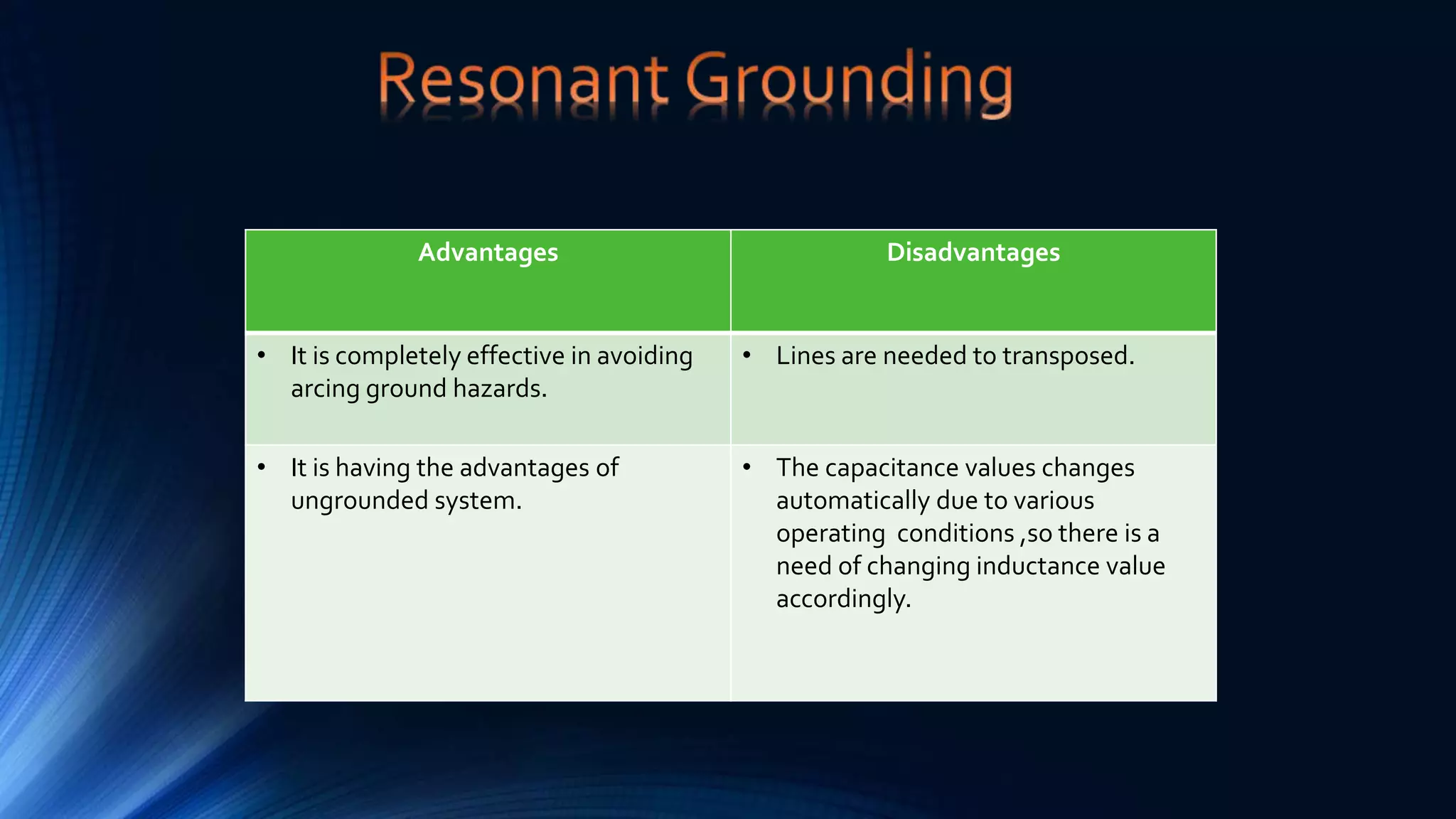
Advantages Disadvantages
• It is completely effective in avoiding
arcing ground hazards.
• Lines are needed to transposed.
• It is having the advantages of
ungrounded system.
• The capacitance values changes
automatically due to various
operating conditions ,so there is a
need of changing inductance value
accordingly.
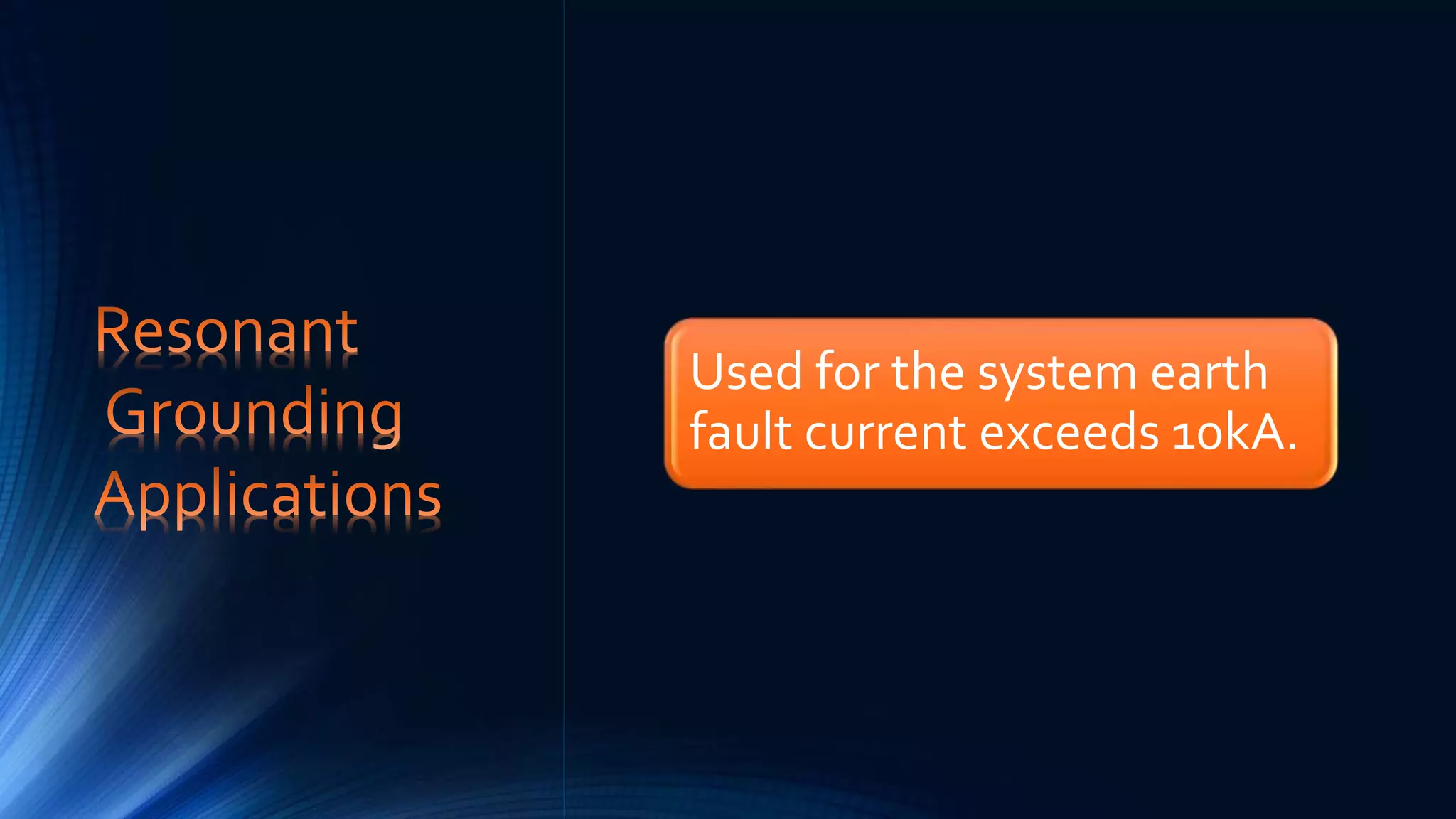
Used for the system earth
fault current exceeds 10kA.
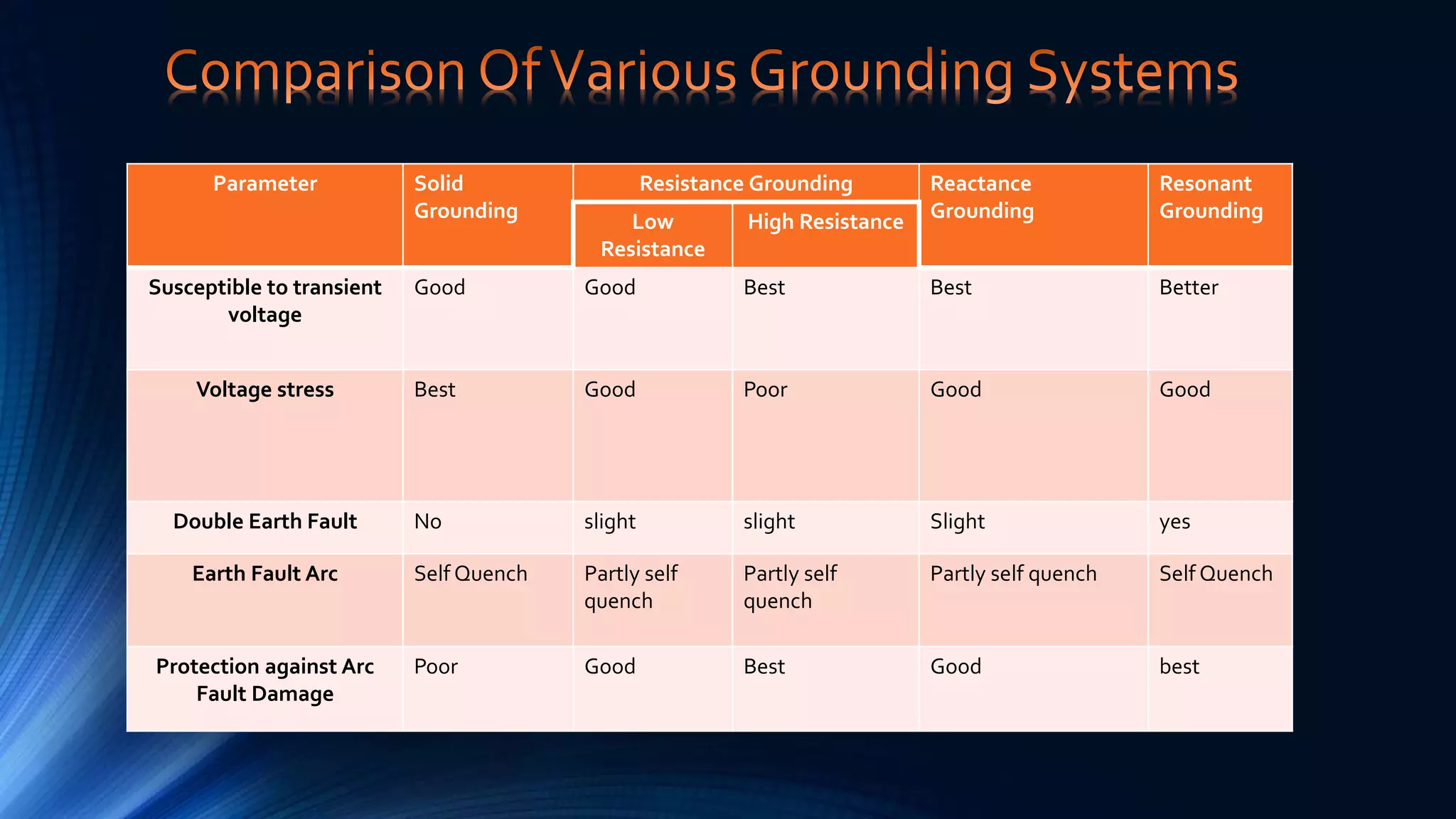
Parameter Solid
Grounding
Resistance Grounding Reactance
Grounding
Resonant
GroundingLow
Resistance
High Resistance
Susceptible to transient
voltage
Good Good Best Best Better
Voltage stress Best Good Poor Good Good
Double Earth Fault No slight slight Slight yes
Earth Fault Arc Self Quench Partly self
quench
Partly self
quench
Partly self quench Self Quench
Protection against Arc
Fault Damage
Poor Good Best Good best
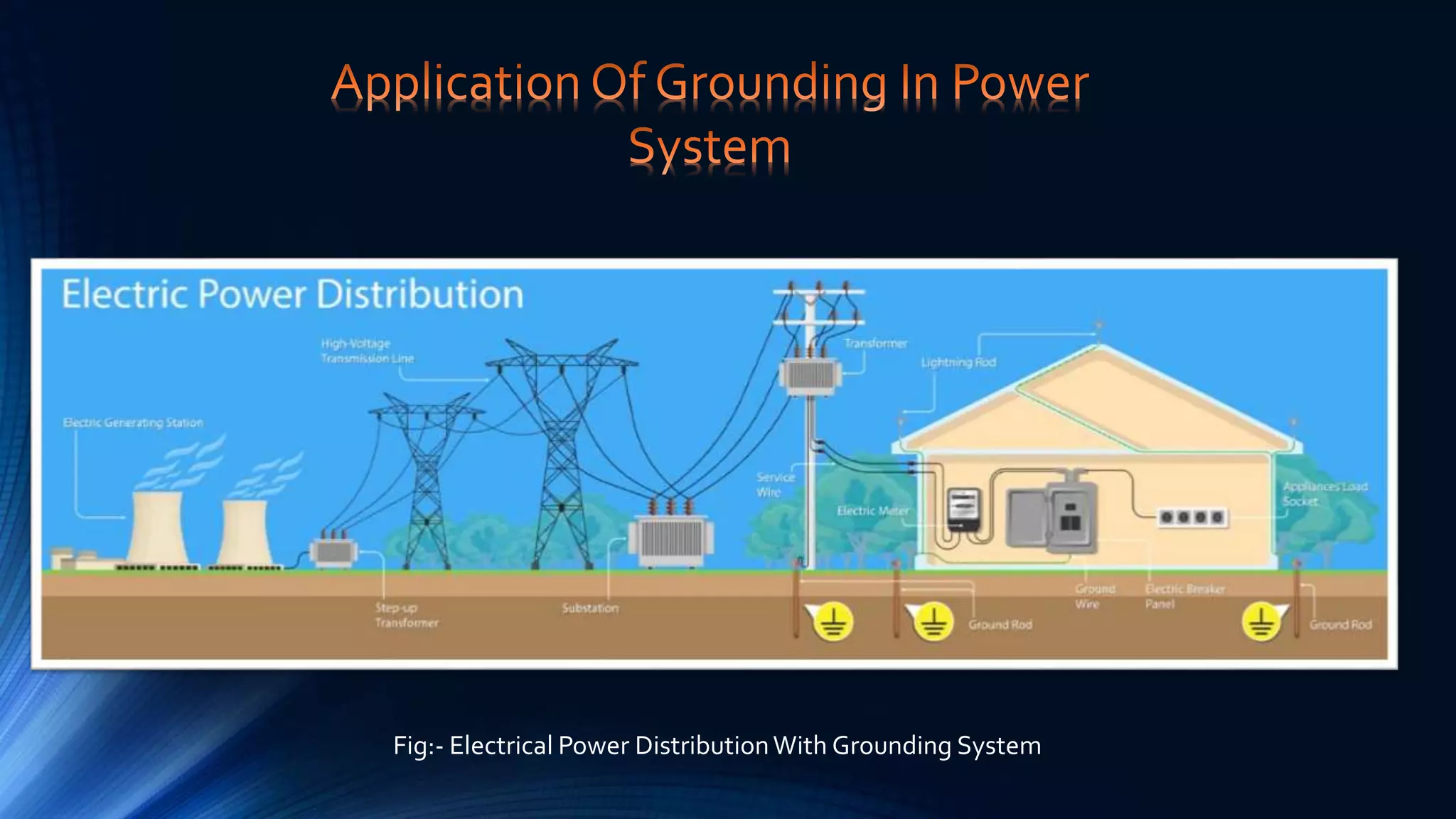
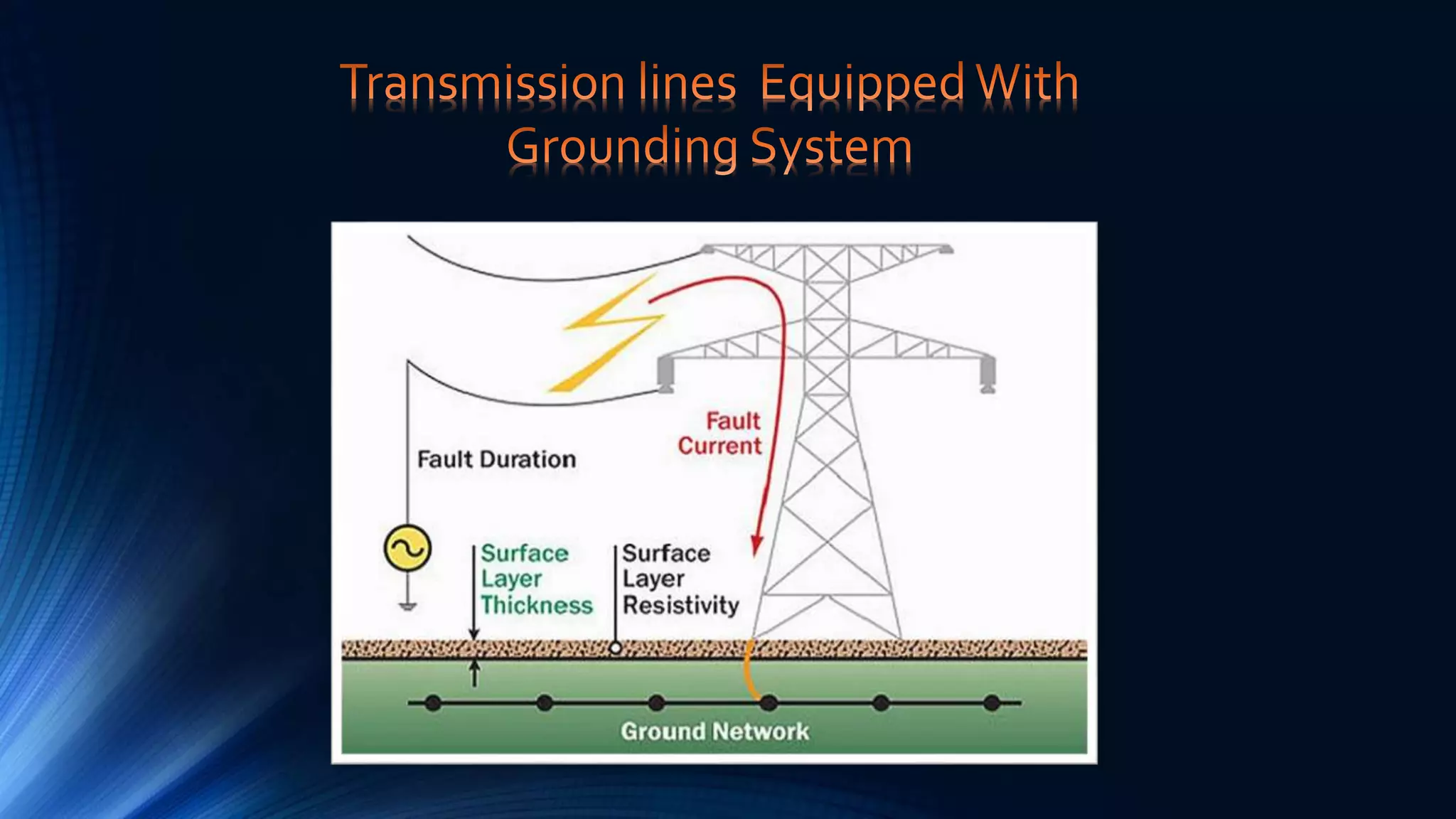
Fig:- Electrical Power DistributionWith Grounding System
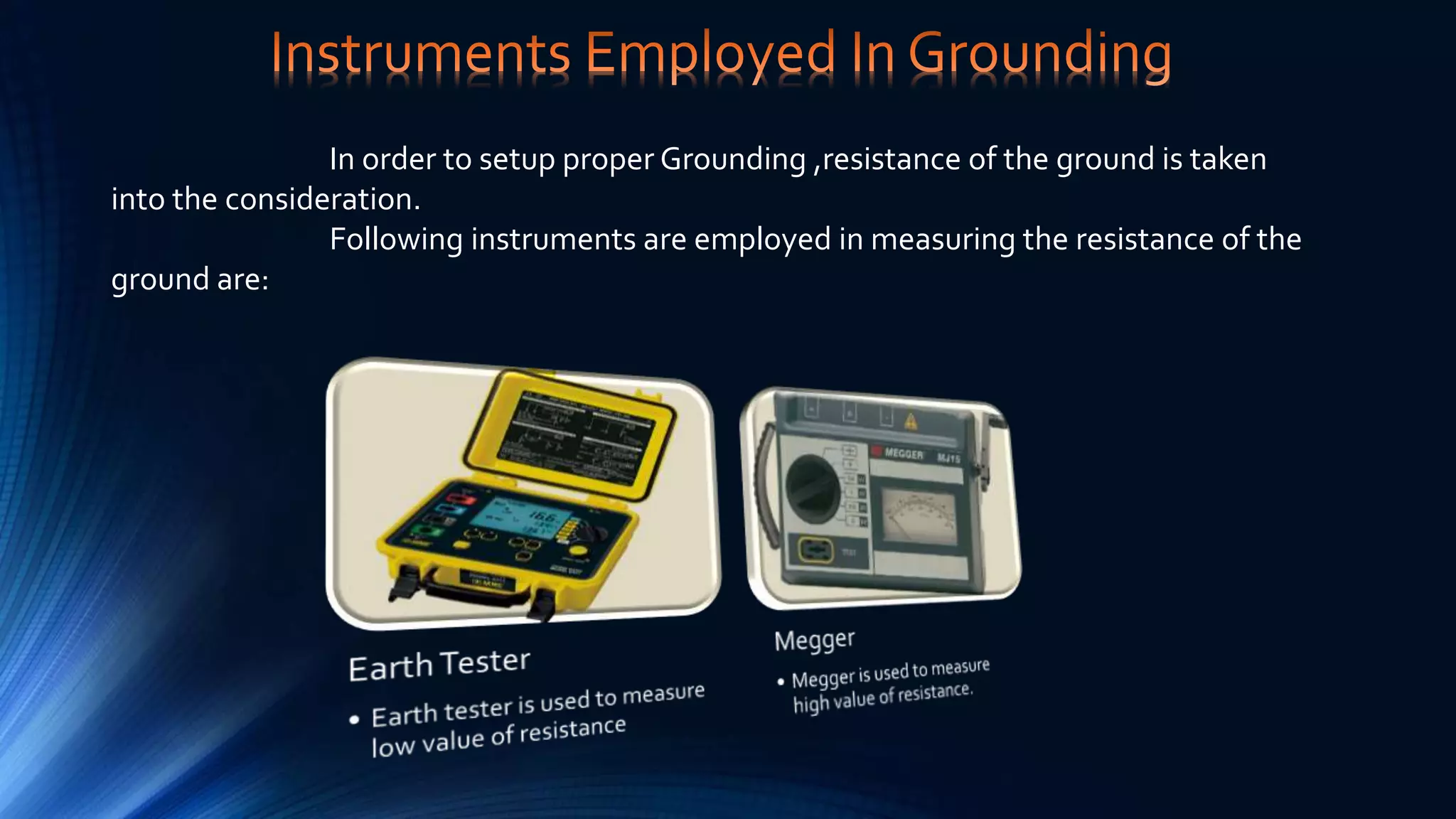
In order to setup proper Grounding ,resistance of the ground is taken
into the consideration.
Following instruments are employed in measuring the resistance of the
ground are:
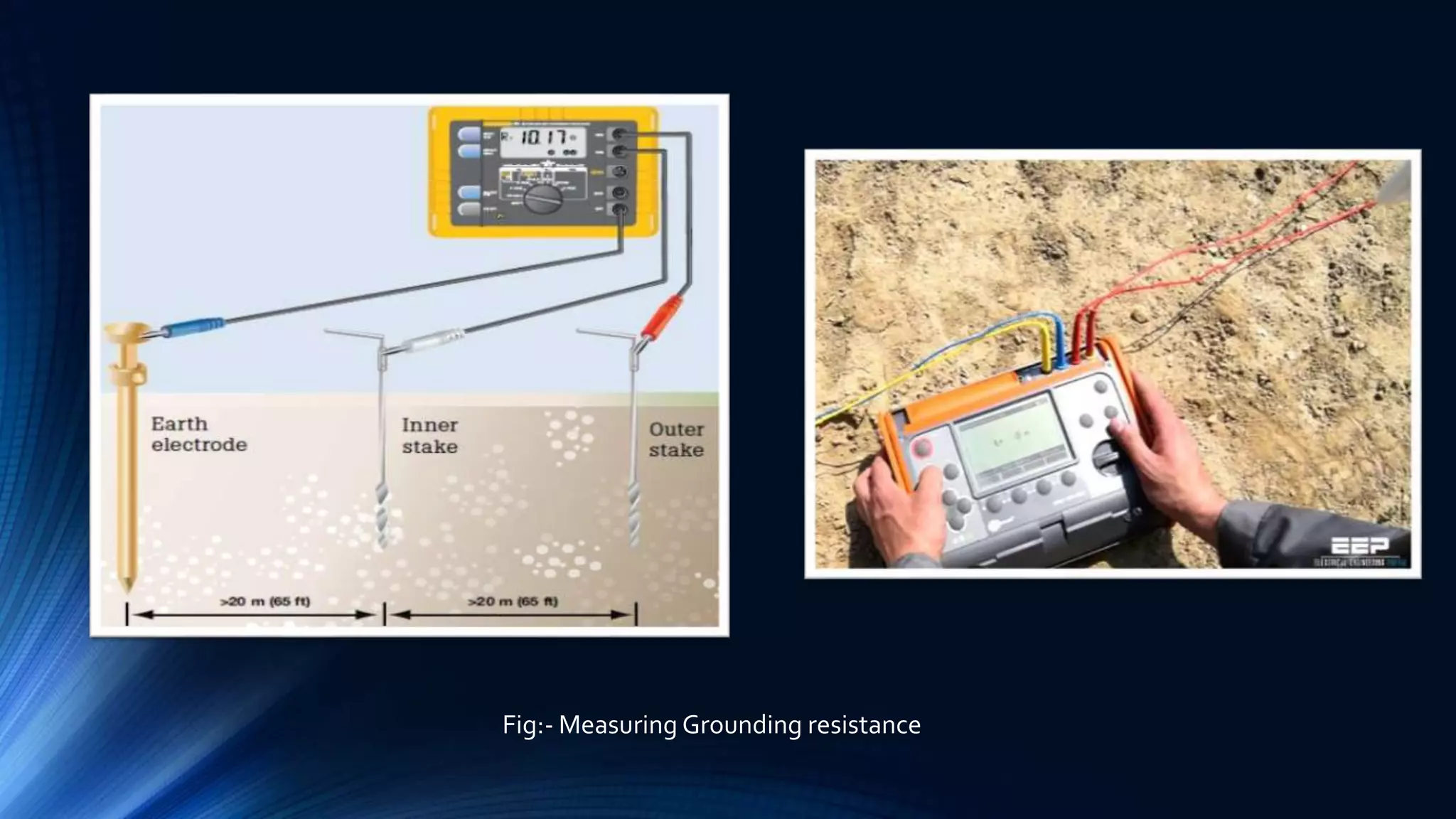
Fig:- Measuring Grounding resistance
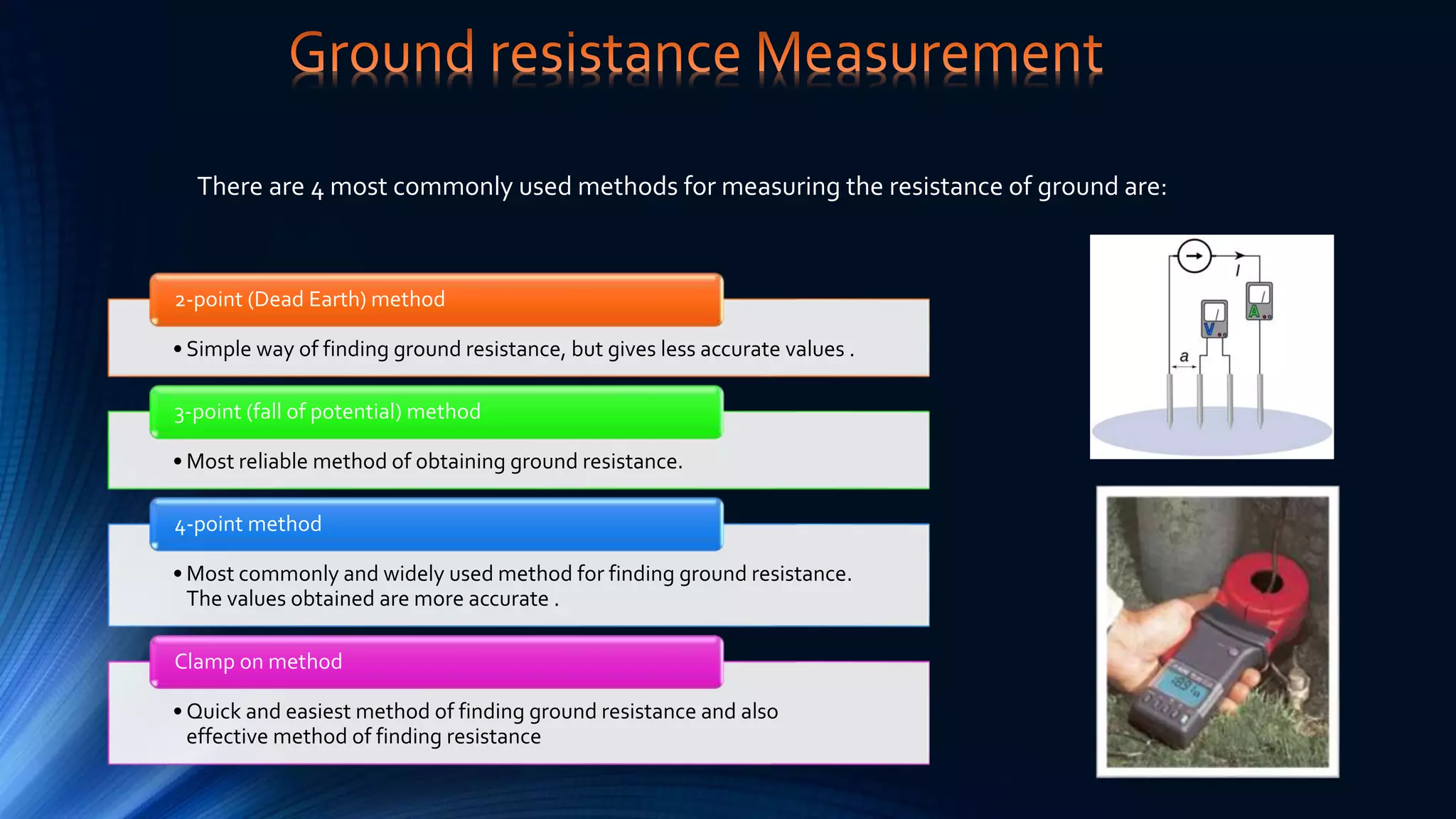
There are 4 most commonly used methods for measuring the resistance of ground are:
• Simple way of finding ground resistance, but gives less accurate values .
2-point (Dead Earth) method
• Most reliable method of obtaining ground resistance.
3-point (fall of potential) method
• Most commonly and widely used method for finding ground resistance.
The values obtained are more accurate .
4-point method
• Quick and easiest method of finding ground resistance and also
effective method of finding resistance
Clamp on method
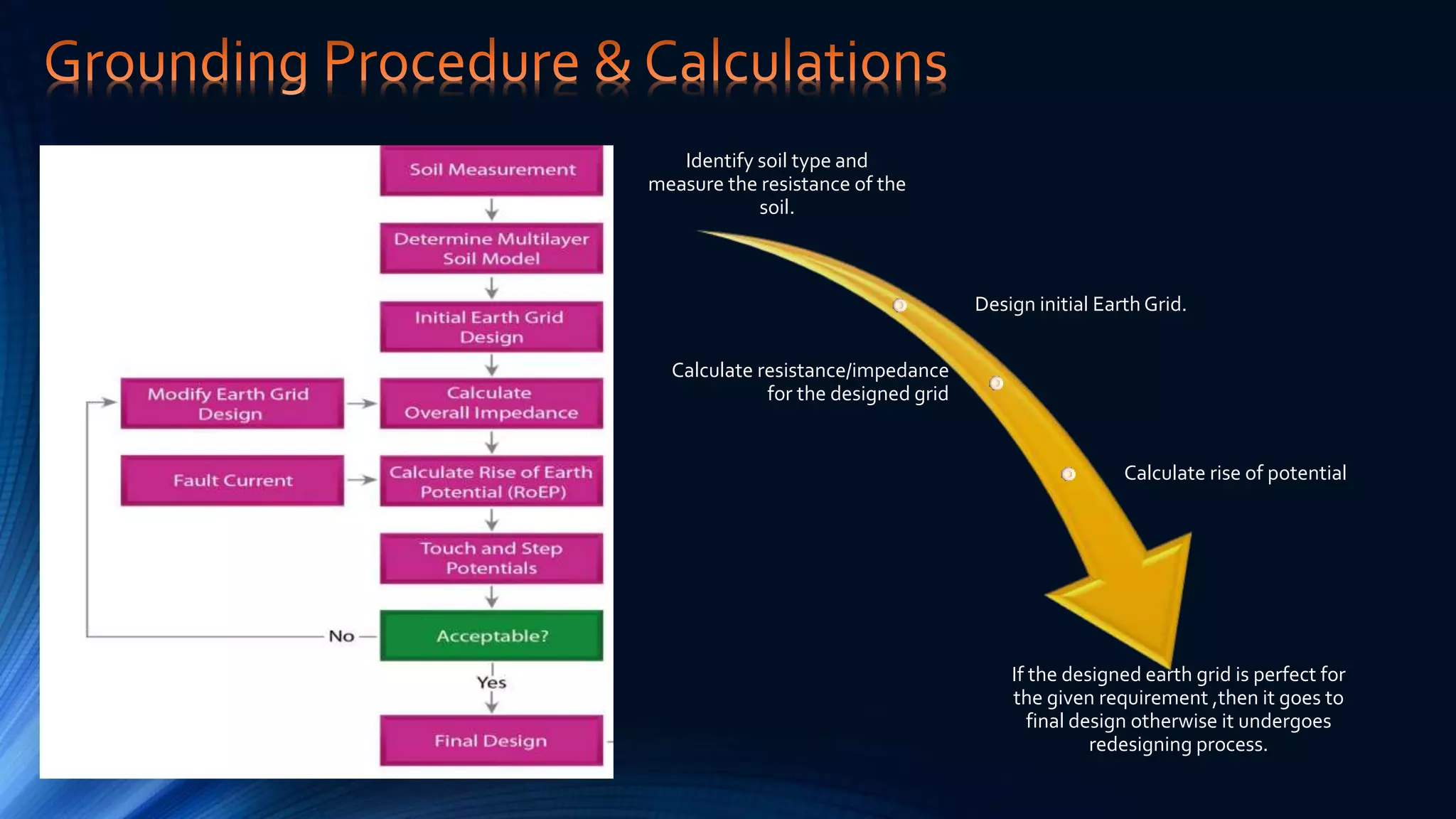
Identify soil type and
measure the resistance of the
soil.
Design initial Earth Grid.
Calculate resistance/impedance
for the designed grid
Calculate rise of potential
If the designed earth grid is perfect for
the given requirement ,then it goes to
final design otherwise it undergoes
redesigning process.
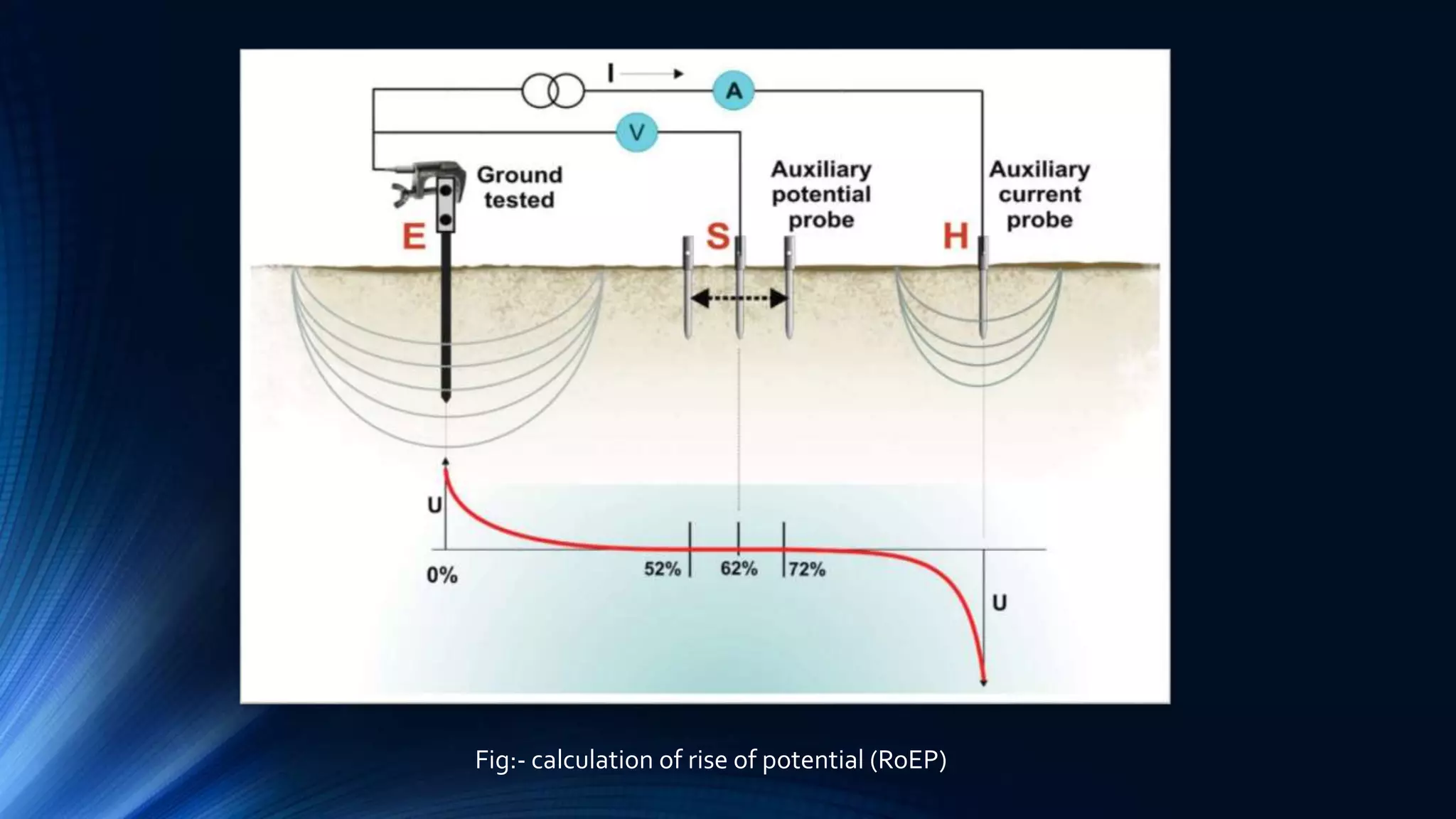
Fig:- calculation of rise of potential (RoEP)
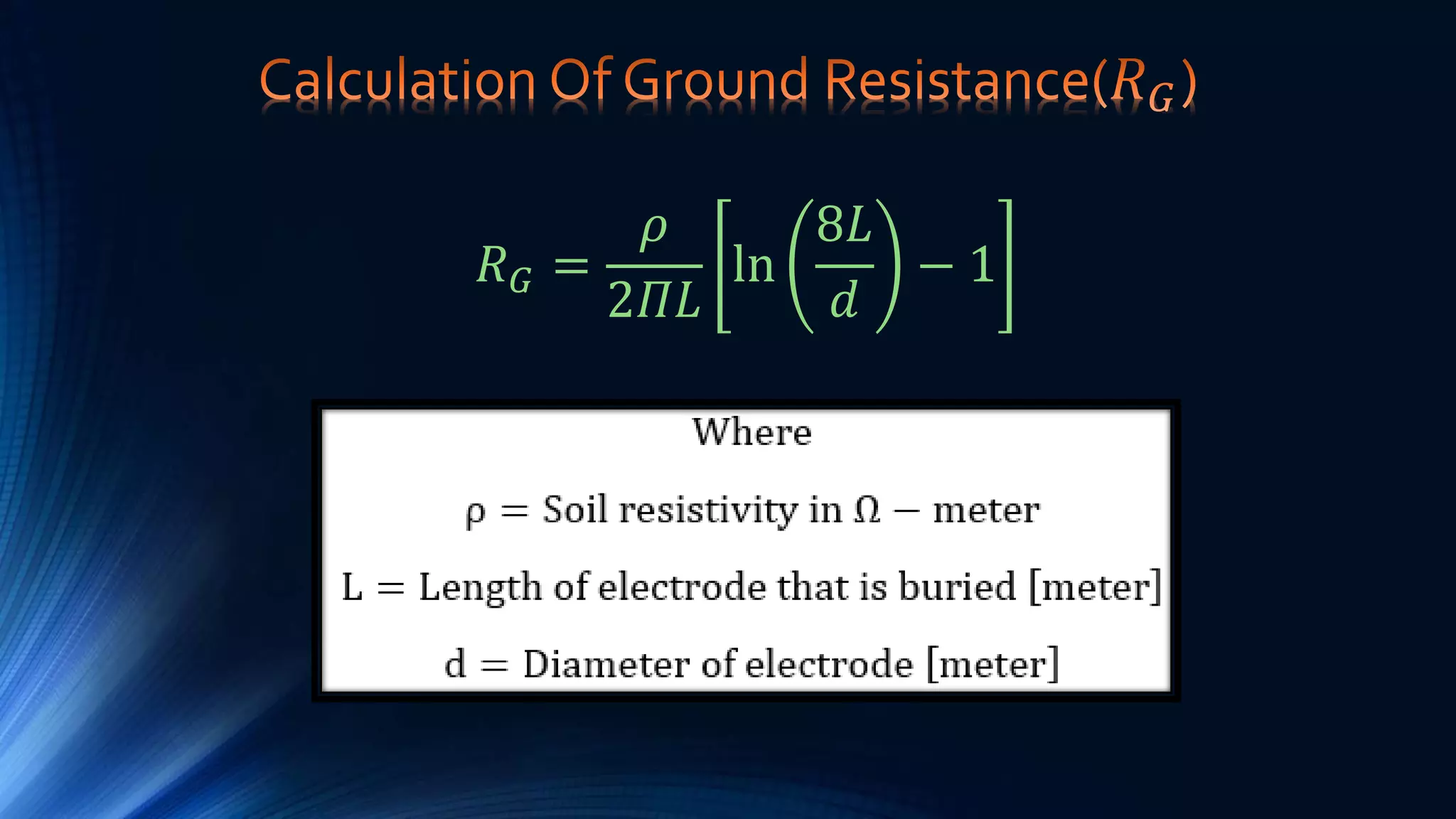
𝑅 𝐺 =
𝜌
2𝛱𝐿
ln
8𝐿
𝑑
− 1
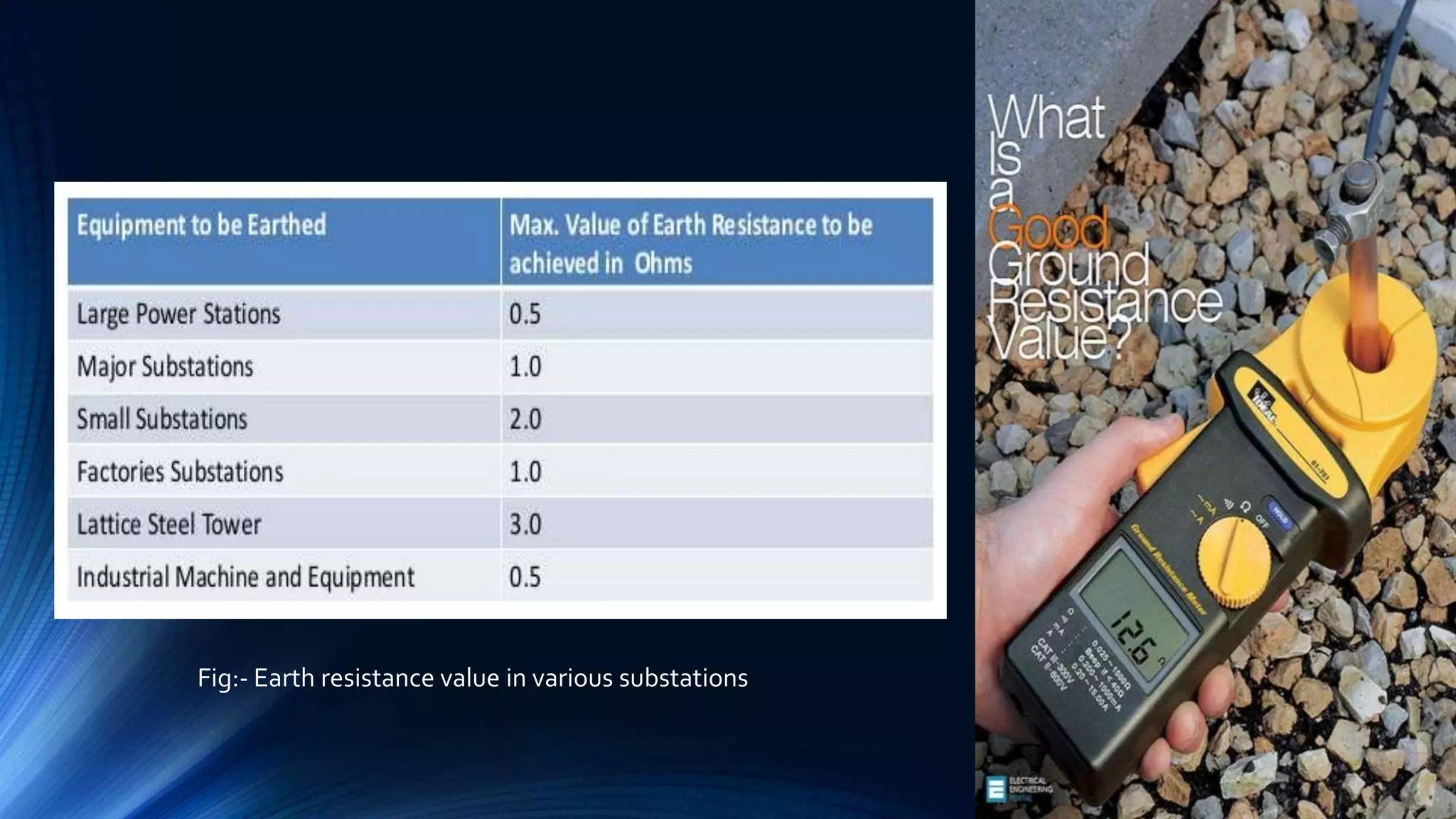
Fig:- Earth resistance value in various substations
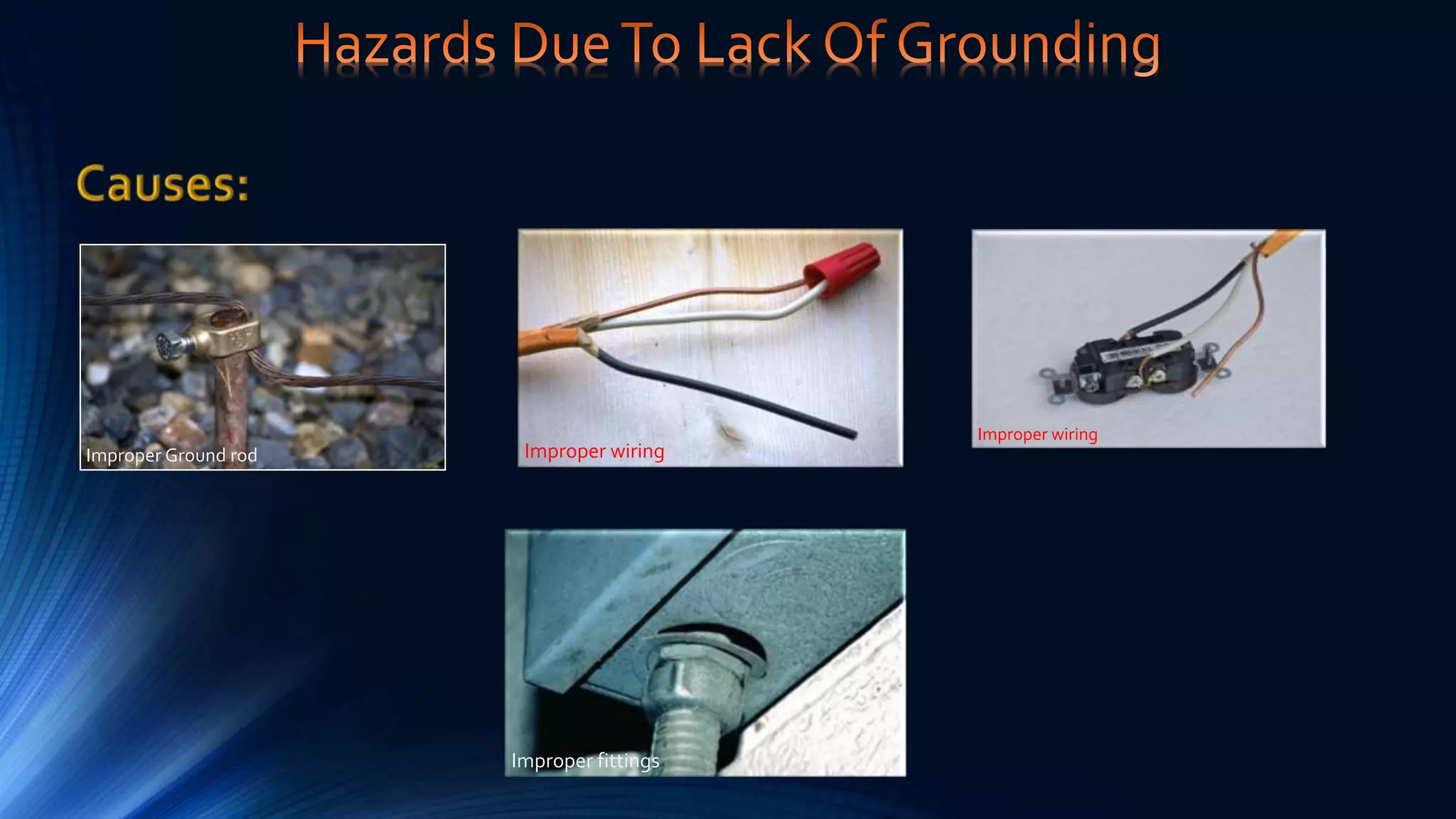
Improper Ground rod Improper wiring
Improper wiring
Improper fittings
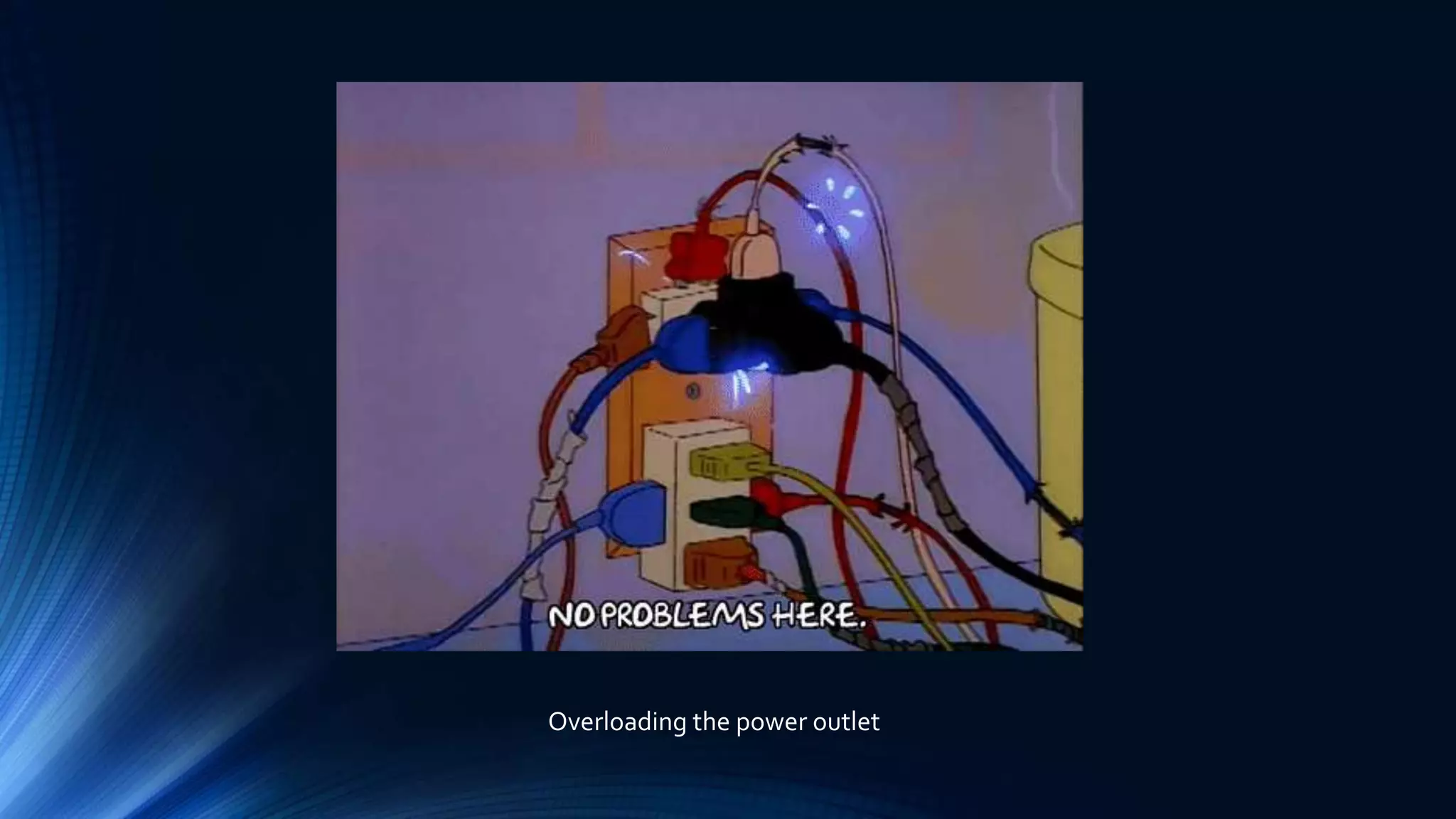
Overloading the power outlet
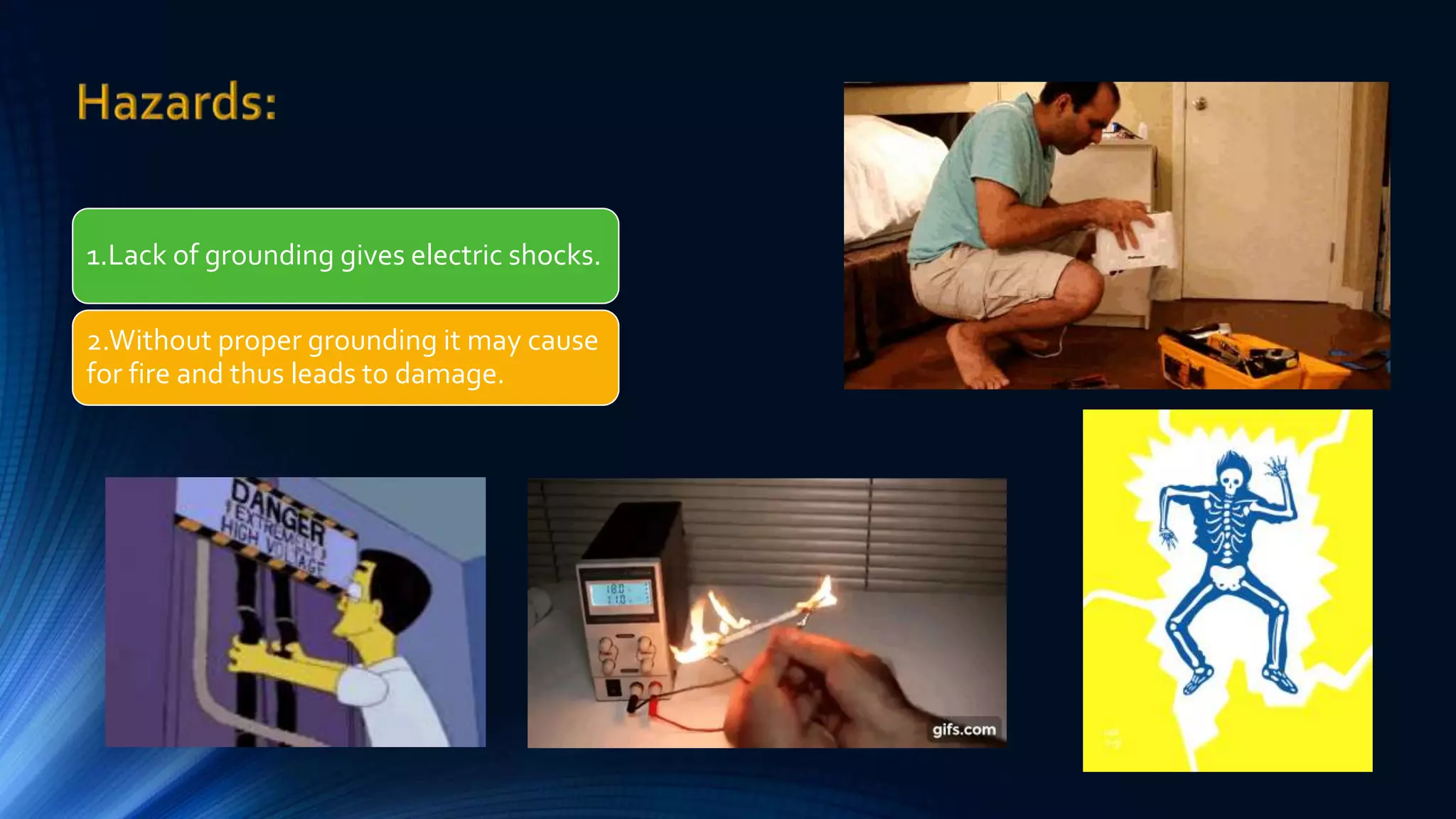
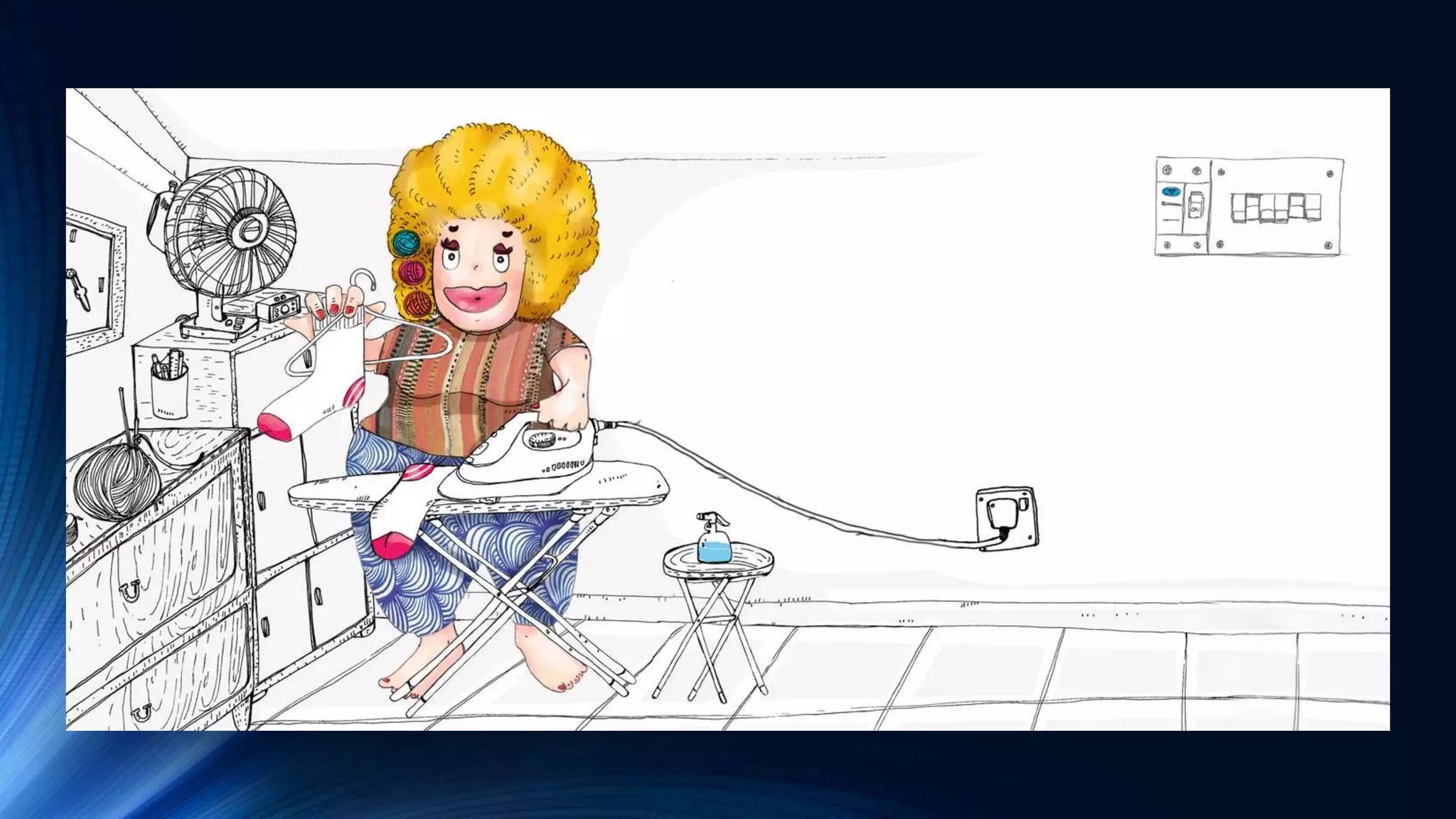
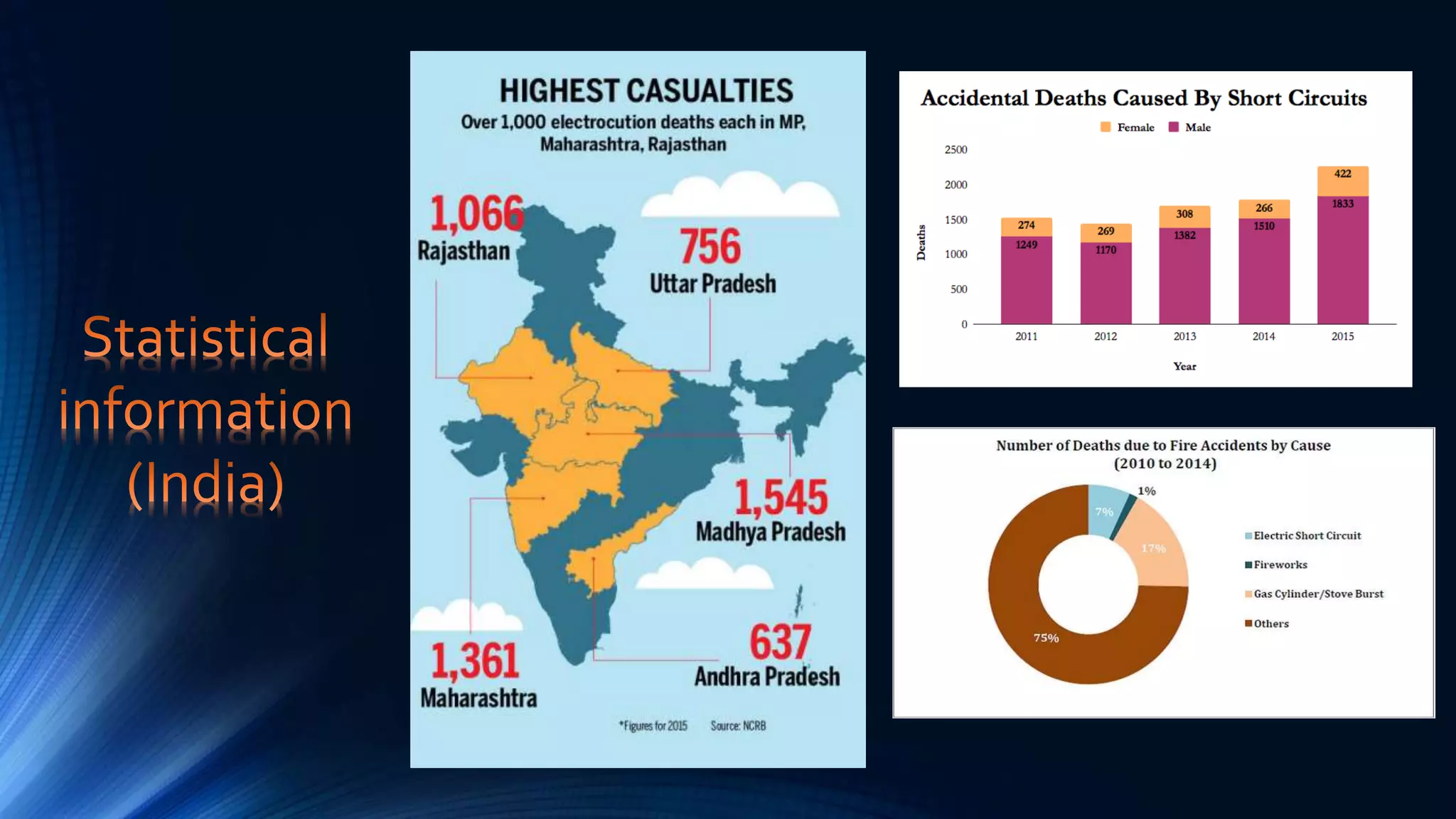
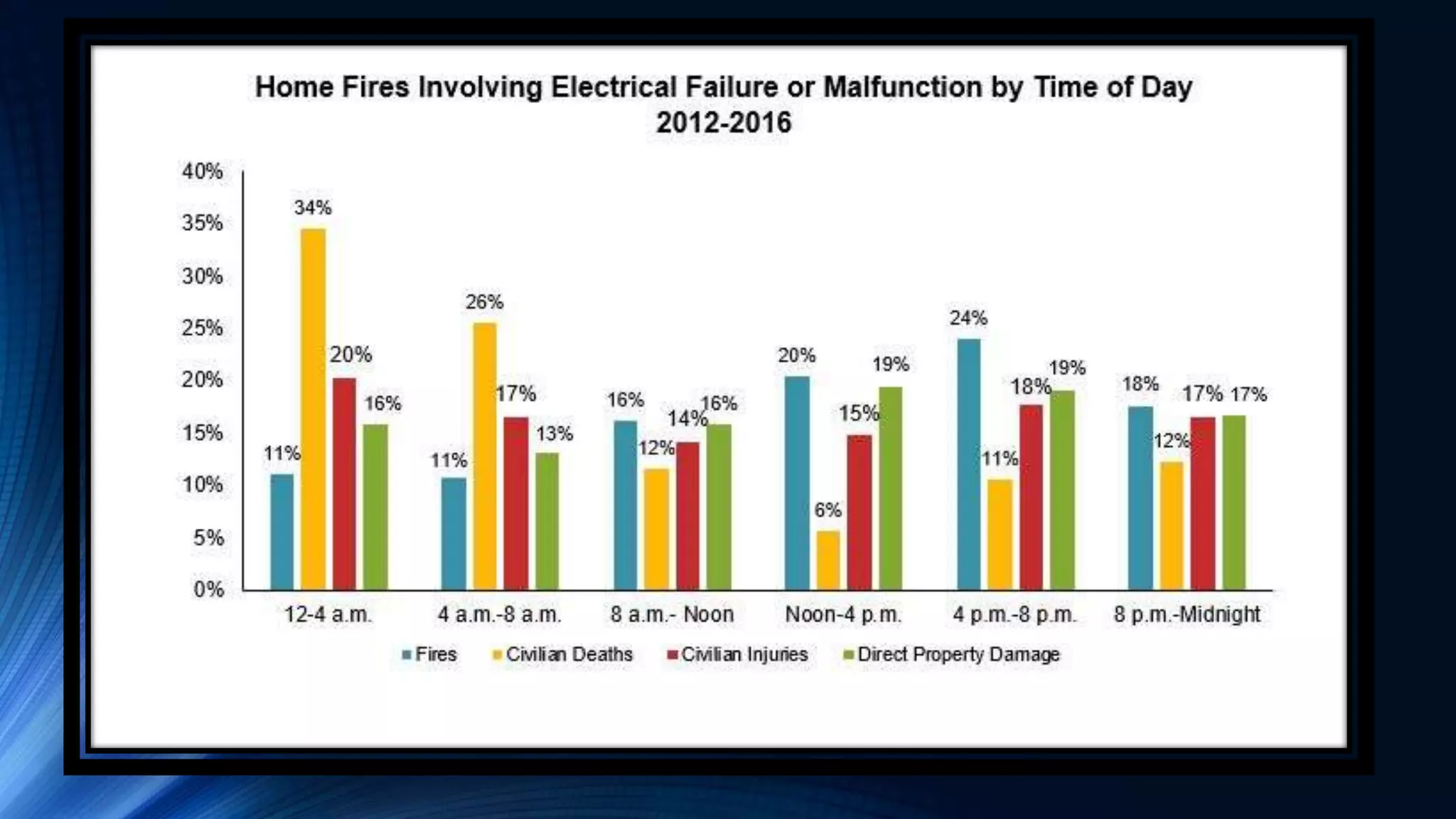
1.Lack of grounding gives electric shocks.
2.Without proper grounding it may cause
for fire and thus leads to damage.
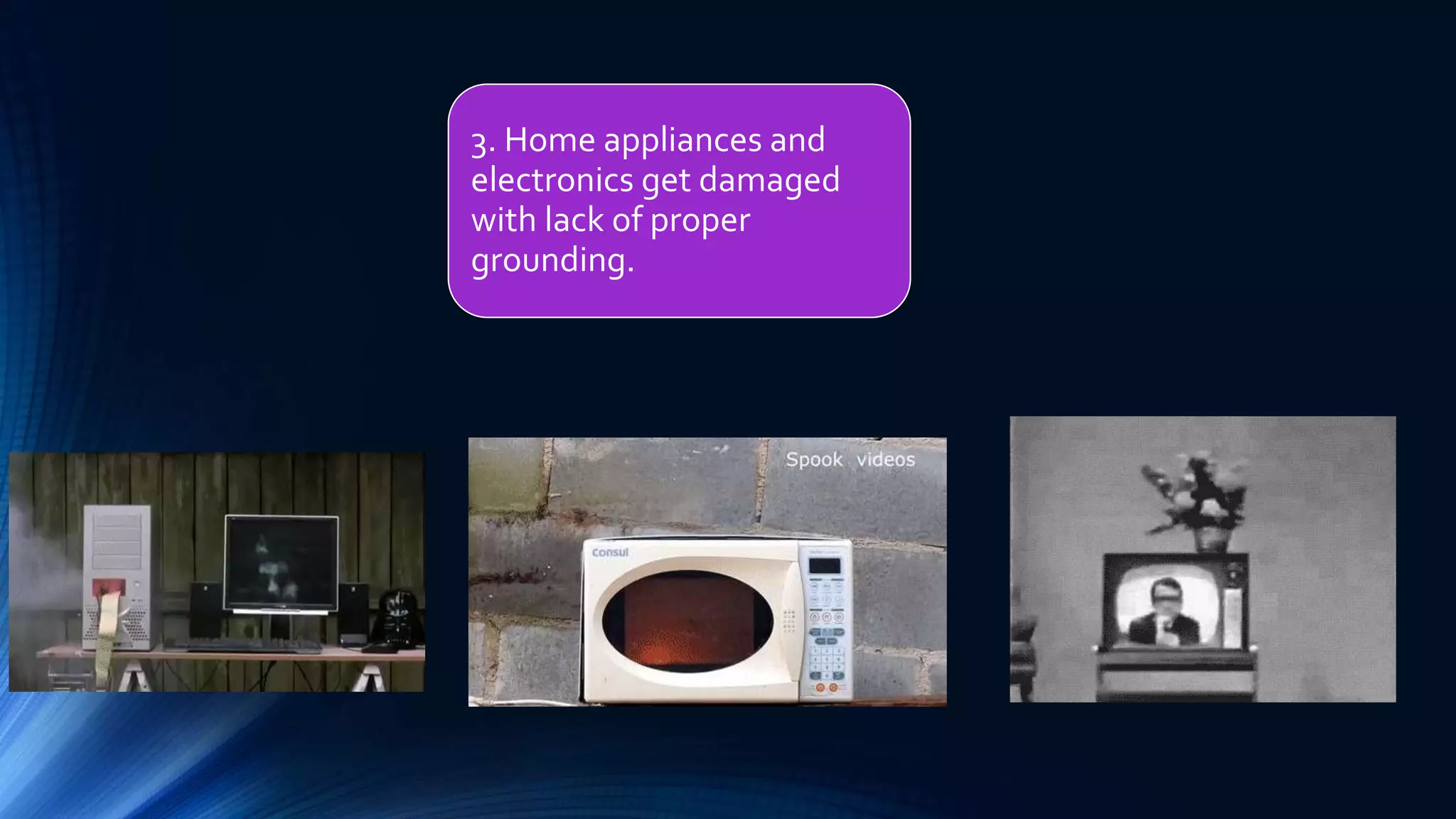
3. Home appliances and
electronics get damaged
with lack of proper
grounding.
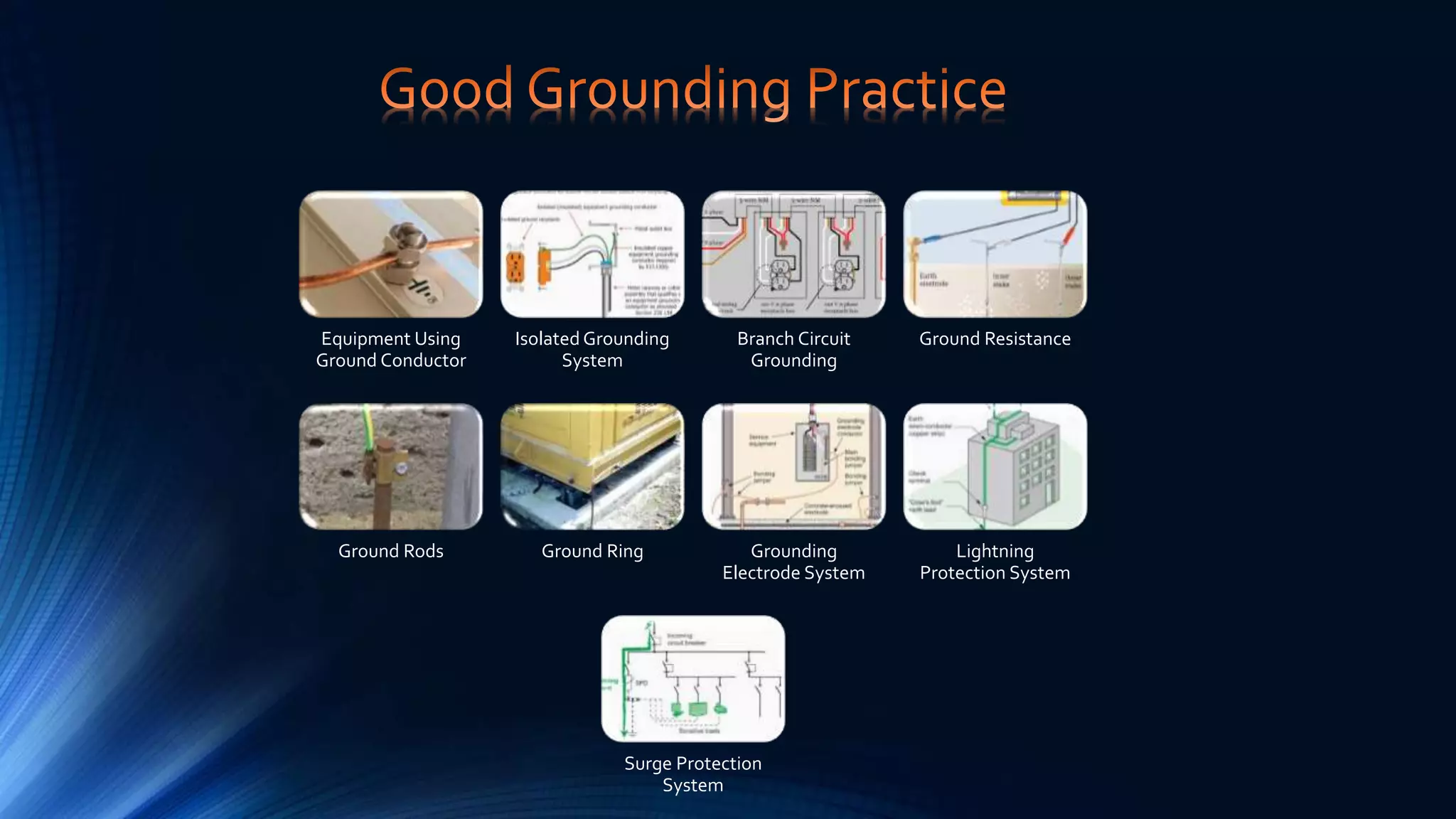
Equipment Using
Ground Conductor
IsolatedGrounding
System
Branch Circuit
Grounding
Ground Resistance
Ground Rods Ground Ring Grounding
Electrode System
Lightning
Protection System
Surge Protection
System
IEEE 142-2007 - IEEE Recommended Practice for Grounding of Industrial and
Commercial Power Systems
“A system without a proper safety & protection is just useless,
with proper system grounding , lives gets better, safer and the
equipment gets protected from being damaged.”
https://www.controlglobal.com/articles/2018/good-grounding-practices-part-1/
https://electrical-engineering-portal.com/grounding-ground-system
https://electrical-engineering-portal.com/9-recommended-practices-for-grounding
https://ieeexplore.ieee.org/document/6917192
https://www.ecmweb.com/content/article/20890415/the-basics-of-grounding-systems
https://images.google.com
http://www.brainkart.com/article/Methods-of-Neutral-Grounding_12394/
https://en.wikipedia.org/wiki/Earthing_system
Grounding in power system

Grounding in power system

  • 1.
    Grounding in Power System PRESENTEDBY • N.K.Harikrishna (1011703006) • U.Govardhan (1011803904)
  • 3.
    • What isGrounding? • Importance of Grounding • Types of Grounding • Applications of Grounding in power system • Instruments employed in Grounding • Grounding procedure & calculations • Hazards due to lack of Grounding • Good Grounding practice • IEEE rules regarding Grounding • Conclusion
  • 4.
    A safety measureto prevent people from shocked. In scientific terms ,It is a process which involves transferring of short circuited or any leakage currents in to ground during abnormal conditions. It provides low resistance path to divert the currents into the ground. It is commonly termed as “Earthing”. Electrical earthing is carried out by connecting the neutral part of the supply system to the ground. Low resistance conductor is best employed in the process of Grounding.
  • 5.
    • A properlygrounded device doesn’t leak out any current.This prevents humans from getting shocked during fault conditions. Human safety • Earthing provides stability to electronic equipment. This helps in preventing damage to the equipment against over currents and avoids replacement costs. Safety of Electrical Equipment • Earthing device like ,lightning arrestors, which are placed at the highest point of the building and connected to the ground via conducting wire or plate and this prevents damage to structure. Protection of Buildings and Towers from lightning 3 Reasons for employing Grounding:
  • 6.
    Fig: Protection againstLightning strokes using Grounding
  • 7.
    A question foryou all What is the difference between Ground & virtual ground? The answer is in the figure below:
  • 8.
  • 9.
    • It meansthat there is no impedance placed intentionally between the neutral and ground. • Neutral of the electrical system is directly connected to ground. • This system of Grounding is used for voltages up to 33 kV with total power capacity not exceeding 5000 kVA Solid Grounding means the Neutral of electrical system is directly connected to the ground and there is no addition impedance in the circuit.
  • 10.
  • 11.
    Advantages Disadvantages • Neutralis effectively held at earth potential. • Heavy Earth Fault currents may interfere neighboring communication circuits. • Permits easy operation of earth fault relay . • Difficult to operate circuit breaker due to heavy earth fault currents. • No arcing Ground. • Not economical beyond a voltage of 33kv • Easy to setup . • Installation cost is economical .
  • 12.
    Usually employed wherethe circuit impedance is high ,to keep the earth fault current within safe limits. Used for voltages up to 33 kV with total power capacity not exceeding 5000 kVA.
  • 13.
    Resistance Grounding iswhen an electrical power system has a connection between neutral line and the ground through resistor. Here, resistor is used to limit the fault current through a neutral line. • A high resistance conductor is used to provide the connection between neutral and ground. High resistance Grounding • A low resistance conductor is used to • provide the connection between neutral and ground. Low resistance Grounding
  • 14.
    Fig:- Material usedfor low resistance Grounding Fig:- High resistance Grounding Fig:- Structure of Low resistance material
  • 15.
    Advantages Disadvantages • Minimizeshazards of arcing Grounds. • Costlier than the solid grounded system. • Less interference to the neighboring communication circuits. • Enormous energy loss due to power dissipation in Grounding resistor. • Power dissipation in the resistor may improve the system stability. • Equipment needs to be highly insulated for higher voltages.
  • 16.
    It is usedon a system operating at voltages between 2.2 kV and 33 kV with power source capacity more than 5000 kVA.
  • 17.
    Reactance Grounding iswhen an electrical system has a connection between neutral and the ground through reactor. Here, reactor is used to limit the fault current through a neutral line. • Fault current is depend on the magnitude of reactance in the neutral line. • It’s characteristics are similar to solid Grounding system. • It is lies in between solid Grounding and Resonant Grounding.
  • 18.
    Fig:-Neutral Grounding reactorFig:-Industry level Neutral Grounding reactor Fig:-Grounding reactor in substations
  • 19.
    Advantages Disadvantages • Arcinggrounds are avoided. • Equipment may be insulated for higher voltages. • Satisfactory operation of ground fault protection equipment. • It is costlier than solid Grounding system. • Less interference to the neighboring communication circuits. • High transient voltages appear during fault conditions.
  • 20.
    Used for theneutral of circuits where high charging currents are involved such as transmission lines, underground cables, synchronous motors, synchronous capacitors etc.
  • 21.
    Resonant Grounding iswhen an electrical power system has a connection between neutral line and the ground through arc suppression coil. Here, arc suppression coil is used to limit the fault current through a neutral line. • The value of inductance in the arc suppression coil limits the fault current and exactly balances the capacitive current , thereby it is called as “Resonant Grounding”. • Arc suppression coil is also called as “Peterson coil” and the Grounding has another name called “Peterson coil Grounding”.
  • 22.
    Fig:-Arc suppression coilFig:-Resonant Grounding in substation Fig:-Arc suppression coil in enclosure
  • 23.
    Advantages Disadvantages • Itis completely effective in avoiding arcing ground hazards. • Lines are needed to transposed. • It is having the advantages of ungrounded system. • The capacitance values changes automatically due to various operating conditions ,so there is a need of changing inductance value accordingly.
  • 24.
    Used for thesystem earth fault current exceeds 10kA.
  • 25.
    Parameter Solid Grounding Resistance GroundingReactance Grounding Resonant GroundingLow Resistance High Resistance Susceptible to transient voltage Good Good Best Best Better Voltage stress Best Good Poor Good Good Double Earth Fault No slight slight Slight yes Earth Fault Arc Self Quench Partly self quench Partly self quench Partly self quench Self Quench Protection against Arc Fault Damage Poor Good Best Good best
  • 26.
    Fig:- Electrical PowerDistributionWith Grounding System
  • 31.
    In order tosetup proper Grounding ,resistance of the ground is taken into the consideration. Following instruments are employed in measuring the resistance of the ground are:
  • 32.
  • 33.
    There are 4most commonly used methods for measuring the resistance of ground are: • Simple way of finding ground resistance, but gives less accurate values . 2-point (Dead Earth) method • Most reliable method of obtaining ground resistance. 3-point (fall of potential) method • Most commonly and widely used method for finding ground resistance. The values obtained are more accurate . 4-point method • Quick and easiest method of finding ground resistance and also effective method of finding resistance Clamp on method
  • 34.
    Identify soil typeand measure the resistance of the soil. Design initial Earth Grid. Calculate resistance/impedance for the designed grid Calculate rise of potential If the designed earth grid is perfect for the given requirement ,then it goes to final design otherwise it undergoes redesigning process.
  • 35.
    Fig:- calculation ofrise of potential (RoEP)
  • 36.
  • 37.
    Fig:- Earth resistancevalue in various substations
  • 38.
    Improper Ground rodImproper wiring Improper wiring Improper fittings
  • 39.
  • 40.
    1.Lack of groundinggives electric shocks. 2.Without proper grounding it may cause for fire and thus leads to damage.
  • 41.
    3. Home appliancesand electronics get damaged with lack of proper grounding.
  • 46.
    Equipment Using Ground Conductor IsolatedGrounding System BranchCircuit Grounding Ground Resistance Ground Rods Ground Ring Grounding Electrode System Lightning Protection System Surge Protection System
  • 48.
    IEEE 142-2007 -IEEE Recommended Practice for Grounding of Industrial and Commercial Power Systems
  • 49.
    “A system withouta proper safety & protection is just useless, with proper system grounding , lives gets better, safer and the equipment gets protected from being damaged.”
  • 52.