EARTH

MARS
Presented by:

Tutored by:

Btissam BOUHLAL
Sara KHOUYIBABA

Christopher YUKNA
Size
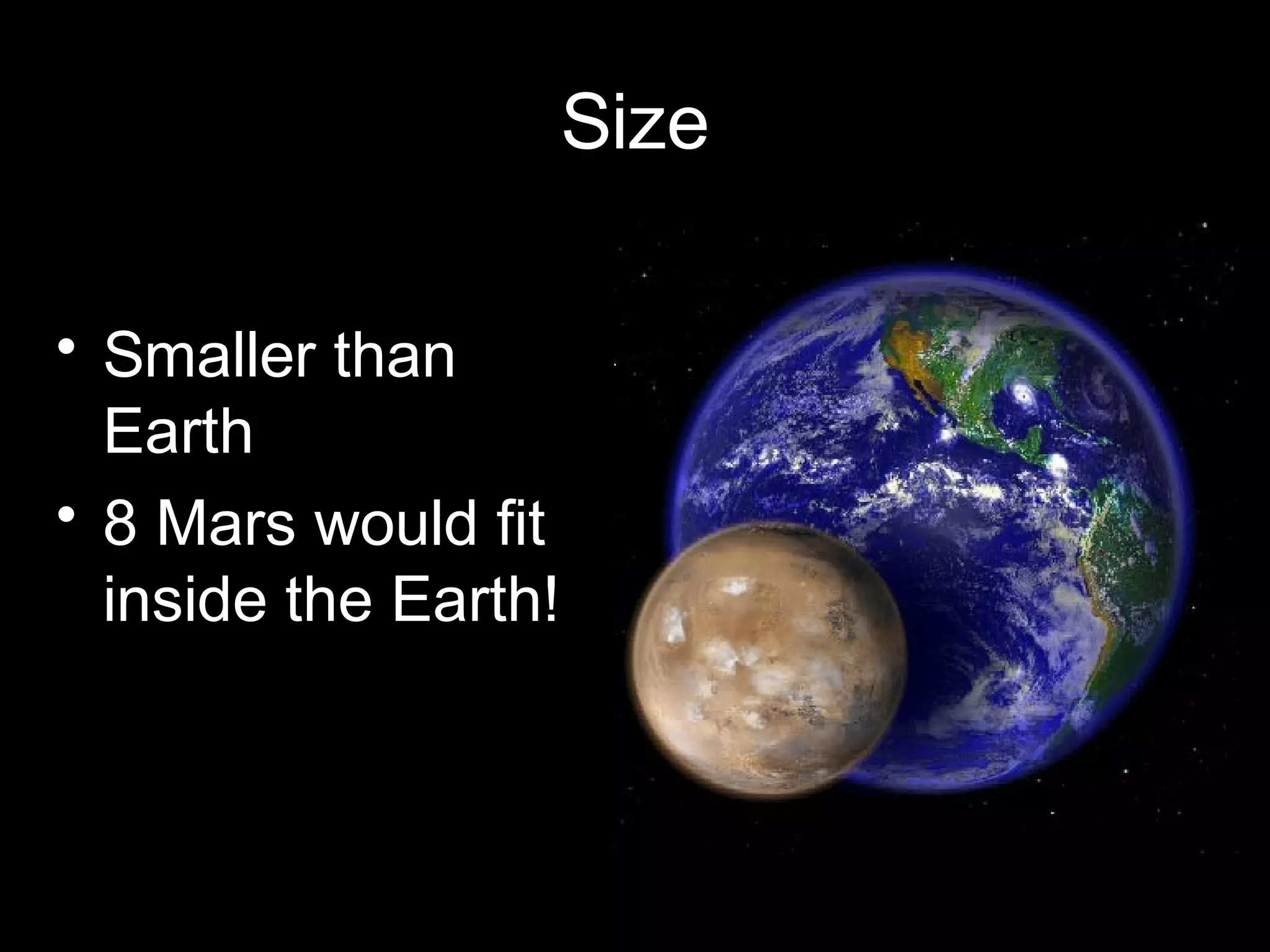
• Smaller than
Earth
• 8 Mars would fit
inside the Earth!
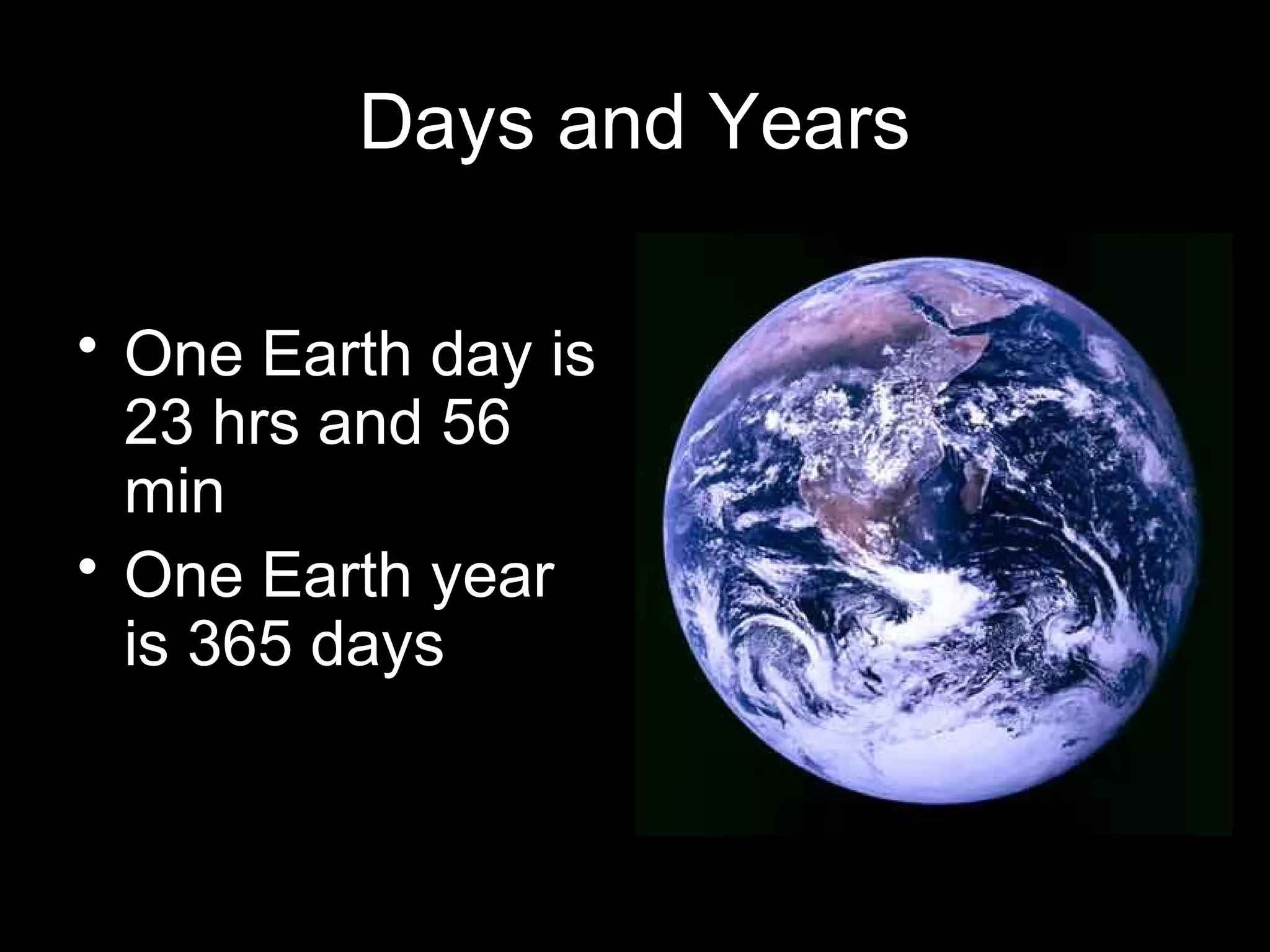
Days and Years
• One Earth day is
23 hrs and 56
min
• One Earth year
is 365 days
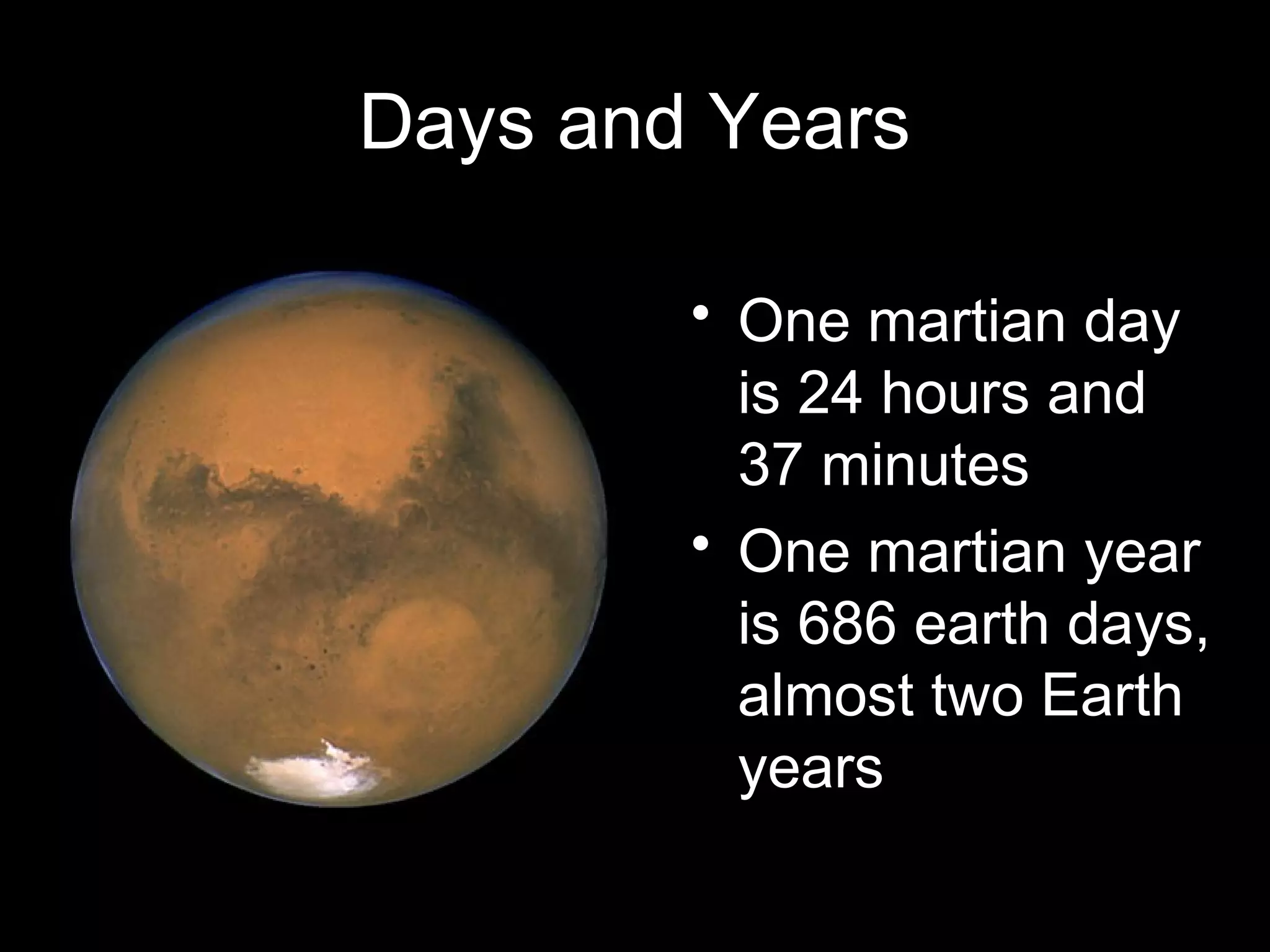
Days and Years
• One martian day
is 24 hours and
37 minutes
• One martian year
is 686 earth days,
almost two Earth
years
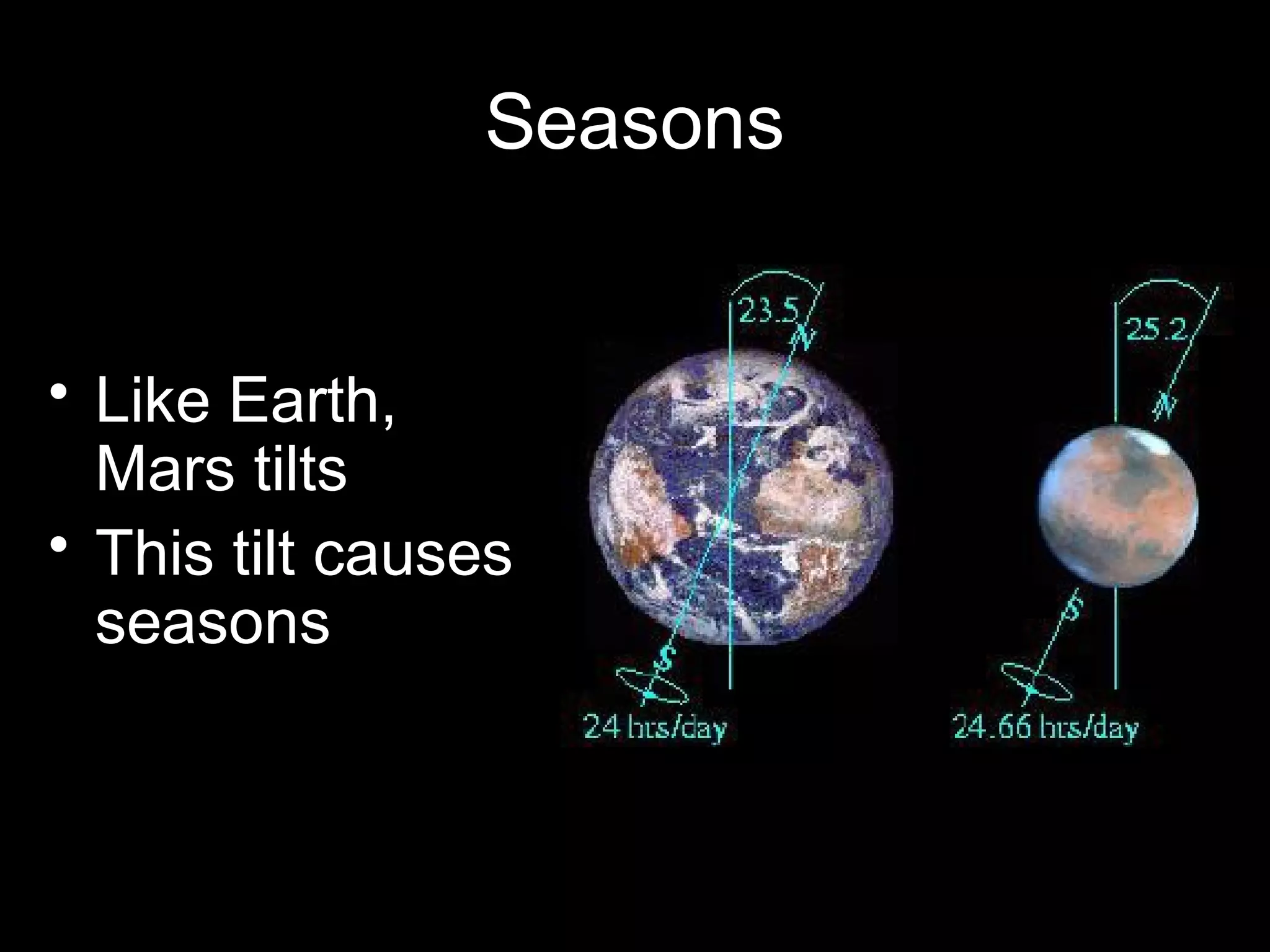
Seasons

• Like Earth,
Mars tilts
• This tilt causes
seasons
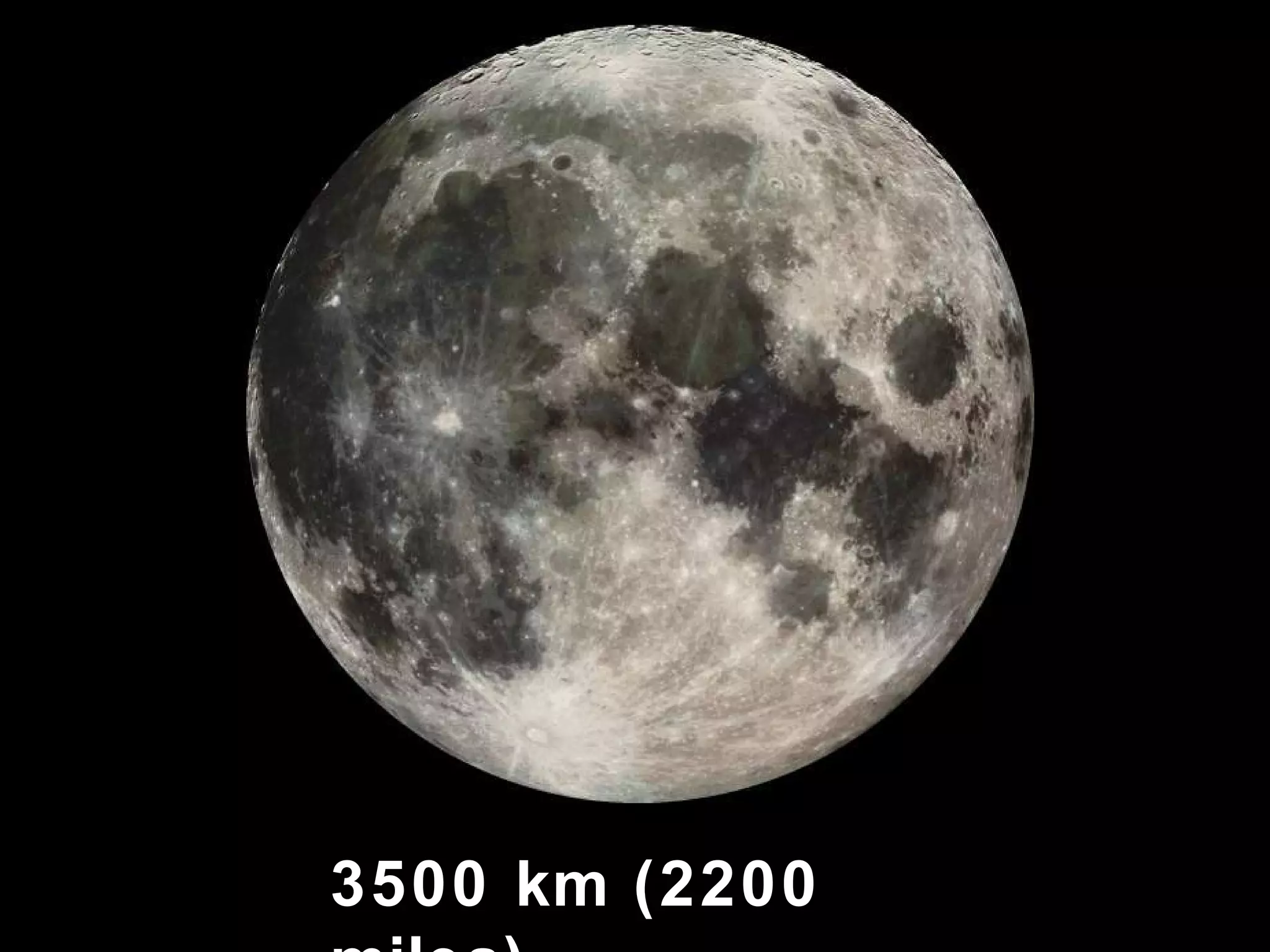
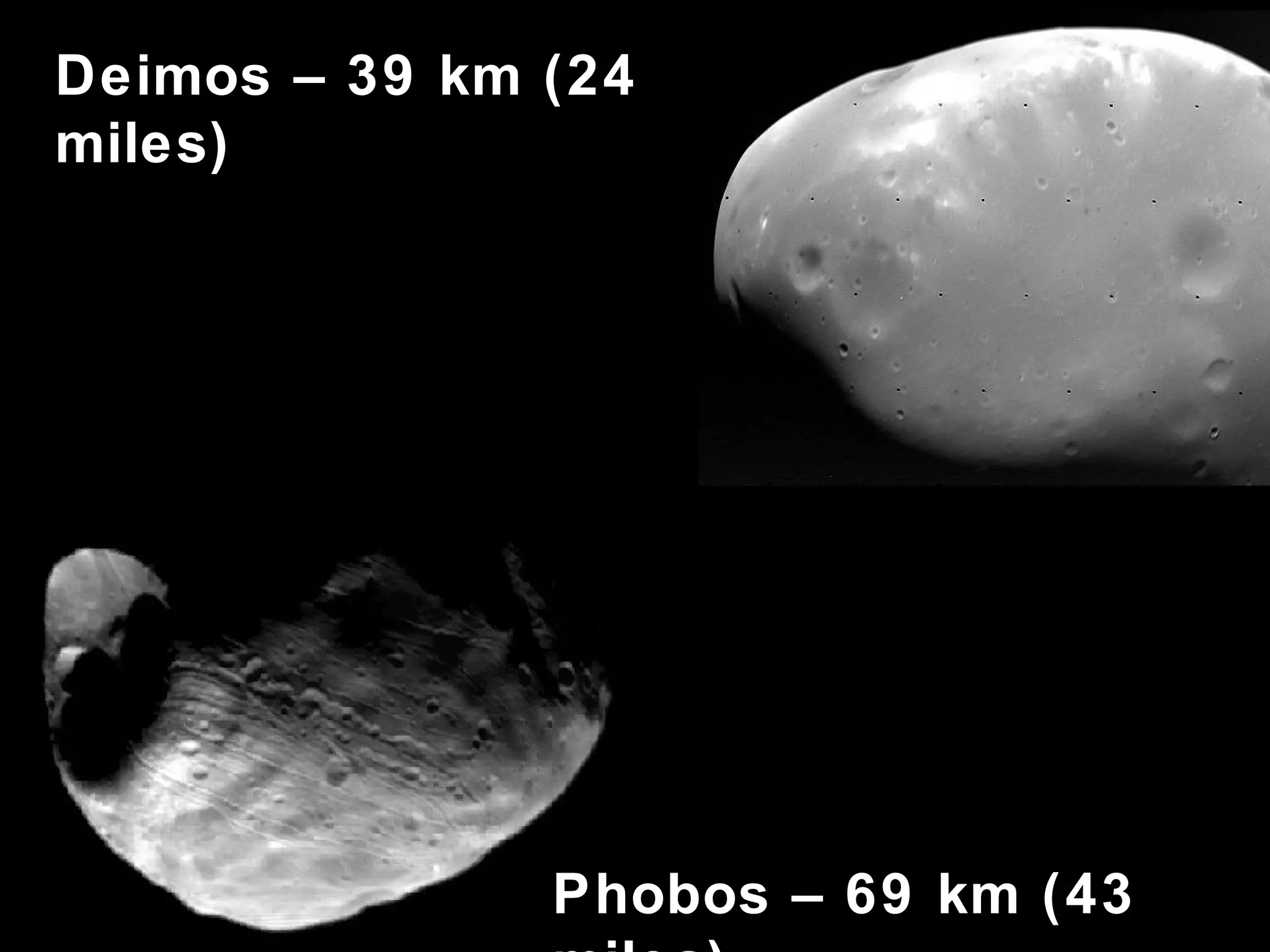
3500 km (2200
Deimos – 39 km (24
miles)

Phobos – 69 km (43
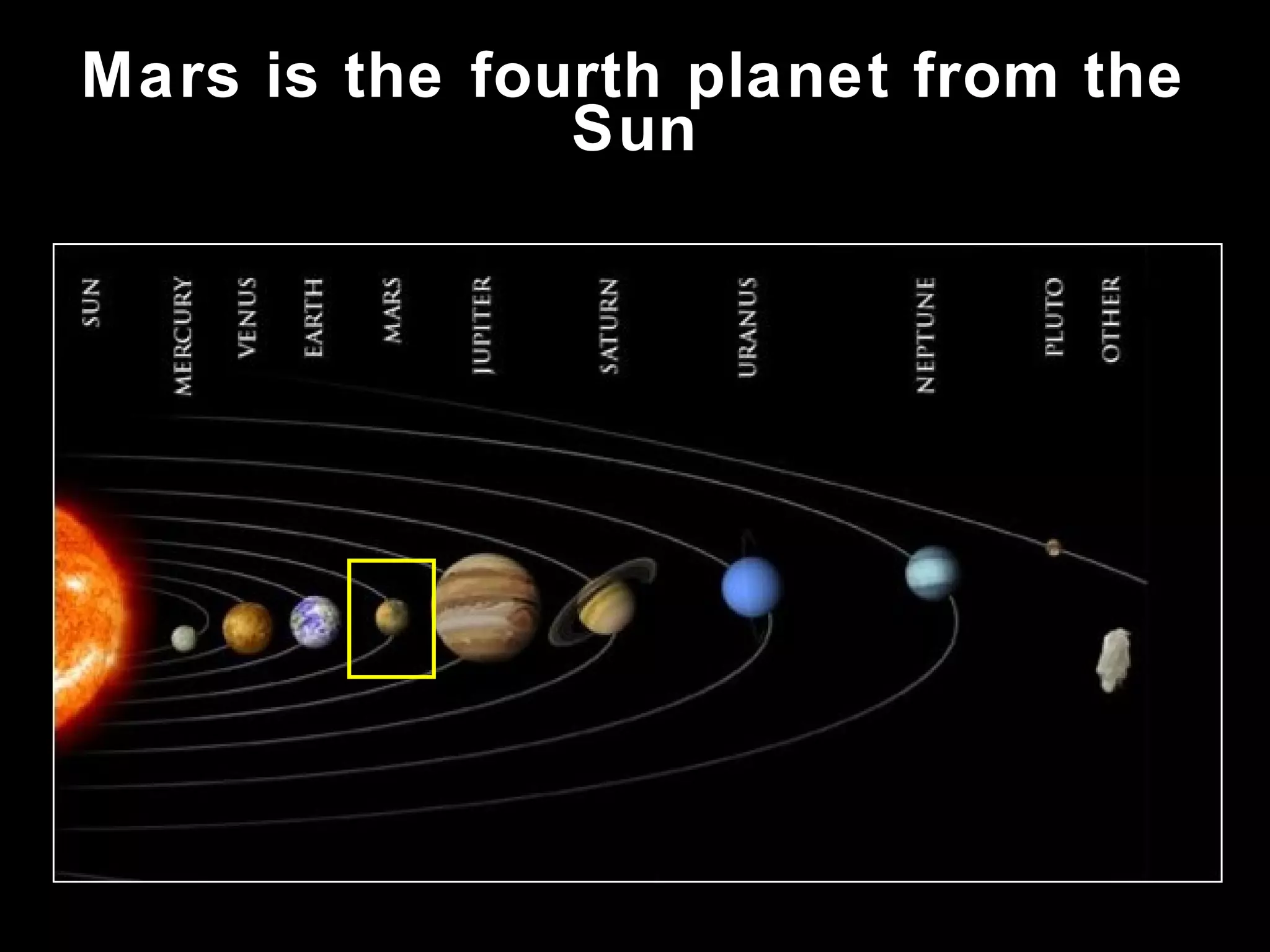
Mars is the fourth planet from the
Sun
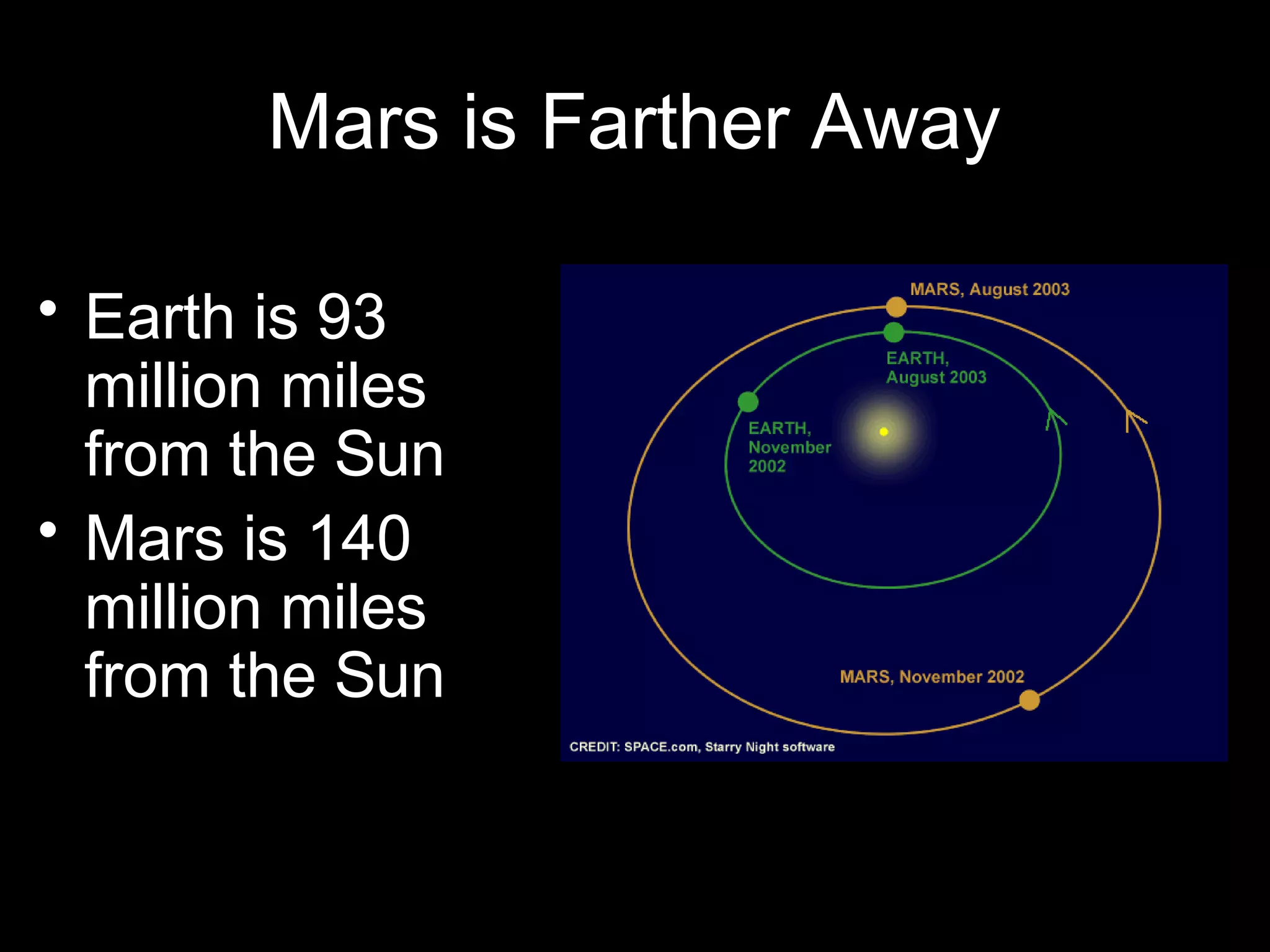
Mars is Farther Away
• Earth is 93
million miles
from the Sun
• Mars is 140
million miles
from the Sun
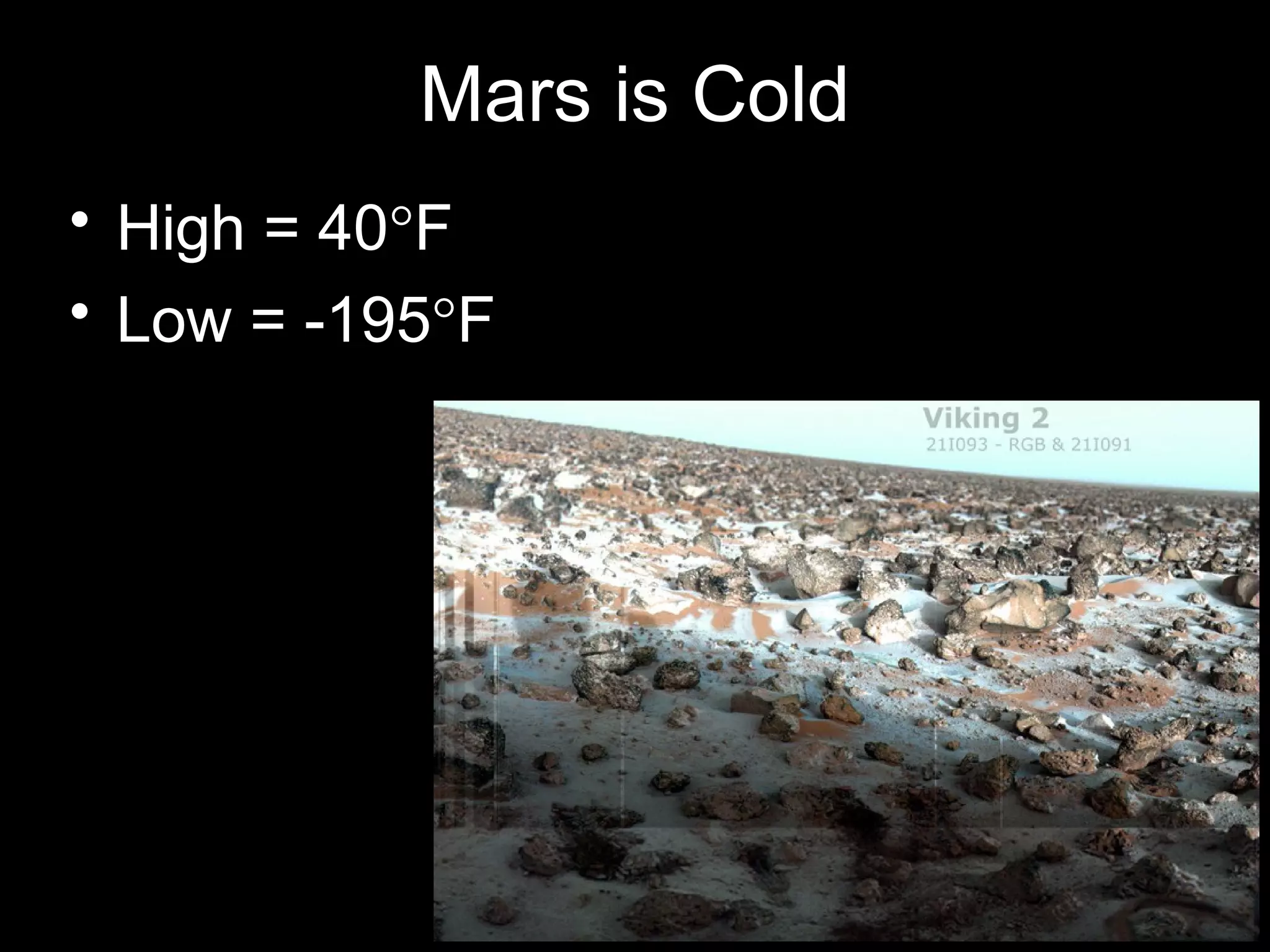
Mars is Cold
• High = 40°F
• Low = -195°F
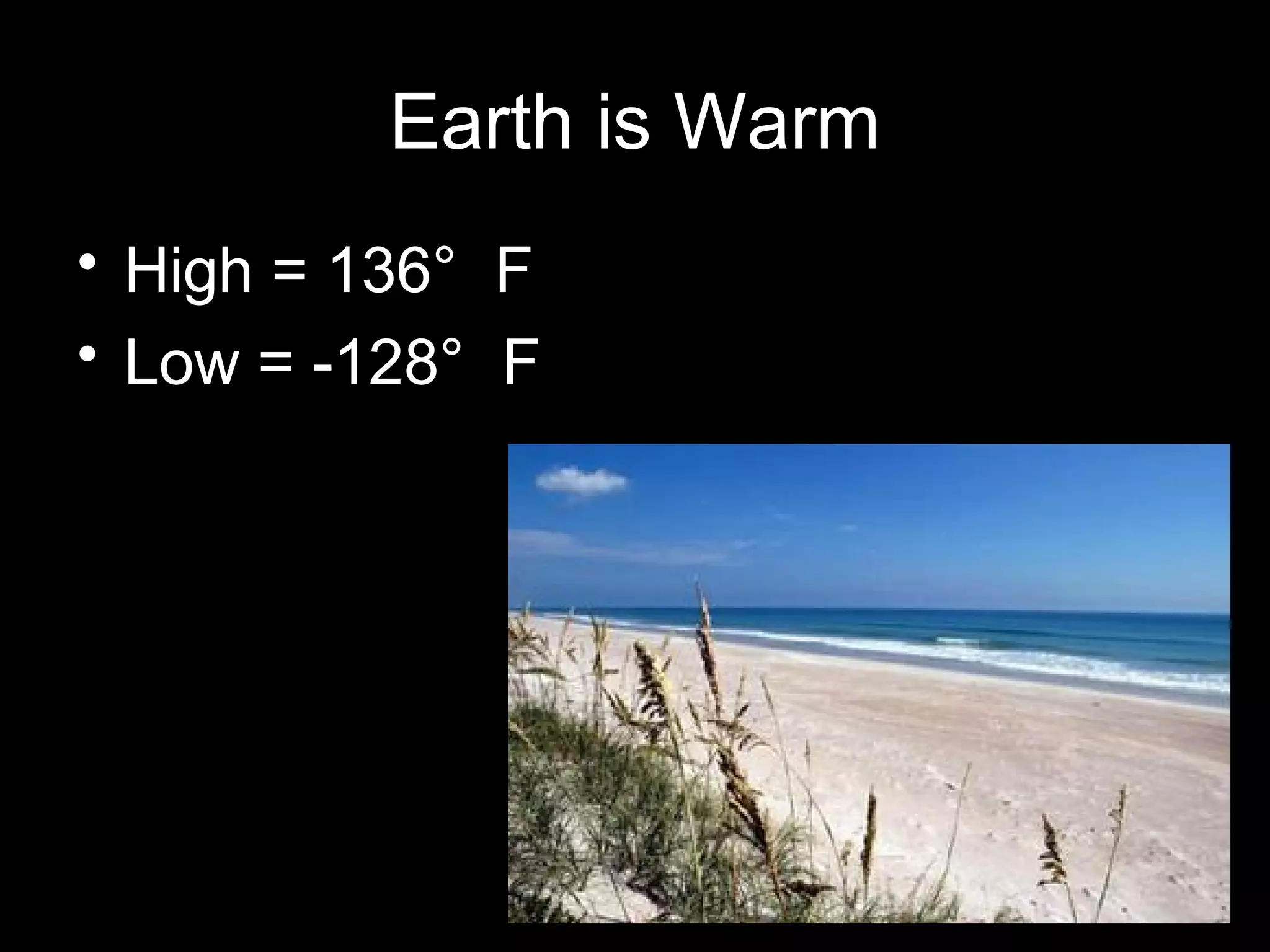
Earth is Warm
• High = 136° F
• Low = -128° F
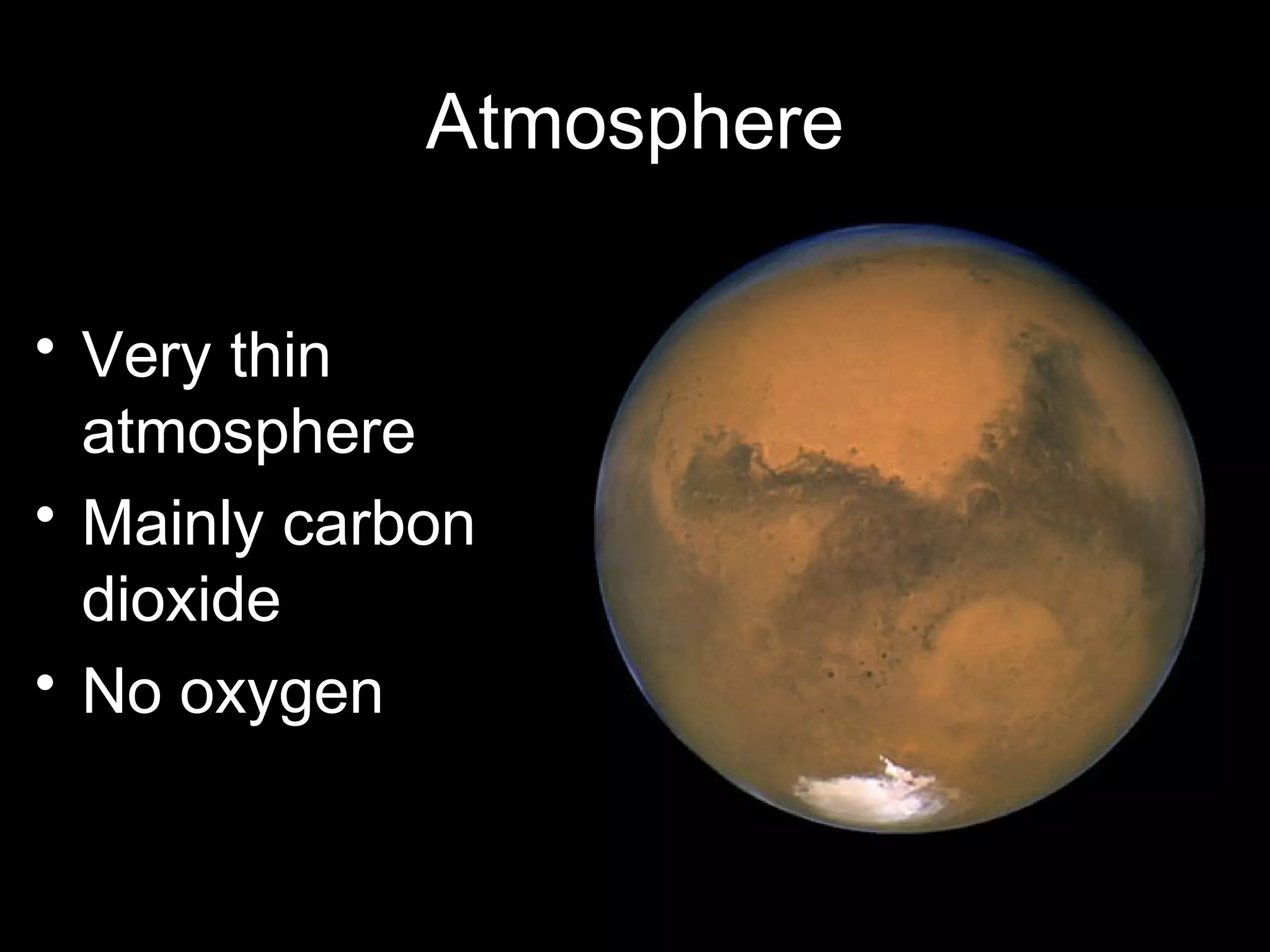
Atmosphere
• Very thin
atmosphere
• Mainly carbon
dioxide
• No oxygen
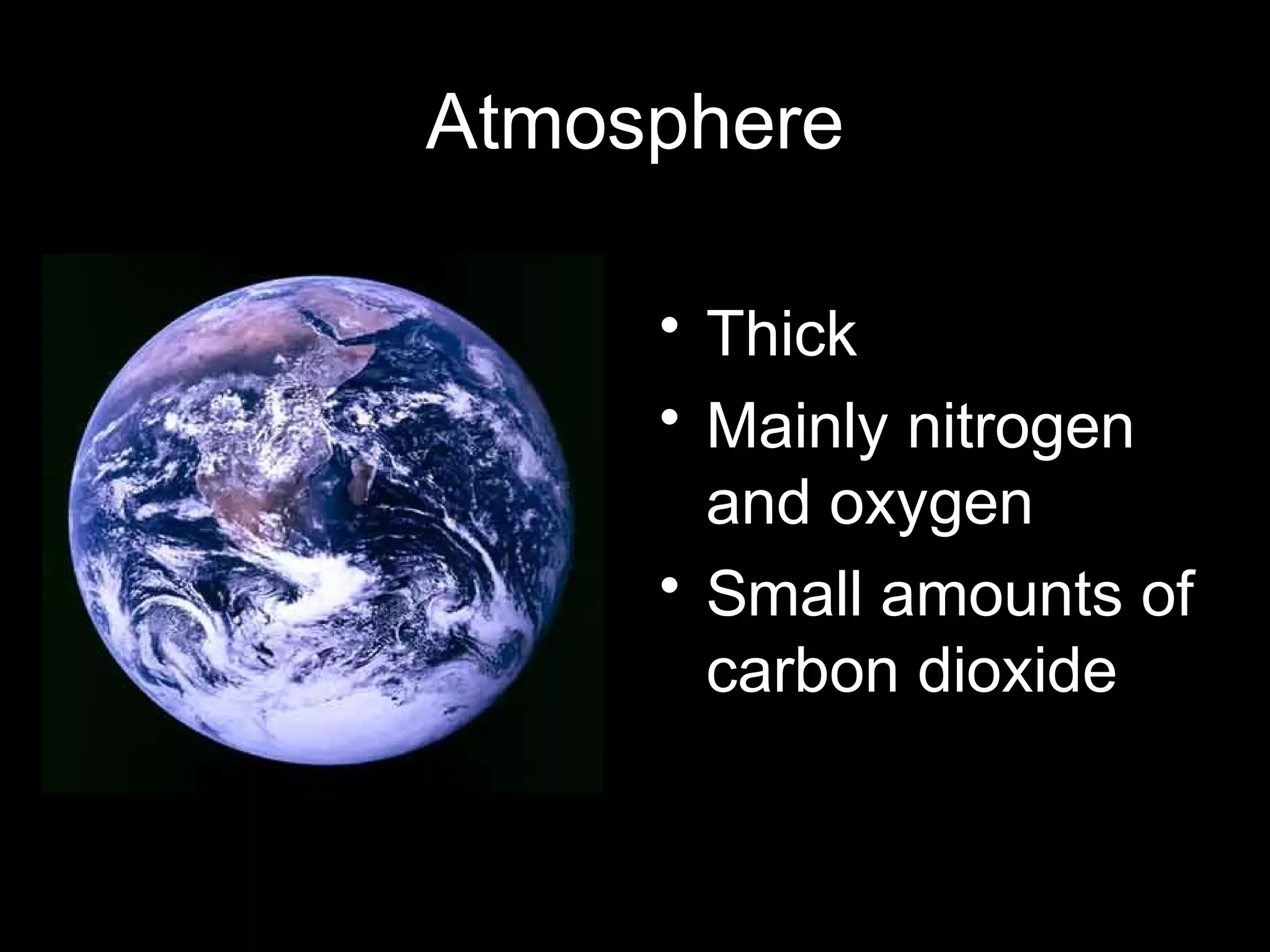
Atmosphere
• Thick
• Mainly nitrogen
and oxygen
• Small amounts of
carbon dioxide
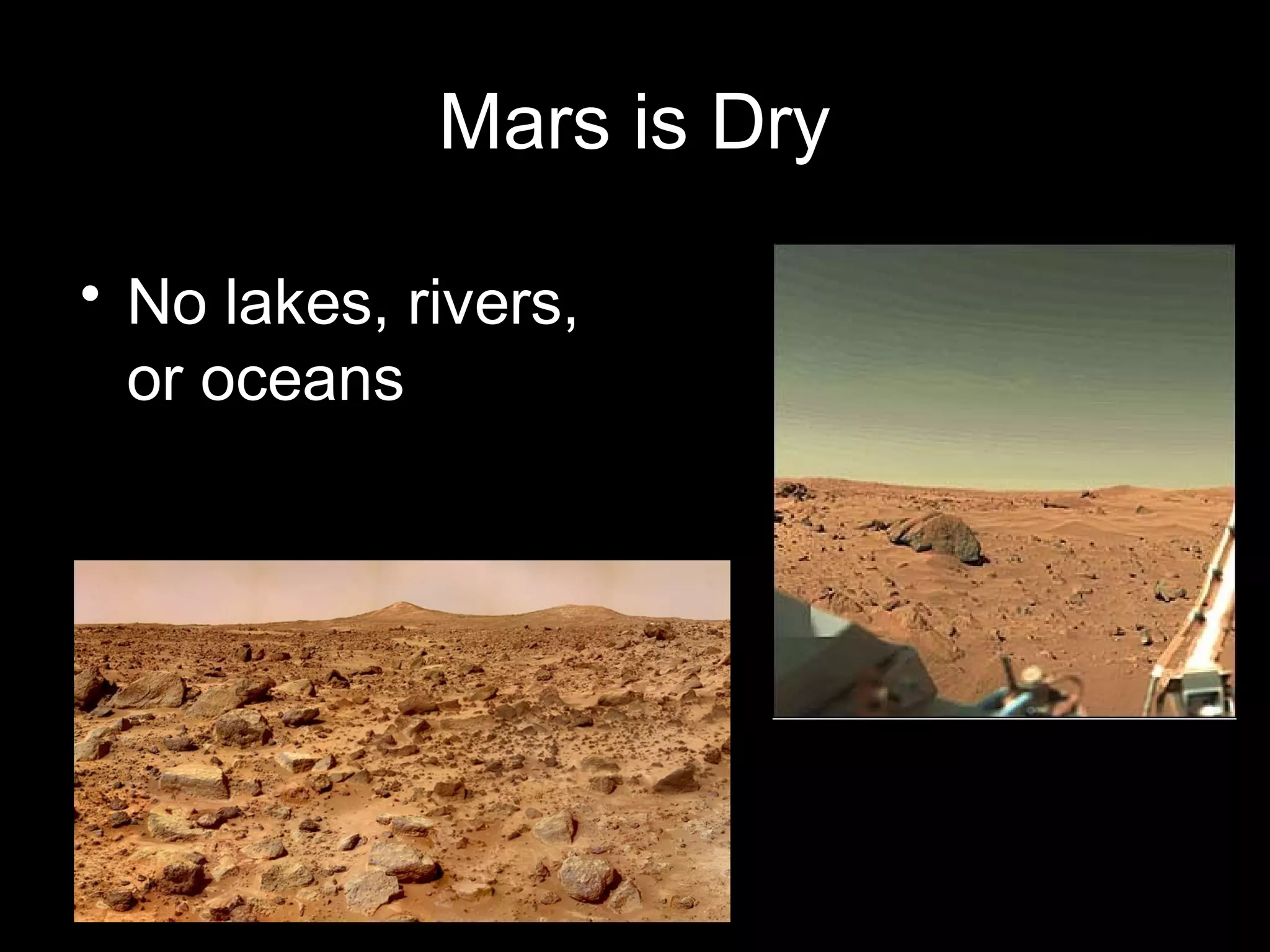
Mars is Dry
• No lakes, rivers,
or oceans
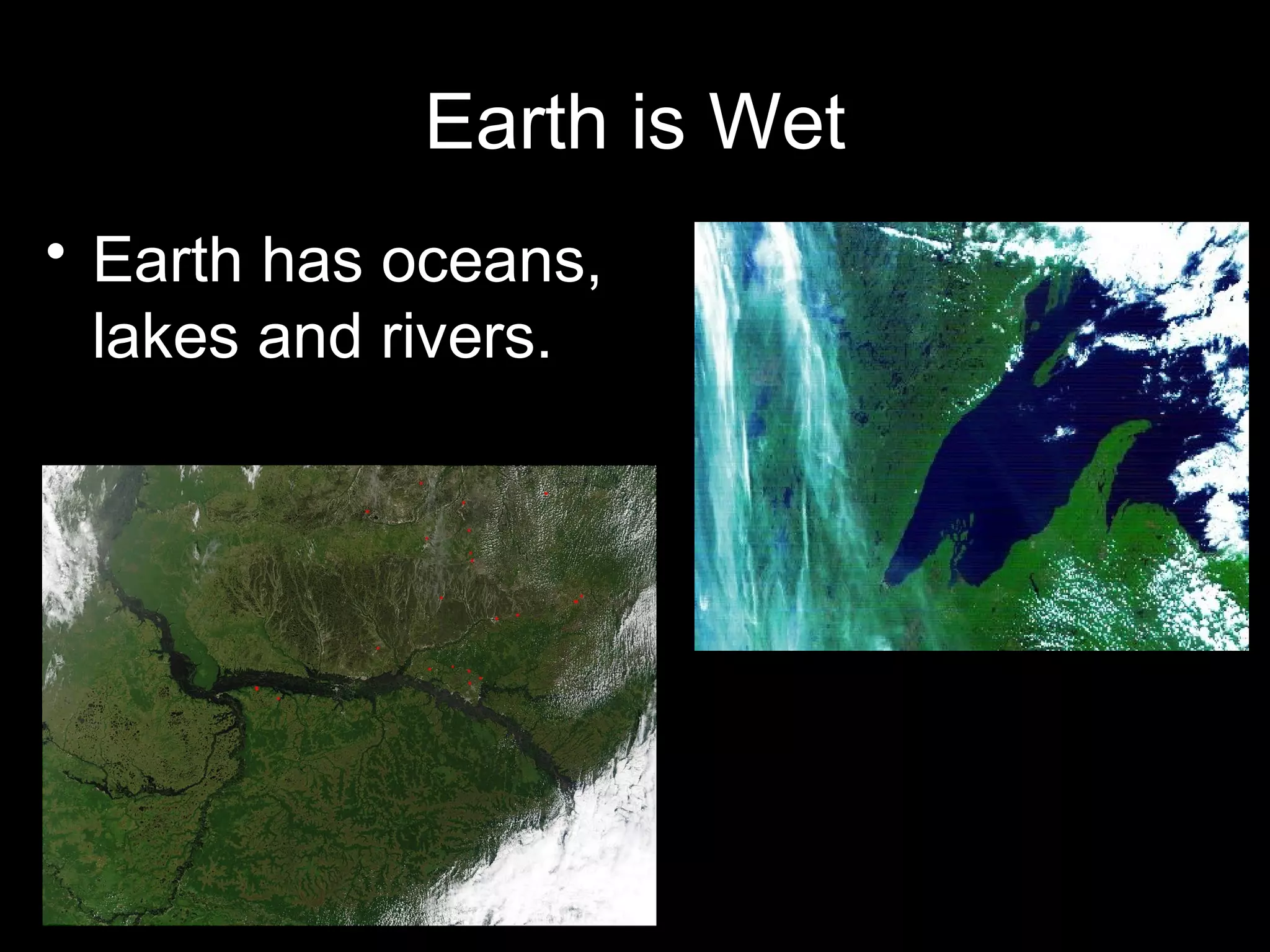
Earth is Wet
• Earth has oceans,
lakes and rivers.

Earth vs mars

Editor's Notes

  • #6 A day on the Earth is defined by how long it takes the Earth to make one complete rotation. We commonly use 24 hours as the amount of time in one day, but the actual amount of time is 23 hours and 56 minutes. One year is the time it takes for the Earth to make one trip around the sun. One Earth year is 365 days.
  • #7 A day on Mars is measured the same way on Earth – a day (or Sol) on Mars is how long it takes Mars to rotate once. A day on Mars is very close a day on Earth, but is a little bit longer – 24 hours and 40 minutes. One year on Mars is measured by how long it takes to make one trip around the sun, just like the Earth. However, one year on Mars is 686 days, almost twice as many days as a year on Earth making a year on Mars about twice as long as a year on Earth. Why is one year on Mars longer? We’ll have to keep going to find out. Ask the students if the Earth’s poles point straight up and down. The correct answer is no, they do not. The Earth is tilted (about 25°). The effect this has on the Earth is seasons. Summer (for the U.S.) occurs when the northern hemisphere is tilted towards the sun and winter occurs when the northern hemisphere is tilted away from the sun. Ask the students if they think Mars has seasons. Ask them why or why not.
  • #13 Mars is cold! The highest temperature recorded on Mars was 40 degrees Fahrenheit. Ask the students if this temperature was recorded by a human. This temperature was taken by a robotic spacecraft on the surface of Mars. The lowest temperature recorded on Mars was -195° Fahrenheit. One reason Mars is so cold is because it is farther from the sun than the Earth.
  • #14 The Earth is warm. The highest temperature ever recorded on the Earth was 136 degrees Fahrenheit. Ask the students where they think this might have been. This temperature was recorded in Libya in 1922. The coldest temperature ever recorded on the Earth was -128 degrees Fahrenheit. Ask the students where they think this might have been. This temperature was recorded in Antarctica in 1983.
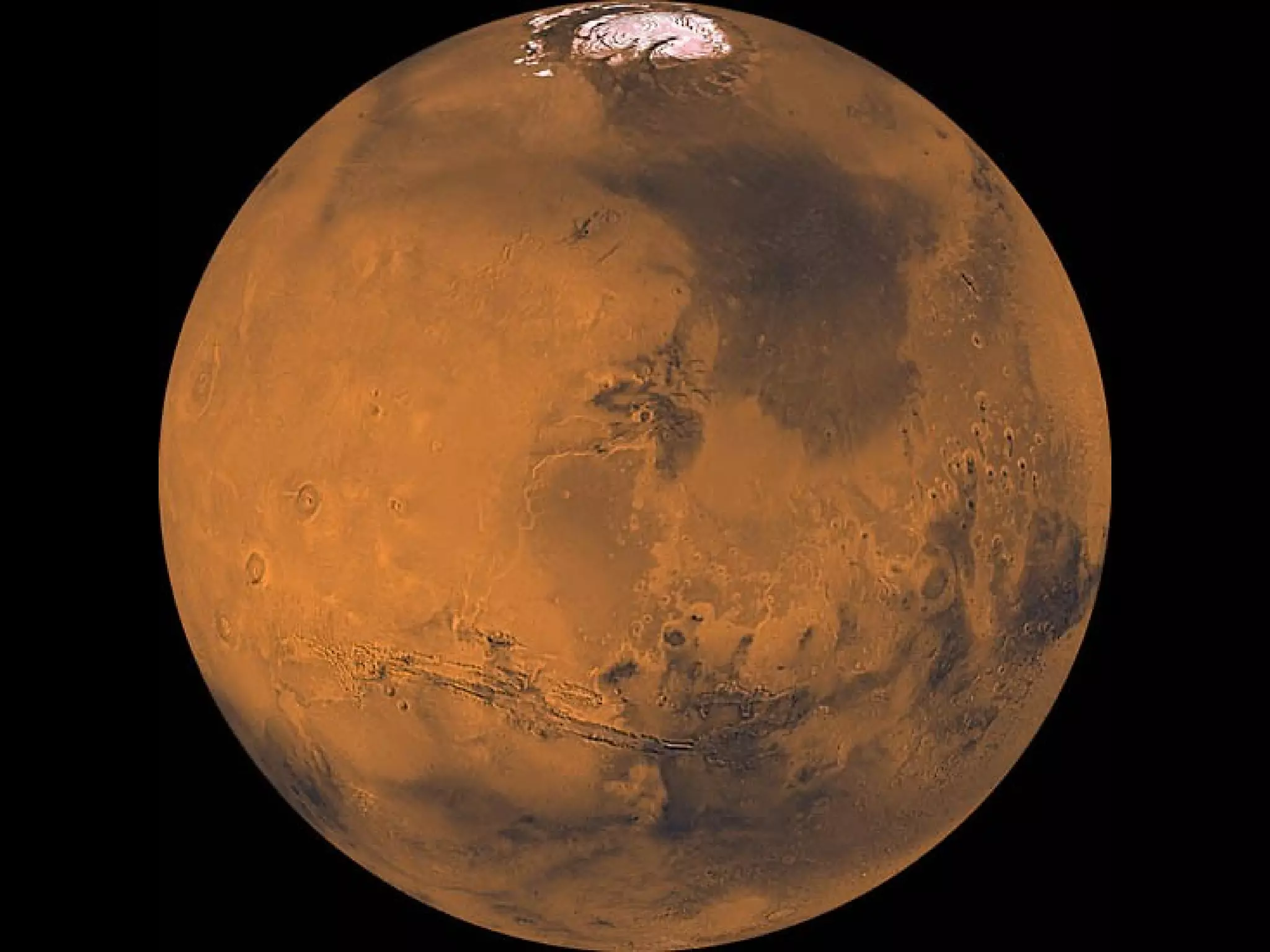
  • #16 Compared to Mars, Earth has a thick atmosphere made of mainly nitrogen (79%) and oxygen (20%). There is a small amount of carbon dioxide in Earth’s atmosphere. Ask the students what life on Earth uses carbon dioxide (plants). Refer back to the image of Mars at the very beginning of the presentation. Ask the students if they think there might be little rivers or lakes on Mars that could not be seen in the image.