PRESENTATION ON
MISSION TO MARS
THE RED PLANET
CREATED BY: SIFATUL ALAM SHOHAN
TOPICS TO BE DISCUSSED
What is Mars?
What is Mars like?
First images of Mars
Mars Facts
Mars Basics
Compareto Earth
Marsprobe Highlights
Rovers sent by NASA
NASA’s discovery on Mars
Reasons to go
Can human really survive on Mars?
Humans need to be a multi planetspecies?
MARS IS THE FOURTH PLANET FROM THE SUN AND THE SECOND-
SMALLEST PLANET IN THE SOLAR SYSTEM, AFTER MERCURY. ITS THE
CLOSEST PLANET FROM THE EARTH.
MARS IS KNOWN AS THE RED PLANET.
MARS IS THE FOURTH PLANET FROM THE SUN AND THE
SECOND-SMALLEST PLANET IN THE SOLAR SYSTEM, AFTER
MERCURY. NAMED AFTER THE ROMAN GOD OF WAR. ITS
THE CLOSEST PLANET FROM THE EARTH.
MARS IS KNOWN AS THE RED PLANET.
WHAT IS MARSLIKE?
Its surface is rocky, with canyons, volcanoes, dry lake beds and craters all over it.
Red dust covers most of its surface. Mars has clouds and wind just like Earth.
Mars’ atmosphere is much thinner than Earth’s. The atmosphere of Mars contains
more than 95 percent carbon dioxide and much less than 1 percent oxygen.
FRIST IMAGES OF MARS
NASA'S HUBBLE SPACE TELESCOPE TOOK THIS
PICTURE OF MARS AS IT WAS MAKING ITS CLOSEST
APPROACH TO EARTH IN 60,000 YEARS!.
TAKEN BY THE VIKING 1 LANDER SHORTLY AFTER IT
TOUCHED DOWN ON MARS, THIS IMAGE IS THE FIRST
PHOTOGRAPH EVER TAKEN FROM THE SURFACE OF
MARS. IT WAS TAKEN ON JULY 20, 1976.
MARS FACTS
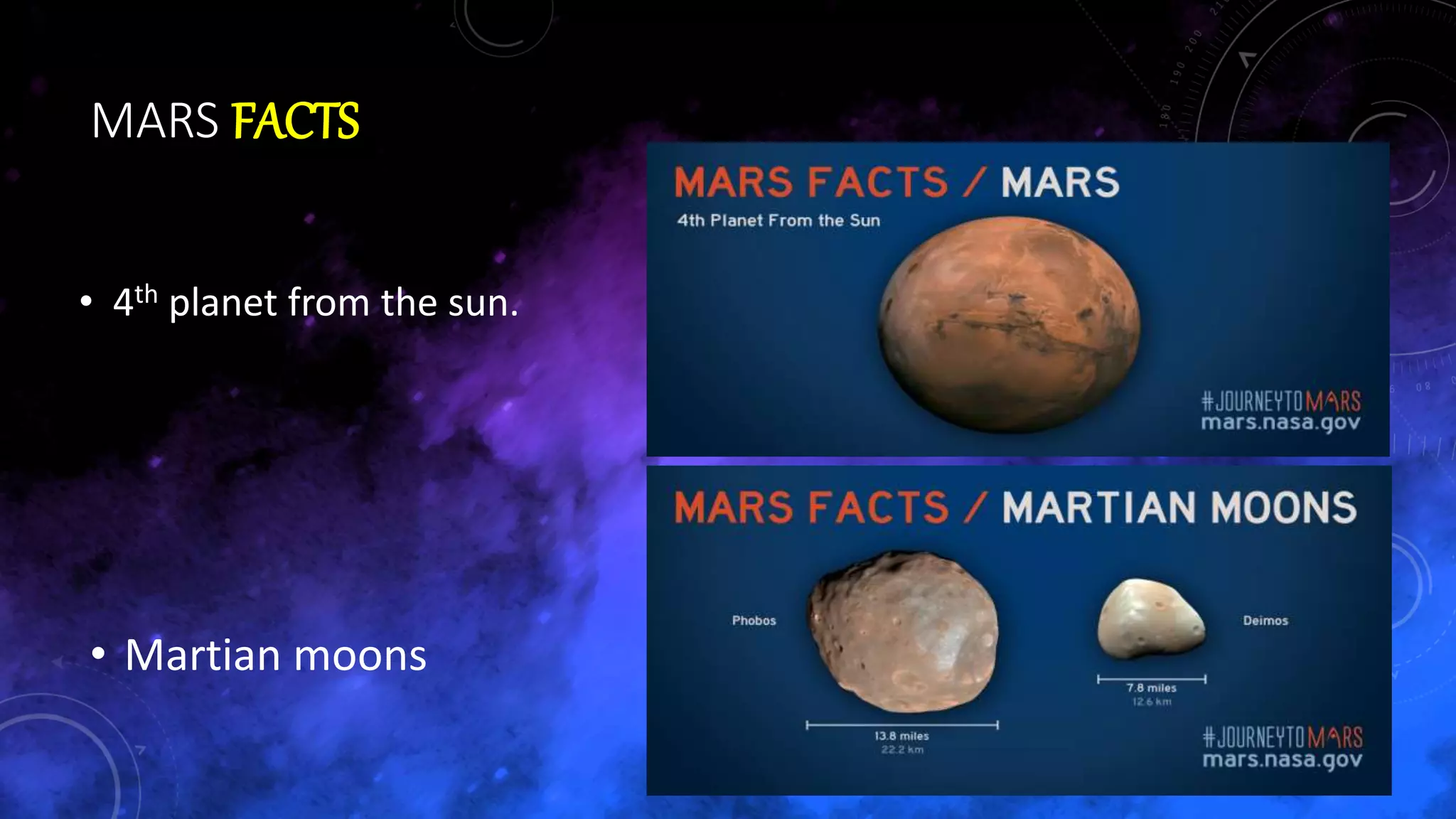
• 4th planet from the sun.
• Martian moons
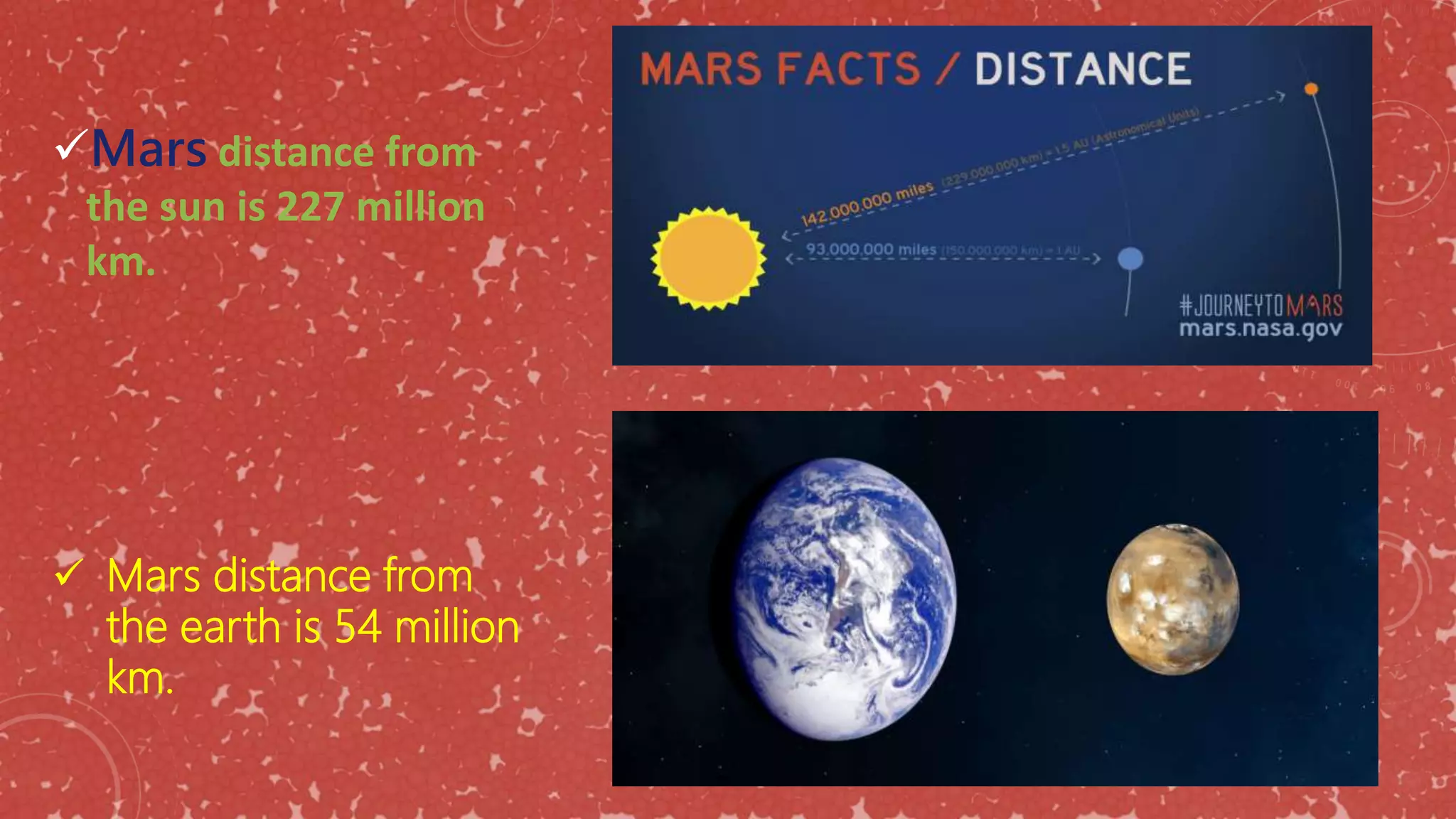
 Mars distance from
the earth is 54 million
km.
Mars distance from
the sun is 227 million
km.
 EARTH’S VOLUME
IS SIX TIMES HIGHER
THAN MARS
 EARTH’S MASS IS TEN
TIMES HIGHER THAN
MARS
GRAVITY OF MARS
Gravity of Mars is 3.711 m/s²
Mars gravity is 62.5% less
than Earth.
Mean Radius: 6,371 km 3,396 km
Mass: 59.7×10²³ kg 6.42 x 10²³ kg
Volume: 10.8 x 10¹¹ km3 1.63 x 10¹¹ km³
Gravity: 9.8 m/s² 3.711 m/s²
Avg. Temperature: 14°C (57.2 °F) -46 °C (-51 °F)
Length of Day: 24 hours 24h 40m
Length of Year: 365.25 days 686.971 days
Water: Plentiful Intermittent (mostly frozen)
Polar Ice Caps: Yep Yep
COMPARE TO
IN SHORT, COMPARED TO EARTH, MARS IS A PRETTY SMALL, DRY, COLD, AND DUSTY PLANET. IT HAS
COMPARATIVELY LOW GRAVITY, VERY LITTLE ATMOSPHERE AND NO BREATHABLE AIR. AND THE YEARS ARE ALSO
MIGHTY LONG, ALMOST TWICE THAT OF EARTH, IN FACT. HOWEVER, THE PLANET DOES HAVE ITS FAIR SHARE OF
WATER (ALBEIT MOSTLY IN ICE FORM), HAS SEASONAL CYCLES SIMILAR TO EARTH, TEMPERATURE VARIATIONS
THAT ARE SIMILAR, AND A DAY THAT IS ALMOST AS LONG.
MARS BASICS
Similar to
Earth: day,
seasons,
polar ice caps
Different: dry,
cold, thin
atmosphere
(CO2)
MARS PROBE HIGHLIGHTS
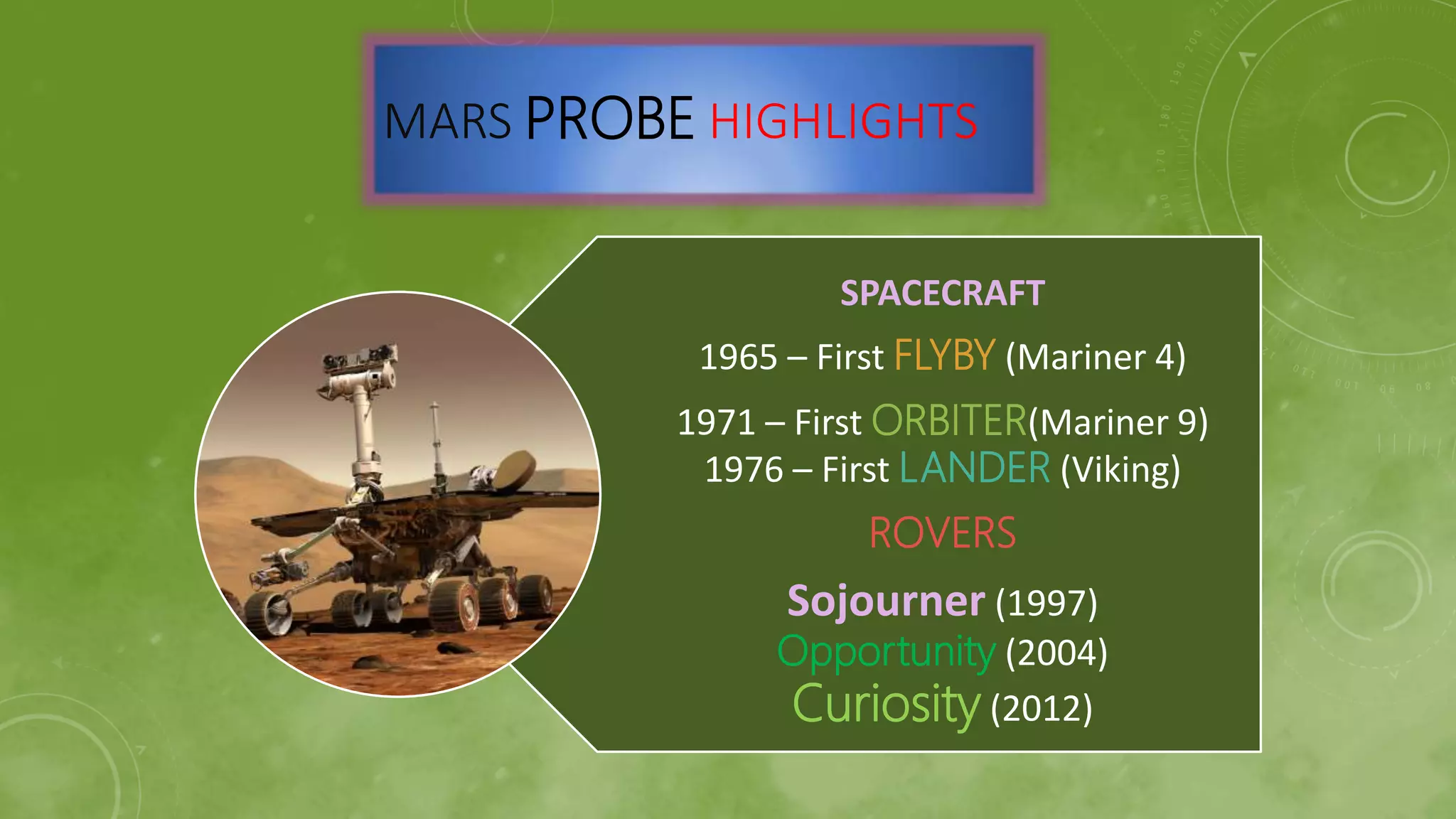
SPACECRAFT
1965 – First FLYBY (Mariner 4)
1971 – First ORBITER(Mariner 9)
1976 – First LANDER (Viking)
ROVERS
Sojourner (1997)
Opportunity (2004)
Curiosity (2012)
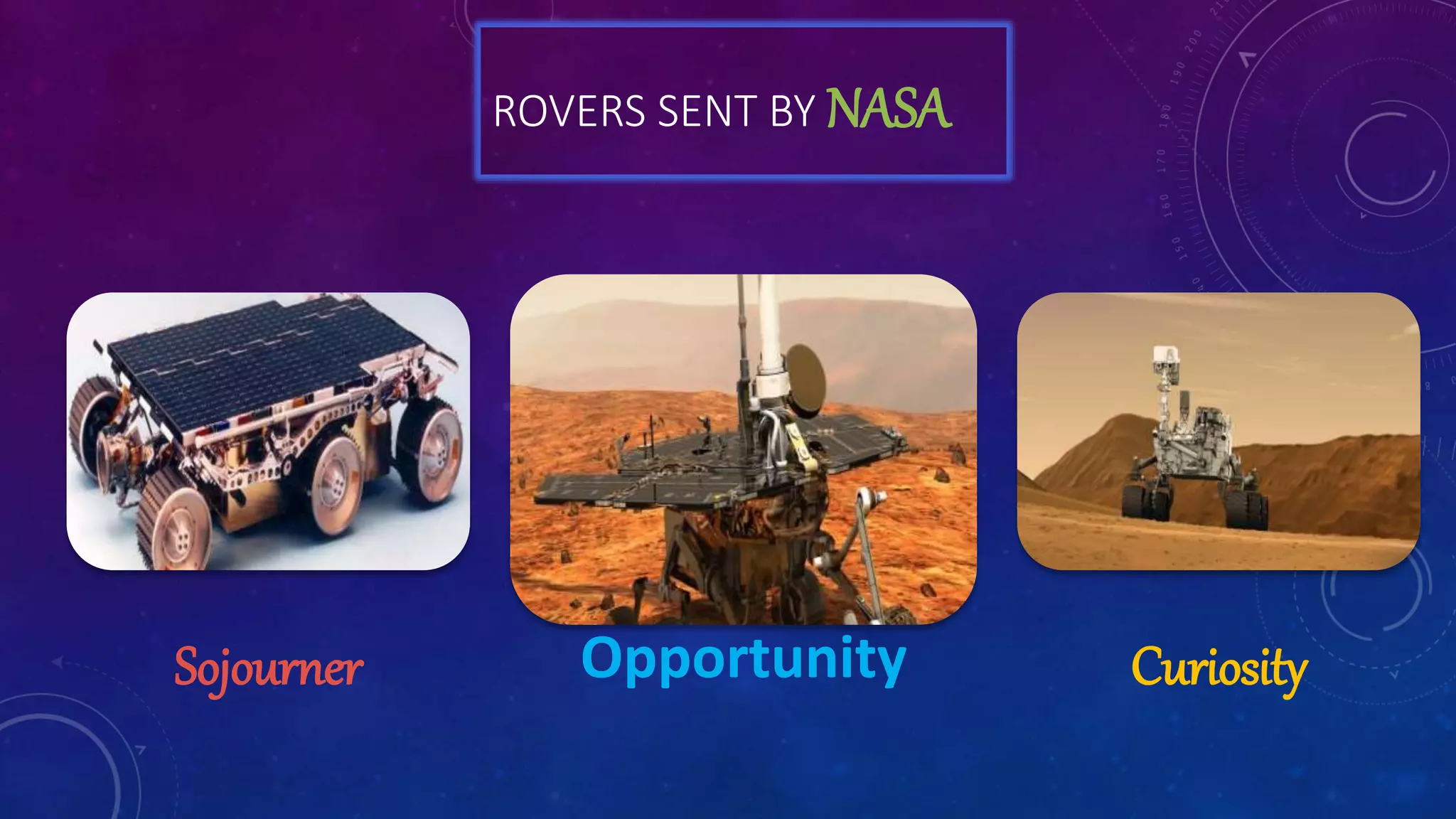
ROVERS SENT BY NASA
Sojourner Opportunity Curiosity
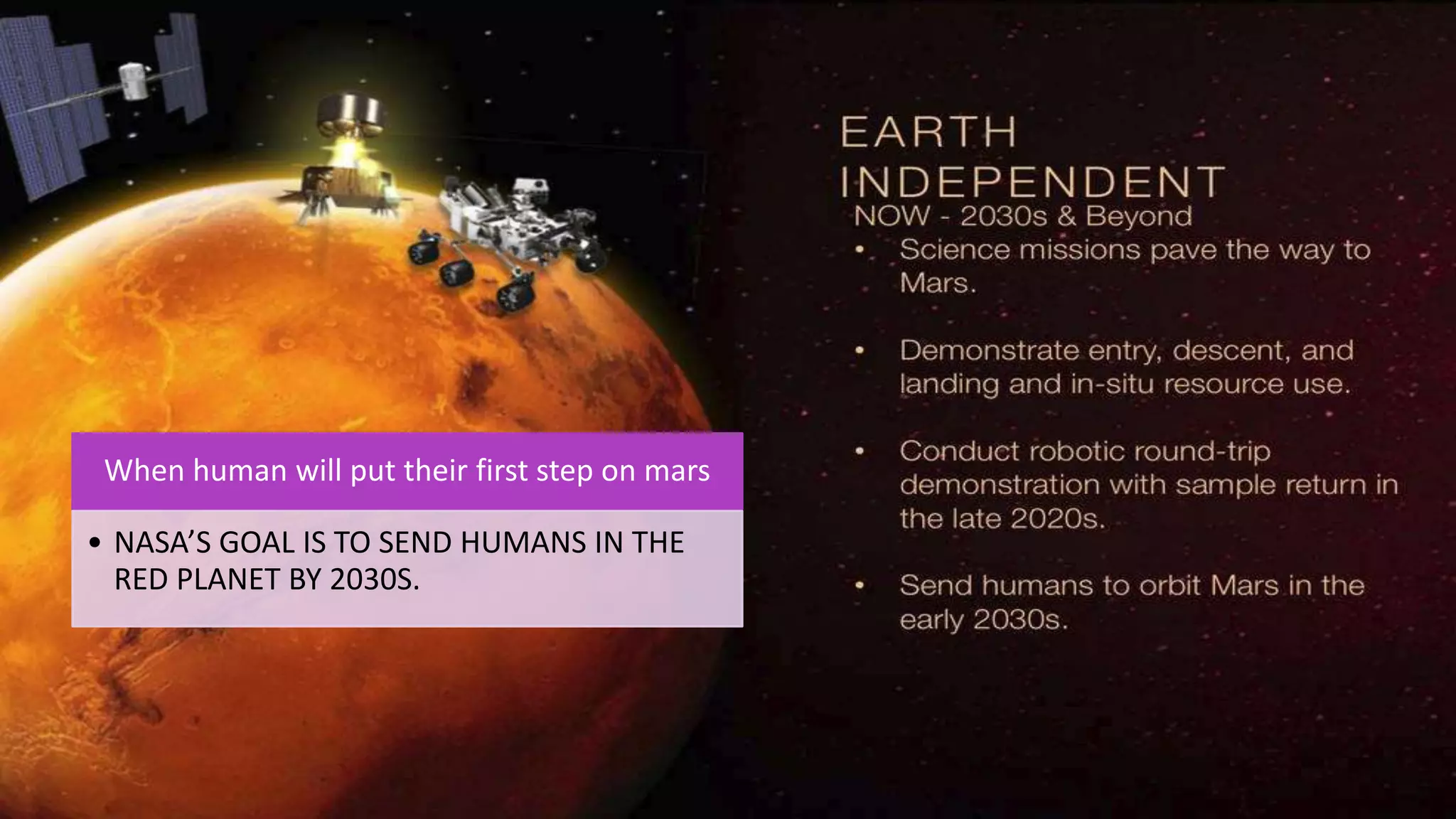
When human will put their first step on mars
• NASA’S GOAL IS TO SEND HUMANS IN THE
RED PLANET BY 2030S.
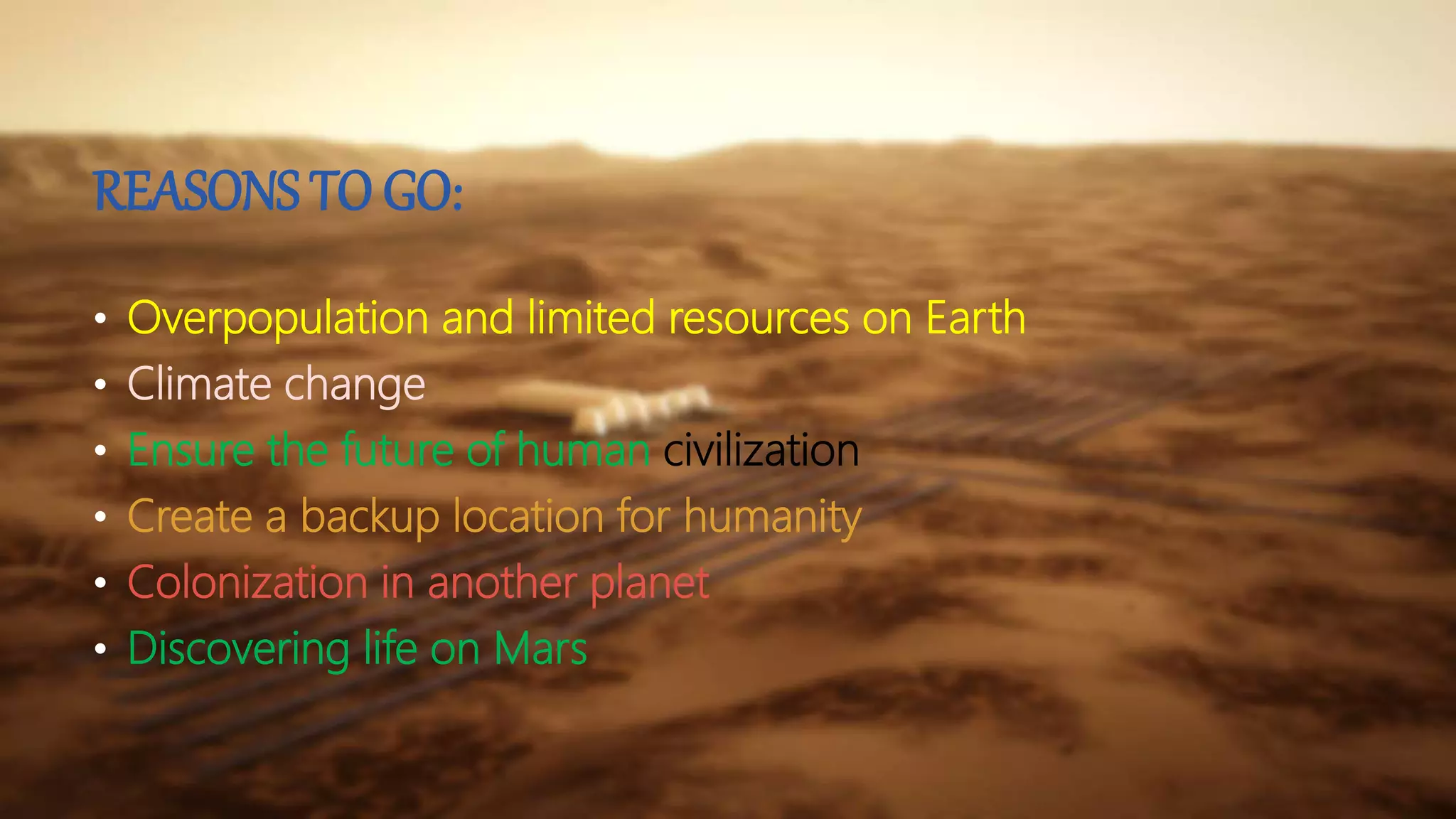
REASONS TO GO:
• Overpopulation and limited resources on Earth
• Climate change
• Ensure the future of human civilization
• Create a backup location for humanity
• Colonization in another planet
• Discovering life on Mars
CAN HUMAN REALLY SURVIVE ON MARS??
 To survive on Mars, humans need the same
things they need on Earth, including water, a
breathable atmosphere and food. Mars is a
hostile planet, and as of early 2015, is unable
to support human life.
 Scientists have thought of creating an air-
tight habitat that would allow settlers of the
planet to grow their own food and to live in a
breathable environment
 A water recycling program must be
implemented, as would some type of
radiation protection.
HUMANS NEED TO BE A MULTIPLANET SPECIES-
ELON MUSK
The only home humans have ever known is Earth. But history
shows that surviving as a species on this tiny blue dot in the
vacuum of space is tough and by no means guaranteed.
The dinosaurs are a classic example: They roamed the
planet for 165 million years, but the only trace of them
today are their fossilized remains. A colossal asteroid wiped
them out. So it can wiped us out too.
Putting humans on more than one planet would better ensure our
existence thousands if not millions of years from now.
THANK YOU

Mission to Mars

  • 1.
    PRESENTATION ON MISSION TOMARS THE RED PLANET
  • 2.
  • 3.
    TOPICS TO BEDISCUSSED What is Mars? What is Mars like? First images of Mars Mars Facts Mars Basics Compareto Earth Marsprobe Highlights Rovers sent by NASA NASA’s discovery on Mars Reasons to go Can human really survive on Mars? Humans need to be a multi planetspecies?
  • 4.
    MARS IS THEFOURTH PLANET FROM THE SUN AND THE SECOND- SMALLEST PLANET IN THE SOLAR SYSTEM, AFTER MERCURY. ITS THE CLOSEST PLANET FROM THE EARTH. MARS IS KNOWN AS THE RED PLANET. MARS IS THE FOURTH PLANET FROM THE SUN AND THE SECOND-SMALLEST PLANET IN THE SOLAR SYSTEM, AFTER MERCURY. NAMED AFTER THE ROMAN GOD OF WAR. ITS THE CLOSEST PLANET FROM THE EARTH. MARS IS KNOWN AS THE RED PLANET.
  • 5.
    WHAT IS MARSLIKE? Itssurface is rocky, with canyons, volcanoes, dry lake beds and craters all over it. Red dust covers most of its surface. Mars has clouds and wind just like Earth. Mars’ atmosphere is much thinner than Earth’s. The atmosphere of Mars contains more than 95 percent carbon dioxide and much less than 1 percent oxygen.
  • 6.
    FRIST IMAGES OFMARS NASA'S HUBBLE SPACE TELESCOPE TOOK THIS PICTURE OF MARS AS IT WAS MAKING ITS CLOSEST APPROACH TO EARTH IN 60,000 YEARS!. TAKEN BY THE VIKING 1 LANDER SHORTLY AFTER IT TOUCHED DOWN ON MARS, THIS IMAGE IS THE FIRST PHOTOGRAPH EVER TAKEN FROM THE SURFACE OF MARS. IT WAS TAKEN ON JULY 20, 1976.
  • 7.
    MARS FACTS • 4thplanet from the sun. • Martian moons
  • 8.
     Mars distancefrom the earth is 54 million km. Mars distance from the sun is 227 million km.
  • 9.
     EARTH’S VOLUME ISSIX TIMES HIGHER THAN MARS  EARTH’S MASS IS TEN TIMES HIGHER THAN MARS
  • 10.
    GRAVITY OF MARS Gravityof Mars is 3.711 m/s² Mars gravity is 62.5% less than Earth.
  • 11.
    Mean Radius: 6,371km 3,396 km Mass: 59.7×10²³ kg 6.42 x 10²³ kg Volume: 10.8 x 10¹¹ km3 1.63 x 10¹¹ km³ Gravity: 9.8 m/s² 3.711 m/s² Avg. Temperature: 14°C (57.2 °F) -46 °C (-51 °F) Length of Day: 24 hours 24h 40m Length of Year: 365.25 days 686.971 days Water: Plentiful Intermittent (mostly frozen) Polar Ice Caps: Yep Yep COMPARE TO IN SHORT, COMPARED TO EARTH, MARS IS A PRETTY SMALL, DRY, COLD, AND DUSTY PLANET. IT HAS COMPARATIVELY LOW GRAVITY, VERY LITTLE ATMOSPHERE AND NO BREATHABLE AIR. AND THE YEARS ARE ALSO MIGHTY LONG, ALMOST TWICE THAT OF EARTH, IN FACT. HOWEVER, THE PLANET DOES HAVE ITS FAIR SHARE OF WATER (ALBEIT MOSTLY IN ICE FORM), HAS SEASONAL CYCLES SIMILAR TO EARTH, TEMPERATURE VARIATIONS THAT ARE SIMILAR, AND A DAY THAT IS ALMOST AS LONG.
  • 12.
    MARS BASICS Similar to Earth:day, seasons, polar ice caps Different: dry, cold, thin atmosphere (CO2)
  • 13.
    MARS PROBE HIGHLIGHTS SPACECRAFT 1965– First FLYBY (Mariner 4) 1971 – First ORBITER(Mariner 9) 1976 – First LANDER (Viking) ROVERS Sojourner (1997) Opportunity (2004) Curiosity (2012)
  • 14.
    ROVERS SENT BYNASA Sojourner Opportunity Curiosity
  • 16.
    When human willput their first step on mars • NASA’S GOAL IS TO SEND HUMANS IN THE RED PLANET BY 2030S.
  • 17.
    REASONS TO GO: •Overpopulation and limited resources on Earth • Climate change • Ensure the future of human civilization • Create a backup location for humanity • Colonization in another planet • Discovering life on Mars
  • 18.
    CAN HUMAN REALLYSURVIVE ON MARS??  To survive on Mars, humans need the same things they need on Earth, including water, a breathable atmosphere and food. Mars is a hostile planet, and as of early 2015, is unable to support human life.  Scientists have thought of creating an air- tight habitat that would allow settlers of the planet to grow their own food and to live in a breathable environment  A water recycling program must be implemented, as would some type of radiation protection.
  • 19.
    HUMANS NEED TOBE A MULTIPLANET SPECIES- ELON MUSK The only home humans have ever known is Earth. But history shows that surviving as a species on this tiny blue dot in the vacuum of space is tough and by no means guaranteed. The dinosaurs are a classic example: They roamed the planet for 165 million years, but the only trace of them today are their fossilized remains. A colossal asteroid wiped them out. So it can wiped us out too. Putting humans on more than one planet would better ensure our existence thousands if not millions of years from now.
  • 21.