The Sun Chapter 6 Lesson 1 Ms. Aab Mrs. Avila
California State Standards and Objective 5 ES 5.a. Students know the Sun, an average star, is the central and largest body in the solar system and is composed primarily of hydrogen and helium. Objective : Students in grade five will be able to label and identify parts of the sun, identify the sun as a star ,  and explain the atomic process through which the sun releases energy.
 
 
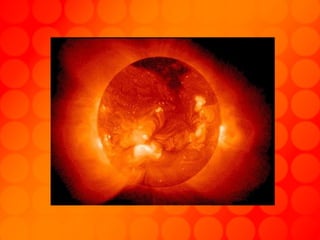
The Sun is a Star The sun is a Star made of hydrogen and helium. The sun is located at the center of the solar system and is also the largest object.
Vocabulary Star - is an object that produces it own energy, including heat and light. Astronomical Unit-  the closest stars to the solar system are found in the Alpha Centauri star system.
The size of the Sun If the Sun were a hollow ball more then a million Earths could fit inside it! The Sun is an average size star and the largest object in the solar system.  The Sun looks larger than the other stars that can be seen in the night sky because it is much closer to Earth.
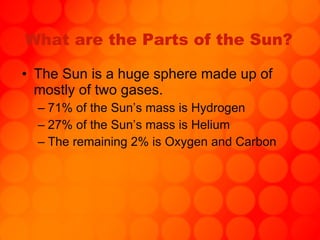
What are the Parts of the Sun? The Sun is a huge sphere made up of mostly of two gases. 71% of the Sun’s mass is Hydrogen 27% of the Sun’s mass is Helium The remaining 2% is Oxygen and Carbon
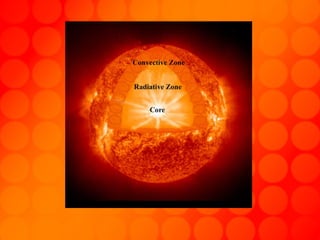
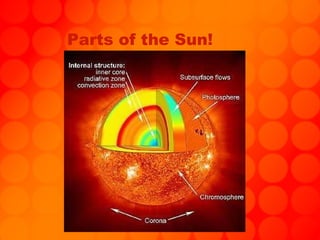
Parts of the Sun!
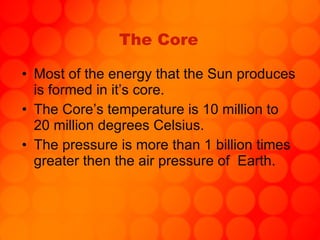
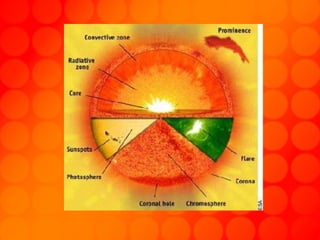
The Core Most of the energy that the Sun produces is formed in it’s core. The Core’s temperature is 10 million to 20 million degrees Celsius.  The pressure is more than 1 billion times greater then the air pressure of  Earth.
 
Radiation Layer Next to the core Moves the energy produced in the core in every direction. It can take million of years for energy to move out of this layer.
Convection Layer Layer next to the radiation layer Gasses with different energies move in circles in a way similar to air with different densities.  Energy moves out of this layer in about a week.
Photosphere  Is the visible surface of the Sun. It is not a solid surface, but rather a layer of gasses. It is cooler then the core with a temperature of 10,346 F
Chromosphere Is the inner layer of the Sun’s atmosphere. When it can be seen it looks like a red circle around the Sun.
The Corona The outermost layer of the Sun’s atmosphere. The corona takes on different shapes around the Sun depending on changes in the temperature of the photosphere.
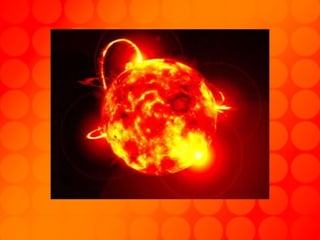
Solar Flares Are burst of heat and energy that stretch out from the corona and chromospheres into space.  Sometimes the energy disrupts satallites, interfering with TV, radio, and cell phone communication systems.
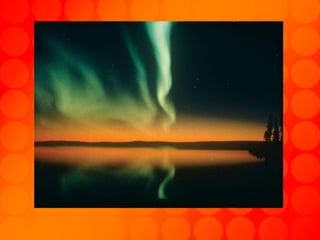
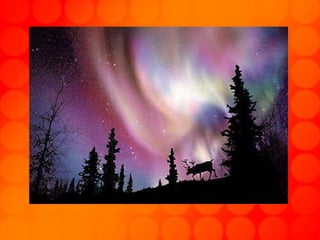
Aurora Borealis Also called the Northern Lights Energy from the solar flares also causes displays of different-colored lights in the upper atmosphere. Most often seen in Alaska, Canada, and the Northern United States
 
 
Sun Spots Solar Flares are also sometimes associated with sunspots They are dark spots on the Sun. They are regions of the photosphere that have a lower temperature then the surrounding regions.
 
How does the Sun produce energy? 100 years ago, Albert Einstein discovered a relationship between energy and mass. E = MC 2 The E stands for energy, M stands for mass, the C represents the speed of light.
What happens inside the Sun? Hydrogen particles smash together to make helium. This smashing is called  Fusion . A little bit of mass is a lost when hydrogen particles combine to make helium. The mass in turned into energy We see this energy as light and heat!

The Sun

  • 1.
    The Sun Chapter6 Lesson 1 Ms. Aab Mrs. Avila
  • 2.
    California State Standardsand Objective 5 ES 5.a. Students know the Sun, an average star, is the central and largest body in the solar system and is composed primarily of hydrogen and helium. Objective : Students in grade five will be able to label and identify parts of the sun, identify the sun as a star , and explain the atomic process through which the sun releases energy.
  • 3.
  • 4.
  • 5.
    The Sun isa Star The sun is a Star made of hydrogen and helium. The sun is located at the center of the solar system and is also the largest object.
  • 6.
    Vocabulary Star -is an object that produces it own energy, including heat and light. Astronomical Unit- the closest stars to the solar system are found in the Alpha Centauri star system.
  • 7.
    The size ofthe Sun If the Sun were a hollow ball more then a million Earths could fit inside it! The Sun is an average size star and the largest object in the solar system. The Sun looks larger than the other stars that can be seen in the night sky because it is much closer to Earth.
  • 8.
    What are theParts of the Sun? The Sun is a huge sphere made up of mostly of two gases. 71% of the Sun’s mass is Hydrogen 27% of the Sun’s mass is Helium The remaining 2% is Oxygen and Carbon
  • 9.
  • 10.
    The Core Mostof the energy that the Sun produces is formed in it’s core. The Core’s temperature is 10 million to 20 million degrees Celsius. The pressure is more than 1 billion times greater then the air pressure of Earth.
  • 11.
  • 12.
    Radiation Layer Nextto the core Moves the energy produced in the core in every direction. It can take million of years for energy to move out of this layer.
  • 13.
    Convection Layer Layernext to the radiation layer Gasses with different energies move in circles in a way similar to air with different densities. Energy moves out of this layer in about a week.
  • 14.
    Photosphere Isthe visible surface of the Sun. It is not a solid surface, but rather a layer of gasses. It is cooler then the core with a temperature of 10,346 F
  • 15.
    Chromosphere Is theinner layer of the Sun’s atmosphere. When it can be seen it looks like a red circle around the Sun.
  • 16.
    The Corona Theoutermost layer of the Sun’s atmosphere. The corona takes on different shapes around the Sun depending on changes in the temperature of the photosphere.
  • 17.
    Solar Flares Areburst of heat and energy that stretch out from the corona and chromospheres into space. Sometimes the energy disrupts satallites, interfering with TV, radio, and cell phone communication systems.
  • 18.
    Aurora Borealis Alsocalled the Northern Lights Energy from the solar flares also causes displays of different-colored lights in the upper atmosphere. Most often seen in Alaska, Canada, and the Northern United States
  • 19.
  • 20.
  • 21.
    Sun Spots SolarFlares are also sometimes associated with sunspots They are dark spots on the Sun. They are regions of the photosphere that have a lower temperature then the surrounding regions.
  • 22.
  • 23.
    How does theSun produce energy? 100 years ago, Albert Einstein discovered a relationship between energy and mass. E = MC 2 The E stands for energy, M stands for mass, the C represents the speed of light.
  • 24.
    What happens insidethe Sun? Hydrogen particles smash together to make helium. This smashing is called Fusion . A little bit of mass is a lost when hydrogen particles combine to make helium. The mass in turned into energy We see this energy as light and heat!