Downloaded 51 times



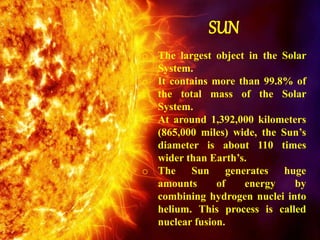
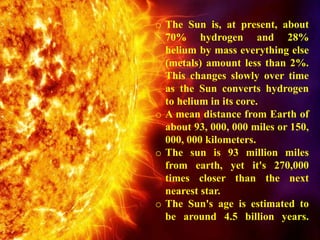
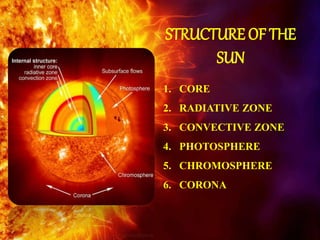
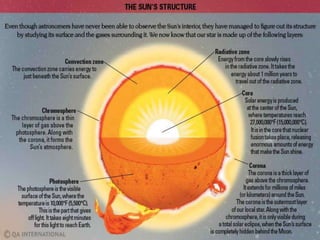
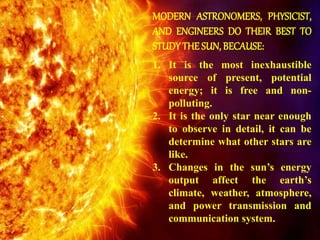
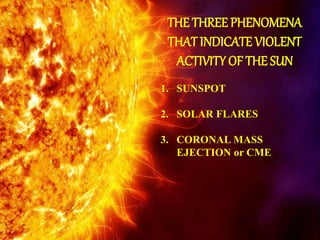
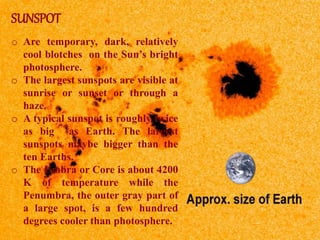
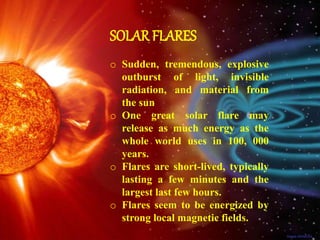

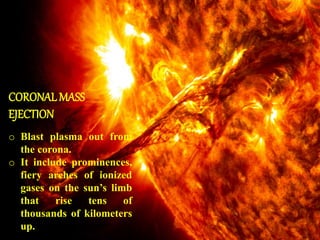




The Sun is by far the largest object in the solar system, containing over 99% of the mass. It has a diameter over 100 times larger than Earth and generates energy through nuclear fusion of hydrogen into helium. Light from the Sun takes approximately 8 minutes to reach Earth. While the visible surface of the Sun appears solid, it actually consists of several layers including the core, radiative zone, convective zone, photosphere, chromosphere, and corona. Solar activity like sunspots, solar flares, and coronal mass ejections can impact power grids and communication systems on Earth. Astronomers study the Sun to better understand stars and how changes in solar output impact Earth's climate and atmosphere.


