Educational Resources Online: E-tips
(e-textbook institutional publishing services)
Professor Frank Rennie
University of the Highlands and Islands
Edinburgh Napier University
Contents
• Some background context
• Summary of the e-tips research project
• The wider context
• The benefits
• The challenges
• The lessons learned
• What is next?
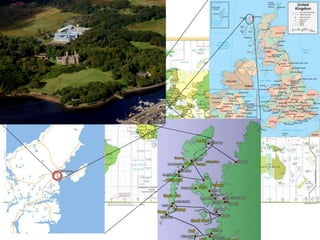
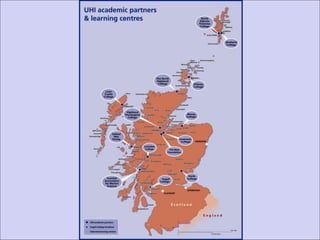
Airport
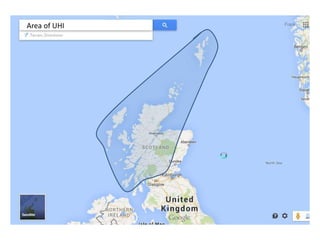
Area of UHI
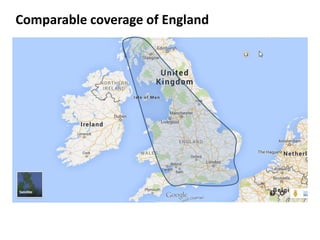
Comparable coverage of England
The UHI network
• Networked access to files and software
• Local telephone call access
• Local videoconference access
• Online catalogue of network libraries
• Online as well as on-campus libraries
– Online access to journal papers
– Online access to e-books
– Online access to digital artefacts
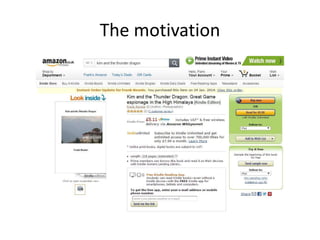
The motivation
• The institution as an e-textbook publisher
• Four projects in the UK
• Three year study, £350K
• Partnership
– Lews Castle College UHI
– UHI EDU staff
– Edinburgh Napier University
JISC Programme
Who is this for?
• This is a pilot of the e-publishing process
• Not intended to be comprehensive textbooks
• Guidelines for student orientation and study
• Generic subjects with long “shelf-life”
• Active links to open educational repositories
• Affordable globally
• Full documentation of the institutional
development process
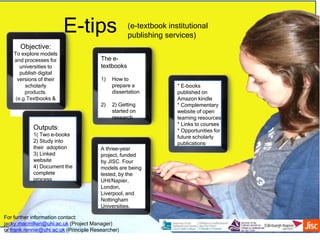
E-tips
For further information contact:
jacky.macmillan@uhi.ac.uk (Project Manager)
or frank.rennie@uhi.ac.uk (Principle Researcher)
Objective:
To explore models
and processes for
universities to
publish digital
versions of their
scholarly
products.
(e.g.Textbooks &
monographs)
(e-textbook institutional
publishing services)
Outputs:
1( Two e-books
2) Study into
their adoption
3) Linked
website
4) Document the
complete
process
The e-
textbooks
1) How to
prepare a
dissertation
2) 2) Getting
started on
research
A three-year
project, funded
by JISC. Four
models are being
tested, by the
UHI/Napier,
London,
Liverpool, and
Nottingham
Universities.
* E-books
published on
Amazon kindle
* Complementary
website of open
learning resources
* Links to courses
* Opportunities for
future scholarly
publications
Why would we do this?
• Geographical equivalence for students /staff
• Cost
• Wider dissemination of our work
• Opening up new audiences
• Brand and reputation
• Public good
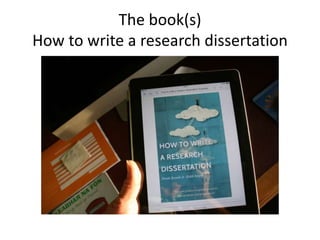
The book(s)
How to write a research dissertation
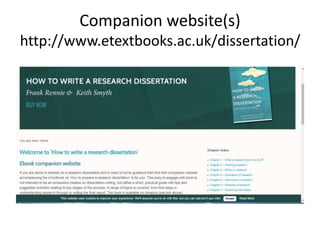
Companion website(s)
http://www.etextbooks.ac.uk/dissertation/
The wider context
• The Attention Economy
• Post-capitalist contradictions
– Blurring of work and non-work time
– Market inability to fix prices consistently
– Rise of collaborative and networked production
– Production of free stuff and non-copyright
– Non-economic benefits (social good)
The benefits
• Networked information as a public good
• Wide and affordable access to education
• Contributing to a community of practice
• Enhancing the brand of the institution
• Enhancing the reputation of the author(s)
• Extra product(s) for diminishing costs
• Collaborative resources are made available
The challenges
• A different management structure is required
• A different cost/benefit model needs
agreement
• Ongoing curation is needed
• Technical solutions change and evolve
• Careful selection of subject matter is needed
• Ensuring that the institutional brand gets
recognised
The lessons learned
• The pre-production processes are similar
• The superabundance of information lowers prices
• The half-life of knowledge generation is reducing
• Changing dynamic of information as a social good
• Creation, re-creation, co-creation is possible
• The cost of reproduction falls towards zero
• Human behaviour is changing information use
• The media is changing and will continue to evolve
Explore related options
• Academic monographs / PG dissertations
• Network the global academy
• Print on demand options
• Links to specific programmes/modules
• Links to evolving open educational resources
• Links to new search engines
What is next?
View this presentation again at
www.slideshare.net/frankrennie
More info at
www.lews.uhi.ac.uk/frennie
Blog
https://uheye.wordpress.com/

E tips educational resources online

  • 1.
    Educational Resources Online:E-tips (e-textbook institutional publishing services) Professor Frank Rennie University of the Highlands and Islands Edinburgh Napier University
  • 2.
    Contents • Some backgroundcontext • Summary of the e-tips research project • The wider context • The benefits • The challenges • The lessons learned • What is next?
  • 3.
  • 5.
  • 6.
  • 7.
    The UHI network •Networked access to files and software • Local telephone call access • Local videoconference access • Online catalogue of network libraries • Online as well as on-campus libraries – Online access to journal papers – Online access to e-books – Online access to digital artefacts
  • 8.
  • 9.
    • The institutionas an e-textbook publisher • Four projects in the UK • Three year study, £350K • Partnership – Lews Castle College UHI – UHI EDU staff – Edinburgh Napier University JISC Programme
  • 10.
    Who is thisfor? • This is a pilot of the e-publishing process • Not intended to be comprehensive textbooks • Guidelines for student orientation and study • Generic subjects with long “shelf-life” • Active links to open educational repositories • Affordable globally • Full documentation of the institutional development process
  • 11.
    E-tips For further informationcontact: jacky.macmillan@uhi.ac.uk (Project Manager) or frank.rennie@uhi.ac.uk (Principle Researcher) Objective: To explore models and processes for universities to publish digital versions of their scholarly products. (e.g.Textbooks & monographs) (e-textbook institutional publishing services) Outputs: 1( Two e-books 2) Study into their adoption 3) Linked website 4) Document the complete process The e- textbooks 1) How to prepare a dissertation 2) 2) Getting started on research A three-year project, funded by JISC. Four models are being tested, by the UHI/Napier, London, Liverpool, and Nottingham Universities. * E-books published on Amazon kindle * Complementary website of open learning resources * Links to courses * Opportunities for future scholarly publications
  • 12.
    Why would wedo this? • Geographical equivalence for students /staff • Cost • Wider dissemination of our work • Opening up new audiences • Brand and reputation • Public good
  • 13.
    The book(s) How towrite a research dissertation
  • 14.
  • 15.
    The wider context •The Attention Economy • Post-capitalist contradictions – Blurring of work and non-work time – Market inability to fix prices consistently – Rise of collaborative and networked production – Production of free stuff and non-copyright – Non-economic benefits (social good)
  • 16.
    The benefits • Networkedinformation as a public good • Wide and affordable access to education • Contributing to a community of practice • Enhancing the brand of the institution • Enhancing the reputation of the author(s) • Extra product(s) for diminishing costs • Collaborative resources are made available
  • 17.
    The challenges • Adifferent management structure is required • A different cost/benefit model needs agreement • Ongoing curation is needed • Technical solutions change and evolve • Careful selection of subject matter is needed • Ensuring that the institutional brand gets recognised
  • 18.
    The lessons learned •The pre-production processes are similar • The superabundance of information lowers prices • The half-life of knowledge generation is reducing • Changing dynamic of information as a social good • Creation, re-creation, co-creation is possible • The cost of reproduction falls towards zero • Human behaviour is changing information use • The media is changing and will continue to evolve
  • 19.
    Explore related options •Academic monographs / PG dissertations • Network the global academy • Print on demand options • Links to specific programmes/modules • Links to evolving open educational resources • Links to new search engines What is next?
  • 20.
    View this presentationagain at www.slideshare.net/frankrennie More info at www.lews.uhi.ac.uk/frennie Blog https://uheye.wordpress.com/