© 2013 UTC Fire & Security. All rights reserved. 1 / 2 P/N 3101209 • REV 03 • REB 28JAN13
E-HD Fixed-Temperature/Rate-of-Rise Heat
Detector Installation Sheet
Operation
The E-HD Fixed-Temperature/Rate-of-Rise Heat Detector can
be configured as a rate-of-rise detector (default) or, through
programming, as a fixed-temperature heat detector. When
configured as a rate-of-rise detector, a rate-of-rise heat sensor
can quickly detect a fast, flaming fire. When configured as a
fixed-temperature heat detector, a fixed-temperature heat
sensor monitors the temperature of the air in its surroundings
and determines whether to initiate an alarm. The detector is
capable of performing comprehensive self-diagnostics and
storing the results.
LED operation
The detector provides a bicolor LED that shows its status.
Normal: Green LED flashes
Alarm/active: Red LED flashes
Installation
Refer to Edwards Signaling Smoke and Heat Detector
Application Bulletin (P/N 3101212) for additional information on
detector placement and spacing.
WARNINGS
• This detector does not operate without electrical power. As
fires frequently cause power interruption, discuss further
safeguards with the local fire protection specialist.
• This detector does not sense fires that start in areas
where heat cannot reach the detector. Heat from fires in
walls, roofs, or on the opposite side of closed doors may
not reach the detector.
• This detector is intended for use with ionization and/or
photoelectric smoke detectors. The heat detector by itself
does not provide life safety protection.
• This detector does not detect oxygen levels, smoke, toxic
gases, or flames. Use this device only as part of a broad-
based, life-safety program which includes a variety of
information sources pertaining to heat and smoke levels,
extinguishment systems, visual and audible devices, and
other safety measures.
• Independent studies recommend using heat detectors only
for property protection. Never rely on heat detectors as the
sole means of fire protection.
• To ensure proper operation, schedule maintenance
(regular or selected) in accordance with the requirements
of the authority having jurisdiction. Refer to NFPA 72 and
CAN/ULC−S536.
• To ensure proper operation, store the detector within the
recommended ranges. Allow the detector to stabilize to
room temperature before applying power.
• Keep the dust cover (supplied) on the detector during
installation and remove it prior to commissioning and
service. The dust cover is not a substitute for removing the
detector during new construction or heavy remodeling.
To install the detector:
1. Install and wire the detector base using the installation
sheet supplied with the detector base.
2. Set the detector address. Refer to the panel technical
reference manual for a list of valid addresses.
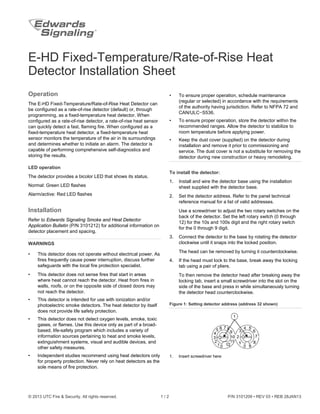
Use a screwdriver to adjust the two rotary switches on the
back of the detector. Set the left rotary switch (0 through
12) for the 10s and 100s digit and the right rotary switch
for the 0 through 9 digit.
3. Connect the detector to the base by rotating the detector
clockwise until it snaps into the locked position.
The head can be removed by turning it counterclockwise.
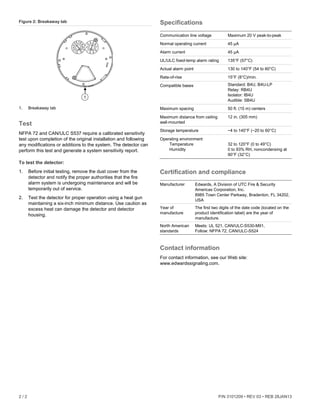
4. If the head must lock to the base, break away the locking
tab using a pair of pliers.
To then remove the detector head after breaking away the
locking tab, insert a small screwdriver into the slot on the
side of the base and press in while simultaneously turning
the detector head counterclockwise.
Figure 1: Setting detector address (address 32 shown)
1. Insert screwdriver here
2 / 2 P/N 3101209 • REV 03 • REB 28JAN13
Figure 2: Breakaway tab
1
01
2
3
4
5 6
12
11
10
9
87
0 9
1
2
3
4 5
6
7
8
1. Breakaway tab
Test
NFPA 72 and CAN/ULC S537 require a calibrated sensitivity
test upon completion of the original installation and following
any modifications or additions to the system. The detector can
perform this test and generate a system sensitivity report.
To test the detector:
1. Before initial testing, remove the dust cover from the
detector and notify the proper authorities that the fire
alarm system is undergoing maintenance and will be
temporarily out of service.
2. Test the detector for proper operation using a heat gun
maintaining a six-inch minimum distance. Use caution as
excess heat can damage the detector and detector
housing.
Specifications
Communication line voltage Maximum 20 V peak-to-peak
Normal operating current 45 µA
Alarm current 45 µA
UL/ULC fixed-temp alarm rating 135°F (57°C)
Actual alarm point 130 to 140°F (54 to 60°C)
Rate-of-rise 15°F (8°C)/min.
Compatible bases Standard: B4U, B4U-LP
Relay: RB4U
Isolator: IB4U
Audible: SB4U
Maximum spacing 50 ft. (15 m) centers
Maximum distance from ceiling
wall-mounted
12 in. (305 mm)
Storage temperature −4 to 140°F (−20 to 60°C)
Operating environment
Temperature
Humidity
32 to 120°F (0 to 49°C)
0 to 93% RH, noncondensing at
90°F (32°C)
Certification and compliance
Manufacturer Edwards, A Division of UTC Fire & Security
Americas Corporation, Inc.
8985 Town Center Parkway, Bradenton, FL 34202,
USA
Year of
manufacture
The first two digits of the date code (located on the
product identification label) are the year of
manufacture.
North American
standards
Meets: UL 521, CAN/ULC-S530-M91,
Follow: NFPA 72, CAN/ULC-S524
Contact information
For contact information, see our Web site:
www.edwardssignaling.com.

Edwards Signaling E-HD Installation Manual

  • 1.
    © 2013 UTCFire & Security. All rights reserved. 1 / 2 P/N 3101209 • REV 03 • REB 28JAN13 E-HD Fixed-Temperature/Rate-of-Rise Heat Detector Installation Sheet Operation The E-HD Fixed-Temperature/Rate-of-Rise Heat Detector can be configured as a rate-of-rise detector (default) or, through programming, as a fixed-temperature heat detector. When configured as a rate-of-rise detector, a rate-of-rise heat sensor can quickly detect a fast, flaming fire. When configured as a fixed-temperature heat detector, a fixed-temperature heat sensor monitors the temperature of the air in its surroundings and determines whether to initiate an alarm. The detector is capable of performing comprehensive self-diagnostics and storing the results. LED operation The detector provides a bicolor LED that shows its status. Normal: Green LED flashes Alarm/active: Red LED flashes Installation Refer to Edwards Signaling Smoke and Heat Detector Application Bulletin (P/N 3101212) for additional information on detector placement and spacing. WARNINGS • This detector does not operate without electrical power. As fires frequently cause power interruption, discuss further safeguards with the local fire protection specialist. • This detector does not sense fires that start in areas where heat cannot reach the detector. Heat from fires in walls, roofs, or on the opposite side of closed doors may not reach the detector. • This detector is intended for use with ionization and/or photoelectric smoke detectors. The heat detector by itself does not provide life safety protection. • This detector does not detect oxygen levels, smoke, toxic gases, or flames. Use this device only as part of a broad- based, life-safety program which includes a variety of information sources pertaining to heat and smoke levels, extinguishment systems, visual and audible devices, and other safety measures. • Independent studies recommend using heat detectors only for property protection. Never rely on heat detectors as the sole means of fire protection. • To ensure proper operation, schedule maintenance (regular or selected) in accordance with the requirements of the authority having jurisdiction. Refer to NFPA 72 and CAN/ULC−S536. • To ensure proper operation, store the detector within the recommended ranges. Allow the detector to stabilize to room temperature before applying power. • Keep the dust cover (supplied) on the detector during installation and remove it prior to commissioning and service. The dust cover is not a substitute for removing the detector during new construction or heavy remodeling. To install the detector: 1. Install and wire the detector base using the installation sheet supplied with the detector base. 2. Set the detector address. Refer to the panel technical reference manual for a list of valid addresses. Use a screwdriver to adjust the two rotary switches on the back of the detector. Set the left rotary switch (0 through 12) for the 10s and 100s digit and the right rotary switch for the 0 through 9 digit. 3. Connect the detector to the base by rotating the detector clockwise until it snaps into the locked position. The head can be removed by turning it counterclockwise. 4. If the head must lock to the base, break away the locking tab using a pair of pliers. To then remove the detector head after breaking away the locking tab, insert a small screwdriver into the slot on the side of the base and press in while simultaneously turning the detector head counterclockwise. Figure 1: Setting detector address (address 32 shown) 1. Insert screwdriver here
  • 2.
    2 / 2P/N 3101209 • REV 03 • REB 28JAN13 Figure 2: Breakaway tab 1 01 2 3 4 5 6 12 11 10 9 87 0 9 1 2 3 4 5 6 7 8 1. Breakaway tab Test NFPA 72 and CAN/ULC S537 require a calibrated sensitivity test upon completion of the original installation and following any modifications or additions to the system. The detector can perform this test and generate a system sensitivity report. To test the detector: 1. Before initial testing, remove the dust cover from the detector and notify the proper authorities that the fire alarm system is undergoing maintenance and will be temporarily out of service. 2. Test the detector for proper operation using a heat gun maintaining a six-inch minimum distance. Use caution as excess heat can damage the detector and detector housing. Specifications Communication line voltage Maximum 20 V peak-to-peak Normal operating current 45 µA Alarm current 45 µA UL/ULC fixed-temp alarm rating 135°F (57°C) Actual alarm point 130 to 140°F (54 to 60°C) Rate-of-rise 15°F (8°C)/min. Compatible bases Standard: B4U, B4U-LP Relay: RB4U Isolator: IB4U Audible: SB4U Maximum spacing 50 ft. (15 m) centers Maximum distance from ceiling wall-mounted 12 in. (305 mm) Storage temperature −4 to 140°F (−20 to 60°C) Operating environment Temperature Humidity 32 to 120°F (0 to 49°C) 0 to 93% RH, noncondensing at 90°F (32°C) Certification and compliance Manufacturer Edwards, A Division of UTC Fire & Security Americas Corporation, Inc. 8985 Town Center Parkway, Bradenton, FL 34202, USA Year of manufacture The first two digits of the date code (located on the product identification label) are the year of manufacture. North American standards Meets: UL 521, CAN/ULC-S530-M91, Follow: NFPA 72, CAN/ULC-S524 Contact information For contact information, see our Web site: www.edwardssignaling.com.