
VISUAL DISPLAY MATERIALS

      CHALKBOARD
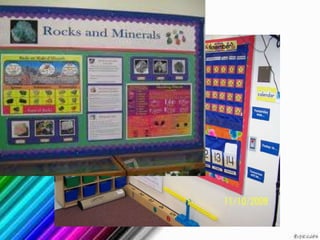
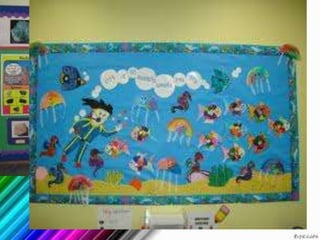
     BULLETIN BOARD
     FLANNEL BOARD
     MAGNETIC BOARD
       FLIPCHARTS
CHALKBOARD
• Chalkboard are traditional visual aids that is a
  very important part of classroom teaching
BULLETIN BOARD
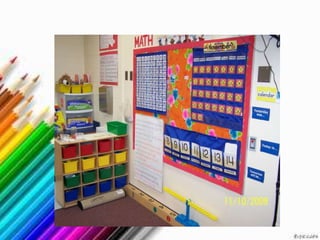
• is a surface intended for the posting of public
  messages, for example, to advertise items
  wanted or for sale, announce events, or
  provide information.
FLANNEL / MAGNETIC
           BOARDS
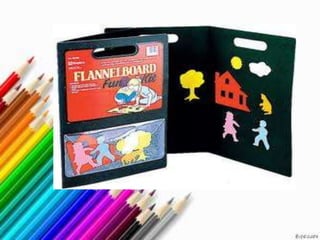
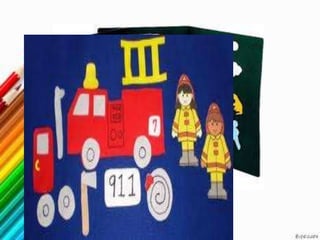
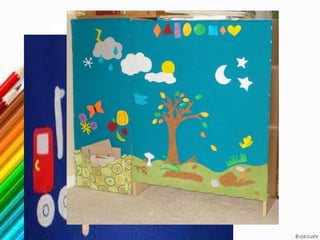
• A flannel board is a board that is usually
  covered in either felt or flannel and propped
  up on a easel. It is usually used in preschool
  classes as a storytelling device.
Advantages or Special Purposes

   1. These boards are best used in lessons
      requiring a step-by-step presentation.
Advantages or Special Purposes

   1. These boards are best used in lessons
      requiring a step-by-step presentation.
   2. The cut-outs can be moved,
   rearranged or removed to show action or
   the results of action and
   changes in the relationship of the subject
   material.
Advantages or Special Purposes


   2. The cut-outs can be moved,
   rearranged or removed to show action or
   the results of action and
   changes in the relationship of the subject
   material.
    3. Visualization capabilities enhance a
      verbal presentation.
Advantages or Special Purposes


   3. Visualization capabilities enhance a
       verbal presentation.
   4. Judicious use of color attracts the
       attention of the learner.
Advantages or Special Purposes


   3. Visualization capabilities enhance a
       verbal presentation.
   4. Judicious use of color attracts the
       attention of the learner.
   5. These aids can be light-weight and
       portable or they can be permanently
       fixed.
Advantages or Special Purposes

   5. These aids can be light-weight and
   portable or they can be permanently
   fixed.

   6. Cut-outs are relatively easy for the
      instructor to construct.

   7. Learners can make cut-outs and use
   the boards.
• Disadvantages or Limitations
• 1. Small cut -outs cannot be easily seen.
• Disadvantages or Limitations
• 1. Small cut -outs cannot be easily seen.
• 2. Cut-outs can be easily lost.
• Disadvantages or Limitations
• 1. Small cut -outs cannot be easily seen.
• 2. Cut-outs can be easily lost.
• 3. The flannel board has for so long been
  used predominantly with children that it may
  seem
"childish" to older learners.
• 4. Less spontaneity is afforded since the
  prepared cut-outs limit what is considered.
• Disadvantages or Limitations
• 1. Small cut -outs cannot be easily seen.
• 2. Cut-outs can be easily lost.
• 3. The flannel board has for so long been
  used predominantly with children that it may
  seem
"childish" to older learners.
• 4. Less spontaneity is afforded since the
  prepared cut-outs limit what is considered.
• 5. Space is usually limited.
Application
•   1. The lesson must be rehearsed in advance
    and all materials organized accordingly for
    use.
•   2. Be sure all materials are present at the
    time they will be needed.
•   3. Use color in a systematic way if it will help
    show the sequence of important data.
•   4. Do not block the view of the students.
•   5. Avoid "talking into" the board.
•   6. Encourage learners to show their
    understanding by having them use t
Benefits
• .They make learning more visual for young
  students, and the students remember what
  they have learned better.
• Flannel boards are more cost-effective than
  some other classroom aids.
• They can be used over and over again for a
  wide variety of activities, and you can easily
  switch the pieces from activity to activity.
• It's also easy to make your own flannel board
  and story pieces.
Flip Chart
• A flip chart is a collection of large pages which
  are bound together at the top. The pages are
  “flipped” or brought up and to the back as
  they are used.
USES OF FLIP CHART

• Flip charts can be placed on an held. The leader
  stands beside or holds the flip chart, referring to
  the text printed on the back if necessary. As each
  page is finished, the leader flips it over to the
  back.
• Flip charts are easiest to use when the pages
  facing the group have large print and illustrations.
• The back of the pages can have
• the same text and illustrations in a smaller size
E dt ech report final

E dt ech report final

  • 1.
    VISUAL DISPLAY MATERIALS CHALKBOARD BULLETIN BOARD FLANNEL BOARD MAGNETIC BOARD FLIPCHARTS
  • 2.
    CHALKBOARD • Chalkboard aretraditional visual aids that is a very important part of classroom teaching
  • 3.
    BULLETIN BOARD • isa surface intended for the posting of public messages, for example, to advertise items wanted or for sale, announce events, or provide information.
  • 7.
    FLANNEL / MAGNETIC BOARDS • A flannel board is a board that is usually covered in either felt or flannel and propped up on a easel. It is usually used in preschool classes as a storytelling device.
  • 8.
    Advantages or SpecialPurposes 1. These boards are best used in lessons requiring a step-by-step presentation.
  • 9.
    Advantages or SpecialPurposes 1. These boards are best used in lessons requiring a step-by-step presentation. 2. The cut-outs can be moved, rearranged or removed to show action or the results of action and changes in the relationship of the subject material.
  • 10.
    Advantages or SpecialPurposes 2. The cut-outs can be moved, rearranged or removed to show action or the results of action and changes in the relationship of the subject material. 3. Visualization capabilities enhance a verbal presentation.
  • 11.
    Advantages or SpecialPurposes 3. Visualization capabilities enhance a verbal presentation. 4. Judicious use of color attracts the attention of the learner.
  • 12.
    Advantages or SpecialPurposes 3. Visualization capabilities enhance a verbal presentation. 4. Judicious use of color attracts the attention of the learner. 5. These aids can be light-weight and portable or they can be permanently fixed.
  • 13.
    Advantages or SpecialPurposes 5. These aids can be light-weight and portable or they can be permanently fixed. 6. Cut-outs are relatively easy for the instructor to construct. 7. Learners can make cut-outs and use the boards.
  • 14.
    • Disadvantages orLimitations • 1. Small cut -outs cannot be easily seen.
  • 15.
    • Disadvantages orLimitations • 1. Small cut -outs cannot be easily seen. • 2. Cut-outs can be easily lost.
  • 16.
    • Disadvantages orLimitations • 1. Small cut -outs cannot be easily seen. • 2. Cut-outs can be easily lost. • 3. The flannel board has for so long been used predominantly with children that it may seem "childish" to older learners. • 4. Less spontaneity is afforded since the prepared cut-outs limit what is considered.
  • 17.
    • Disadvantages orLimitations • 1. Small cut -outs cannot be easily seen. • 2. Cut-outs can be easily lost. • 3. The flannel board has for so long been used predominantly with children that it may seem "childish" to older learners. • 4. Less spontaneity is afforded since the prepared cut-outs limit what is considered. • 5. Space is usually limited.
  • 18.
    Application • 1. The lesson must be rehearsed in advance and all materials organized accordingly for use. • 2. Be sure all materials are present at the time they will be needed. • 3. Use color in a systematic way if it will help show the sequence of important data. • 4. Do not block the view of the students. • 5. Avoid "talking into" the board. • 6. Encourage learners to show their understanding by having them use t
  • 19.
    Benefits • .They makelearning more visual for young students, and the students remember what they have learned better. • Flannel boards are more cost-effective than some other classroom aids. • They can be used over and over again for a wide variety of activities, and you can easily switch the pieces from activity to activity. • It's also easy to make your own flannel board and story pieces.
  • 23.
    Flip Chart • Aflip chart is a collection of large pages which are bound together at the top. The pages are “flipped” or brought up and to the back as they are used.
  • 24.
    USES OF FLIPCHART • Flip charts can be placed on an held. The leader stands beside or holds the flip chart, referring to the text printed on the back if necessary. As each page is finished, the leader flips it over to the back. • Flip charts are easiest to use when the pages facing the group have large print and illustrations. • The back of the pages can have • the same text and illustrations in a smaller size

Editor's Notes

  • #14 6. Cut-outs are relatively easy for the instructor to construct. 7. Learners can make cut-outs and use the boards.