E-COMMERCE CASE
STUDY-I
FLIPKART
BY
AMLAN DATTA
 What has led to the rising popularity of e-commerce in
India?
 Why do many people still prefer to go shopping
physically, ignoring the convenience of online
shopping?
 What are the prospects of e-commerce in India and
which factors may influence its continued growth?
E-COMMERCE SCENARIO IN INDIA
 Display
 Expense
 Location
 Communication
 Technology
ONLINE VS. OFF-LINE
 Books fall under non-sensory product categories and
gaining trust while selling non-sensory products online is
easier.
 The average order size for Flipkart books was very small
 Flipkart had already established its brand as a trustworthy
seller, capable of delivering on its promises.
 Flipkart entered into different product categories so that
the order sizes increased, resulting in a greater profit per
transaction.
 By including a variety of products, they minimized the risk
involved in decreases of demand for any particular
product.
PRODUCT CATALOGUE: BOOKS
 There is no tax on the purchase of books, making it an
apparently easy and profitable market
 Major global players have just started to enter India, because
of issues with FDI in India
 Huge government support to increase literacy rates and
generate employment, which will increase disposable incomes
of customers
 Governments in some Indian states are providing
computers/laptops/tablets at free or reduced cost, which may
help to increase the company’s customer base.
 Indian economy is growing rapidly and is poised to become
one of the greatest in the world by 2030
 Rapid growth in income power of the educated youth and more
disposable income predict a better future for e-commerce
companies
MACRO ECONOMETRICS: BOOK CATALOGUE
 Tech-savvy Indian youth would like to derive more
benefit from their electronic gadgets
 Online shopping can be one of these avenues where they
may spend time and money, to have more time for their
personal lives
 Lack of trust in online shopping
 Advancements in technology, penetration of broadband,
ubiquitous use of smartphones, Internet banking
facilities will determine the fate of Flipkart
 The company will have to stay updated with the most
current technology to provide its customers with a
satisfying shopping experience.
MACRO ENVIRONMENT
 Reduced costs of operation, as Flipkart does not have any bricks-
and-mortar shop infrastructure and does not need to pay for the
same;
 Excellent customer support, superior use of technology and efficient
distribution system
 Experience of Sachin Bansal and Binny Bansal, who both worked for
Amazon.com and have good knowledge of software coding, which
works as the backbone of this online business
 Trust enjoyed because of being the business leader
 Positive word-of-mouth recommendations by satisfied customers,
online or offline;
 Discounted price of books, which bricks-and-mortar retailers are not
able to match
 Increasing number of repeat purchasers and loyal customers;
 Dedicated and informed employees
SITUATION ANALYSIS
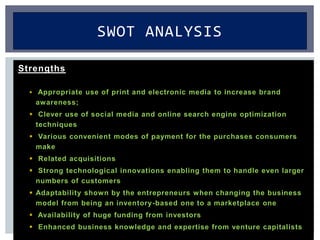
Strengths
 Appropriate use of print and electronic media to increase brand
awareness;
 Clever use of social media and online search engine optimization
techniques
 Various convenient modes of payment for the purchases consumers
make
 Related acquisitions
 Strong technological innovations enabling them to handle even larger
numbers of customers
 Adaptability shown by the entrepreneurs when changing the business
model from being an inventory-based one to a marketplace one
 Availability of huge funding from investors
 Enhanced business knowledge and expertise from venture capitalists
SWOT ANALYSIS
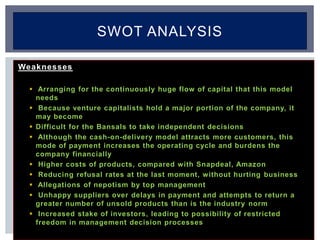
Weaknesses
 Arranging for the continuously huge flow of capital that this model
needs
 Because venture capitalists hold a major portion of the company, it
may become
 Difficult for the Bansals to take independent decisions
 Although the cash-on-delivery model attracts more customers, this
mode of payment increases the operating cycle and burdens the
company financially
 Higher costs of products, compared with Snapdeal, Amazon
 Reducing refusal rates at the last moment, without hurting business
 Allegations of nepotism by top management
 Unhappy suppliers over delays in payment and attempts to return a
greater number of unsold products than is the industry norm
 Increased stake of investors, leading to possibility of restricted
freedom in management decision processes
SWOT ANALYSIS
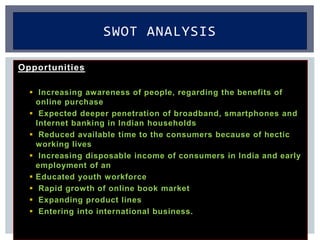
Opportunities
 Increasing awareness of people, regarding the benefits of
online purchase
 Expected deeper penetration of broadband, smartphones and
Internet banking in Indian households
 Reduced available time to the consumers because of hectic
working lives
 Increasing disposable income of consumers in India and early
employment of an
 Educated youth workforce
 Rapid growth of online book market
 Expanding product lines
 Entering into international business.
SWOT ANALYSIS
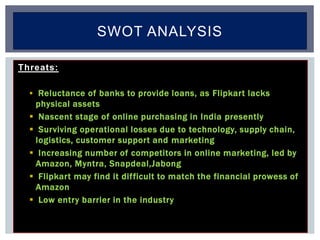
Threats:
 Reluctance of banks to provide loans, as Flipkart lacks
physical assets
 Nascent stage of online purchasing in India presently
 Surviving operational losses due to technology, supply chain,
logistics, customer support and marketing
 Increasing number of competitors in online marketing, led by
Amazon, Myntra, Snapdeal,Jabong
 Flipkart may find it difficult to match the financial prowess of
Amazon
 Low entry barrier in the industry
SWOT ANALYSIS
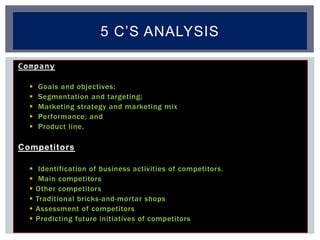
Company
 Goals and objectives;
 Segmentation and targeting;
 Marketing strategy and marketing mix
 Performance; and
 Product line.
Competitors
 Identification of business activities of competitors.
 Main competitors
 Other competitors
 Traditional bricks-and-mortar shops
 Assessment of competitors
 Predicting future initiatives of competitors
5 C’S ANALYSIS
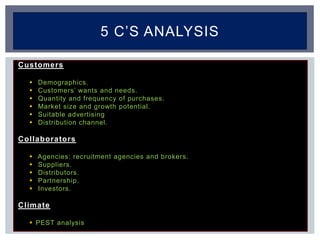
Customers
 Demographics.
 Customers’ wants and needs.
 Quantity and frequency of purchases.
 Market size and growth potential.
 Suitable advertising
 Distribution channel.
Collaborators
 Agencies: recruitment agencies and brokers.
 Suppliers.
 Distributors.
 Partnership.
 Investors.
Climate
 PEST analysis
5 C’S ANALYSIS
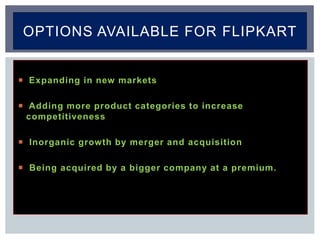
 Expanding in new markets
 Adding more product categories to increase
competitiveness
 Inorganic growth by merger and acquisition
 Being acquired by a bigger company at a premium.
OPTIONS AVAILABLE FOR FLIPKART

E commerce case study

  • 1.
  • 2.
     What hasled to the rising popularity of e-commerce in India?  Why do many people still prefer to go shopping physically, ignoring the convenience of online shopping?  What are the prospects of e-commerce in India and which factors may influence its continued growth? E-COMMERCE SCENARIO IN INDIA
  • 3.
     Display  Expense Location  Communication  Technology ONLINE VS. OFF-LINE
  • 4.
     Books fallunder non-sensory product categories and gaining trust while selling non-sensory products online is easier.  The average order size for Flipkart books was very small  Flipkart had already established its brand as a trustworthy seller, capable of delivering on its promises.  Flipkart entered into different product categories so that the order sizes increased, resulting in a greater profit per transaction.  By including a variety of products, they minimized the risk involved in decreases of demand for any particular product. PRODUCT CATALOGUE: BOOKS
  • 5.
     There isno tax on the purchase of books, making it an apparently easy and profitable market  Major global players have just started to enter India, because of issues with FDI in India  Huge government support to increase literacy rates and generate employment, which will increase disposable incomes of customers  Governments in some Indian states are providing computers/laptops/tablets at free or reduced cost, which may help to increase the company’s customer base.  Indian economy is growing rapidly and is poised to become one of the greatest in the world by 2030  Rapid growth in income power of the educated youth and more disposable income predict a better future for e-commerce companies MACRO ECONOMETRICS: BOOK CATALOGUE
  • 6.
     Tech-savvy Indianyouth would like to derive more benefit from their electronic gadgets  Online shopping can be one of these avenues where they may spend time and money, to have more time for their personal lives  Lack of trust in online shopping  Advancements in technology, penetration of broadband, ubiquitous use of smartphones, Internet banking facilities will determine the fate of Flipkart  The company will have to stay updated with the most current technology to provide its customers with a satisfying shopping experience. MACRO ENVIRONMENT
  • 7.
     Reduced costsof operation, as Flipkart does not have any bricks- and-mortar shop infrastructure and does not need to pay for the same;  Excellent customer support, superior use of technology and efficient distribution system  Experience of Sachin Bansal and Binny Bansal, who both worked for Amazon.com and have good knowledge of software coding, which works as the backbone of this online business  Trust enjoyed because of being the business leader  Positive word-of-mouth recommendations by satisfied customers, online or offline;  Discounted price of books, which bricks-and-mortar retailers are not able to match  Increasing number of repeat purchasers and loyal customers;  Dedicated and informed employees SITUATION ANALYSIS
  • 8.
    Strengths  Appropriate useof print and electronic media to increase brand awareness;  Clever use of social media and online search engine optimization techniques  Various convenient modes of payment for the purchases consumers make  Related acquisitions  Strong technological innovations enabling them to handle even larger numbers of customers  Adaptability shown by the entrepreneurs when changing the business model from being an inventory-based one to a marketplace one  Availability of huge funding from investors  Enhanced business knowledge and expertise from venture capitalists SWOT ANALYSIS
  • 9.
    Weaknesses  Arranging forthe continuously huge flow of capital that this model needs  Because venture capitalists hold a major portion of the company, it may become  Difficult for the Bansals to take independent decisions  Although the cash-on-delivery model attracts more customers, this mode of payment increases the operating cycle and burdens the company financially  Higher costs of products, compared with Snapdeal, Amazon  Reducing refusal rates at the last moment, without hurting business  Allegations of nepotism by top management  Unhappy suppliers over delays in payment and attempts to return a greater number of unsold products than is the industry norm  Increased stake of investors, leading to possibility of restricted freedom in management decision processes SWOT ANALYSIS
  • 10.
    Opportunities  Increasing awarenessof people, regarding the benefits of online purchase  Expected deeper penetration of broadband, smartphones and Internet banking in Indian households  Reduced available time to the consumers because of hectic working lives  Increasing disposable income of consumers in India and early employment of an  Educated youth workforce  Rapid growth of online book market  Expanding product lines  Entering into international business. SWOT ANALYSIS
  • 11.
    Threats:  Reluctance ofbanks to provide loans, as Flipkart lacks physical assets  Nascent stage of online purchasing in India presently  Surviving operational losses due to technology, supply chain, logistics, customer support and marketing  Increasing number of competitors in online marketing, led by Amazon, Myntra, Snapdeal,Jabong  Flipkart may find it difficult to match the financial prowess of Amazon  Low entry barrier in the industry SWOT ANALYSIS
  • 12.
    Company  Goals andobjectives;  Segmentation and targeting;  Marketing strategy and marketing mix  Performance; and  Product line. Competitors  Identification of business activities of competitors.  Main competitors  Other competitors  Traditional bricks-and-mortar shops  Assessment of competitors  Predicting future initiatives of competitors 5 C’S ANALYSIS
  • 13.
    Customers  Demographics.  Customers’wants and needs.  Quantity and frequency of purchases.  Market size and growth potential.  Suitable advertising  Distribution channel. Collaborators  Agencies: recruitment agencies and brokers.  Suppliers.  Distributors.  Partnership.  Investors. Climate  PEST analysis 5 C’S ANALYSIS
  • 14.
     Expanding innew markets  Adding more product categories to increase competitiveness  Inorganic growth by merger and acquisition  Being acquired by a bigger company at a premium. OPTIONS AVAILABLE FOR FLIPKART