Dynamic Memory Allocation
Definition
 The process of allocating memory at
runtime is known as dynamic
memory allocation.
 Library routines known as "memory
management functions" are used for
allocating and freeing memory during
execution of a program.
 These functions are defined
in stdlib.h.
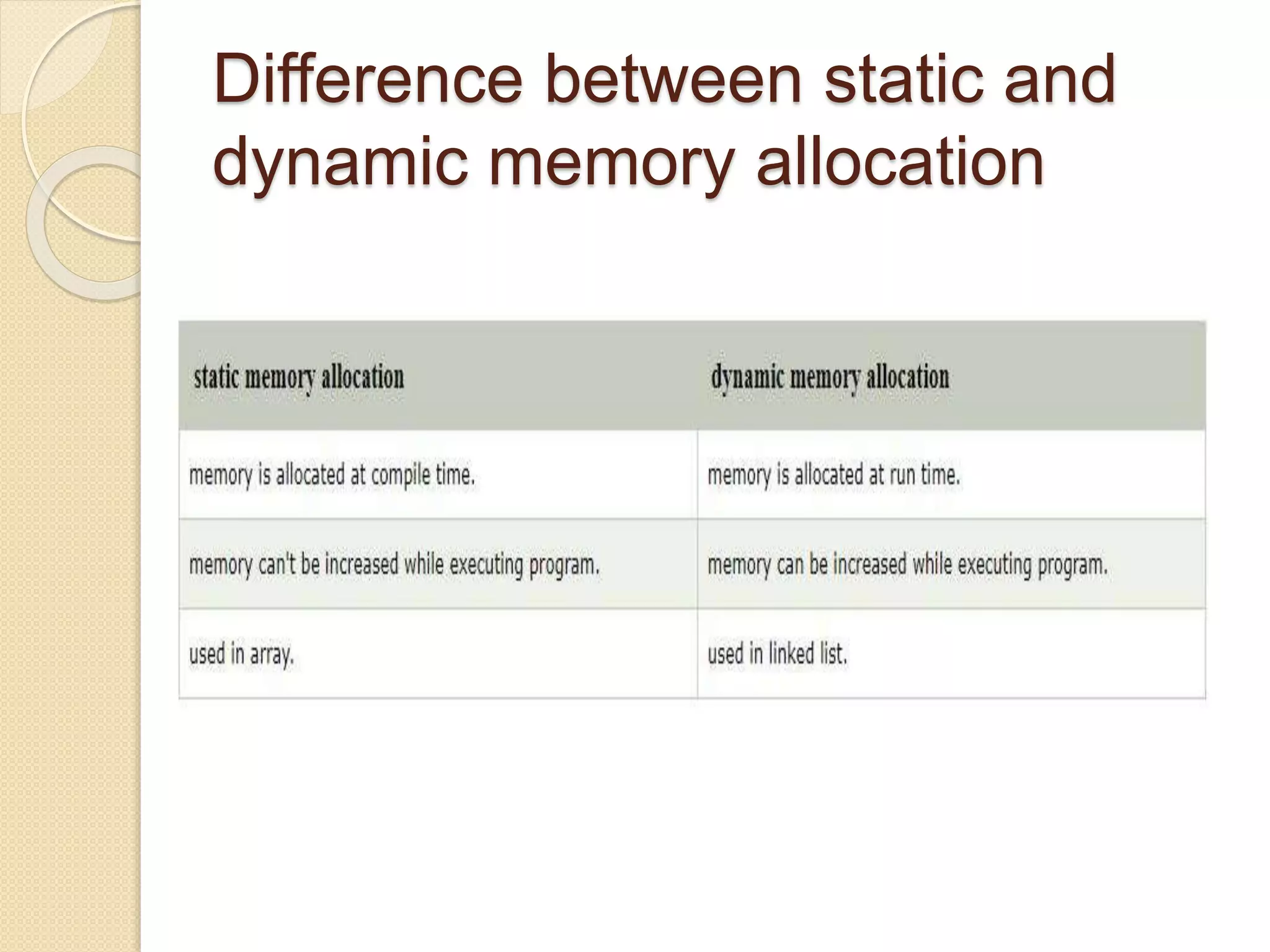
Difference between static and
dynamic memory allocation
Memory Allocation Process
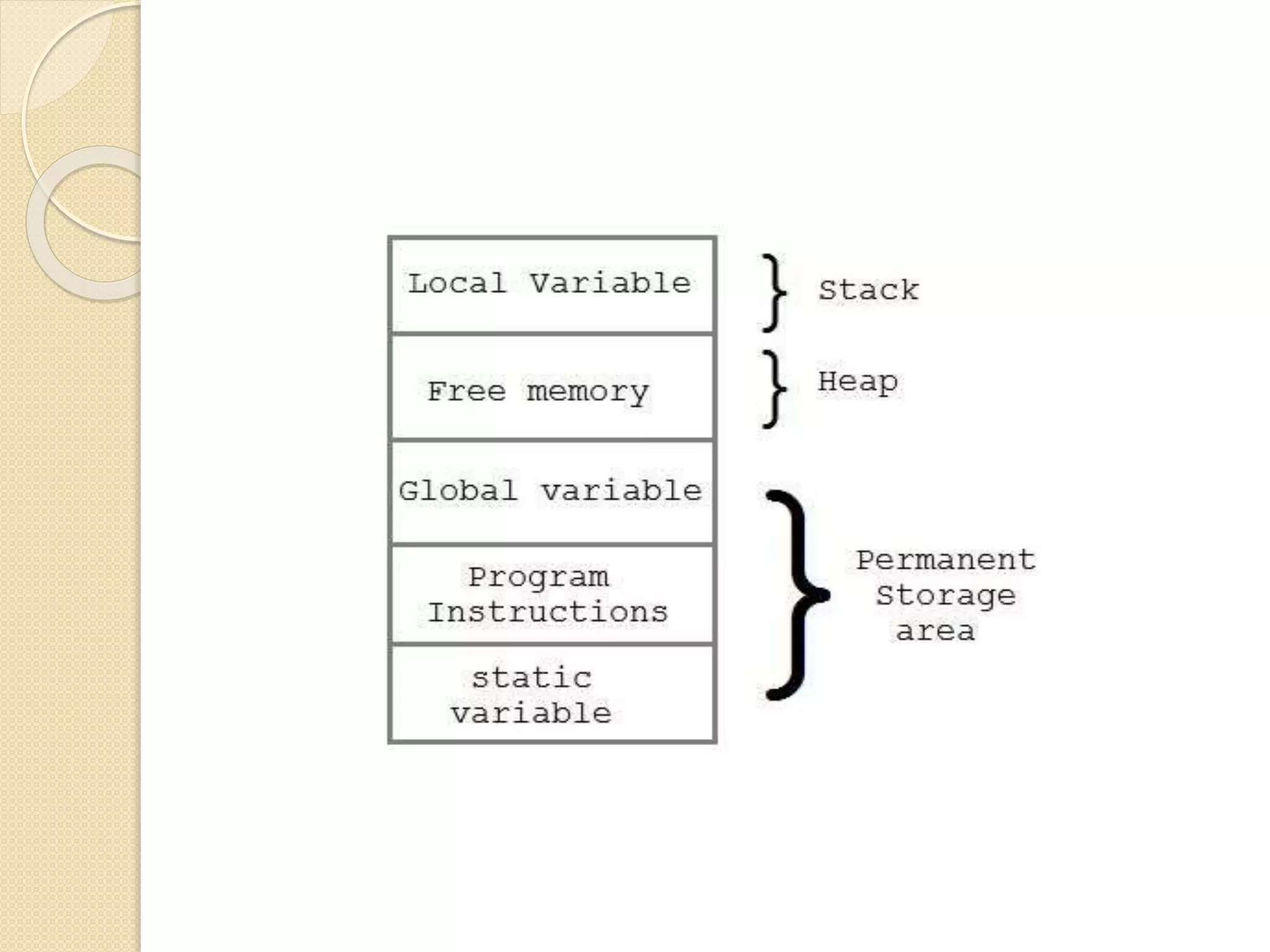
 Global variables, static variables and
program instructions get their memory
in permanent storage area
whereas local variables are stored in
a memory area called Stack.
 The memory space between these
two region is known as Heap area.
 This region is used for dynamic
memory allocation during execution of
the program.
 The size of heap keep changing.
Allocating block of Memory
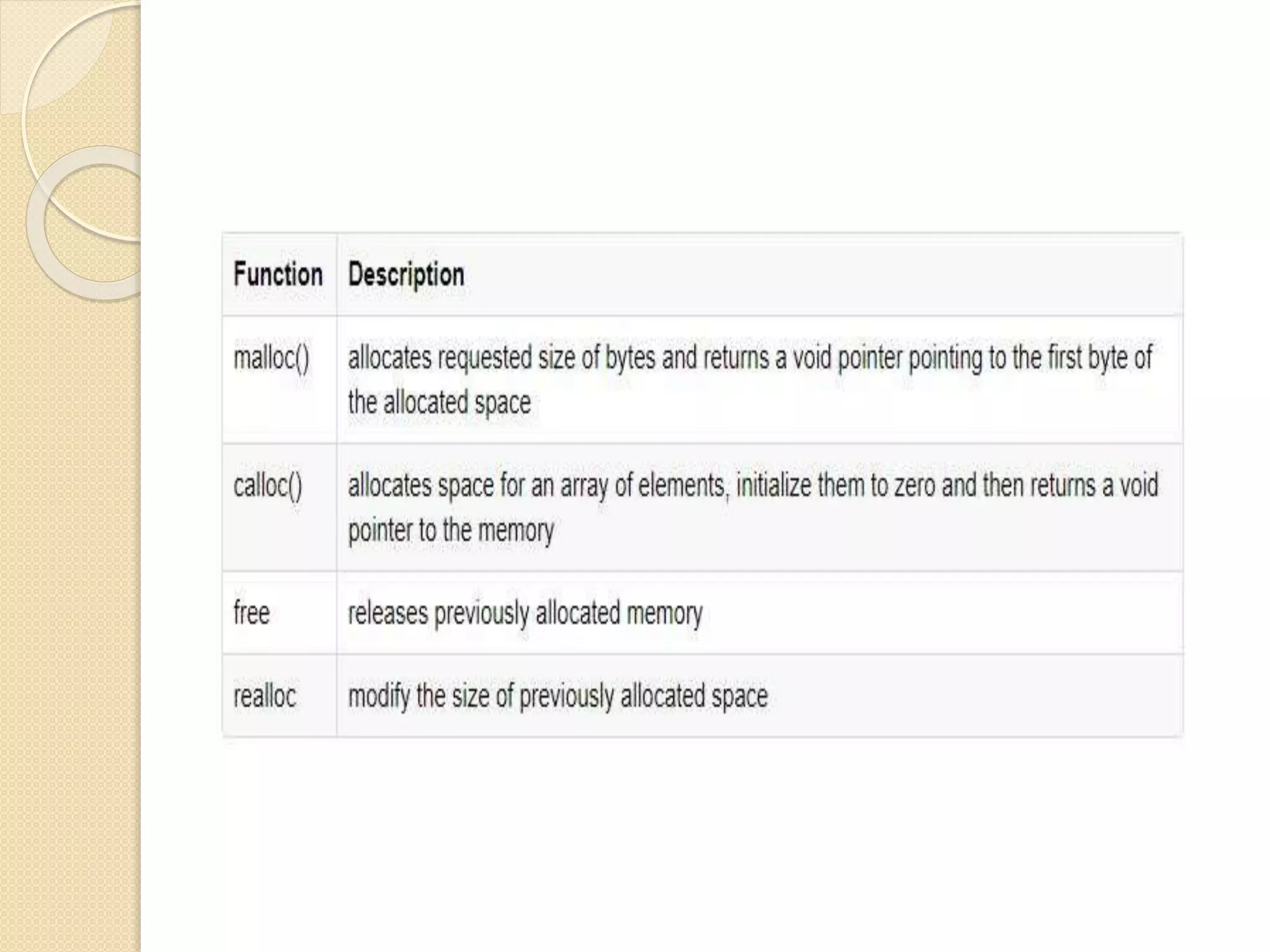
 malloc() function is used for allocating block
of memory at runtime. This function reserves
a block of memory of given size and returns a
pointer of type void. This means that we can
assign it to any type of pointer using
typecasting. If it fails to allocate enough space
as specified, it returns a NULL pointer.
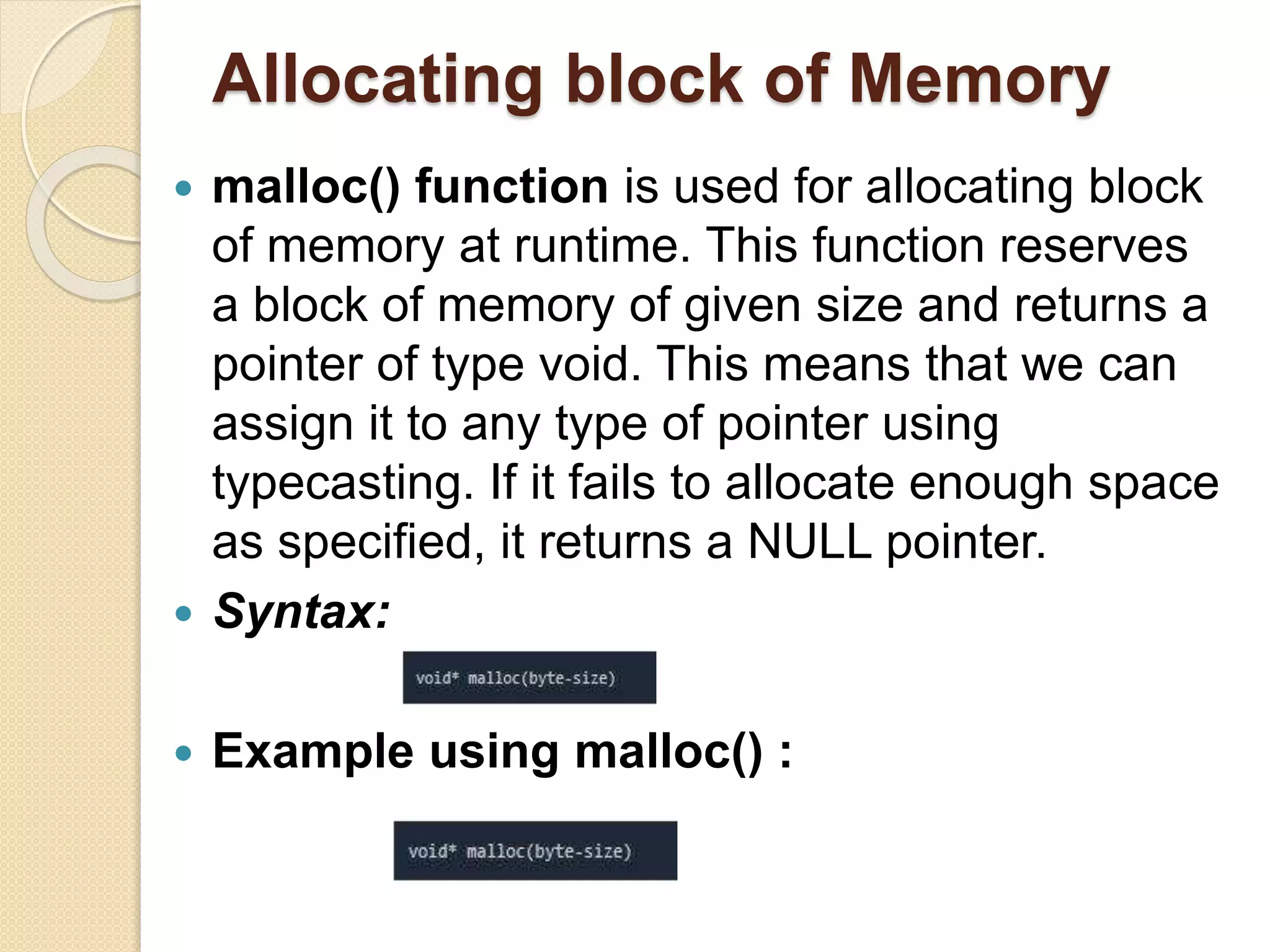
 Syntax:
 Example using malloc() :
 calloc() is another memory allocation
function that is used for allocating memory
at runtime. callocfunction is normally used
for allocating memory to derived data types
such as arrays and structures. If it fails to
allocate enough space as specified, it
returns a NULL pointer.
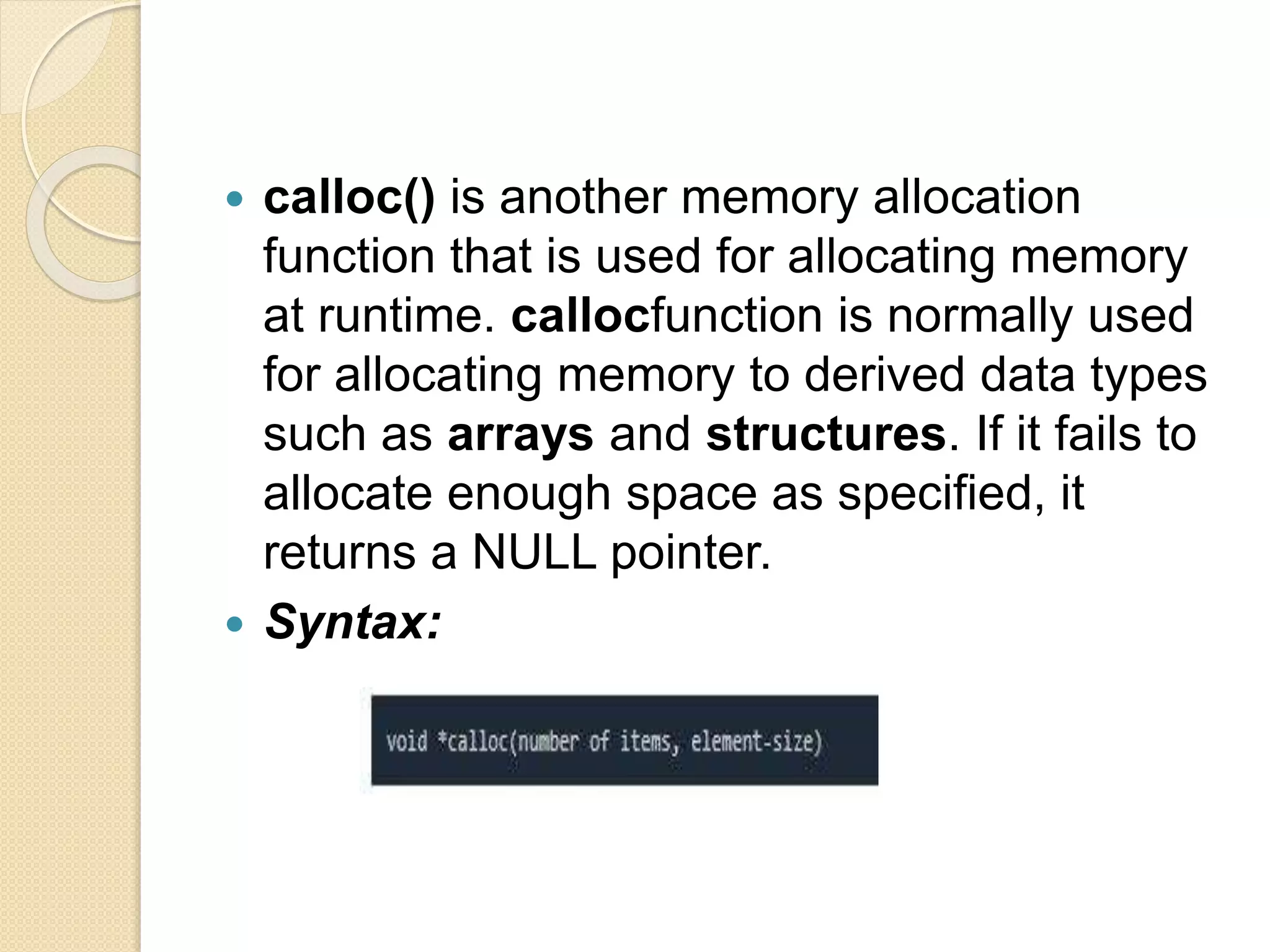
 Syntax:
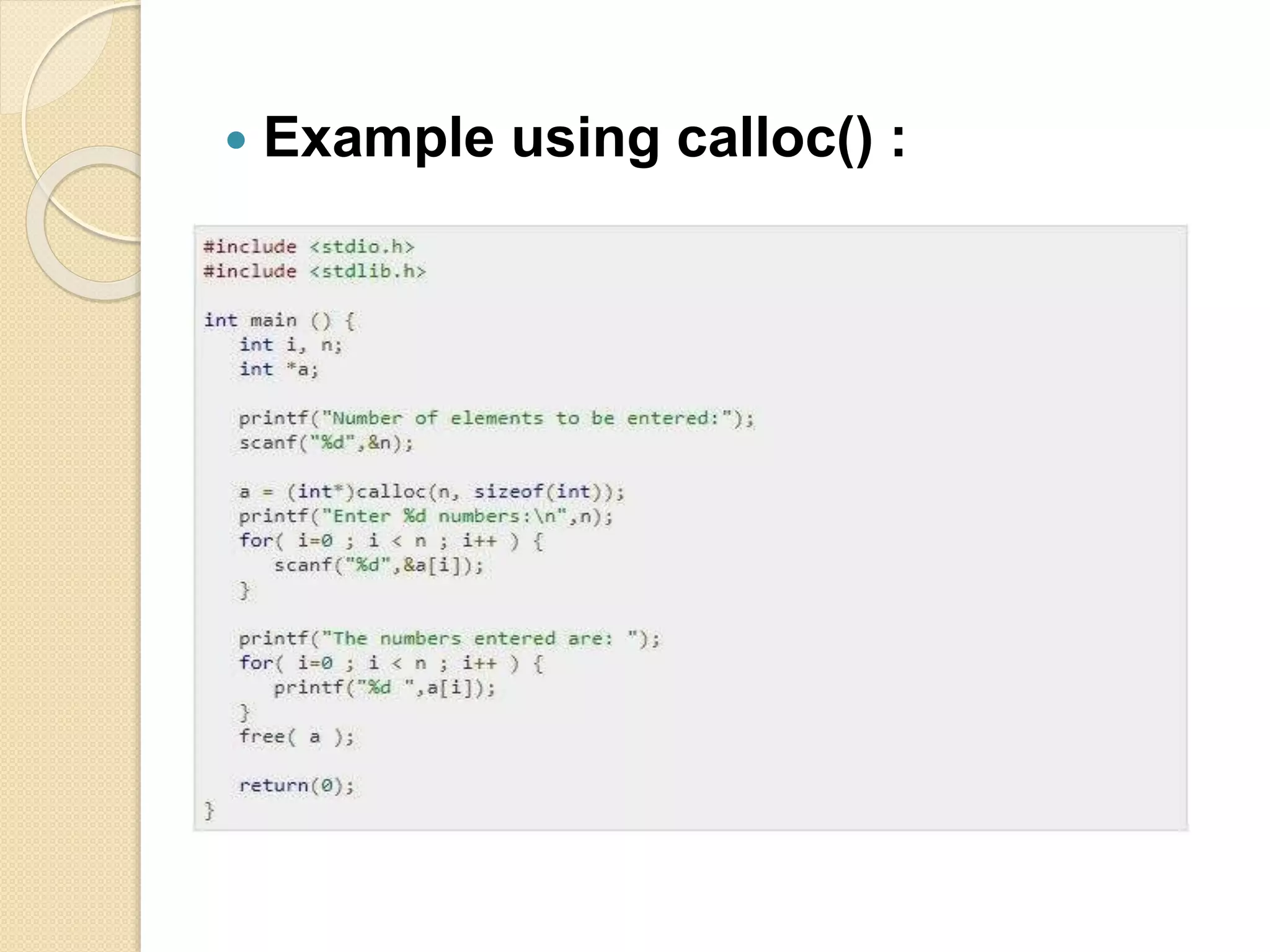
 Example using calloc() :
 realloc() function in C
 If memory is not sufficient for malloc()
or calloc(), you can reallocate the
memory by realloc() function. In short,
it changes the memory size.
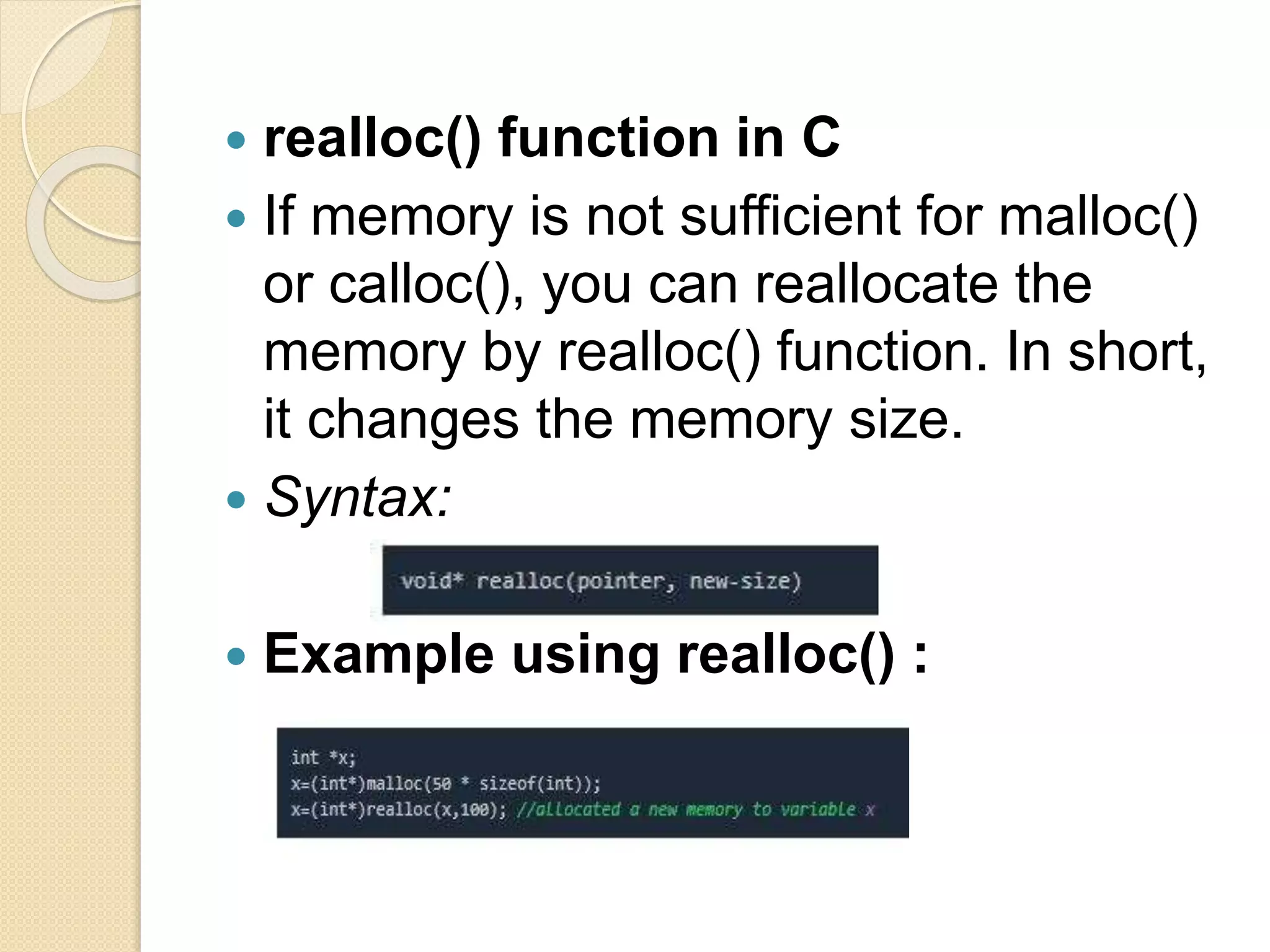
 Syntax:
 Example using realloc() :
 free() function in C
 The memory occupied by malloc() or
calloc() functions must be released by
calling free() function. Otherwise, it will
consume memory until program exit.
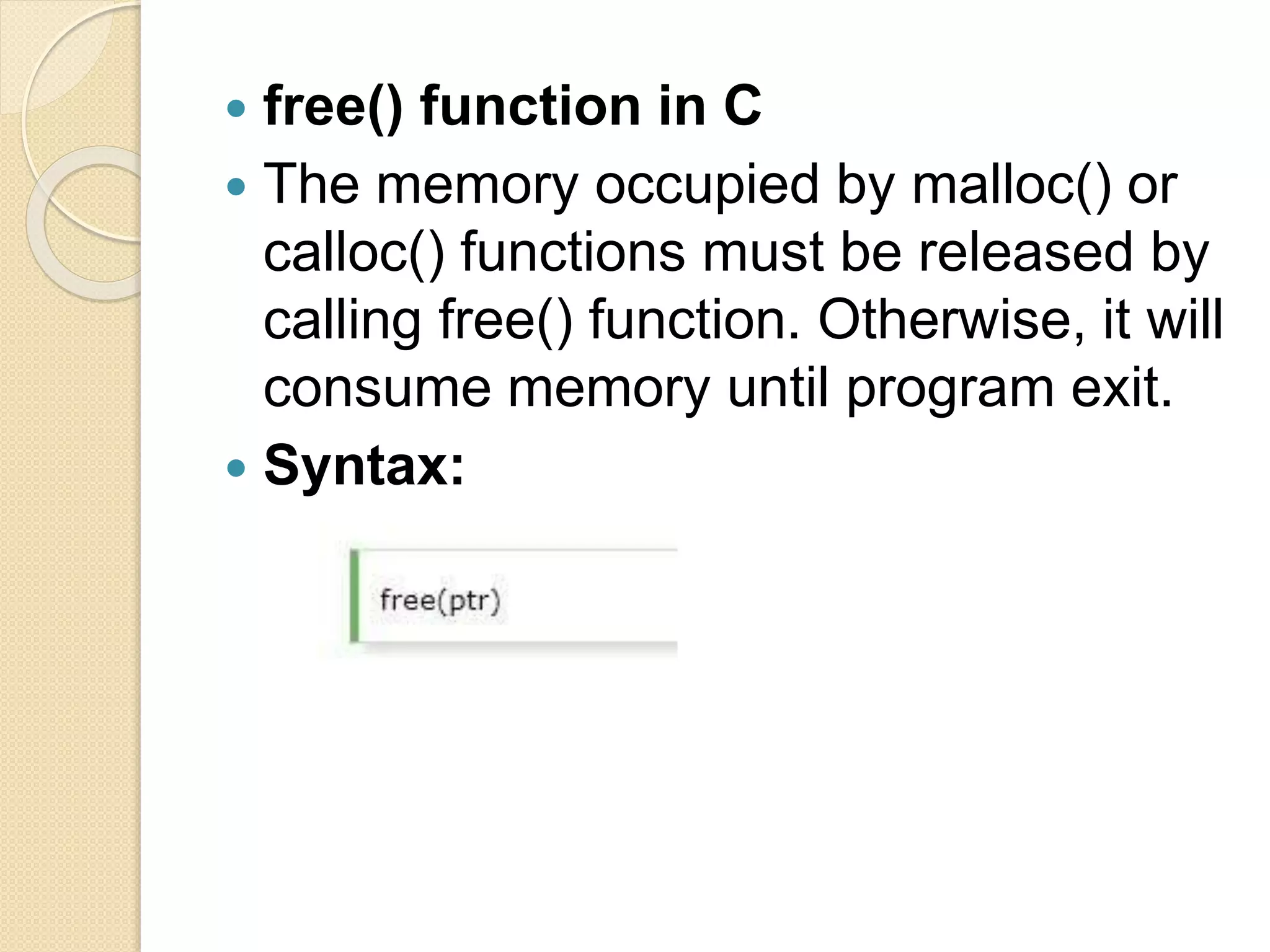
 Syntax:

Dynamic memory allocation in c language

  • 1.
  • 2.
    Definition  The processof allocating memory at runtime is known as dynamic memory allocation.  Library routines known as "memory management functions" are used for allocating and freeing memory during execution of a program.  These functions are defined in stdlib.h.
  • 4.
    Difference between staticand dynamic memory allocation
  • 5.
    Memory Allocation Process Global variables, static variables and program instructions get their memory in permanent storage area whereas local variables are stored in a memory area called Stack.  The memory space between these two region is known as Heap area.  This region is used for dynamic memory allocation during execution of the program.  The size of heap keep changing.
  • 7.
    Allocating block ofMemory  malloc() function is used for allocating block of memory at runtime. This function reserves a block of memory of given size and returns a pointer of type void. This means that we can assign it to any type of pointer using typecasting. If it fails to allocate enough space as specified, it returns a NULL pointer.  Syntax:  Example using malloc() :
  • 8.
     calloc() isanother memory allocation function that is used for allocating memory at runtime. callocfunction is normally used for allocating memory to derived data types such as arrays and structures. If it fails to allocate enough space as specified, it returns a NULL pointer.  Syntax:
  • 9.
  • 10.
     realloc() functionin C  If memory is not sufficient for malloc() or calloc(), you can reallocate the memory by realloc() function. In short, it changes the memory size.  Syntax:  Example using realloc() :
  • 11.
     free() functionin C  The memory occupied by malloc() or calloc() functions must be released by calling free() function. Otherwise, it will consume memory until program exit.  Syntax: