Structures in C
Definition
 Structure is a user-defined data type
in C which allows you to combine
different data types to store a
particular type of record.
 It is somewhat similar to an Array. The
only difference is that array is used to
store collection of similar data types
while structure can store collection of
any type of data.
Example:
Structure is used to represent a record.
 Suppose you want to store record
of Student which consists of student
name, address, roll number and age. You
can define a structure to hold this
information.
 Suppose you want to keep track of your
books in a library. You might want to track
the following attributes about each book −
 Title
 Author
 Subject
 Book ID
Defining a structure
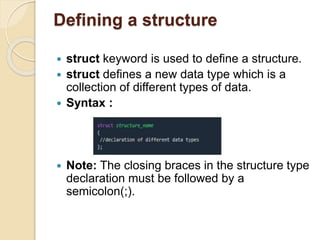
 struct keyword is used to define a structure.
 struct defines a new data type which is a
collection of different types of data.
 Syntax :
 Note: The closing braces in the structure type
declaration must be followed by a
semicolon(;).
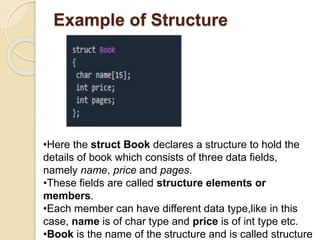
Example of Structure
•Here the struct Book declares a structure to hold the
details of book which consists of three data fields,
namely name, price and pages.
•These fields are called structure elements or
members.
•Each member can have different data type,like in this
case, name is of char type and price is of int type etc.
•Book is the name of the structure and is called structure
Declaring Structure Variables
 It is possible to declare variables of
a structure, after the structure is
defined.
 Structure variable declaration is
similar to the declaration of variables
of any other data types.
 Structure variables can be declared in
following two ways.
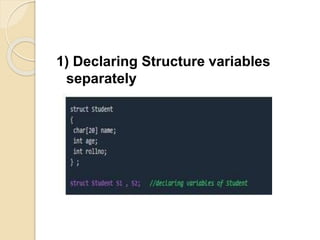
1) Declaring Structure variables
separately
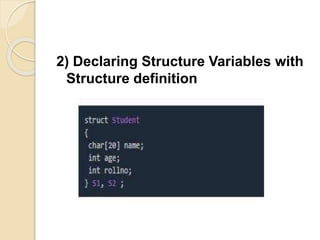
2) Declaring Structure Variables with
Structure definition
Accessing Structure Members
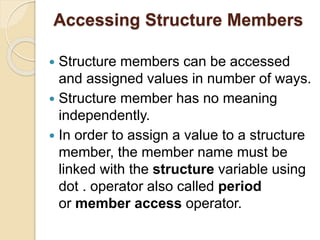
 Structure members can be accessed
and assigned values in number of ways.
 Structure member has no meaning
independently.
 In order to assign a value to a structure
member, the member name must be
linked with the structure variable using
dot . operator also called period
or member access operator.
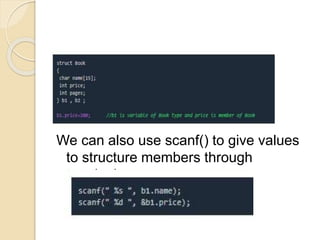
We can also use scanf() to give values
to structure members through
terminal.
Structure Initialization
 Like any other data type, structure
variable can also be initialized at
compile time.
Or
Array of Structure
 We can also declare an array of structure.
Each element of the array represents a
structure variable.
 Example : struct employee emp[5];
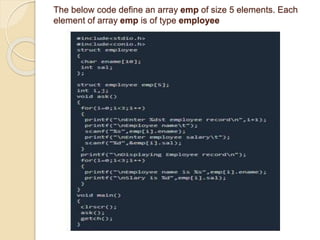
The below code define an array emp of size 5 elements. Each
element of array emp is of type employee
Nested Structures
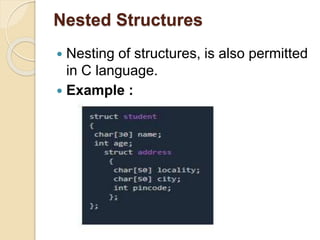
 Nesting of structures, is also permitted
in C language.
 Example :
Structure as function arguments
 We can pass a structure as a function
argument in similar way as we pass any other
variable or array.
 Example:

Structures in c language

  • 1.
  • 2.
    Definition  Structure isa user-defined data type in C which allows you to combine different data types to store a particular type of record.  It is somewhat similar to an Array. The only difference is that array is used to store collection of similar data types while structure can store collection of any type of data.
  • 3.
    Example: Structure is usedto represent a record.  Suppose you want to store record of Student which consists of student name, address, roll number and age. You can define a structure to hold this information.  Suppose you want to keep track of your books in a library. You might want to track the following attributes about each book −  Title  Author  Subject  Book ID
  • 4.
    Defining a structure struct keyword is used to define a structure.  struct defines a new data type which is a collection of different types of data.  Syntax :  Note: The closing braces in the structure type declaration must be followed by a semicolon(;).
  • 5.
    Example of Structure •Herethe struct Book declares a structure to hold the details of book which consists of three data fields, namely name, price and pages. •These fields are called structure elements or members. •Each member can have different data type,like in this case, name is of char type and price is of int type etc. •Book is the name of the structure and is called structure
  • 6.
    Declaring Structure Variables It is possible to declare variables of a structure, after the structure is defined.  Structure variable declaration is similar to the declaration of variables of any other data types.  Structure variables can be declared in following two ways.
  • 7.
    1) Declaring Structurevariables separately
  • 8.
    2) Declaring StructureVariables with Structure definition
  • 9.
    Accessing Structure Members Structure members can be accessed and assigned values in number of ways.  Structure member has no meaning independently.  In order to assign a value to a structure member, the member name must be linked with the structure variable using dot . operator also called period or member access operator.
  • 10.
    We can alsouse scanf() to give values to structure members through terminal.
  • 11.
    Structure Initialization  Likeany other data type, structure variable can also be initialized at compile time. Or
  • 12.
    Array of Structure We can also declare an array of structure. Each element of the array represents a structure variable.  Example : struct employee emp[5];
  • 13.
    The below codedefine an array emp of size 5 elements. Each element of array emp is of type employee
  • 14.
    Nested Structures  Nestingof structures, is also permitted in C language.  Example :
  • 15.
    Structure as functionarguments  We can pass a structure as a function argument in similar way as we pass any other variable or array.  Example: