Dynamic Memory Allocation
Active Learning Assessment
Semester:2
Computer Programming Utilization(2110003)
Made By:- Burhanuddin Kapadia Submitted to:- Prof. Parin Patel
Enrolment:- 170120119026
Branch:- Mechanical Department
Contents
 Introduction
 Memory Allocation process
 Malloc
 Calloc
 Difference between malloc & calloc
 References
Introduction
 C language requires numbers of elements in an array to be specified at compile time.
 Many languages permit a programmer to specify an arrays size at run time.
 Such language have the ability to calculate and assign, during execution, the memory
space required by the variables in a program.
 The process of allocating memory at run time is known as Dynamic Memory Allocation.
 C program have four routine library for memory allocation and freeing space.
i. Malloc
ii. Calloc
iii. Free
iv. realloc
 Their performance varies in both execution time and required memory.
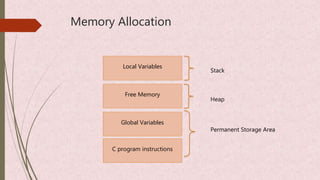
Memory Allocation
Local Variables
Free Memory
C program instructions
Global Variables
Stack
Heap
Permanent Storage Area
Malloc
 A block of memory is allocated by malloc
 Allocates single block of requested memory.
 It doesn't initialize memory at execution time, so it has
garbage value initially.
 Allocates specified number of bytes
 Returns NULL if memory is not sufficient.
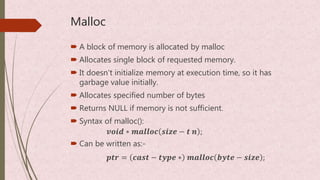
 Syntax of malloc():
𝒗𝒐𝒊𝒅 ∗ 𝒎𝒂𝒍𝒍𝒐𝒄 𝒔𝒊𝒛𝒆 − 𝒕 𝒏 ;
 Can be written as:-
𝒑𝒕𝒓 = 𝒄𝒂𝒔𝒕 − 𝒕𝒚𝒑𝒆 ∗ 𝒎𝒂𝒍𝒍𝒐𝒄 𝒃𝒚𝒕𝒆 − 𝒔𝒊𝒛𝒆 ;
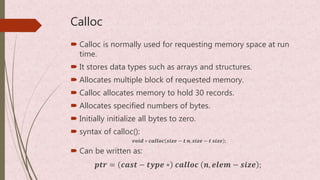
Calloc
 Calloc is normally used for requesting memory space at run
time.
 It stores data types such as arrays and structures.
 Allocates multiple block of requested memory.
 Calloc allocates memory to hold 30 records.
 Allocates specified numbers of bytes.
 Initially initialize all bytes to zero.
 syntax of calloc():
𝒗𝒐𝒊𝒅 ∗ 𝒄𝒂𝒍𝒍𝒐𝒄 𝒔𝒊𝒛𝒆 − 𝒕 𝒏, 𝒔𝒊𝒛𝒆 − 𝒕 𝒔𝒊𝒛𝒆 ;
 Can be written as:
𝒑𝒕𝒓 = 𝒄𝒂𝒔𝒕 − 𝒕𝒚𝒑𝒆 ∗ 𝒄𝒂𝒍𝒍𝒐𝒄 𝒏, 𝒆𝒍𝒆𝒎 − 𝒔𝒊𝒛𝒆 ;
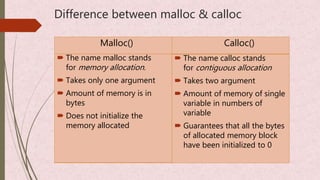
Malloc() Calloc()
 The name malloc stands
for memory allocation.
 Takes only one argument
 Amount of memory is in
bytes
 Does not initialize the
memory allocated
 The name calloc stands
for contiguous allocation
 Takes two argument
 Amount of memory of single
variable in numbers of
variable
 Guarantees that all the bytes
of allocated memory block
have been initialized to 0
Difference between malloc & calloc
Programs for malloc & calloc
/* Allocate memory for an int. */
int *ptr = (int*) malloc(sizeof
(int));
if (ptr == NULL)
{
printf("Could not allocate
memoryn");
exit(-1);
}
else
printf("Memory allocated
successfully.n");
/* Allocating memory for an array
of 10 elements of type int. */
int *ptr = (int*) calloc(10 ,sizeof (int));
if (ptr == NULL)
{
printf("Could not allocate
memoryn");
exit(-1);
}
else
printf("Memory allocated
successfully.n");
Reference
 https://www.javatpoint.com/cpp-tutorial
 https://www.studytonight.com/c/dynamic-memory-
allocation-in-c.php
 https://www.javatpoint.com/dynamic-memory-allocation-in-c
 https://www.geeksforgeeks.org/calloc-versus-malloc/
 https://www.programiz.com/c-programming/c-dynamic-
memory-allocation

Dynamic memory allocation

  • 1.
    Dynamic Memory Allocation ActiveLearning Assessment Semester:2 Computer Programming Utilization(2110003) Made By:- Burhanuddin Kapadia Submitted to:- Prof. Parin Patel Enrolment:- 170120119026 Branch:- Mechanical Department
  • 2.
    Contents  Introduction  MemoryAllocation process  Malloc  Calloc  Difference between malloc & calloc  References
  • 3.
    Introduction  C languagerequires numbers of elements in an array to be specified at compile time.  Many languages permit a programmer to specify an arrays size at run time.  Such language have the ability to calculate and assign, during execution, the memory space required by the variables in a program.  The process of allocating memory at run time is known as Dynamic Memory Allocation.  C program have four routine library for memory allocation and freeing space. i. Malloc ii. Calloc iii. Free iv. realloc  Their performance varies in both execution time and required memory.
  • 4.
    Memory Allocation Local Variables FreeMemory C program instructions Global Variables Stack Heap Permanent Storage Area
  • 5.
    Malloc  A blockof memory is allocated by malloc  Allocates single block of requested memory.  It doesn't initialize memory at execution time, so it has garbage value initially.  Allocates specified number of bytes  Returns NULL if memory is not sufficient.  Syntax of malloc(): 𝒗𝒐𝒊𝒅 ∗ 𝒎𝒂𝒍𝒍𝒐𝒄 𝒔𝒊𝒛𝒆 − 𝒕 𝒏 ;  Can be written as:- 𝒑𝒕𝒓 = 𝒄𝒂𝒔𝒕 − 𝒕𝒚𝒑𝒆 ∗ 𝒎𝒂𝒍𝒍𝒐𝒄 𝒃𝒚𝒕𝒆 − 𝒔𝒊𝒛𝒆 ;
  • 6.
    Calloc  Calloc isnormally used for requesting memory space at run time.  It stores data types such as arrays and structures.  Allocates multiple block of requested memory.  Calloc allocates memory to hold 30 records.  Allocates specified numbers of bytes.  Initially initialize all bytes to zero.  syntax of calloc(): 𝒗𝒐𝒊𝒅 ∗ 𝒄𝒂𝒍𝒍𝒐𝒄 𝒔𝒊𝒛𝒆 − 𝒕 𝒏, 𝒔𝒊𝒛𝒆 − 𝒕 𝒔𝒊𝒛𝒆 ;  Can be written as: 𝒑𝒕𝒓 = 𝒄𝒂𝒔𝒕 − 𝒕𝒚𝒑𝒆 ∗ 𝒄𝒂𝒍𝒍𝒐𝒄 𝒏, 𝒆𝒍𝒆𝒎 − 𝒔𝒊𝒛𝒆 ;
  • 7.
    Malloc() Calloc()  Thename malloc stands for memory allocation.  Takes only one argument  Amount of memory is in bytes  Does not initialize the memory allocated  The name calloc stands for contiguous allocation  Takes two argument  Amount of memory of single variable in numbers of variable  Guarantees that all the bytes of allocated memory block have been initialized to 0 Difference between malloc & calloc
  • 8.
    Programs for malloc& calloc /* Allocate memory for an int. */ int *ptr = (int*) malloc(sizeof (int)); if (ptr == NULL) { printf("Could not allocate memoryn"); exit(-1); } else printf("Memory allocated successfully.n"); /* Allocating memory for an array of 10 elements of type int. */ int *ptr = (int*) calloc(10 ,sizeof (int)); if (ptr == NULL) { printf("Could not allocate memoryn"); exit(-1); } else printf("Memory allocated successfully.n");
  • 9.
    Reference  https://www.javatpoint.com/cpp-tutorial  https://www.studytonight.com/c/dynamic-memory- allocation-in-c.php https://www.javatpoint.com/dynamic-memory-allocation-in-c  https://www.geeksforgeeks.org/calloc-versus-malloc/  https://www.programiz.com/c-programming/c-dynamic- memory-allocation