Unit VI Drugs used on
Urinary System.
Mr. Abhay Rajpoot
Nishat College of Nursing
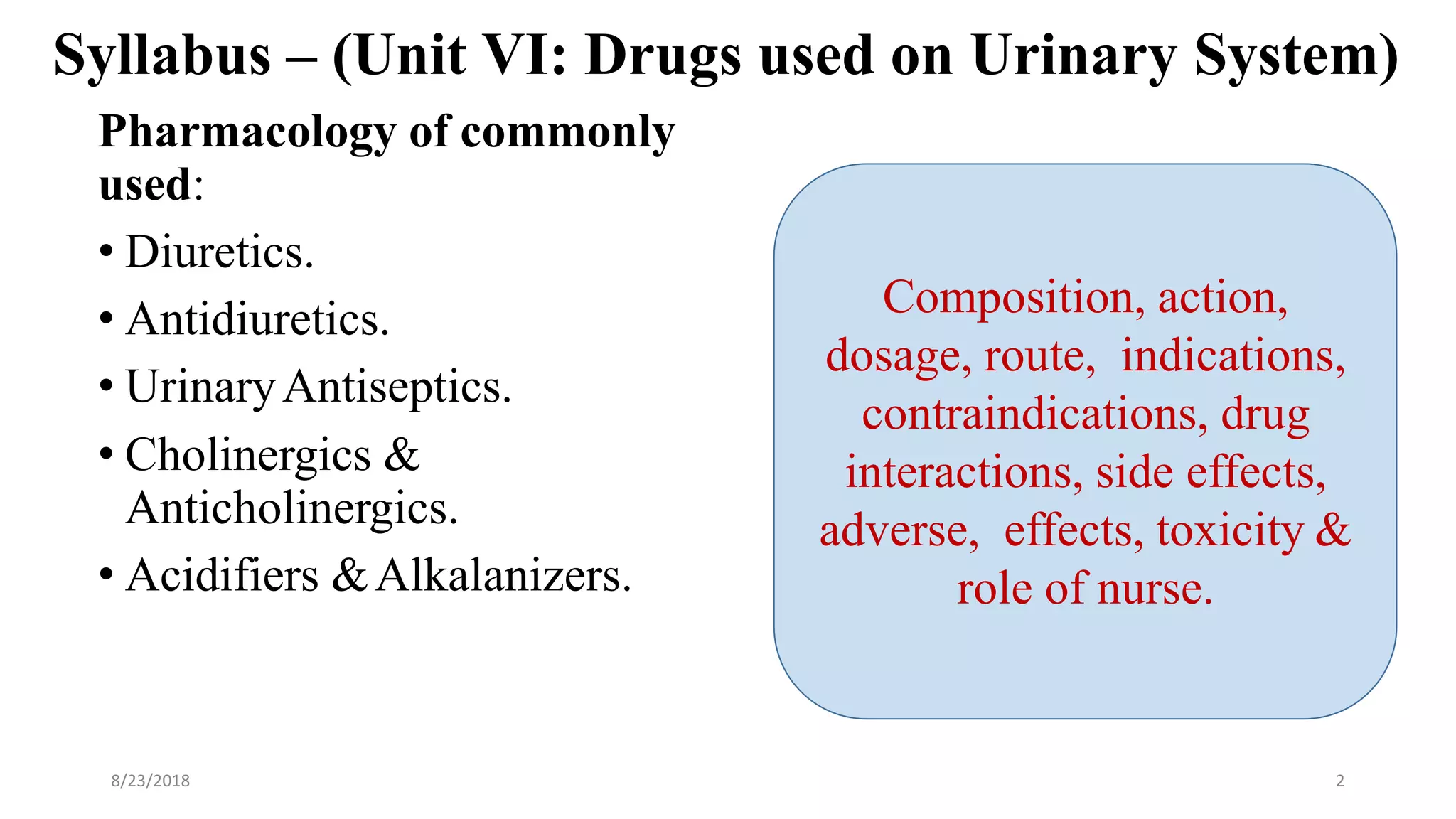
Syllabus – (Unit VI: Drugs used on Urinary System)
Pharmacology of commonly
used:
• Diuretics.
• Antidiuretics.
• UrinaryAntiseptics.
• Cholinergics &
Anticholinergics.
• Acidifiers &Alkalanizers.
Composition, action,
dosage, route, indications,
contraindications, drug
interactions, side effects,
adverse, effects, toxicity &
role of nurse.
28/23/2018
Diuretics
Diuretics (“water pills”) are the drugs which
increase the urine out put (or) urine volume .
What is natreuretic agent ?
Any drug when introduce into the body
increases the out put of sodium
ie., loss of sodium in urine.
Diuretics are very effective in the treatment of conditions like:-
 Chronic heart failure
 Nephrotic syndrome
Chronic hepatic diseases
 Hypertension
Pregnancy associated edema
Cirrhosis of the liver.
Therapeutic approaches
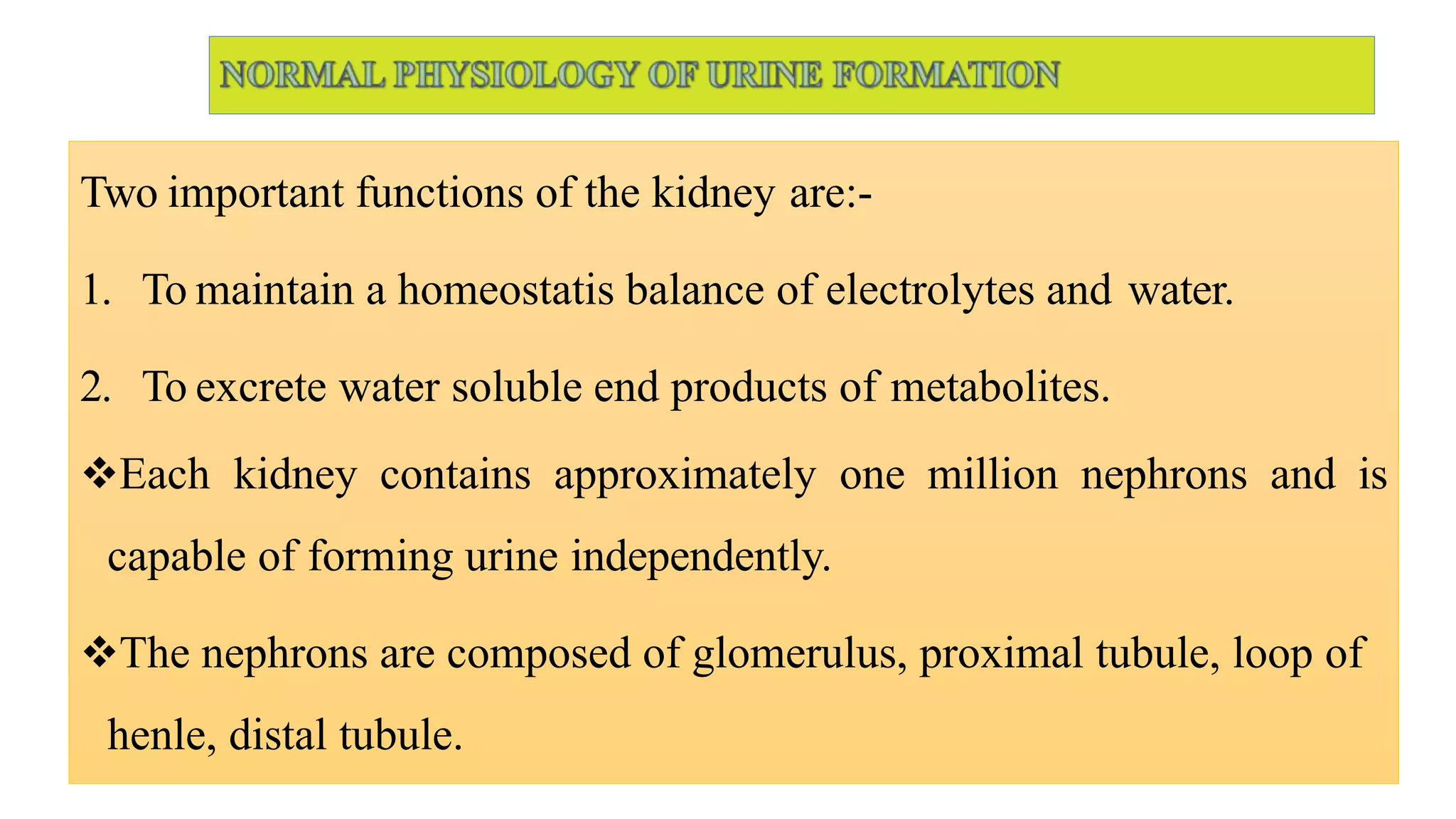
Two important functions of the kidney are:-
1. To maintain a homeostatis balance of electrolytes and water.
2. To excrete water soluble end products of metabolites.
Each kidney contains approximately one million nephrons and is
capable of forming urine independently.
The nephrons are composed of glomerulus, proximal tubule, loop of
henle, distal tubule.
Approximately 1200 ml of blood per minute flows through both
kidneys.
Ions such as sodium, chloride,calcium are reabsorbed.
Total amount of glucose, amino acids, vitamins, proteins are
reabsorbed.
If the urine contains above it represents the disorders.
For example proteins such as albumin in higher amounts causes
albuminaria.
1 cardiac output -5 lit/min.
Out of that 20% goes to kidneys i.e.1 lit/min.
1 lit of blood of has 40%of cells and 60%of plasma.
600 ml of plasma is not entered into glomerulus only a part of plasma can
enter into it and the rest pass through the efferent arteriole.
Only 20% can enter into glomerelus that is 120 ml.
This 120 ml/min (180L/day) makes glomerular filtrate (99%reabsorbed).
Urine output is about 1 – 1.5L/Day
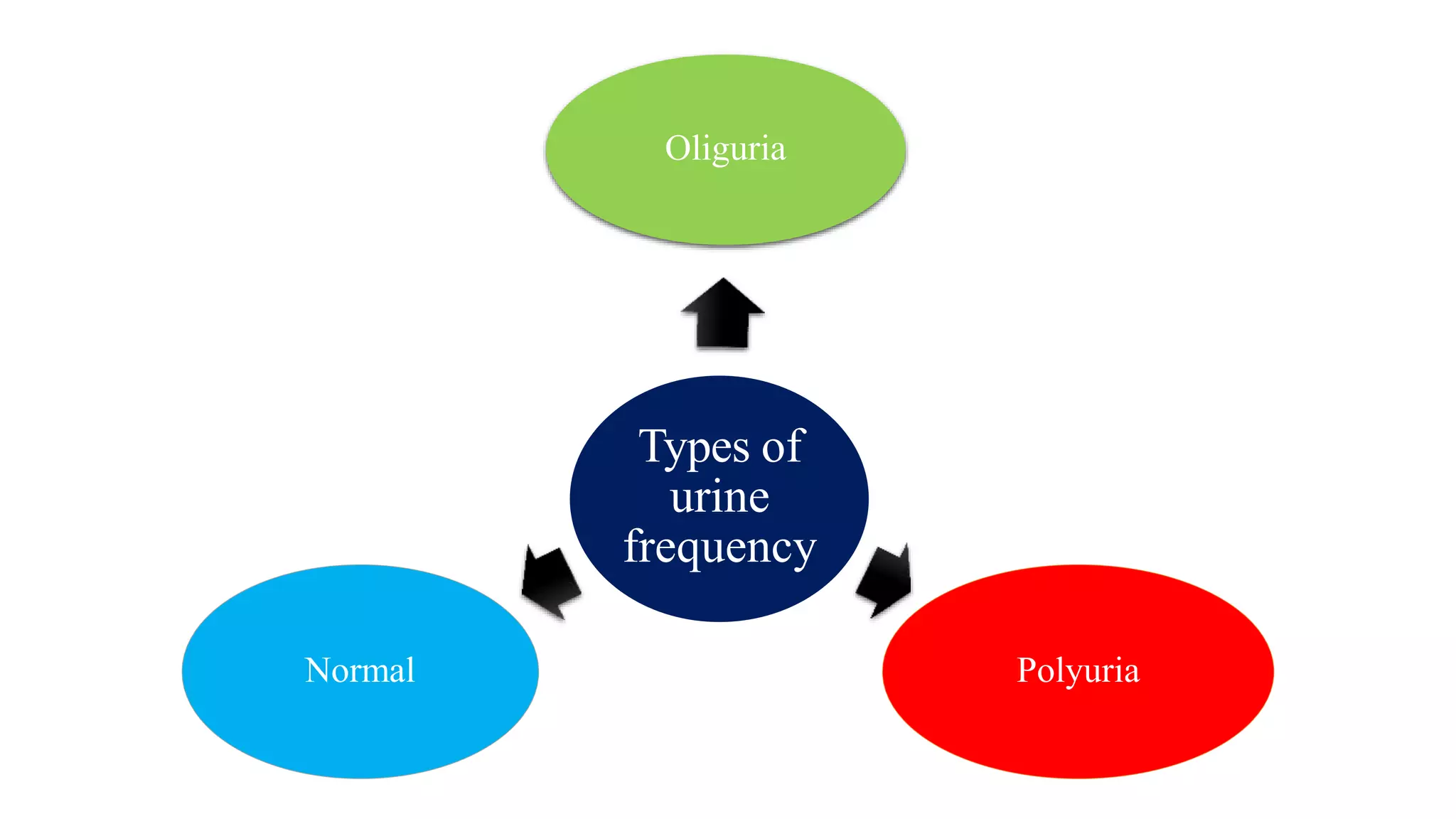
Types of
urine
frequency
Oliguria
PolyuriaNormal
Classification
of Diuretics
• According to types:
1. High ceiling (Loop Diuretics)
• Furosemide
• Torsemide.
2. Thiazide Diuretics.
• Chlorothiazide.
• Hydrochloride thiazide.
• Benzthiazide.
3. Osmotic Diuretics: Mannitol.
4. Carbonic Anhydrase inhibitors:Acetazolamide.
5. Potassium sparing Diuretics.
• Spironolactone.
• Amiloride.
Classification
of Diuretics:
contd.
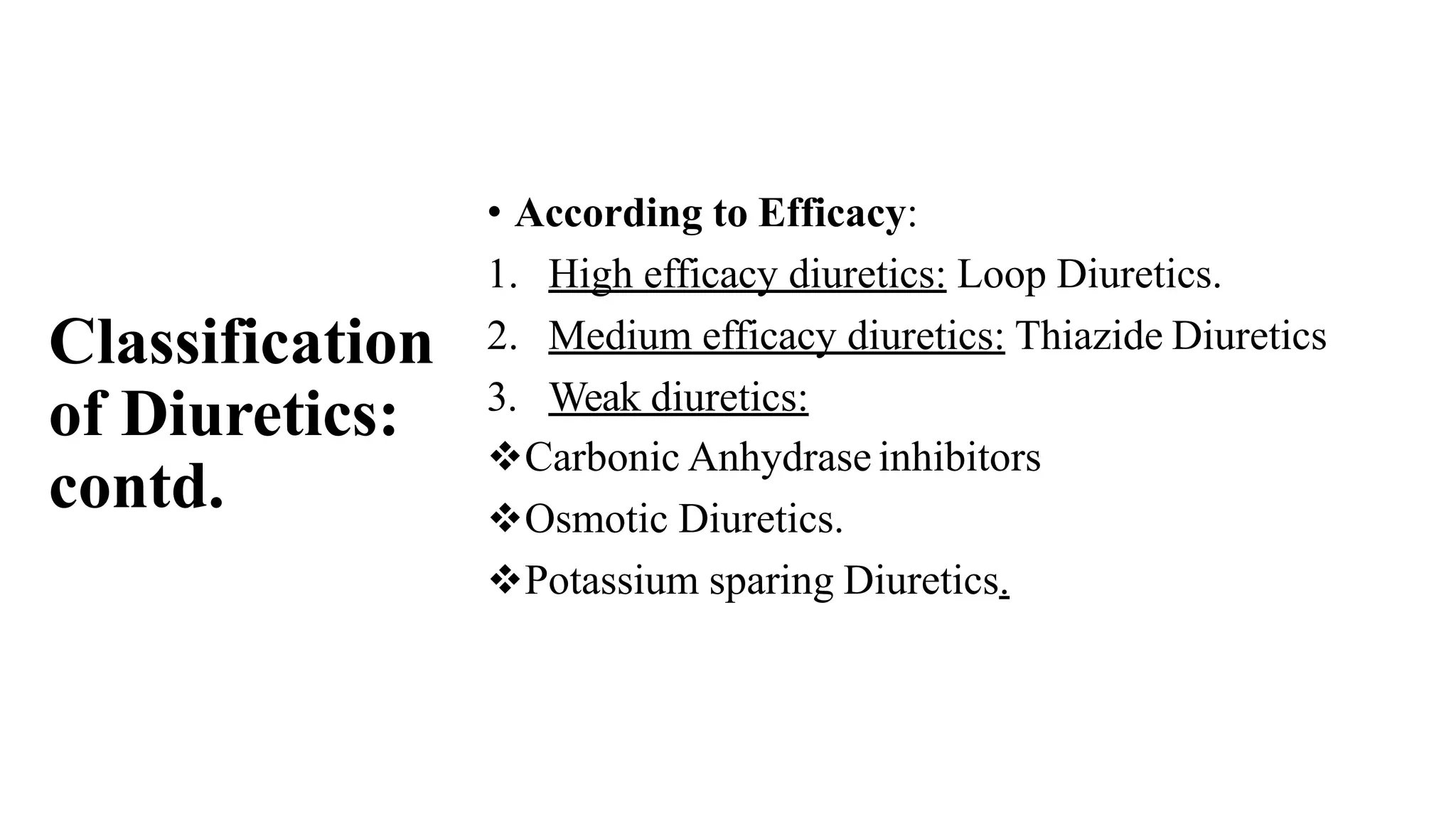
• According to Efficacy:
1. High efficacy diuretics: Loop Diuretics.
2. Medium efficacy diuretics: Thiazide Diuretics
3. Weak diuretics:
Carbonic Anhydrase inhibitors
Osmotic Diuretics.
Potassium sparing Diuretics.
Classification of Diuretics
Diuretics
• Mechanism of Action:
1. Loop Diuretics: They show their action by reducing absorption of
sodium at the level of loop of Henle. Eg. Furosemide, Torsemide.
2. Potassium sparing: Drug which antagonised the effect of
aldosterone, Eg. Spironolactone.
3. Thiazide: They inhibit reabsorption of sodium & Chloride ions
from distal convoluted tubules, Eg. Chlorothiazide.
4. Osmotic: It inhibits reabsorption of water and sodium. Eg.
Mannitol.
5. Carbonic Anhydrase inhibitor: They suppress the activityof
Carbonic Anhydrase, Eg.Acetazolamide.
8/23/2018 14
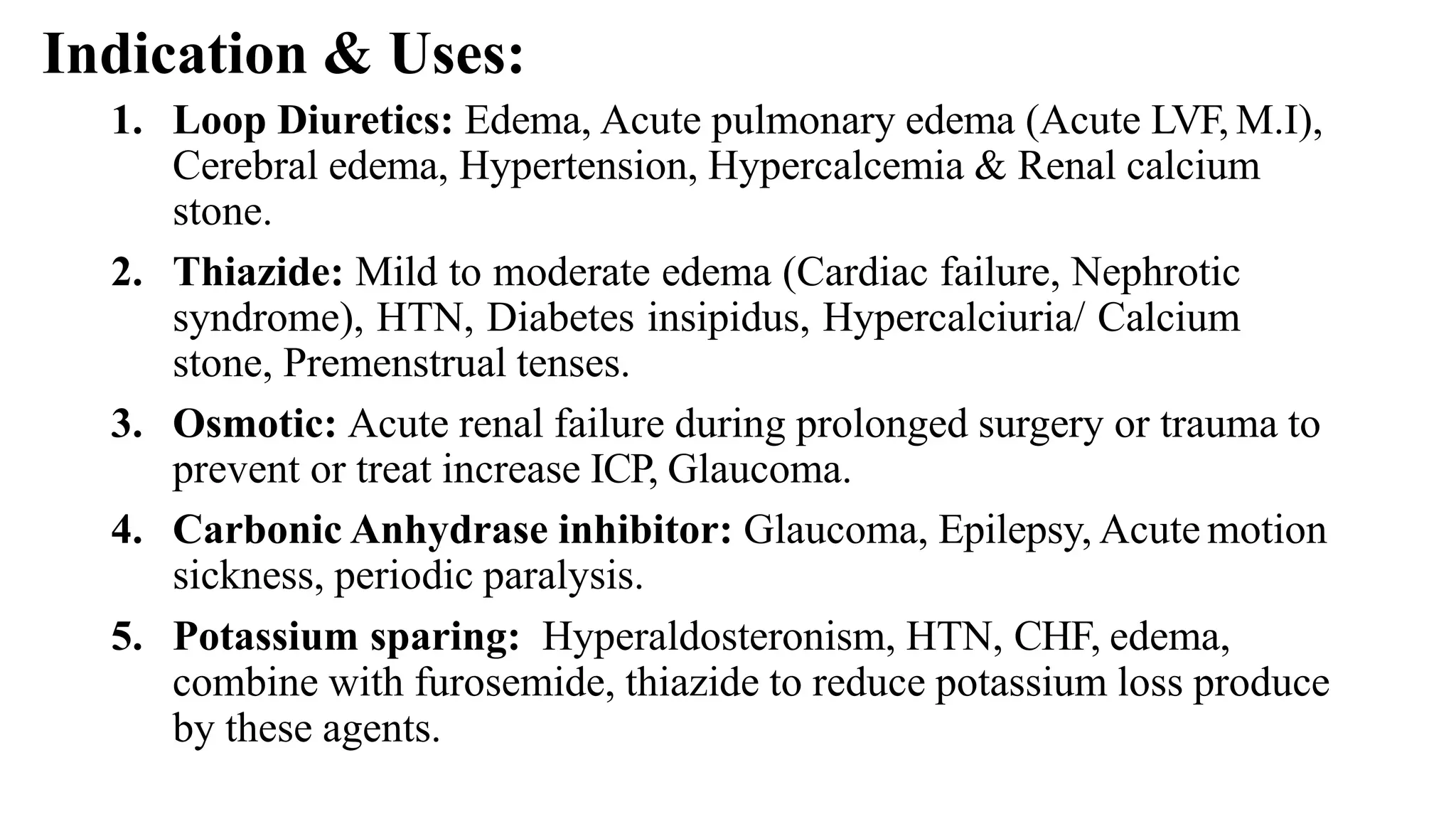
Indication & Uses:
1. Loop Diuretics: Edema, Acute pulmonary edema (Acute LVF, M.I),
Cerebral edema, Hypertension, Hypercalcemia & Renal calcium
stone.
2. Thiazide: Mild to moderate edema (Cardiac failure, Nephrotic
syndrome), HTN, Diabetes insipidus, Hypercalciuria/ Calcium
stone, Premenstrual tenses.
3. Osmotic: Acute renal failure during prolonged surgery or trauma to
prevent or treat increase ICP, Glaucoma.
4. Carbonic Anhydrase inhibitor: Glaucoma, Epilepsy, Acute motion
sickness, periodic paralysis.
5. Potassium sparing: Hyperaldosteronism, HTN, CHF, edema,
combine with furosemide, thiazide to reduce potassium loss produce
by these agents.
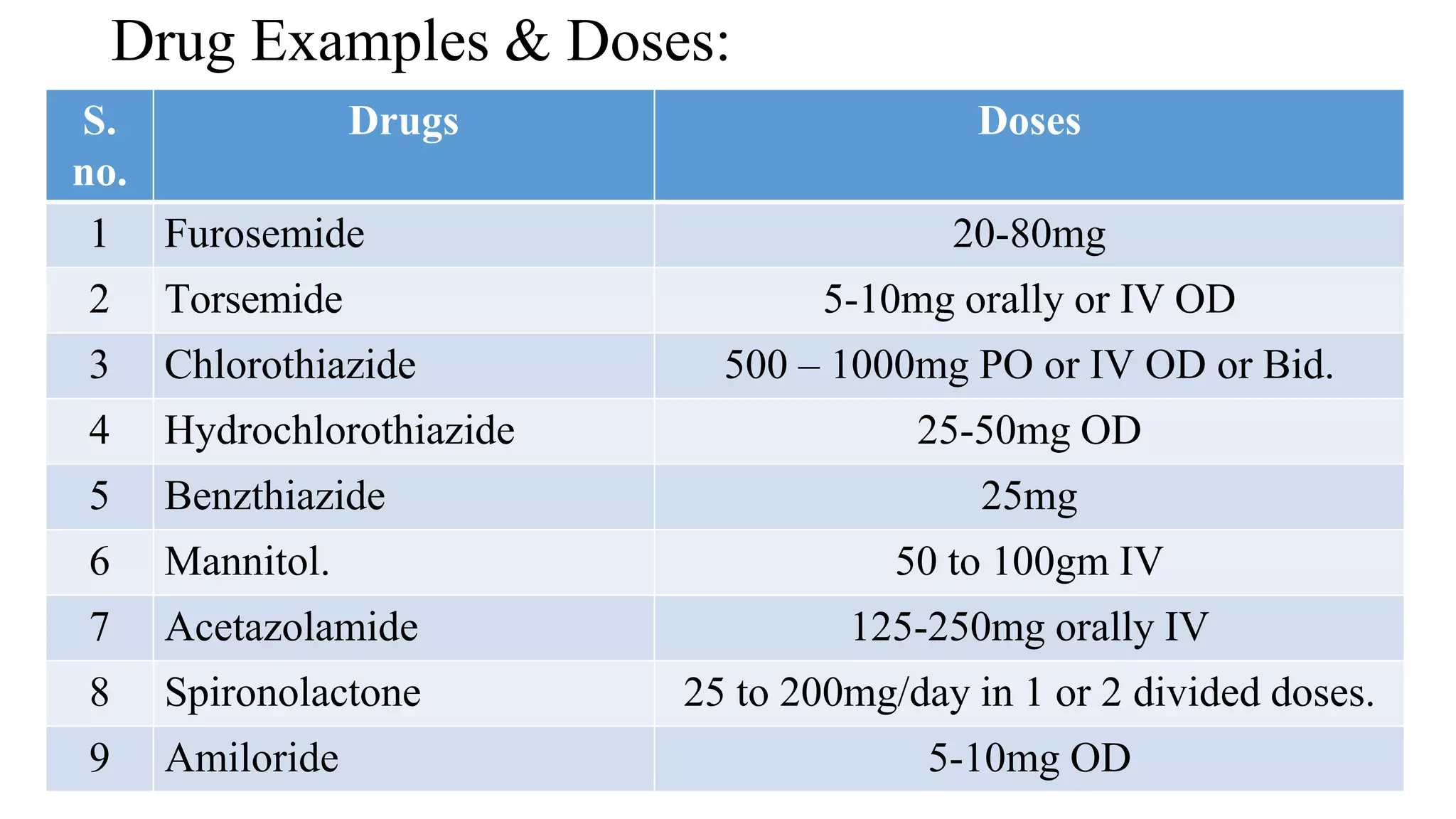
Drug Examples & Doses:
S.
no.
Drugs Doses
1 Furosemide 20-80mg
2 Torsemide 5-10mg orally or IV OD
3 Chlorothiazide 500 – 1000mg PO or IV OD or Bid.
4 Hydrochlorothiazide 25-50mg OD
5 Benzthiazide 25mg
6 Mannitol. 50 to 100gm IV
7 Acetazolamide 125-250mg orally IV
8 Spironolactone 25 to 200mg/day in 1 or 2 divided doses.
9 Amiloride 5-10mg OD
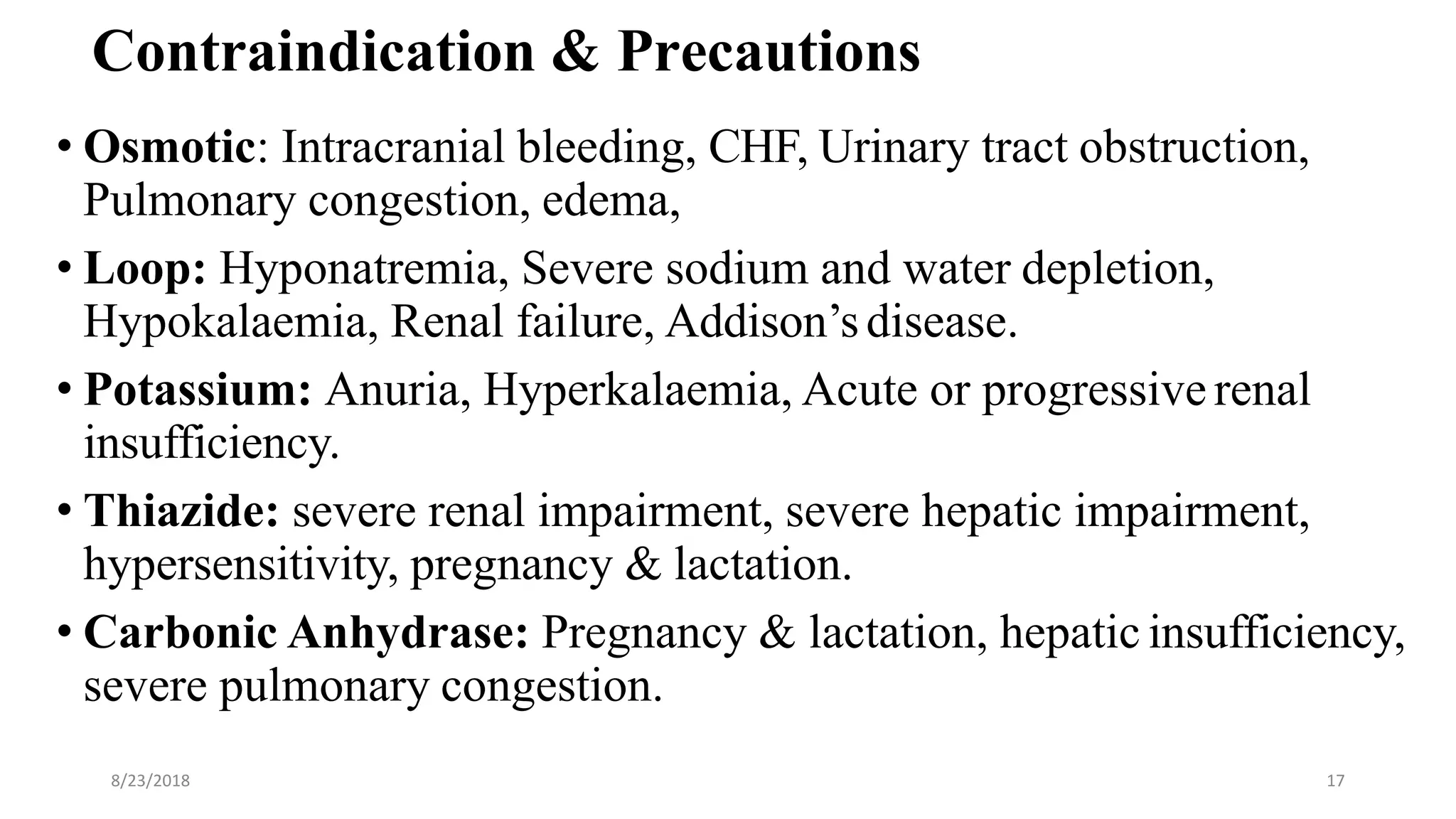
Contraindication & Precautions
• Osmotic: Intracranial bleeding, CHF, Urinary tract obstruction,
Pulmonary congestion, edema,
• Loop: Hyponatremia, Severe sodium and water depletion,
Hypokalaemia, Renal failure, Addison’sdisease.
• Potassium: Anuria, Hyperkalaemia, Acute or progressive renal
insufficiency.
• Thiazide: severe renal impairment, severe hepatic impairment,
hypersensitivity, pregnancy & lactation.
• Carbonic Anhydrase: Pregnancy & lactation, hepatic insufficiency,
severe pulmonary congestion.
8/23/2018 17
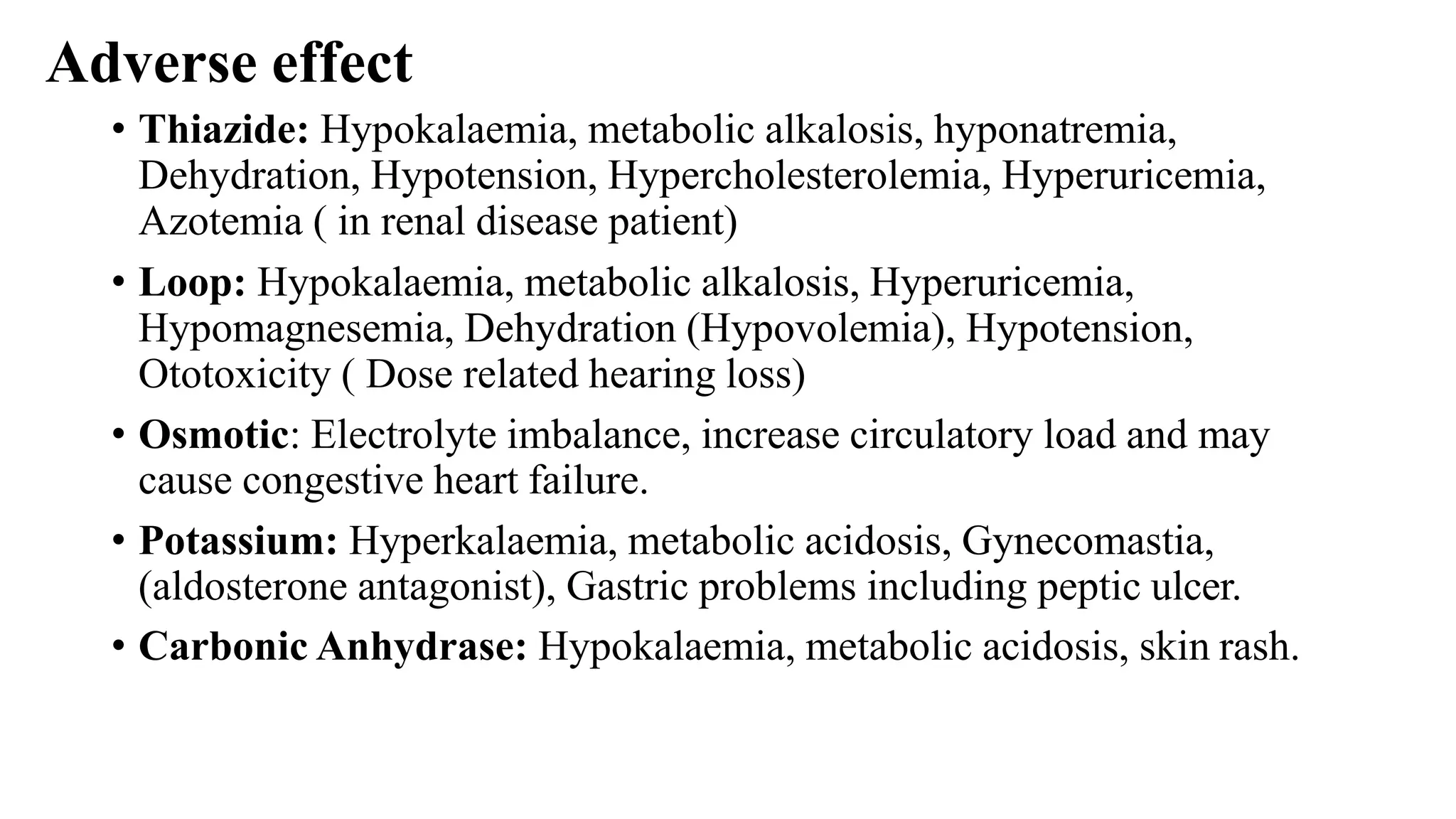
Adverse effect
• Thiazide: Hypokalaemia, metabolic alkalosis, hyponatremia,
Dehydration, Hypotension, Hypercholesterolemia, Hyperuricemia,
Azotemia ( in renal disease patient)
• Loop: Hypokalaemia, metabolic alkalosis, Hyperuricemia,
Hypomagnesemia, Dehydration (Hypovolemia), Hypotension,
Ototoxicity ( Dose related hearing loss)
• Osmotic: Electrolyte imbalance, increase circulatory load and may
cause congestive heart failure.
• Potassium: Hyperkalaemia, metabolic acidosis, Gynecomastia,
(aldosterone antagonist), Gastric problems including peptic ulcer.
• Carbonic Anhydrase: Hypokalaemia, metabolic acidosis, skin rash.
Drug interactions:
1. Simultaneously use of spironolactone and digoxin increases the risks of
digoxin toxicity.
2. Spironolactone effects may decrease with salicylates use.
3. Salicylates may cause carbonic anhydrase inhibitor toxicity.
4. These drugs may cause lithium toxicity by decreasing excretion of
lithium.
5. Use of digoxin may cause additive hypokalaemia, these increasing the
risk of digoxin toxicity and arrthymias.
6. Anticoagulants effect may increases with the use of these drugs
simultaneously.
7. Risk of ototoxicity may occurs when use with aminoglycosides.
Nursing Responsibilities.
• Monitor urine output, blood pressure, hrly check for electrolyte
imbalance.
• Obtain vital signs.
• Monitor laboratory values sply. Potassium, sodium (diuretics
can cause electrolyte imbalance)
• Observe for changes in level of consciousness, dizziness,
fatigue, and postural hypotension because reduction in blood
volume due to diuretic therapy may produce changes in level of
consciousness or syncope.
• Observe for sign of hypersensitivity reaction.
• Monitor hearing and vision ( Loop diuretic are ototoxic)
8/23/2018 20
Contd.
• Instruct patient to:
1. Immediately report any severe shortness of breath, profound fatigue,
edema in extremities, potential sign of heart failure, or pul. oedema.
2. Avoid excessive heat which contributes to fluid loss through
perspiration.
3. Consume adequate amount of plain water.
4. Stop medication if severe hypotension exists.
5. Immediately report any change in consciousness, specially felling
faint.
6. Change position slowly.
7. Receiving loop or thiazide diuretic to eat food high in potassium.
8.Receiving potassium – sparing diuretic to avoid foods high in
potassium.
9.To consult which health care provider before using vitamin/minerals
supplements or electrolyte fortified sports drinks.
10. To report any changes in hearing or vision.
Contd.
Antidiuretics
Antidiuretics
• Introduction: An antidiuretics are the agent that reduce urine
volume, opposing diuresis.
• Mechanism of Action: Reduces urine flow by acting
reabsorption of water by kidney tubules
• Indication & Uses:
1. Cranial Diabetes insipidus.
2. Primary nocturnal enuresis (bed wetting)
3. Nocturia associated with multiple sclerosis.
8/23/2018 24
Drug Examples & Doses:
S.
no.
Drugs Doses
1 Antidiuretic Hormone
(Vasopressin)
5-10units IM/ SC
2 Desmopressin 100-400mcg orally
1-4mcg IV.
8/23/2018 25
Contd
• Contraindication & Precautions: Hypersensitivity, impaired renal
function, with ongoing diuretic treatment, Caution in CV disease,
edema, hypertension, cystic fibrosis, fluid and electrolyte
imbalance, pregnancy and lactation.
• Adverse effect: Nasal irritation, Rhinitis, Abdominal cramps, Urge
defecate, fluid retention, congestion, Ulceration, nausea, pallor,
Backache in females (due to uterine contraction)
8/23/2018 26
Nursing Responsibilities.
• Monitor electrolyte imbalance.
• Monitor vital signs and B.P. regularly.
• Observe for sign of hypersensitivity reactions.
• Monitor laboratory values.
• Stop medication if hypertension exists.
8/23/2018 27
Urinary Antiseptics
Urinary Antiseptics
• Introduction: Drugs used for urinary tract infects which kill or
inhibit the growth of microorganism.
• Mechanism ofAction: There are bacteriostatic drug. They inhibit
the growth of different species of bacteria in urine.
• Indication & Uses:
1. Sulphonamide are used to treat infection causes by susceptible
organism in urinary tract.
2. Methenamine is used to prevent recurrent urinary tract infection
• Adverse effects: Fever, Rash, Crystalluria, Nausea, Vomiting,
Photosensitivity reaction, Stevens Johnson's syndrome
8/23/2018 29
Drug Examples & Doses:
8/
2
3/201
8
30
S. no. Drugs Doses
Sulphonamides
1 Cotrimoxazole Co-Trimoxazole ( Trimethoprim/Sulfamethonazole)
80mg+400mg
2 Sulfadiazine 500-1000mg
3 Sulfamethoxazole 1-2gm orally every 6hrly.
Miscellaneous
4 Flouroquinolones Ciprofoxacin – 250-500mg, Levofloxacin 250-500mg
5 Methenamine 1gm orally
6 Nalidic acid Nalidixic Acid 500mg
7 Nitrofurantoin 50-100 mg orally.
Contd
• Contraindication & Precautions:
1. Contraindicated in pregnant and breast feeding women, children
younger than age 2yr.
2. History of Stevens Johnson syndrome.
3. Hypersensitive patients with sulphonamides.
4. Cautiously use in patient with mild to moderate renal or hepatic
disorders, severe allergies, blood Dyscrasias urinary obstruction.
• Drug interaction:
• Sulphonamides may increase the effect of oral hypoglycemics.
• It may decrease the effectiveness of hormonal contraceptives.
• Increase risk of bleeding in patient who are taking anticoagulants.
8/23/2018 31
Nursing Responsibilities.
• Assess the sign and symptoms of urinary tract infections.
• Advice to patient for intake of fluid 2000 – 3000 ml/day to
reduce Crystalluria.
• Teach the patient proper hygiene measures to reduce the risk of
reinfection.
• Monitor the patient urinary elimination patterns.
• Instruct to women who are taking oral conceptives to use an
alternative method such as barrier method during the entire
course of therapy.
8/23/2018 32
Assignment: Role of Cholinergics &
Anticholinergics in Urinary system.
Acidifiers & Alkalanizers
Urinary acidifiers & alkalanizers
• Acidifiers Sodium citrate, potassium citrate, tartaric acid
• Alkalanizers Sodium bicarbonate, acetazolamide
Acidic Alkaline pH immaterial
Nitrofurantoin Cotrimoxazole Chloramphenicol
Methanamine Aminoglycosides Ampicillin
Tetracyclines Cephalosporins
Cloxacillin Fluoroquinolones
Assignment
•Explain in detail: Urinary acidifiers &
alkalanizers (Acidifiers Sodium citrate,
potassium citrate, tartaric acid &
Alkalanizers Sodium bicarbonate,
acetazolamide)
•Explain in detail: Nitrofurantoin,
Cotrimoxazole & Chloramphenicol.
References
1. Dr. P.K. Panwar, Essentials of pharmacology for nurses,AITBS pub. 2017,
India, Pg no. 63 – 70.
2. Dr. Suresh k sharma, Textbook of pharmacology, pathology & genetics for
nurses, Jaypee pub. 2016 India Pg no 206 – 226.
3. Tara v. Shanbhag, Smita shenoy, Pharmacology preparation manual for
undergraduate, Elsevier pub. 2014. Pg no. 150 – 160.
4. Marilyn Herbert – Ashton, Nancy Clarkson, Pharmacology, Jones & Barlet
pub 2010 India, Pg no 486.
5. Govind s. mittal, Pharmacology at a glance, Paras medical book pub. 2009
India Pg no.20.
6. Madhuri Inamdar, Pharmacology in nursing, Vora medical pub. 2006 India
1st edition, Pg no 111 – 119.
Thanks.

Drugs used on urinary system

  • 1.
    Unit VI Drugsused on Urinary System. Mr. Abhay Rajpoot Nishat College of Nursing
  • 2.
    Syllabus – (UnitVI: Drugs used on Urinary System) Pharmacology of commonly used: • Diuretics. • Antidiuretics. • UrinaryAntiseptics. • Cholinergics & Anticholinergics. • Acidifiers &Alkalanizers. Composition, action, dosage, route, indications, contraindications, drug interactions, side effects, adverse, effects, toxicity & role of nurse. 28/23/2018
  • 3.
  • 4.
    Diuretics (“water pills”)are the drugs which increase the urine out put (or) urine volume . What is natreuretic agent ? Any drug when introduce into the body increases the out put of sodium ie., loss of sodium in urine.
  • 5.
    Diuretics are veryeffective in the treatment of conditions like:-  Chronic heart failure  Nephrotic syndrome Chronic hepatic diseases  Hypertension Pregnancy associated edema Cirrhosis of the liver. Therapeutic approaches
  • 6.
    Two important functionsof the kidney are:- 1. To maintain a homeostatis balance of electrolytes and water. 2. To excrete water soluble end products of metabolites. Each kidney contains approximately one million nephrons and is capable of forming urine independently. The nephrons are composed of glomerulus, proximal tubule, loop of henle, distal tubule.
  • 7.
    Approximately 1200 mlof blood per minute flows through both kidneys. Ions such as sodium, chloride,calcium are reabsorbed. Total amount of glucose, amino acids, vitamins, proteins are reabsorbed. If the urine contains above it represents the disorders. For example proteins such as albumin in higher amounts causes albuminaria.
  • 8.
    1 cardiac output-5 lit/min. Out of that 20% goes to kidneys i.e.1 lit/min. 1 lit of blood of has 40%of cells and 60%of plasma. 600 ml of plasma is not entered into glomerulus only a part of plasma can enter into it and the rest pass through the efferent arteriole. Only 20% can enter into glomerelus that is 120 ml. This 120 ml/min (180L/day) makes glomerular filtrate (99%reabsorbed). Urine output is about 1 – 1.5L/Day
  • 9.
  • 10.
    Classification of Diuretics • Accordingto types: 1. High ceiling (Loop Diuretics) • Furosemide • Torsemide. 2. Thiazide Diuretics. • Chlorothiazide. • Hydrochloride thiazide. • Benzthiazide. 3. Osmotic Diuretics: Mannitol. 4. Carbonic Anhydrase inhibitors:Acetazolamide. 5. Potassium sparing Diuretics. • Spironolactone. • Amiloride.
  • 11.
    Classification of Diuretics: contd. • Accordingto Efficacy: 1. High efficacy diuretics: Loop Diuretics. 2. Medium efficacy diuretics: Thiazide Diuretics 3. Weak diuretics: Carbonic Anhydrase inhibitors Osmotic Diuretics. Potassium sparing Diuretics.
  • 12.
  • 14.
    Diuretics • Mechanism ofAction: 1. Loop Diuretics: They show their action by reducing absorption of sodium at the level of loop of Henle. Eg. Furosemide, Torsemide. 2. Potassium sparing: Drug which antagonised the effect of aldosterone, Eg. Spironolactone. 3. Thiazide: They inhibit reabsorption of sodium & Chloride ions from distal convoluted tubules, Eg. Chlorothiazide. 4. Osmotic: It inhibits reabsorption of water and sodium. Eg. Mannitol. 5. Carbonic Anhydrase inhibitor: They suppress the activityof Carbonic Anhydrase, Eg.Acetazolamide. 8/23/2018 14
  • 15.
    Indication & Uses: 1.Loop Diuretics: Edema, Acute pulmonary edema (Acute LVF, M.I), Cerebral edema, Hypertension, Hypercalcemia & Renal calcium stone. 2. Thiazide: Mild to moderate edema (Cardiac failure, Nephrotic syndrome), HTN, Diabetes insipidus, Hypercalciuria/ Calcium stone, Premenstrual tenses. 3. Osmotic: Acute renal failure during prolonged surgery or trauma to prevent or treat increase ICP, Glaucoma. 4. Carbonic Anhydrase inhibitor: Glaucoma, Epilepsy, Acute motion sickness, periodic paralysis. 5. Potassium sparing: Hyperaldosteronism, HTN, CHF, edema, combine with furosemide, thiazide to reduce potassium loss produce by these agents.
  • 16.
    Drug Examples &Doses: S. no. Drugs Doses 1 Furosemide 20-80mg 2 Torsemide 5-10mg orally or IV OD 3 Chlorothiazide 500 – 1000mg PO or IV OD or Bid. 4 Hydrochlorothiazide 25-50mg OD 5 Benzthiazide 25mg 6 Mannitol. 50 to 100gm IV 7 Acetazolamide 125-250mg orally IV 8 Spironolactone 25 to 200mg/day in 1 or 2 divided doses. 9 Amiloride 5-10mg OD
  • 17.
    Contraindication & Precautions •Osmotic: Intracranial bleeding, CHF, Urinary tract obstruction, Pulmonary congestion, edema, • Loop: Hyponatremia, Severe sodium and water depletion, Hypokalaemia, Renal failure, Addison’sdisease. • Potassium: Anuria, Hyperkalaemia, Acute or progressive renal insufficiency. • Thiazide: severe renal impairment, severe hepatic impairment, hypersensitivity, pregnancy & lactation. • Carbonic Anhydrase: Pregnancy & lactation, hepatic insufficiency, severe pulmonary congestion. 8/23/2018 17
  • 18.
    Adverse effect • Thiazide:Hypokalaemia, metabolic alkalosis, hyponatremia, Dehydration, Hypotension, Hypercholesterolemia, Hyperuricemia, Azotemia ( in renal disease patient) • Loop: Hypokalaemia, metabolic alkalosis, Hyperuricemia, Hypomagnesemia, Dehydration (Hypovolemia), Hypotension, Ototoxicity ( Dose related hearing loss) • Osmotic: Electrolyte imbalance, increase circulatory load and may cause congestive heart failure. • Potassium: Hyperkalaemia, metabolic acidosis, Gynecomastia, (aldosterone antagonist), Gastric problems including peptic ulcer. • Carbonic Anhydrase: Hypokalaemia, metabolic acidosis, skin rash.
  • 19.
    Drug interactions: 1. Simultaneouslyuse of spironolactone and digoxin increases the risks of digoxin toxicity. 2. Spironolactone effects may decrease with salicylates use. 3. Salicylates may cause carbonic anhydrase inhibitor toxicity. 4. These drugs may cause lithium toxicity by decreasing excretion of lithium. 5. Use of digoxin may cause additive hypokalaemia, these increasing the risk of digoxin toxicity and arrthymias. 6. Anticoagulants effect may increases with the use of these drugs simultaneously. 7. Risk of ototoxicity may occurs when use with aminoglycosides.
  • 20.
    Nursing Responsibilities. • Monitorurine output, blood pressure, hrly check for electrolyte imbalance. • Obtain vital signs. • Monitor laboratory values sply. Potassium, sodium (diuretics can cause electrolyte imbalance) • Observe for changes in level of consciousness, dizziness, fatigue, and postural hypotension because reduction in blood volume due to diuretic therapy may produce changes in level of consciousness or syncope. • Observe for sign of hypersensitivity reaction. • Monitor hearing and vision ( Loop diuretic are ototoxic) 8/23/2018 20
  • 21.
    Contd. • Instruct patientto: 1. Immediately report any severe shortness of breath, profound fatigue, edema in extremities, potential sign of heart failure, or pul. oedema. 2. Avoid excessive heat which contributes to fluid loss through perspiration. 3. Consume adequate amount of plain water. 4. Stop medication if severe hypotension exists. 5. Immediately report any change in consciousness, specially felling faint. 6. Change position slowly. 7. Receiving loop or thiazide diuretic to eat food high in potassium.
  • 22.
    8.Receiving potassium –sparing diuretic to avoid foods high in potassium. 9.To consult which health care provider before using vitamin/minerals supplements or electrolyte fortified sports drinks. 10. To report any changes in hearing or vision. Contd.
  • 23.
  • 24.
    Antidiuretics • Introduction: Anantidiuretics are the agent that reduce urine volume, opposing diuresis. • Mechanism of Action: Reduces urine flow by acting reabsorption of water by kidney tubules • Indication & Uses: 1. Cranial Diabetes insipidus. 2. Primary nocturnal enuresis (bed wetting) 3. Nocturia associated with multiple sclerosis. 8/23/2018 24
  • 25.
    Drug Examples &Doses: S. no. Drugs Doses 1 Antidiuretic Hormone (Vasopressin) 5-10units IM/ SC 2 Desmopressin 100-400mcg orally 1-4mcg IV. 8/23/2018 25
  • 26.
    Contd • Contraindication &Precautions: Hypersensitivity, impaired renal function, with ongoing diuretic treatment, Caution in CV disease, edema, hypertension, cystic fibrosis, fluid and electrolyte imbalance, pregnancy and lactation. • Adverse effect: Nasal irritation, Rhinitis, Abdominal cramps, Urge defecate, fluid retention, congestion, Ulceration, nausea, pallor, Backache in females (due to uterine contraction) 8/23/2018 26
  • 27.
    Nursing Responsibilities. • Monitorelectrolyte imbalance. • Monitor vital signs and B.P. regularly. • Observe for sign of hypersensitivity reactions. • Monitor laboratory values. • Stop medication if hypertension exists. 8/23/2018 27
  • 28.
  • 29.
    Urinary Antiseptics • Introduction:Drugs used for urinary tract infects which kill or inhibit the growth of microorganism. • Mechanism ofAction: There are bacteriostatic drug. They inhibit the growth of different species of bacteria in urine. • Indication & Uses: 1. Sulphonamide are used to treat infection causes by susceptible organism in urinary tract. 2. Methenamine is used to prevent recurrent urinary tract infection • Adverse effects: Fever, Rash, Crystalluria, Nausea, Vomiting, Photosensitivity reaction, Stevens Johnson's syndrome 8/23/2018 29
  • 30.
    Drug Examples &Doses: 8/ 2 3/201 8 30 S. no. Drugs Doses Sulphonamides 1 Cotrimoxazole Co-Trimoxazole ( Trimethoprim/Sulfamethonazole) 80mg+400mg 2 Sulfadiazine 500-1000mg 3 Sulfamethoxazole 1-2gm orally every 6hrly. Miscellaneous 4 Flouroquinolones Ciprofoxacin – 250-500mg, Levofloxacin 250-500mg 5 Methenamine 1gm orally 6 Nalidic acid Nalidixic Acid 500mg 7 Nitrofurantoin 50-100 mg orally.
  • 31.
    Contd • Contraindication &Precautions: 1. Contraindicated in pregnant and breast feeding women, children younger than age 2yr. 2. History of Stevens Johnson syndrome. 3. Hypersensitive patients with sulphonamides. 4. Cautiously use in patient with mild to moderate renal or hepatic disorders, severe allergies, blood Dyscrasias urinary obstruction. • Drug interaction: • Sulphonamides may increase the effect of oral hypoglycemics. • It may decrease the effectiveness of hormonal contraceptives. • Increase risk of bleeding in patient who are taking anticoagulants. 8/23/2018 31
  • 32.
    Nursing Responsibilities. • Assessthe sign and symptoms of urinary tract infections. • Advice to patient for intake of fluid 2000 – 3000 ml/day to reduce Crystalluria. • Teach the patient proper hygiene measures to reduce the risk of reinfection. • Monitor the patient urinary elimination patterns. • Instruct to women who are taking oral conceptives to use an alternative method such as barrier method during the entire course of therapy. 8/23/2018 32
  • 33.
    Assignment: Role ofCholinergics & Anticholinergics in Urinary system.
  • 34.
  • 35.
    Urinary acidifiers &alkalanizers • Acidifiers Sodium citrate, potassium citrate, tartaric acid • Alkalanizers Sodium bicarbonate, acetazolamide Acidic Alkaline pH immaterial Nitrofurantoin Cotrimoxazole Chloramphenicol Methanamine Aminoglycosides Ampicillin Tetracyclines Cephalosporins Cloxacillin Fluoroquinolones
  • 36.
    Assignment •Explain in detail:Urinary acidifiers & alkalanizers (Acidifiers Sodium citrate, potassium citrate, tartaric acid & Alkalanizers Sodium bicarbonate, acetazolamide) •Explain in detail: Nitrofurantoin, Cotrimoxazole & Chloramphenicol.
  • 37.
    References 1. Dr. P.K.Panwar, Essentials of pharmacology for nurses,AITBS pub. 2017, India, Pg no. 63 – 70. 2. Dr. Suresh k sharma, Textbook of pharmacology, pathology & genetics for nurses, Jaypee pub. 2016 India Pg no 206 – 226. 3. Tara v. Shanbhag, Smita shenoy, Pharmacology preparation manual for undergraduate, Elsevier pub. 2014. Pg no. 150 – 160. 4. Marilyn Herbert – Ashton, Nancy Clarkson, Pharmacology, Jones & Barlet pub 2010 India, Pg no 486. 5. Govind s. mittal, Pharmacology at a glance, Paras medical book pub. 2009 India Pg no.20. 6. Madhuri Inamdar, Pharmacology in nursing, Vora medical pub. 2006 India 1st edition, Pg no 111 – 119.
  • 38.