Urinary Acidifiers and
Alakalinizers
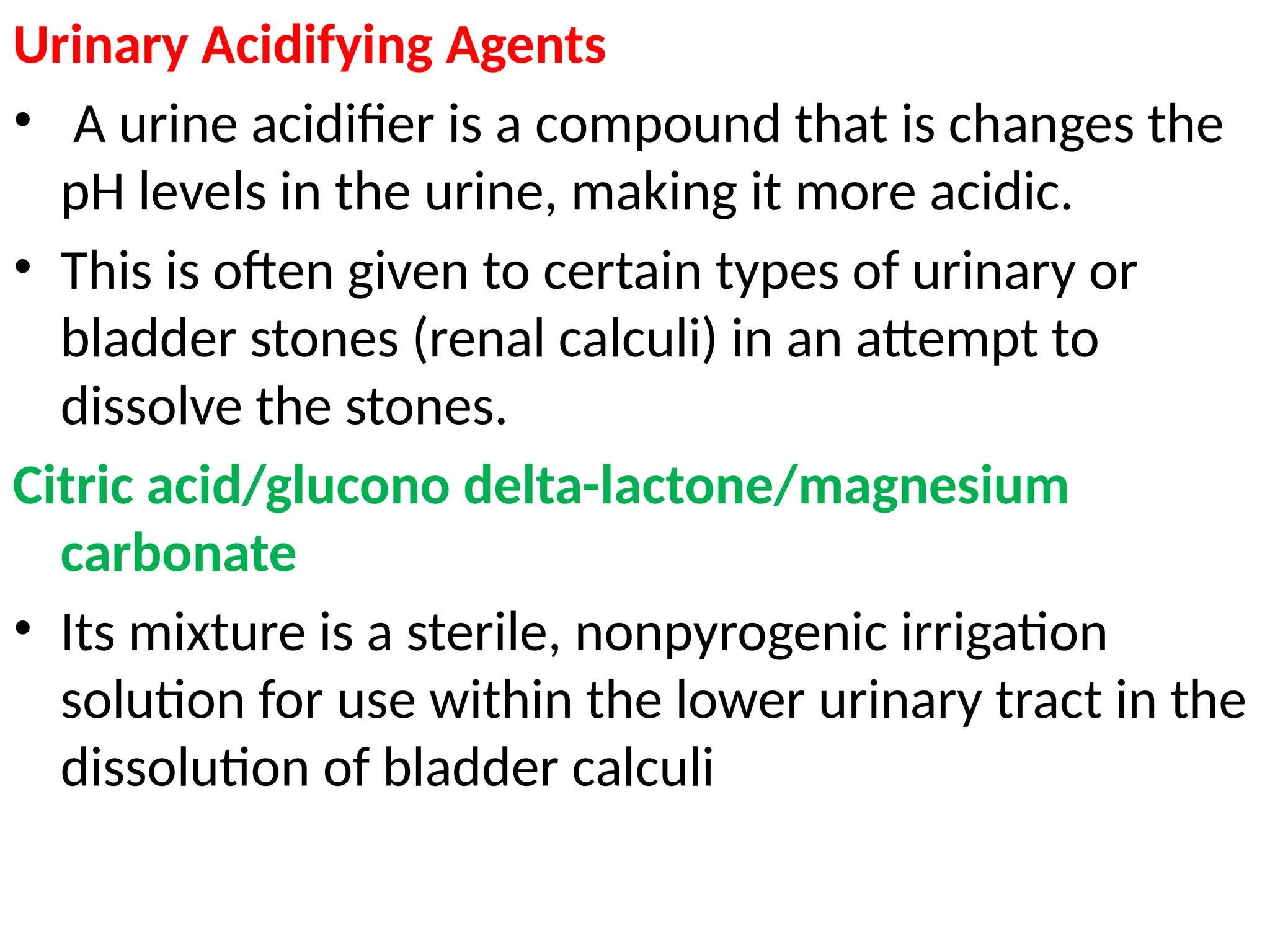
Urinary Acidifying Agents
• A urine acidifier is a compound that is changes the
pH levels in the urine, making it more acidic.
• This is often given to certain types of urinary or
bladder stones (renal calculi) in an attempt to
dissolve the stones.
Citric acid/glucono delta-lactone/magnesium
carbonate
• Its mixture is a sterile, nonpyrogenic irrigation
solution for use within the lower urinary tract in the
dissolution of bladder calculi
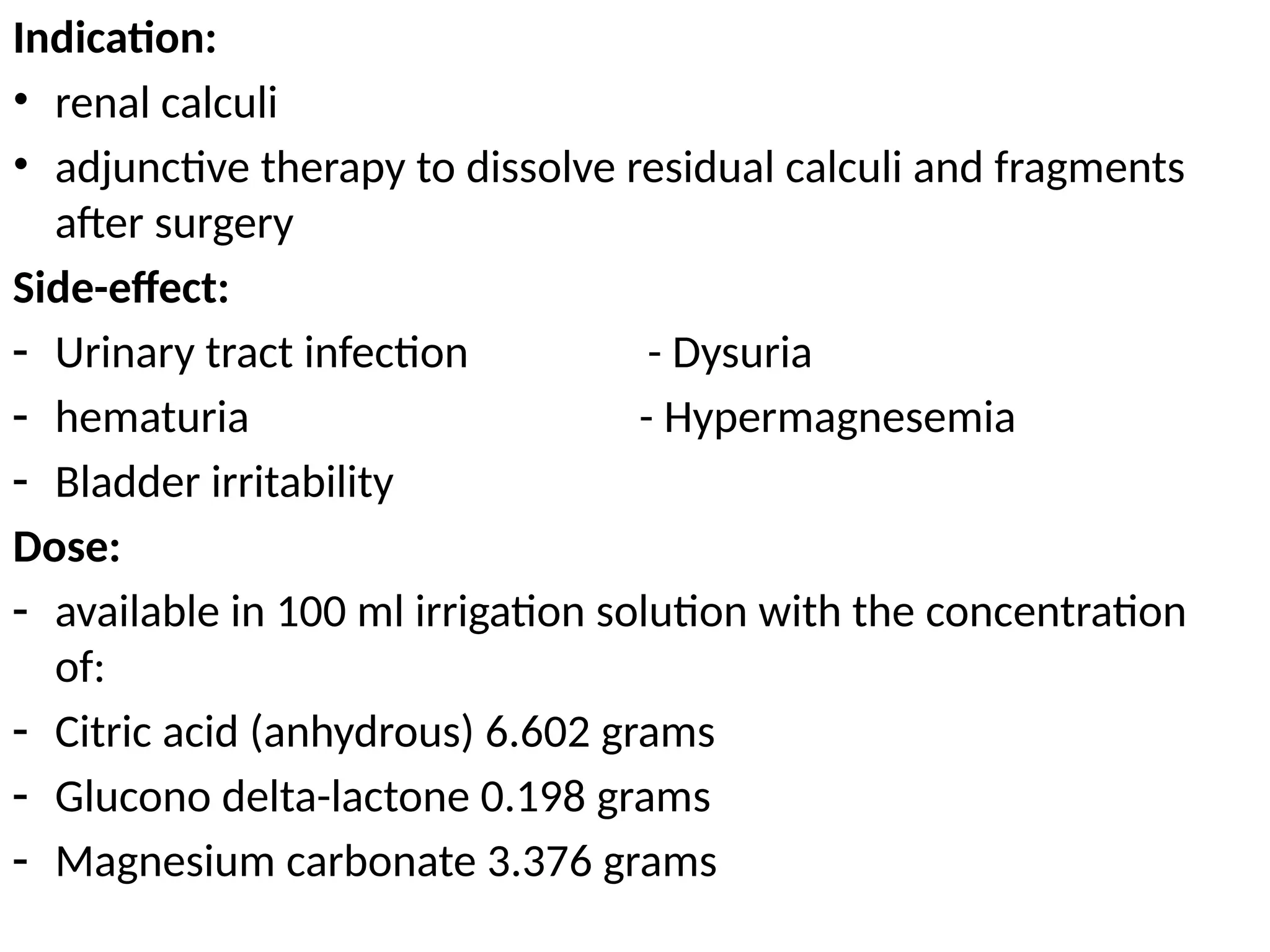
Indication:
• renal calculi
• adjunctive therapy to dissolve residual calculi and fragments
after surgery
Side-effect:
- Urinary tract infection - Dysuria
- hematuria - Hypermagnesemia
- Bladder irritability
Dose:
- available in 100 ml irrigation solution with the concentration
of:
- Citric acid (anhydrous) 6.602 grams
- Glucono delta-lactone 0.198 grams
- Magnesium carbonate 3.376 grams
Potassium and sodium phosphate
• It is available in the tablet
Mechanism of action
• Intracellular cation is essential in physiological
processes including transmission of nerve impulses,
glucose utilization, muscle contractions and enzyme
activity which in turn the urine more acidifies.
Indication:
• make the urine more acidic which helps treat
certain urinary tract infections.
• It is also used to prevent the formation of calcium
stones
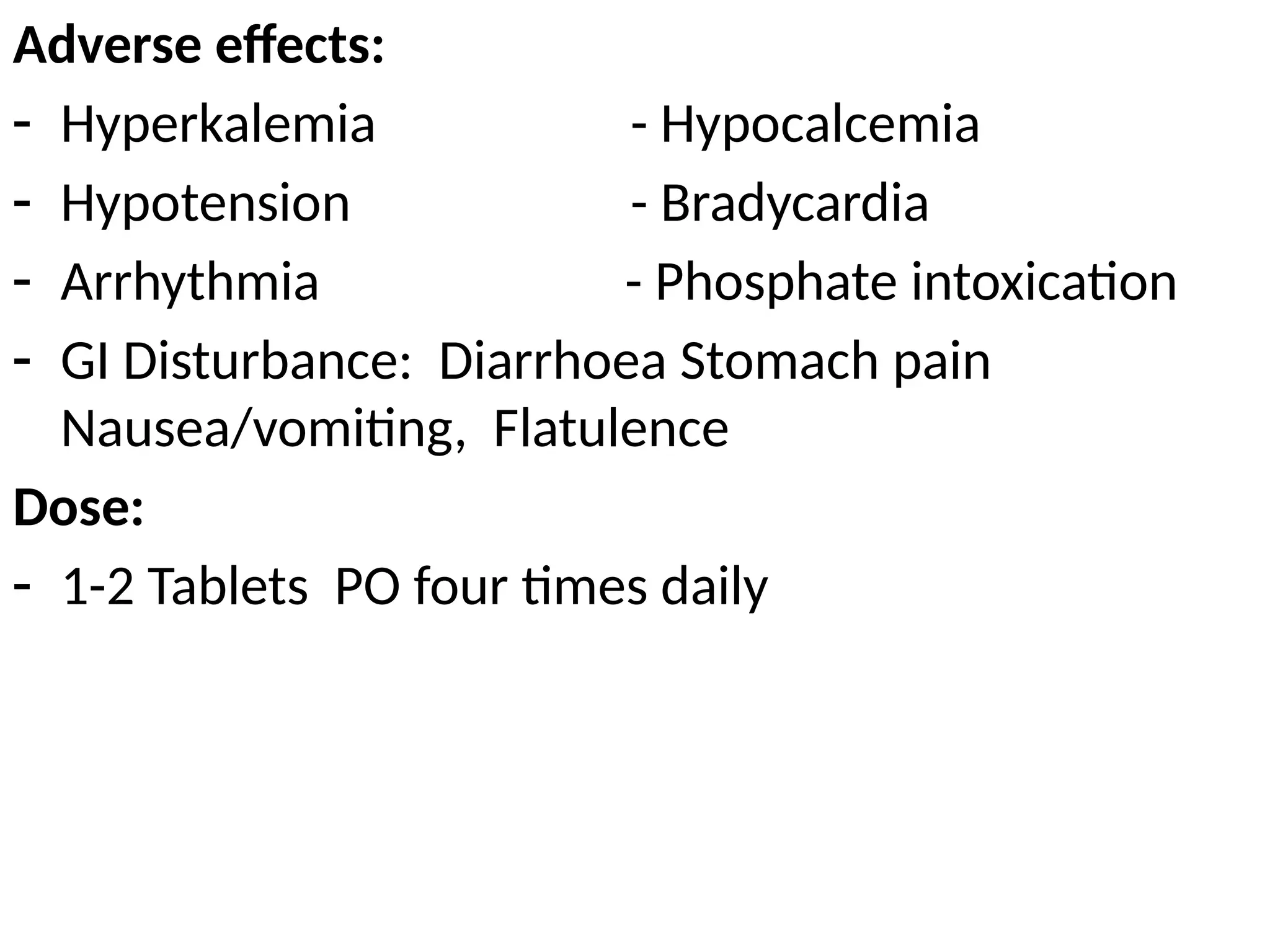
Adverse effects:
- Hyperkalemia - Hypocalcemia
- Hypotension - Bradycardia
- Arrhythmia - Phosphate intoxication
- GI Disturbance: Diarrhoea Stomach pain
Nausea/vomiting, Flatulence
Dose:
- 1-2 Tablets PO four times daily
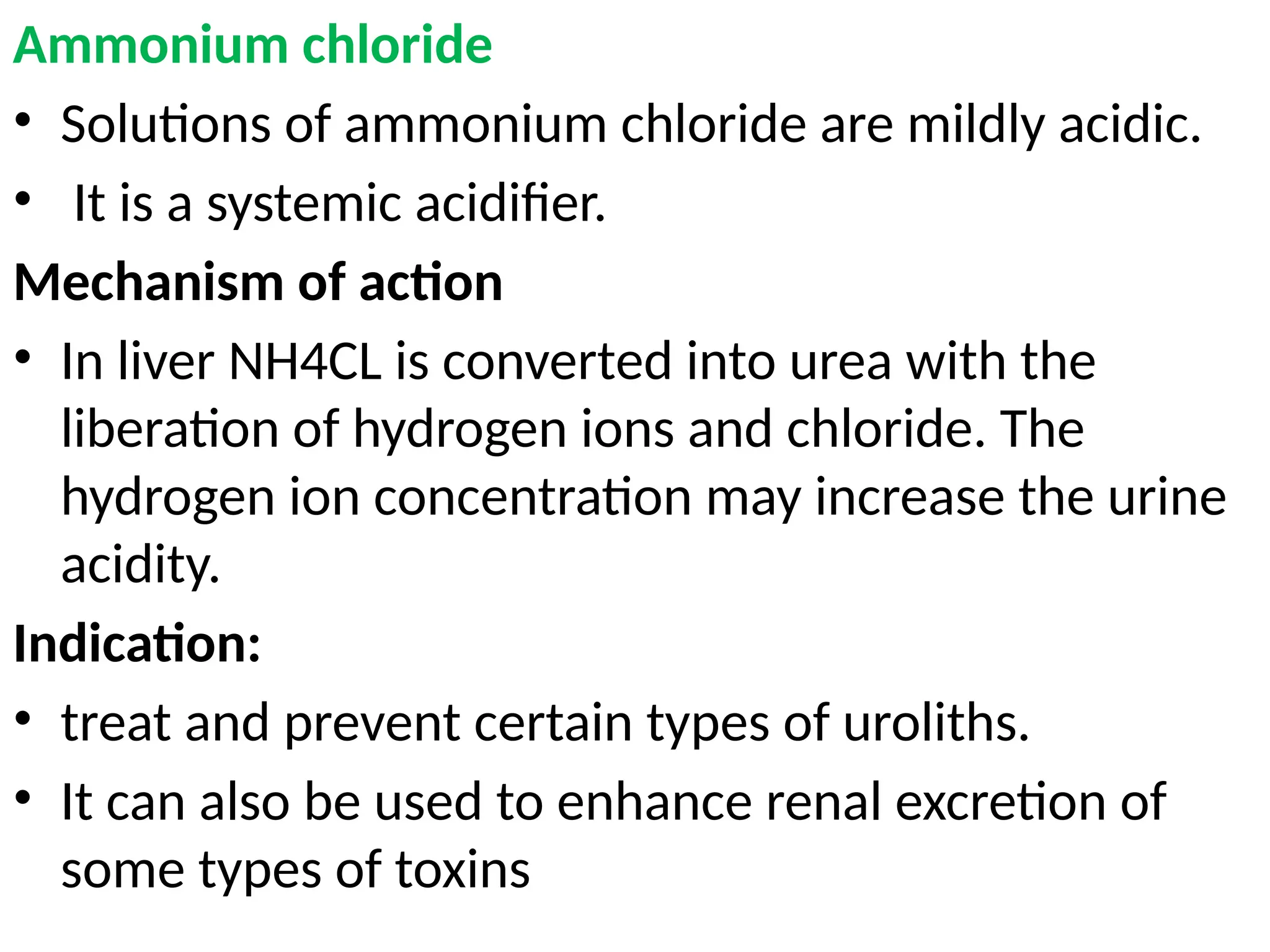
Ammonium chloride
• Solutions of ammonium chloride are mildly acidic.
• It is a systemic acidifier.
Mechanism of action
• In liver NH4CL is converted into urea with the
liberation of hydrogen ions and chloride. The
hydrogen ion concentration may increase the urine
acidity.
Indication:
• treat and prevent certain types of uroliths.
• It can also be used to enhance renal excretion of
some types of toxins
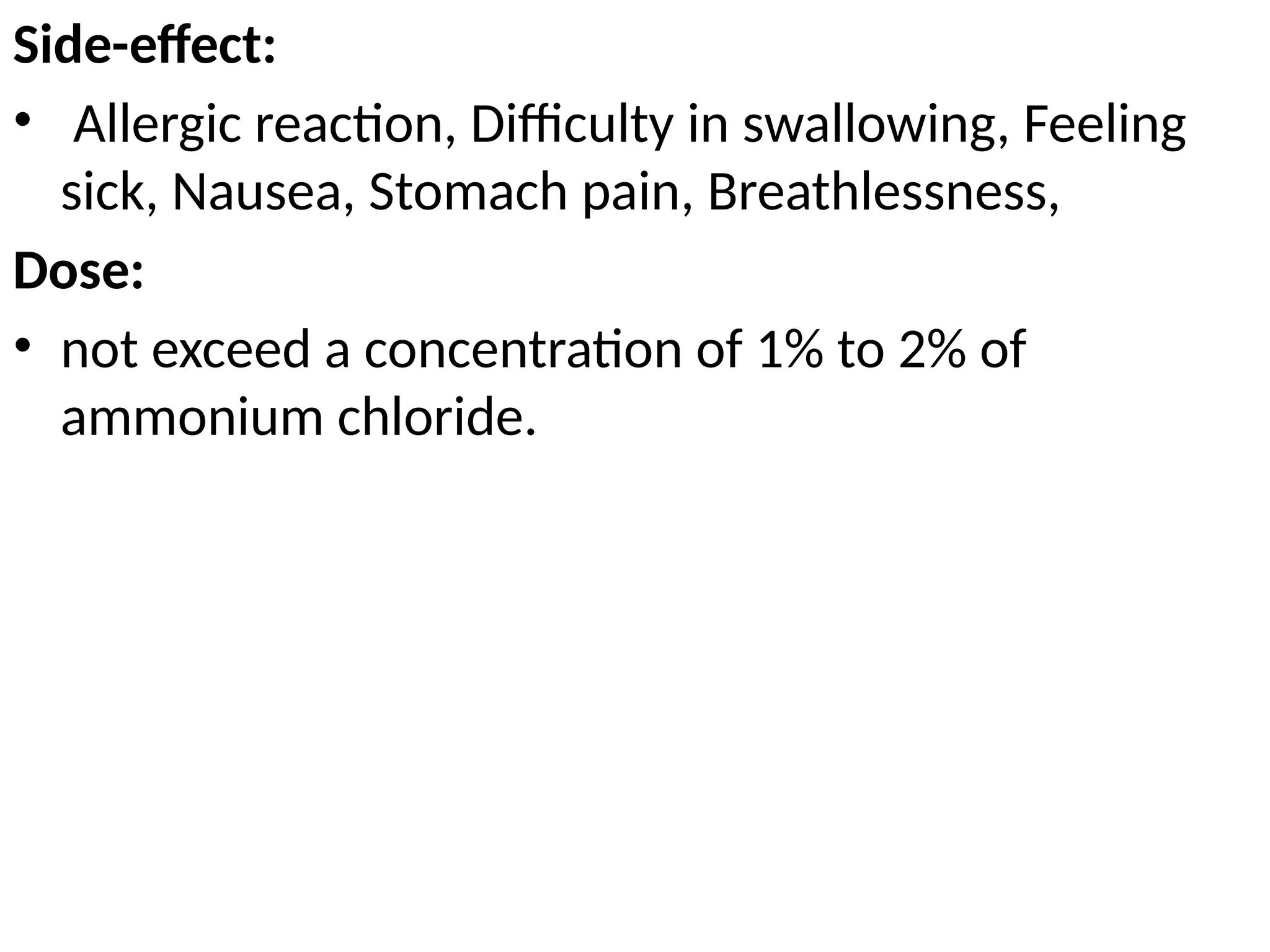
Side-effect:
• Allergic reaction, Difficulty in swallowing, Feeling
sick, Nausea, Stomach pain, Breathlessness,
Dose:
• not exceed a concentration of 1% to 2% of
ammonium chloride.
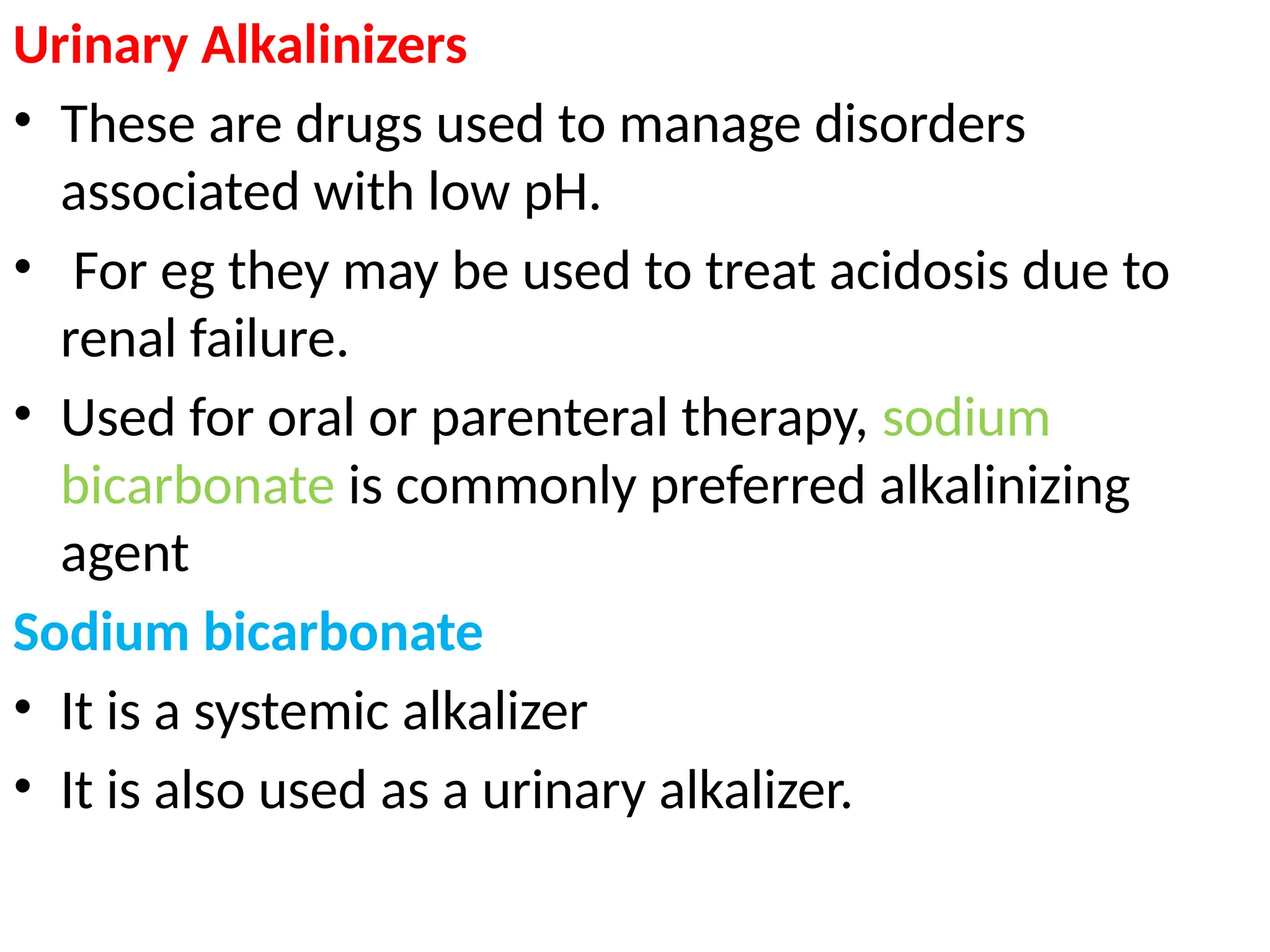
Urinary Alkalinizers
• These are drugs used to manage disorders
associated with low pH.
• For eg they may be used to treat acidosis due to
renal failure.
• Used for oral or parenteral therapy, sodium
bicarbonate is commonly preferred alkalinizing
agent
Sodium bicarbonate
• It is a systemic alkalizer
• It is also used as a urinary alkalizer.
Mechanism of action
• It increases the excretion of free bicarbonate ions in
the urine thus effectively raising the urinary pH. By
maintaining alkaline urine the actual dissolution of uric
acid stones may be accomplished.
Indication:
• heartburn and upset stomach.
• high acid levels in the blood & urine.
• It is used to treat high potassium levels.
Side effect
- Metabolic alkalosis - Hypernitraemia
- Muscle hypertonicity - Hypokalaemia
Dose: At first, 4gm is given then 1 to 2 gm in every 4 hour
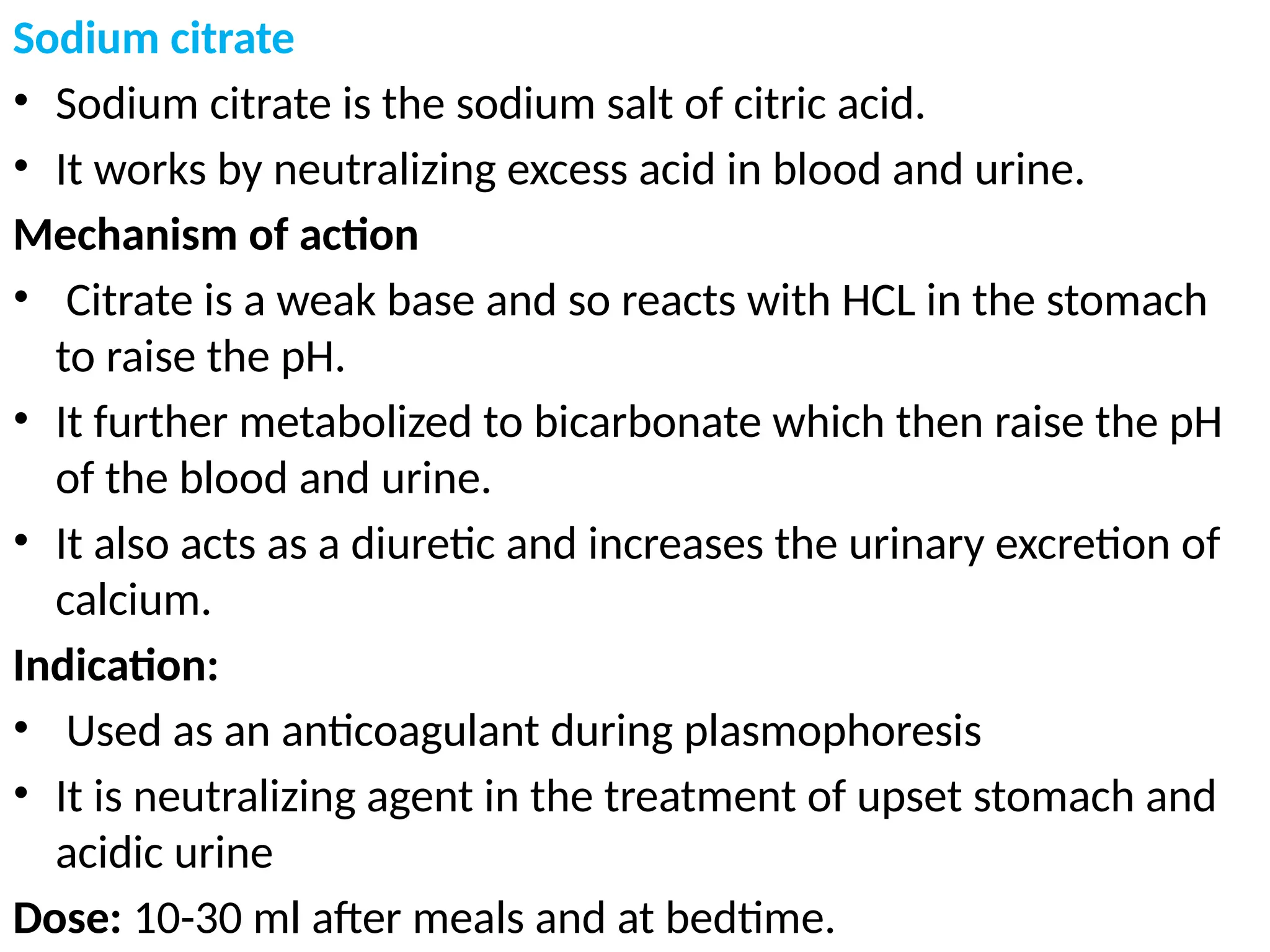
Sodium citrate
• Sodium citrate is the sodium salt of citric acid.
• It works by neutralizing excess acid in blood and urine.
Mechanism of action
• Citrate is a weak base and so reacts with HCL in the stomach
to raise the pH.
• It further metabolized to bicarbonate which then raise the pH
of the blood and urine.
• It also acts as a diuretic and increases the urinary excretion of
calcium.
Indication:
• Used as an anticoagulant during plasmophoresis
• It is neutralizing agent in the treatment of upset stomach and
acidic urine
Dose: 10-30 ml after meals and at bedtime.
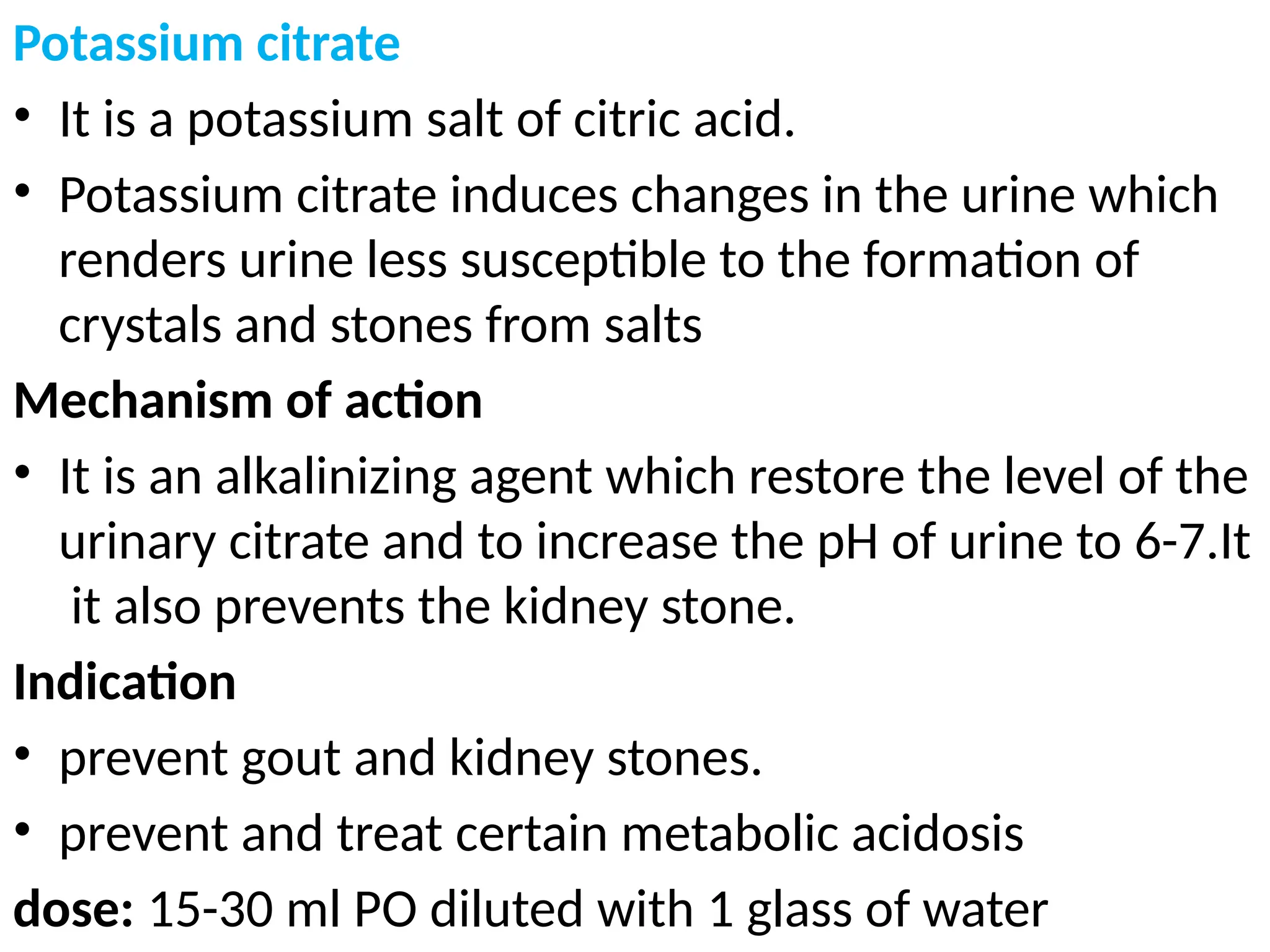
Potassium citrate
• It is a potassium salt of citric acid.
• Potassium citrate induces changes in the urine which
renders urine less susceptible to the formation of
crystals and stones from salts
Mechanism of action
• It is an alkalinizing agent which restore the level of the
urinary citrate and to increase the pH of urine to 6-7.It
it also prevents the kidney stone.
Indication
• prevent gout and kidney stones.
• prevent and treat certain metabolic acidosis
dose: 15-30 ml PO diluted with 1 glass of water
Disodium hydrogen citrate
• It is a sodium acid salt of citric acid or sodium
citrate. It is used as an anti-oxidant in food as well
as to improve the effects of other antioxidants.
Mechanism of action
• Same as sodium citrate.
Indication:
• Alkalinization of urine.
• Relieves discomfort in urinary tract infection
Dose:
• Adult: infuse at 0.5 to 1 µg/min.

Urinary Acidifiers and Alakalinizers.pptx

  • 1.
  • 2.
    Urinary Acidifying Agents •A urine acidifier is a compound that is changes the pH levels in the urine, making it more acidic. • This is often given to certain types of urinary or bladder stones (renal calculi) in an attempt to dissolve the stones. Citric acid/glucono delta-lactone/magnesium carbonate • Its mixture is a sterile, nonpyrogenic irrigation solution for use within the lower urinary tract in the dissolution of bladder calculi
  • 3.
    Indication: • renal calculi •adjunctive therapy to dissolve residual calculi and fragments after surgery Side-effect: - Urinary tract infection - Dysuria - hematuria - Hypermagnesemia - Bladder irritability Dose: - available in 100 ml irrigation solution with the concentration of: - Citric acid (anhydrous) 6.602 grams - Glucono delta-lactone 0.198 grams - Magnesium carbonate 3.376 grams
  • 4.
    Potassium and sodiumphosphate • It is available in the tablet Mechanism of action • Intracellular cation is essential in physiological processes including transmission of nerve impulses, glucose utilization, muscle contractions and enzyme activity which in turn the urine more acidifies. Indication: • make the urine more acidic which helps treat certain urinary tract infections. • It is also used to prevent the formation of calcium stones
  • 5.
    Adverse effects: - Hyperkalemia- Hypocalcemia - Hypotension - Bradycardia - Arrhythmia - Phosphate intoxication - GI Disturbance: Diarrhoea Stomach pain Nausea/vomiting, Flatulence Dose: - 1-2 Tablets PO four times daily
  • 6.
    Ammonium chloride • Solutionsof ammonium chloride are mildly acidic. • It is a systemic acidifier. Mechanism of action • In liver NH4CL is converted into urea with the liberation of hydrogen ions and chloride. The hydrogen ion concentration may increase the urine acidity. Indication: • treat and prevent certain types of uroliths. • It can also be used to enhance renal excretion of some types of toxins
  • 7.
    Side-effect: • Allergic reaction,Difficulty in swallowing, Feeling sick, Nausea, Stomach pain, Breathlessness, Dose: • not exceed a concentration of 1% to 2% of ammonium chloride.
  • 8.
    Urinary Alkalinizers • Theseare drugs used to manage disorders associated with low pH. • For eg they may be used to treat acidosis due to renal failure. • Used for oral or parenteral therapy, sodium bicarbonate is commonly preferred alkalinizing agent Sodium bicarbonate • It is a systemic alkalizer • It is also used as a urinary alkalizer.
  • 9.
    Mechanism of action •It increases the excretion of free bicarbonate ions in the urine thus effectively raising the urinary pH. By maintaining alkaline urine the actual dissolution of uric acid stones may be accomplished. Indication: • heartburn and upset stomach. • high acid levels in the blood & urine. • It is used to treat high potassium levels. Side effect - Metabolic alkalosis - Hypernitraemia - Muscle hypertonicity - Hypokalaemia Dose: At first, 4gm is given then 1 to 2 gm in every 4 hour
  • 10.
    Sodium citrate • Sodiumcitrate is the sodium salt of citric acid. • It works by neutralizing excess acid in blood and urine. Mechanism of action • Citrate is a weak base and so reacts with HCL in the stomach to raise the pH. • It further metabolized to bicarbonate which then raise the pH of the blood and urine. • It also acts as a diuretic and increases the urinary excretion of calcium. Indication: • Used as an anticoagulant during plasmophoresis • It is neutralizing agent in the treatment of upset stomach and acidic urine Dose: 10-30 ml after meals and at bedtime.
  • 11.
    Potassium citrate • Itis a potassium salt of citric acid. • Potassium citrate induces changes in the urine which renders urine less susceptible to the formation of crystals and stones from salts Mechanism of action • It is an alkalinizing agent which restore the level of the urinary citrate and to increase the pH of urine to 6-7.It it also prevents the kidney stone. Indication • prevent gout and kidney stones. • prevent and treat certain metabolic acidosis dose: 15-30 ml PO diluted with 1 glass of water
  • 12.
    Disodium hydrogen citrate •It is a sodium acid salt of citric acid or sodium citrate. It is used as an anti-oxidant in food as well as to improve the effects of other antioxidants. Mechanism of action • Same as sodium citrate. Indication: • Alkalinization of urine. • Relieves discomfort in urinary tract infection Dose: • Adult: infuse at 0.5 to 1 µg/min.