Downloaded 391 times


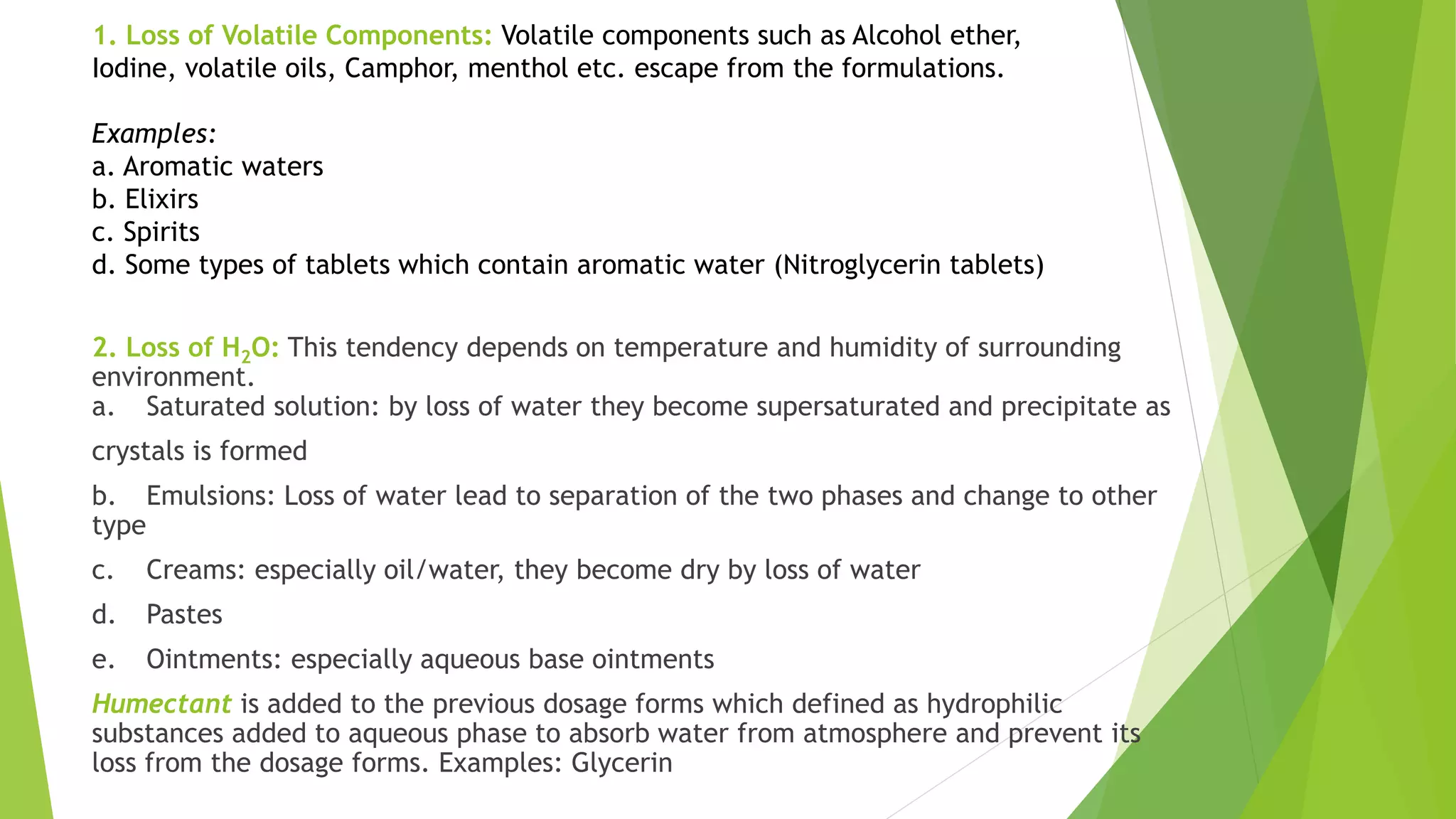


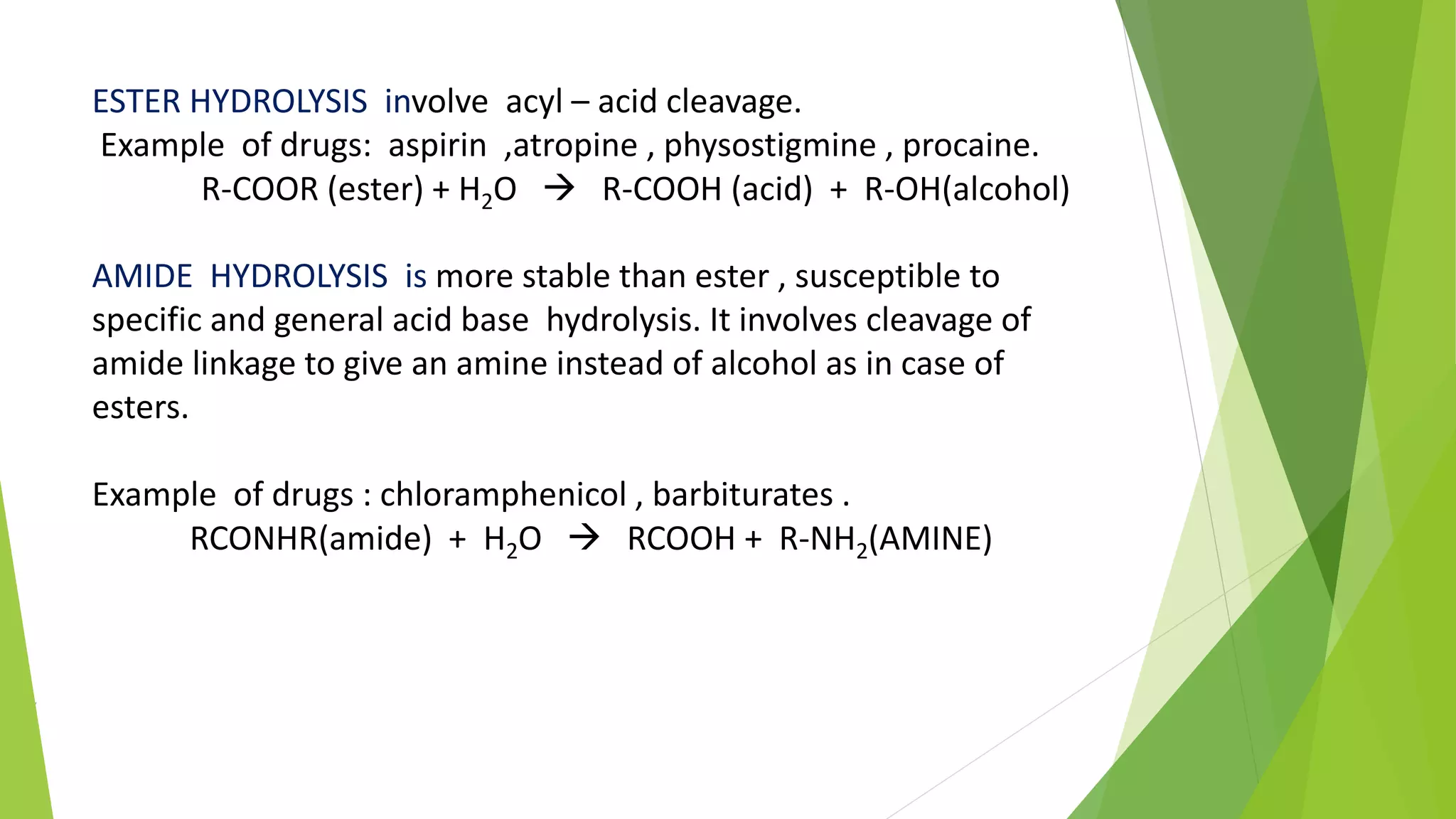


![Photo-oxidation:
Oxidation in which removal of the electron is involved without presence of O2.”
This type is less frequently encountered e.g. It occurs in adrenaline, riboflavin & ascorbic
acid etc.
STEPS INVOLVED OXIDATION REACTION:
INITIATION : Formation of free radicals is taken place .
R--H R. + [H. ]
PROPOGATION : here the free radical is regenerated and react with more oxygen .
R. + O2 R.—O2
R.O2 + RH ROOH + R.
HYDROPEROXIDE DECOMPOSITION
ROOH RO. + OH.
TERMINATION : free radicals react with each other resulting in inactive products.
R.--O2 + X Inactive product
RO2 + RO2 Inactive product
EXAMPLE OF DRUGS DECOMPOSED BY OXIDATION PATHWAYS
Archis oil , clove oil , ethyl oleate ,Heparin , Ascorbic acid , Morphine ,Vitamin A , Vitamin B12 ,
etc.](https://image.slidesharecdn.com/drugstabilityconsiderationanddegradation-150228025437-conversion-gate02/75/Drug-stability-consideration-and-degradation-19-2048.jpg)

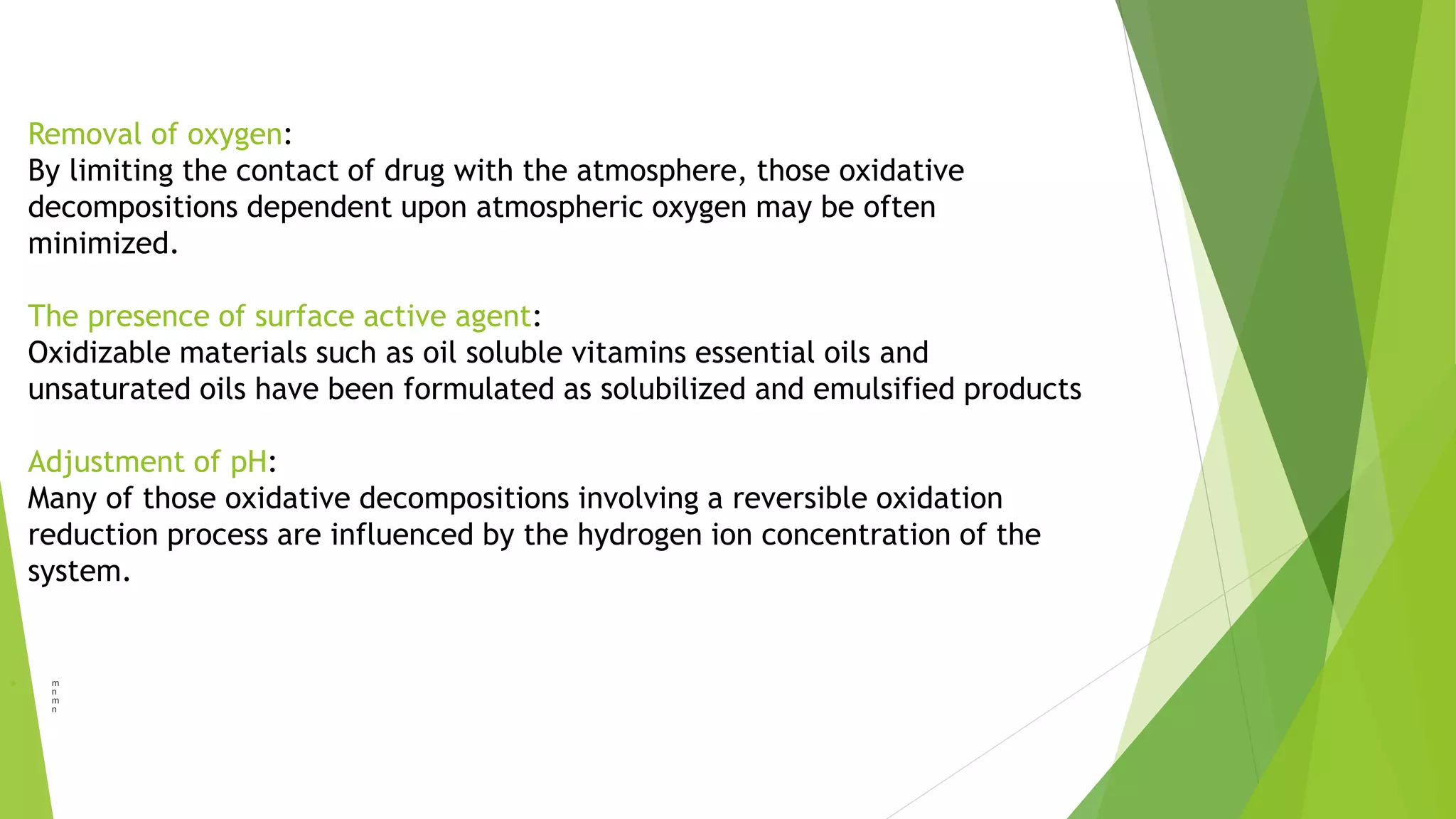


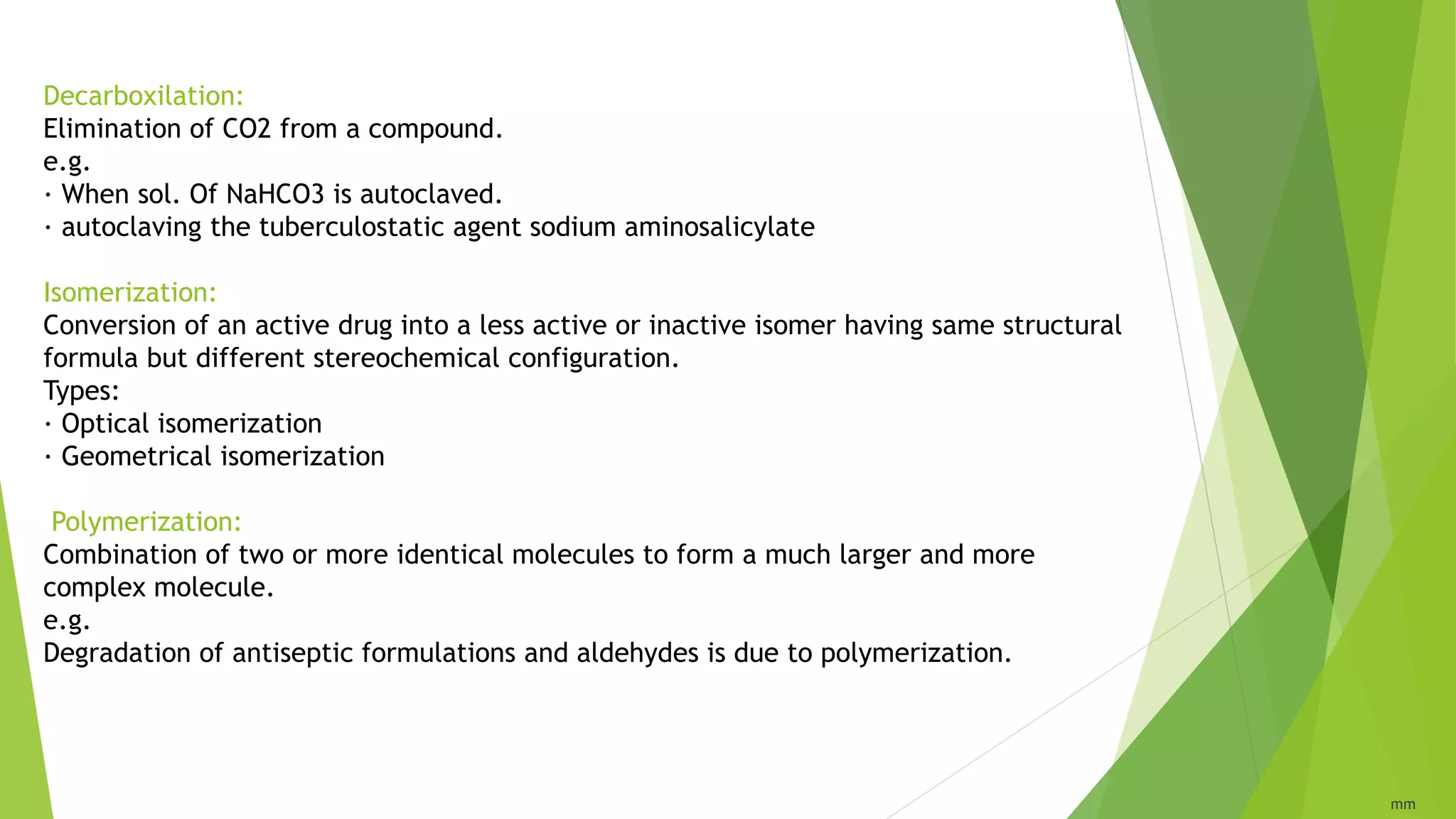

This document discusses drug stability and factors that affect it. It defines drug stability as the ability of a drug formulation to remain within specified chemical, microbiological, therapeutic, physical and toxicological limits over a period of time. The main factors that can affect drug stability are pH, temperature, moisture, light, oxygen, and additives. Common types of drug degradation include hydrolysis, oxidation, photolysis, and isomerization. Proper packaging, inclusion of antioxidants and buffers, and controlling environmental conditions like temperature and humidity can help protect drugs and increase their shelf life.


