DRUG PRESENTATION ON
CHARCOAL
D.P.
MSC 2ND YEAR
ANTIDOTE
• Antidote is defined as a therapeutic substance used to
counteract the toxic action
• Antidotes reduce the overall burden of health service in
managing of poisoning cases
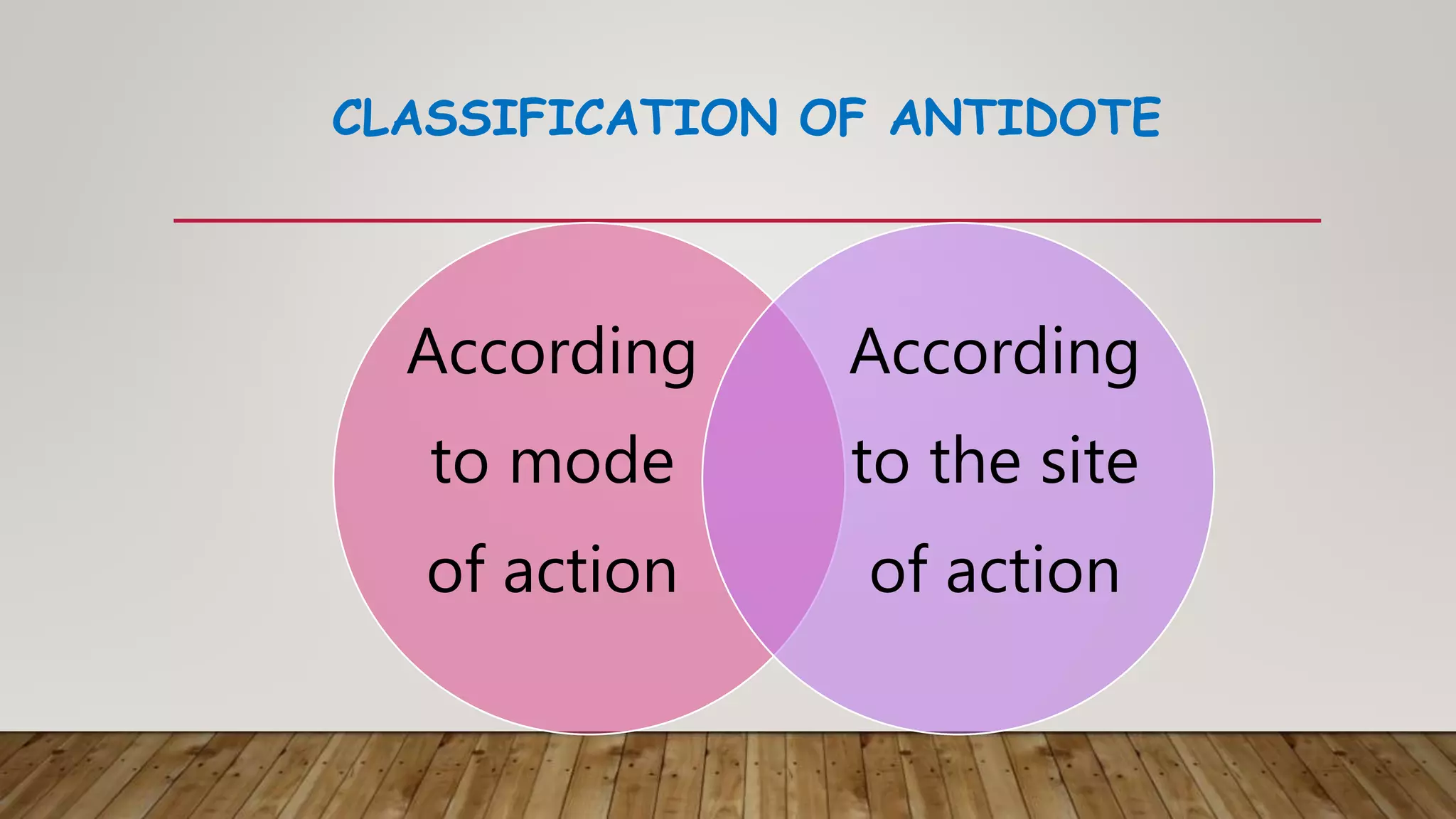
CLASSIFICATION OF ANTIDOTE
According
to mode
of action
According
to the site
of action
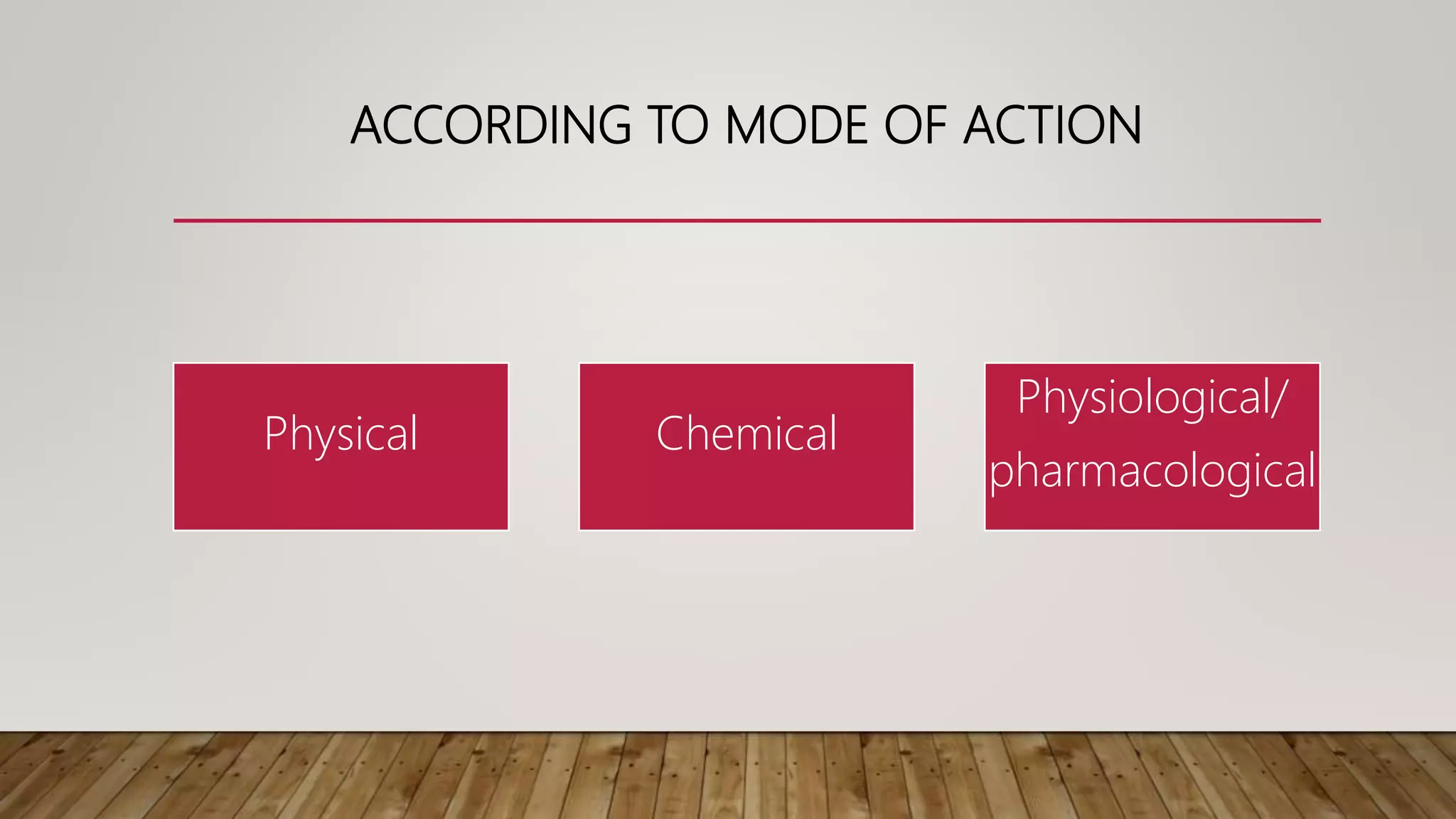
ACCORDING TO MODE OF ACTION
Physical Chemical
Physiological/
pharmacological
Physical antidote
• Agent use to interfere with poison through physical
properties, not change their nature
Chemical Antidote
• Interact specifically with a toxicant or neutralize the toxicant
Physiological antidote
• They act by producing opposite effect to that of poison
• Sodium nitrite converts haemoglobin into methemoglobin
order to bind cyanide
ACCORDING TO SITE OF ACTION
• Interacts with the poison to form a non toxic complex
that can be excreted Chelators.
• Accelerates the detoxification of the poison
• Decrease the conversion of poison into toxic metabolite
• Block the receptor through which the toxic effect of the
poison is mediated
• Antidotes to the poison
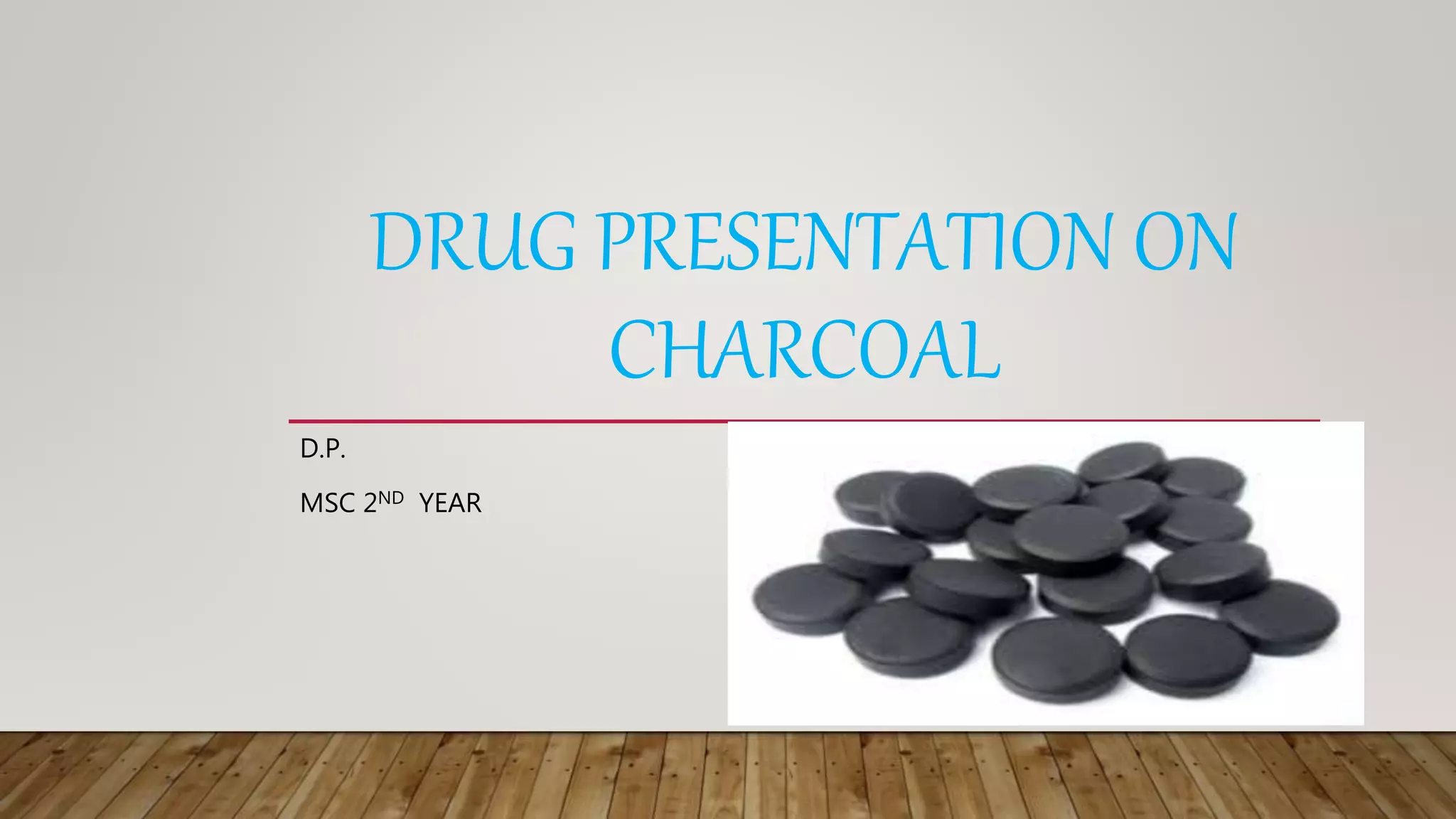
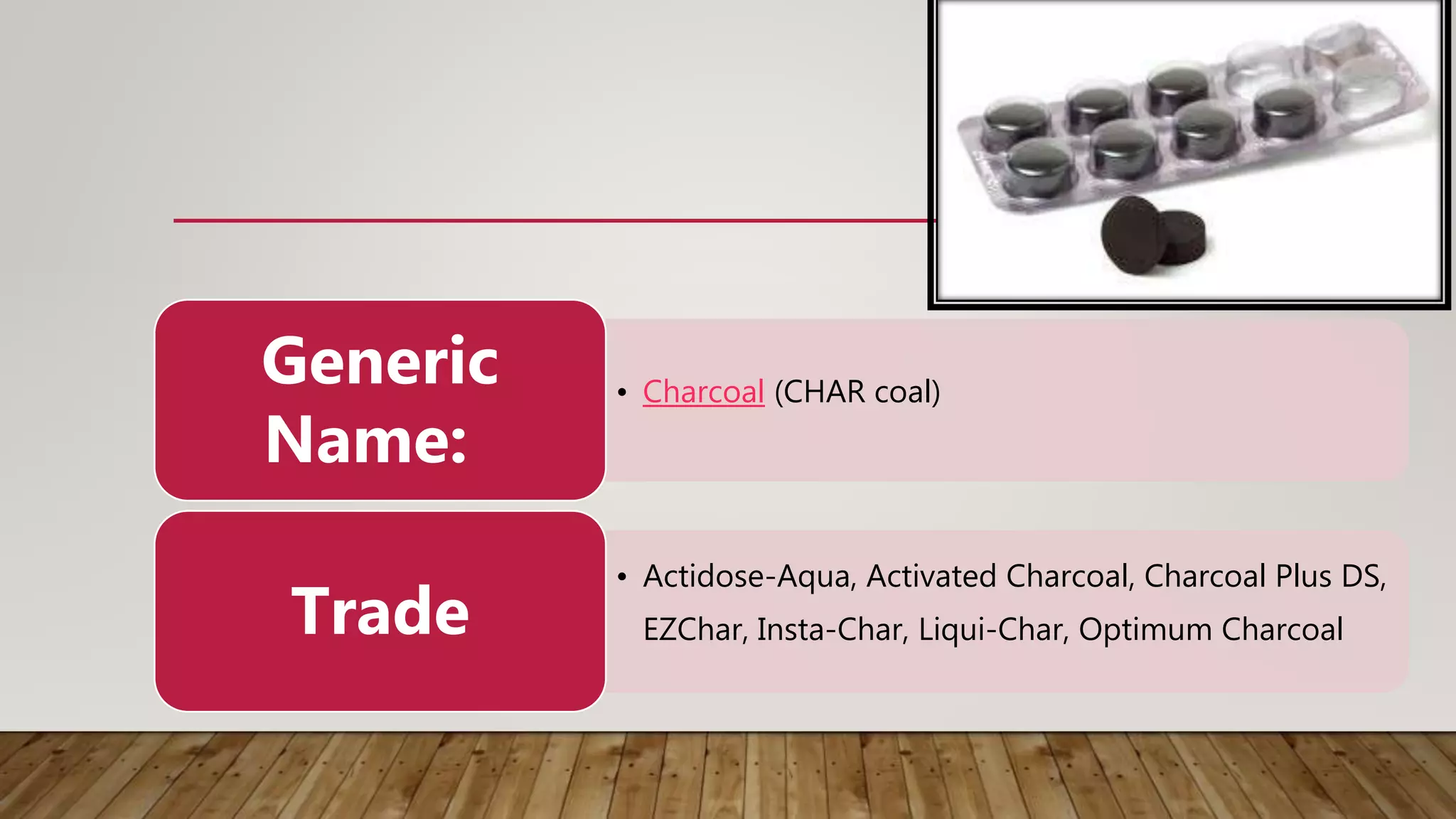
• Charcoal (CHAR coal)
Generic
Name:
• Actidose-Aqua, Activated Charcoal, Charcoal Plus DS,
EZChar, Insta-Char, Liqui-Char, Optimum CharcoalTrade
Charcoal (universal antidote)
Produced by heating carbonaceous substances saw dust, peat or coconut shells.
Activated charcoal can prevent systemic adsorption of drugs when given within 1-2 h of ingestion
The optimal dose is probably a 40:1 ratio of charcoal to drug
Contraindicated for iron, lithium, potassium and ethanol overdose
CLASSIFICATION:
Therapeutic: Antidote
Pharmacologic: Adsorbents
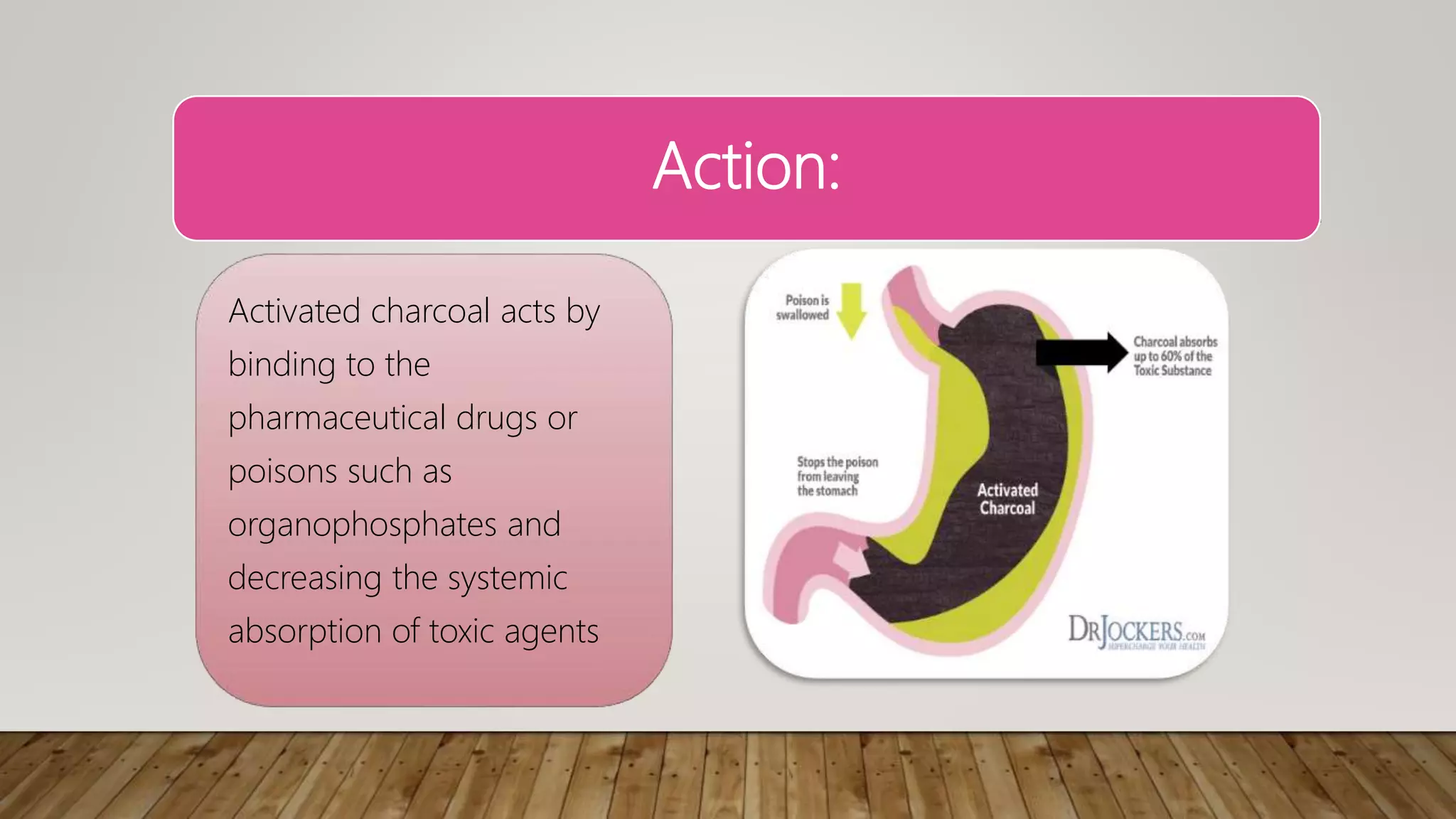
Action:
Activated charcoal acts by
binding to the
pharmaceutical drugs or
poisons such as
organophosphates and
decreasing the systemic
absorption of toxic agents
INDICATION:
Acute management of
many oral poisoning
following emesis/ lavage.
ROUTE/ DOSAGE
Antidote
• PO (adults): 25-100 g (may be repeated q 4-6 hr)
• PO (children 1-12 yr): 25-50 g (may be repeated q
4-6 hr)
• PO(Children<1 yr): 1 g/kg (may be repeated q 4-6
hr)
CONTRAINDICATIONS:
• No known contraindications
• Use cautiously in: poisoning due to cyanide,
corrosiveness, ethanol, methanol, petroleum
distillates, organic solvents, mineral acids or iron;
endoscopic examination
ADVERSE REACTIONS/SIDE EFFECTS
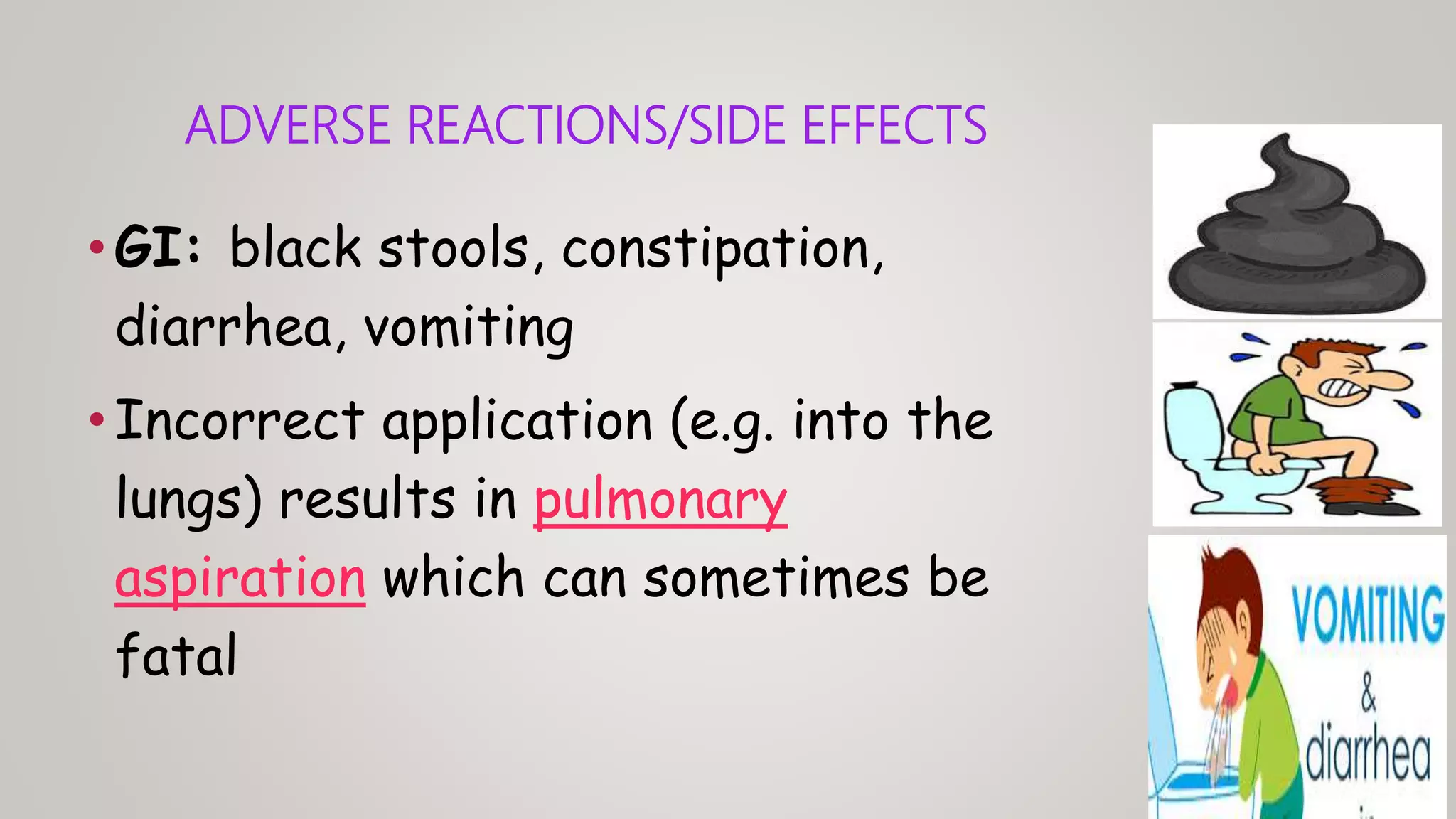
•GI: black stools, constipation,
diarrhea, vomiting
•Incorrect application (e.g. into the
lungs) results in pulmonary
aspiration which can sometimes be
fatal
NURSING IMPLICATIONS
● Assess neurologic status; administer only if patient is alert
(unless airway is protected).
● Inquire as to the type of drug or poison and time of ingestion.
● Consult reference, poison control center, or physician for
symptoms of toxicity of ingested agent(s).
● Monitor BP, pulse, respiratory and neurologic status, and urine
output as indicated by toxicity of agent(s). Notify physician if
symptoms persist or worsen.
NURSING IMPLICATIONS
Assessment & Drug Effects
• Record appearance, color, consistency, frequency, and
relative amount of stools. Inform patient that activated
charcoal will color feces black
 Shake oral suspension well before administration.
 Rapid ingestion may cause vomiting. If vomiting occurs
shortly after administering dose, confer with physician
about repeating dose.
 Do not administer other oral drugs for 2 hr before or
after administering activated charcoal.
 Slurry is constipating; physician may order a laxative to
speed removal of the drug. May not be required with
products containing sorbitol
CONTD…
PATIENT & FAMILY EDUCATION
• Do not breast feed while taking this drug without consulting
physician.
• Inform patient or caregiver that stools will turn black.
Caution:
Consider the following cautions when using activated charcoal:
• vomiting may occur
• caution in patients with decreased peristalsis
Note: activated charcoal is not effective with alcohols, iron, lithium,
heavy metals, and mineral acids
• Poisoning: When counseling, discuss methods of prevention,
to confer with poison control center, physician, or emergency
department before administering, and need to bring ingested
substance to emergency department for identification.
Drug presentation on charcoal

Drug presentation on charcoal

  • 1.
  • 2.
    ANTIDOTE • Antidote isdefined as a therapeutic substance used to counteract the toxic action • Antidotes reduce the overall burden of health service in managing of poisoning cases
  • 3.
    CLASSIFICATION OF ANTIDOTE According tomode of action According to the site of action
  • 4.
    ACCORDING TO MODEOF ACTION Physical Chemical Physiological/ pharmacological
  • 5.
    Physical antidote • Agentuse to interfere with poison through physical properties, not change their nature Chemical Antidote • Interact specifically with a toxicant or neutralize the toxicant Physiological antidote • They act by producing opposite effect to that of poison • Sodium nitrite converts haemoglobin into methemoglobin order to bind cyanide
  • 6.
    ACCORDING TO SITEOF ACTION • Interacts with the poison to form a non toxic complex that can be excreted Chelators. • Accelerates the detoxification of the poison • Decrease the conversion of poison into toxic metabolite • Block the receptor through which the toxic effect of the poison is mediated • Antidotes to the poison
  • 7.
    • Charcoal (CHARcoal) Generic Name: • Actidose-Aqua, Activated Charcoal, Charcoal Plus DS, EZChar, Insta-Char, Liqui-Char, Optimum CharcoalTrade
  • 8.
    Charcoal (universal antidote) Producedby heating carbonaceous substances saw dust, peat or coconut shells. Activated charcoal can prevent systemic adsorption of drugs when given within 1-2 h of ingestion The optimal dose is probably a 40:1 ratio of charcoal to drug Contraindicated for iron, lithium, potassium and ethanol overdose
  • 9.
  • 10.
    Action: Activated charcoal actsby binding to the pharmaceutical drugs or poisons such as organophosphates and decreasing the systemic absorption of toxic agents
  • 11.
    INDICATION: Acute management of manyoral poisoning following emesis/ lavage.
  • 12.
    ROUTE/ DOSAGE Antidote • PO(adults): 25-100 g (may be repeated q 4-6 hr) • PO (children 1-12 yr): 25-50 g (may be repeated q 4-6 hr) • PO(Children<1 yr): 1 g/kg (may be repeated q 4-6 hr)
  • 13.
    CONTRAINDICATIONS: • No knowncontraindications • Use cautiously in: poisoning due to cyanide, corrosiveness, ethanol, methanol, petroleum distillates, organic solvents, mineral acids or iron; endoscopic examination
  • 14.
    ADVERSE REACTIONS/SIDE EFFECTS •GI:black stools, constipation, diarrhea, vomiting •Incorrect application (e.g. into the lungs) results in pulmonary aspiration which can sometimes be fatal
  • 15.
    NURSING IMPLICATIONS ● Assessneurologic status; administer only if patient is alert (unless airway is protected). ● Inquire as to the type of drug or poison and time of ingestion. ● Consult reference, poison control center, or physician for symptoms of toxicity of ingested agent(s). ● Monitor BP, pulse, respiratory and neurologic status, and urine output as indicated by toxicity of agent(s). Notify physician if symptoms persist or worsen.
  • 16.
    NURSING IMPLICATIONS Assessment &Drug Effects • Record appearance, color, consistency, frequency, and relative amount of stools. Inform patient that activated charcoal will color feces black
  • 17.
     Shake oralsuspension well before administration.  Rapid ingestion may cause vomiting. If vomiting occurs shortly after administering dose, confer with physician about repeating dose.  Do not administer other oral drugs for 2 hr before or after administering activated charcoal.  Slurry is constipating; physician may order a laxative to speed removal of the drug. May not be required with products containing sorbitol CONTD…
  • 18.
    PATIENT & FAMILYEDUCATION • Do not breast feed while taking this drug without consulting physician. • Inform patient or caregiver that stools will turn black.
  • 19.
    Caution: Consider the followingcautions when using activated charcoal: • vomiting may occur • caution in patients with decreased peristalsis Note: activated charcoal is not effective with alcohols, iron, lithium, heavy metals, and mineral acids • Poisoning: When counseling, discuss methods of prevention, to confer with poison control center, physician, or emergency department before administering, and need to bring ingested substance to emergency department for identification.