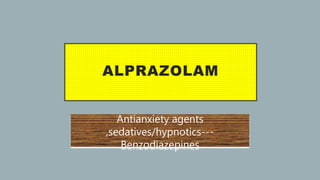
ALPRAZOLAM
Antianxiety agents
,sedatives/hypnotics---
Benzodiazepines
TRADE NAMES
Alprax,
Apo-Alpraz
Novo-Alprazol
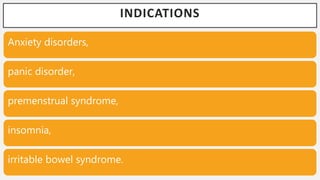
INDICATIONS
Anxiety disorders,
panic disorder,
premenstrual syndrome,
insomnia,
irritable bowel syndrome.
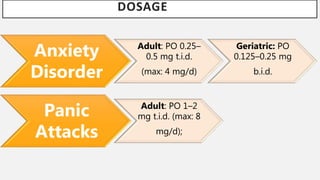
DOSAGE
Anxiety
Disorder
Adult: PO 0.25–
0.5 mg t.i.d.
(max: 4 mg/d)
Geriatric: PO
0.125–0.25 mg
b.i.d.
Panic
Attacks
Adult: PO 1–2
mg t.i.d. (max: 8
mg/d);
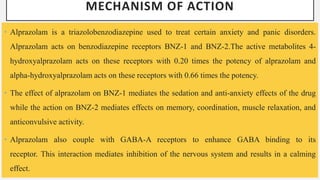
MECHANISM OF ACTION
• Alprazolam is a triazolobenzodiazepine used to treat certain anxiety and panic disorders.
Alprazolam acts on benzodiazepine receptors BNZ-1 and BNZ-2.The active metabolites 4-
hydroxyalprazolam acts on these receptors with 0.20 times the potency of alprazolam and
alpha-hydroxyalprazolam acts on these receptors with 0.66 times the potency.
• The effect of alprazolam on BNZ-1 mediates the sedation and anti-anxiety effects of the drug
while the action on BNZ-2 mediates effects on memory, coordination, muscle relaxation, and
anticonvulsive activity.
• Alprazolam also couple with GABA-A receptors to enhance GABA binding to its
receptor. This interaction mediates inhibition of the nervous system and results in a calming
effect.
Absorption
• Oral bioavailability of a standard release tablet of alprazolam is 84-
91% with a time to maximum concentration of 1.8 hours.
• A 1mg oral dose of alprazolam leads to a maximum plasma
concentration of 12-22mcg/L.
• Alprazolam is rapidly absorbed in the gastrointestinal tract.
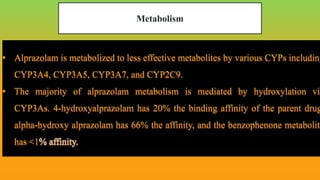
Metabolism
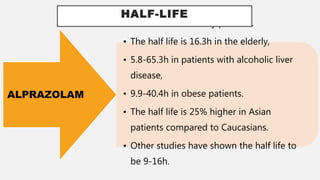
• 11.2 hours in healthy patients.
• The half life is 16.3h in the elderly,
• 5.8-65.3h in patients with alcoholic liver
disease,
• 9.9-40.4h in obese patients.
• The half life is 25% higher in Asian
patients compared to Caucasians.
• Other studies have shown the half life to
be 9-16h.
ALPRAZOLAM
HALF-LIFE
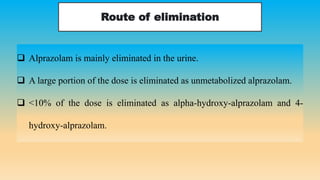
Route of elimination
 Alprazolam is mainly eliminated in the urine.
 A large portion of the dose is eliminated as unmetabolized alprazolam.
 <10% of the dose is eliminated as alpha-hydroxy-alprazolam and 4-
hydroxy-alprazolam.
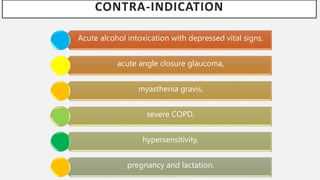
CONTRA-INDICATION
Acute alcohol intoxication with depressed vital signs,
acute angle closure glaucoma,
myasthenia gravis,
severe COPD,
hypersensitivity,
pregnancy and lactation.
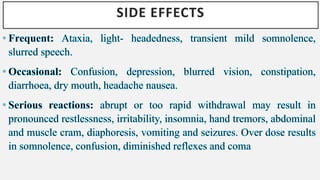
SIDE EFFECTS
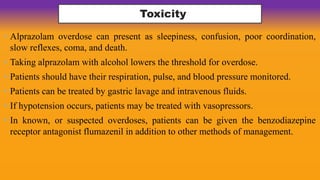
Toxicity
• Alprazolam overdose can present as sleepiness, confusion, poor coordination,
slow reflexes, coma, and death.
• Taking alprazolam with alcohol lowers the threshold for overdose.
• Patients should have their respiration, pulse, and blood pressure monitored.
• Patients can be treated by gastric lavage and intravenous fluids.
• If hypotension occurs, patients may be treated with vasopressors.
• In known, or suspected overdoses, patients can be given the benzodiazepine
receptor antagonist flumazenil in addition to other methods of management.
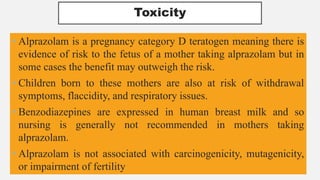
Toxicity
• Alprazolam is a pregnancy category D teratogen meaning there is
evidence of risk to the fetus of a mother taking alprazolam but in
some cases the benefit may outweigh the risk.
• Children born to these mothers are also at risk of withdrawal
symptoms, flaccidity, and respiratory issues.
• Benzodiazepines are expressed in human breast milk and so
nursing is generally not recommended in mothers taking
alprazolam.
• Alprazolam is not associated with carcinogenicity, mutagenicity,
or impairment of fertility
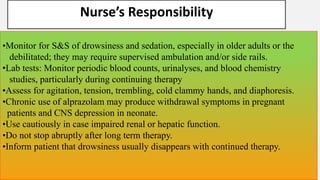
Nurse’s Responsibility
•Monitor for S&S of drowsiness and sedation, especially in older adults or the
debilitated; they may require supervised ambulation and/or side rails.
•Lab tests: Monitor periodic blood counts, urinalyses, and blood chemistry
studies, particularly during continuing therapy
•Assess for agitation, tension, trembling, cold clammy hands, and diaphoresis.
•Chronic use of alprazolam may produce withdrawal symptoms in pregnant
patients and CNS depression in neonate.
•Use cautiously in case impaired renal or hepatic function.
•Do not stop abruptly after long term therapy.
•Inform patient that drowsiness usually disappears with continued therapy.
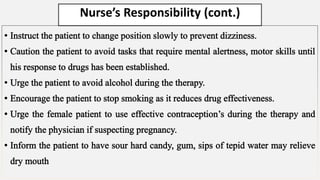
Nurse’s Responsibility (cont.)
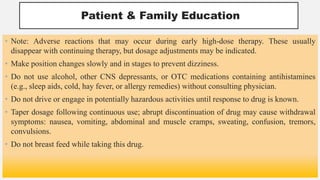
Patient & Family Education
• Note: Adverse reactions that may occur during early high-dose therapy. These usually
disappear with continuing therapy, but dosage adjustments may be indicated.
• Make position changes slowly and in stages to prevent dizziness.
• Do not use alcohol, other CNS depressants, or OTC medications containing antihistamines
(e.g., sleep aids, cold, hay fever, or allergy remedies) without consulting physician.
• Do not drive or engage in potentially hazardous activities until response to drug is known.
• Taper dosage following continuous use; abrupt discontinuation of drug may cause withdrawal
symptoms: nausea, vomiting, abdominal and muscle cramps, sweating, confusion, tremors,
convulsions.
• Do not breast feed while taking this drug.
Alprazolam

Alprazolam

  • 1.
  • 2.
  • 3.
    INDICATIONS Anxiety disorders, panic disorder, premenstrualsyndrome, insomnia, irritable bowel syndrome.
  • 4.
    DOSAGE Anxiety Disorder Adult: PO 0.25– 0.5mg t.i.d. (max: 4 mg/d) Geriatric: PO 0.125–0.25 mg b.i.d. Panic Attacks Adult: PO 1–2 mg t.i.d. (max: 8 mg/d);
  • 5.
    MECHANISM OF ACTION •Alprazolam is a triazolobenzodiazepine used to treat certain anxiety and panic disorders. Alprazolam acts on benzodiazepine receptors BNZ-1 and BNZ-2.The active metabolites 4- hydroxyalprazolam acts on these receptors with 0.20 times the potency of alprazolam and alpha-hydroxyalprazolam acts on these receptors with 0.66 times the potency. • The effect of alprazolam on BNZ-1 mediates the sedation and anti-anxiety effects of the drug while the action on BNZ-2 mediates effects on memory, coordination, muscle relaxation, and anticonvulsive activity. • Alprazolam also couple with GABA-A receptors to enhance GABA binding to its receptor. This interaction mediates inhibition of the nervous system and results in a calming effect.
  • 6.
    Absorption • Oral bioavailabilityof a standard release tablet of alprazolam is 84- 91% with a time to maximum concentration of 1.8 hours. • A 1mg oral dose of alprazolam leads to a maximum plasma concentration of 12-22mcg/L. • Alprazolam is rapidly absorbed in the gastrointestinal tract.
  • 7.
  • 8.
    • 11.2 hoursin healthy patients. • The half life is 16.3h in the elderly, • 5.8-65.3h in patients with alcoholic liver disease, • 9.9-40.4h in obese patients. • The half life is 25% higher in Asian patients compared to Caucasians. • Other studies have shown the half life to be 9-16h. ALPRAZOLAM HALF-LIFE
  • 9.
    Route of elimination Alprazolam is mainly eliminated in the urine.  A large portion of the dose is eliminated as unmetabolized alprazolam.  <10% of the dose is eliminated as alpha-hydroxy-alprazolam and 4- hydroxy-alprazolam.
  • 10.
    CONTRA-INDICATION Acute alcohol intoxicationwith depressed vital signs, acute angle closure glaucoma, myasthenia gravis, severe COPD, hypersensitivity, pregnancy and lactation.
  • 11.
  • 12.
    Toxicity • Alprazolam overdosecan present as sleepiness, confusion, poor coordination, slow reflexes, coma, and death. • Taking alprazolam with alcohol lowers the threshold for overdose. • Patients should have their respiration, pulse, and blood pressure monitored. • Patients can be treated by gastric lavage and intravenous fluids. • If hypotension occurs, patients may be treated with vasopressors. • In known, or suspected overdoses, patients can be given the benzodiazepine receptor antagonist flumazenil in addition to other methods of management.
  • 13.
    Toxicity • Alprazolam isa pregnancy category D teratogen meaning there is evidence of risk to the fetus of a mother taking alprazolam but in some cases the benefit may outweigh the risk. • Children born to these mothers are also at risk of withdrawal symptoms, flaccidity, and respiratory issues. • Benzodiazepines are expressed in human breast milk and so nursing is generally not recommended in mothers taking alprazolam. • Alprazolam is not associated with carcinogenicity, mutagenicity, or impairment of fertility
  • 14.
    Nurse’s Responsibility •Monitor forS&S of drowsiness and sedation, especially in older adults or the debilitated; they may require supervised ambulation and/or side rails. •Lab tests: Monitor periodic blood counts, urinalyses, and blood chemistry studies, particularly during continuing therapy •Assess for agitation, tension, trembling, cold clammy hands, and diaphoresis. •Chronic use of alprazolam may produce withdrawal symptoms in pregnant patients and CNS depression in neonate. •Use cautiously in case impaired renal or hepatic function. •Do not stop abruptly after long term therapy. •Inform patient that drowsiness usually disappears with continued therapy.
  • 15.
  • 16.
    Patient & FamilyEducation • Note: Adverse reactions that may occur during early high-dose therapy. These usually disappear with continuing therapy, but dosage adjustments may be indicated. • Make position changes slowly and in stages to prevent dizziness. • Do not use alcohol, other CNS depressants, or OTC medications containing antihistamines (e.g., sleep aids, cold, hay fever, or allergy remedies) without consulting physician. • Do not drive or engage in potentially hazardous activities until response to drug is known. • Taper dosage following continuous use; abrupt discontinuation of drug may cause withdrawal symptoms: nausea, vomiting, abdominal and muscle cramps, sweating, confusion, tremors, convulsions. • Do not breast feed while taking this drug.