Alternative therapies used in
caring for patient with medical
surgical disorder
UNIVERSITY INSTITUTE OF NURSING
Introduction
 Alternative therapies can be used as
complementary approaches in caring for
patients with medical surgical disorders,
alongside conventional medical treatments. It's
important to note that alternative therapies
should not replace evidence-based medicine
but rather be used in conjunction with it. Here
are some alternative therapies that are
commonly used:
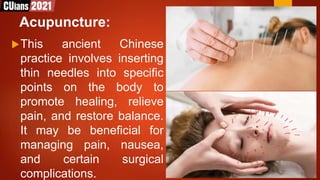
Acupuncture:
This ancient Chinese
practice involves inserting
thin needles into specific
points on the body to
promote healing, relieve
pain, and restore balance.
It may be beneficial for
managing pain, nausea,
and certain surgical
complications.
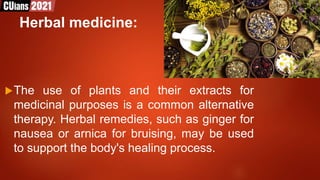
Herbal medicine:
The use of plants and their extracts for
medicinal purposes is a common alternative
therapy. Herbal remedies, such as ginger for
nausea or arnica for bruising, may be used
to support the body's healing process.
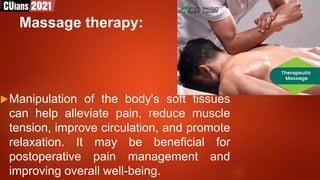
Massage therapy:
Manipulation of the body's soft tissues
can help alleviate pain, reduce muscle
tension, improve circulation, and promote
relaxation. It may be beneficial for
postoperative pain management and
improving overall well-being.
Mind-body techniques:
Practices such as meditation, deep
breathing exercises, guided imagery, and
progressive muscle relaxation can help
reduce stress, anxiety, and pain
perception. They may aid in the recovery
process and improve patient outcomes.
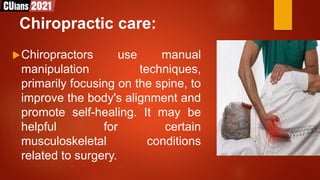
Chiropractic care:
Chiropractors use manual
manipulation techniques,
primarily focusing on the spine, to
improve the body's alignment and
promote self-healing. It may be
helpful for certain
musculoskeletal conditions
related to surgery.
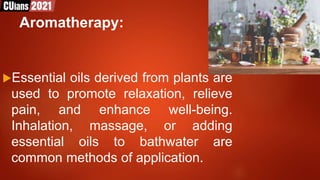
Aromatherapy:
Essential oils derived from plants are
used to promote relaxation, relieve
pain, and enhance well-being.
Inhalation, massage, or adding
essential oils to bathwater are
common methods of application.
Energy-based therapies:
 Practices like Reiki,
therapeutic touch, and
qigong work with the
body's energy fields to
promote healing and
relaxation. They are
non-invasive and can be
used as complementary
therapies.
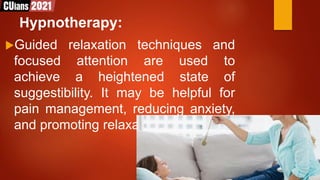
Hypnotherapy:
Guided relaxation techniques and
focused attention are used to
achieve a heightened state of
suggestibility. It may be helpful for
pain management, reducing anxiety,
and promoting relaxation.
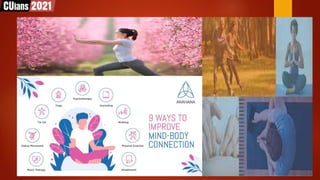
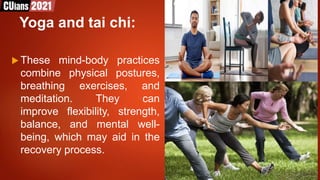
Yoga and tai chi:
 These mind-body practices
combine physical postures,
breathing exercises, and
meditation. They can
improve flexibility, strength,
balance, and mental well-
being, which may aid in the
recovery process.
Summary
It's important to consult with healthcare
professionals and qualified practitioners
when considering alternative therapies.
They can help determine the
appropriateness of these therapies for
specific medical surgical disorders and
ensure they are integrated safely and
effectively into the overall treatment plan.
Thanks

alternate therapies.pptx

  • 1.
    Alternative therapies usedin caring for patient with medical surgical disorder UNIVERSITY INSTITUTE OF NURSING
  • 2.
    Introduction  Alternative therapiescan be used as complementary approaches in caring for patients with medical surgical disorders, alongside conventional medical treatments. It's important to note that alternative therapies should not replace evidence-based medicine but rather be used in conjunction with it. Here are some alternative therapies that are commonly used:
  • 3.
    Acupuncture: This ancient Chinese practiceinvolves inserting thin needles into specific points on the body to promote healing, relieve pain, and restore balance. It may be beneficial for managing pain, nausea, and certain surgical complications.
  • 4.
    Herbal medicine: The useof plants and their extracts for medicinal purposes is a common alternative therapy. Herbal remedies, such as ginger for nausea or arnica for bruising, may be used to support the body's healing process.
  • 5.
    Massage therapy: Manipulation ofthe body's soft tissues can help alleviate pain, reduce muscle tension, improve circulation, and promote relaxation. It may be beneficial for postoperative pain management and improving overall well-being.
  • 6.
    Mind-body techniques: Practices suchas meditation, deep breathing exercises, guided imagery, and progressive muscle relaxation can help reduce stress, anxiety, and pain perception. They may aid in the recovery process and improve patient outcomes.
  • 8.
    Chiropractic care: Chiropractors usemanual manipulation techniques, primarily focusing on the spine, to improve the body's alignment and promote self-healing. It may be helpful for certain musculoskeletal conditions related to surgery.
  • 9.
    Aromatherapy: Essential oils derivedfrom plants are used to promote relaxation, relieve pain, and enhance well-being. Inhalation, massage, or adding essential oils to bathwater are common methods of application.
  • 10.
    Energy-based therapies:  Practiceslike Reiki, therapeutic touch, and qigong work with the body's energy fields to promote healing and relaxation. They are non-invasive and can be used as complementary therapies.
  • 11.
    Hypnotherapy: Guided relaxation techniquesand focused attention are used to achieve a heightened state of suggestibility. It may be helpful for pain management, reducing anxiety, and promoting relaxation.
  • 12.
    Yoga and taichi:  These mind-body practices combine physical postures, breathing exercises, and meditation. They can improve flexibility, strength, balance, and mental well- being, which may aid in the recovery process.
  • 13.
    Summary It's important toconsult with healthcare professionals and qualified practitioners when considering alternative therapies. They can help determine the appropriateness of these therapies for specific medical surgical disorders and ensure they are integrated safely and effectively into the overall treatment plan.
  • 14.