Metagenomic sequencing for virus discovery and
characterization
Kansas State Veterinary Diagnostic Laboratory
Ben Hause, MS, PhD
• Metagenomic sequencing: sequencing material directly recovered from the environment
– Nasal swab, sera, oral fluids, tissue, etc.
– Next generation sequencing (Illumina Miseq)
Metagenomic sequencing
Sanger Sequencing
• 1 read
• ~800 bp
• $80/gene
• Targeted
• Quasispecies: no
• Single gene/region
Metagenomic/NGS
• ~1 million reads
• ~300 bp
• $300/sample
• Targeted or non-targeted
• Quasispecies: yes
• Complete genomes/multiple
organisms
Metagenomic viral
RNA and DNA
(sample pretreated
with DNase/RNase
cocktail
Random hexamer with
5’-20bp barcode
Reverse Transcription and
Second Strand Synthesis
(RNA -> cDNA->dsDNA)
PCR Amplification
using primer identical
to 20bp barcode
Amplicon pools
generated from
randomly amplified
virus nucleic acid
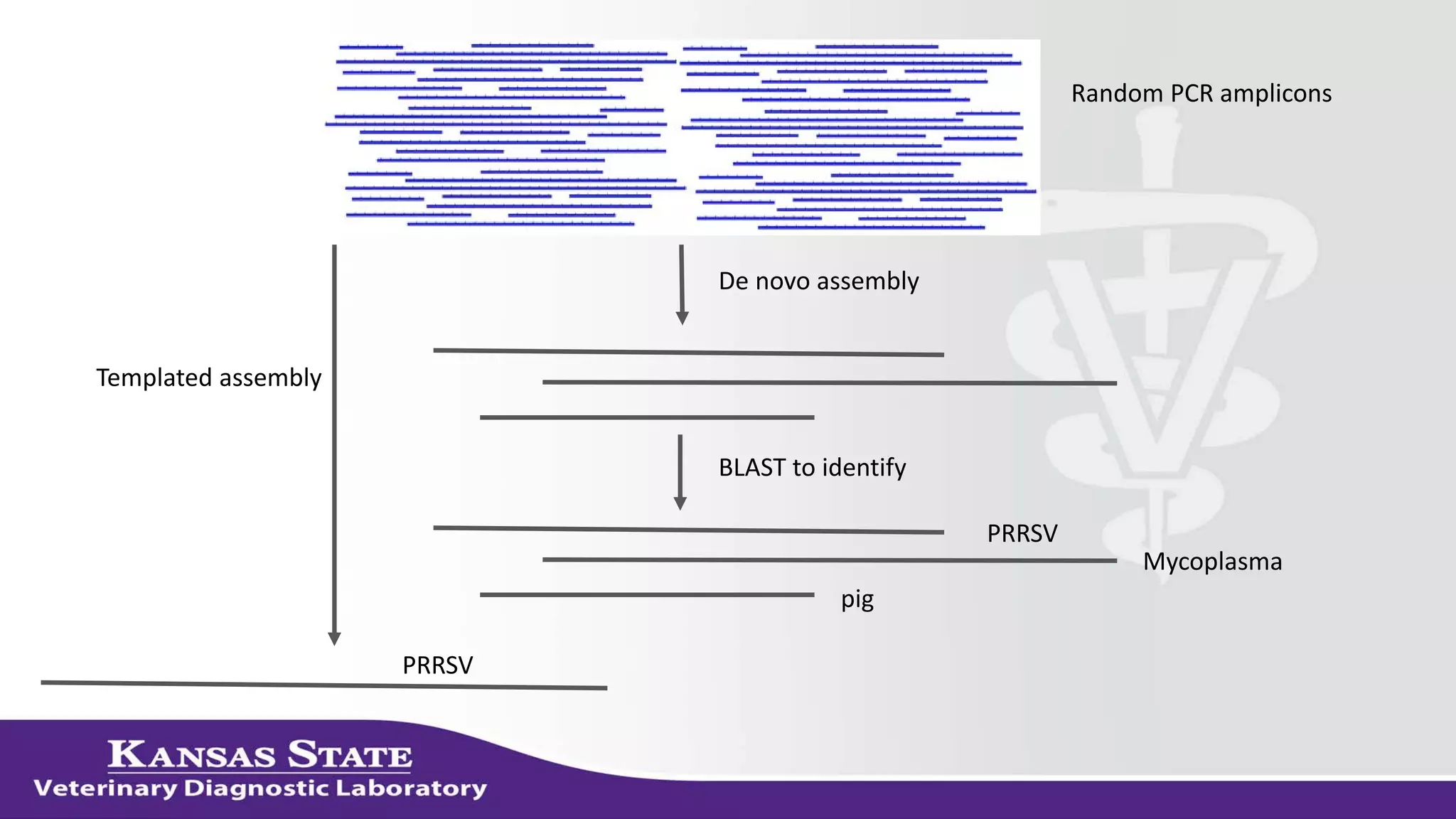
De novo assembly
BLAST to identify
PRRSV
Mycoplasma
pig
Templated assembly
PRRSV
Random PCR amplicons
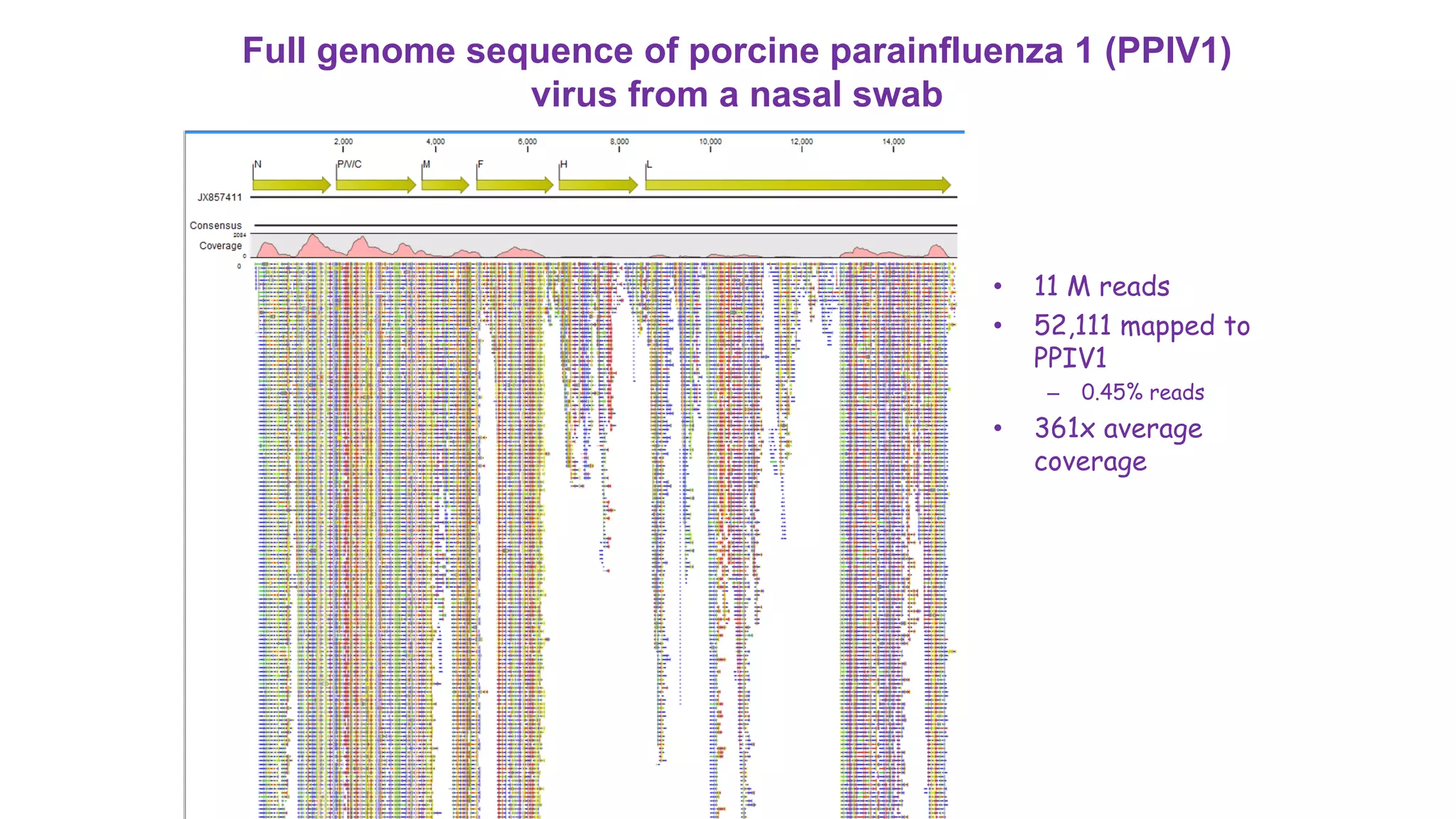
Full genome sequence of porcine parainfluenza 1 (PPIV1)
virus from a nasal swab
• 11 M reads
• 52,111 mapped to
PPIV1
– 0.45% reads
• 361x average
coverage
Metagenomic sequencing uses:
- cases with unusual clinical presentations
-cases where the usual suspects aren’t identified
-herd profiling
-feedback/exposure inoculum screening
Unknown neurologic disease
• Starting in spring 2015, approx. 700 5-14 week old pigs
exhibited intention tremors, increased respiratory rates,
and as disease progressed, inability to swallow
– Mortality was 100% within 4 days of onset
• Conventional diagnostics failed to find pathogens
• August 2015 new group of pigs 10-16 weeks of age from
same system showed similar symptoms
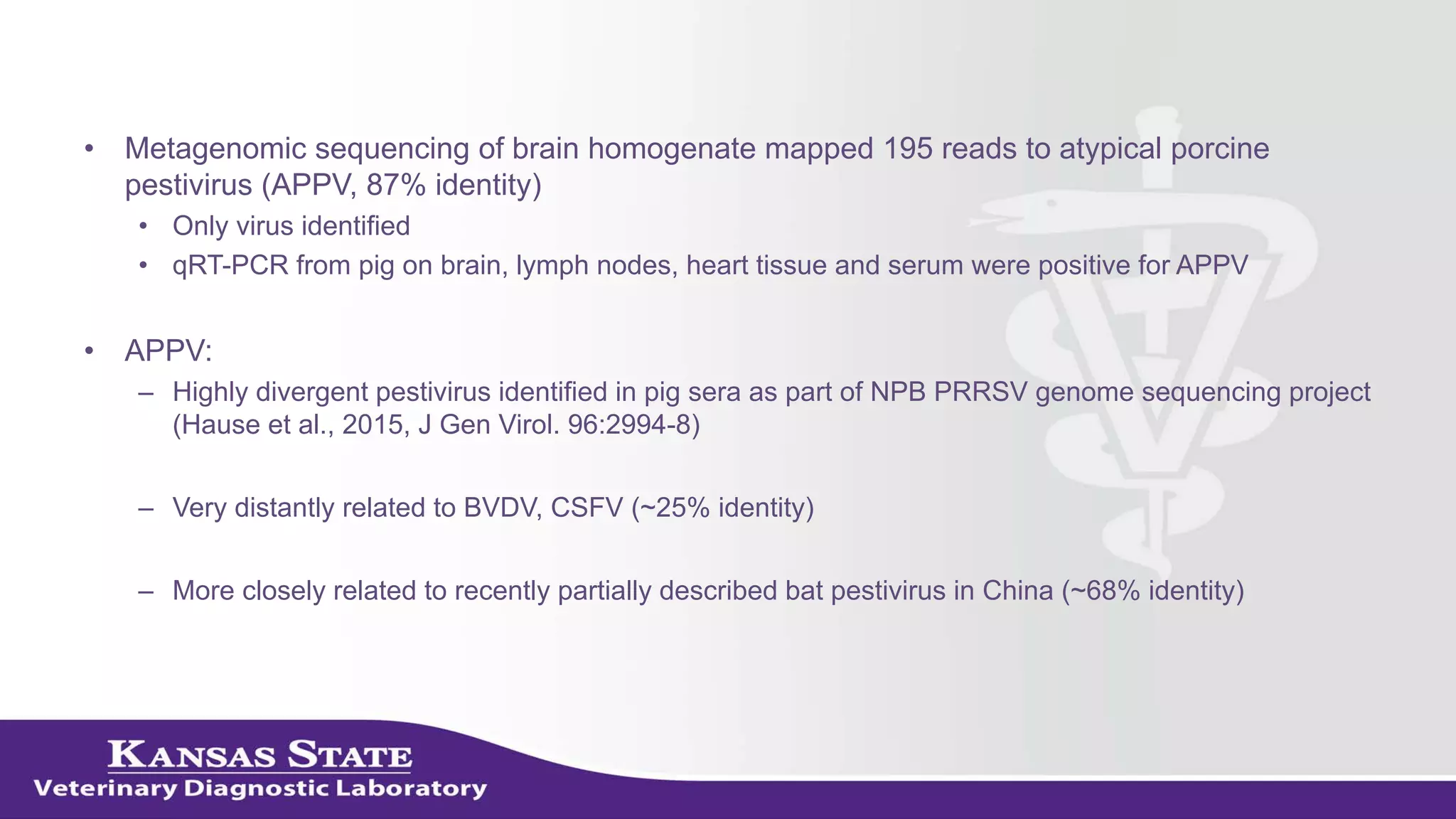
• Metagenomic sequencing of brain homogenate mapped 195 reads to atypical porcine
pestivirus (APPV, 87% identity)
• Only virus identified
• qRT-PCR from pig on brain, lymph nodes, heart tissue and serum were positive for APPV
• APPV:
– Highly divergent pestivirus identified in pig sera as part of NPB PRRSV genome sequencing project
(Hause et al., 2015, J Gen Virol. 96:2994-8)
– Very distantly related to BVDV, CSFV (~25% identity)
– More closely related to recently partially described bat pestivirus in China (~68% identity)
IHC
• Anti-APPV Erns antibodies
were generated in mice
• IHC detected virus in the
liver, spleen and lymph
nodes
– Brain was negative
– Large number positive cells
in LN, localization in
cytoplasm
Recent Findings and future studies
• ISU was able to demonstrate APPV-like virus induced congenital shaker pigs after in utero
inoculation of fetuses
• How serious is this disease in the swine industry?
– Congenital tremors have been sporadically observed with no definitive etiologic agent
– Intention tremors and resulting mortality in older pigs new?
• Is there potential for persistent infection of piglets?
• Multiple subtypes resulting in different disease presentation?
– Observed ~15% E2 nt diversity
• Newly emerged virus or circulating unnoticed for some time?
– Virus X or pestivirus-like viruses isolated from pigs reported in the past
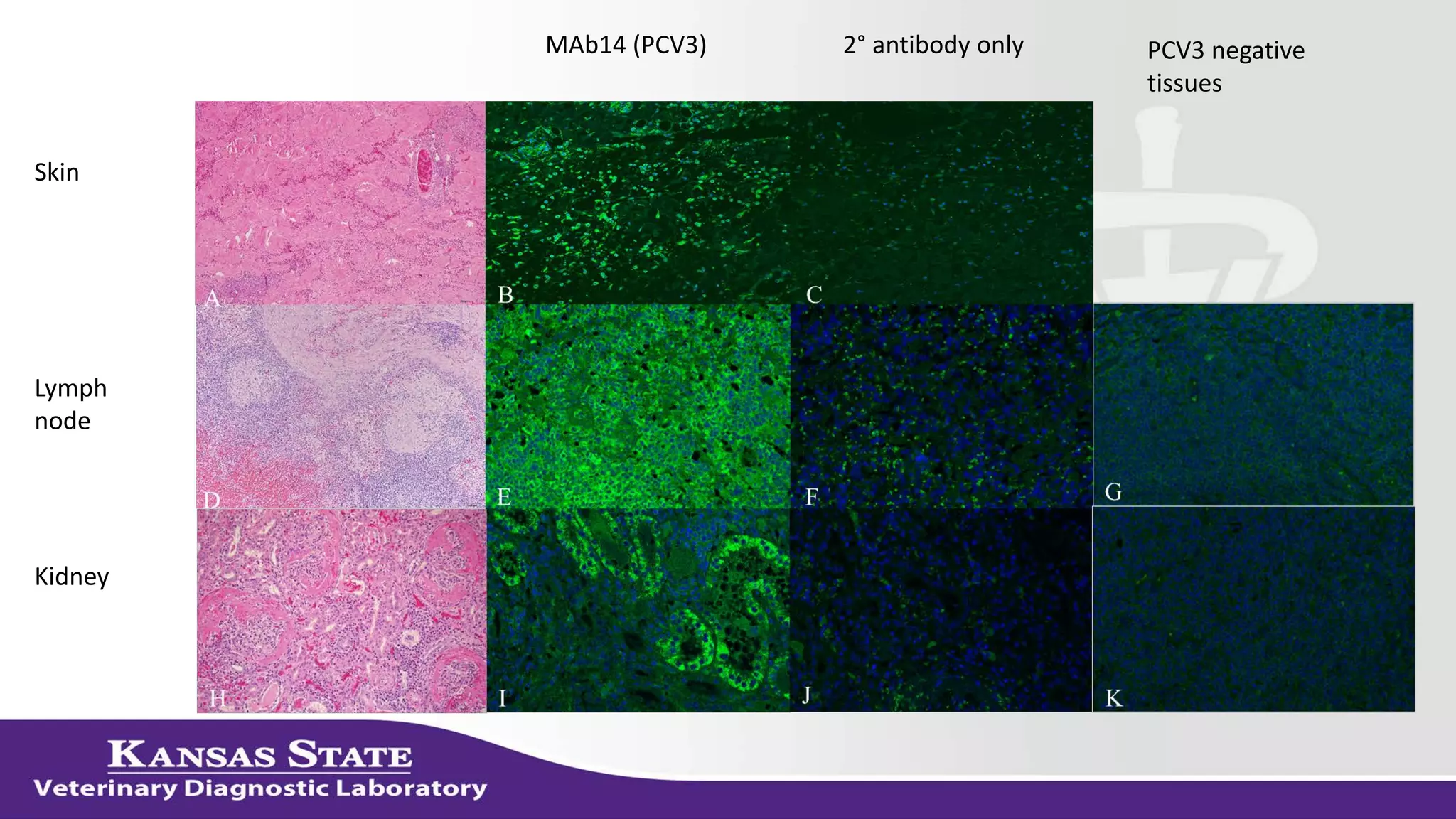
New circovirus species, PCV3
• NC sow farm, chronic poor reproductive performance
• Acutely dead sows with lesions consistent with PDNS
• Sows with PDNS-like skin lesions aborting
• Samples sent to ISU
– Lesions consistent with PCV2, however…
– PCV2 negative by PCR and IHC
• Samples sent to KState for metagenomic sequencing
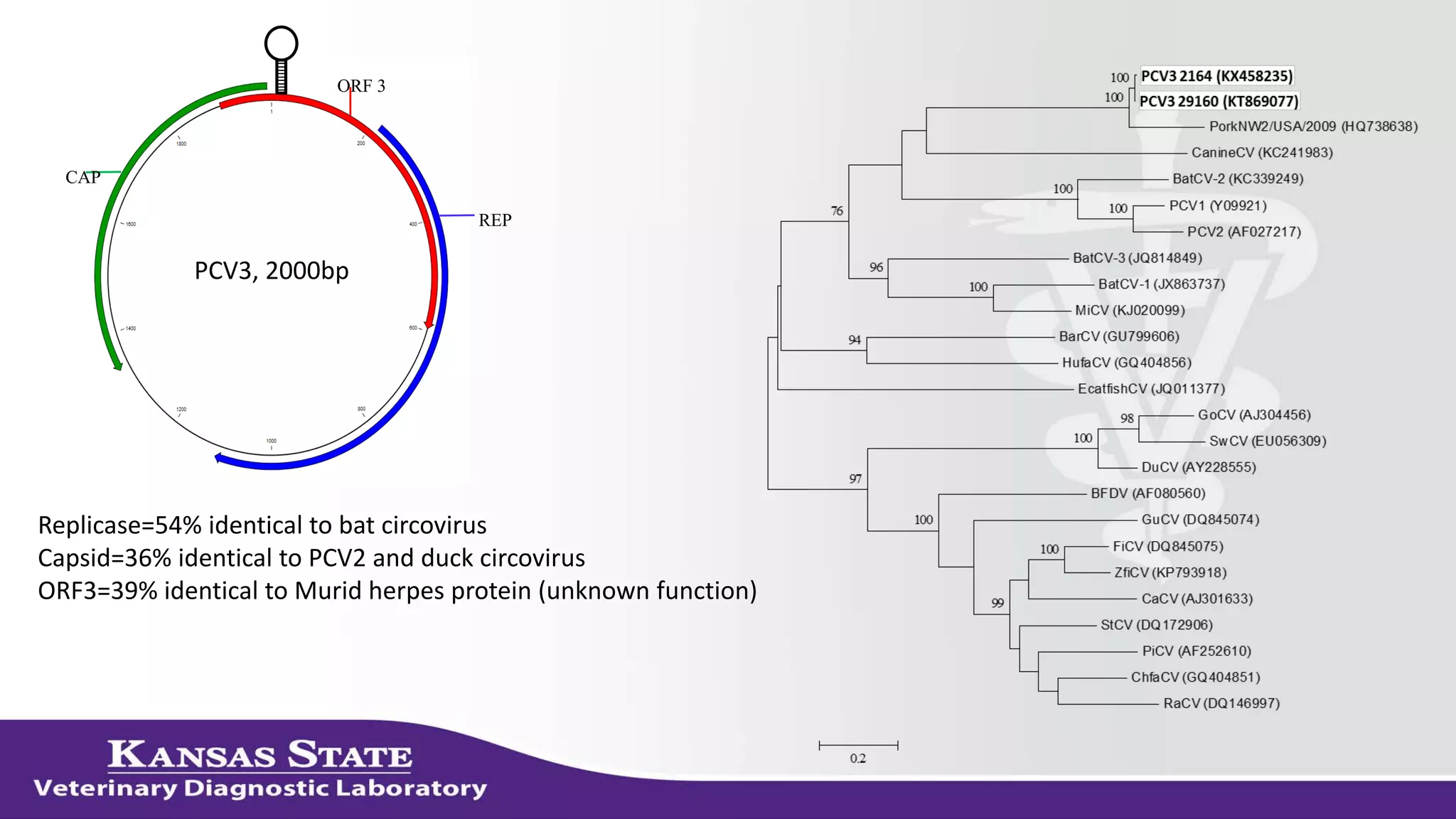
Replicase=54% identical to bat circovirus
Capsid=36% identical to PCV2 and duck circovirus
ORF3=39% identical to Murid herpes protein (unknown function)
REP
ORF 3
CAP
PCV3, 2000bp
Kidney
Skin
Lymph
node
MAb14 (PCV3) 2° antibody only PCV3 negative
tissues
• Quantified PCV3 in symptomatic cases
– Sows with PDNS, Ct=28-30
– Mummies, Ct=17-21
• Incidence determined by qPCR: 34/271 samples positive (12.5%)
– Samples submitted to ISU for respiratory disease testing
• Screened 48 PDNS cases from ISU that were negative for PCV2 by IHC
– 45 positive by PCR for PCV3 (94%)
– Confirmed subset of 5 positive samples by PCR/sequencing
– PCV3 IHC on 5 PCR positive slides, 3 positive (60%)
• PCV2 history
– First identified in mid-1990’s
– Sporadic PMWS in Canada
– Severe systemic disease in Europe and Asia followed by U.S. in early/mid 2000’s
– Retrospective studies found evidence of PCV2 circulation for decades prior to
widespread disease
– Uncontrolled until commercial vaccines developed
• PCV3 on a similar trajectory???
– More research needed, including vaccine development!
– role in PDNS?
– Subclinical infection?
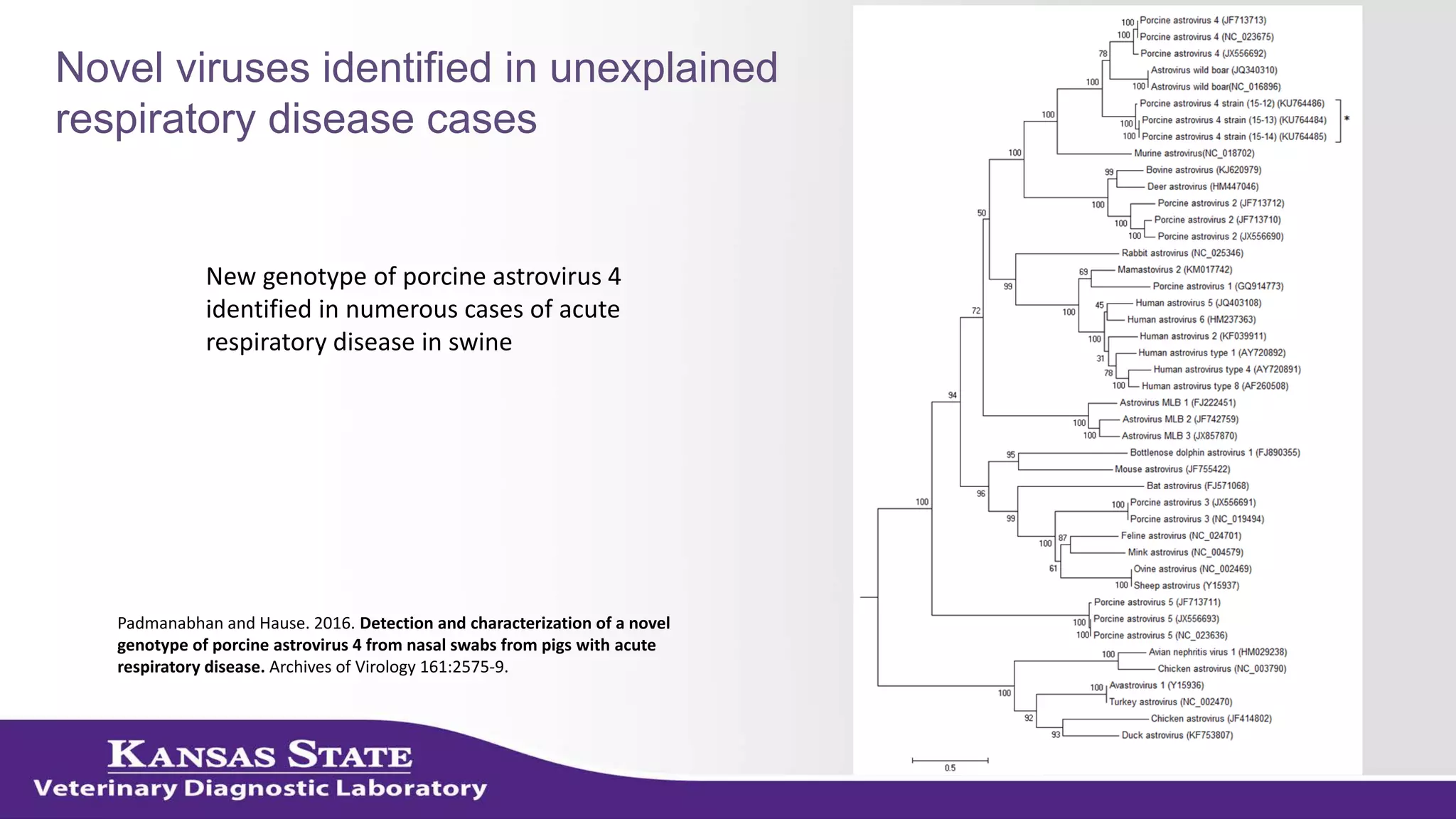
Novel viruses identified in unexplained
respiratory disease cases
New genotype of porcine astrovirus 4
identified in numerous cases of acute
respiratory disease in swine
Padmanabhan and Hause. 2016. Detection and characterization of a novel
genotype of porcine astrovirus 4 from nasal swabs from pigs with acute
respiratory disease. Archives of Virology 161:2575-9.
Porcine parainfluenza virus 1
• 10-21 day old pigs with acute respiratory disease
– Negative for influenza A virus and PRRSV
• Metagenomic sequencing of nasal swabs from IL and NE
– Complete PPIV1 genomes
U.S. PPIV1 genomes 90-95% identical to
Hong Kong PPIV1
Palinski et al., J Gen Virol. 2016, 97(2):281-6. doi: 10.1099/jgv.0.000343.
U.S.
H.K.
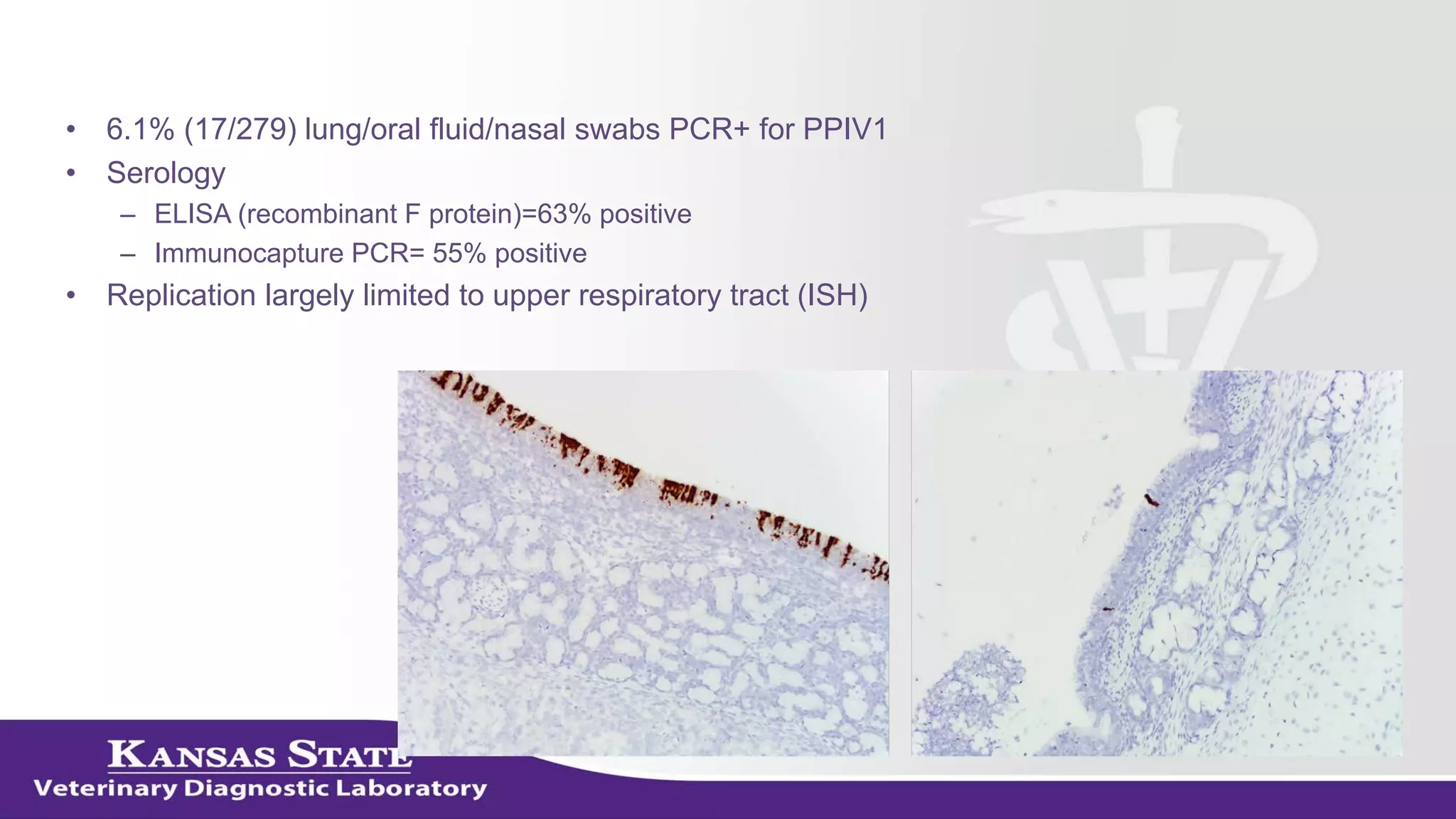
• 6.1% (17/279) lung/oral fluid/nasal swabs PCR+ for PPIV1
• Serology
– ELISA (recombinant F protein)=63% positive
– Immunocapture PCR= 55% positive
• Replication largely limited to upper respiratory tract (ISH)
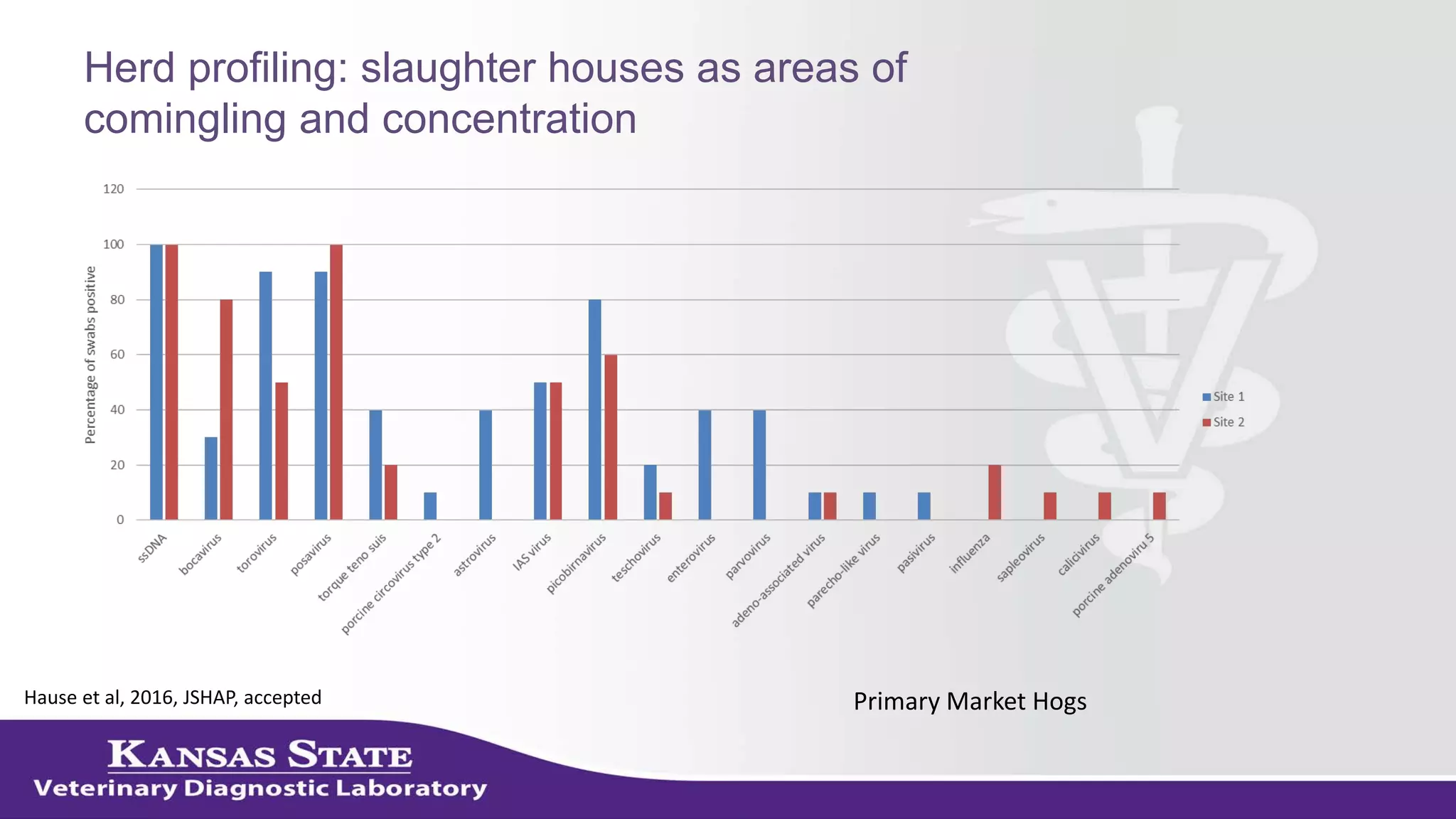
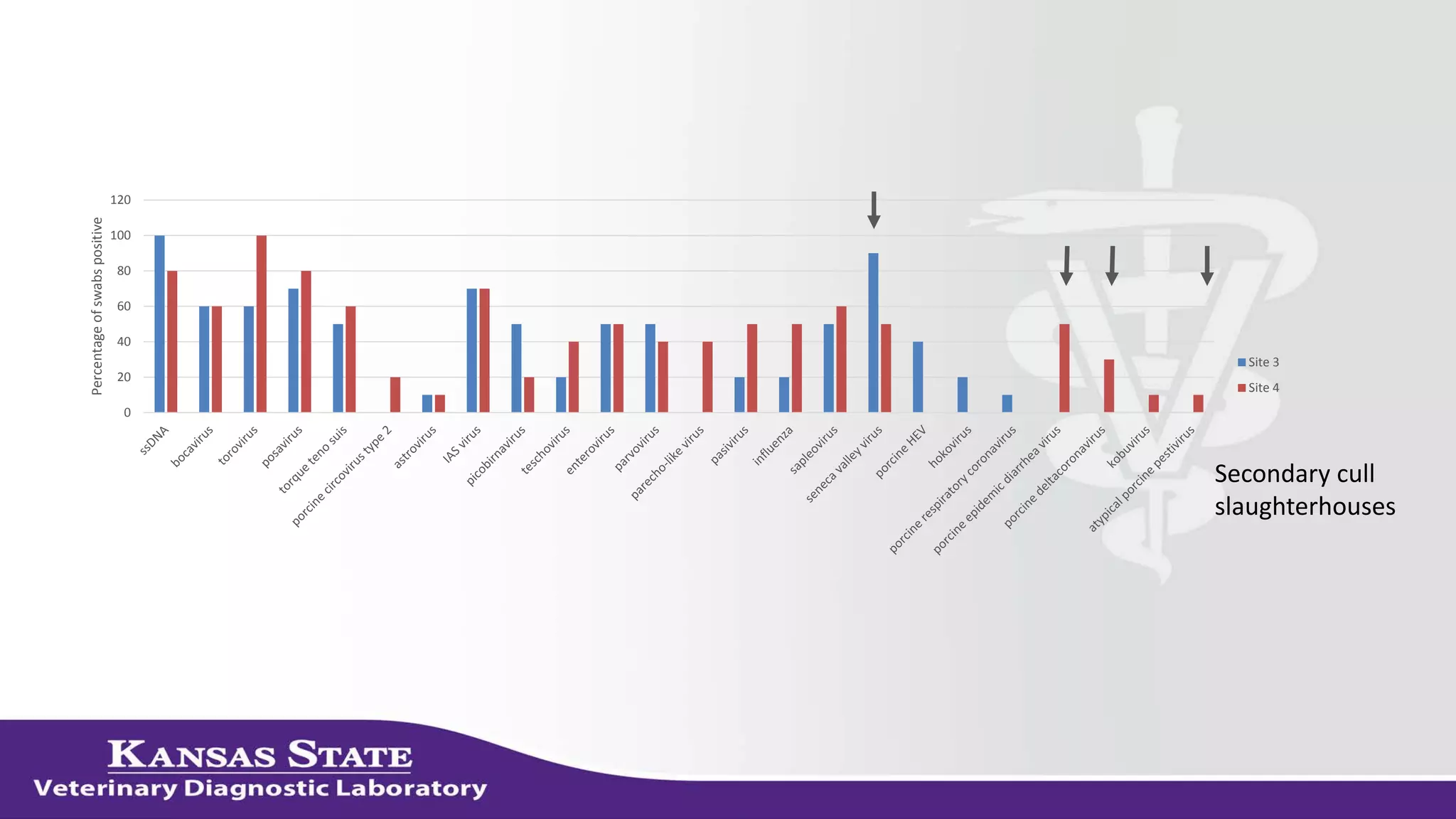
Herd profiling: slaughter houses as areas of
comingling and concentration
Primary Market HogsHause et al, 2016, JSHAP, accepted
0
20
40
60
80
100
120
Percentageofswabspositive
Site 3
Site 4
Secondary cull
slaughterhouses
• Seneca valley virus identified from both
samplings from 4/5 markets by
sequencing
• qRT-PCR for SVV
– 26/50 (52%) June sampling
– 18/50 (36%) August sampling
• Primary market=1/40 (2.5%)
• Secondary market=43/60 (72%)
• Virus isolation, second sampling
– Positive for 5 samples (Ct values ~15-
20)
• SVV much more common in lower
health status pigs?
– Oral fluid testing for SVV, ~1% positive
(ISU/UMN/SHIC)
– Cause versus effect???
Hause et al., 2016. Emerg Infect Dis 22:1323-1325.
Feral Swine Virome
• Novel swine orthopneumovirus
• 30% seropositivity both in
domestic and feral swine
• 5% domestic swine respiratory
samples positive
• Role in disease?
Hause et al., 2016, J Gen Virol, doi: 10.1099/jgv.0.000554
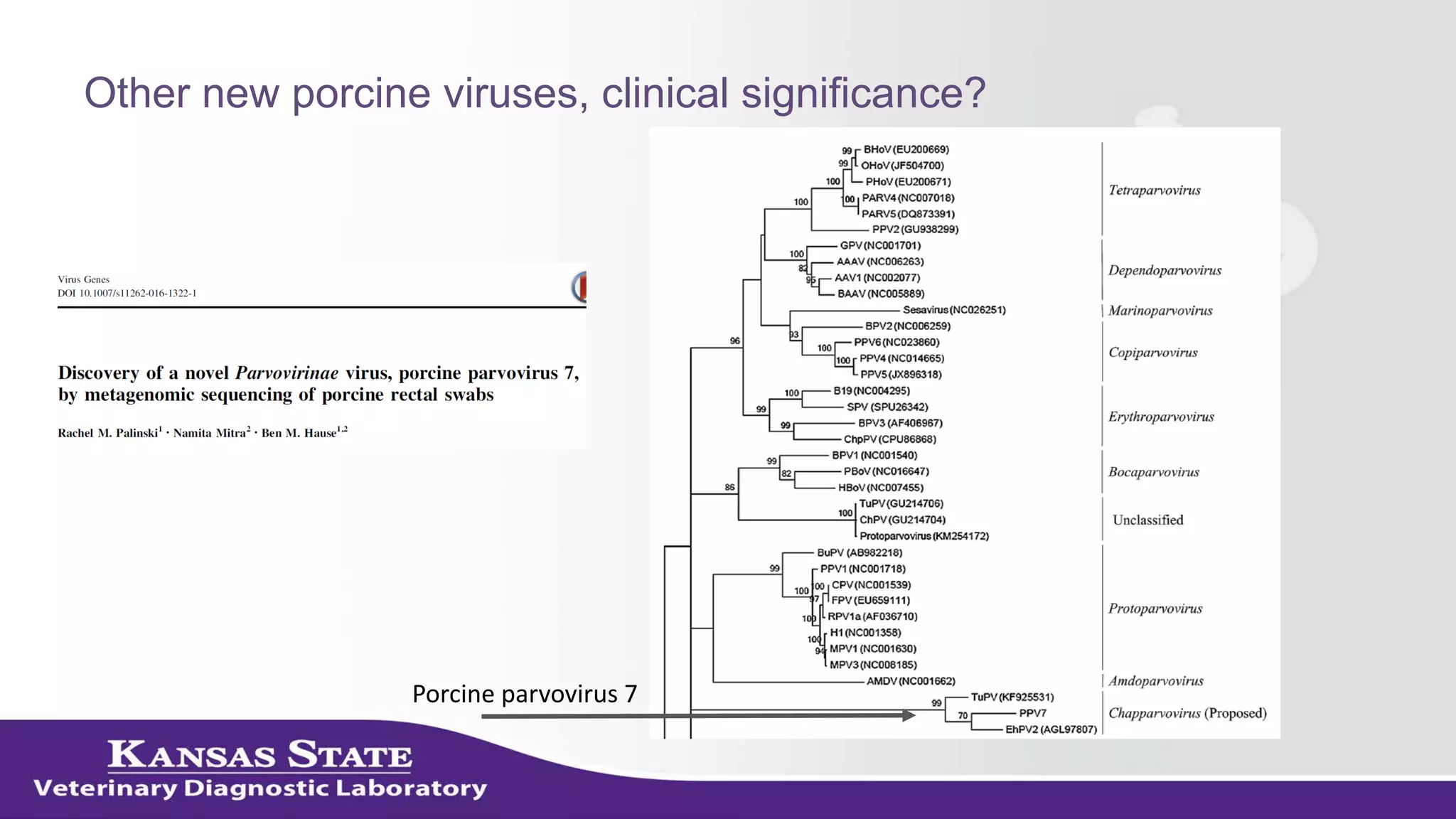
Other new porcine viruses, clinical significance?
Porcine parvovirus 7
NGS/Metagenomic Sequencing
• Powerful new method for veterinary diagnostics
• Complete viral genome sequencing
– Isolated virus
– Directly from clinical samples (with sufficient viral titer)
• Cases with unknown etiology
– Unusual clinical presentation
– Clinical symptoms with absence of usual suspects
• Profiling animal/herds
– Live exposure (rotavirus, PEDV, PDCoV, PRRSV)
• Affordable
– $300/sample
– Alternative: multiple PCRS, histopathology, culture, VI, etc., can easily reach
$300
• Need more widespread use!
• Need follow up studies to establish clinical relevance
Acknowledgements
• Kansas State University
• Dr. Dick Hesse
• Dr. Lalitha Peddireddi
• Dr. Jianfa Bai
• Dr. Erin Schirtzinger
• Dr. Emily Collin
• Rachel Palinski
• Dr. Namita Mitra
• Aiswaria Padmanabhan
• South Dakota State University
• Travis Clement
• Iowa State University
• Dr. Phillip Gauger
• Dr. Pablo Pineyro
• Dr. Paulo Arruda
• Dr. Kent Schwartz
• Swine Veterinarians
• Dr. Josh Duff
• Dr. Chad Smith
• Dr. Emily Byers
• Dr. John Prickett
• National Pork Board grant #14-204
• Zoetis
• Boehringer Ingelheim
• Swine Health Information Center
• Kansas Bioscience Authority/Center for
Excellence Emerging Zoonotic Animal
Diseases
New Contact Info:
bhause@cambridgetechnologies.net

Dr. Ben Hause - Pathogen Discovery Using Metagenomic Sequencing

  • 1.
    Metagenomic sequencing forvirus discovery and characterization Kansas State Veterinary Diagnostic Laboratory Ben Hause, MS, PhD
  • 2.
    • Metagenomic sequencing:sequencing material directly recovered from the environment – Nasal swab, sera, oral fluids, tissue, etc. – Next generation sequencing (Illumina Miseq) Metagenomic sequencing Sanger Sequencing • 1 read • ~800 bp • $80/gene • Targeted • Quasispecies: no • Single gene/region Metagenomic/NGS • ~1 million reads • ~300 bp • $300/sample • Targeted or non-targeted • Quasispecies: yes • Complete genomes/multiple organisms
  • 3.
    Metagenomic viral RNA andDNA (sample pretreated with DNase/RNase cocktail Random hexamer with 5’-20bp barcode Reverse Transcription and Second Strand Synthesis (RNA -> cDNA->dsDNA) PCR Amplification using primer identical to 20bp barcode Amplicon pools generated from randomly amplified virus nucleic acid
  • 4.
    De novo assembly BLASTto identify PRRSV Mycoplasma pig Templated assembly PRRSV Random PCR amplicons
  • 5.
    Full genome sequenceof porcine parainfluenza 1 (PPIV1) virus from a nasal swab • 11 M reads • 52,111 mapped to PPIV1 – 0.45% reads • 361x average coverage
  • 6.
    Metagenomic sequencing uses: -cases with unusual clinical presentations -cases where the usual suspects aren’t identified -herd profiling -feedback/exposure inoculum screening
  • 7.
    Unknown neurologic disease •Starting in spring 2015, approx. 700 5-14 week old pigs exhibited intention tremors, increased respiratory rates, and as disease progressed, inability to swallow – Mortality was 100% within 4 days of onset • Conventional diagnostics failed to find pathogens • August 2015 new group of pigs 10-16 weeks of age from same system showed similar symptoms
  • 9.
    • Metagenomic sequencingof brain homogenate mapped 195 reads to atypical porcine pestivirus (APPV, 87% identity) • Only virus identified • qRT-PCR from pig on brain, lymph nodes, heart tissue and serum were positive for APPV • APPV: – Highly divergent pestivirus identified in pig sera as part of NPB PRRSV genome sequencing project (Hause et al., 2015, J Gen Virol. 96:2994-8) – Very distantly related to BVDV, CSFV (~25% identity) – More closely related to recently partially described bat pestivirus in China (~68% identity)
  • 10.
    IHC • Anti-APPV Ernsantibodies were generated in mice • IHC detected virus in the liver, spleen and lymph nodes – Brain was negative – Large number positive cells in LN, localization in cytoplasm
  • 11.
    Recent Findings andfuture studies • ISU was able to demonstrate APPV-like virus induced congenital shaker pigs after in utero inoculation of fetuses • How serious is this disease in the swine industry? – Congenital tremors have been sporadically observed with no definitive etiologic agent – Intention tremors and resulting mortality in older pigs new? • Is there potential for persistent infection of piglets? • Multiple subtypes resulting in different disease presentation? – Observed ~15% E2 nt diversity • Newly emerged virus or circulating unnoticed for some time? – Virus X or pestivirus-like viruses isolated from pigs reported in the past
  • 12.
    New circovirus species,PCV3 • NC sow farm, chronic poor reproductive performance • Acutely dead sows with lesions consistent with PDNS • Sows with PDNS-like skin lesions aborting • Samples sent to ISU – Lesions consistent with PCV2, however… – PCV2 negative by PCR and IHC • Samples sent to KState for metagenomic sequencing
  • 13.
    Replicase=54% identical tobat circovirus Capsid=36% identical to PCV2 and duck circovirus ORF3=39% identical to Murid herpes protein (unknown function) REP ORF 3 CAP PCV3, 2000bp
  • 14.
    Kidney Skin Lymph node MAb14 (PCV3) 2°antibody only PCV3 negative tissues
  • 15.
    • Quantified PCV3in symptomatic cases – Sows with PDNS, Ct=28-30 – Mummies, Ct=17-21 • Incidence determined by qPCR: 34/271 samples positive (12.5%) – Samples submitted to ISU for respiratory disease testing • Screened 48 PDNS cases from ISU that were negative for PCV2 by IHC – 45 positive by PCR for PCV3 (94%) – Confirmed subset of 5 positive samples by PCR/sequencing – PCV3 IHC on 5 PCR positive slides, 3 positive (60%)
  • 16.
    • PCV2 history –First identified in mid-1990’s – Sporadic PMWS in Canada – Severe systemic disease in Europe and Asia followed by U.S. in early/mid 2000’s – Retrospective studies found evidence of PCV2 circulation for decades prior to widespread disease – Uncontrolled until commercial vaccines developed • PCV3 on a similar trajectory??? – More research needed, including vaccine development! – role in PDNS? – Subclinical infection?
  • 17.
    Novel viruses identifiedin unexplained respiratory disease cases New genotype of porcine astrovirus 4 identified in numerous cases of acute respiratory disease in swine Padmanabhan and Hause. 2016. Detection and characterization of a novel genotype of porcine astrovirus 4 from nasal swabs from pigs with acute respiratory disease. Archives of Virology 161:2575-9.
  • 18.
    Porcine parainfluenza virus1 • 10-21 day old pigs with acute respiratory disease – Negative for influenza A virus and PRRSV • Metagenomic sequencing of nasal swabs from IL and NE – Complete PPIV1 genomes U.S. PPIV1 genomes 90-95% identical to Hong Kong PPIV1 Palinski et al., J Gen Virol. 2016, 97(2):281-6. doi: 10.1099/jgv.0.000343. U.S. H.K.
  • 19.
    • 6.1% (17/279)lung/oral fluid/nasal swabs PCR+ for PPIV1 • Serology – ELISA (recombinant F protein)=63% positive – Immunocapture PCR= 55% positive • Replication largely limited to upper respiratory tract (ISH)
  • 20.
    Herd profiling: slaughterhouses as areas of comingling and concentration Primary Market HogsHause et al, 2016, JSHAP, accepted
  • 21.
  • 22.
    • Seneca valleyvirus identified from both samplings from 4/5 markets by sequencing • qRT-PCR for SVV – 26/50 (52%) June sampling – 18/50 (36%) August sampling • Primary market=1/40 (2.5%) • Secondary market=43/60 (72%) • Virus isolation, second sampling – Positive for 5 samples (Ct values ~15- 20) • SVV much more common in lower health status pigs? – Oral fluid testing for SVV, ~1% positive (ISU/UMN/SHIC) – Cause versus effect??? Hause et al., 2016. Emerg Infect Dis 22:1323-1325.
  • 23.
    Feral Swine Virome •Novel swine orthopneumovirus • 30% seropositivity both in domestic and feral swine • 5% domestic swine respiratory samples positive • Role in disease? Hause et al., 2016, J Gen Virol, doi: 10.1099/jgv.0.000554
  • 24.
    Other new porcineviruses, clinical significance? Porcine parvovirus 7
  • 26.
    NGS/Metagenomic Sequencing • Powerfulnew method for veterinary diagnostics • Complete viral genome sequencing – Isolated virus – Directly from clinical samples (with sufficient viral titer) • Cases with unknown etiology – Unusual clinical presentation – Clinical symptoms with absence of usual suspects • Profiling animal/herds – Live exposure (rotavirus, PEDV, PDCoV, PRRSV) • Affordable – $300/sample – Alternative: multiple PCRS, histopathology, culture, VI, etc., can easily reach $300 • Need more widespread use! • Need follow up studies to establish clinical relevance
  • 27.
    Acknowledgements • Kansas StateUniversity • Dr. Dick Hesse • Dr. Lalitha Peddireddi • Dr. Jianfa Bai • Dr. Erin Schirtzinger • Dr. Emily Collin • Rachel Palinski • Dr. Namita Mitra • Aiswaria Padmanabhan • South Dakota State University • Travis Clement • Iowa State University • Dr. Phillip Gauger • Dr. Pablo Pineyro • Dr. Paulo Arruda • Dr. Kent Schwartz • Swine Veterinarians • Dr. Josh Duff • Dr. Chad Smith • Dr. Emily Byers • Dr. John Prickett • National Pork Board grant #14-204 • Zoetis • Boehringer Ingelheim • Swine Health Information Center • Kansas Bioscience Authority/Center for Excellence Emerging Zoonotic Animal Diseases New Contact Info: bhause@cambridgetechnologies.net