Microbial Metagenomics  Drives a New Cyberinfrastructure Invited Talk  School of Biological Sciences University of California, Irvine March 3, 2006 Dr. Larry Smarr Director, California Institute for Telecommunications and Information Technologies Harry E. Gruber Professor,  Dept. of Computer Science and Engineering Jacobs School of Engineering, UCSD
Abstract Calit2, in partnership with J. Craig Venter Institute in Rockville, MD, and UCSD's Center for Earth Observations and Applications at Scripps Institution of Oceanography, will build a state-of-the-art computational resource and develop software tools to decipher the genetic code of communities of microbial life in the world's oceans. The Gordon and Betty Moore Foundation has awarded $24.5 million over seven years to create the Community Cyberinfrastructure for Advanced Marine Microbial Ecology Research and Analysis (CAMERA). Scientists will use CAMERA for metagenomics research -- analyzing microbial genomic sequence data in the context of other microbial species, as well as in comparison to a variety of other "metadata" such as the chemical and physical conditions in which microbes are sampled. The CAMERA project will contain the results of the Venter Institute's Sorcerer II Expedition, which carried out the first large-scale genomic survey of microbial life in the world's oceans to produce the largest gene catalogue ever assembled. Sorcerer II is expected to more than double the number of protein sequences currently available in the National Institutes of Health's GenBank. In addition to Sorcerer II's ecological genomic data, the CAMERA database will be augmented by the full genomes of more than 150 critical marine microbes enabling new comparative genomics studies.
Calit2 Brings Computer Scientists and Engineers  Together with Biomedical Researchers Some Areas of Concentration: Metagenomics Genomic Analysis of Organisms Evolution of Genomes Cancer Genomics Human Genomic Variation and Disease Mitochondrial Evolution Proteomics Computational Biology Information Theory and Biological Systems UC San Diego UC Irvine 1200 Researchers in Two Buildings
Evolution is the Principle of Biological Systems: Most of Evolutionary Time Was in the Microbial World Source: Carl Woese, et al You Are Here Much of Genome Work Has Occurred in Animals
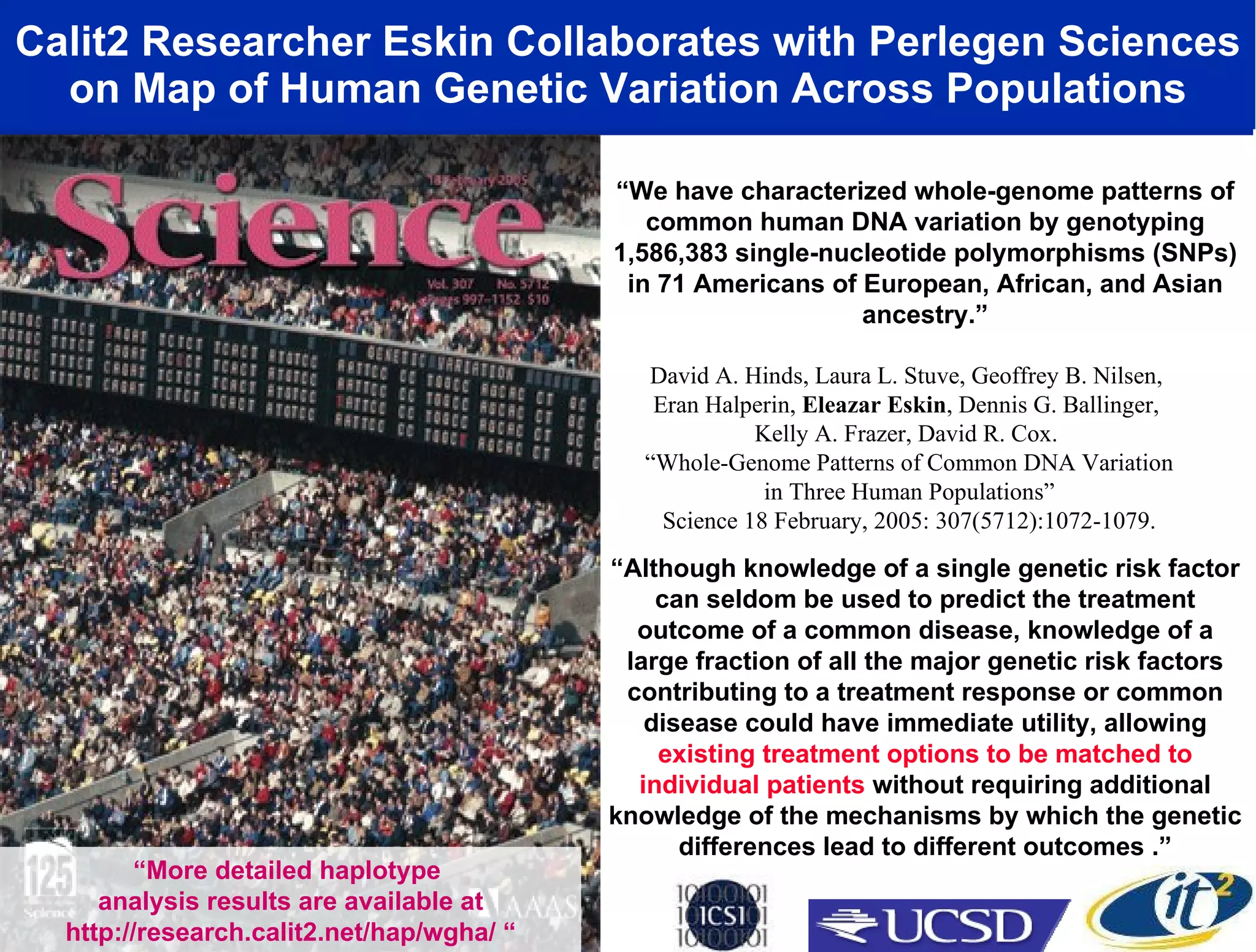
Calit2 Researcher Eskin Collaborates with Perlegen Sciences on Map of Human Genetic Variation Across Populations David A. Hinds, Laura L. Stuve, Geoffrey B. Nilsen,  Eran Halperin,  Eleazar Eskin , Dennis G. Ballinger,  Kelly A. Frazer, David R. Cox.  “ Whole-Genome Patterns of Common DNA Variation in Three Human Populations”  Science 18 February, 2005: 307(5712):1072-1079. “ We have characterized whole-genome patterns of common human DNA variation by genotyping 1,586,383 single-nucleotide polymorphisms (SNPs) in 71 Americans of European, African, and Asian ancestry.” “ Although knowledge of a single genetic risk factor can seldom be used to predict the treatment outcome of a common disease, knowledge of a large fraction of all the major genetic risk factors contributing to a treatment response or common disease could have immediate utility, allowing  existing treatment options to be matched to individual patients  without requiring additional knowledge of the mechanisms by which the genetic differences lead to different outcomes .” “ More detailed haplotype  analysis results are available at http://research.calit2.net/hap/wgha/ “
For Mitochondrial Diseases It Has Been More Productive   to Classify Patients by Genetic Defect Rather than by Clinical Manifestation Over the past 10 years, mitochondrial defects have been implicated in a wide variety of degenerative diseases, aging, and cancer… The same mtDNA mutation can produce quite different phenotypes,  and different mutations can produce similar phenotypes. … The essential role of mitochondrial oxidative phosphorylation in cellular energy production,  the generation of reactive oxygen species,  and the initiation of apoptosis  has suggested a number of novel mechanisms for mitochondrial pathology. -- Douglas Wallace, Science, Vol. 283, 1482-1488,  5 March 1999
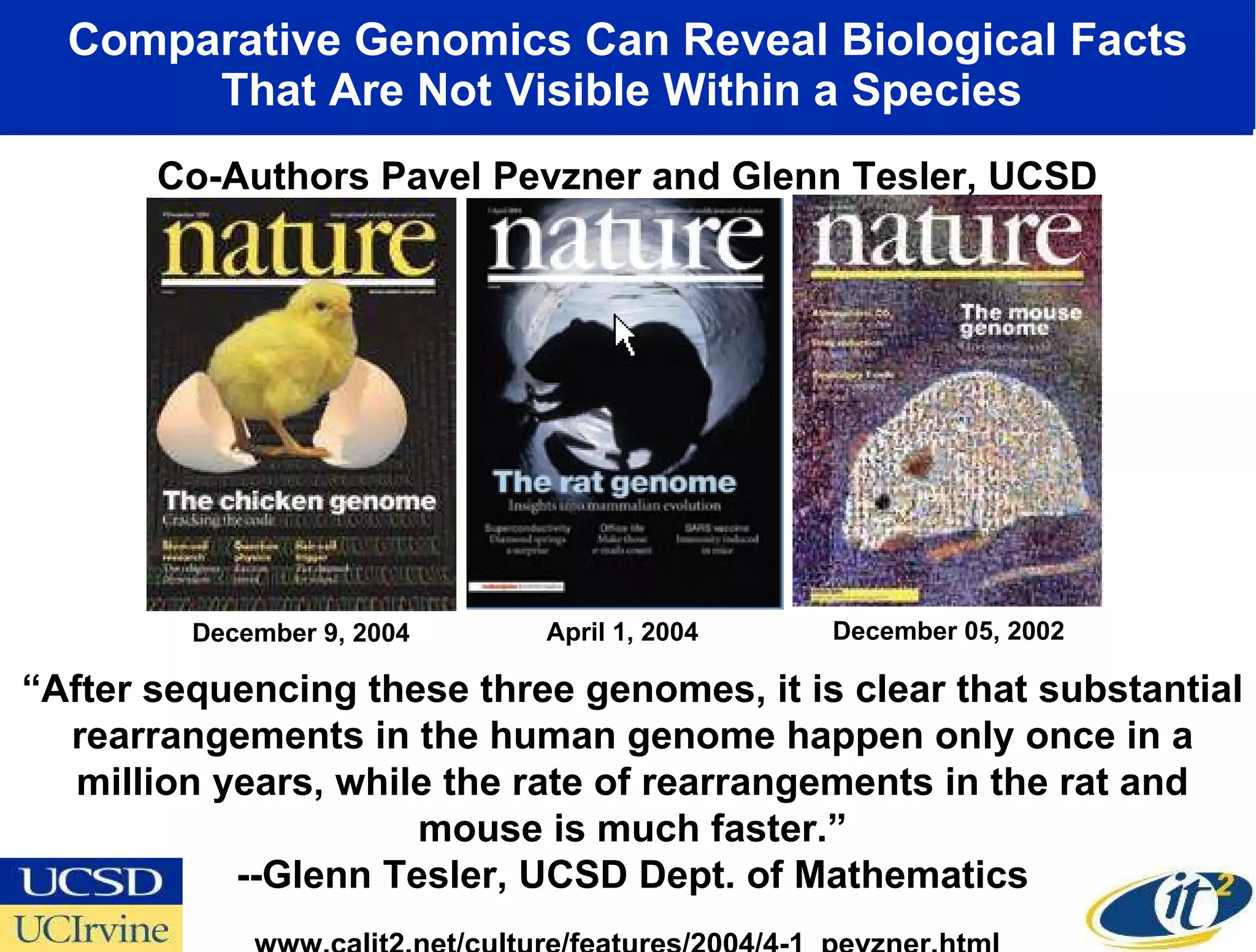
Comparative Genomics Can Reveal Biological Facts That Are Not Visible Within a Species  “ After sequencing these three genomes, it is clear that substantial rearrangements in the human genome happen only once in a million years, while the rate of rearrangements in the rat and mouse is much faster.” --Glenn Tesler, UCSD Dept. of Mathematics www.calit2.net/culture/features/2004/4-1_pevzner.html Co-Authors Pavel Pevzner and Glenn Tesler, UCSD April 1, 2004 December 05, 2002 December 9, 2004
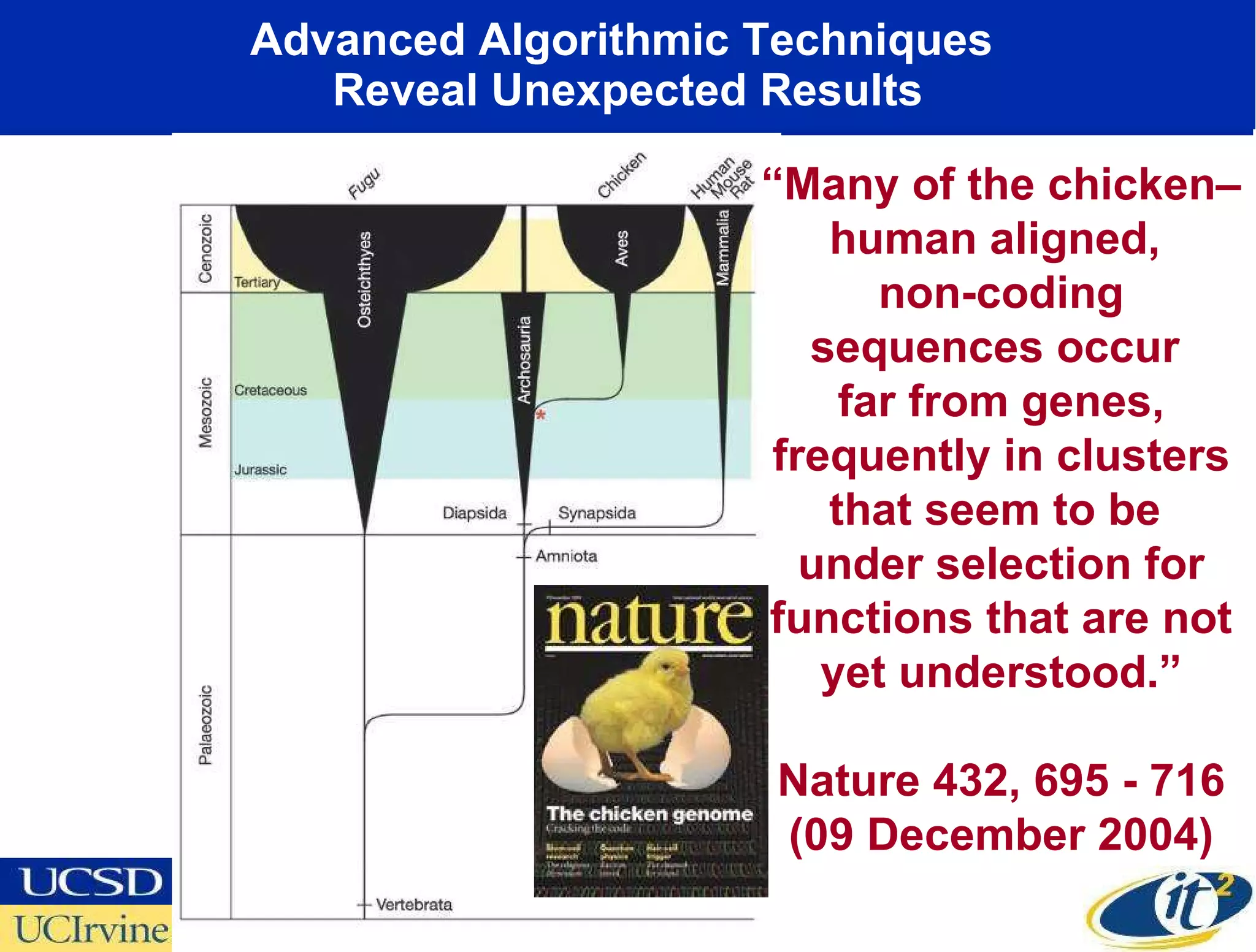
Advanced Algorithmic Techniques  Reveal Unexpected Results “ Many of the chicken–human aligned,  non-coding sequences occur  far from genes, frequently in clusters that seem to be  under selection for functions that are not yet understood.” Nature 432, 695 - 716 (09 December 2004)
Microbial Metagenomics is  a Rapidly Emerging Field of Research “ Despite their ubiquity, relatively little is known about the majority of environmental microorganisms, largely because of their resistance to culture under standard laboratory conditions.” “ The application of high-throughput shotgun sequencing environmental samples has recently provided global views of those communities not obtainable from 16S rRNA or BAC clone–sequencing surveys .” Comparative Metagenomics of Microbial Communities  Susannah Green Tringe, Christian von Mering, Arthur Kobayashi, Asaf A. Salamov, Kevin Chen, Hwai W. Chang, Mircea Podar, Jay M. Short, Eric J. Mathur, John C. Detter, Peer Bork, Philip Hugenholtz, Edward M. Rubin Science 22 April 2005
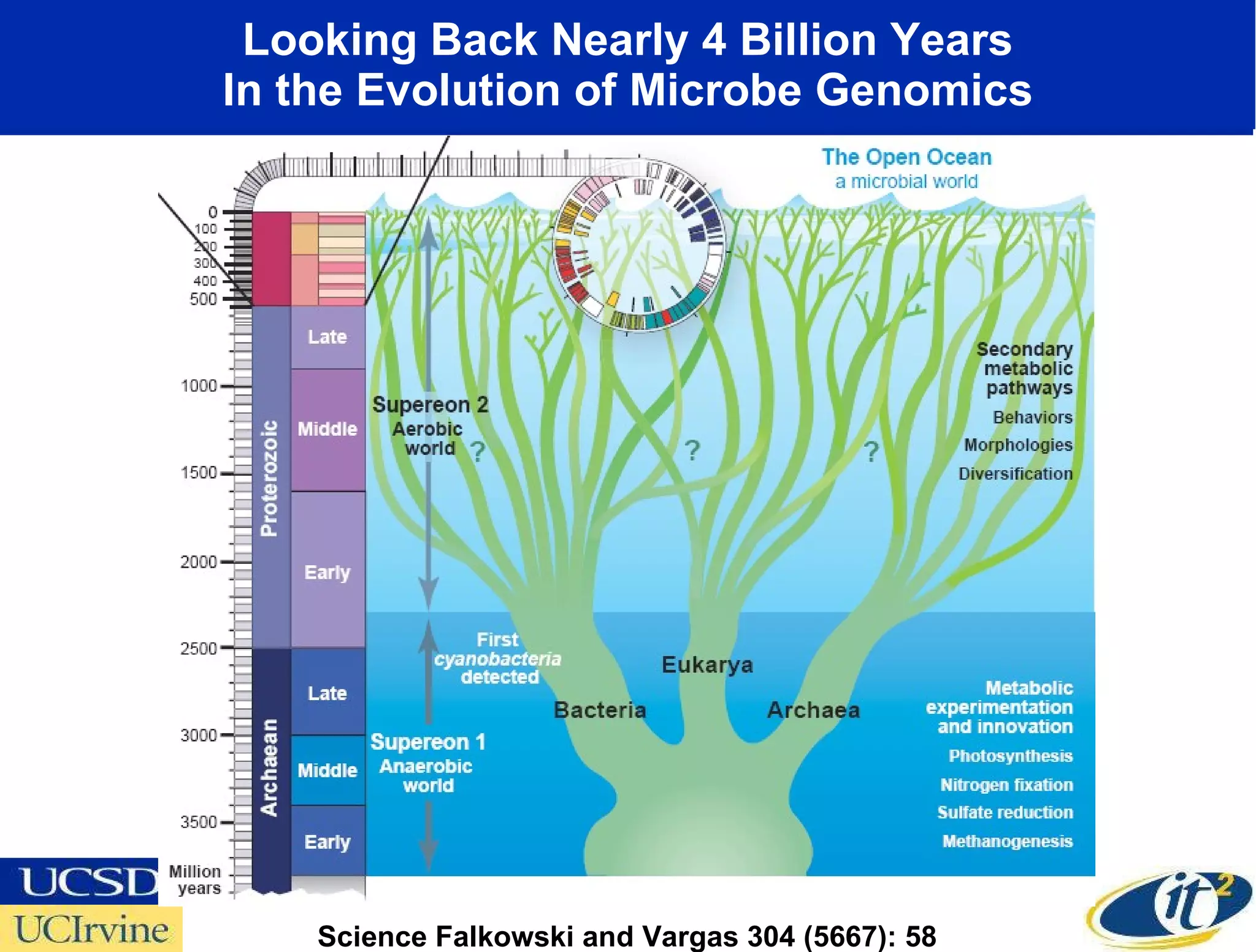
Looking Back Nearly 4 Billion Years In the Evolution of Microbe Genomics Science Falkowski and Vargas 304 (5667): 58
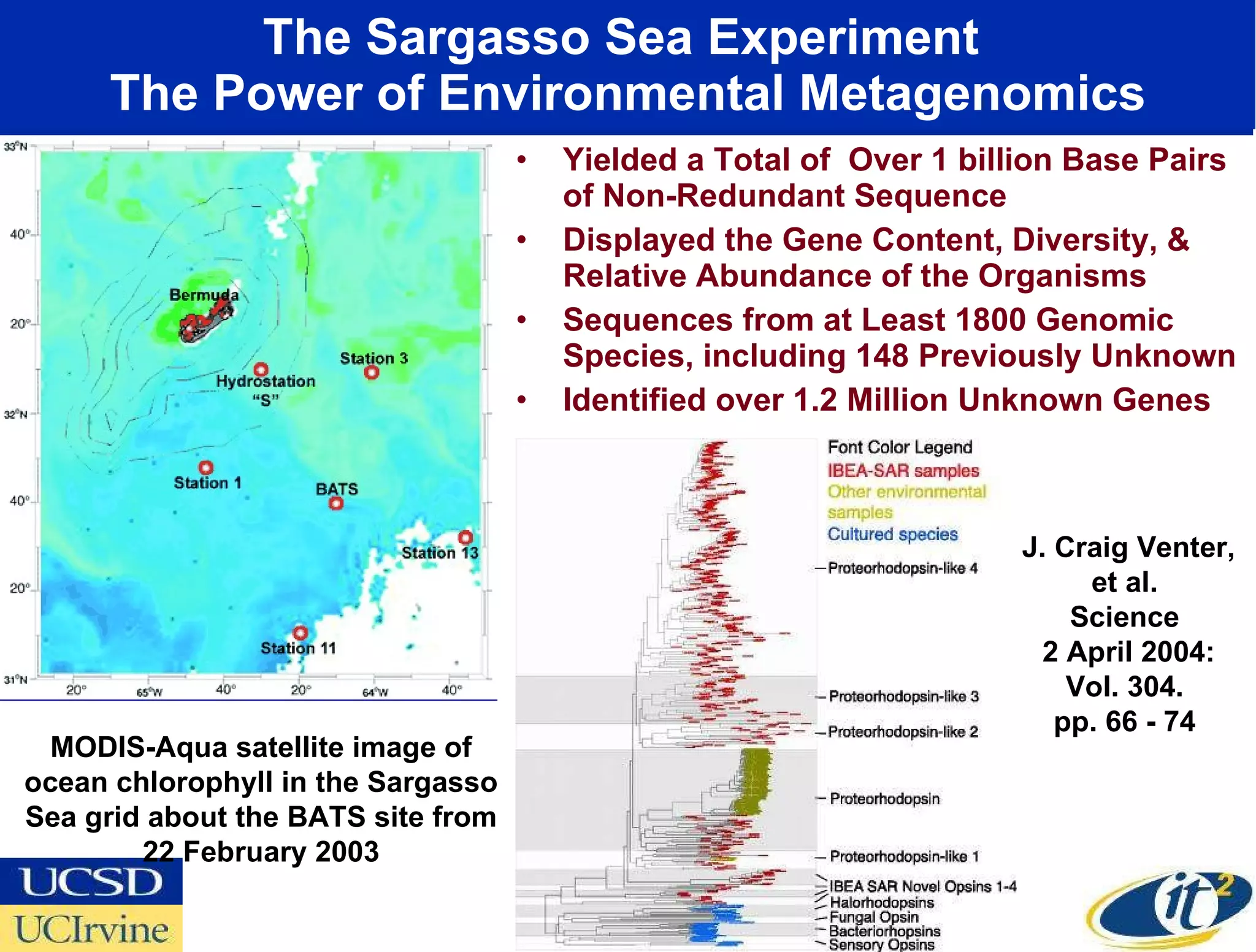
The Sargasso Sea Experiment  The Power of Environmental Metagenomics Yielded a Total of  Over 1 billion Base Pairs of Non-Redundant Sequence Displayed the Gene Content, Diversity, & Relative Abundance of the Organisms  Sequences from at Least 1800 Genomic Species, including 148 Previously Unknown Identified over 1.2 Million Unknown Genes MODIS-Aqua satellite image of ocean chlorophyll in the Sargasso Sea grid about the BATS site from 22 February 2003 J. Craig Venter, et al.  Science  2 April 2004: Vol. 304.  pp. 66 - 74
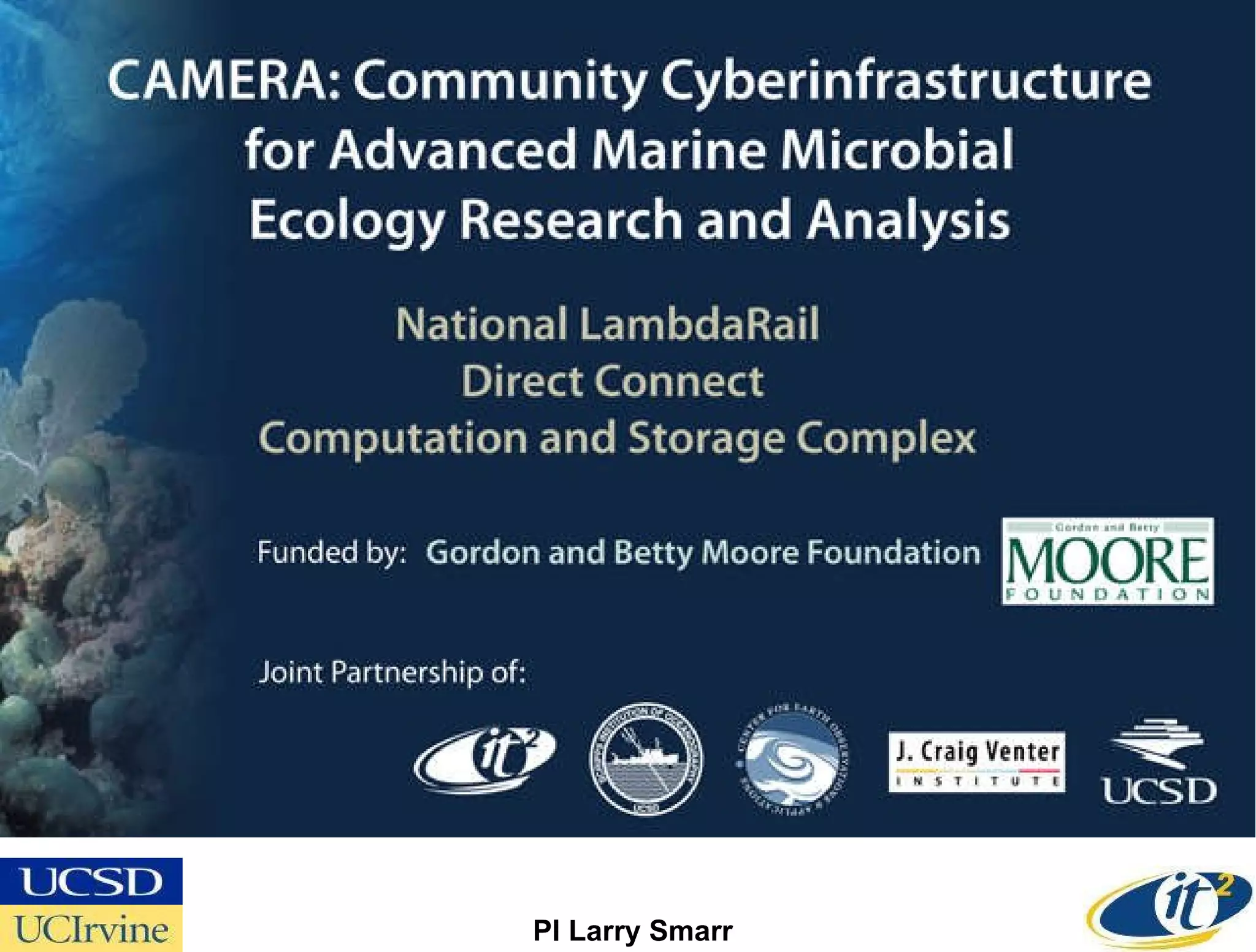
PI Larry Smarr
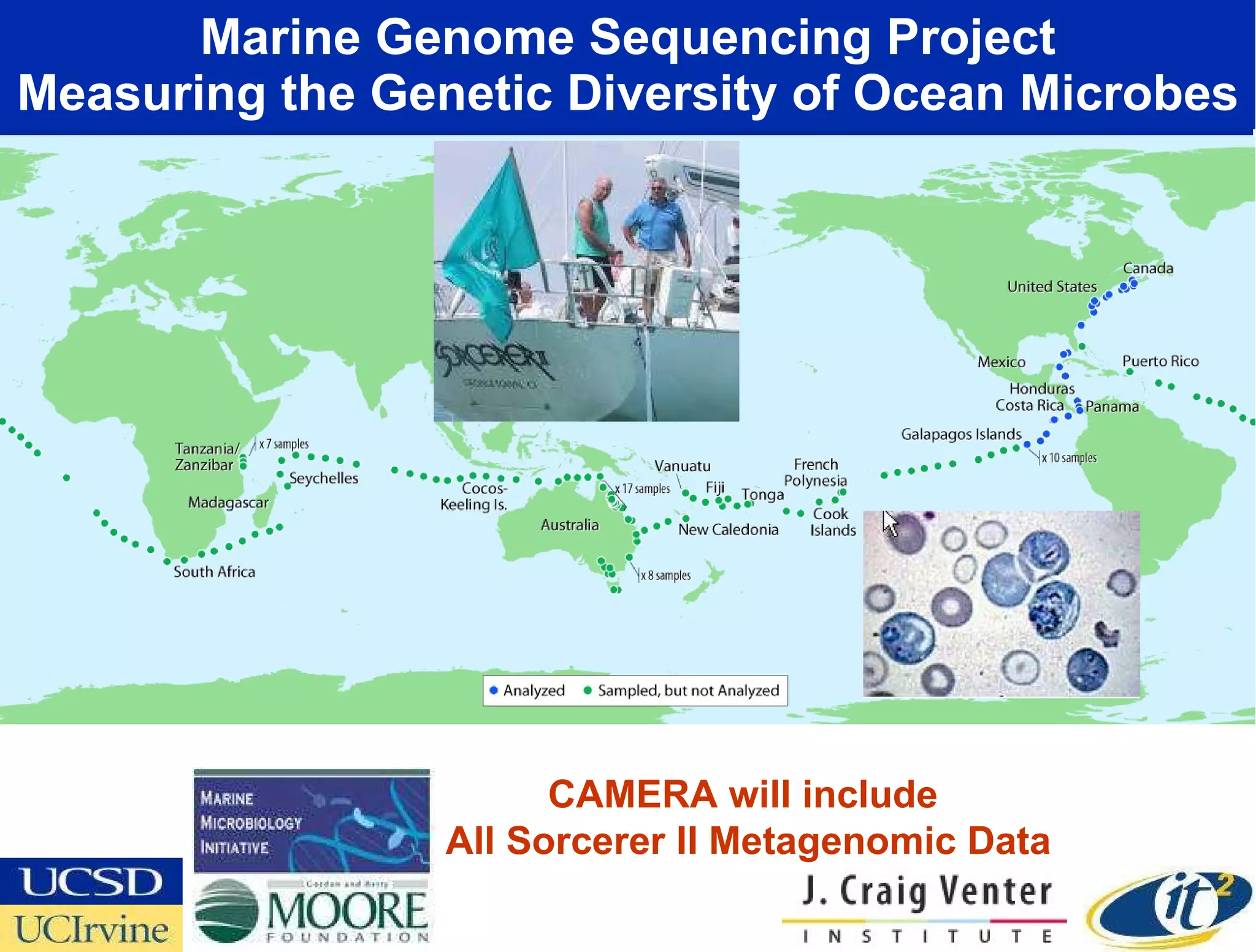
Marine Genome Sequencing Project Measuring the Genetic Diversity of Ocean Microbes CAMERA will include  All Sorcerer II Metagenomic Data
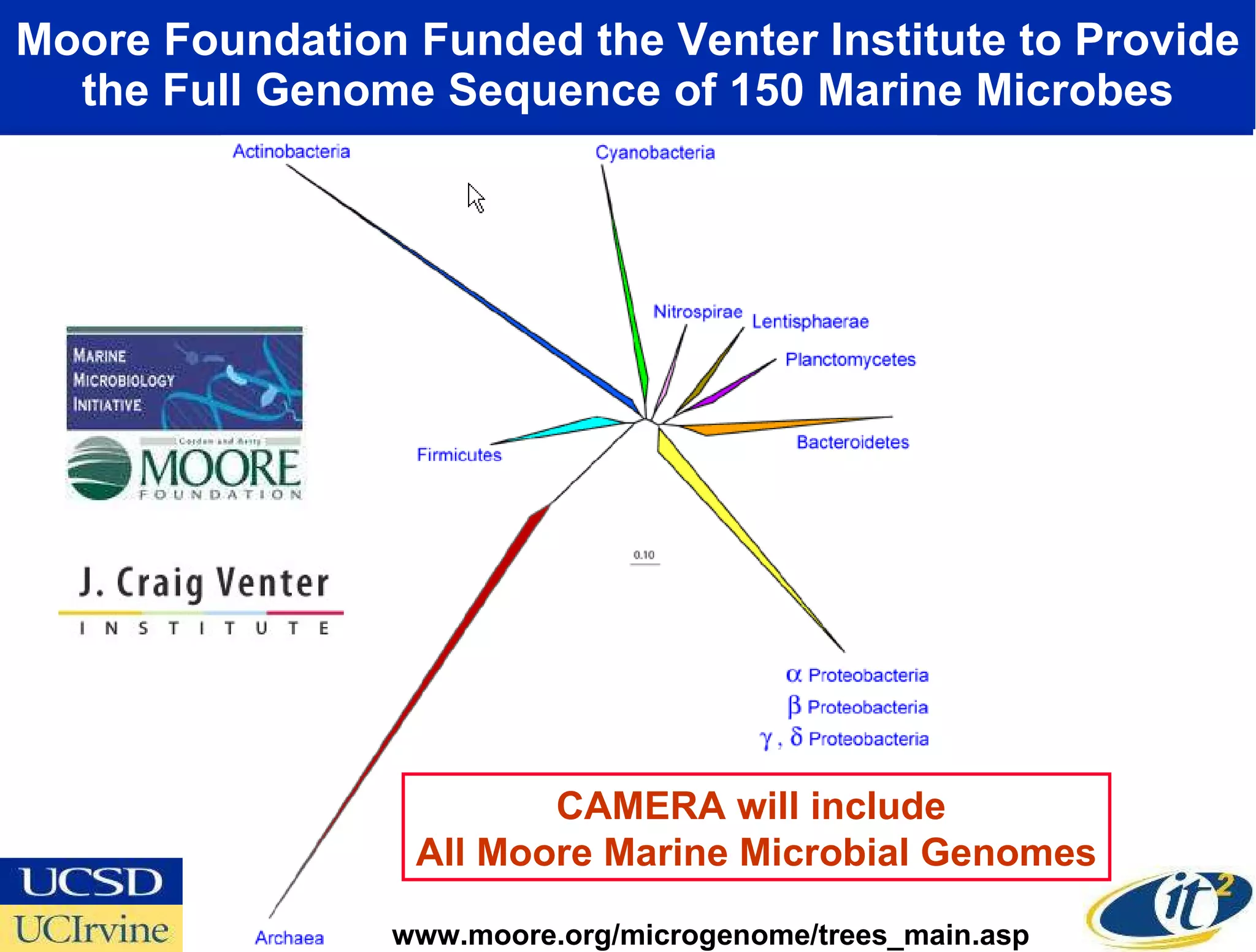
Moore Foundation Funded the Venter Institute to Provide the Full Genome Sequence of 150 Marine Microbes www.moore.org/microgenome/trees_main.asp CAMERA will include  All Moore Marine Microbial Genomes
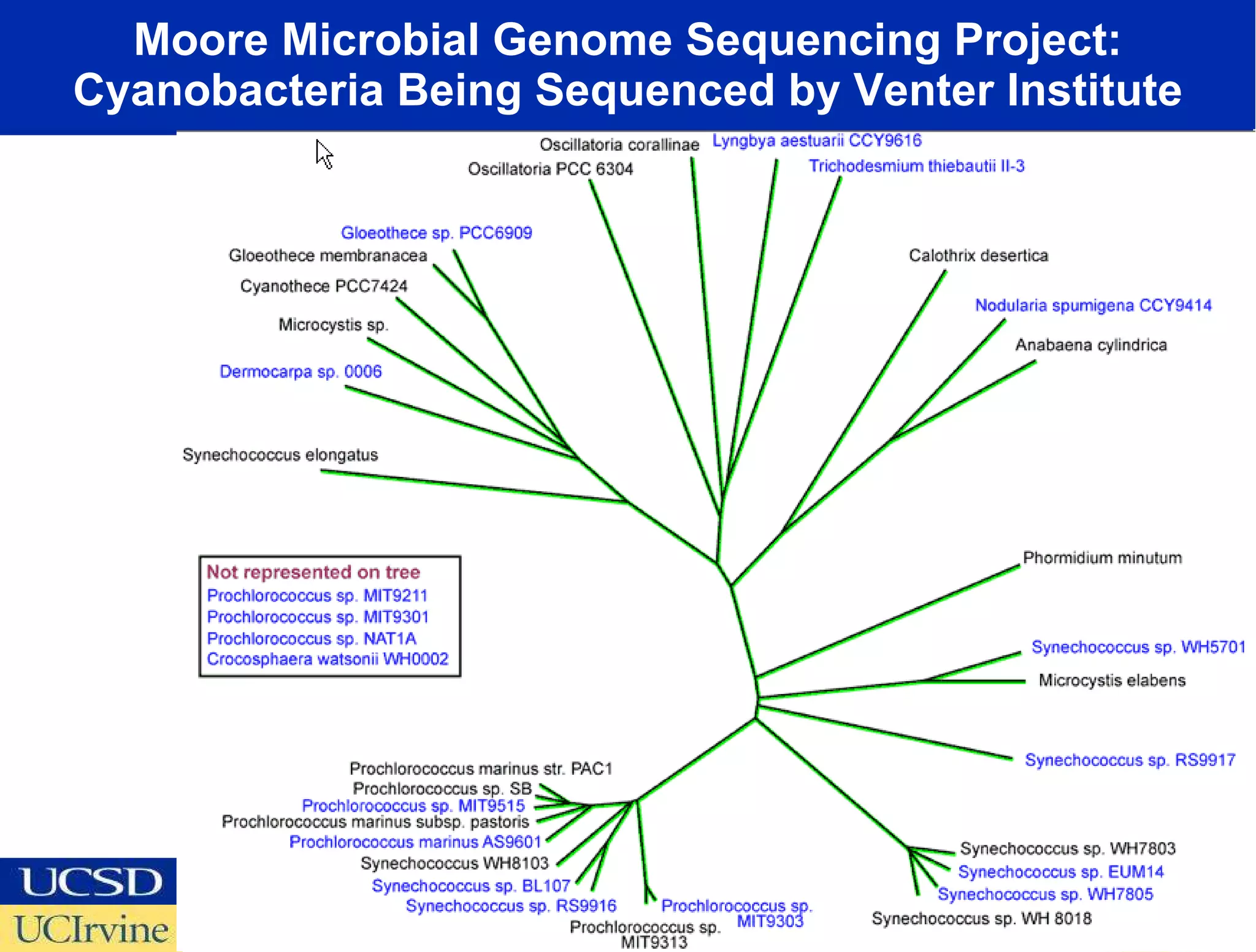
Moore Microbial Genome Sequencing Project: Cyanobacteria Being Sequenced by Venter Institute
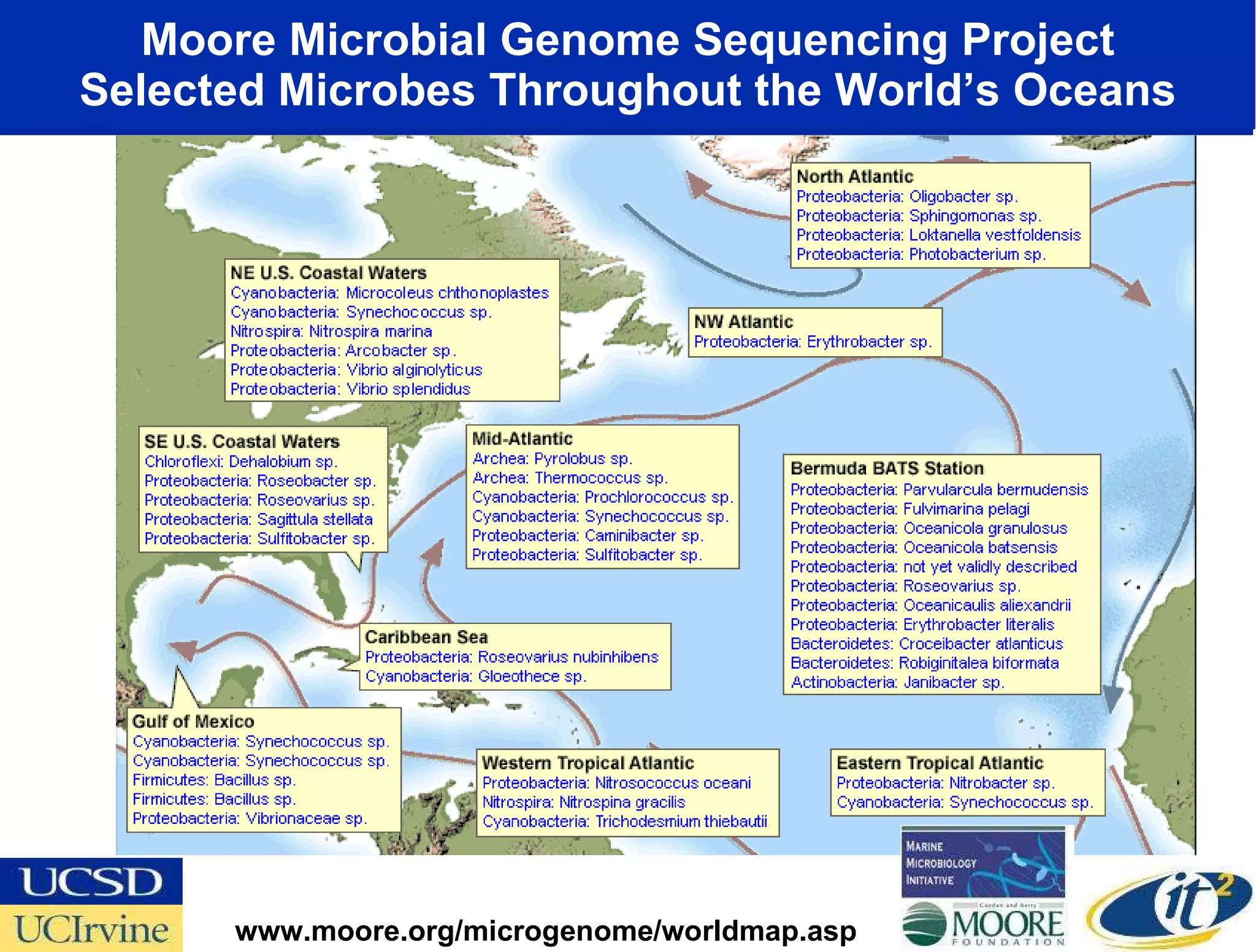
Moore Microbial Genome Sequencing Project Selected Microbes Throughout the World’s Oceans www.moore.org/microgenome/worldmap.asp
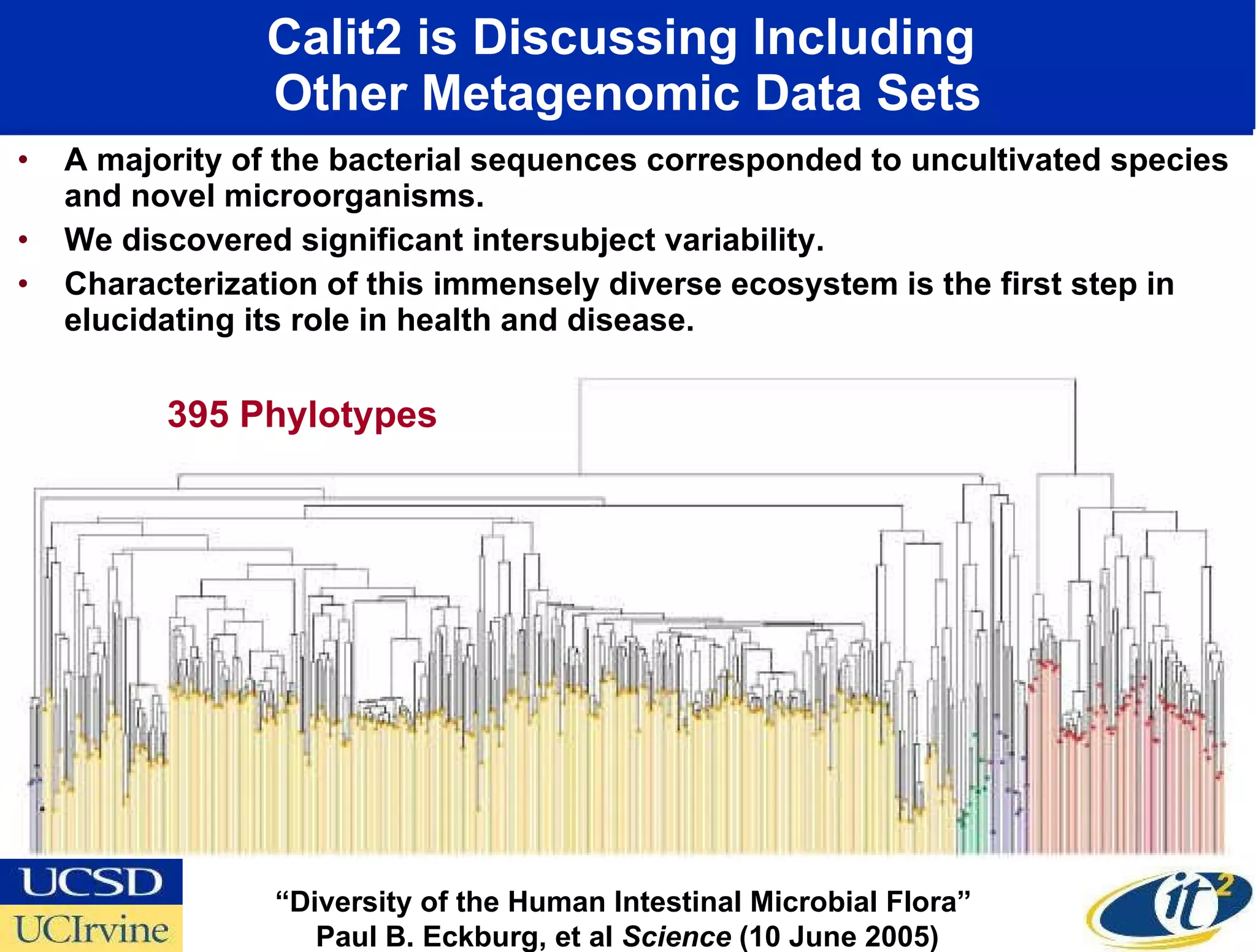
Calit2 is Discussing Including  Other Metagenomic Data Sets A majority of the bacterial sequences corresponded to uncultivated species and novel microorganisms.  We discovered significant intersubject variability.  Characterization of this immensely diverse ecosystem is the first step in elucidating its role in health and disease. “ Diversity of the Human Intestinal Microbial Flora”  Paul B. Eckburg, et al  Science  (10 June 2005) 395 Phylotypes
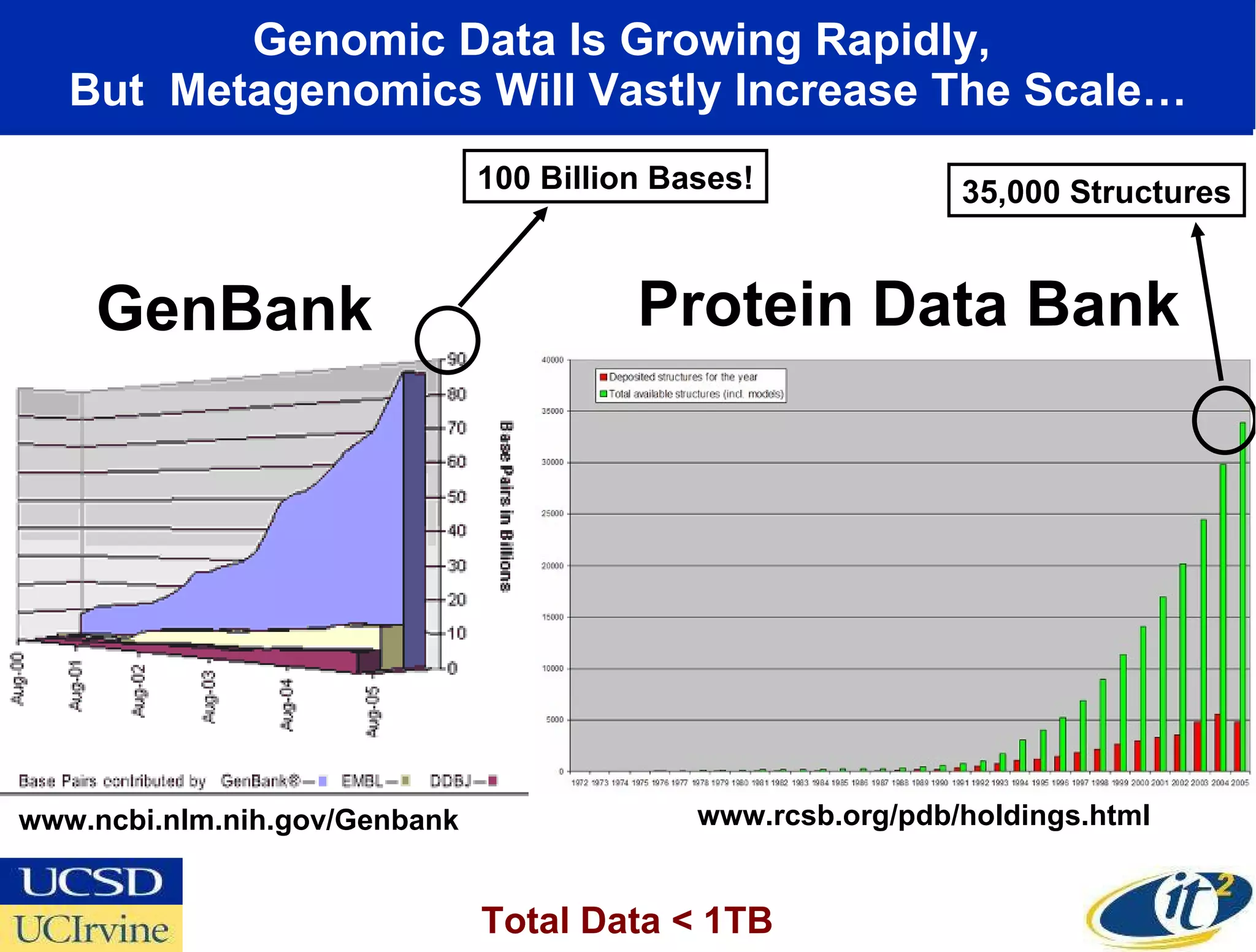
Genomic Data Is Growing Rapidly,  But  Metagenomics Will Vastly Increase The Scale… GenBank Protein Data Bank www.rcsb.org/pdb/holdings.html www.ncbi.nlm.nih.gov/Genbank 100 Billion Bases! Total Data < 1TB 35,000 Structures
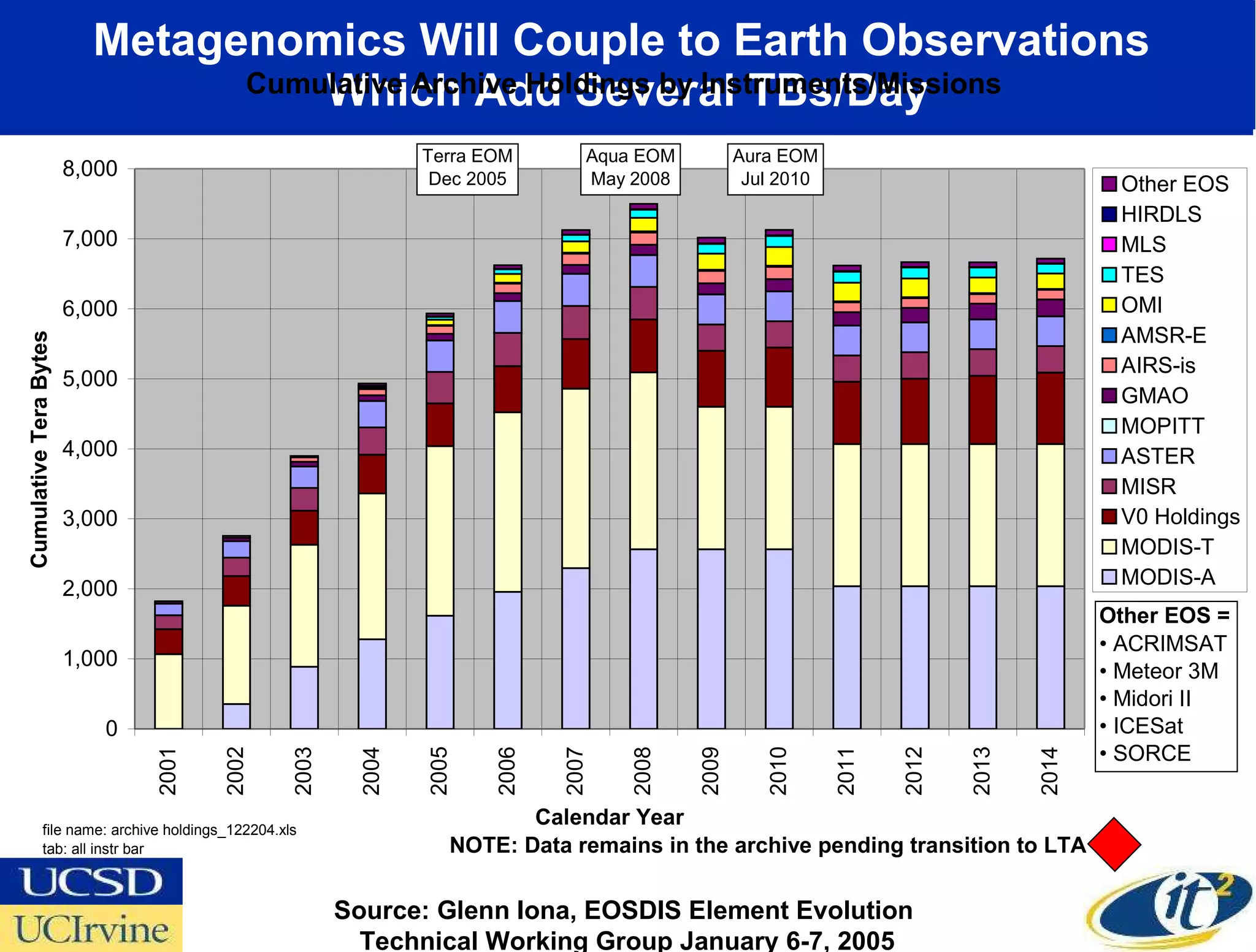
Metagenomics Will Couple to Earth Observations  Which Add Several TBs/Day Source: Glenn Iona, EOSDIS Element Evolution  Technical Working Group January 6-7, 2005
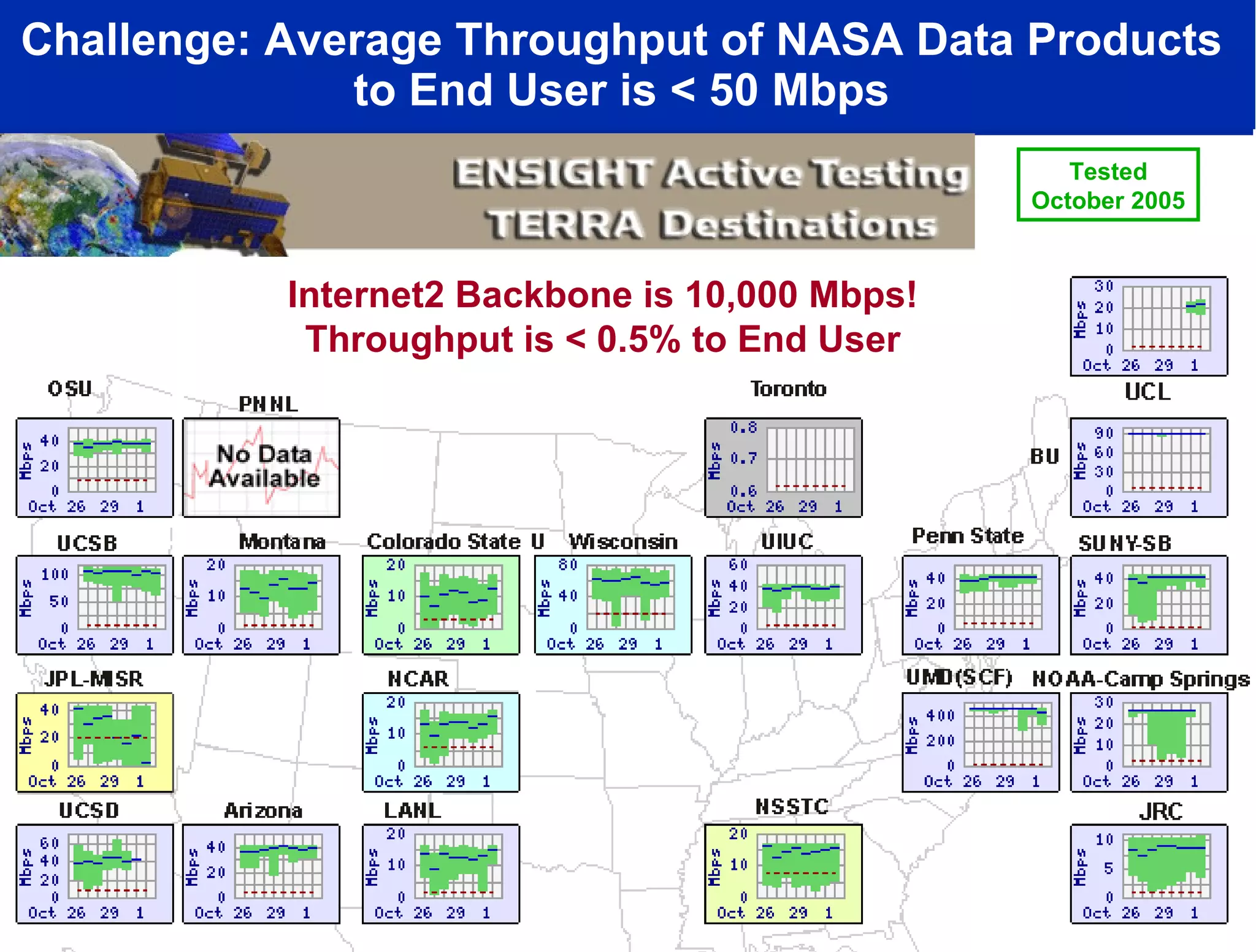
Challenge: Average Throughput of NASA Data Products  to End User is < 50 Mbps  Tested October 2005 http://ensight.eos.nasa.gov/Missions/icesat/index.shtml Internet2 Backbone is 10,000 Mbps! Throughput is < 0.5% to End User
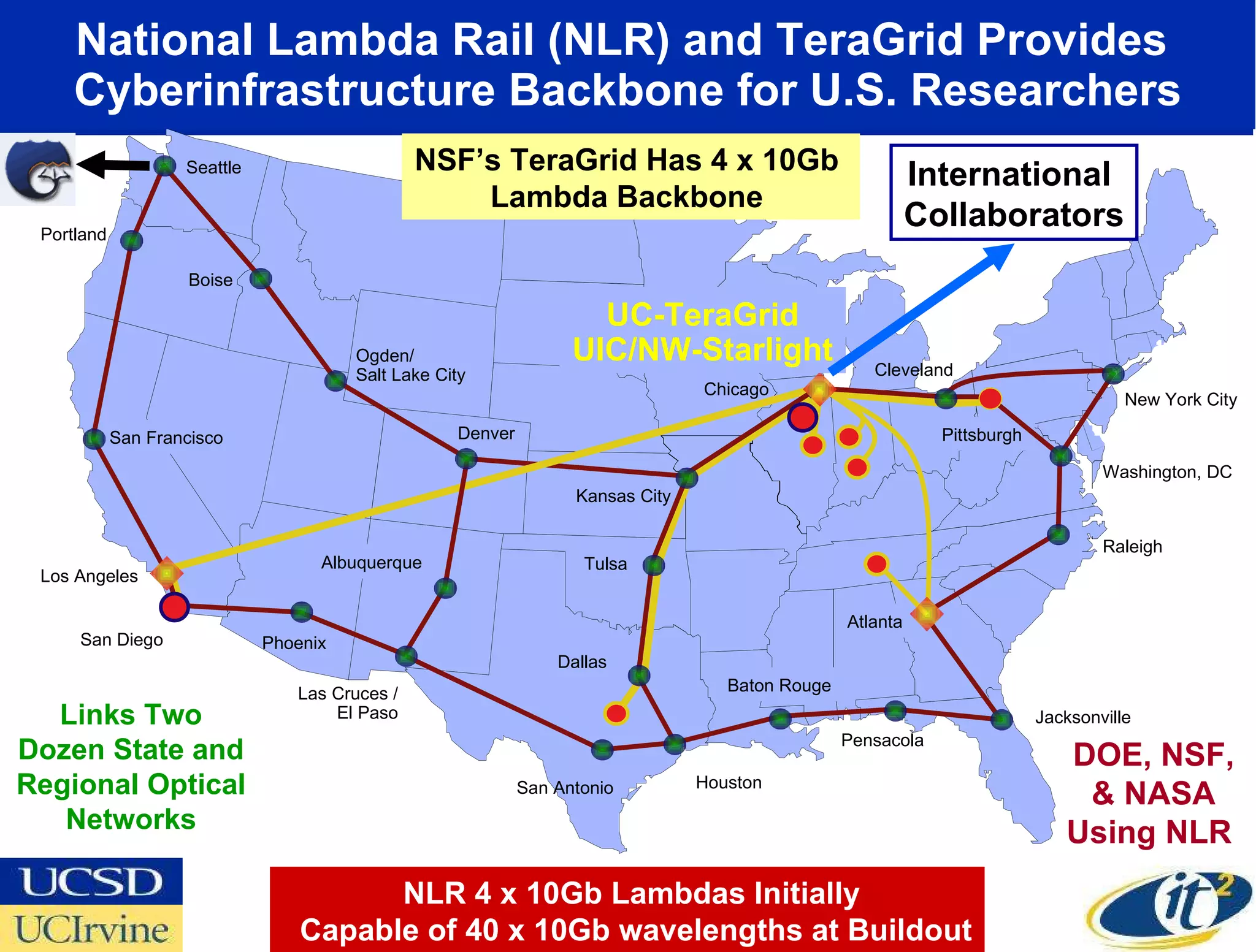
National Lambda Rail (NLR) and TeraGrid Provides  Cyberinfrastructure Backbone for U.S. Researchers San Francisco Pittsburgh Cleveland San Diego Los Angeles Portland Seattle Pensacola Baton Rouge Houston San Antonio Las Cruces / El Paso Phoenix New York City Washington, DC Raleigh Jacksonville Dallas Tulsa Atlanta Kansas City Denver Ogden/ Salt Lake City Boise Albuquerque UC-TeraGrid UIC/NW-Starlight Chicago International  Collaborators NLR 4 x 10Gb Lambdas Initially Capable of 40 x 10Gb wavelengths at Buildout NSF’s TeraGrid Has 4 x 10Gb  Lambda Backbone  Links Two Dozen State and Regional Optical Networks DOE, NSF, & NASA Using NLR
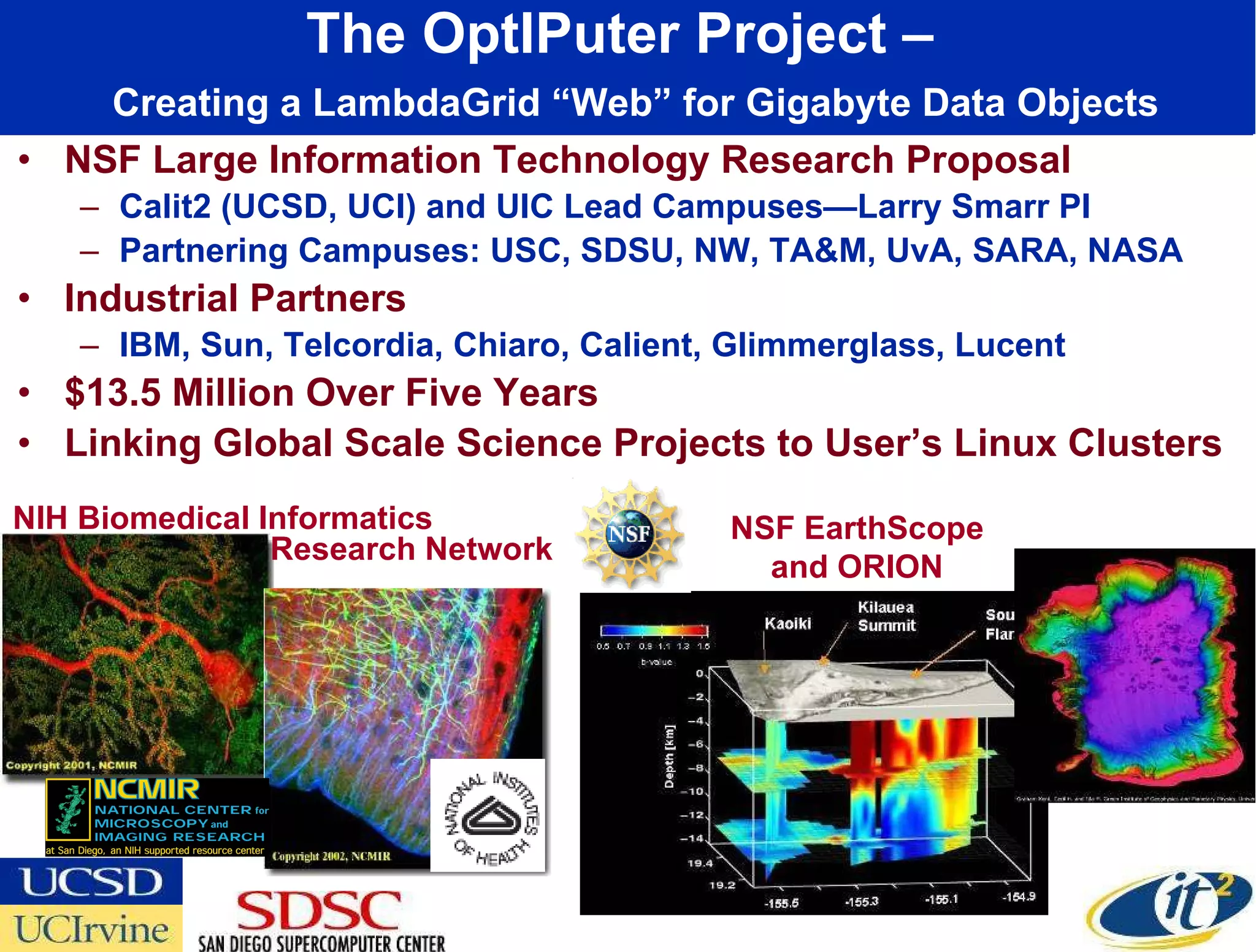
The OptIPuter Project –    Creating a LambdaGrid “Web” for Gigabyte Data Objects NSF Large Information Technology Research Proposal Calit2 (UCSD, UCI) and UIC Lead Campuses—Larry Smarr PI Partnering Campuses: USC, SDSU, NW, TA&M, UvA, SARA, NASA Industrial Partners IBM, Sun, Telcordia, Chiaro, Calient, Glimmerglass, Lucent $13.5 Million Over Five Years Linking Global Scale Science Projects to User’s Linux Clusters NIH Biomedical Informatics NSF EarthScope and ORION Research Network
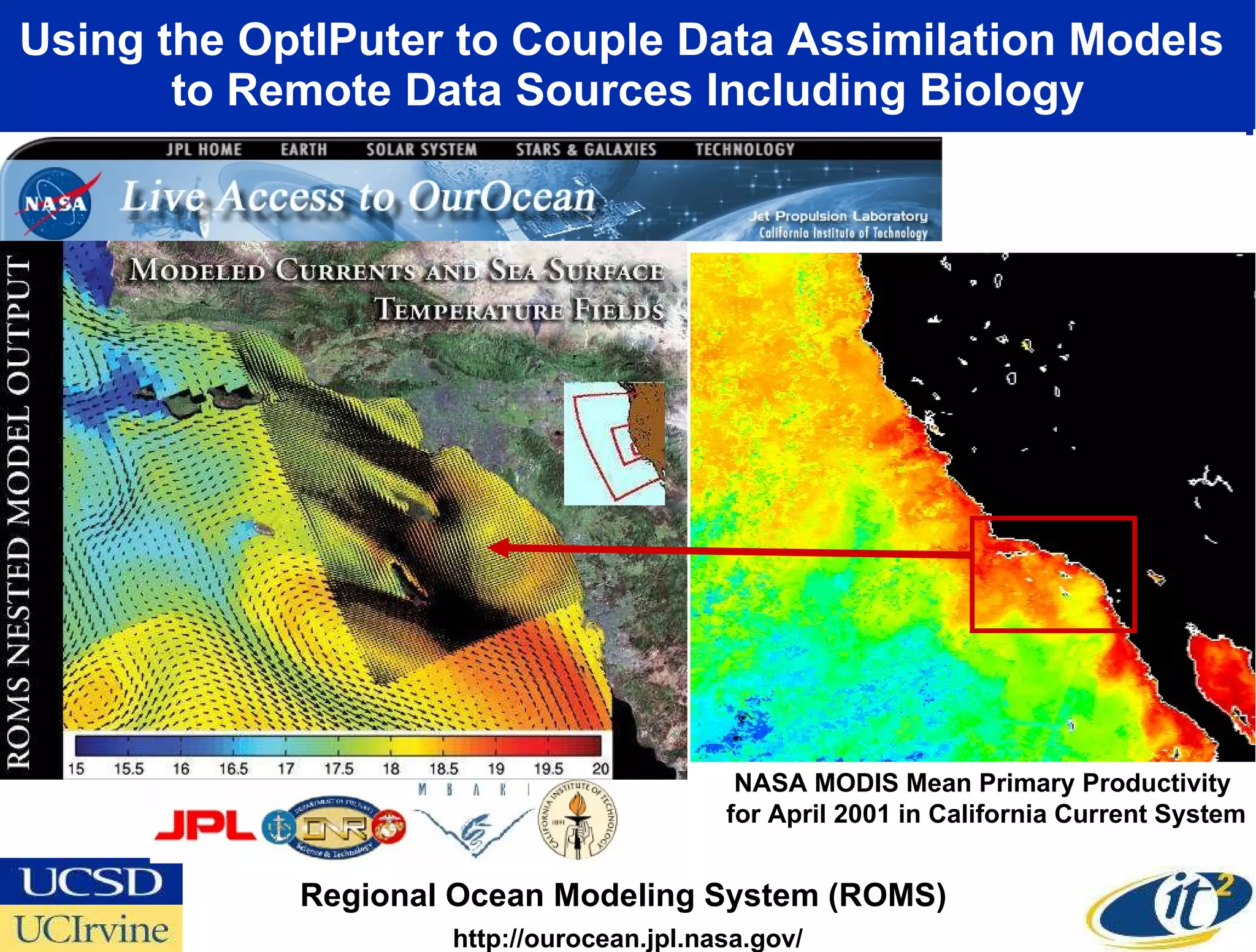
Using the OptIPuter to Couple Data Assimilation Models  to Remote Data Sources Including Biology Regional Ocean Modeling System (ROMS)  http://ourocean.jpl.nasa.gov/ NASA MODIS Mean Primary Productivity  for April 2001 in California Current System
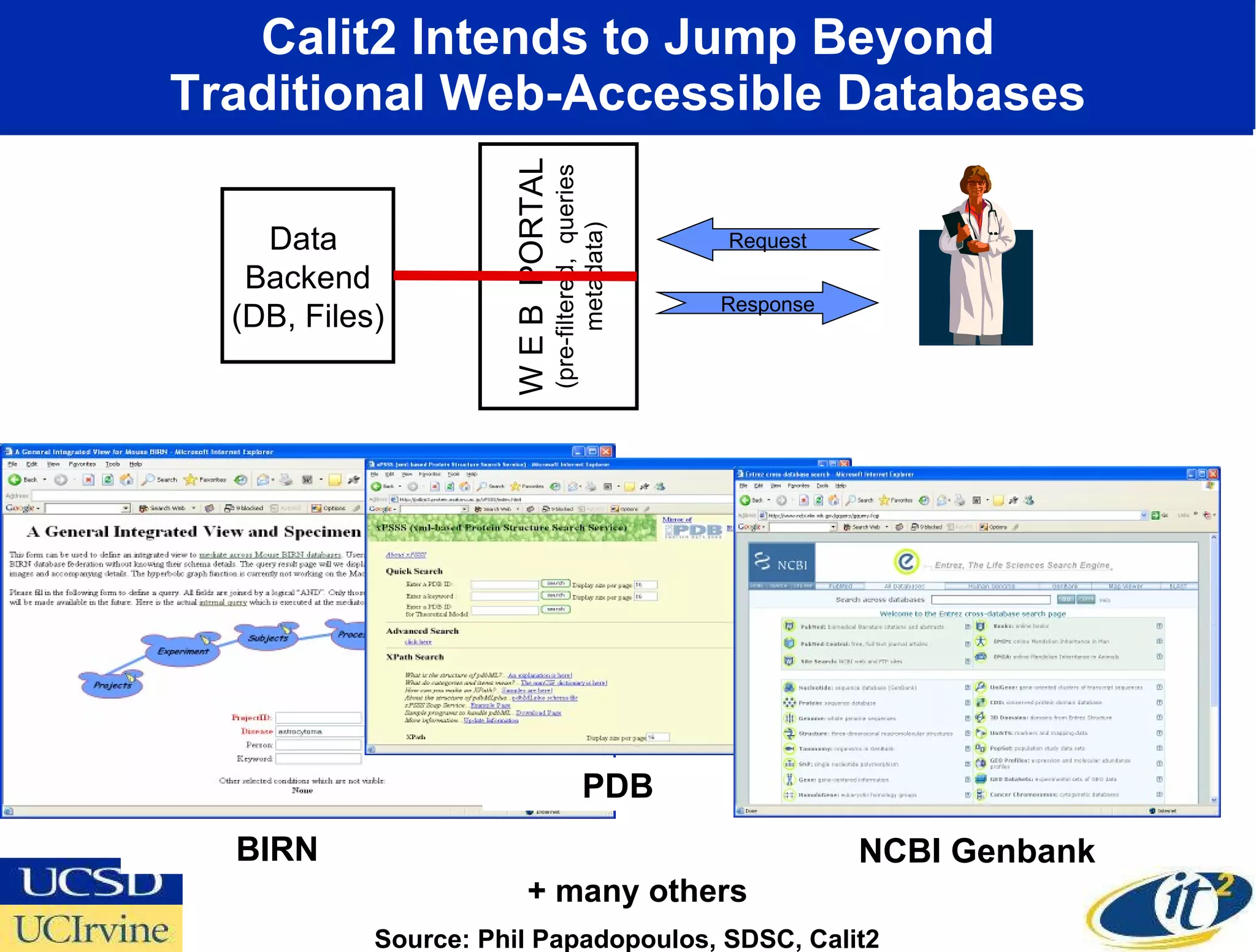
Calit2 Intends to Jump Beyond Traditional Web-Accessible Databases Data  Backend (DB, Files) W E B  PORTAL (pre-filtered,  queries metadata) Response Request + many others Source: Phil Papadopoulos, SDSC, Calit2 BIRN PDB NCBI Genbank
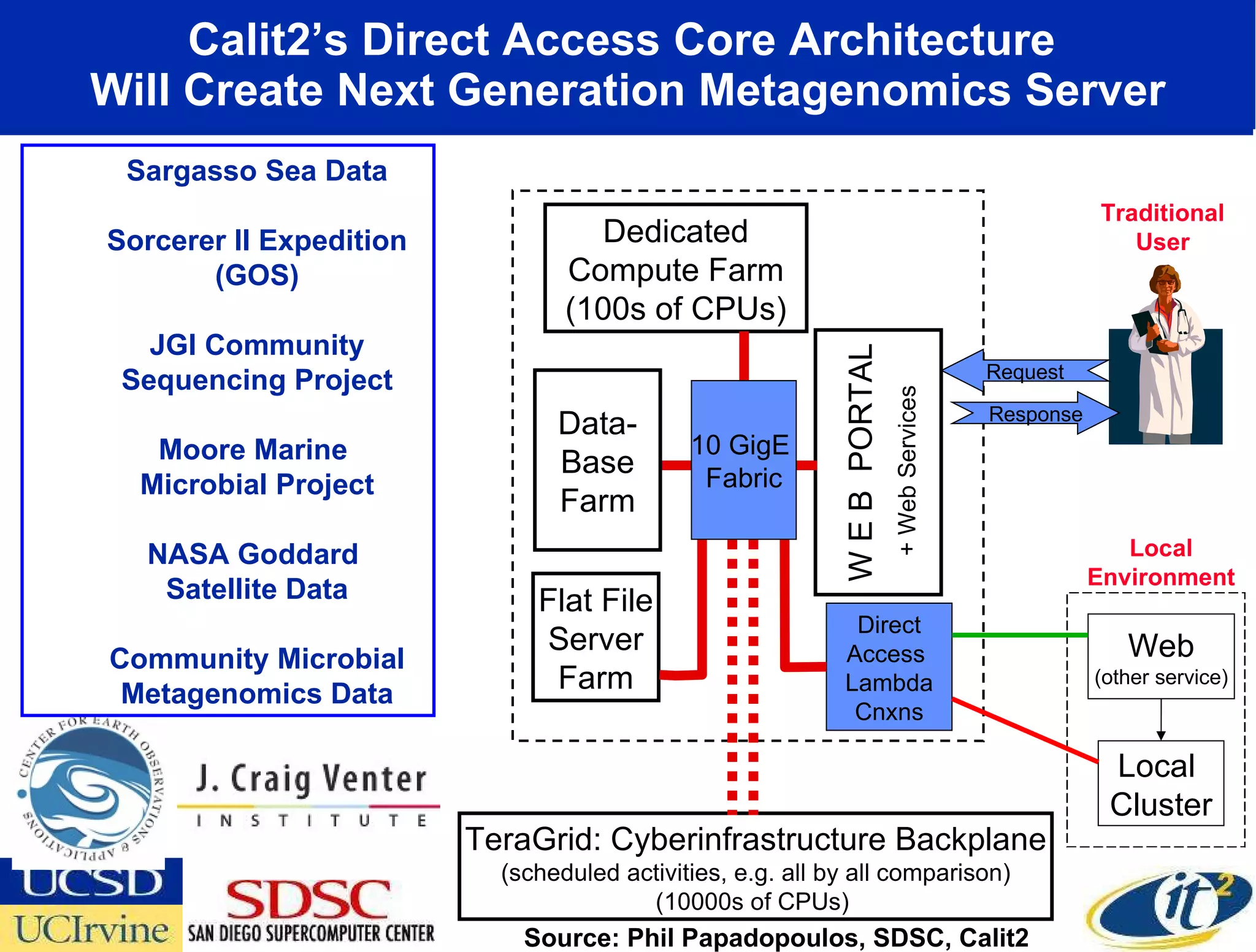
Calit2’s Direct Access Core Architecture  Will Create Next Generation Metagenomics Server Traditional User Response Request Source: Phil Papadopoulos, SDSC, Calit2 + Web Services Sargasso Sea Data Sorcerer II Expedition (GOS) JGI Community Sequencing Project Moore Marine  Microbial Project NASA Goddard  Satellite Data Community Microbial Metagenomics Data Flat File Server Farm W E B  PORTAL Dedicated Compute Farm (100s of CPUs) TeraGrid: Cyberinfrastructure Backplane (scheduled activities, e.g. all by all comparison) (10000s of CPUs)  Web (other service) Local  Cluster Local Environment Direct Access  Lambda Cnxns Data- Base Farm 10 GigE  Fabric
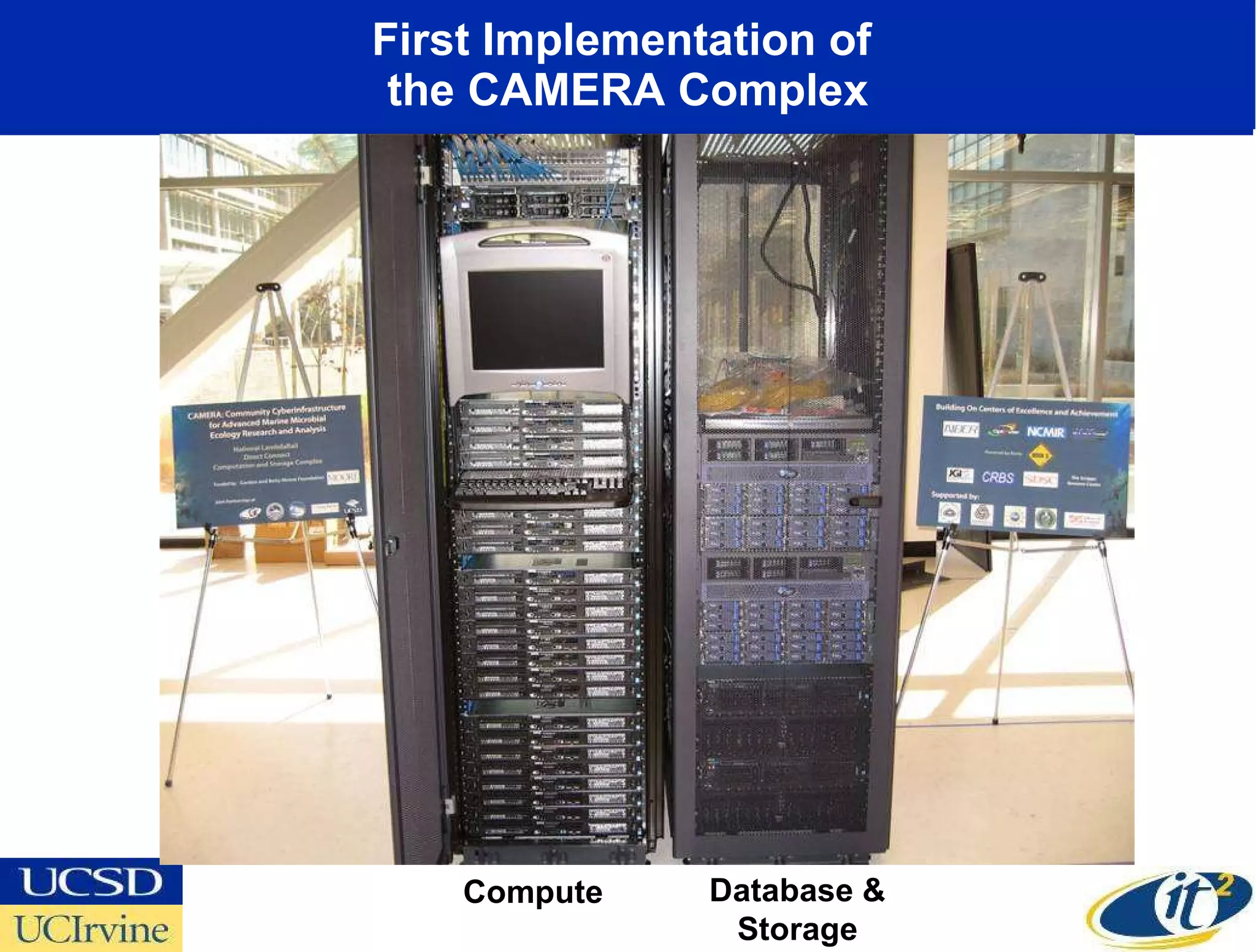
First Implementation of  the CAMERA Complex Compute Database & Storage
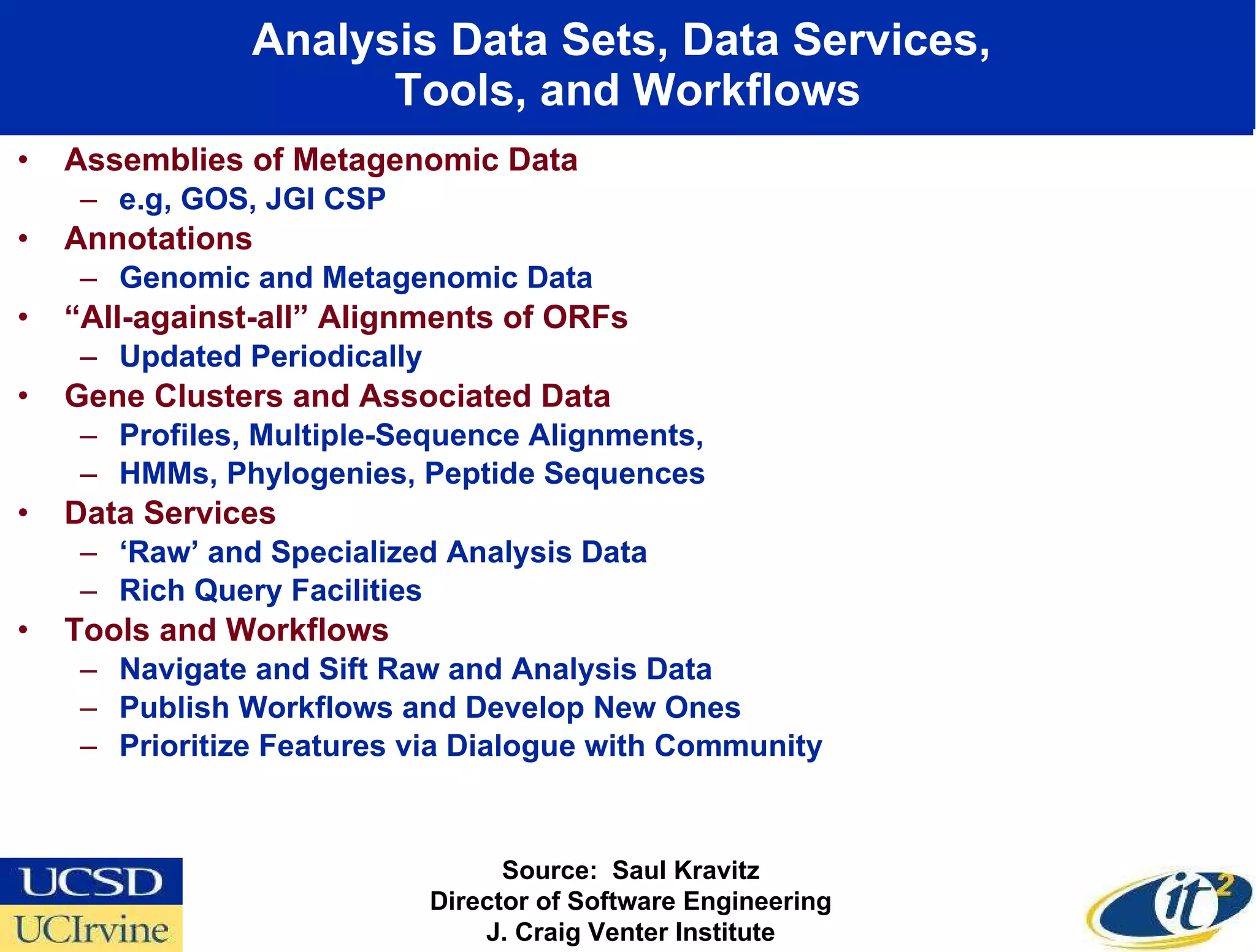
Analysis Data Sets, Data Services,  Tools, and Workflows Assemblies of Metagenomic Data e.g, GOS, JGI CSP Annotations Genomic and Metagenomic Data “ All-against-all” Alignments of ORFs Updated Periodically Gene Clusters and Associated Data Profiles, Multiple-Sequence Alignments,  HMMs, Phylogenies, Peptide Sequences Data Services ‘ Raw’ and Specialized Analysis Data Rich Query Facilities Tools and Workflows Navigate and Sift Raw and Analysis Data Publish Workflows and Develop New Ones Prioritize Features via Dialogue with Community Source:  Saul Kravitz Director of Software Engineering J. Craig Venter Institute
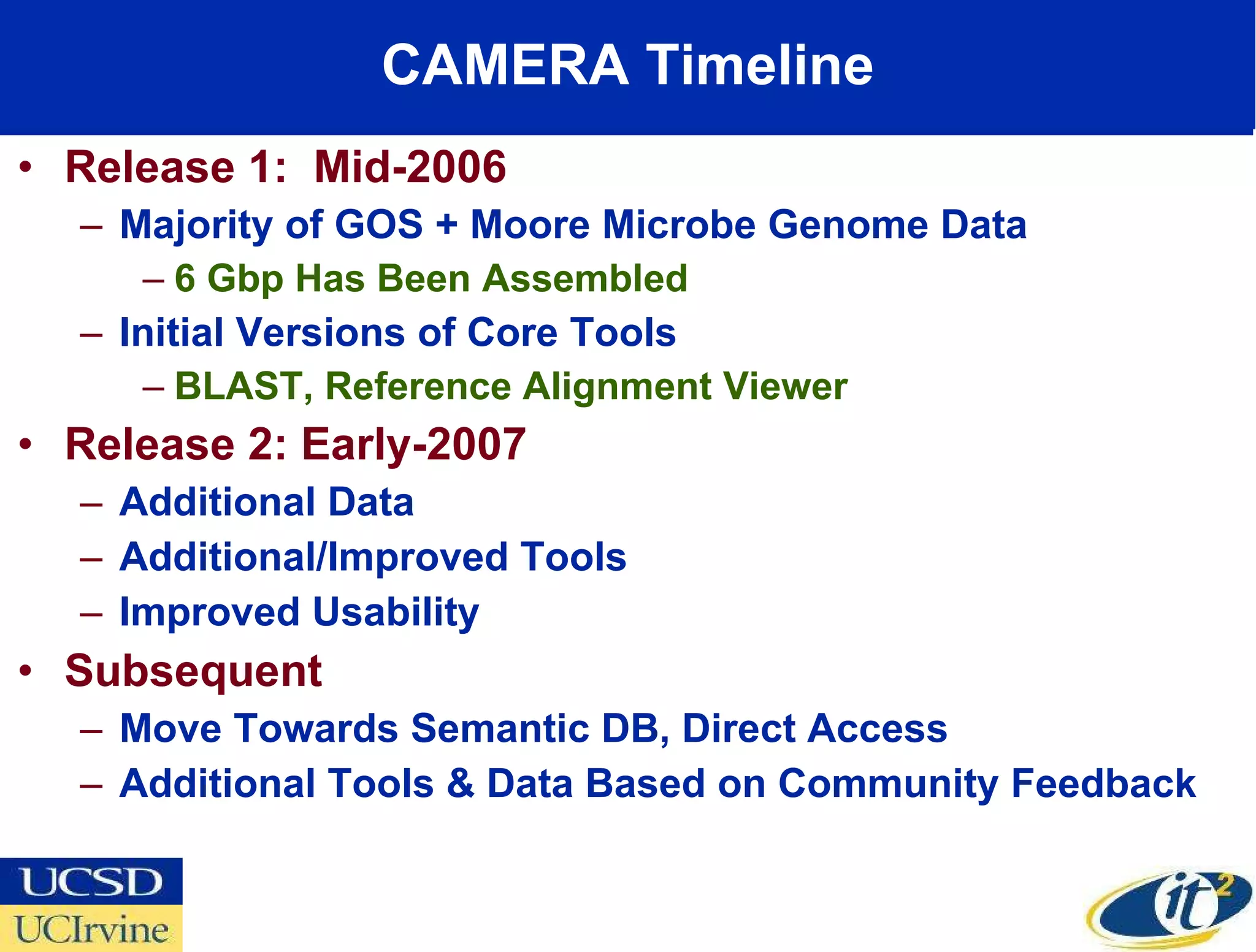
CAMERA Timeline Release 1:  Mid-2006 Majority of GOS + Moore Microbe Genome Data 6 Gbp Has Been Assembled Initial Versions of Core Tools BLAST, Reference Alignment Viewer Release 2: Early-2007 Additional Data Additional/Improved Tools Improved Usability Subsequent Move Towards Semantic DB, Direct Access Additional Tools & Data Based on Community Feedback
Announcing Tuesday January 17, 2006
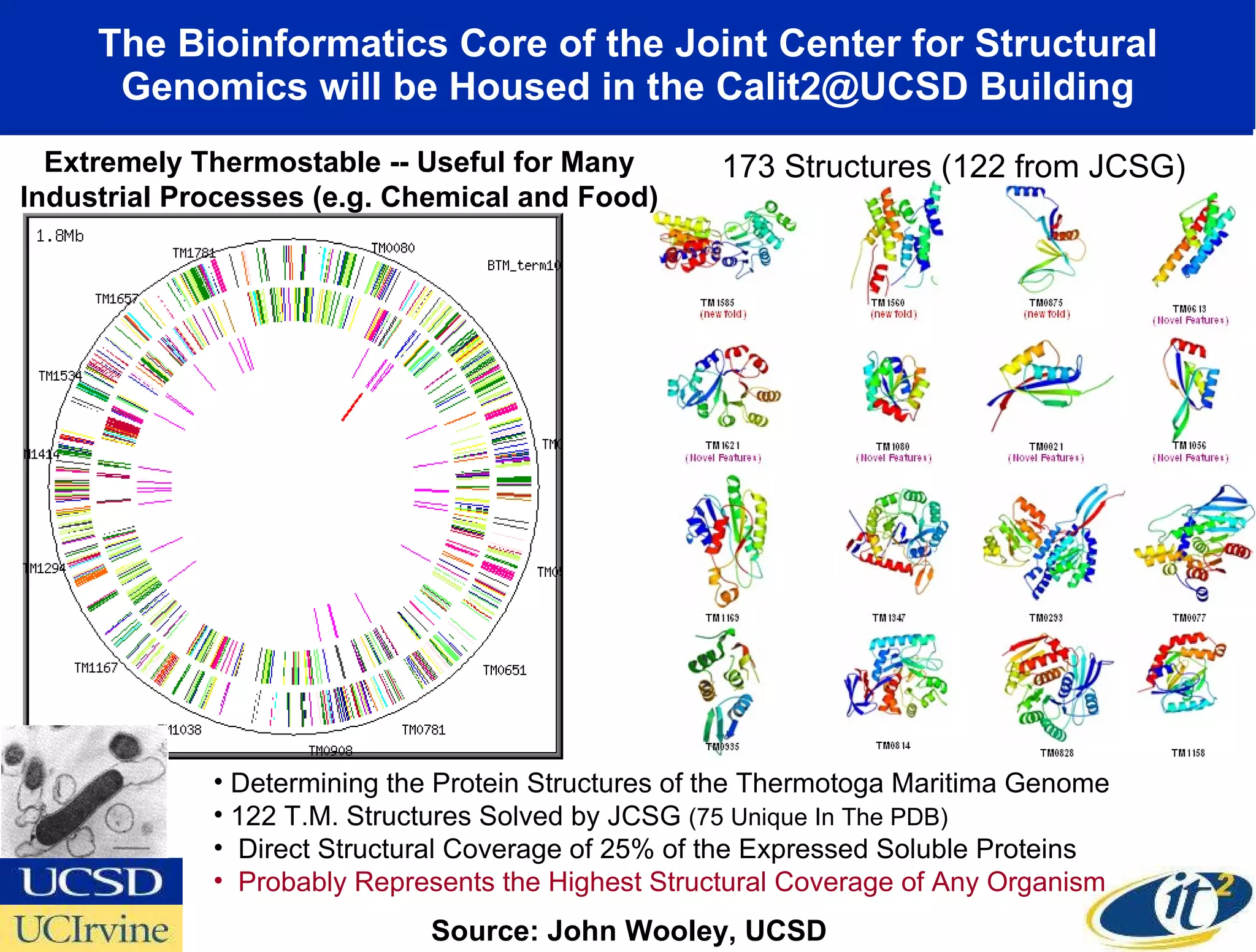
The Bioinformatics Core of the Joint Center for Structural Genomics will be Housed in the Calit2@UCSD Building Extremely Thermostable -- Useful for Many  Industrial Processes (e.g. Chemical and Food)  173 Structures (122 from JCSG) Determining the Protein Structures of the Thermotoga Maritima Genome  122 T.M. Structures Solved by JCSG  (75 Unique In The PDB)   Direct Structural Coverage of 25% of the Expressed Soluble Proteins Probably Represents the Highest Structural Coverage of Any Organism Source: John Wooley, UCSD
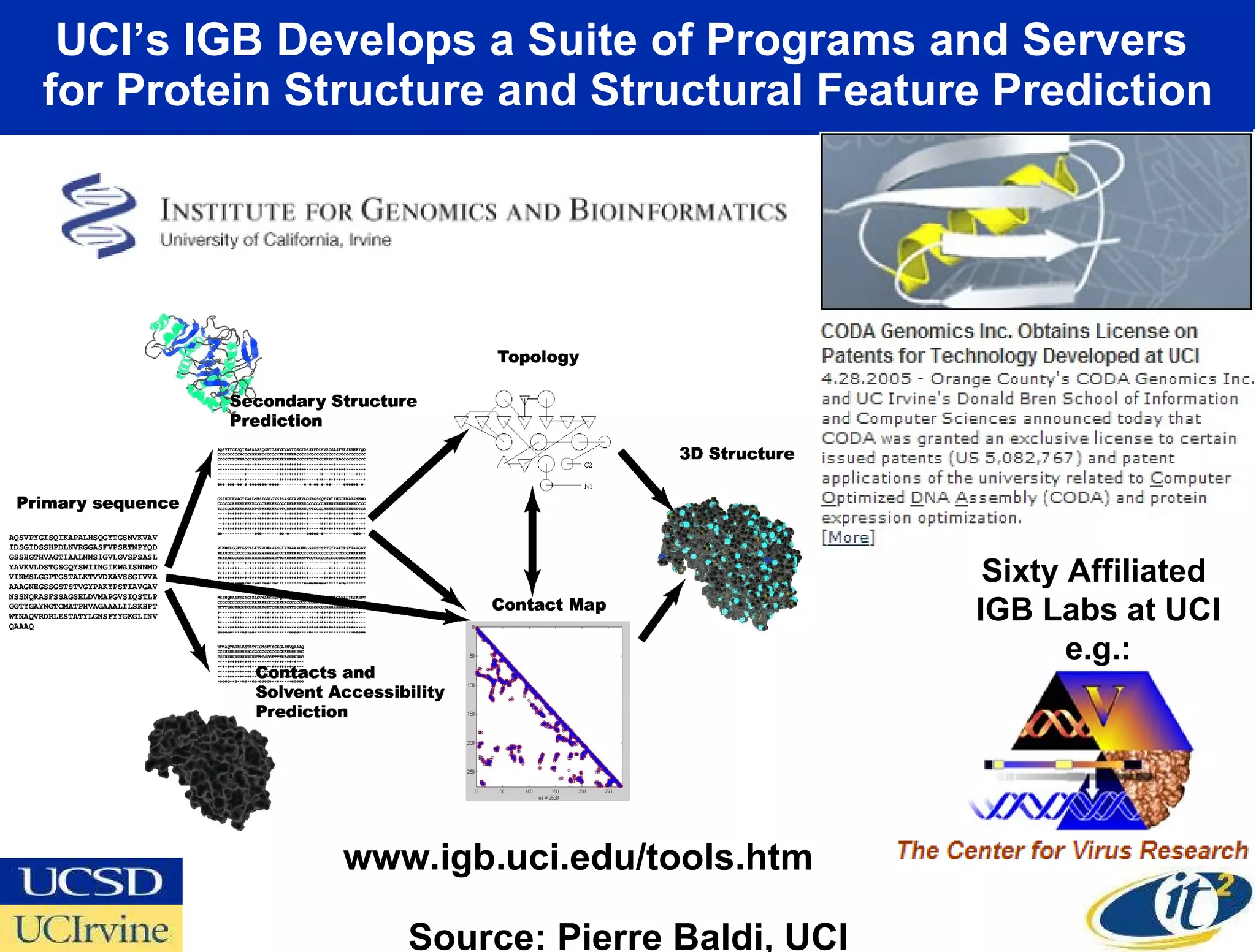
UCI’s IGB Develops a Suite of Programs and Servers  for Protein Structure and Structural Feature Prediction www.igb.uci.edu/tools.htm Source: Pierre Baldi, UCI Sixty Affiliated  IGB Labs at UCI e.g.:
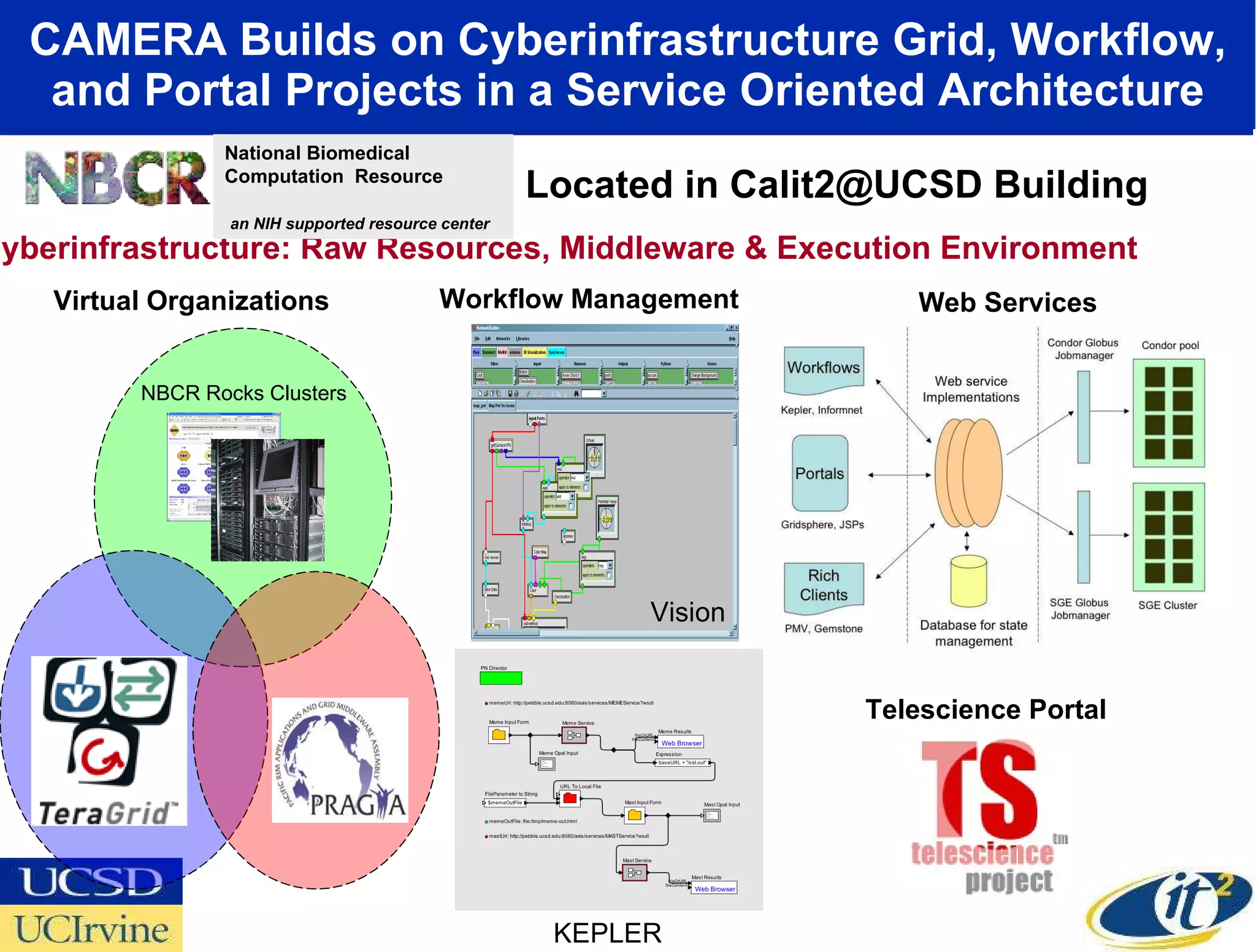
CAMERA Builds on Cyberinfrastructure Grid, Workflow, and Portal Projects in a Service Oriented Architecture Cyberinfrastructure: Raw Resources, Middleware & Execution Environment NBCR Rocks Clusters Virtual Organizations Web Services KEPLER Workflow Management Vision Telescience Portal Located in Calit2@UCSD Building National Biomedical Computation  Resource  an NIH supported resource center
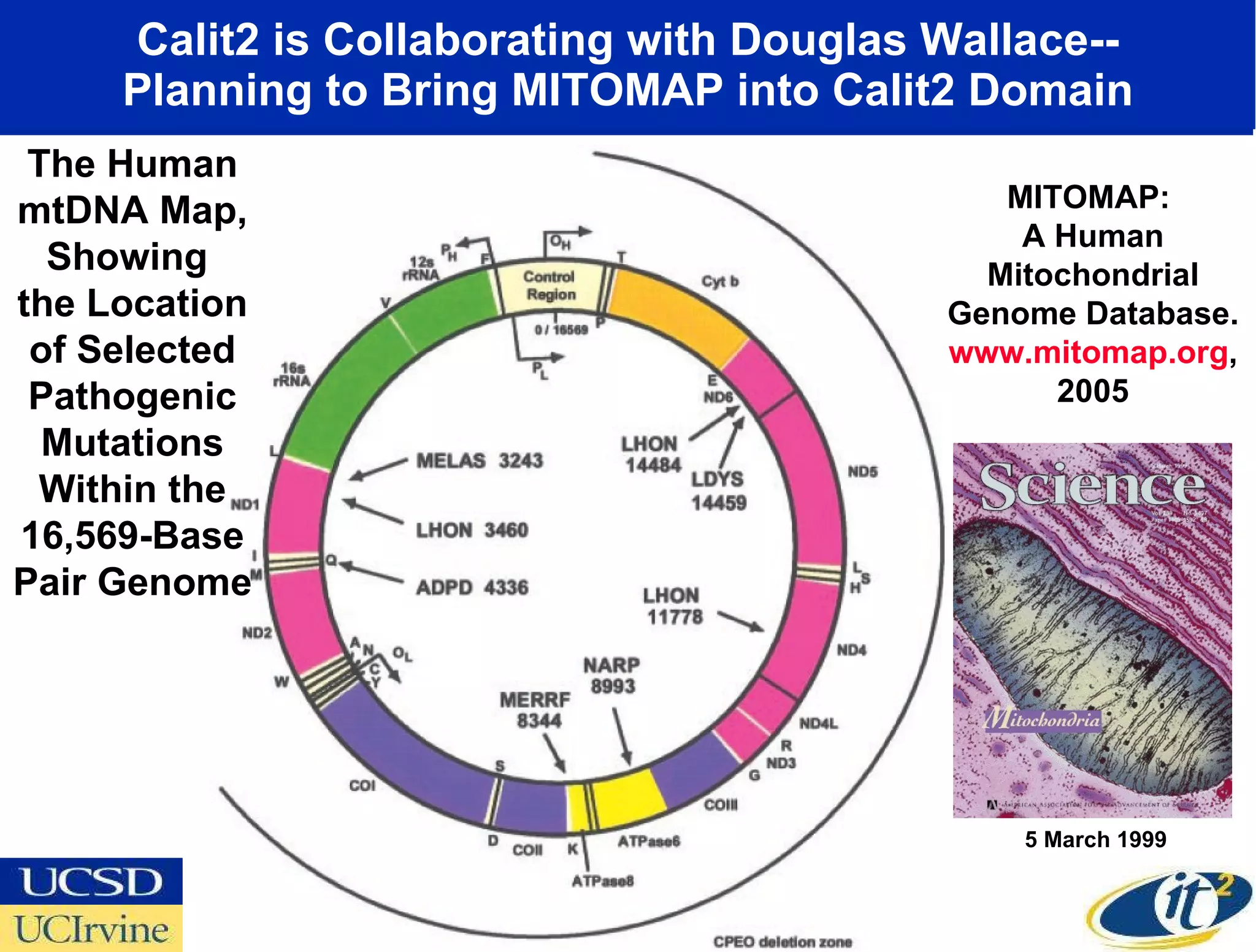
Calit2 is Collaborating with Douglas Wallace-- Planning to Bring MITOMAP into Calit2 Domain The Human mtDNA Map, Showing  the Location of Selected Pathogenic Mutations Within the 16,569-Base Pair Genome MITOMAP:  A Human Mitochondrial Genome Database.  www.mitomap.org , 2005 5 March 1999
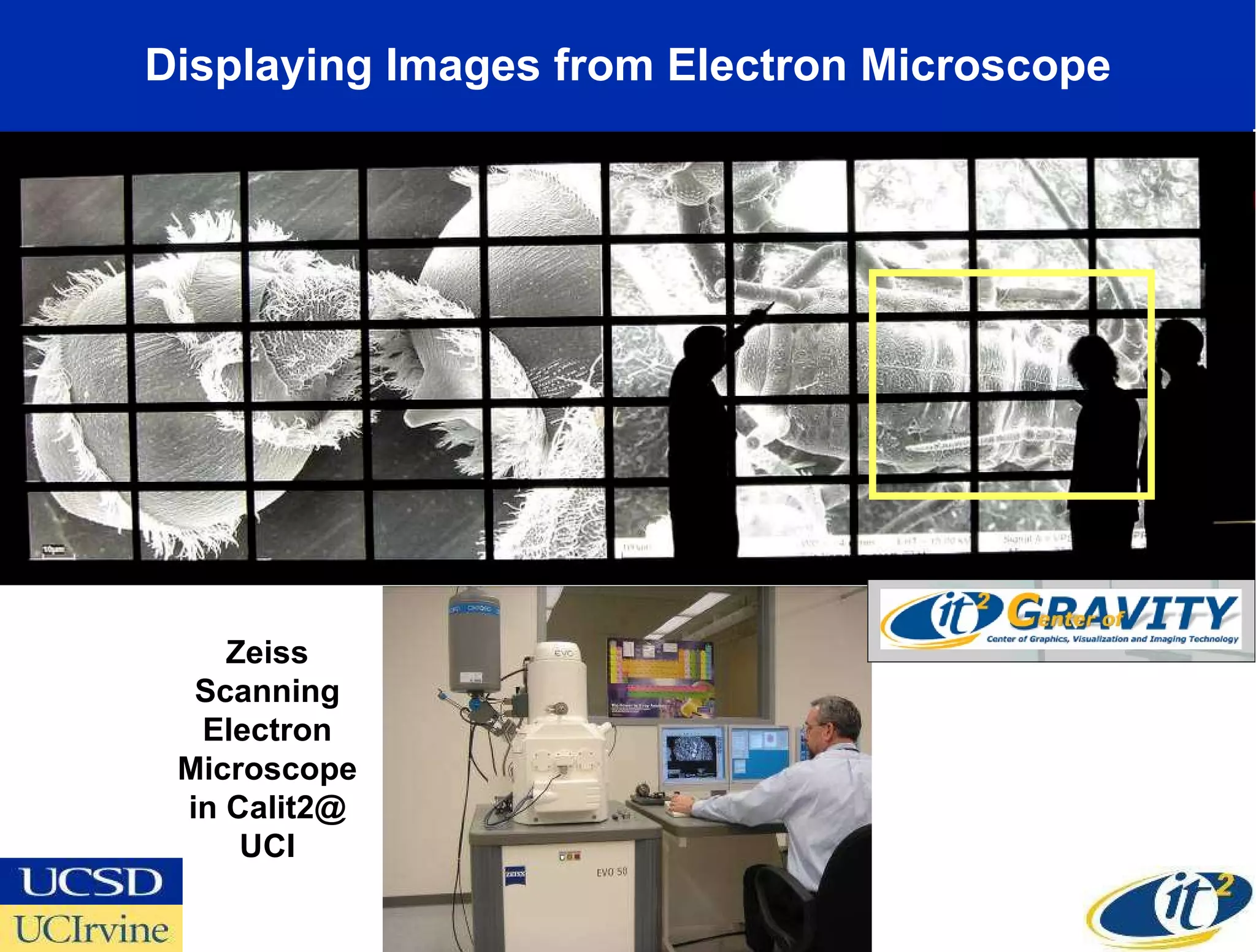
Displaying Images from Electron Microscope Zeiss Scanning Electron Microscope in Calit2@ UCI
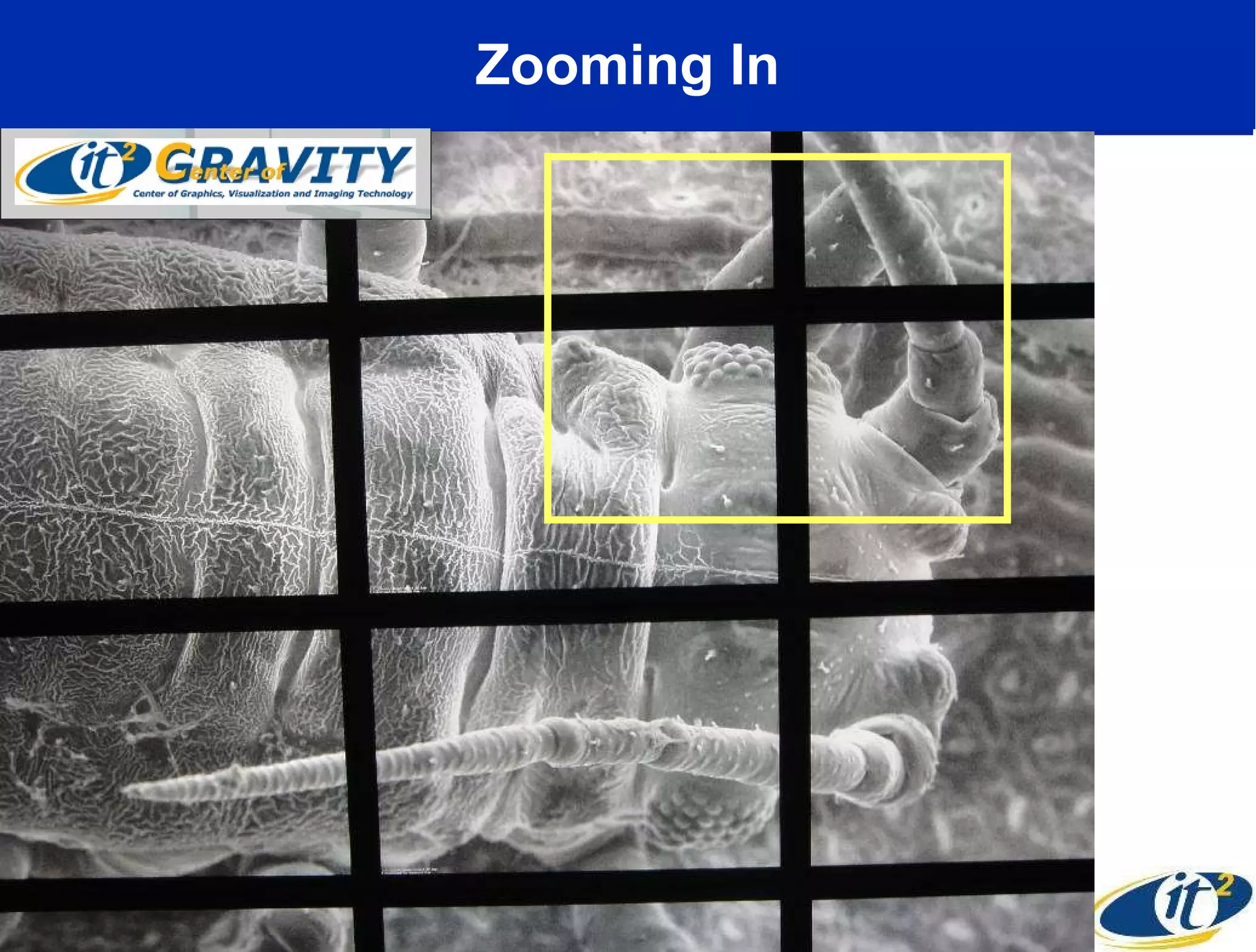
Zooming In
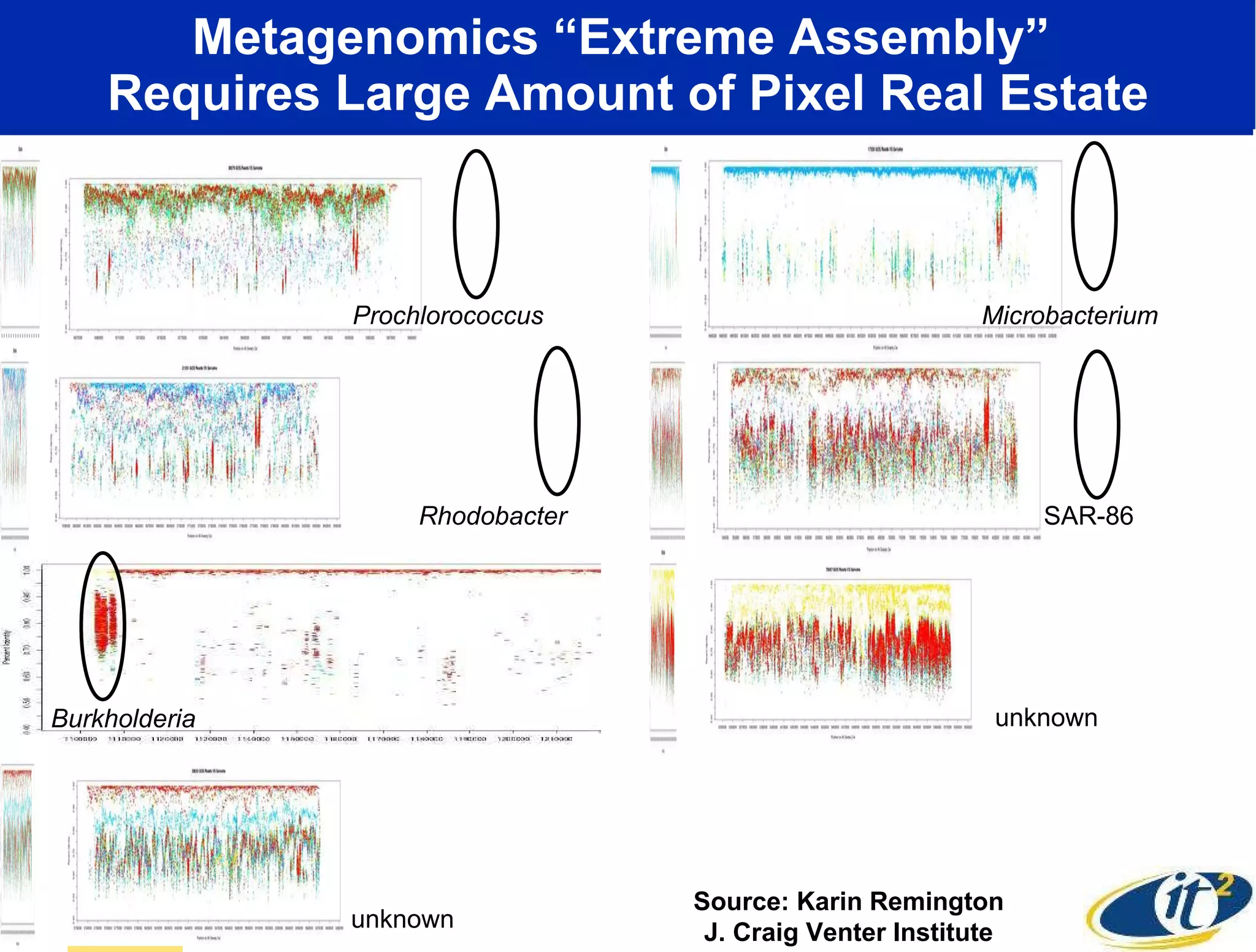
Metagenomics “Extreme Assembly”  Requires Large Amount of Pixel Real Estate Source: Karin Remington J. Craig Venter Institute Prochlorococcus Microbacterium Burkholderia Rhodobacter SAR-86 unknown unknown
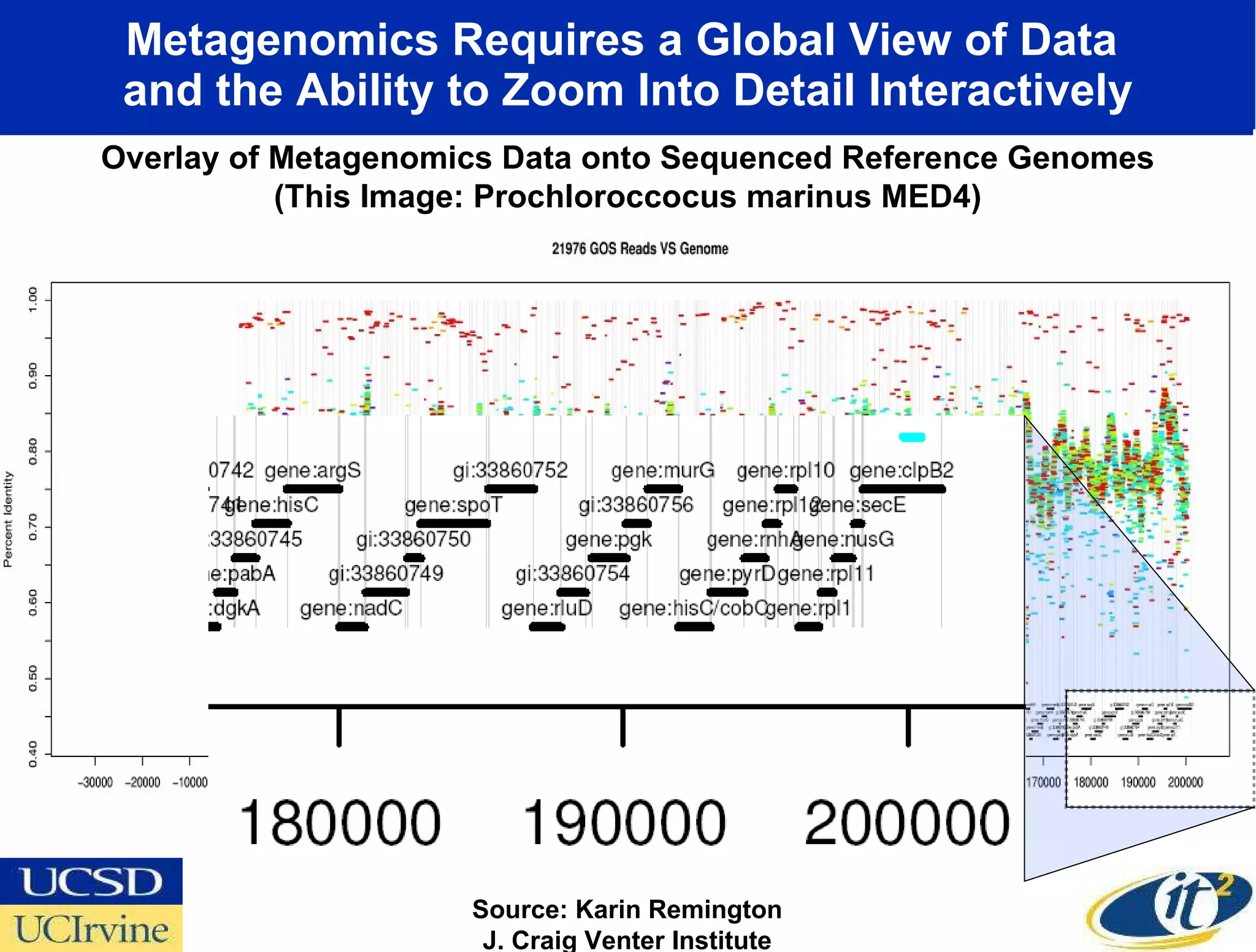
Metagenomics Requires a Global View of Data  and the Ability to Zoom Into Detail Interactively Overlay of Metagenomics Data onto Sequenced Reference Genomes (This Image: Prochloroccocus marinus MED4) Source: Karin Remington J. Craig Venter Institute
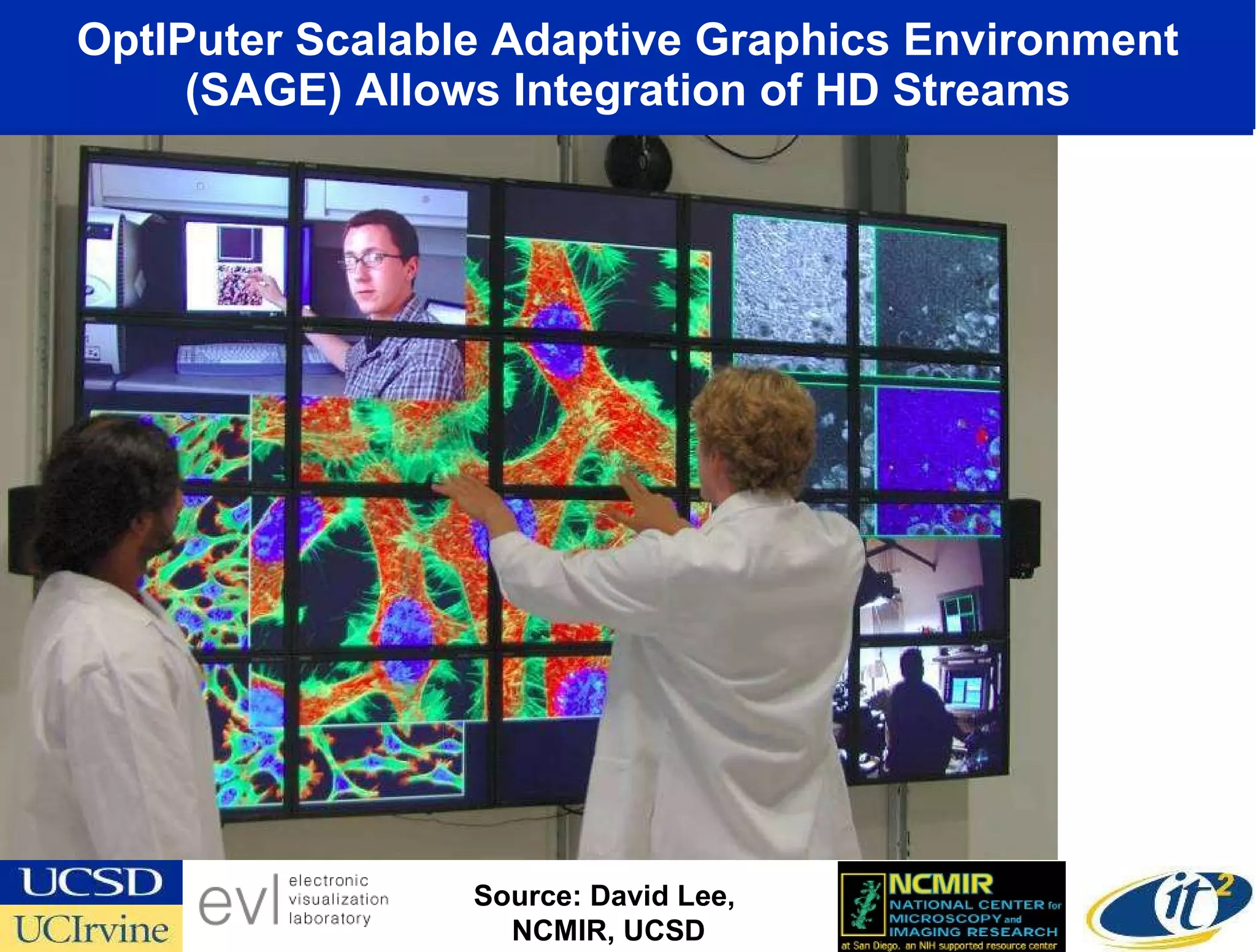
OptIPuter Scalable Adaptive Graphics Environment (SAGE) Allows Integration of HD Streams Source: David Lee,  NCMIR, UCSD
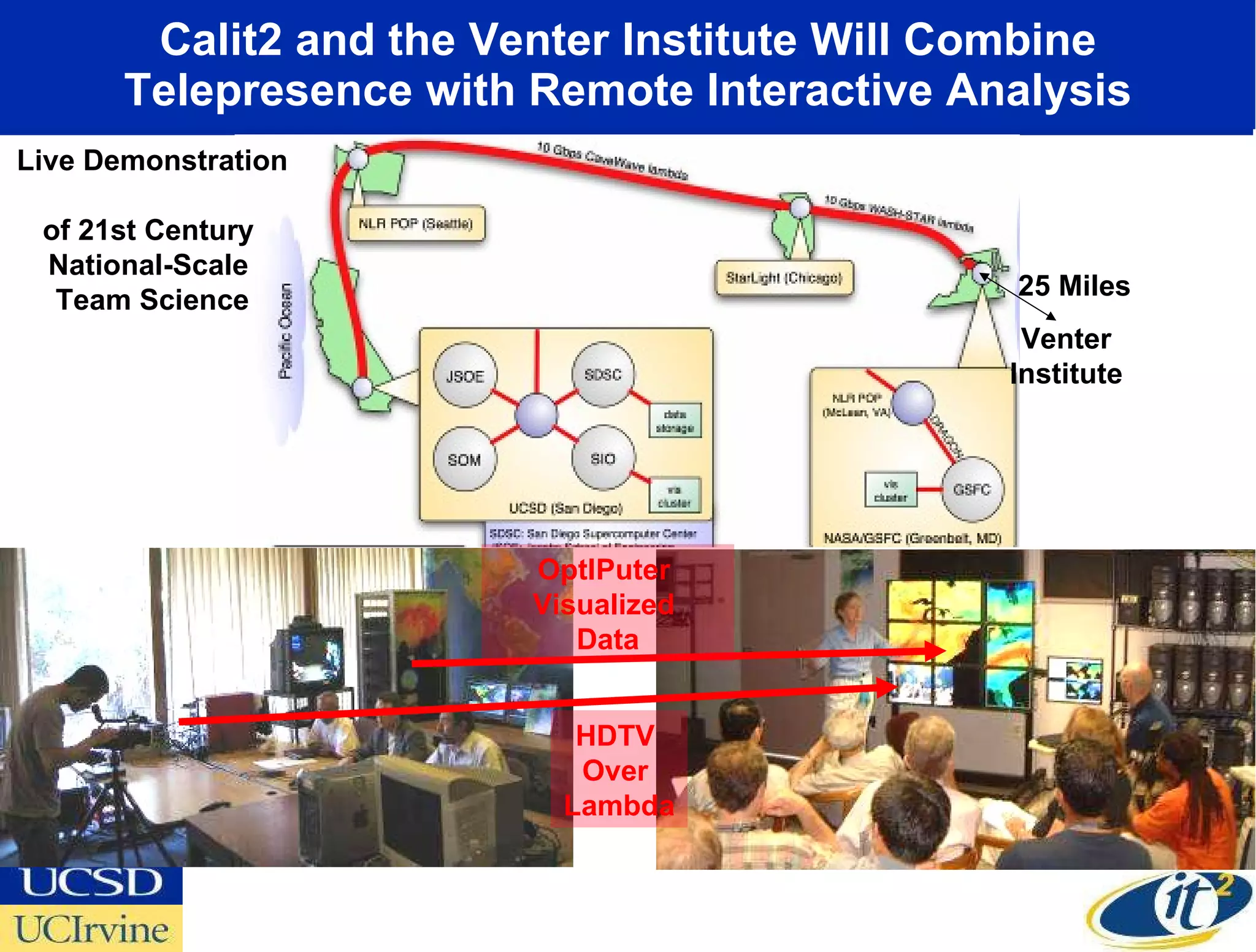
Calit2 and the Venter Institute Will Combine Telepresence with Remote Interactive Analysis Live Demonstration  of 21st Century  National-Scale  Team Science OptIPuter  Visualized  Data HDTV  Over  Lambda 25 Miles Venter Institute
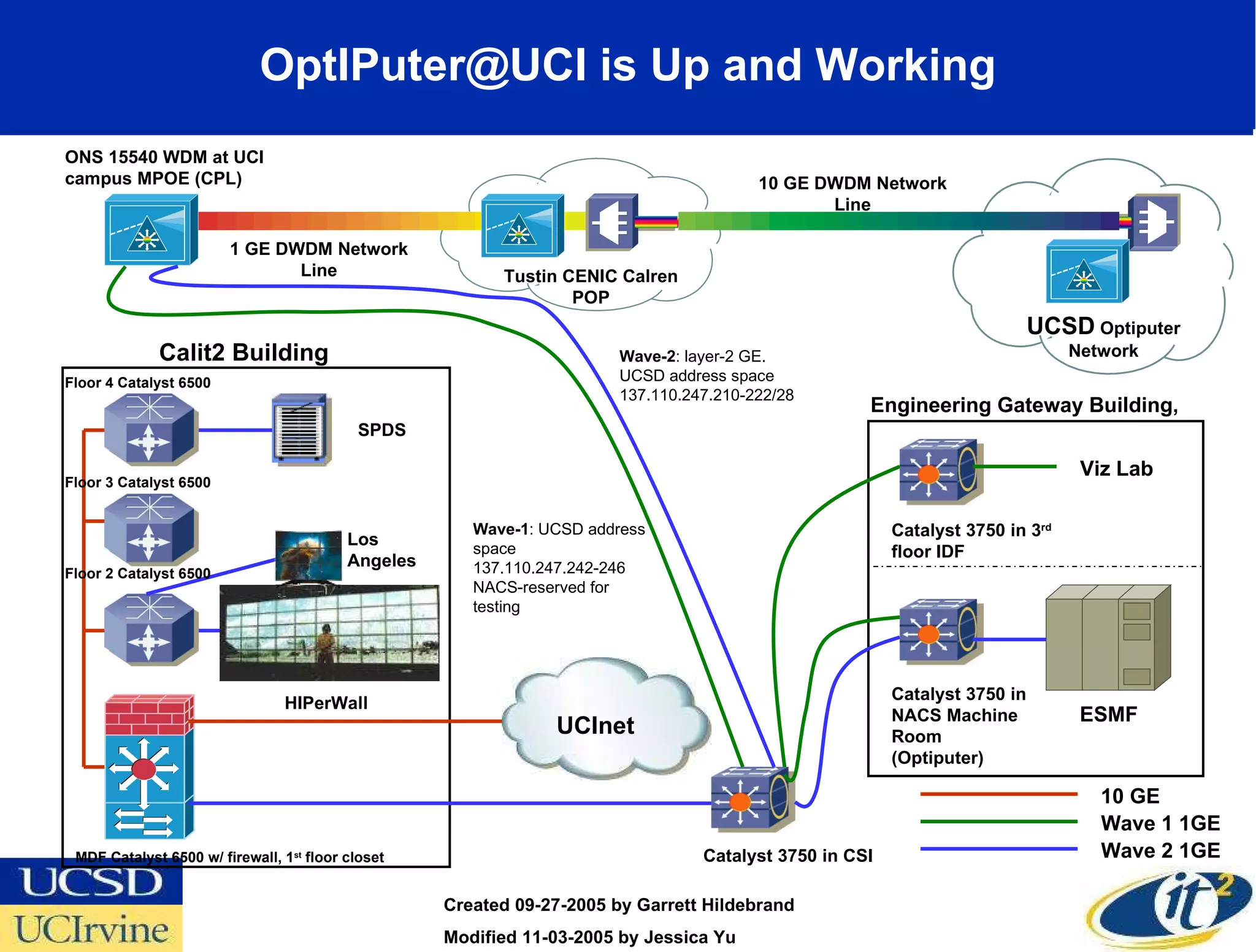
OptIPuter@UCI is Up and Working Created 09-27-2005 by Garrett Hildebrand Modified 11-03-2005 by Jessica Yu 10 GE SPDS Catalyst 3750 in CSI ONS 15540 WDM at UCI campus MPOE (CPL) 10 GE DWDM Network Line Engineering Gateway Building,  Catalyst 3750 in 3 rd floor IDF MDF Catalyst 6500 w/ firewall, 1 st  floor closet Wave-2 : layer-2 GE. UCSD address space 137.110.247.210-222/28 Floor 2 Catalyst 6500 Floor 3 Catalyst 6500 Floor 4 Catalyst 6500 Wave-1 : UCSD address space 137.110.247.242-246 NACS-reserved for testing ESMF Catalyst 3750 in NACS Machine Room (Optiputer) Viz Lab Wave 1 1GE Wave 2 1GE Calit2 Building UCInet HIPerWall Los Angeles 1 GE DWDM Network Line Tustin CENIC Calren POP UCSD  Optiputer Network
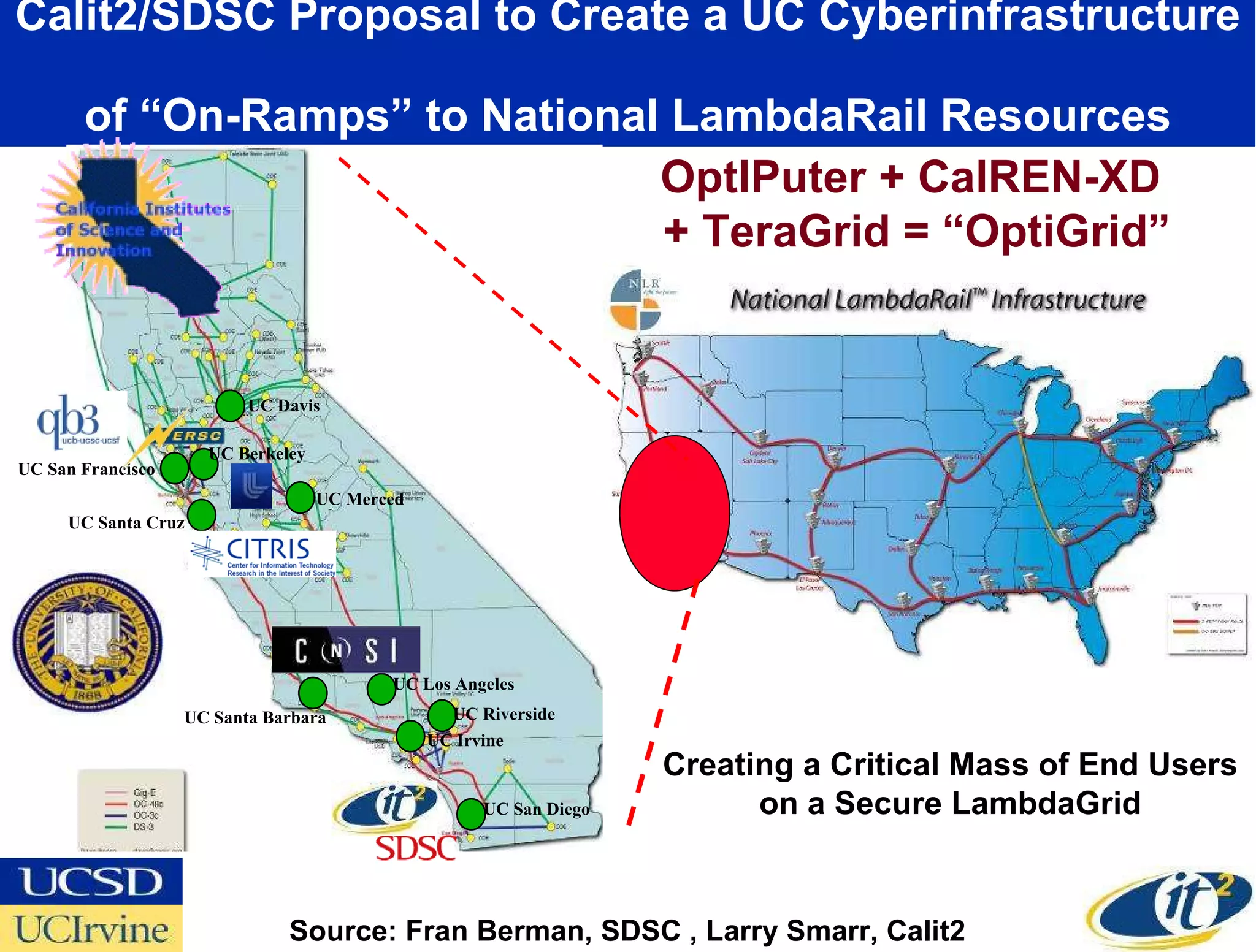
Calit2/SDSC Proposal to Create a UC Cyberinfrastructure  of “On-Ramps” to National LambdaRail Resources OptIPuter + CalREN-XD  + TeraGrid = “OptiGrid” Source: Fran Berman, SDSC , Larry Smarr, Calit2 Creating a Critical Mass of End Users on a Secure LambdaGrid UC San Francisco  UC San Diego  UC Riverside  UC Irvine  UC Davis  UC Berkeley UC Santa Cruz UC Santa Barbara  UC Los Angeles  UC Merced

Microbial Metagenomics Drives a New Cyberinfrastructure

  • 1.
    Microbial Metagenomics Drives a New Cyberinfrastructure Invited Talk School of Biological Sciences University of California, Irvine March 3, 2006 Dr. Larry Smarr Director, California Institute for Telecommunications and Information Technologies Harry E. Gruber Professor, Dept. of Computer Science and Engineering Jacobs School of Engineering, UCSD
  • 2.
    Abstract Calit2, inpartnership with J. Craig Venter Institute in Rockville, MD, and UCSD's Center for Earth Observations and Applications at Scripps Institution of Oceanography, will build a state-of-the-art computational resource and develop software tools to decipher the genetic code of communities of microbial life in the world's oceans. The Gordon and Betty Moore Foundation has awarded $24.5 million over seven years to create the Community Cyberinfrastructure for Advanced Marine Microbial Ecology Research and Analysis (CAMERA). Scientists will use CAMERA for metagenomics research -- analyzing microbial genomic sequence data in the context of other microbial species, as well as in comparison to a variety of other &quot;metadata&quot; such as the chemical and physical conditions in which microbes are sampled. The CAMERA project will contain the results of the Venter Institute's Sorcerer II Expedition, which carried out the first large-scale genomic survey of microbial life in the world's oceans to produce the largest gene catalogue ever assembled. Sorcerer II is expected to more than double the number of protein sequences currently available in the National Institutes of Health's GenBank. In addition to Sorcerer II's ecological genomic data, the CAMERA database will be augmented by the full genomes of more than 150 critical marine microbes enabling new comparative genomics studies.
  • 3.
    Calit2 Brings ComputerScientists and Engineers Together with Biomedical Researchers Some Areas of Concentration: Metagenomics Genomic Analysis of Organisms Evolution of Genomes Cancer Genomics Human Genomic Variation and Disease Mitochondrial Evolution Proteomics Computational Biology Information Theory and Biological Systems UC San Diego UC Irvine 1200 Researchers in Two Buildings
  • 4.
    Evolution is thePrinciple of Biological Systems: Most of Evolutionary Time Was in the Microbial World Source: Carl Woese, et al You Are Here Much of Genome Work Has Occurred in Animals
  • 5.
    Calit2 Researcher EskinCollaborates with Perlegen Sciences on Map of Human Genetic Variation Across Populations David A. Hinds, Laura L. Stuve, Geoffrey B. Nilsen, Eran Halperin, Eleazar Eskin , Dennis G. Ballinger, Kelly A. Frazer, David R. Cox. “ Whole-Genome Patterns of Common DNA Variation in Three Human Populations” Science 18 February, 2005: 307(5712):1072-1079. “ We have characterized whole-genome patterns of common human DNA variation by genotyping 1,586,383 single-nucleotide polymorphisms (SNPs) in 71 Americans of European, African, and Asian ancestry.” “ Although knowledge of a single genetic risk factor can seldom be used to predict the treatment outcome of a common disease, knowledge of a large fraction of all the major genetic risk factors contributing to a treatment response or common disease could have immediate utility, allowing existing treatment options to be matched to individual patients without requiring additional knowledge of the mechanisms by which the genetic differences lead to different outcomes .” “ More detailed haplotype analysis results are available at http://research.calit2.net/hap/wgha/ “
  • 6.
    For Mitochondrial DiseasesIt Has Been More Productive to Classify Patients by Genetic Defect Rather than by Clinical Manifestation Over the past 10 years, mitochondrial defects have been implicated in a wide variety of degenerative diseases, aging, and cancer… The same mtDNA mutation can produce quite different phenotypes, and different mutations can produce similar phenotypes. … The essential role of mitochondrial oxidative phosphorylation in cellular energy production, the generation of reactive oxygen species, and the initiation of apoptosis has suggested a number of novel mechanisms for mitochondrial pathology. -- Douglas Wallace, Science, Vol. 283, 1482-1488, 5 March 1999
  • 7.
    Comparative Genomics CanReveal Biological Facts That Are Not Visible Within a Species “ After sequencing these three genomes, it is clear that substantial rearrangements in the human genome happen only once in a million years, while the rate of rearrangements in the rat and mouse is much faster.” --Glenn Tesler, UCSD Dept. of Mathematics www.calit2.net/culture/features/2004/4-1_pevzner.html Co-Authors Pavel Pevzner and Glenn Tesler, UCSD April 1, 2004 December 05, 2002 December 9, 2004
  • 8.
    Advanced Algorithmic Techniques Reveal Unexpected Results “ Many of the chicken–human aligned, non-coding sequences occur far from genes, frequently in clusters that seem to be under selection for functions that are not yet understood.” Nature 432, 695 - 716 (09 December 2004)
  • 9.
    Microbial Metagenomics is a Rapidly Emerging Field of Research “ Despite their ubiquity, relatively little is known about the majority of environmental microorganisms, largely because of their resistance to culture under standard laboratory conditions.” “ The application of high-throughput shotgun sequencing environmental samples has recently provided global views of those communities not obtainable from 16S rRNA or BAC clone–sequencing surveys .” Comparative Metagenomics of Microbial Communities Susannah Green Tringe, Christian von Mering, Arthur Kobayashi, Asaf A. Salamov, Kevin Chen, Hwai W. Chang, Mircea Podar, Jay M. Short, Eric J. Mathur, John C. Detter, Peer Bork, Philip Hugenholtz, Edward M. Rubin Science 22 April 2005
  • 10.
    Looking Back Nearly4 Billion Years In the Evolution of Microbe Genomics Science Falkowski and Vargas 304 (5667): 58
  • 11.
    The Sargasso SeaExperiment The Power of Environmental Metagenomics Yielded a Total of Over 1 billion Base Pairs of Non-Redundant Sequence Displayed the Gene Content, Diversity, & Relative Abundance of the Organisms Sequences from at Least 1800 Genomic Species, including 148 Previously Unknown Identified over 1.2 Million Unknown Genes MODIS-Aqua satellite image of ocean chlorophyll in the Sargasso Sea grid about the BATS site from 22 February 2003 J. Craig Venter, et al. Science 2 April 2004: Vol. 304. pp. 66 - 74
  • 12.
  • 13.
    Marine Genome SequencingProject Measuring the Genetic Diversity of Ocean Microbes CAMERA will include All Sorcerer II Metagenomic Data
  • 14.
    Moore Foundation Fundedthe Venter Institute to Provide the Full Genome Sequence of 150 Marine Microbes www.moore.org/microgenome/trees_main.asp CAMERA will include All Moore Marine Microbial Genomes
  • 15.
    Moore Microbial GenomeSequencing Project: Cyanobacteria Being Sequenced by Venter Institute
  • 16.
    Moore Microbial GenomeSequencing Project Selected Microbes Throughout the World’s Oceans www.moore.org/microgenome/worldmap.asp
  • 17.
    Calit2 is DiscussingIncluding Other Metagenomic Data Sets A majority of the bacterial sequences corresponded to uncultivated species and novel microorganisms. We discovered significant intersubject variability. Characterization of this immensely diverse ecosystem is the first step in elucidating its role in health and disease. “ Diversity of the Human Intestinal Microbial Flora” Paul B. Eckburg, et al Science (10 June 2005) 395 Phylotypes
  • 18.
    Genomic Data IsGrowing Rapidly, But Metagenomics Will Vastly Increase The Scale… GenBank Protein Data Bank www.rcsb.org/pdb/holdings.html www.ncbi.nlm.nih.gov/Genbank 100 Billion Bases! Total Data < 1TB 35,000 Structures
  • 19.
    Metagenomics Will Coupleto Earth Observations Which Add Several TBs/Day Source: Glenn Iona, EOSDIS Element Evolution Technical Working Group January 6-7, 2005
  • 20.
    Challenge: Average Throughputof NASA Data Products to End User is < 50 Mbps Tested October 2005 http://ensight.eos.nasa.gov/Missions/icesat/index.shtml Internet2 Backbone is 10,000 Mbps! Throughput is < 0.5% to End User
  • 21.
    National Lambda Rail(NLR) and TeraGrid Provides Cyberinfrastructure Backbone for U.S. Researchers San Francisco Pittsburgh Cleveland San Diego Los Angeles Portland Seattle Pensacola Baton Rouge Houston San Antonio Las Cruces / El Paso Phoenix New York City Washington, DC Raleigh Jacksonville Dallas Tulsa Atlanta Kansas City Denver Ogden/ Salt Lake City Boise Albuquerque UC-TeraGrid UIC/NW-Starlight Chicago International Collaborators NLR 4 x 10Gb Lambdas Initially Capable of 40 x 10Gb wavelengths at Buildout NSF’s TeraGrid Has 4 x 10Gb Lambda Backbone Links Two Dozen State and Regional Optical Networks DOE, NSF, & NASA Using NLR
  • 22.
    The OptIPuter Project– Creating a LambdaGrid “Web” for Gigabyte Data Objects NSF Large Information Technology Research Proposal Calit2 (UCSD, UCI) and UIC Lead Campuses—Larry Smarr PI Partnering Campuses: USC, SDSU, NW, TA&M, UvA, SARA, NASA Industrial Partners IBM, Sun, Telcordia, Chiaro, Calient, Glimmerglass, Lucent $13.5 Million Over Five Years Linking Global Scale Science Projects to User’s Linux Clusters NIH Biomedical Informatics NSF EarthScope and ORION Research Network
  • 23.
    Using the OptIPuterto Couple Data Assimilation Models to Remote Data Sources Including Biology Regional Ocean Modeling System (ROMS) http://ourocean.jpl.nasa.gov/ NASA MODIS Mean Primary Productivity for April 2001 in California Current System
  • 24.
    Calit2 Intends toJump Beyond Traditional Web-Accessible Databases Data Backend (DB, Files) W E B PORTAL (pre-filtered, queries metadata) Response Request + many others Source: Phil Papadopoulos, SDSC, Calit2 BIRN PDB NCBI Genbank
  • 25.
    Calit2’s Direct AccessCore Architecture Will Create Next Generation Metagenomics Server Traditional User Response Request Source: Phil Papadopoulos, SDSC, Calit2 + Web Services Sargasso Sea Data Sorcerer II Expedition (GOS) JGI Community Sequencing Project Moore Marine Microbial Project NASA Goddard Satellite Data Community Microbial Metagenomics Data Flat File Server Farm W E B PORTAL Dedicated Compute Farm (100s of CPUs) TeraGrid: Cyberinfrastructure Backplane (scheduled activities, e.g. all by all comparison) (10000s of CPUs) Web (other service) Local Cluster Local Environment Direct Access Lambda Cnxns Data- Base Farm 10 GigE Fabric
  • 26.
    First Implementation of the CAMERA Complex Compute Database & Storage
  • 27.
    Analysis Data Sets,Data Services, Tools, and Workflows Assemblies of Metagenomic Data e.g, GOS, JGI CSP Annotations Genomic and Metagenomic Data “ All-against-all” Alignments of ORFs Updated Periodically Gene Clusters and Associated Data Profiles, Multiple-Sequence Alignments, HMMs, Phylogenies, Peptide Sequences Data Services ‘ Raw’ and Specialized Analysis Data Rich Query Facilities Tools and Workflows Navigate and Sift Raw and Analysis Data Publish Workflows and Develop New Ones Prioritize Features via Dialogue with Community Source: Saul Kravitz Director of Software Engineering J. Craig Venter Institute
  • 28.
    CAMERA Timeline Release1: Mid-2006 Majority of GOS + Moore Microbe Genome Data 6 Gbp Has Been Assembled Initial Versions of Core Tools BLAST, Reference Alignment Viewer Release 2: Early-2007 Additional Data Additional/Improved Tools Improved Usability Subsequent Move Towards Semantic DB, Direct Access Additional Tools & Data Based on Community Feedback
  • 29.
  • 30.
    The Bioinformatics Coreof the Joint Center for Structural Genomics will be Housed in the Calit2@UCSD Building Extremely Thermostable -- Useful for Many Industrial Processes (e.g. Chemical and Food) 173 Structures (122 from JCSG) Determining the Protein Structures of the Thermotoga Maritima Genome 122 T.M. Structures Solved by JCSG (75 Unique In The PDB) Direct Structural Coverage of 25% of the Expressed Soluble Proteins Probably Represents the Highest Structural Coverage of Any Organism Source: John Wooley, UCSD
  • 31.
    UCI’s IGB Developsa Suite of Programs and Servers for Protein Structure and Structural Feature Prediction www.igb.uci.edu/tools.htm Source: Pierre Baldi, UCI Sixty Affiliated IGB Labs at UCI e.g.:
  • 32.
    CAMERA Builds onCyberinfrastructure Grid, Workflow, and Portal Projects in a Service Oriented Architecture Cyberinfrastructure: Raw Resources, Middleware & Execution Environment NBCR Rocks Clusters Virtual Organizations Web Services KEPLER Workflow Management Vision Telescience Portal Located in Calit2@UCSD Building National Biomedical Computation Resource an NIH supported resource center
  • 33.
    Calit2 is Collaboratingwith Douglas Wallace-- Planning to Bring MITOMAP into Calit2 Domain The Human mtDNA Map, Showing the Location of Selected Pathogenic Mutations Within the 16,569-Base Pair Genome MITOMAP: A Human Mitochondrial Genome Database. www.mitomap.org , 2005 5 March 1999
  • 34.
    Displaying Images fromElectron Microscope Zeiss Scanning Electron Microscope in Calit2@ UCI
  • 35.
  • 36.
    Metagenomics “Extreme Assembly” Requires Large Amount of Pixel Real Estate Source: Karin Remington J. Craig Venter Institute Prochlorococcus Microbacterium Burkholderia Rhodobacter SAR-86 unknown unknown
  • 37.
    Metagenomics Requires aGlobal View of Data and the Ability to Zoom Into Detail Interactively Overlay of Metagenomics Data onto Sequenced Reference Genomes (This Image: Prochloroccocus marinus MED4) Source: Karin Remington J. Craig Venter Institute
  • 38.
    OptIPuter Scalable AdaptiveGraphics Environment (SAGE) Allows Integration of HD Streams Source: David Lee, NCMIR, UCSD
  • 39.
    Calit2 and theVenter Institute Will Combine Telepresence with Remote Interactive Analysis Live Demonstration of 21st Century National-Scale Team Science OptIPuter Visualized Data HDTV Over Lambda 25 Miles Venter Institute
  • 40.
    OptIPuter@UCI is Upand Working Created 09-27-2005 by Garrett Hildebrand Modified 11-03-2005 by Jessica Yu 10 GE SPDS Catalyst 3750 in CSI ONS 15540 WDM at UCI campus MPOE (CPL) 10 GE DWDM Network Line Engineering Gateway Building, Catalyst 3750 in 3 rd floor IDF MDF Catalyst 6500 w/ firewall, 1 st floor closet Wave-2 : layer-2 GE. UCSD address space 137.110.247.210-222/28 Floor 2 Catalyst 6500 Floor 3 Catalyst 6500 Floor 4 Catalyst 6500 Wave-1 : UCSD address space 137.110.247.242-246 NACS-reserved for testing ESMF Catalyst 3750 in NACS Machine Room (Optiputer) Viz Lab Wave 1 1GE Wave 2 1GE Calit2 Building UCInet HIPerWall Los Angeles 1 GE DWDM Network Line Tustin CENIC Calren POP UCSD Optiputer Network
  • 41.
    Calit2/SDSC Proposal toCreate a UC Cyberinfrastructure of “On-Ramps” to National LambdaRail Resources OptIPuter + CalREN-XD + TeraGrid = “OptiGrid” Source: Fran Berman, SDSC , Larry Smarr, Calit2 Creating a Critical Mass of End Users on a Secure LambdaGrid UC San Francisco UC San Diego UC Riverside UC Irvine UC Davis UC Berkeley UC Santa Cruz UC Santa Barbara UC Los Angeles UC Merced