Sample to Insight
Development of Rapid Detection Methods for Microbial and
Microbiome Analysis and Applications to Human Health
Christine Davis
Christine.Davis@QIAGEN.com
1
Sample to Insight
Legal disclaimer
Microbial Identification 2
• QIAGEN products shown here are intended for molecular biology
applications. These products are not intended for the diagnosis,
prevention or treatment of a disease.
• For up-to-date licensing information and product-specific
disclaimers, see the respective QIAGEN kit handbook or user
manual. QIAGEN kit handbooks and user manuals are available
at www.QIAGEN.com or can be requested from QIAGEN
Technical Services or your local distributor.
Sample to Insight
Agenda
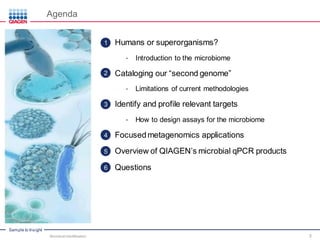
Humans or superorganisms?
• Introduction to the microbiome
Cataloging our “second genome”
• Limitations of current methodologies
Identify and profile relevant targets
• How to design assays for the microbiome
Focused metagenomics applications
Overview of QIAGEN’s microbial qPCR products
Questions
Microbial Identification 3
1
2
3
4
5
6
Sample to Insight
Agenda
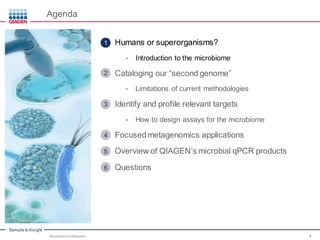
Humans or superorganisms?
• Introduction to the microbiome
Cataloging our “second genome”
• Limitations of current methodologies
Identify and profile relevant targets
• How to design assays for the microbiome
Focused metagenomics applications
Overview of QIAGEN’s microbial qPCR products
Questions
Microbial Identification 4
1
2
3
4
5
6
Sample to Insight
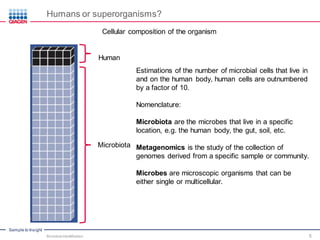
Humans or superorganisms?
Cellular composition of the organism
Human
Microbiota
Estimations of the number of microbial cells that live in
and on the human body, human cells are outnumbered
by a factor of 10.
Nomenclature:
Microbiota are the microbes that live in a specific
location, e.g. the human body, the gut, soil, etc.
Metagenomics is the study of the collection of
genomes derived from a specific sample or community.
Microbes are microscopic organisms that can be
either single or multicellular.
Microbial Identification 5
Sample to Insight
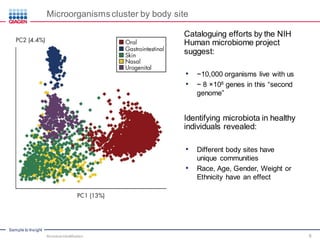
Microorganisms cluster by body site
Cataloguing efforts by the NIH
Human microbiome project
suggest:
• ~10,000 organisms live with us
• ~ 8 ×10⁶ genes in this “second
genome”
Identifying microbiota in healthy
individuals revealed:
• Different body sites have
unique communities
• Race, Age, Gender, Weight or
Ethnicity have an effect
Microbial Identification 6
Sample to Insight
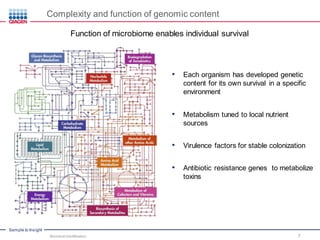
Complexity and function of genomic content
Function of microbiome enables individual survival
• Each organism has developed genetic
content for its own survival in a specific
environment
• Metabolism tuned to local nutrient
sources
• Virulence factors for stable colonization
• Antibiotic resistance genes to metabolize
toxins
Microbial Identification 7
Sample to Insight
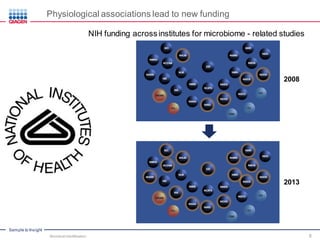
Physiological associations lead to new funding
NIH funding across institutes for microbiome - related studies
2008
2013
Microbial Identification 8
Sample to Insight
Agenda
Humans or superorganisms?
• Introduction to the microbiome
Cataloging our “second genome”
• Limitations of current methodologies
Identify and profile relevant targets
• How to design assays for the microbiome
Focused metagenomics applications
Overview of QIAGEN’s microbial qPCR products
Questions
Microbial Identification 9
1
2
3
4
5
6
Sample to Insight
Current methods for microbial analysis
• Culture
• Gene cloning (Pan 16S rRNA) and sanger
sequencing
• Microarray
• Next generation sequencing
• 16S rRNA sequencing
• Whole genome sequencing
• MALDI
• qPCR - Target dependent
• 16S rRNA gene
• Other relevant gene (antibiotic
resistance gene, virulence factor gene)
Microbial Identification 10
Sample to Insight
Limitations of current pathogen detection methods
• Time consuming
• (Involve multiple steps, 5-7 days)
• Can not identify all pathogens
• Majority are non-culturable
• Culture conditions are different
• Require extensive microbiological training
and expertise
• Varying protocols for identification
• Waste generation
Microbial Identification 11
Sample to Insight
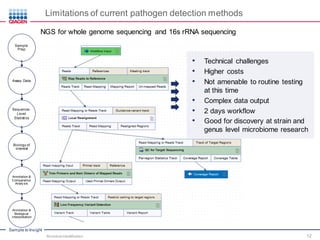
NGS for whole genome sequencing and 16s rRNA sequencing
• Technical challenges
• Higher costs
• Not amenable to routine testing
at this time
• Complex data output
• 2 days workflow
• Good for discovery at strain and
genus level microbiome research
Sample
Prep
Assay Data
Sequence-
Level
Statistics
Biology of
Interest
Annotation &
Comparative
Analysis
Annotation &
Biological
Interpretation
Limitations of current pathogen detection methods
Microbial Identification 12
Sample to Insight
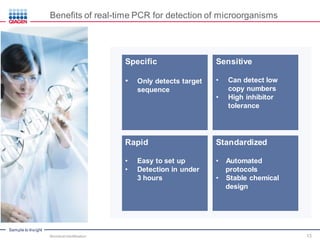
Specific
• Only detects target
sequence
Sensitive
• Can detect low
copy numbers
• High inhibitor
tolerance
Rapid
• Easy to set up
• Detection in under
3 hours
Standardized
• Automated
protocols
• Stable chemical
design
Benefits of real-time PCR for detection of microorganisms
Microbial Identification 13
Sample to Insight
Agenda
Humans or superorganisms?
• Introduction to the microbiome
Cataloging our “second genome”
• Limitations of current methodologies
Identify and profile relevant targets
• How to design assays for the microbiome
Focused metagenomics applications
Overview of QIAGEN’s microbial qPCR products
Questions
Microbial Identification 14
1
2
3
4
5
6
Sample to Insight
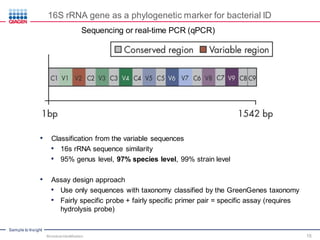
16S rRNA gene as a phylogenetic marker for bacterial ID
Sequencing or real-time PCR (qPCR)
• Classification from the variable sequences
• 16s rRNA sequence similarity
• 95% genus level, 97% species level, 99% strain level
• Assay design approach
• Use only sequences with taxonomy classified by the GreenGenes taxonomy
• Fairly specific probe + fairly specific primer pair = specific assay (requires
hydrolysis probe)
Microbial Identification 15
Sample to Insight
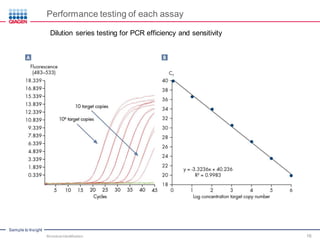
Performance testing of each assay
Dilution series testing for PCR efficiency and sensitivity
Microbial Identification 16
Sample to Insight
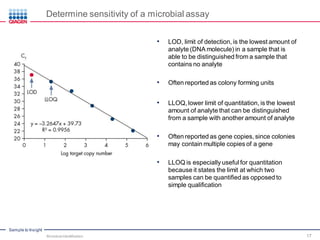
Determine sensitivity of a microbial assay
• LOD, limit of detection, is the lowest amount of
analyte (DNA molecule) in a sample that is
able to be distinguished from a sample that
contains no analyte
• Often reported as colony forming units
• LLOQ, lower limit of quantitation, is the lowest
amount of analyte that can be distinguished
from a sample with another amount of analyte
• Often reported as gene copies, since colonies
may contain multiple copies of a gene
• LLOQ is especially useful for quantitation
because it states the limit at which two
samples can be quantified as opposed to
simple qualification
Microbial Identification 17
Sample to Insight
Specificity of microbial DNA qPCR assays
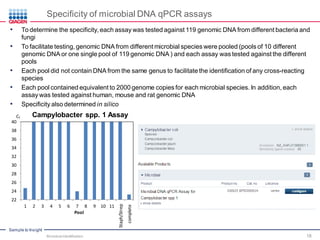
• To determine the specificity, each assay was tested against 119 genomic DNA from different bacteria and
fungi
• To facilitate testing, genomic DNA from different microbial species were pooled (pools of 10 different
genomic DNA or one single pool of 119 genomic DNA ) and each assay was tested against the different
pools
• Each pool did not contain DNA from the same genus to facilitate the identification of any cross-reacting
species
• Each pool contained equivalent to 2000 genome copies for each microbial species. In addition, each
assay was tested against human, mouse and rat genomic DNA
• Specificity also determined in silico
22
24
26
28
30
32
34
36
38
40
1 2 3 4 5 6 7 8 9 10 11
CT
Pool
Staph/Strep
complete
Campylobacter spp. 1 Assay
Microbial Identification 18
Sample to Insight
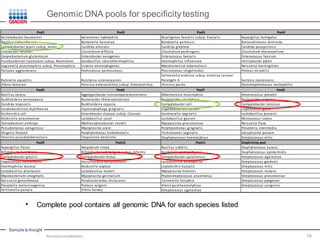
Genomic DNA pools for specificity testing
• Complete pool contains all genomic DNA for each species listed
Pool1 Pool2 Pool3 Pool4
Acinetobacter baumannii Aeromonas hydrophila Alcaligenes faecalis subsp. Faecalis Aspergillus fumigatus
Bacillus licheniformis Bartonella henselae Bordetella pertussis Brevundimonas diminuta
Campylobacter jejuni subsp. Jejuni Candida albicans Candida glabrata Candida parapsilosis
Citrobacter freundii Clostridium difficile Clostridium perfringens Clostridium thermocellum
Corynebacterium glutamicum Enterobacter aerogenes Enterococcus faecalis Enterococcus faecium
Fusobacterium nucleatum subsp. Nucleatum Geobacillus stearothermophilus Haemophilus influenzae Helicobacter pylori
Legionella pneumophila subsp. Pneumophila Listeria monocytogenes Mycobacterium tuberculosis Neisseria meningitidis
Pantoea agglomerans Pediococcus pentosaceus Plesiomonas shigelloides Proteus mirabilis
Rahnella aquatilis Ralstonia solanacearum
Salmonella enterica subsp. enterica serovar
Paratyphi A Serratia marcescens
Vibrio cholerae Yersinia enterocolitica subsp. Enterocolitica Yersinia pestis Stenotrophomonas maltophilia
Pool5 Pool6 Pool7 Pool8
Bacillus cereus Aggregatibacter actinomycetemcomitans Akkermansia muciniphila Anaerococcus prevotii
Burkholderia cenocepacia Bacteroides thetaiotaomicron Bacteroides ureolyticus Bacteroides vulgatus
Candida tropicalis Burkholderia cepacia Campylobacter coli Campylobacter concisus
Corynebacterium diphtheriae Capnocytophaga gingivalis Cryptobacterium curtum Cryptococcus gattii
Escherichia coli Enterobacter cloacae subsp. Cloacae Gardnerella vaginalis Lactobacillus jensenii
Klebsiella pneumoniae Lactobacillus casei Lactobacillus gasseri Micrococcus luteus
Ochrobactrum anthropi Methanobrevibacter smithii Mycoplasma pneumoniae Neisseria flava
Pseudomonas aeruginosa Mycoplasma orale Porphyromonas gingivalis Prevotella intermedia
Shigella flexneri Porphyromonas endodontalis Trichomonas vaginalis Ureaplasma parvum
Yersinia pseudotuberculosis Treponema denticola Staphylococcus haemolyticus Streptococcus mitis
Pool9 Pool10 Pool11 Staph/strep pool
Aspergillus flavus Atopobium rimae Bacillus subtilis Staphylococcus aureus
Bifidobacterium breve Bifidobacterium longum subsp. Infantis Bordetella parapertussis Staphylococcus epidermidis
Campylobacter gracilis Campylobacter rectus Campylobacter upsaliensis Streptococcus agalactiae
Cryptococcus neoformans Desulfovibrio desulfuricans Lactobacillus acidophilus Streptococcus gordonii
Haemophilus ducreyi Klebsiella oxytoca Leptotrichia buccalis Streptococcus mitis
Lactobacillus plantarum Lactobacillus reuteri Mycoplasma hominis Streptococcus mutans
Mycobacterium smegmatis Mycoplasma genitalium Peptostreptococcus anaerobius Streptococcus pneumoniae
Neisseria gonorrhoeae Parabacteroides distasonis Tannerella forsythia Streptococcus pyogenes
Prevotella melaninogenica Proteus vulgaris Vibrio parahaemolyticus Streptococcus sanguinis
Veillonella parvula Vibrio harvey Streptococcus agalactiae
Microbial Identification 19
Sample to Insight
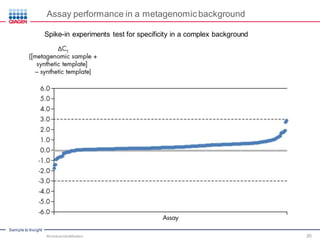
Assay performance in a metagenomic background
Spike-in experiments test for specificity in a complex background
Microbial Identification 20
Sample to Insight
Agenda
Humans or superorganisms?
• Introduction to the microbiome
Cataloging our “second genome”
• Limitations of current methodologies
Identify and profile relevant targets
• How to design assays for the microbiome
Focused metagenomics applications
Overview of QIAGEN’s microbial qPCR products
Questions
Microbial Identification 21
1
2
3
4
5
6
Sample to Insight
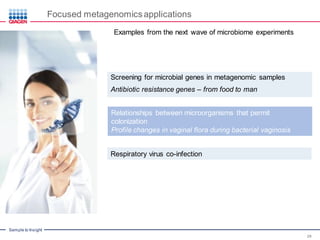
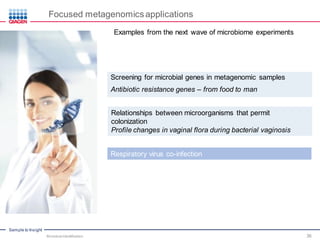
Focused metagenomics applications
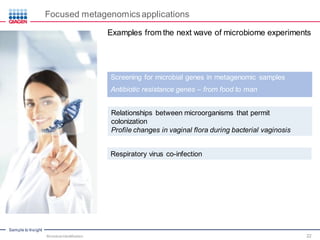
Screening for microbial genes in metagenomic samples
Antibiotic resistance genes – from food to man
Examples from the next wave of microbiome experiments
Respiratory virus co-infection
Relationships between microorganisms that permit
colonization
Profile changes in vaginal flora during bacterial vaginosis
Microbial Identification 22
Sample to Insight
Antibiotic resistance
23,00
0
death
s can
be
preve
nted
if....
Antibi
otic-
resist
ant
genes
: how
can
we
contr
ol
Antibi
otic-
resist
ant
bacte
ria’s
sicke
n two
millio
n
peopl
e and
23,00
0
succu
mb to
it.
Can
we
preve
nt
these
death
s?
Yes
we
can.
In
Marc
h of
2015,
the
nation
al
action
plan
for
comb
ating
antibi
otic-
resist
ant
bacte
ria
was
devel
oped
to
comb
at
resist
ance.
One
of the
action
plans
was
to
impro
ve
surve
illanc
e
capab
ilities.
Learn
more
about
The
Natio
nal
Actio
n
Plan
23,000 deaths can be prevented if....
Antibiotic-resistant genes: how can we control……
• CDC estimates: causes sickness in 2 million people and 23,000 deaths per year
• March 2015, Obama Administration Releases National Action Plan to Combat
Antibiotic-Resistant Bacteria
• June 2 2015, Washington the National Cattlemen’s Beef Association participated in the
White House Forum on Antibiotic Stewardship
Microbial Identification 23
Sample to Insight
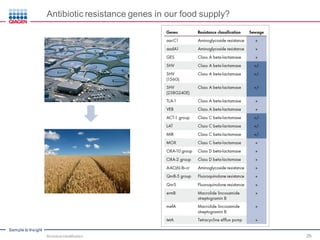
Antibiotic resistance genes in our food supply?
Microbial Identification 24
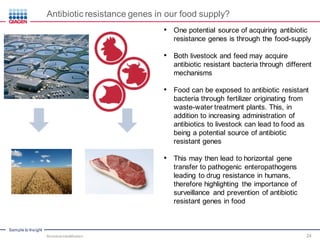
• One potential source of acquiring antibiotic
resistance genes is through the food-supply
• Both livestock and feed may acquire
antibiotic resistant bacteria through different
mechanisms
• Food can be exposed to antibiotic resistant
bacteria through fertilizer originating from
waste-water treatment plants. This, in
addition to increasing administration of
antibiotics to livestock can lead to food as
being a potential source of antibiotic
resistant genes
• This may then lead to horizontal gene
transfer to pathogenic enteropathogens
leading to drug resistance in humans,
therefore highlighting the importance of
surveillance and prevention of antibiotic
resistant genes in food
Sample to Insight
Antibiotic resistance gene reservoirs in the body
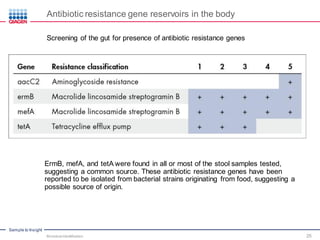
Screening of the gut for presence of antibiotic resistance genes
ErmB, mefA, and tetA were found in all or most of the stool samples tested,
suggesting a common source. These antibiotic resistance genes have been
reported to be isolated from bacterial strains originating from food, suggesting a
possible source of origin.
Microbial Identification 25
Sample to Insight
Antibiotic resistance genes in our food supply?
Microbial Identification 26
Sample to Insight
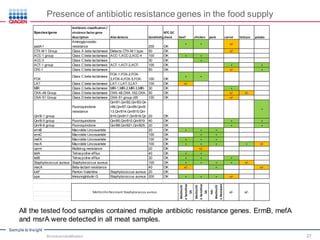
Presence of antibiotic resistance genes in the food supply
Species/gene
Antibiotic classification /
virulence factor gene
description Also detects Sensitivity
NTC QC
check beef chicken pork carrot lettuce potato
aadA1
Aminoglycoside-
resistance 200 OK
+ + +/-
CTX-M-1 Group Class A beta-lactamase Detects CTX-M-1 type 50 OK +/-
ACC-1 group Class C beta-lactamase ACC-1,ACC-2,ACC-4 100 OK + +
ACC-3 Class C beta-lactamase 30 OK +
ACT-1 group Class C beta-lactamase ACT-1,ACT-2,ACT- 100 OK + +
CFE-1 Class C beta-lactamase 50 OK +/- +
FOX
Class C beta-lactamase
FOX-1,FOX-2,FOX-
3,FOX-4,FOX-5,FOX- 100 OK
+ +
LAT Class C beta-lactamase LAT-1,LAT-3,LAT- 100 OK +/-
MIR Class C beta-lactamase MIR-1,MIR-2,MIR-3,MIR- 30 OK +
OXA-48 Group Class D beta-lactamase OXA-48,OXA-162,OXA- 50 OK +/- +/-
OXA-51 Group Class D beta-lactamase OXA-51 group (65 100 OK +/-
QnrB-1 group
Fluoroquinolone
resistance
QnrB1,QnrB2,QnrB3,Qn
rB6,QnrB7,QnrB9,QnrB
13,QnrB14,QnrB15,Qnr
B16,QnrB17,QnrB18,Qn 20 OK
+
QnrB-5 group Fluoroquinolone QnrB5,QnrB10,QnrB19 40 OK + +
QnrB-8 group Fluoroquinolone QnrB8,QnrB21,QnrB25, 20 OK + +
ermB Macrolide Lincosamide 20 OK + + +
ermC Macrolide Lincosamide 100 OK + +
mefA Macrolide Lincosamide 100 OK + + +
msrA Macrolide Lincosamide 100 OK + + + + +/-
oprm Multidrug resistance 20 OK +/-
tetA Tetracycline efflux 40 OK + +
tetB Tetracycline efflux 30 OK + + +
Staphylococcus aureus Staphylococcus aureus 100 OK + + + + +/-
mecA Beta-lactam resistance 40 OK +/- + +/-
lukF Panton-Valentine Staphylococcus aureus 20 OK
spa Immunoglobulin G Staphylococcus aureus 200 OK + + + +/-
Methicillin Resistant Staphylococcus aureus
Methicilli
nSensitive
SA
Methicilli
nSensitive
SA
HA-
Methicilli
nResistant
+/- +/-
All the tested food samples contained multiple antibiotic resistance genes. ErmB, mefA
and msrA were detected in all meat samples.
Microbial Identification 27
Sample to Insight
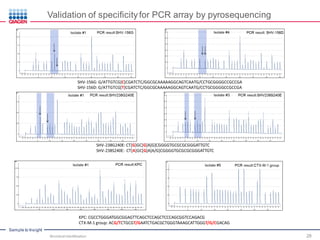
Validation of specificity for PCR array by pyrosequencing
Microbial Identification 28
Sample to Insight
Focused metagenomics applications
Screening for microbial genes in metagenomic samples
Antibiotic resistance genes – from food to man
29
Examples from the next wave of microbiome experiments
Respiratory virus co-infection
Relationships between microorganisms that permit
colonization
Profile changes in vaginal flora during bacterial vaginosis
Sample to Insight
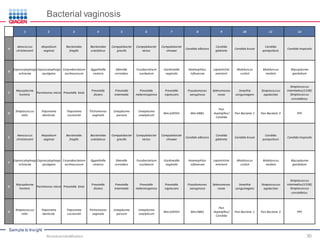
Bacterial vaginosis
1 2 3 4 5 6 7 8 9 10 11 12
A
Aerococcus
christensenii
Atopobium
vaginae
Bacteroides
fragilis
Bacteroides
ureolyticus
Campylobacter
gracilis
Campylobacter
rectus
Campylobacter
showae
Candida albicans
Candida
glabrata
Candida krusei
Candida
parapsilosis
Candida tropicalis
B
Capnocytophaga
ochracea
Capnocytophaga
sputigena
Corynebacterium
aurimucosum
Eggerthella
sinensis
Eikenella
corrodens
Fusobacterium
nucleatum
Gardnerella
vaginalis
Haemophilus
influenzae
Leptotrichia
amnionii
Mobiluncus
curtisii
Mobiluncus
mulieris
Mycoplasma
genitalium
C
Mycoplasma
hominis
Parvimonas micra Prevotella bivia
Prevotella
disiens
Prevotella
intermedia
Prevotella
melaninogenica
Prevotella
nigrescens
Pseudomonas
aeruginosa
Selenomonas
noxia
Sneathia
sanguinegens
Streptococcus
agalactiae
Streptococcus
intermedius(1338)
Streptococcus
constellatus
D
Streptococcus
mitis
Treponema
denticola
Treponema
socranskii
Trichomonas
vaginalis
Ureaplasma
parvum
Ureaplasma
urealyticum
Mm.GAPDH Mm.HBB1
Pan
Aspergillus/
Candida
Pan Bacteria 1 Pan Bacteria 3 PPC
E
Aerococcus
christensenii
Atopobium
vaginae
Bacteroides
fragilis
Bacteroides
ureolyticus
Campylobacter
gracilis
Campylobacter
rectus
Campylobacter
showae
Candida albicans
Candida
glabrata
Candida krusei
Candida
parapsilosis
Candida tropicalis
F
Capnocytophaga
ochracea
Capnocytophaga
sputigena
Corynebacterium
aurimucosum
Eggerthella
sinensis
Eikenella
corrodens
Fusobacterium
nucleatum
Gardnerella
vaginalis
Haemophilus
influenzae
Leptotrichia
amnionii
Mobiluncus
curtisii
Mobiluncus
mulieris
Mycoplasma
genitalium
G
Mycoplasma
hominis
Parvimonas micra Prevotella bivia
Prevotella
disiens
Prevotella
intermedia
Prevotella
melaninogenica
Prevotella
nigrescens
Pseudomonas
aeruginosa
Selenomonas
noxia
Sneathia
sanguinegens
Streptococcus
agalactiae
Streptococcus
intermedius(1338)
Streptococcus
constellatus
H
Streptococcus
mitis
Treponema
denticola
Treponema
socranskii
Trichomonas
vaginalis
Ureaplasma
parvum
Ureaplasma
urealyticum
Mm.GAPDH Mm.HBB1
Pan
Aspergillus/
Candida
Pan Bacteria 1 Pan Bacteria 3 PPC
Microbial Identification 30
Sample to Insight
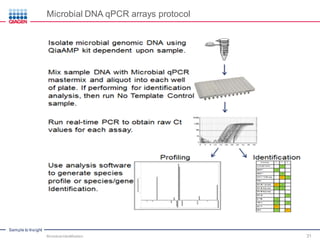
Microbial DNA qPCR arrays protocol
Microbial Identification 31
Sample to Insight
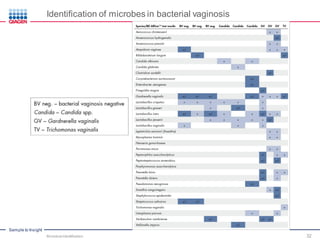
Identification of microbes in bacterial vaginosis
Microbial Identification 32
Sample to Insight
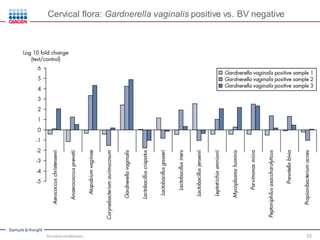
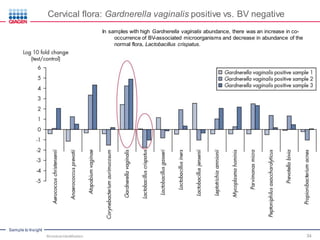
Cervical flora: Gardnerella vaginalis positive vs. BV negative
Microbial Identification 33
Sample to Insight
In samples with high Gardnerella vaginalis abundance, there was an increase in co-
occurrence of BV-associated microorganisms and decrease in abundance of the
normal flora, Lactobacillus crispatus.
Microbial Identification 34
Cervical flora: Gardnerella vaginalis positive vs. BV negative
Sample to Insight
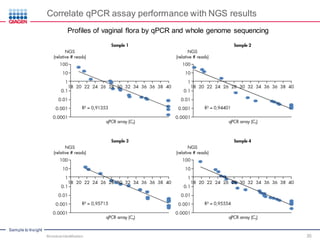
Correlate qPCR assay performance with NGS results
Profiles of vaginal flora by qPCR and whole genome sequencing
Microbial Identification 35
Sample to Insight
Focused metagenomics applications
Screening for microbial genes in metagenomic samples
Antibiotic resistance genes – from food to man
Examples from the next wave of microbiome experiments
Respiratory virus co-infection
Relationships between microorganisms that permit
colonization
Profile changes in vaginal flora during bacterial vaginosis
Microbial Identification 36
Sample to Insight
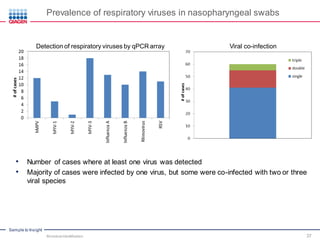
Prevalence of respiratory viruses in nasopharyngeal swabs
• Number of cases where at least one virus was detected
• Majority of cases were infected by one virus, but some were co-infected with two or three
viral species
Detection of respiratory viruses by qPCR array Viral co-infection
Microbial Identification 37
Sample to Insight
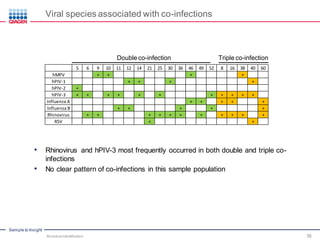
Viral species associated with co-infections
Double co-infection Triple co-infection
5 6 9 10 11 12 14 21 25 30 36 46 49 52 8 16 38 40 60
hMPV + + + +
hPIV-1 + + + +
hPIV-2 +
hPIV-3 + + + + + + + + + + +
Influenza A + + + + +
Influenza B + + + + +
Rhinovirus + + + + + + + + + + +
RSV + +
• Rhinovirus and hPIV-3 most frequently occurred in both double and triple co-
infections
• No clear pattern of co-infections in this sample population
Microbial Identification 38
Sample to Insight
Agenda
Humans or superorganisms?
• Introduction to the microbiome
Cataloging our “second genome”
• Limitations of current methodologies
Identify and profile relevant targets
• How to design assays for the microbiome
Focused metagenomics applications
Overview of QIAGEN’s microbial qPCR products
Questions
Microbial Identification 39
1
2
3
4
5
6
Sample to Insight
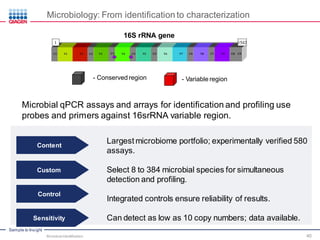
Microbiology: From identification to characterization
16S rRNA gene
- Conserved region - Variable region
Microbial qPCR assays and arrays for identification and profiling use
probes and primers against 16srRNA variable region.
Largest microbiome portfolio; experimentally verified 580
assays.
Select 8 to 384 microbial species for simultaneous
detection and profiling.
Integrated controls ensure reliability of results.
95 Can detect as low as 10 copy numbers; data available.
Content
Custom
Control
Sensitivity
Microbial Identification 40
Sample to Insight
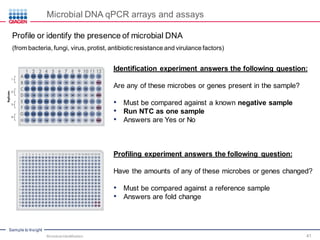
Microbial DNA qPCR arrays and assays
Profile or identify the presence of microbial DNA
(from bacteria, fungi, virus, protist, antibiotic resistance and virulance factors)
Identification experiment answers the following question:
Are any of these microbes or genes present in the sample?
• Must be compared against a known negative sample
• Run NTC as one sample
• Answers are Yes or No
Profiling experiment answers the following question:
Have the amounts of any of these microbes or genes changed?
• Must be compared against a reference sample
• Answers are fold change
Microbial Identification 41
Sample to Insight
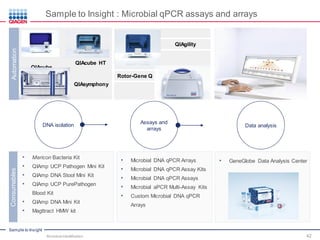
Sample to Insight : Microbial qPCR assays and arrays
• Mericon Bacteria Kit
• QIAmp UCP Pathogen Mini Kit
• QIAmp DNA Stool Mini Kit
• QIAmp UCP PurePathogen
Blood Kit
• QIAmp DNA Mini Kit
• Magttract HMW kit
• Microbial DNA qPCR Arrays
• Microbial DNA qPCR Assay Kits
• Microbial DNA qPCR Assays
• Microbial aPCR Multi-Assay Kits
• Custom Microbial DNA qPCR
Arrays
• GeneGlobe Data Analysis Center
QIAcube
QIAcube HT
QIAsymphony
QIAgility
Rotor-Gene Q
AutomationConsumables
Microbial Identification 42
Data analysis
Assays and
arrays
DNA isolation
Sample to Insight
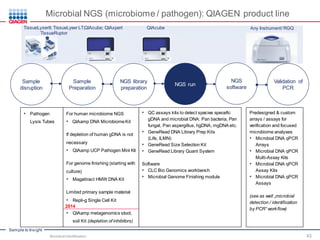
• Pathogen
Lysis Tubes
Microbial NGS (microbiome / pathogen): QIAGEN product line
• QC assays kits to detect species specefic
gDNA and microbial DNA: Pan bacteria, Pan
fungal, Pan aspergillus, hgDNA, mgDNA etc.
• GeneRead DNA Library Prep Kits
(Life, ILMN)
• GeneRead Size Selection Kit
• GeneRead Library Quant System
Software
• CLC Bio Genomics workbench
• Microbial Genome Finishing module
For human microbiome NGS
• QIAamp DNA Microbiome Kit
If depletion of human gDNA is not
necessary
• QIAamp UCP Pathogen Mini Kit
For genome finishing (starting with
culture)
• Magattract HMW DNA Kit
Limited primary sample material
• Repli-g Single Cell Kit
• QIAamp metagenomics stool,
soil Kit (depletion of inhibitors)
Predesigned & custom
arrays / assays for
verification and focused
microbiome analyses
• Microbial DNA qPCR
Arrays
• Microbial DNA qPCR
Multi-Assay Kits
• Microbial DNA qPCR
Assay Kits
• Microbial DNA qPCR
Assays
(see as well „microbial
detection / identification
by PCR“ workflow)
TissueLyserII; TissueLyser LT;
TissueRuptor
QIAcube; QIAxpert QIAcube
2014
Any Instrument/ RGQ
Microbial Identification 43
NGS run
NGS library
preparation
Sample
Preparation
NGS
software
Validation of
PCR
Sample
disruption
Sample to Insight
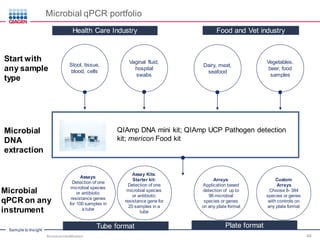
Microbial qPCR portfolio
Start with
any sample
type
Health Care Industry Food and Vet industry
QIAmp DNA mini kit; QIAmp UCP Pathogen detection
kit; mericon Food kit
Microbial
DNA
extraction
Microbial
qPCR on any
instrument
Tube format Plate format
Microbial Identification 44
Stool, tissue,
blood, cells
Vaginal fluid,
hospital
swabs
Dairy, meat,
seafood
Vegetables,
beer, food
samples
Assay Kits:
Starter kit:
Detection of one
microbial species
or antibiotic
resistance gene for
20 samples in a
tube
Arrays:
Application based
detection of up to
96 microbial
species or genes
on any plate format
Assays:
Detection of one
microbial species
or antibiotic
resistance genes
for 100 samples in
a tube
Custom
Arrays
Choose 8- 384
species or genes
with controls on
any plate format
Sample to Insight
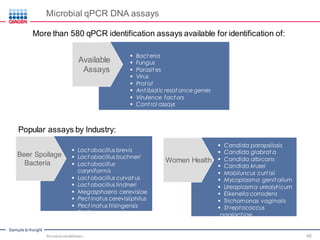
Microbial qPCR DNA assays
More than 580 qPCR identification assays available for identification of:
 Bacteria
 Fungus
 Parasites
 Virus
 Protist
 Antibiotic resistance genes
 Virulence factors
 Control assays
Available
Assays
Popular assays by Industry:
 Lactobacillus brevis
 Lactobacillus buchneri
 Lactobacillus coryniformis
 Lactobacillus curvatus
 Lactobacillus lindneri
 Megasphaera cerevisiae
 Pectinatus cerevisiiphilus
 Pectinatus frisingensis
 Pediocococcus damnosus
Beer Spoilage
Bacteria Women Health
 Candida parapsilosis
 Candida glabrata
 Candida albicans
 Candida krusei
 Mobiluncus curtisii
 Mycoplasma genitalium
 Ureaplasma urealyticum
 Eikenella corrodens
 Trichomonas vaginalis
 Streptococcus agalactiae
Microbial Identification 45
Sample to Insight
Health Care
industry
& academic
research
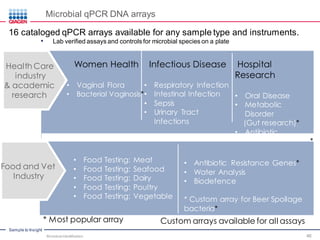
Microbial qPCR DNA arrays
16 cataloged qPCR arrays available for any sample type and instruments.
• Lab verified assays and controls for microbial species on a plate
Women Health
• Vaginal Flora
• Bacterial Vaginosis*
Infectious Disease
• Respiratory Infection
• Intestinal Infection
• Sepsis
• Urinary Tract Infections
Hospital Research
• Oral Disease
• Metabolic Disorder
(Gut research)*
• Antibiotic
Resistance Genes*
Food and Vet
Industry
• Food Testing: Meat
• Food Testing: Seafood
• Food Testing: Dairy
• Food Testing: Poultry
• Food Testing: Vegetable
• Antibiotic Resistance Genes*
• Water Analysis
• Biodefence
* Custom array for Beer Spoilage
bacteria*
* Most popular array Custom arrays available for all assays
Microbial Identification 46
Sample to Insight
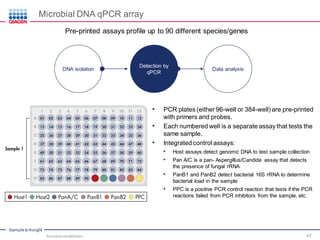
Microbial DNA qPCR array
Pre-printed assays profile up to 90 different species/genes
• PCR plates (either 96-well or 384-well) are pre-printed
with primers and probes.
• Each numbered well is a separate assay that tests the
same sample.
• Integrated control assays:
• Host assays detect genomic DNA to test sample collection
• Pan A/C is a pan- Aspergillus/Candida assay that detects
the presence of fungal rRNA
• PanB1 and PanB2 detect bacterial 16S rRNA to determine
bacterial load in the sample
• PPC is a positive PCR control reaction that tests if the PCR
reactions failed from PCR inhibitors from the sample, etc.
Microbial Identification 47
Data analysis
Detection by
qPCR
DNA isolation
Sample to Insight
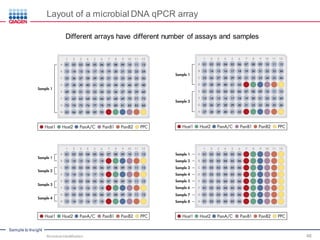
Layout of a microbial DNA qPCR array
Different arrays have different number of assays and samples
Microbial Identification 48
Sample to Insight
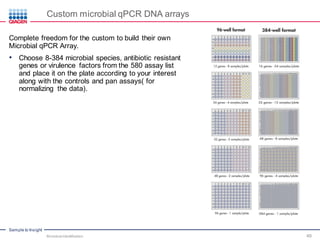
Custom microbial qPCR DNA arrays
Complete freedom for the custom to build their own
Microbial qPCR Array.
• Choose 8-384 microbial species, antibiotic resistant
genes or virulence factors from the 580 assay list
and place it on the plate according to your interest
along with the controls and pan assays( for
normalizing the data).
Microbial Identification 49
Sample to Insight
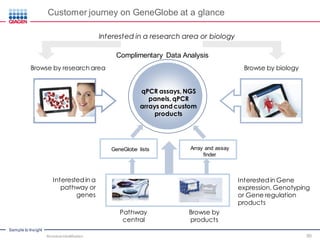
Interested in a
pathway or
genes
Browse by research area Browse by biology
Pathway
central
qPCR assays, NGS
panels, qPCR
arrays and custom
products
Customer journey on GeneGlobe at a glance
Interested in a research area or biology
Interested in Gene
expression, Genotyping or
Gene regulation products
Browse by products
GeneGlobe lists Array and assay
finder
Complimentary Data Analysis
Microbial Identification 50
Sample to Insight
Pathway-focused solutions for expression analysis
http://www.geneglobe.com
http://www.QIAGEN.com/
Microbial DNA qPCR Arrays
Thank you
Microbial Identification 51
Sample to Insight
Agenda
Humans or superorganisms?
• Introduction to the microbiome
Cataloging our “second genome”
• Limitations of current methodologies
Identify and profile relevant targets
• How to design assays for the microbiome
Focused metagenomics applications
Overview of QIAGEN’s microbial qPCR products
Questions
Microbial Identification 52
1
2
3
4
5
6
Sample to Insight
Thank you for coming
Any questions?
Contact us
Telephone: 888-503-3187
Email: brcsupport@QIAGEN.com
qiawebinars@QIAGEN.com
Microbial Identification 53

Microbiome Identification to Characterization: Pathogen Detection Webinar Series: Part 3

  • 1.
    Sample to Insight Developmentof Rapid Detection Methods for Microbial and Microbiome Analysis and Applications to Human Health Christine Davis Christine.Davis@QIAGEN.com 1
  • 2.
    Sample to Insight Legaldisclaimer Microbial Identification 2 • QIAGEN products shown here are intended for molecular biology applications. These products are not intended for the diagnosis, prevention or treatment of a disease. • For up-to-date licensing information and product-specific disclaimers, see the respective QIAGEN kit handbook or user manual. QIAGEN kit handbooks and user manuals are available at www.QIAGEN.com or can be requested from QIAGEN Technical Services or your local distributor.
  • 3.
    Sample to Insight Agenda Humansor superorganisms? • Introduction to the microbiome Cataloging our “second genome” • Limitations of current methodologies Identify and profile relevant targets • How to design assays for the microbiome Focused metagenomics applications Overview of QIAGEN’s microbial qPCR products Questions Microbial Identification 3 1 2 3 4 5 6
  • 4.
    Sample to Insight Agenda Humansor superorganisms? • Introduction to the microbiome Cataloging our “second genome” • Limitations of current methodologies Identify and profile relevant targets • How to design assays for the microbiome Focused metagenomics applications Overview of QIAGEN’s microbial qPCR products Questions Microbial Identification 4 1 2 3 4 5 6
  • 5.
    Sample to Insight Humansor superorganisms? Cellular composition of the organism Human Microbiota Estimations of the number of microbial cells that live in and on the human body, human cells are outnumbered by a factor of 10. Nomenclature: Microbiota are the microbes that live in a specific location, e.g. the human body, the gut, soil, etc. Metagenomics is the study of the collection of genomes derived from a specific sample or community. Microbes are microscopic organisms that can be either single or multicellular. Microbial Identification 5
  • 6.
    Sample to Insight Microorganismscluster by body site Cataloguing efforts by the NIH Human microbiome project suggest: • ~10,000 organisms live with us • ~ 8 ×10⁶ genes in this “second genome” Identifying microbiota in healthy individuals revealed: • Different body sites have unique communities • Race, Age, Gender, Weight or Ethnicity have an effect Microbial Identification 6
  • 7.
    Sample to Insight Complexityand function of genomic content Function of microbiome enables individual survival • Each organism has developed genetic content for its own survival in a specific environment • Metabolism tuned to local nutrient sources • Virulence factors for stable colonization • Antibiotic resistance genes to metabolize toxins Microbial Identification 7
  • 8.
    Sample to Insight Physiologicalassociations lead to new funding NIH funding across institutes for microbiome - related studies 2008 2013 Microbial Identification 8
  • 9.
    Sample to Insight Agenda Humansor superorganisms? • Introduction to the microbiome Cataloging our “second genome” • Limitations of current methodologies Identify and profile relevant targets • How to design assays for the microbiome Focused metagenomics applications Overview of QIAGEN’s microbial qPCR products Questions Microbial Identification 9 1 2 3 4 5 6
  • 10.
    Sample to Insight Currentmethods for microbial analysis • Culture • Gene cloning (Pan 16S rRNA) and sanger sequencing • Microarray • Next generation sequencing • 16S rRNA sequencing • Whole genome sequencing • MALDI • qPCR - Target dependent • 16S rRNA gene • Other relevant gene (antibiotic resistance gene, virulence factor gene) Microbial Identification 10
  • 11.
    Sample to Insight Limitationsof current pathogen detection methods • Time consuming • (Involve multiple steps, 5-7 days) • Can not identify all pathogens • Majority are non-culturable • Culture conditions are different • Require extensive microbiological training and expertise • Varying protocols for identification • Waste generation Microbial Identification 11
  • 12.
    Sample to Insight NGSfor whole genome sequencing and 16s rRNA sequencing • Technical challenges • Higher costs • Not amenable to routine testing at this time • Complex data output • 2 days workflow • Good for discovery at strain and genus level microbiome research Sample Prep Assay Data Sequence- Level Statistics Biology of Interest Annotation & Comparative Analysis Annotation & Biological Interpretation Limitations of current pathogen detection methods Microbial Identification 12
  • 13.
    Sample to Insight Specific •Only detects target sequence Sensitive • Can detect low copy numbers • High inhibitor tolerance Rapid • Easy to set up • Detection in under 3 hours Standardized • Automated protocols • Stable chemical design Benefits of real-time PCR for detection of microorganisms Microbial Identification 13
  • 14.
    Sample to Insight Agenda Humansor superorganisms? • Introduction to the microbiome Cataloging our “second genome” • Limitations of current methodologies Identify and profile relevant targets • How to design assays for the microbiome Focused metagenomics applications Overview of QIAGEN’s microbial qPCR products Questions Microbial Identification 14 1 2 3 4 5 6
  • 15.
    Sample to Insight 16SrRNA gene as a phylogenetic marker for bacterial ID Sequencing or real-time PCR (qPCR) • Classification from the variable sequences • 16s rRNA sequence similarity • 95% genus level, 97% species level, 99% strain level • Assay design approach • Use only sequences with taxonomy classified by the GreenGenes taxonomy • Fairly specific probe + fairly specific primer pair = specific assay (requires hydrolysis probe) Microbial Identification 15
  • 16.
    Sample to Insight Performancetesting of each assay Dilution series testing for PCR efficiency and sensitivity Microbial Identification 16
  • 17.
    Sample to Insight Determinesensitivity of a microbial assay • LOD, limit of detection, is the lowest amount of analyte (DNA molecule) in a sample that is able to be distinguished from a sample that contains no analyte • Often reported as colony forming units • LLOQ, lower limit of quantitation, is the lowest amount of analyte that can be distinguished from a sample with another amount of analyte • Often reported as gene copies, since colonies may contain multiple copies of a gene • LLOQ is especially useful for quantitation because it states the limit at which two samples can be quantified as opposed to simple qualification Microbial Identification 17
  • 18.
    Sample to Insight Specificityof microbial DNA qPCR assays • To determine the specificity, each assay was tested against 119 genomic DNA from different bacteria and fungi • To facilitate testing, genomic DNA from different microbial species were pooled (pools of 10 different genomic DNA or one single pool of 119 genomic DNA ) and each assay was tested against the different pools • Each pool did not contain DNA from the same genus to facilitate the identification of any cross-reacting species • Each pool contained equivalent to 2000 genome copies for each microbial species. In addition, each assay was tested against human, mouse and rat genomic DNA • Specificity also determined in silico 22 24 26 28 30 32 34 36 38 40 1 2 3 4 5 6 7 8 9 10 11 CT Pool Staph/Strep complete Campylobacter spp. 1 Assay Microbial Identification 18
  • 19.
    Sample to Insight GenomicDNA pools for specificity testing • Complete pool contains all genomic DNA for each species listed Pool1 Pool2 Pool3 Pool4 Acinetobacter baumannii Aeromonas hydrophila Alcaligenes faecalis subsp. Faecalis Aspergillus fumigatus Bacillus licheniformis Bartonella henselae Bordetella pertussis Brevundimonas diminuta Campylobacter jejuni subsp. Jejuni Candida albicans Candida glabrata Candida parapsilosis Citrobacter freundii Clostridium difficile Clostridium perfringens Clostridium thermocellum Corynebacterium glutamicum Enterobacter aerogenes Enterococcus faecalis Enterococcus faecium Fusobacterium nucleatum subsp. Nucleatum Geobacillus stearothermophilus Haemophilus influenzae Helicobacter pylori Legionella pneumophila subsp. Pneumophila Listeria monocytogenes Mycobacterium tuberculosis Neisseria meningitidis Pantoea agglomerans Pediococcus pentosaceus Plesiomonas shigelloides Proteus mirabilis Rahnella aquatilis Ralstonia solanacearum Salmonella enterica subsp. enterica serovar Paratyphi A Serratia marcescens Vibrio cholerae Yersinia enterocolitica subsp. Enterocolitica Yersinia pestis Stenotrophomonas maltophilia Pool5 Pool6 Pool7 Pool8 Bacillus cereus Aggregatibacter actinomycetemcomitans Akkermansia muciniphila Anaerococcus prevotii Burkholderia cenocepacia Bacteroides thetaiotaomicron Bacteroides ureolyticus Bacteroides vulgatus Candida tropicalis Burkholderia cepacia Campylobacter coli Campylobacter concisus Corynebacterium diphtheriae Capnocytophaga gingivalis Cryptobacterium curtum Cryptococcus gattii Escherichia coli Enterobacter cloacae subsp. Cloacae Gardnerella vaginalis Lactobacillus jensenii Klebsiella pneumoniae Lactobacillus casei Lactobacillus gasseri Micrococcus luteus Ochrobactrum anthropi Methanobrevibacter smithii Mycoplasma pneumoniae Neisseria flava Pseudomonas aeruginosa Mycoplasma orale Porphyromonas gingivalis Prevotella intermedia Shigella flexneri Porphyromonas endodontalis Trichomonas vaginalis Ureaplasma parvum Yersinia pseudotuberculosis Treponema denticola Staphylococcus haemolyticus Streptococcus mitis Pool9 Pool10 Pool11 Staph/strep pool Aspergillus flavus Atopobium rimae Bacillus subtilis Staphylococcus aureus Bifidobacterium breve Bifidobacterium longum subsp. Infantis Bordetella parapertussis Staphylococcus epidermidis Campylobacter gracilis Campylobacter rectus Campylobacter upsaliensis Streptococcus agalactiae Cryptococcus neoformans Desulfovibrio desulfuricans Lactobacillus acidophilus Streptococcus gordonii Haemophilus ducreyi Klebsiella oxytoca Leptotrichia buccalis Streptococcus mitis Lactobacillus plantarum Lactobacillus reuteri Mycoplasma hominis Streptococcus mutans Mycobacterium smegmatis Mycoplasma genitalium Peptostreptococcus anaerobius Streptococcus pneumoniae Neisseria gonorrhoeae Parabacteroides distasonis Tannerella forsythia Streptococcus pyogenes Prevotella melaninogenica Proteus vulgaris Vibrio parahaemolyticus Streptococcus sanguinis Veillonella parvula Vibrio harvey Streptococcus agalactiae Microbial Identification 19
  • 20.
    Sample to Insight Assayperformance in a metagenomic background Spike-in experiments test for specificity in a complex background Microbial Identification 20
  • 21.
    Sample to Insight Agenda Humansor superorganisms? • Introduction to the microbiome Cataloging our “second genome” • Limitations of current methodologies Identify and profile relevant targets • How to design assays for the microbiome Focused metagenomics applications Overview of QIAGEN’s microbial qPCR products Questions Microbial Identification 21 1 2 3 4 5 6
  • 22.
    Sample to Insight Focusedmetagenomics applications Screening for microbial genes in metagenomic samples Antibiotic resistance genes – from food to man Examples from the next wave of microbiome experiments Respiratory virus co-infection Relationships between microorganisms that permit colonization Profile changes in vaginal flora during bacterial vaginosis Microbial Identification 22
  • 23.
    Sample to Insight Antibioticresistance 23,00 0 death s can be preve nted if.... Antibi otic- resist ant genes : how can we contr ol Antibi otic- resist ant bacte ria’s sicke n two millio n peopl e and 23,00 0 succu mb to it. Can we preve nt these death s? Yes we can. In Marc h of 2015, the nation al action plan for comb ating antibi otic- resist ant bacte ria was devel oped to comb at resist ance. One of the action plans was to impro ve surve illanc e capab ilities. Learn more about The Natio nal Actio n Plan 23,000 deaths can be prevented if.... Antibiotic-resistant genes: how can we control…… • CDC estimates: causes sickness in 2 million people and 23,000 deaths per year • March 2015, Obama Administration Releases National Action Plan to Combat Antibiotic-Resistant Bacteria • June 2 2015, Washington the National Cattlemen’s Beef Association participated in the White House Forum on Antibiotic Stewardship Microbial Identification 23
  • 24.
    Sample to Insight Antibioticresistance genes in our food supply? Microbial Identification 24 • One potential source of acquiring antibiotic resistance genes is through the food-supply • Both livestock and feed may acquire antibiotic resistant bacteria through different mechanisms • Food can be exposed to antibiotic resistant bacteria through fertilizer originating from waste-water treatment plants. This, in addition to increasing administration of antibiotics to livestock can lead to food as being a potential source of antibiotic resistant genes • This may then lead to horizontal gene transfer to pathogenic enteropathogens leading to drug resistance in humans, therefore highlighting the importance of surveillance and prevention of antibiotic resistant genes in food
  • 25.
    Sample to Insight Antibioticresistance gene reservoirs in the body Screening of the gut for presence of antibiotic resistance genes ErmB, mefA, and tetA were found in all or most of the stool samples tested, suggesting a common source. These antibiotic resistance genes have been reported to be isolated from bacterial strains originating from food, suggesting a possible source of origin. Microbial Identification 25
  • 26.
    Sample to Insight Antibioticresistance genes in our food supply? Microbial Identification 26
  • 27.
    Sample to Insight Presenceof antibiotic resistance genes in the food supply Species/gene Antibiotic classification / virulence factor gene description Also detects Sensitivity NTC QC check beef chicken pork carrot lettuce potato aadA1 Aminoglycoside- resistance 200 OK + + +/- CTX-M-1 Group Class A beta-lactamase Detects CTX-M-1 type 50 OK +/- ACC-1 group Class C beta-lactamase ACC-1,ACC-2,ACC-4 100 OK + + ACC-3 Class C beta-lactamase 30 OK + ACT-1 group Class C beta-lactamase ACT-1,ACT-2,ACT- 100 OK + + CFE-1 Class C beta-lactamase 50 OK +/- + FOX Class C beta-lactamase FOX-1,FOX-2,FOX- 3,FOX-4,FOX-5,FOX- 100 OK + + LAT Class C beta-lactamase LAT-1,LAT-3,LAT- 100 OK +/- MIR Class C beta-lactamase MIR-1,MIR-2,MIR-3,MIR- 30 OK + OXA-48 Group Class D beta-lactamase OXA-48,OXA-162,OXA- 50 OK +/- +/- OXA-51 Group Class D beta-lactamase OXA-51 group (65 100 OK +/- QnrB-1 group Fluoroquinolone resistance QnrB1,QnrB2,QnrB3,Qn rB6,QnrB7,QnrB9,QnrB 13,QnrB14,QnrB15,Qnr B16,QnrB17,QnrB18,Qn 20 OK + QnrB-5 group Fluoroquinolone QnrB5,QnrB10,QnrB19 40 OK + + QnrB-8 group Fluoroquinolone QnrB8,QnrB21,QnrB25, 20 OK + + ermB Macrolide Lincosamide 20 OK + + + ermC Macrolide Lincosamide 100 OK + + mefA Macrolide Lincosamide 100 OK + + + msrA Macrolide Lincosamide 100 OK + + + + +/- oprm Multidrug resistance 20 OK +/- tetA Tetracycline efflux 40 OK + + tetB Tetracycline efflux 30 OK + + + Staphylococcus aureus Staphylococcus aureus 100 OK + + + + +/- mecA Beta-lactam resistance 40 OK +/- + +/- lukF Panton-Valentine Staphylococcus aureus 20 OK spa Immunoglobulin G Staphylococcus aureus 200 OK + + + +/- Methicillin Resistant Staphylococcus aureus Methicilli nSensitive SA Methicilli nSensitive SA HA- Methicilli nResistant +/- +/- All the tested food samples contained multiple antibiotic resistance genes. ErmB, mefA and msrA were detected in all meat samples. Microbial Identification 27
  • 28.
    Sample to Insight Validationof specificity for PCR array by pyrosequencing Microbial Identification 28
  • 29.
    Sample to Insight Focusedmetagenomics applications Screening for microbial genes in metagenomic samples Antibiotic resistance genes – from food to man 29 Examples from the next wave of microbiome experiments Respiratory virus co-infection Relationships between microorganisms that permit colonization Profile changes in vaginal flora during bacterial vaginosis
  • 30.
    Sample to Insight Bacterialvaginosis 1 2 3 4 5 6 7 8 9 10 11 12 A Aerococcus christensenii Atopobium vaginae Bacteroides fragilis Bacteroides ureolyticus Campylobacter gracilis Campylobacter rectus Campylobacter showae Candida albicans Candida glabrata Candida krusei Candida parapsilosis Candida tropicalis B Capnocytophaga ochracea Capnocytophaga sputigena Corynebacterium aurimucosum Eggerthella sinensis Eikenella corrodens Fusobacterium nucleatum Gardnerella vaginalis Haemophilus influenzae Leptotrichia amnionii Mobiluncus curtisii Mobiluncus mulieris Mycoplasma genitalium C Mycoplasma hominis Parvimonas micra Prevotella bivia Prevotella disiens Prevotella intermedia Prevotella melaninogenica Prevotella nigrescens Pseudomonas aeruginosa Selenomonas noxia Sneathia sanguinegens Streptococcus agalactiae Streptococcus intermedius(1338) Streptococcus constellatus D Streptococcus mitis Treponema denticola Treponema socranskii Trichomonas vaginalis Ureaplasma parvum Ureaplasma urealyticum Mm.GAPDH Mm.HBB1 Pan Aspergillus/ Candida Pan Bacteria 1 Pan Bacteria 3 PPC E Aerococcus christensenii Atopobium vaginae Bacteroides fragilis Bacteroides ureolyticus Campylobacter gracilis Campylobacter rectus Campylobacter showae Candida albicans Candida glabrata Candida krusei Candida parapsilosis Candida tropicalis F Capnocytophaga ochracea Capnocytophaga sputigena Corynebacterium aurimucosum Eggerthella sinensis Eikenella corrodens Fusobacterium nucleatum Gardnerella vaginalis Haemophilus influenzae Leptotrichia amnionii Mobiluncus curtisii Mobiluncus mulieris Mycoplasma genitalium G Mycoplasma hominis Parvimonas micra Prevotella bivia Prevotella disiens Prevotella intermedia Prevotella melaninogenica Prevotella nigrescens Pseudomonas aeruginosa Selenomonas noxia Sneathia sanguinegens Streptococcus agalactiae Streptococcus intermedius(1338) Streptococcus constellatus H Streptococcus mitis Treponema denticola Treponema socranskii Trichomonas vaginalis Ureaplasma parvum Ureaplasma urealyticum Mm.GAPDH Mm.HBB1 Pan Aspergillus/ Candida Pan Bacteria 1 Pan Bacteria 3 PPC Microbial Identification 30
  • 31.
    Sample to Insight MicrobialDNA qPCR arrays protocol Microbial Identification 31
  • 32.
    Sample to Insight Identificationof microbes in bacterial vaginosis Microbial Identification 32
  • 33.
    Sample to Insight Cervicalflora: Gardnerella vaginalis positive vs. BV negative Microbial Identification 33
  • 34.
    Sample to Insight Insamples with high Gardnerella vaginalis abundance, there was an increase in co- occurrence of BV-associated microorganisms and decrease in abundance of the normal flora, Lactobacillus crispatus. Microbial Identification 34 Cervical flora: Gardnerella vaginalis positive vs. BV negative
  • 35.
    Sample to Insight CorrelateqPCR assay performance with NGS results Profiles of vaginal flora by qPCR and whole genome sequencing Microbial Identification 35
  • 36.
    Sample to Insight Focusedmetagenomics applications Screening for microbial genes in metagenomic samples Antibiotic resistance genes – from food to man Examples from the next wave of microbiome experiments Respiratory virus co-infection Relationships between microorganisms that permit colonization Profile changes in vaginal flora during bacterial vaginosis Microbial Identification 36
  • 37.
    Sample to Insight Prevalenceof respiratory viruses in nasopharyngeal swabs • Number of cases where at least one virus was detected • Majority of cases were infected by one virus, but some were co-infected with two or three viral species Detection of respiratory viruses by qPCR array Viral co-infection Microbial Identification 37
  • 38.
    Sample to Insight Viralspecies associated with co-infections Double co-infection Triple co-infection 5 6 9 10 11 12 14 21 25 30 36 46 49 52 8 16 38 40 60 hMPV + + + + hPIV-1 + + + + hPIV-2 + hPIV-3 + + + + + + + + + + + Influenza A + + + + + Influenza B + + + + + Rhinovirus + + + + + + + + + + + RSV + + • Rhinovirus and hPIV-3 most frequently occurred in both double and triple co- infections • No clear pattern of co-infections in this sample population Microbial Identification 38
  • 39.
    Sample to Insight Agenda Humansor superorganisms? • Introduction to the microbiome Cataloging our “second genome” • Limitations of current methodologies Identify and profile relevant targets • How to design assays for the microbiome Focused metagenomics applications Overview of QIAGEN’s microbial qPCR products Questions Microbial Identification 39 1 2 3 4 5 6
  • 40.
    Sample to Insight Microbiology:From identification to characterization 16S rRNA gene - Conserved region - Variable region Microbial qPCR assays and arrays for identification and profiling use probes and primers against 16srRNA variable region. Largest microbiome portfolio; experimentally verified 580 assays. Select 8 to 384 microbial species for simultaneous detection and profiling. Integrated controls ensure reliability of results. 95 Can detect as low as 10 copy numbers; data available. Content Custom Control Sensitivity Microbial Identification 40
  • 41.
    Sample to Insight MicrobialDNA qPCR arrays and assays Profile or identify the presence of microbial DNA (from bacteria, fungi, virus, protist, antibiotic resistance and virulance factors) Identification experiment answers the following question: Are any of these microbes or genes present in the sample? • Must be compared against a known negative sample • Run NTC as one sample • Answers are Yes or No Profiling experiment answers the following question: Have the amounts of any of these microbes or genes changed? • Must be compared against a reference sample • Answers are fold change Microbial Identification 41
  • 42.
    Sample to Insight Sampleto Insight : Microbial qPCR assays and arrays • Mericon Bacteria Kit • QIAmp UCP Pathogen Mini Kit • QIAmp DNA Stool Mini Kit • QIAmp UCP PurePathogen Blood Kit • QIAmp DNA Mini Kit • Magttract HMW kit • Microbial DNA qPCR Arrays • Microbial DNA qPCR Assay Kits • Microbial DNA qPCR Assays • Microbial aPCR Multi-Assay Kits • Custom Microbial DNA qPCR Arrays • GeneGlobe Data Analysis Center QIAcube QIAcube HT QIAsymphony QIAgility Rotor-Gene Q AutomationConsumables Microbial Identification 42 Data analysis Assays and arrays DNA isolation
  • 43.
    Sample to Insight •Pathogen Lysis Tubes Microbial NGS (microbiome / pathogen): QIAGEN product line • QC assays kits to detect species specefic gDNA and microbial DNA: Pan bacteria, Pan fungal, Pan aspergillus, hgDNA, mgDNA etc. • GeneRead DNA Library Prep Kits (Life, ILMN) • GeneRead Size Selection Kit • GeneRead Library Quant System Software • CLC Bio Genomics workbench • Microbial Genome Finishing module For human microbiome NGS • QIAamp DNA Microbiome Kit If depletion of human gDNA is not necessary • QIAamp UCP Pathogen Mini Kit For genome finishing (starting with culture) • Magattract HMW DNA Kit Limited primary sample material • Repli-g Single Cell Kit • QIAamp metagenomics stool, soil Kit (depletion of inhibitors) Predesigned & custom arrays / assays for verification and focused microbiome analyses • Microbial DNA qPCR Arrays • Microbial DNA qPCR Multi-Assay Kits • Microbial DNA qPCR Assay Kits • Microbial DNA qPCR Assays (see as well „microbial detection / identification by PCR“ workflow) TissueLyserII; TissueLyser LT; TissueRuptor QIAcube; QIAxpert QIAcube 2014 Any Instrument/ RGQ Microbial Identification 43 NGS run NGS library preparation Sample Preparation NGS software Validation of PCR Sample disruption
  • 44.
    Sample to Insight MicrobialqPCR portfolio Start with any sample type Health Care Industry Food and Vet industry QIAmp DNA mini kit; QIAmp UCP Pathogen detection kit; mericon Food kit Microbial DNA extraction Microbial qPCR on any instrument Tube format Plate format Microbial Identification 44 Stool, tissue, blood, cells Vaginal fluid, hospital swabs Dairy, meat, seafood Vegetables, beer, food samples Assay Kits: Starter kit: Detection of one microbial species or antibiotic resistance gene for 20 samples in a tube Arrays: Application based detection of up to 96 microbial species or genes on any plate format Assays: Detection of one microbial species or antibiotic resistance genes for 100 samples in a tube Custom Arrays Choose 8- 384 species or genes with controls on any plate format
  • 45.
    Sample to Insight MicrobialqPCR DNA assays More than 580 qPCR identification assays available for identification of:  Bacteria  Fungus  Parasites  Virus  Protist  Antibiotic resistance genes  Virulence factors  Control assays Available Assays Popular assays by Industry:  Lactobacillus brevis  Lactobacillus buchneri  Lactobacillus coryniformis  Lactobacillus curvatus  Lactobacillus lindneri  Megasphaera cerevisiae  Pectinatus cerevisiiphilus  Pectinatus frisingensis  Pediocococcus damnosus Beer Spoilage Bacteria Women Health  Candida parapsilosis  Candida glabrata  Candida albicans  Candida krusei  Mobiluncus curtisii  Mycoplasma genitalium  Ureaplasma urealyticum  Eikenella corrodens  Trichomonas vaginalis  Streptococcus agalactiae Microbial Identification 45
  • 46.
    Sample to Insight HealthCare industry & academic research Microbial qPCR DNA arrays 16 cataloged qPCR arrays available for any sample type and instruments. • Lab verified assays and controls for microbial species on a plate Women Health • Vaginal Flora • Bacterial Vaginosis* Infectious Disease • Respiratory Infection • Intestinal Infection • Sepsis • Urinary Tract Infections Hospital Research • Oral Disease • Metabolic Disorder (Gut research)* • Antibiotic Resistance Genes* Food and Vet Industry • Food Testing: Meat • Food Testing: Seafood • Food Testing: Dairy • Food Testing: Poultry • Food Testing: Vegetable • Antibiotic Resistance Genes* • Water Analysis • Biodefence * Custom array for Beer Spoilage bacteria* * Most popular array Custom arrays available for all assays Microbial Identification 46
  • 47.
    Sample to Insight MicrobialDNA qPCR array Pre-printed assays profile up to 90 different species/genes • PCR plates (either 96-well or 384-well) are pre-printed with primers and probes. • Each numbered well is a separate assay that tests the same sample. • Integrated control assays: • Host assays detect genomic DNA to test sample collection • Pan A/C is a pan- Aspergillus/Candida assay that detects the presence of fungal rRNA • PanB1 and PanB2 detect bacterial 16S rRNA to determine bacterial load in the sample • PPC is a positive PCR control reaction that tests if the PCR reactions failed from PCR inhibitors from the sample, etc. Microbial Identification 47 Data analysis Detection by qPCR DNA isolation
  • 48.
    Sample to Insight Layoutof a microbial DNA qPCR array Different arrays have different number of assays and samples Microbial Identification 48
  • 49.
    Sample to Insight Custommicrobial qPCR DNA arrays Complete freedom for the custom to build their own Microbial qPCR Array. • Choose 8-384 microbial species, antibiotic resistant genes or virulence factors from the 580 assay list and place it on the plate according to your interest along with the controls and pan assays( for normalizing the data). Microbial Identification 49
  • 50.
    Sample to Insight Interestedin a pathway or genes Browse by research area Browse by biology Pathway central qPCR assays, NGS panels, qPCR arrays and custom products Customer journey on GeneGlobe at a glance Interested in a research area or biology Interested in Gene expression, Genotyping or Gene regulation products Browse by products GeneGlobe lists Array and assay finder Complimentary Data Analysis Microbial Identification 50
  • 51.
    Sample to Insight Pathway-focusedsolutions for expression analysis http://www.geneglobe.com http://www.QIAGEN.com/ Microbial DNA qPCR Arrays Thank you Microbial Identification 51
  • 52.
    Sample to Insight Agenda Humansor superorganisms? • Introduction to the microbiome Cataloging our “second genome” • Limitations of current methodologies Identify and profile relevant targets • How to design assays for the microbiome Focused metagenomics applications Overview of QIAGEN’s microbial qPCR products Questions Microbial Identification 52 1 2 3 4 5 6
  • 53.
    Sample to Insight Thankyou for coming Any questions? Contact us Telephone: 888-503-3187 Email: brcsupport@QIAGEN.com qiawebinars@QIAGEN.com Microbial Identification 53