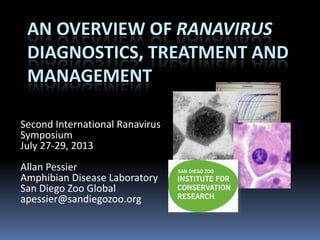
AN OVERVIEW OF RANAVIRUS
DIAGNOSTICS, TREATMENT AND
MANAGEMENT
Second International Ranavirus
Symposium
July 27-29, 2013
Allan Pessier
Amphibian Disease Laboratory
San Diego Zoo Global
apessier@sandiegozoo.org
Introduction
 Diagnostics
 What’s available
 Pitfalls
 Interpretation
 Selecting the right tests
 Treatment and Management
 Wild Populations
 Captive Populations
 Endangered Species and
Reintroduction Programs
BradWilson
Sensitivity and Specificity of Diagnostic
Tests
 Gold Standard: The standard accepted diagnostic test for a
condition to which all other diagnostic tests are compared
 Analytical Sensitivity: Lowest concentration of pathogen
DNA that can be detected by the test (PCR).
 Diagnostic Sensitivity: Proportion of true positives
detected.
 Diagnostic Specificity: Proportions of true negatives
detected
Pitfalls in Diagnostic Sampling
What affectsyour diagnostic sensitivity and specificity?
 Collection of biologically
relevant samples
 Subclinical infections
 Variation in how samples
are collected
 Sample storage
 PCR Inhibitors
 Contamination
Diagnostic Methods
Virus Isolation
 Usually tissue samples
 Fish and amphibian cell
lines
 CPE and ID by ELISA, IPX
or PCR
 Greater cost, not widely
available
 Needed for purified
virus, transmission
experiments, best quality
DNA
OIE Gold Standard
Serology
 Indirect ELISA
 MarineToads
 GopherTortoises
 May be useful for detection
of prior exposure in
populations (? Adjunct to
PCR surveillance)
 Does not provide
information on current
infection status or RV strain
type
Histopathology
 Formalin-fixed tissues
 Evaluate tissues for
lesions consistent with
ranaviral disease
 Rule out other disease
processes
 Immunohistochemistry
 Pathologists are fun
Histopathology
 Insensitive for
subclinical infections
 Multicentric necrosis
(liver, spleen, kidney,
skin, hematopoietic
tissue)
 Intracytoplasmic
basophilic inclusion
bodies
Transmission Electron Microscopy
 Demonstration of
characteristic
icosohedral virions
 Cell culture or
tissues
 Definitive only for
an iridovirus
 Good for historical
cases
Polymerase Chain Reaction (PCR)
 Accessible and fast
 Conventional and
Real-Time
 Major capsid protein
(MCP) is most
common
 Samples include
tissues, blood, oral
and cloacal swabs,
and FFPE
PCR Caveats
 Infection vs. Disease
 Viable vs. inactivated
virions
 Encourages tunnel
vision in outbreak
investigation
 Sample selection
(especially naturally
infected animals)
 Contamination
Conventional PCR
 Products visualized
on agarose gels
 DNA sequencing to
confirm positives
 Phylogeny of
positive samples*
 Less sensitive than
Real-Time
 Inhibitors
April Johnson
“The” Ranavirus and
The Problem with Frog Virus 3
• MCP gene is
highly
conserved
• Different
viruses will have
similar or
identical
sequences
• FV3-like viruses
Implications for Research and Animal
Management
 Detection of
unexpected viruses
 Need to be able to
easily differentiate
viruses for
 Prevalence/epidemio
logic studies
 Reintroduction
Programs
Real-Time/Taqman PCR
 Great for routine
diagnostics
 High analytical
sensitivity
 No need to seq
positives (Taqman)
 Viral Loads
 MCP-based
 Limits on phylogeny
Am I doing the right test(s)?
 Investigation of mortality events
 Did animals die of ranaviral disease
 Co-infections
 Positive PCR doesn’t equal disease
 Population Surveillance and
Management
 High sensitivity
 Adequate samples (type and number)
 Ability to differentiate strains
 Standardization
Mortality Events
 Avoid assumptions as
many conditions look
alike
 Subclininical infections
 Co-infections
 Necropsy and
histopathology
 Ancillary testing
April Johnson
When there is no pathologist…..
 Save tissues for
multiple types of
diagnostic
investigation
 Fixed tissues or
carcasses for
histopathology (not
frozen)
 Frozen tissues or
carcasses for other
diagnostics
Disease Surveillance
 Limitations of PCR for detection of subclinical
infections
 PCRWell-validated for sick animals
 What is the appropriate sample for subclinical infection
 ? Macrophages/leukocytes; kidney
 Adequate sample numbers
 Consideration of diagnostic sensitivity
 Differentiation of strains
 Implications for epidemiology and risk assessments
 Implications for regulatory requirements
 Interpretation of prevalence data
Control of Ranavirus Infections
 Regulatory and
Pathogen Pollution
 Adequate tests
 Strain differentiation
 Vaccination
 Small populations
 Reintroduction programs
 Treatment of
individuals
Reintroduction/Translocation Programs
 Positive PCR tests on
routine surveillance
 Paralysis even when
animals held in
isolation
 Need for easy strain
differentiation
 ? Role of treatment
protocols for valuable
animals/populations
Treatment of Ranavirus Infections
 Guanine analogue
antivirals
(acyclovir, valacyclovir)
 Temperature
elevations
 Questions
 Persistent
infections?
An overview of ranavirus diagnostics, treatment and management

An overview of ranavirus diagnostics, treatment and management

  • 1.
    AN OVERVIEW OFRANAVIRUS DIAGNOSTICS, TREATMENT AND MANAGEMENT Second International Ranavirus Symposium July 27-29, 2013 Allan Pessier Amphibian Disease Laboratory San Diego Zoo Global apessier@sandiegozoo.org
  • 2.
    Introduction  Diagnostics  What’savailable  Pitfalls  Interpretation  Selecting the right tests  Treatment and Management  Wild Populations  Captive Populations  Endangered Species and Reintroduction Programs BradWilson
  • 3.
    Sensitivity and Specificityof Diagnostic Tests  Gold Standard: The standard accepted diagnostic test for a condition to which all other diagnostic tests are compared  Analytical Sensitivity: Lowest concentration of pathogen DNA that can be detected by the test (PCR).  Diagnostic Sensitivity: Proportion of true positives detected.  Diagnostic Specificity: Proportions of true negatives detected
  • 4.
    Pitfalls in DiagnosticSampling What affectsyour diagnostic sensitivity and specificity?  Collection of biologically relevant samples  Subclinical infections  Variation in how samples are collected  Sample storage  PCR Inhibitors  Contamination
  • 5.
  • 6.
    Virus Isolation  Usuallytissue samples  Fish and amphibian cell lines  CPE and ID by ELISA, IPX or PCR  Greater cost, not widely available  Needed for purified virus, transmission experiments, best quality DNA OIE Gold Standard
  • 7.
    Serology  Indirect ELISA MarineToads  GopherTortoises  May be useful for detection of prior exposure in populations (? Adjunct to PCR surveillance)  Does not provide information on current infection status or RV strain type
  • 8.
    Histopathology  Formalin-fixed tissues Evaluate tissues for lesions consistent with ranaviral disease  Rule out other disease processes  Immunohistochemistry  Pathologists are fun
  • 9.
    Histopathology  Insensitive for subclinicalinfections  Multicentric necrosis (liver, spleen, kidney, skin, hematopoietic tissue)  Intracytoplasmic basophilic inclusion bodies
  • 13.
    Transmission Electron Microscopy Demonstration of characteristic icosohedral virions  Cell culture or tissues  Definitive only for an iridovirus  Good for historical cases
  • 15.
    Polymerase Chain Reaction(PCR)  Accessible and fast  Conventional and Real-Time  Major capsid protein (MCP) is most common  Samples include tissues, blood, oral and cloacal swabs, and FFPE
  • 16.
    PCR Caveats  Infectionvs. Disease  Viable vs. inactivated virions  Encourages tunnel vision in outbreak investigation  Sample selection (especially naturally infected animals)  Contamination
  • 17.
    Conventional PCR  Productsvisualized on agarose gels  DNA sequencing to confirm positives  Phylogeny of positive samples*  Less sensitive than Real-Time  Inhibitors April Johnson
  • 18.
    “The” Ranavirus and TheProblem with Frog Virus 3 • MCP gene is highly conserved • Different viruses will have similar or identical sequences • FV3-like viruses
  • 19.
    Implications for Researchand Animal Management  Detection of unexpected viruses  Need to be able to easily differentiate viruses for  Prevalence/epidemio logic studies  Reintroduction Programs
  • 20.
    Real-Time/Taqman PCR  Greatfor routine diagnostics  High analytical sensitivity  No need to seq positives (Taqman)  Viral Loads  MCP-based  Limits on phylogeny
  • 22.
    Am I doingthe right test(s)?  Investigation of mortality events  Did animals die of ranaviral disease  Co-infections  Positive PCR doesn’t equal disease  Population Surveillance and Management  High sensitivity  Adequate samples (type and number)  Ability to differentiate strains  Standardization
  • 23.
    Mortality Events  Avoidassumptions as many conditions look alike  Subclininical infections  Co-infections  Necropsy and histopathology  Ancillary testing April Johnson
  • 24.
    When there isno pathologist…..  Save tissues for multiple types of diagnostic investigation  Fixed tissues or carcasses for histopathology (not frozen)  Frozen tissues or carcasses for other diagnostics
  • 25.
    Disease Surveillance  Limitationsof PCR for detection of subclinical infections  PCRWell-validated for sick animals  What is the appropriate sample for subclinical infection  ? Macrophages/leukocytes; kidney  Adequate sample numbers  Consideration of diagnostic sensitivity  Differentiation of strains  Implications for epidemiology and risk assessments  Implications for regulatory requirements  Interpretation of prevalence data
  • 26.
    Control of RanavirusInfections  Regulatory and Pathogen Pollution  Adequate tests  Strain differentiation  Vaccination  Small populations  Reintroduction programs  Treatment of individuals
  • 27.
    Reintroduction/Translocation Programs  PositivePCR tests on routine surveillance  Paralysis even when animals held in isolation  Need for easy strain differentiation  ? Role of treatment protocols for valuable animals/populations
  • 28.
    Treatment of RanavirusInfections  Guanine analogue antivirals (acyclovir, valacyclovir)  Temperature elevations  Questions  Persistent infections?