DOWNSCALING
CONTENTS
• INTRODUCTION
• DOWNSCALING
• TYPES OF DOWNSCALING
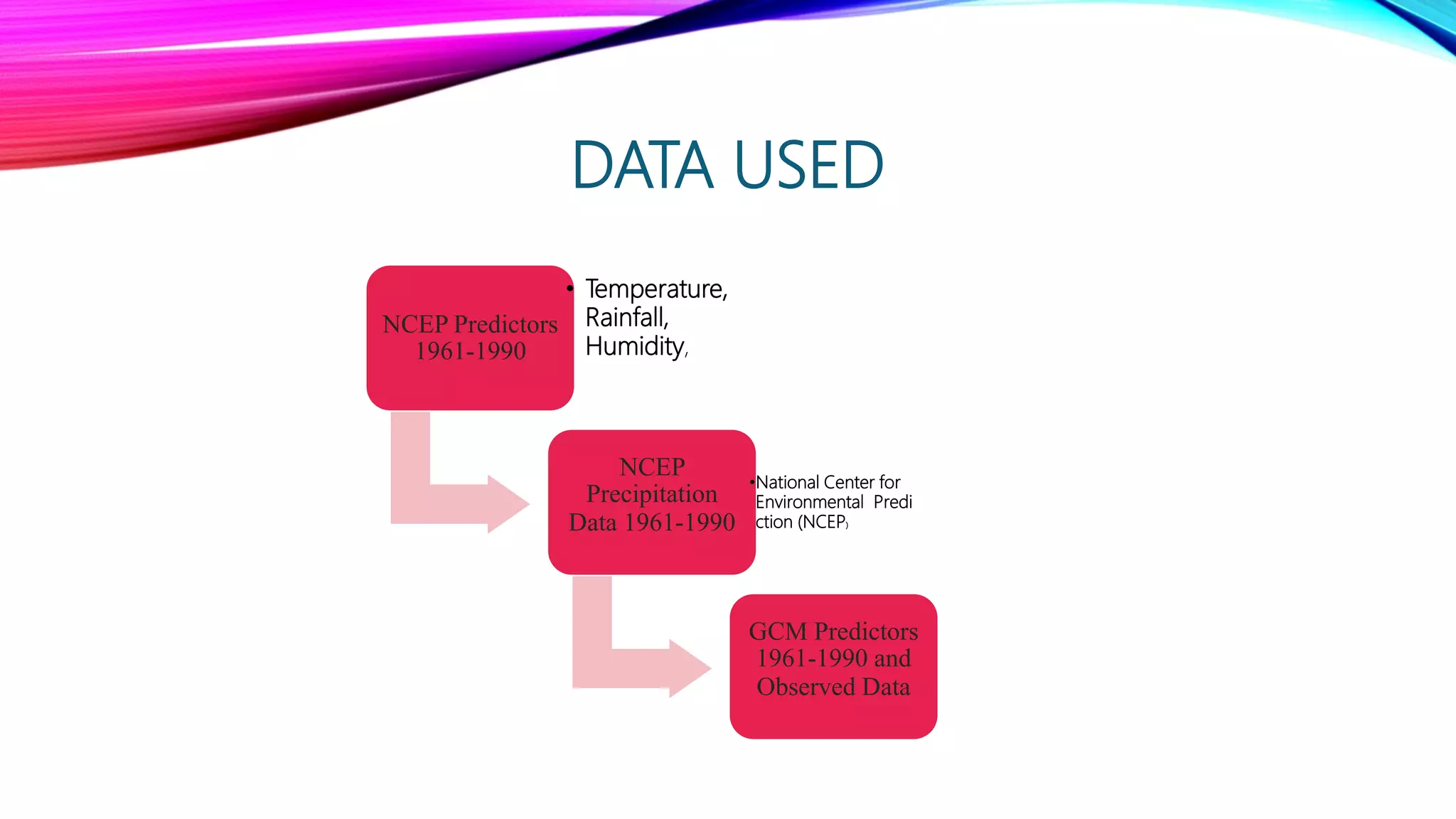
• DATA USED
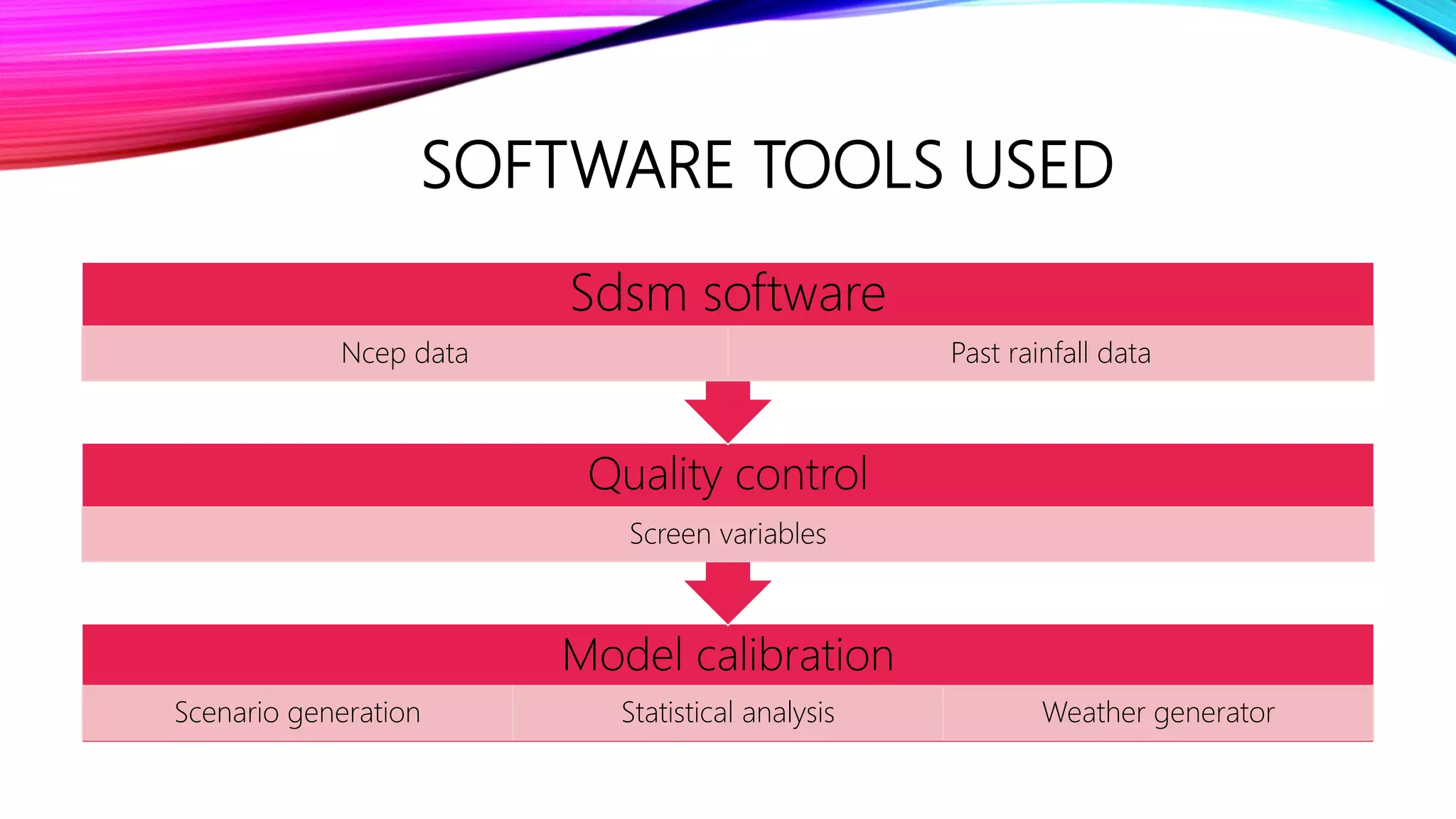
• SOFTWARE TOOL USED
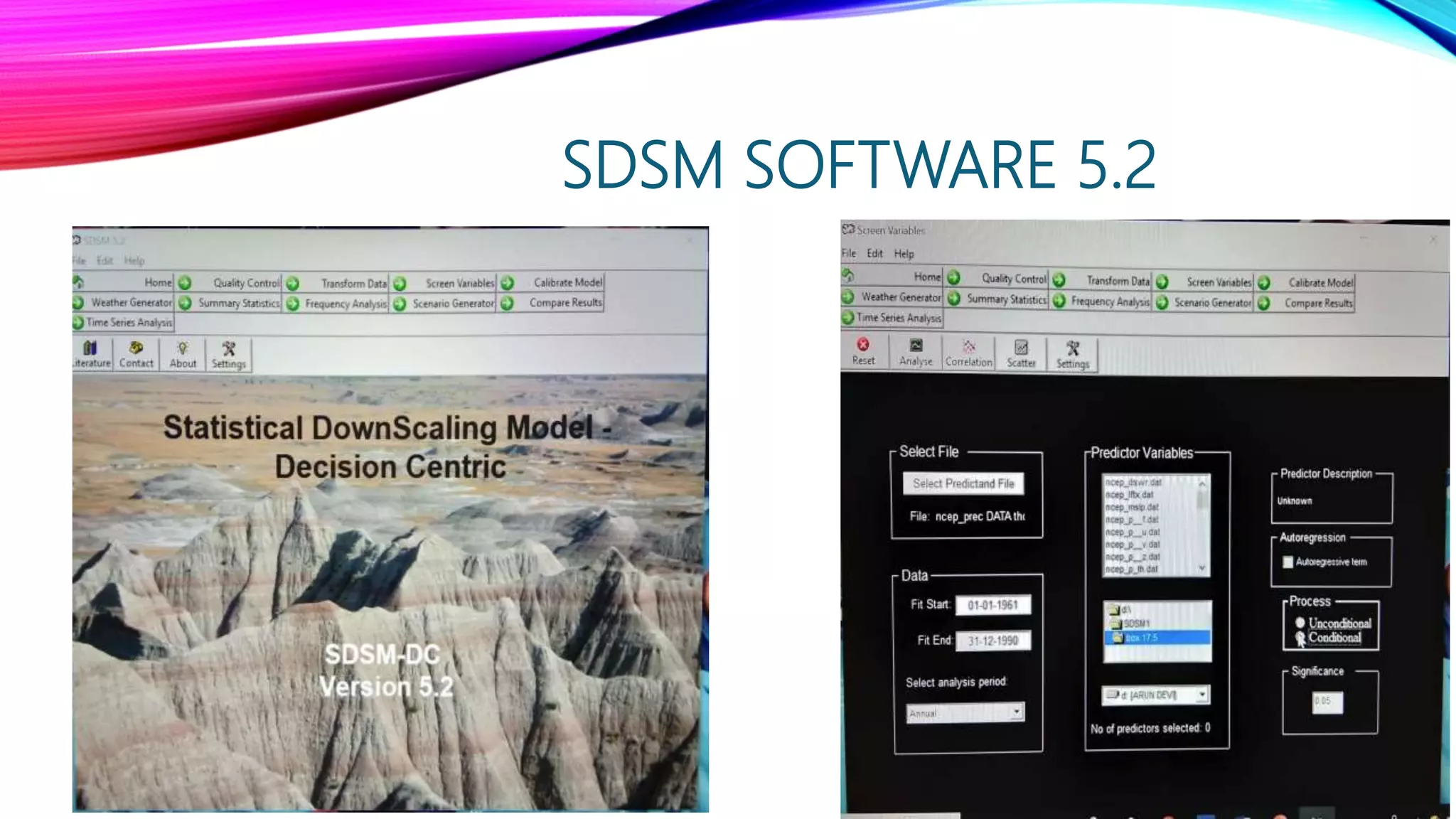
• SDSM SOFTWARE 5.2
INTRODUCTION
• Changing climatic conditions around the world pose a major
problem due to temperature, radiation, rainfall variations in this
era.
• India is facing a grim situation. Out of the 20 major river
basins, 14 are being considered over stressed due to the
population explosion and economic strain.
• Temperature of the Indian subcontinent is expected to rise by
2.5 ºC to 4.5 ºC by 2100
• In this regard, it is required to predict the future climate
changes to analyze its possible impacts in major cities
DOWNSCALING
• Downscaling is the procedure to take information known
at large scales to make predictions at local scales.
• It is used to predict or estimate a future event.
• Qualitative techniques, time series analysis and
projection, and causal models are the basic types of
forecasting.
TYPES OF DOWNSCALING
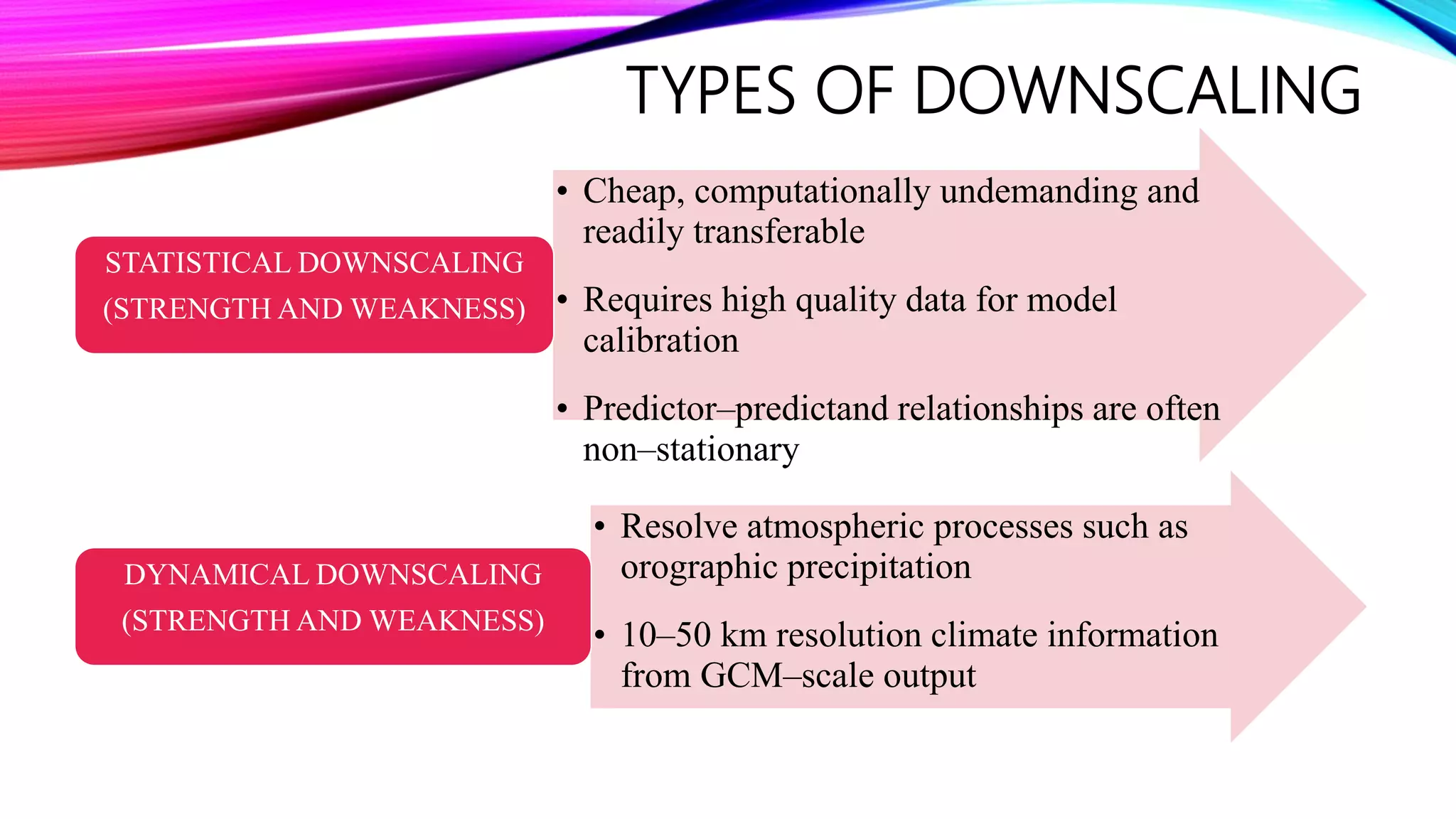
• Cheap, computationally undemanding and
readily transferable
• Requires high quality data for model
calibration
• Predictor–predictand relationships are often
non–stationary
STATISTICAL DOWNSCALING
(STRENGTH AND WEAKNESS)
• Resolve atmospheric processes such as
orographic precipitation
• 10–50 km resolution climate information
from GCM–scale output
DYNAMICAL DOWNSCALING
(STRENGTH AND WEAKNESS)
DATA USED
NCEP Predictors
1961-1990
• Temperature,
Rainfall,
Humidity,
NCEP
Precipitation
Data 1961-1990
•National Center for
Environmental Predi
ction (NCEP)
GCM Predictors
1961-1990 and
Observed Data
SOFTWARE TOOLS USED
Model calibration
Scenario generation Statistical analysis Weather generator
Quality control
Screen variables
Sdsm software
Ncep data Past rainfall data
SDSM SOFTWARE 5.2

Downscaling slideshare ppt

  • 1.
  • 2.
    CONTENTS • INTRODUCTION • DOWNSCALING •TYPES OF DOWNSCALING • DATA USED • SOFTWARE TOOL USED • SDSM SOFTWARE 5.2
  • 3.
    INTRODUCTION • Changing climaticconditions around the world pose a major problem due to temperature, radiation, rainfall variations in this era. • India is facing a grim situation. Out of the 20 major river basins, 14 are being considered over stressed due to the population explosion and economic strain. • Temperature of the Indian subcontinent is expected to rise by 2.5 ºC to 4.5 ºC by 2100 • In this regard, it is required to predict the future climate changes to analyze its possible impacts in major cities
  • 4.
    DOWNSCALING • Downscaling isthe procedure to take information known at large scales to make predictions at local scales. • It is used to predict or estimate a future event. • Qualitative techniques, time series analysis and projection, and causal models are the basic types of forecasting.
  • 5.
    TYPES OF DOWNSCALING •Cheap, computationally undemanding and readily transferable • Requires high quality data for model calibration • Predictor–predictand relationships are often non–stationary STATISTICAL DOWNSCALING (STRENGTH AND WEAKNESS) • Resolve atmospheric processes such as orographic precipitation • 10–50 km resolution climate information from GCM–scale output DYNAMICAL DOWNSCALING (STRENGTH AND WEAKNESS)
  • 6.
    DATA USED NCEP Predictors 1961-1990 •Temperature, Rainfall, Humidity, NCEP Precipitation Data 1961-1990 •National Center for Environmental Predi ction (NCEP) GCM Predictors 1961-1990 and Observed Data
  • 7.
    SOFTWARE TOOLS USED Modelcalibration Scenario generation Statistical analysis Weather generator Quality control Screen variables Sdsm software Ncep data Past rainfall data
  • 8.