DOPAMINE RECEPTORS
PHARMACOLOGY 1
By:-
Manisha
M.Pharm. (Pharmacology)
Deptt. of Pharmaceutical sciences
M.D. University Rohtak, 124001
Contents
 Dopamine
 Biosynthesis of dopamine
 Functions of dopamine
 Dopaminergic pathways
 Dopamine receptors
 Dopamine agonists
 Dopamine antagonists
 Dopamine related diseases
Dopamine
 Dopamine is a monoamine neurotransmitter
that upon binding to a dopamine receptor
releases a variety of downstream signals.
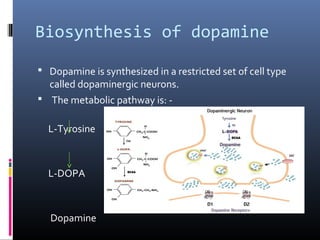
Biosynthesis of dopamine
 Dopamine is synthesized in a restricted set of cell type
called dopaminergic neurons.
 The metabolic pathway is: -
L-Tyrosine
L-DOPA
Dopamine
Functions of dopamine
 Some of its notable functions are in:
 Movement
 Memory
 Pleasurable reward
 Behavior and cognition
 Inhibition of prolactin production
 Nausea and vomiting
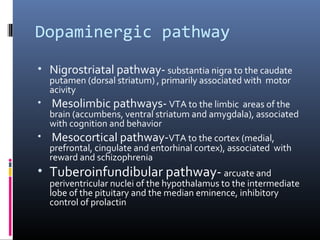
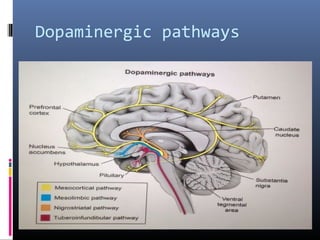
Dopaminergic pathway
• Nigrostriatal pathway- substantia nigra to the caudate
putamen (dorsal striatum) , primarily associated with motor
acivity
• Mesolimbic pathways- VTA to the limbic areas of the
brain (accumbens, ventral striatum and amygdala), associated
with cognition and behavior
• Mesocortical pathway-VTA to the cortex (medial,
prefrontal, cingulate and entorhinal cortex), associated with
reward and schizophrenia
• Tuberoinfundibular pathway- arcuate and
periventricular nuclei of the hypothalamus to the intermediate
lobe of the pituitary and the median eminence, inhibitory
control of prolactin
Dopaminergic pathways
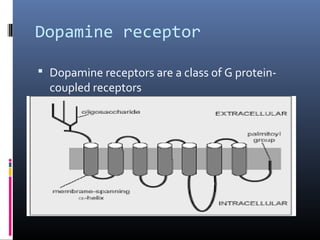
Dopamine receptor
 Dopamine receptors are a class of G protein-
coupled receptors
Dopamine Receptor Subtypes
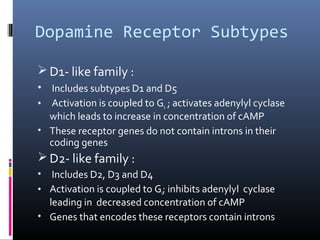
 D1- like family :
• Includes subtypes D1 and D5
• Activation is coupled to Gs ; activates adenylyl cyclase
which leads to increase in concentration of cAMP
• These receptor genes do not contain introns in their
coding genes
 D2- like family :
• Includes D2, D3 and D4
• Activation is coupled to Gi; inhibits adenylyl cyclase
leading in decreased concentration of cAMP
• Genes that encodes these receptors contain introns
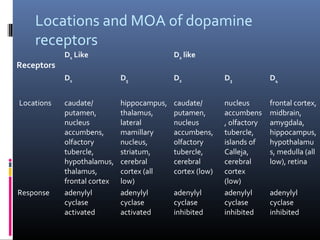
Locations and MOA of dopamine
receptors
Receptors
D1 Like D2 like
D1 D5 D2 D3 D4
Locations caudate/
putamen,
nucleus
accumbens,
olfactory
tubercle,
hypothalamus,
thalamus,
frontal cortex
hippocampus,
thalamus,
lateral
mamillary
nucleus,
striatum,
cerebral
cortex (all
low)
caudate/
putamen,
nucleus
accumbens,
olfactory
tubercle,
cerebral
cortex (low)
nucleus
accumbens
, olfactory
tubercle,
islands of
Calleja,
cerebral
cortex
(low)
frontal cortex,
midbrain,
amygdala,
hippocampus,
hypothalamu
s, medulla (all
low), retina
Response adenylyl
cyclase
activated
adenylyl
cyclase
activated
adenylyl
cyclase
inhibited
adenylyl
cyclase
inhibited
adenylyl
cyclase
inhibited
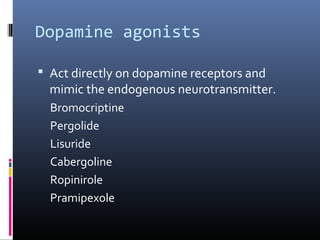
Dopamine agonists
 Act directly on dopamine receptors and
mimic the endogenous neurotransmitter.
Bromocriptine
Pergolide
Lisuride
Cabergoline
Ropinirole
Pramipexole
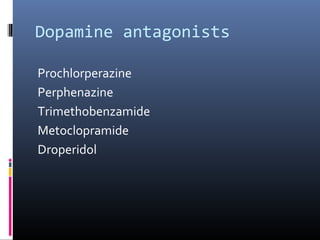
Dopamine antagonists
Prochlorperazine
Perphenazine
Trimethobenzamide
Metoclopramide
Droperidol
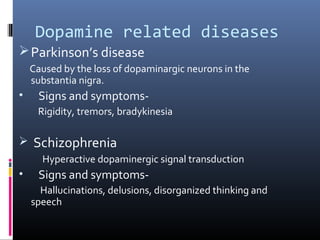
Dopamine related diseases
Parkinson’s disease
Caused by the loss of dopaminargic neurons in the
substantia nigra.
• Signs and symptoms-
Rigidity, tremors, bradykinesia
 Schizophrenia
Hyperactive dopaminergic signal transduction
• Signs and symptoms-
Hallucinations, delusions, disorganized thinking and
speech
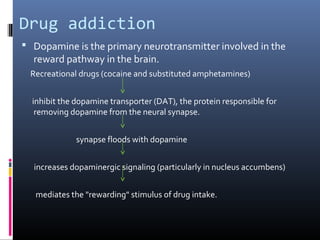
Drug addiction
 Dopamine is the primary neurotransmitter involved in the
reward pathway in the brain.
Recreational drugs (cocaine and substituted amphetamines)
inhibit the dopamine transporter (DAT), the protein responsible for
removing dopamine from the neural synapse.
synapse floods with dopamine
increases dopaminergic signaling (particularly in nucleus accumbens)
mediates the "rewarding" stimulus of drug intake.
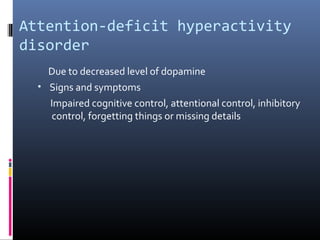
Attention-deficit hyperactivity
disorder
Due to decreased level of dopamine
• Signs and symptoms
Impaired cognitive control, attentional control, inhibitory
control, forgetting things or missing details
References
 Marsden A. Charles, “Dopamine: the rewarding years”,
British Journal Pharmacology, published online 2008 Jan
9, doi- 10.1038/sj.bjp.0706473
 Missale Cristina, Nash S. Russel, “ Dopamine
Receptor:From structure to function”, Physiological
Reviews, Published 1 Jan 1998, vol. 78, no. 1, 189-225
 Brisch Ralf, Saniotis Arthur,”The Role of Dopamine in
Schizophrenia fron a Neurobiological and Evolutionary
Perspective: old fashioned but still in vogye”, Published
online 2014 May 19, doi. 10.3389/fpsyt 2014.00047

Dopamine Receptors by Manisha

  • 1.
    DOPAMINE RECEPTORS PHARMACOLOGY 1 By:- Manisha M.Pharm.(Pharmacology) Deptt. of Pharmaceutical sciences M.D. University Rohtak, 124001
  • 2.
    Contents  Dopamine  Biosynthesisof dopamine  Functions of dopamine  Dopaminergic pathways  Dopamine receptors  Dopamine agonists  Dopamine antagonists  Dopamine related diseases
  • 3.
    Dopamine  Dopamine isa monoamine neurotransmitter that upon binding to a dopamine receptor releases a variety of downstream signals.
  • 4.
    Biosynthesis of dopamine Dopamine is synthesized in a restricted set of cell type called dopaminergic neurons.  The metabolic pathway is: - L-Tyrosine L-DOPA Dopamine
  • 5.
    Functions of dopamine Some of its notable functions are in:  Movement  Memory  Pleasurable reward  Behavior and cognition  Inhibition of prolactin production  Nausea and vomiting
  • 6.
    Dopaminergic pathway • Nigrostriatalpathway- substantia nigra to the caudate putamen (dorsal striatum) , primarily associated with motor acivity • Mesolimbic pathways- VTA to the limbic areas of the brain (accumbens, ventral striatum and amygdala), associated with cognition and behavior • Mesocortical pathway-VTA to the cortex (medial, prefrontal, cingulate and entorhinal cortex), associated with reward and schizophrenia • Tuberoinfundibular pathway- arcuate and periventricular nuclei of the hypothalamus to the intermediate lobe of the pituitary and the median eminence, inhibitory control of prolactin
  • 7.
  • 8.
    Dopamine receptor  Dopaminereceptors are a class of G protein- coupled receptors
  • 9.
    Dopamine Receptor Subtypes D1- like family : • Includes subtypes D1 and D5 • Activation is coupled to Gs ; activates adenylyl cyclase which leads to increase in concentration of cAMP • These receptor genes do not contain introns in their coding genes  D2- like family : • Includes D2, D3 and D4 • Activation is coupled to Gi; inhibits adenylyl cyclase leading in decreased concentration of cAMP • Genes that encodes these receptors contain introns
  • 10.
    Locations and MOAof dopamine receptors Receptors D1 Like D2 like D1 D5 D2 D3 D4 Locations caudate/ putamen, nucleus accumbens, olfactory tubercle, hypothalamus, thalamus, frontal cortex hippocampus, thalamus, lateral mamillary nucleus, striatum, cerebral cortex (all low) caudate/ putamen, nucleus accumbens, olfactory tubercle, cerebral cortex (low) nucleus accumbens , olfactory tubercle, islands of Calleja, cerebral cortex (low) frontal cortex, midbrain, amygdala, hippocampus, hypothalamu s, medulla (all low), retina Response adenylyl cyclase activated adenylyl cyclase activated adenylyl cyclase inhibited adenylyl cyclase inhibited adenylyl cyclase inhibited
  • 11.
    Dopamine agonists  Actdirectly on dopamine receptors and mimic the endogenous neurotransmitter. Bromocriptine Pergolide Lisuride Cabergoline Ropinirole Pramipexole
  • 12.
  • 13.
    Dopamine related diseases Parkinson’sdisease Caused by the loss of dopaminargic neurons in the substantia nigra. • Signs and symptoms- Rigidity, tremors, bradykinesia  Schizophrenia Hyperactive dopaminergic signal transduction • Signs and symptoms- Hallucinations, delusions, disorganized thinking and speech
  • 14.
    Drug addiction  Dopamineis the primary neurotransmitter involved in the reward pathway in the brain. Recreational drugs (cocaine and substituted amphetamines) inhibit the dopamine transporter (DAT), the protein responsible for removing dopamine from the neural synapse. synapse floods with dopamine increases dopaminergic signaling (particularly in nucleus accumbens) mediates the "rewarding" stimulus of drug intake.
  • 15.
    Attention-deficit hyperactivity disorder Due todecreased level of dopamine • Signs and symptoms Impaired cognitive control, attentional control, inhibitory control, forgetting things or missing details
  • 16.
    References  Marsden A.Charles, “Dopamine: the rewarding years”, British Journal Pharmacology, published online 2008 Jan 9, doi- 10.1038/sj.bjp.0706473  Missale Cristina, Nash S. Russel, “ Dopamine Receptor:From structure to function”, Physiological Reviews, Published 1 Jan 1998, vol. 78, no. 1, 189-225  Brisch Ralf, Saniotis Arthur,”The Role of Dopamine in Schizophrenia fron a Neurobiological and Evolutionary Perspective: old fashioned but still in vogye”, Published online 2014 May 19, doi. 10.3389/fpsyt 2014.00047