


Don’t Fall Behind, End the Term Right!
Agenda	Academic SupportTime ManagementStress Management Make a Plan: Set Short Term Goals to Meet Your Long Term GoalsTips to Survive the End of the Term .
WritingCritical ThinkingAcademic ResearchStress ManagementTime ManagementReadingEfficiencyNavigating ESC ResourcesDeveloping a Study PlanLearning StylesGoal SettingRationale EssayThe Pieces of Academic Success
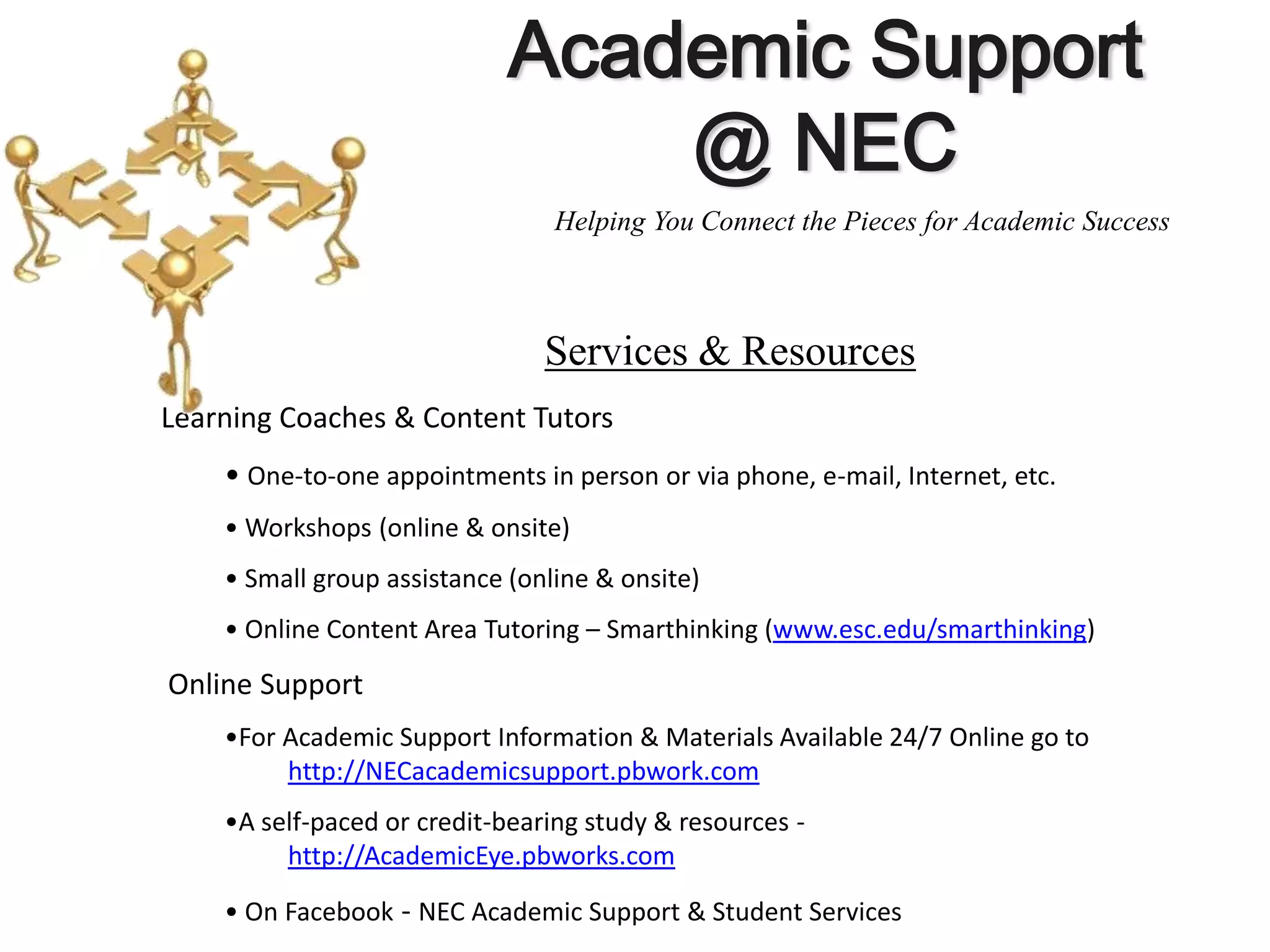
Academic Support @ NECHelping You Connect the Pieces for Academic SuccessServices & ResourcesLearning Coaches & Content TutorsOne-to-one appointments in person or via phone, e-mail, Internet, etc.
 Workshops (online & onsite)
 Small group assistance (online & onsite)
 Online Content Area Tutoring – Smarthinking (www.esc.edu/smarthinking) Online Support For Academic Support Information & Materials Available 24/7 Online go to 	http://NECacademicsupport.pbwork.com
A self-paced or credit-bearing study & resources - 	http://AcademicEye.pbworks.com
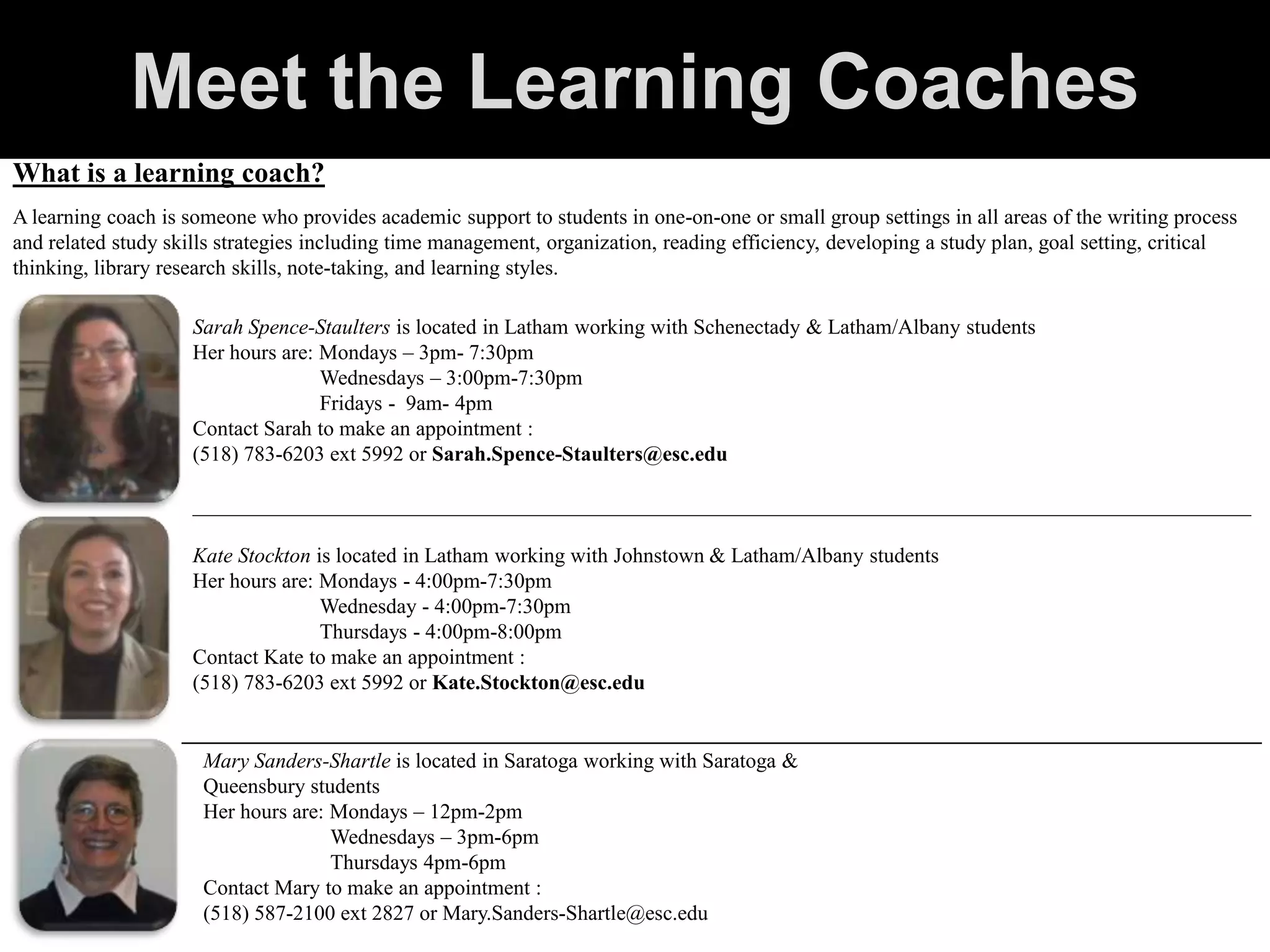
 On Facebook - NEC Academic Support & Student ServicesMeet the Learning CoachesWhat is a learning coach?A learning coach is someone who provides academic support to students in one-on-one or small group settings in all areas of the writing process and related study skills strategies including time management, organization, reading efficiency, developing a study plan, goal setting, critical thinking, library research skills, note-taking, and learning styles.Sarah Spence-Staultersis located in Latham working with Schenectady & Latham/Albany students Her hours are: Mondays – 3pm- 7:30pm	Wednesdays –3:00pm-7:30pmFridays -  9am- 4pmContact Sarah to make an appointment :  (518) 783-6203 ext 5992 or Sarah.Spence-Staulters@esc.edu____________________________________________________________________________________________________Kate Stockton is located in Latham working with Johnstown & Latham/Albany students Her hours are: Mondays - 4:00pm-7:30pm	Wednesday - 4:00pm-7:30pm	Thursdays - 4:00pm-8:00pmContact Kate to make an appointment :  (518) 783-6203 ext 5992 or Kate.Stockton@esc.edu ____________________________________________________________________Mary Sanders-Shartleis located in Saratoga working with Saratoga & Queensbury students Her hours are: Mondays – 12pm-2pmWednesdays – 3pm-6pmThursdays 4pm-6pmContact Mary to make an appointment :(518) 587-2100 ext 2827 or Mary.Sanders-Shartle@esc.edu
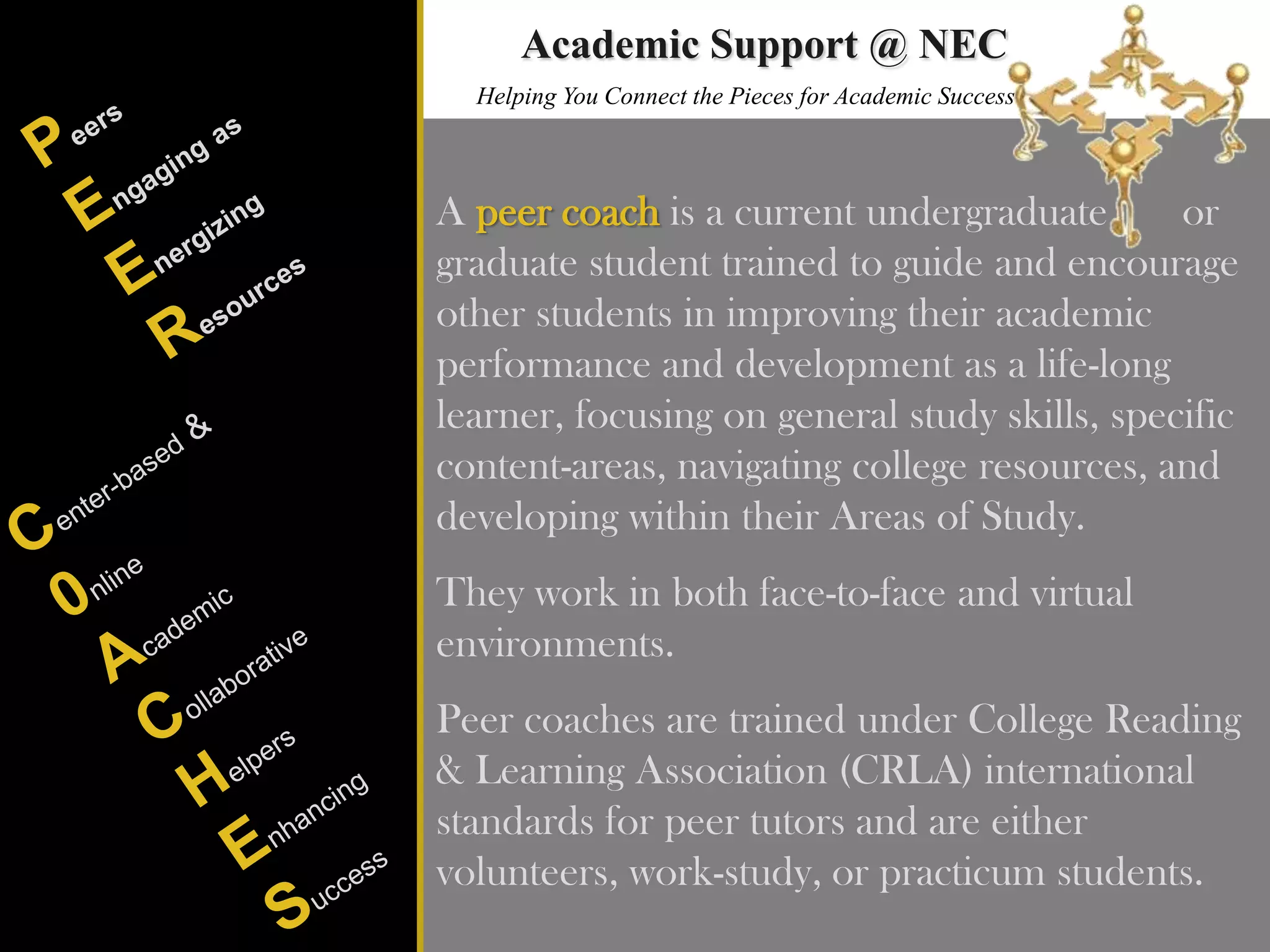
Academic Support @ NECPeersEngagingasEnergizingResourcesHelping You Connect the Pieces for Academic SuccessApeer coach is a current undergraduate       or graduate student trained to guide and encourage other students in improving their academic performance and development as a life-long learner, focusing on general study skills, specific content-areas, navigating college resources, and developing within their Areas of Study.They work in both face-to-face and virtual environments.Peer coaches are trained under College Reading & Learning Association (CRLA) international standards for peer tutors and are either volunteers, work-study, or practicum students.Center-based &0nlineAcademicCollaborativeHelpersEnhancing Success
Manage your Time
How Much Time Do You Waste in a Day?Think about all of the things that you do in a day and ask yourself: “Could I be doing something more productive?”
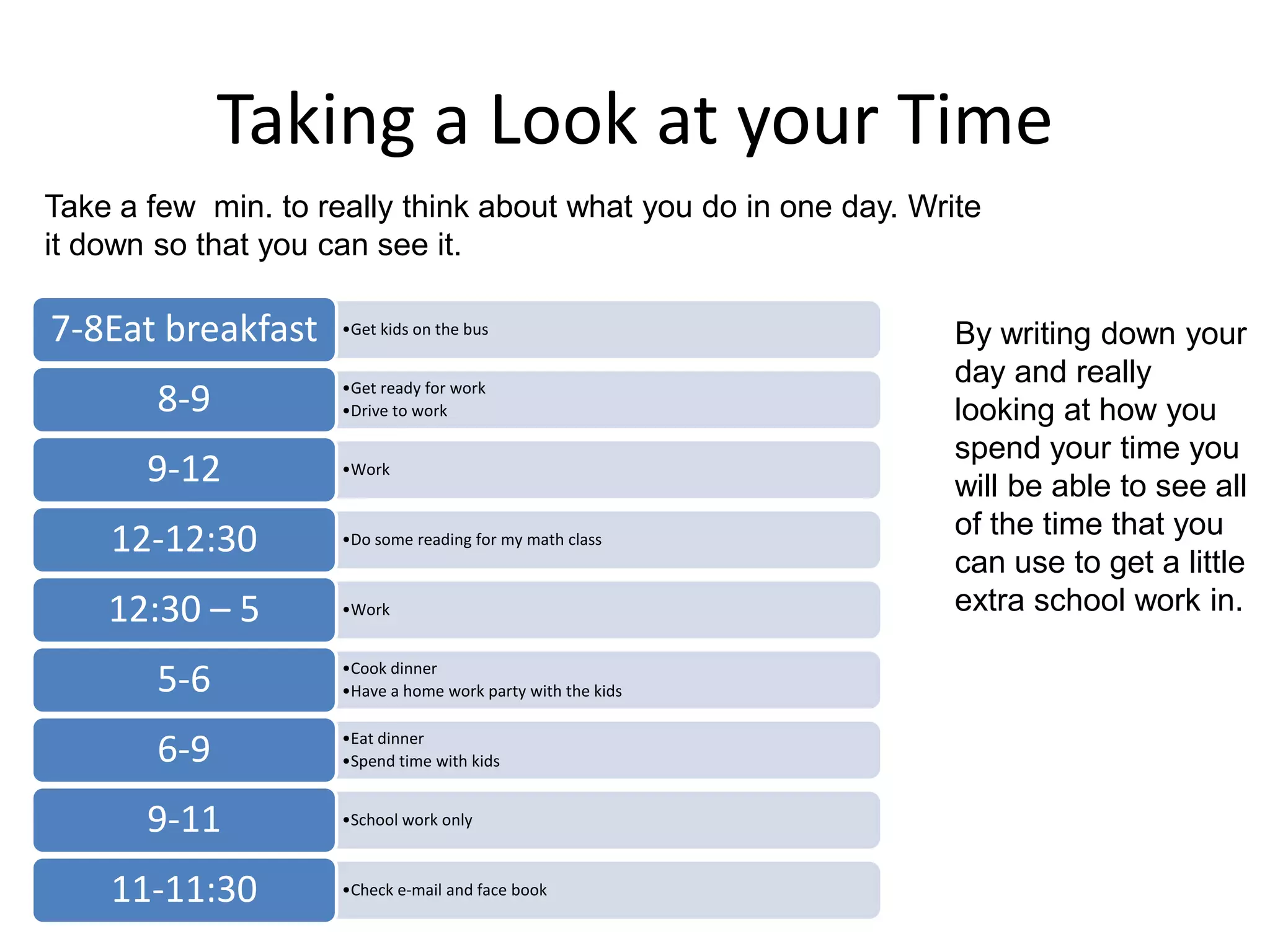
Taking a Look at your TimeTake a few  min. to really think about what you do in one day. Write it down so that you can see it.By writing down your day and really looking at how you spend your time you will be able to see all of the time that you can use to get a little extra school work in.
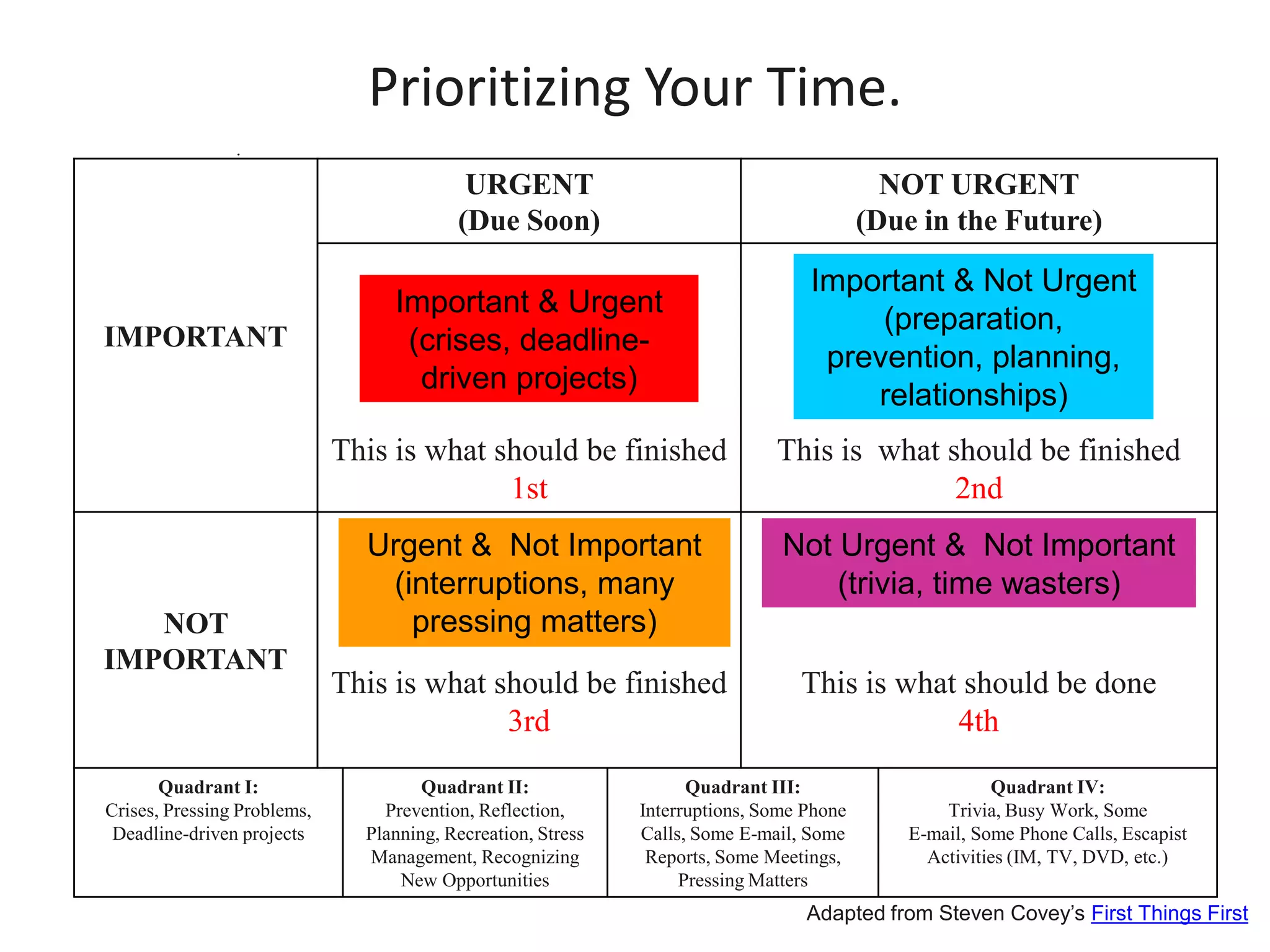
Prioritizing Your Time. Important & Not Urgent (preparation, prevention, planning, relationships)Important & Urgent (crises, deadline-driven projects)Urgent &  Not Important (interruptions, many pressing matters)Not Urgent &  Not Important (trivia, time wasters)Adapted from Steven Covey’s First Things First
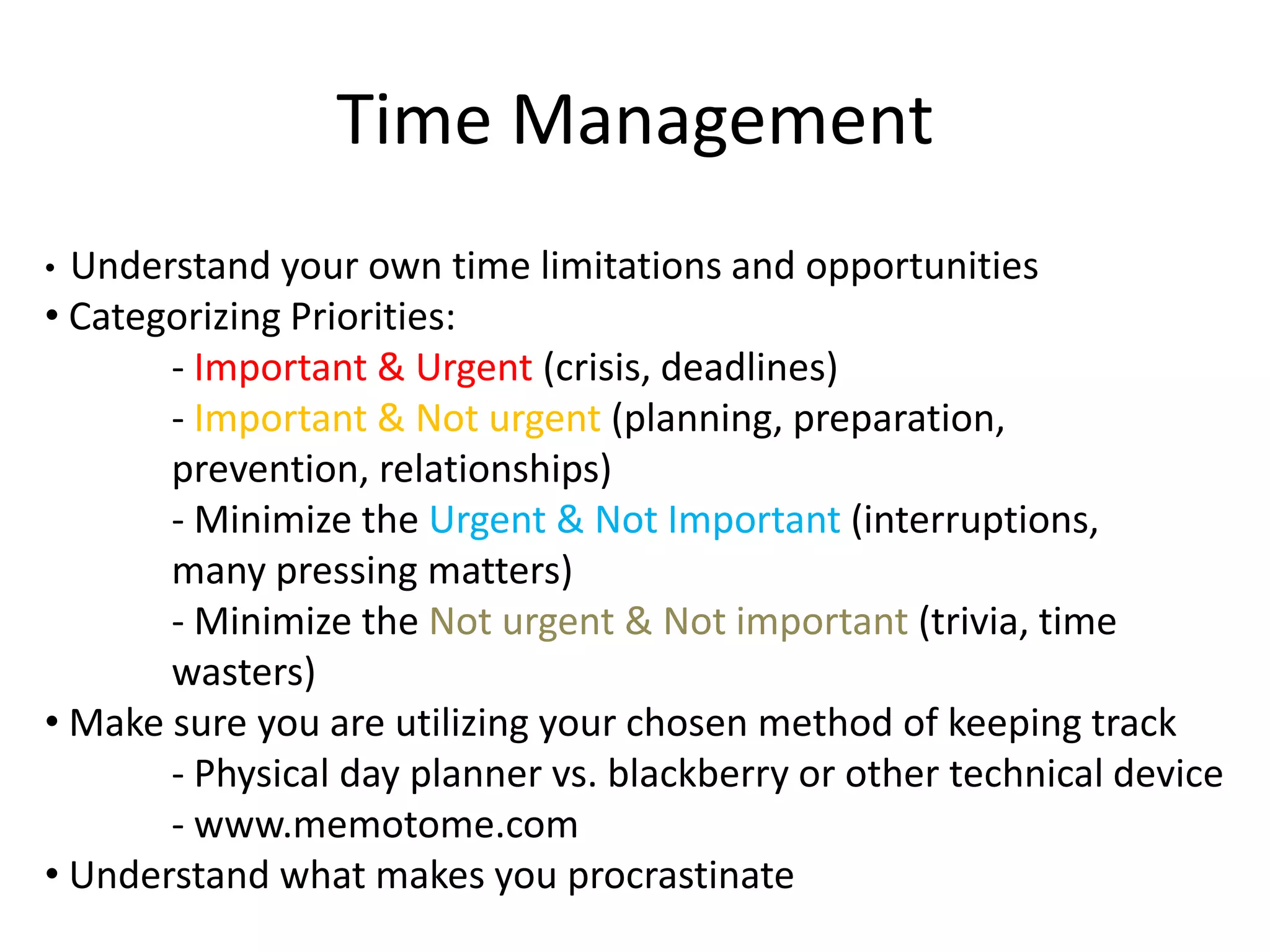
Time ManagementUnderstand your own time limitations and opportunities
 Categorizing Priorities: 	- Important & Urgent (crisis, deadlines)	- Important & Not urgent (planning, preparation, 	prevention, relationships)	- Minimize the Urgent & Not Important (interruptions, 	many pressing matters)- Minimize the Not urgent & Not important (trivia, time 	wasters) Make sure you are utilizing your chosen method of keeping track 	- Physical day planner vs. blackberry or other technical device- www.memotome.com Understand what makes you procrastinate Dealing with Procrastination Recognize when you procrastinate
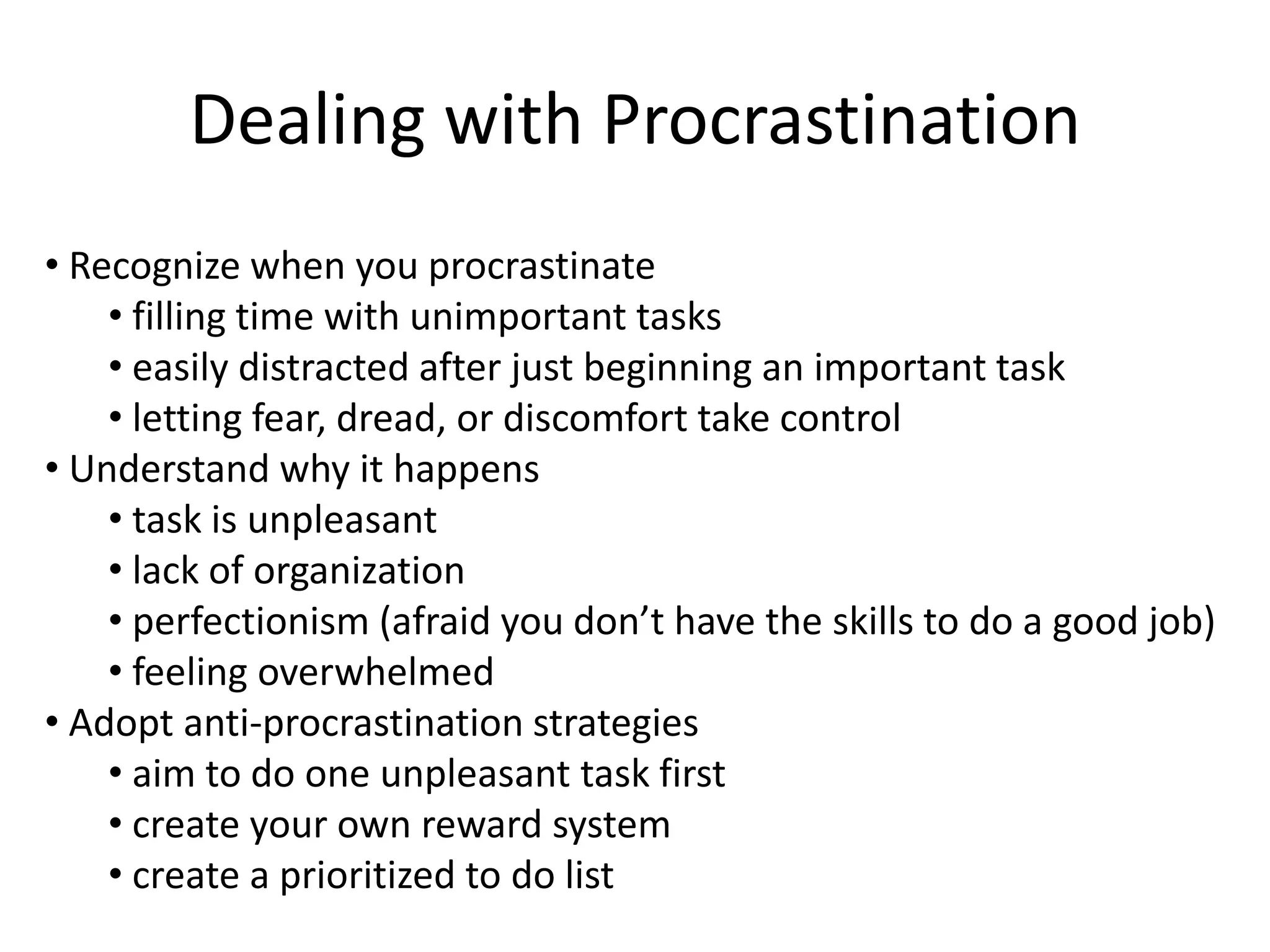
 filling time with unimportant tasks
easily distracted after just beginning an important task
letting fear, dread, or discomfort take control
 Understand why it happens
task is unpleasant
 lack of organization
perfectionism (afraid you don’t have the skills to do a good job)
feeling overwhelmed
Adopt anti-procrastination strategies
aim to do one unpleasant task first
create your own reward system
create a prioritized to do listKeep Track of your Stress Level

Don’t Fall Behind, End the Term Right

  • 1.
    Don’t Fall Behind,End the Term Right!
  • 2.
    Agenda Academic SupportTime ManagementStressManagement Make a Plan: Set Short Term Goals to Meet Your Long Term GoalsTips to Survive the End of the Term .
  • 3.
    WritingCritical ThinkingAcademic ResearchStressManagementTime ManagementReadingEfficiencyNavigating ESC ResourcesDeveloping a Study PlanLearning StylesGoal SettingRationale EssayThe Pieces of Academic Success
  • 4.
    Academic Support @NECHelping You Connect the Pieces for Academic SuccessServices & ResourcesLearning Coaches & Content TutorsOne-to-one appointments in person or via phone, e-mail, Internet, etc.
  • 5.
  • 6.
    Small groupassistance (online & onsite)
  • 7.
    Online ContentArea Tutoring – Smarthinking (www.esc.edu/smarthinking) Online Support For Academic Support Information & Materials Available 24/7 Online go to http://NECacademicsupport.pbwork.com
  • 8.
    A self-paced orcredit-bearing study & resources - http://AcademicEye.pbworks.com
  • 9.
    On Facebook- NEC Academic Support & Student ServicesMeet the Learning CoachesWhat is a learning coach?A learning coach is someone who provides academic support to students in one-on-one or small group settings in all areas of the writing process and related study skills strategies including time management, organization, reading efficiency, developing a study plan, goal setting, critical thinking, library research skills, note-taking, and learning styles.Sarah Spence-Staultersis located in Latham working with Schenectady & Latham/Albany students Her hours are: Mondays – 3pm- 7:30pm Wednesdays –3:00pm-7:30pmFridays - 9am- 4pmContact Sarah to make an appointment : (518) 783-6203 ext 5992 or Sarah.Spence-Staulters@esc.edu____________________________________________________________________________________________________Kate Stockton is located in Latham working with Johnstown & Latham/Albany students Her hours are: Mondays - 4:00pm-7:30pm Wednesday - 4:00pm-7:30pm Thursdays - 4:00pm-8:00pmContact Kate to make an appointment : (518) 783-6203 ext 5992 or Kate.Stockton@esc.edu ____________________________________________________________________Mary Sanders-Shartleis located in Saratoga working with Saratoga & Queensbury students Her hours are: Mondays – 12pm-2pmWednesdays – 3pm-6pmThursdays 4pm-6pmContact Mary to make an appointment :(518) 587-2100 ext 2827 or Mary.Sanders-Shartle@esc.edu
  • 10.
    Academic Support @NECPeersEngagingasEnergizingResourcesHelping You Connect the Pieces for Academic SuccessApeer coach is a current undergraduate or graduate student trained to guide and encourage other students in improving their academic performance and development as a life-long learner, focusing on general study skills, specific content-areas, navigating college resources, and developing within their Areas of Study.They work in both face-to-face and virtual environments.Peer coaches are trained under College Reading & Learning Association (CRLA) international standards for peer tutors and are either volunteers, work-study, or practicum students.Center-based &0nlineAcademicCollaborativeHelpersEnhancing Success
  • 11.
  • 12.
    How Much TimeDo You Waste in a Day?Think about all of the things that you do in a day and ask yourself: “Could I be doing something more productive?”
  • 13.
    Taking a Lookat your TimeTake a few min. to really think about what you do in one day. Write it down so that you can see it.By writing down your day and really looking at how you spend your time you will be able to see all of the time that you can use to get a little extra school work in.
  • 14.
    Prioritizing Your Time.Important & Not Urgent (preparation, prevention, planning, relationships)Important & Urgent (crises, deadline-driven projects)Urgent & Not Important (interruptions, many pressing matters)Not Urgent & Not Important (trivia, time wasters)Adapted from Steven Covey’s First Things First
  • 15.
    Time ManagementUnderstand yourown time limitations and opportunities
  • 16.
    Categorizing Priorities: - Important & Urgent (crisis, deadlines) - Important & Not urgent (planning, preparation, prevention, relationships) - Minimize the Urgent & Not Important (interruptions, many pressing matters)- Minimize the Not urgent & Not important (trivia, time wasters) Make sure you are utilizing your chosen method of keeping track - Physical day planner vs. blackberry or other technical device- www.memotome.com Understand what makes you procrastinate Dealing with Procrastination Recognize when you procrastinate
  • 17.
    filling timewith unimportant tasks
  • 18.
    easily distracted afterjust beginning an important task
  • 19.
    letting fear, dread,or discomfort take control
  • 20.
    Understand whyit happens
  • 21.
  • 22.
    lack oforganization
  • 23.
    perfectionism (afraid youdon’t have the skills to do a good job)
  • 24.
  • 25.
  • 26.
    aim to doone unpleasant task first
  • 27.
    create your ownreward system
  • 28.
    create a prioritizedto do listKeep Track of your Stress Level
  • 29.
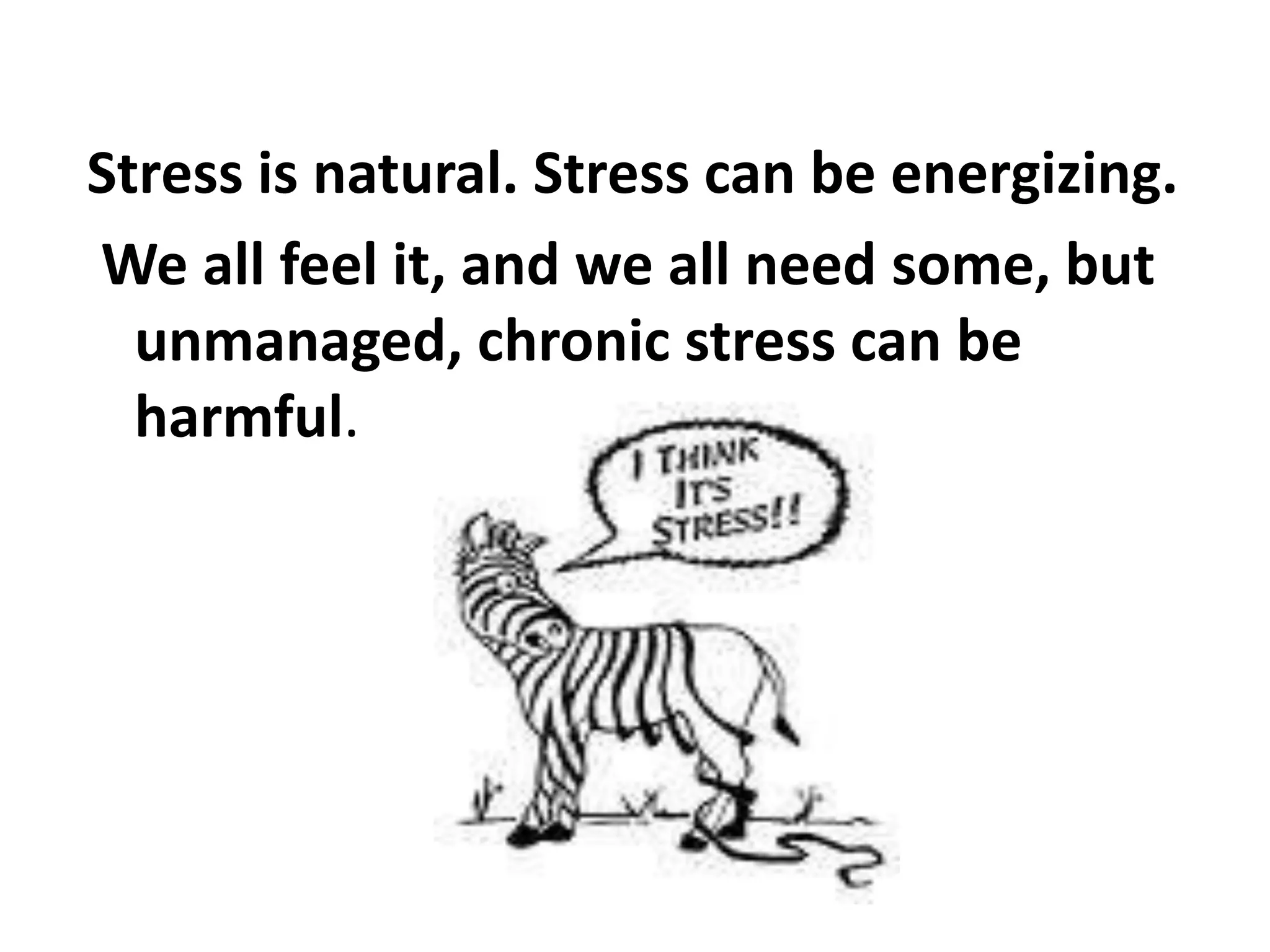
    Stress is natural.Stress can be energizing. We all feel it, and we all need some, but unmanaged, chronic stress can be harmful.
  • 30.
    Increasing Your ResilienceSleephygieneat least 7 hrs/nightsleep schedulesleep habitsEating wellBe aware of caffeine intakeTaking time to relax ExercisingBeing positive Laughing out loud often Meditation and Yoga
  • 31.
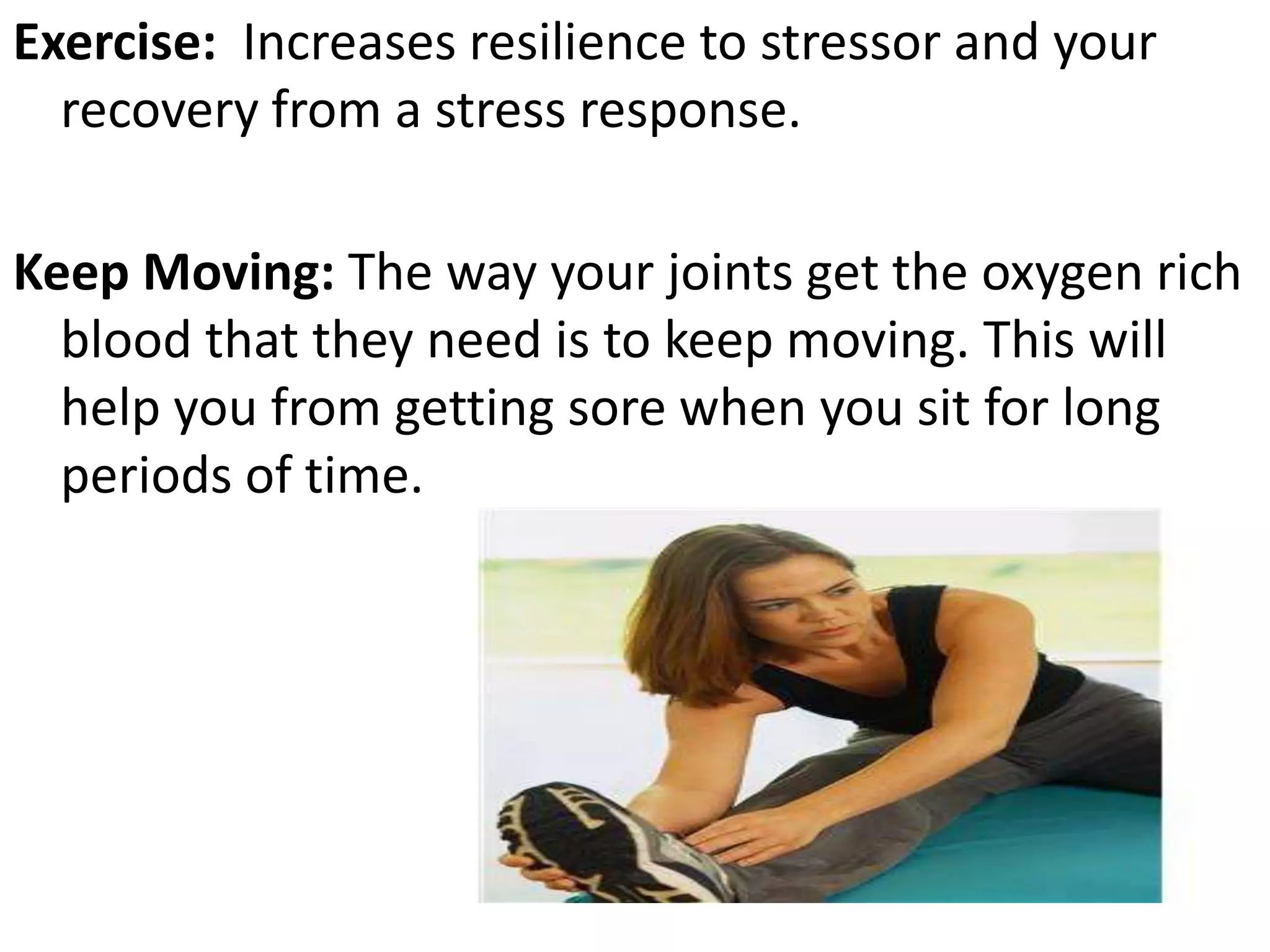
    Exercise: Increasesresilience to stressor and your recovery from a stress response.Keep Moving: The way your joints get the oxygen rich blood that they need is to keep moving. This will help you from getting sore when you sit for long periods of time.
  • 32.
    Stress ManagementHaving aplan to reduce stress!
  • 33.
    Be able torecognize when you are stressed
  • 34.
    Accept the factthat taking time to “de-stress” IS being productive ,and you MUST take the time
  • 35.
    Try to Increaseyour Resilience:Get good sleep, Eat well, Be aware of caffeine intake, Take time to relax, Exercise regularly, Be positive, Laugh out loud often, Meditation and Yoga Try some universal stress relievers: Deep breathing, finding a quiet place, relaxing music find time to do the things you enjoy. Find out what works for you!
  • 36.
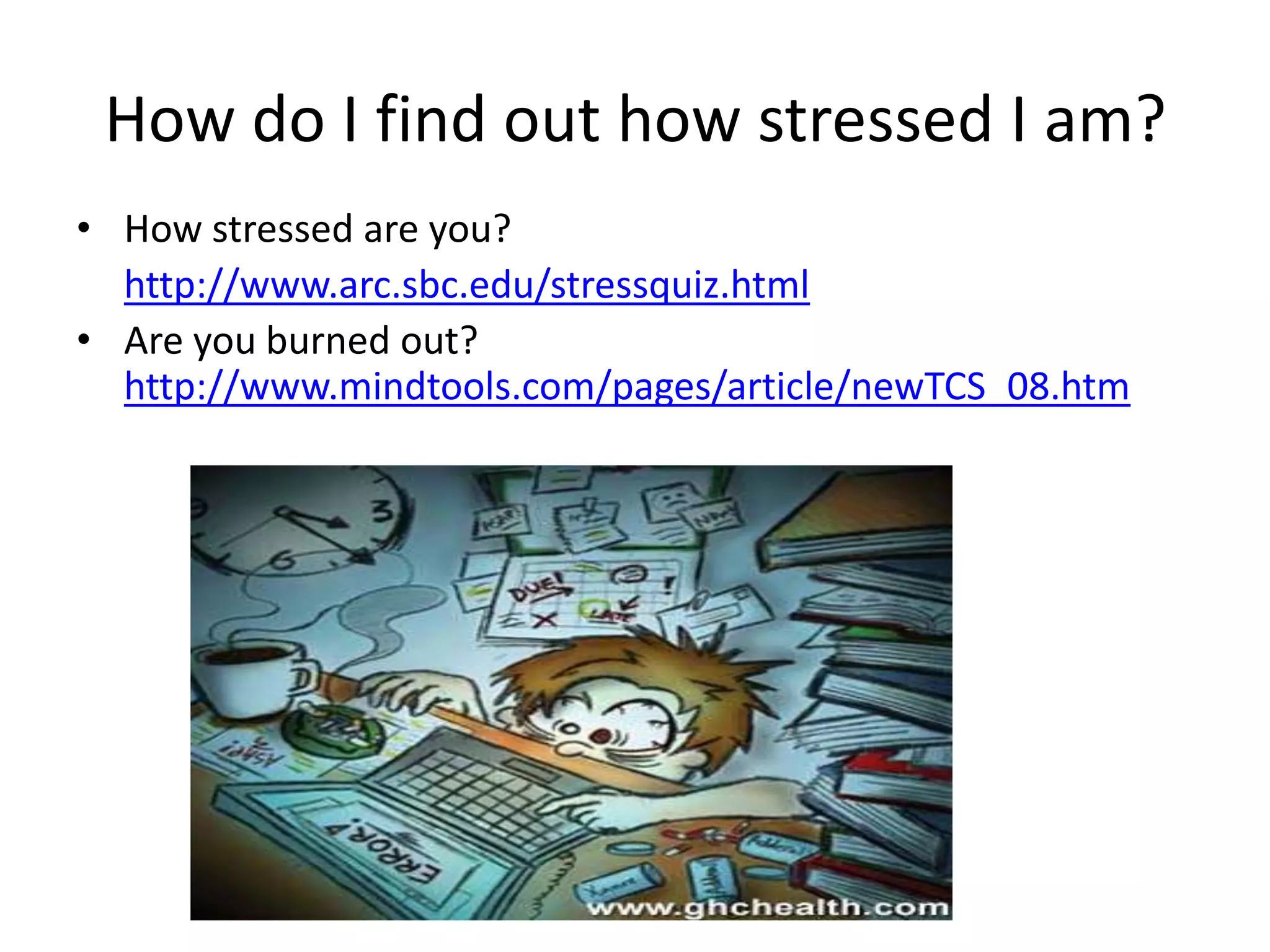
    How do Ifind out how stressed I am?How stressed are you?http://www.arc.sbc.edu/stressquiz.htmlAre you burned out? http://www.mindtools.com/pages/article/newTCS_08.htm
  • 37.
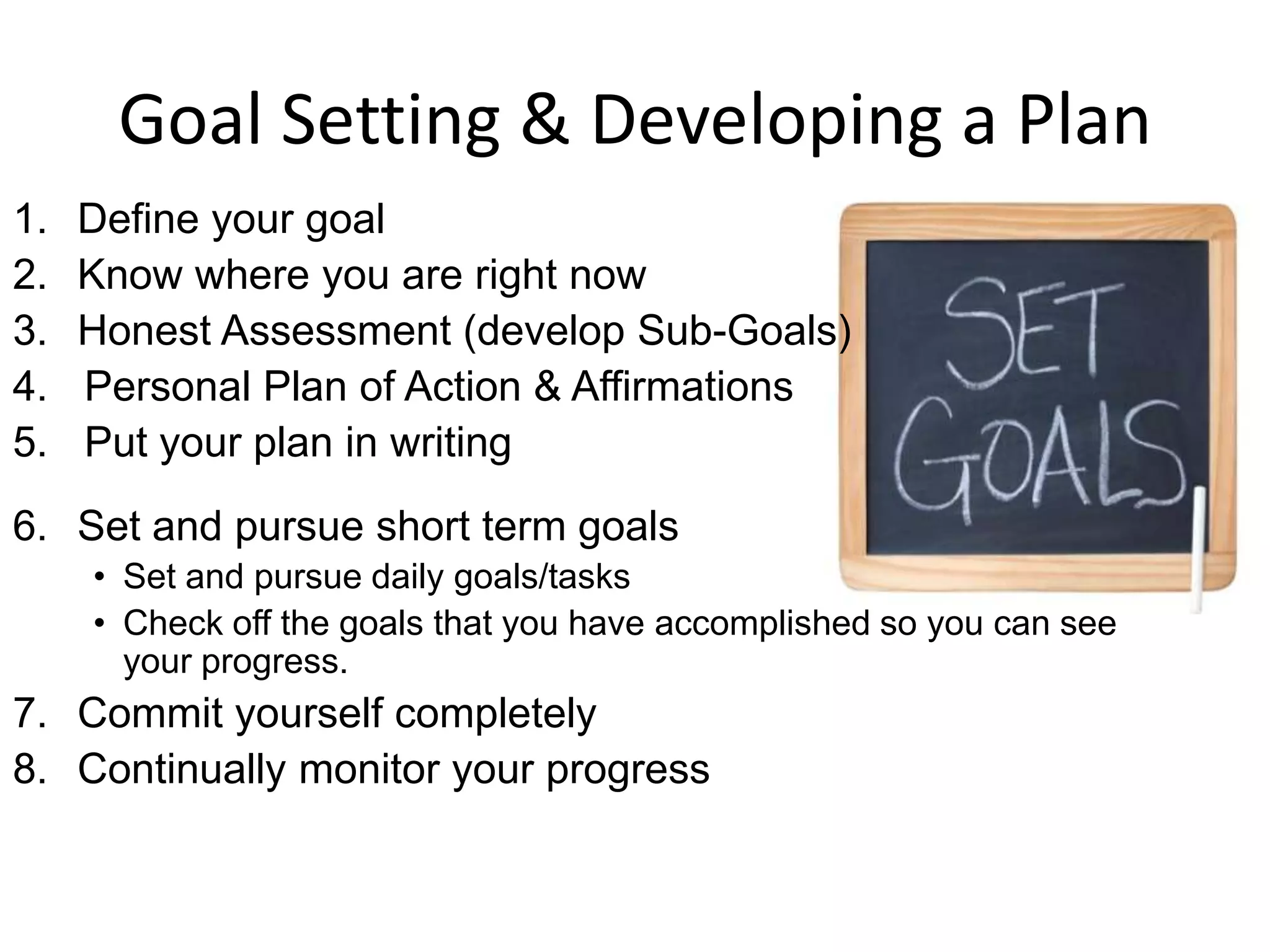
    Make a PlanSet Short Term Goals to Meet Your Long Term Goals.
  • 38.
    Goal Setting &Developing a PlanDefine your goalKnow where you are right nowHonest Assessment (develop Sub-Goals)Personal Plan of Action & AffirmationsPut your plan in writing Set and pursue short term goalsSet and pursue daily goals/tasks
  • 39.
    Check off thegoals that you have accomplished so you can see your progress. Commit yourself completelyContinually monitor your progress
  • 40.
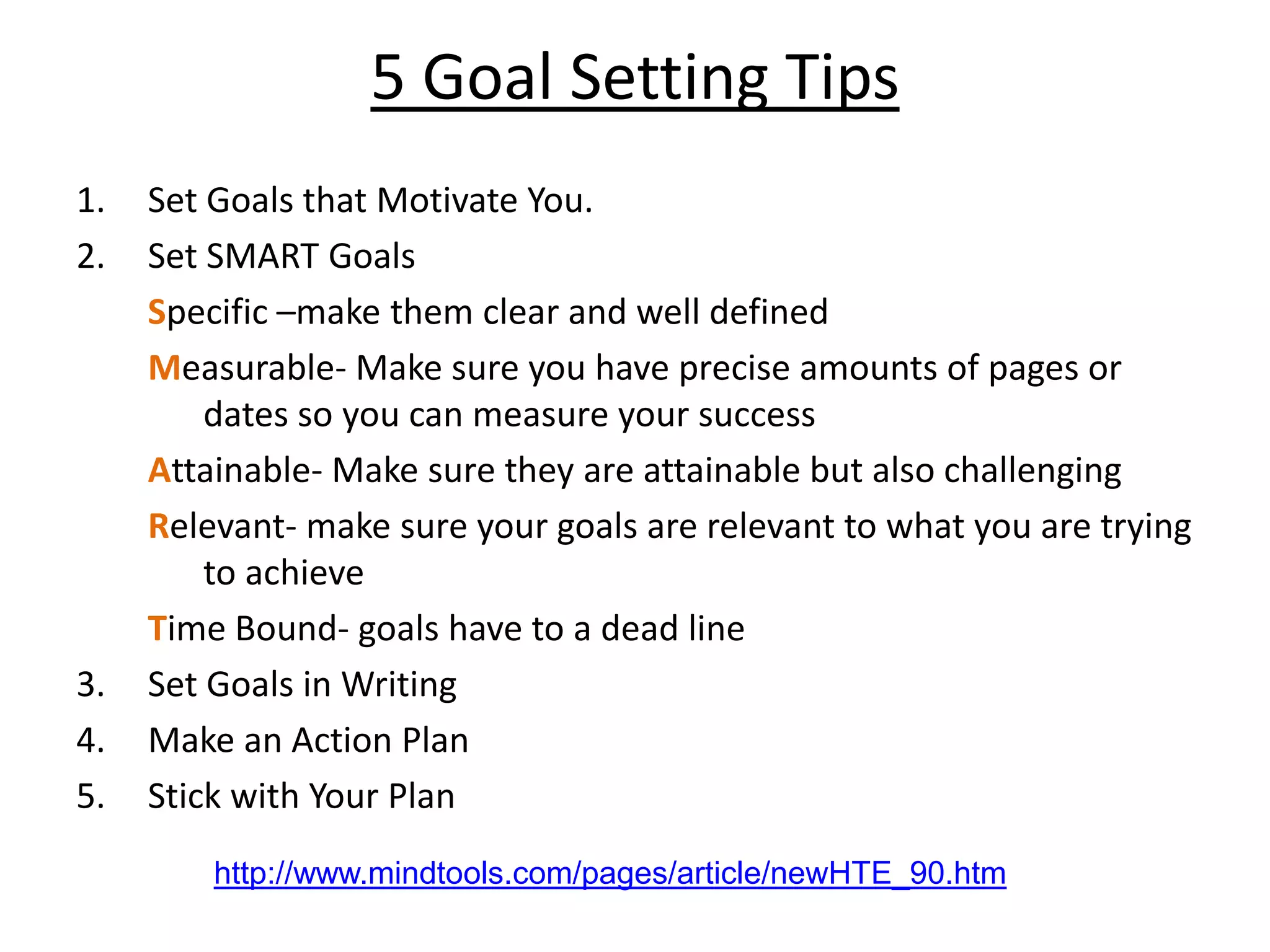
    5 Goal SettingTips Set Goals that Motivate You. Set SMART Goals Specific –make them clear and well defined Measurable- Make sure you have precise amounts of pages or dates so you can measure your success Attainable- Make sure they are attainable but also challenging Relevant- make sure your goals are relevant to what you are trying to achieve Time Bound- goals have to a dead line3. Set Goals in Writing 4. Make an Action Plan 5. Stick with Your Plan http://www.mindtools.com/pages/article/newHTE_90.htm
  • 41.
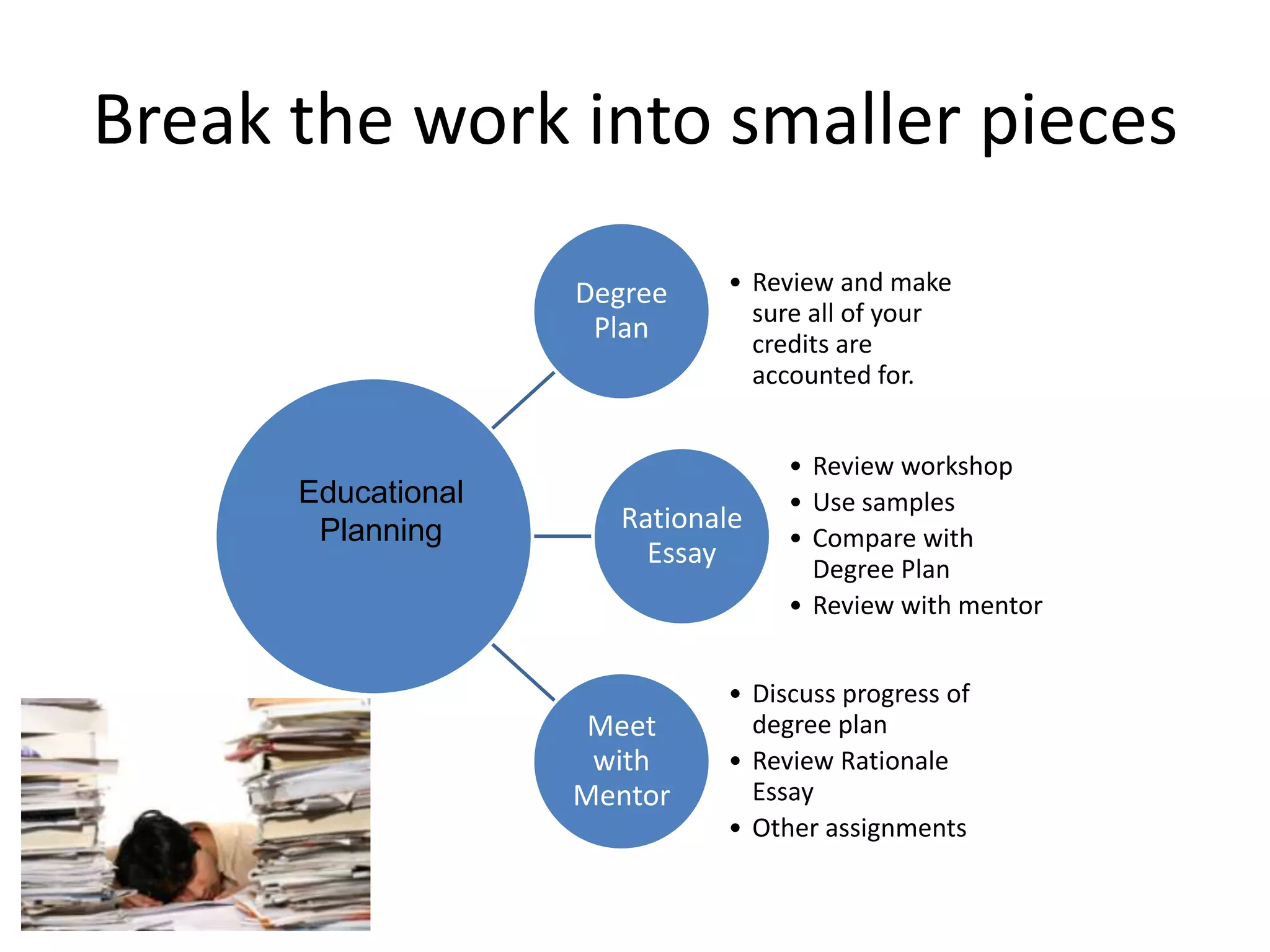
    Break the workinto smaller piecesEducational Planning
  • 42.
    Tips to Survivethe End of the Term .
  • 43.
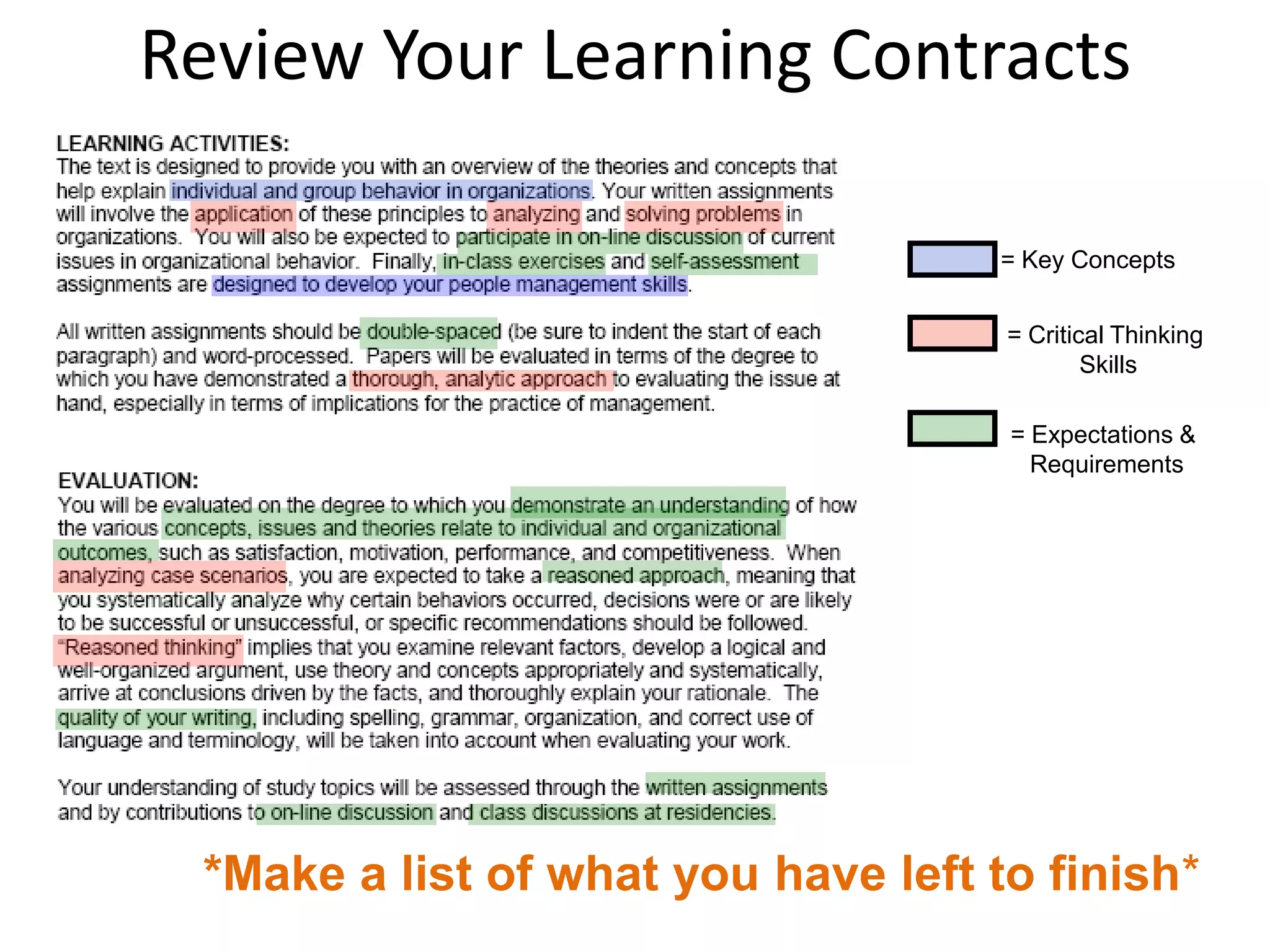
    Review Your LearningContracts = Key Concepts= Critical Thinking Skills= Expectations & Requirements*Make a list of what you have left to finish*
  • 44.
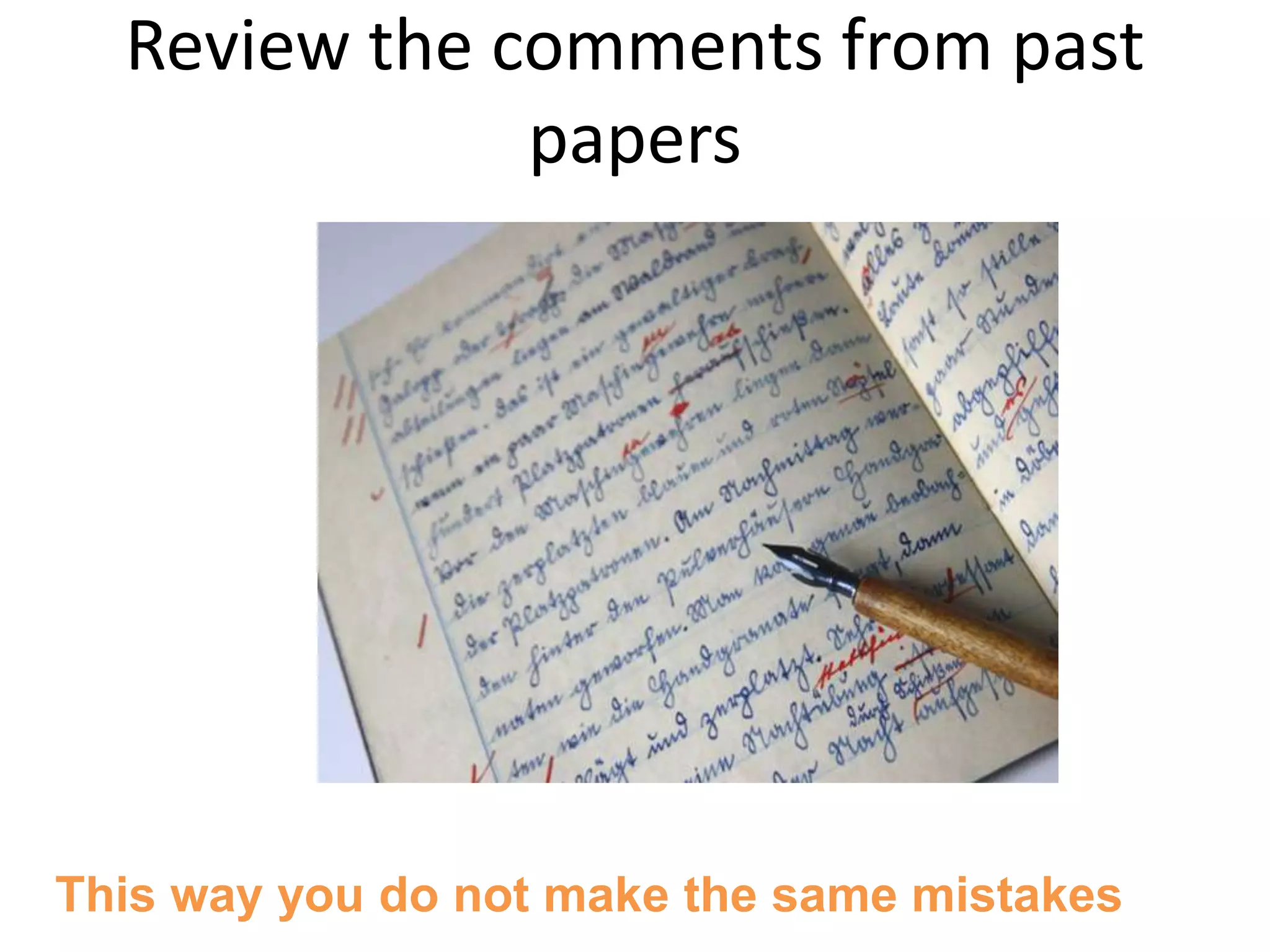
    Review the commentsfrom past papersThis way you do not make the same mistakes
  • 45.
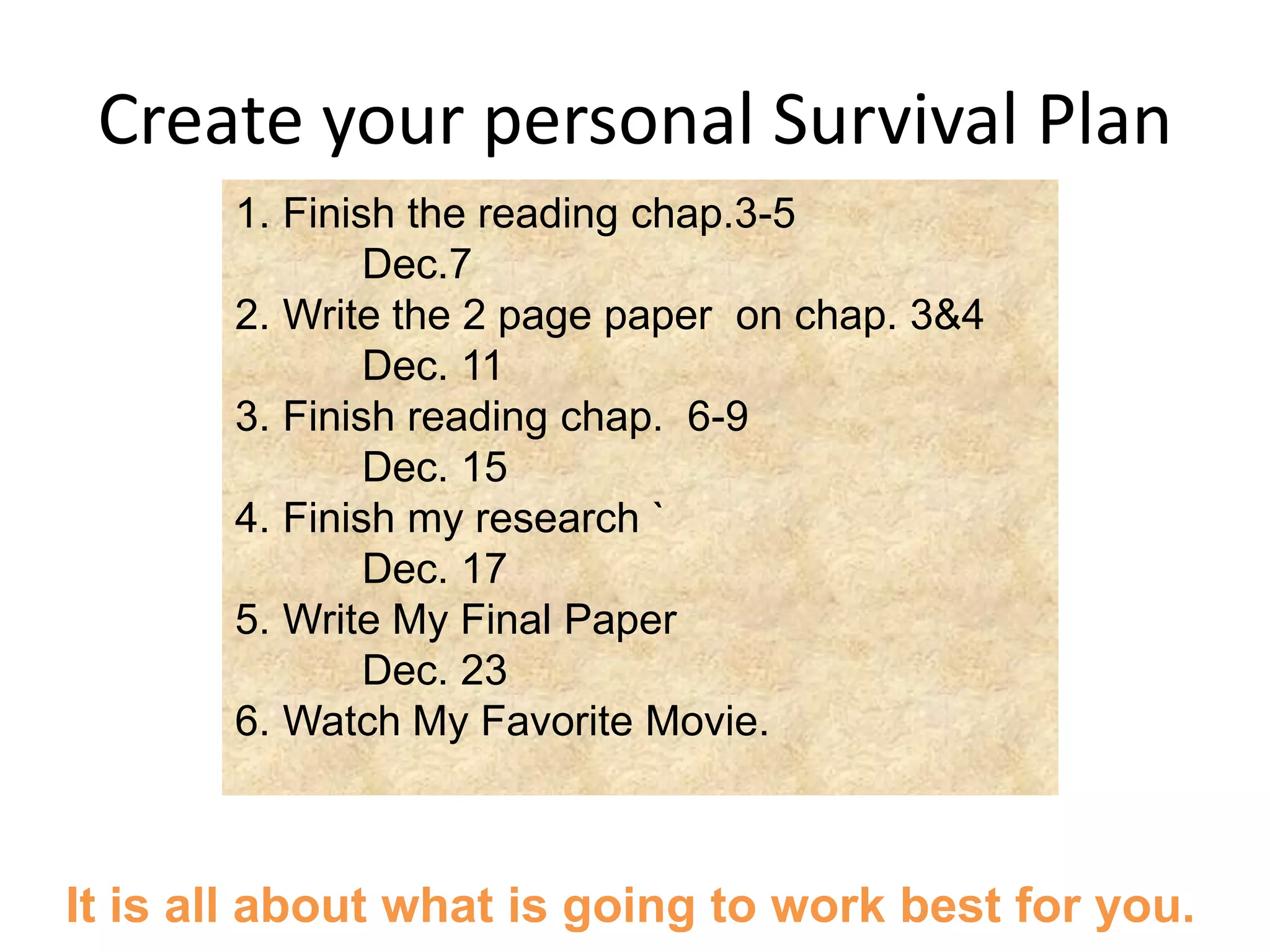
    Create your personalSurvival PlanFinish the reading chap.3-5 Dec.7Write the 2 page paper on chap. 3&4 Dec. 11Finish reading chap. 6-9 Dec. 15 Finish my research ` Dec. 17Write My Final Paper Dec. 23Watch My Favorite Movie. It is all about what is going to work best for you.
  • 46.
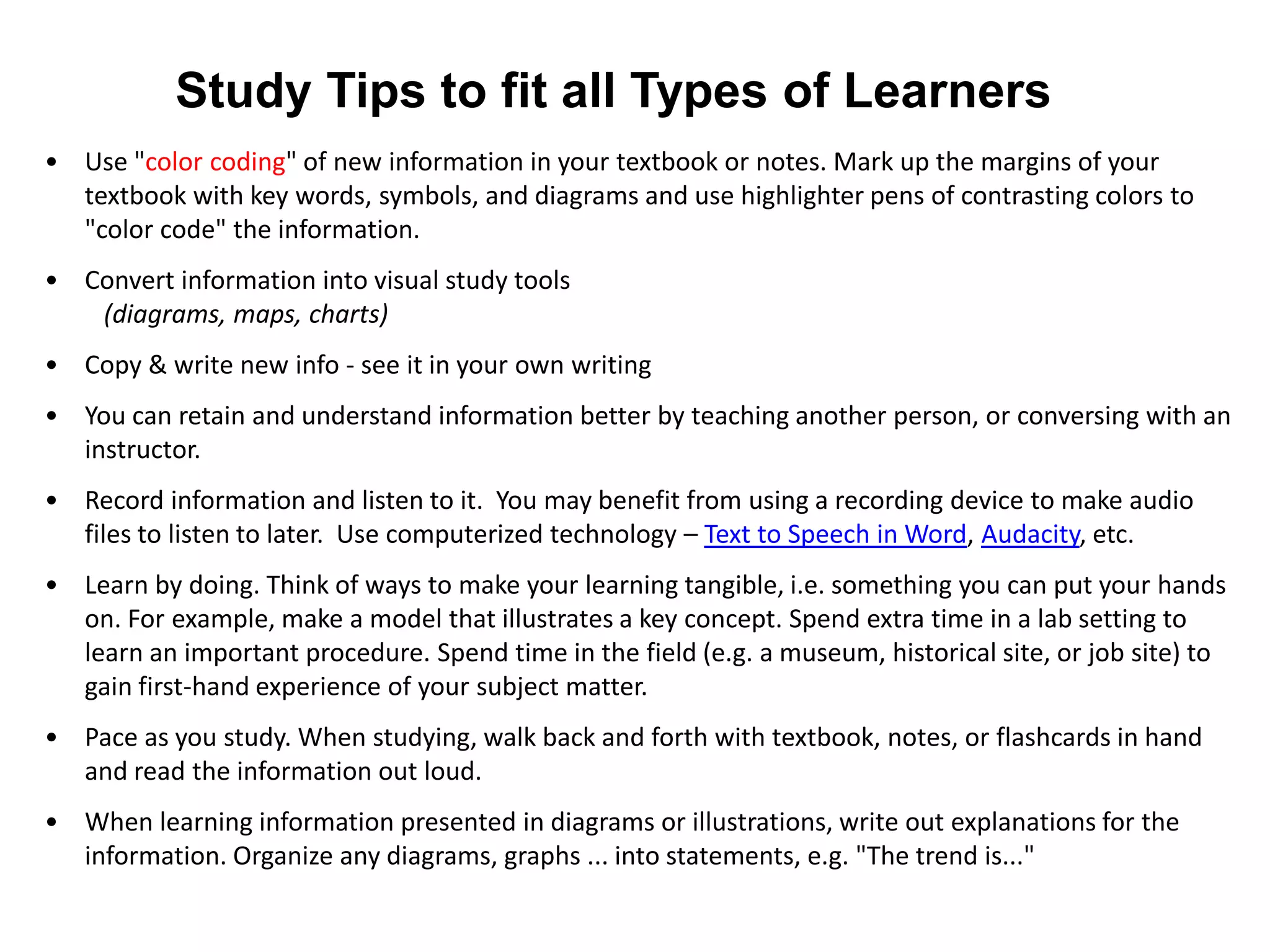
    Study Tips tofit all Types of LearnersUse "color coding" of new information in your textbook or notes. Mark up the margins of your textbook with key words, symbols, and diagrams and use highlighter pens of contrasting colors to "color code" the information.
  • 47.
    Convert information intovisual study tools (diagrams, maps, charts)
  • 48.
    Copy & writenew info - see it in your own writing
  • 49.
    You can retainand understand information better by teaching another person, or conversing with an instructor.
  • 50.
    Record information andlisten to it. You may benefit from using a recording device to make audio files to listen to later. Use computerized technology – Text to Speech in Word, Audacity, etc.
  • 51.
    Learn by doing.Think of ways to make your learning tangible, i.e. something you can put your hands on. For example, make a model that illustrates a key concept. Spend extra time in a lab setting to learn an important procedure. Spend time in the field (e.g. a museum, historical site, or job site) to gain first-hand experience of your subject matter.
  • 52.
    Pace as youstudy. When studying, walk back and forth with textbook, notes, or flashcards in hand and read the information out loud.
  • 53.
    When learning informationpresented in diagrams or illustrations, write out explanations for the information. Organize any diagrams, graphs ... into statements, e.g. "The trend is..." Please give us your feedback at:Thank you for attending tonight's workshop If you would like to view this worship again to refresh your memory or just for fun please visit:www.necacademicsupport.pbworks.com

Editor's Notes

  • #16 Sleep 7 hour a night set up a sleep schedule where you go to bed and wake up around the same time every day eat well and take time to relax……
  • #25 You should have already highlighted your learning contract but if you have not now would be a good time. Then you have a very good idea of what you have left to finish. You might be surprised.
  • #27 Remember to Reward your self it makes it easer to give the final push if you have something to push for. Check off each of the items as you complete them. Make sure you do this for all of the classes you have to finish up. Sometimes it makes I easer to put it all on one list but do not if you think it is going to overwhelm you.