Downloaded 871 times

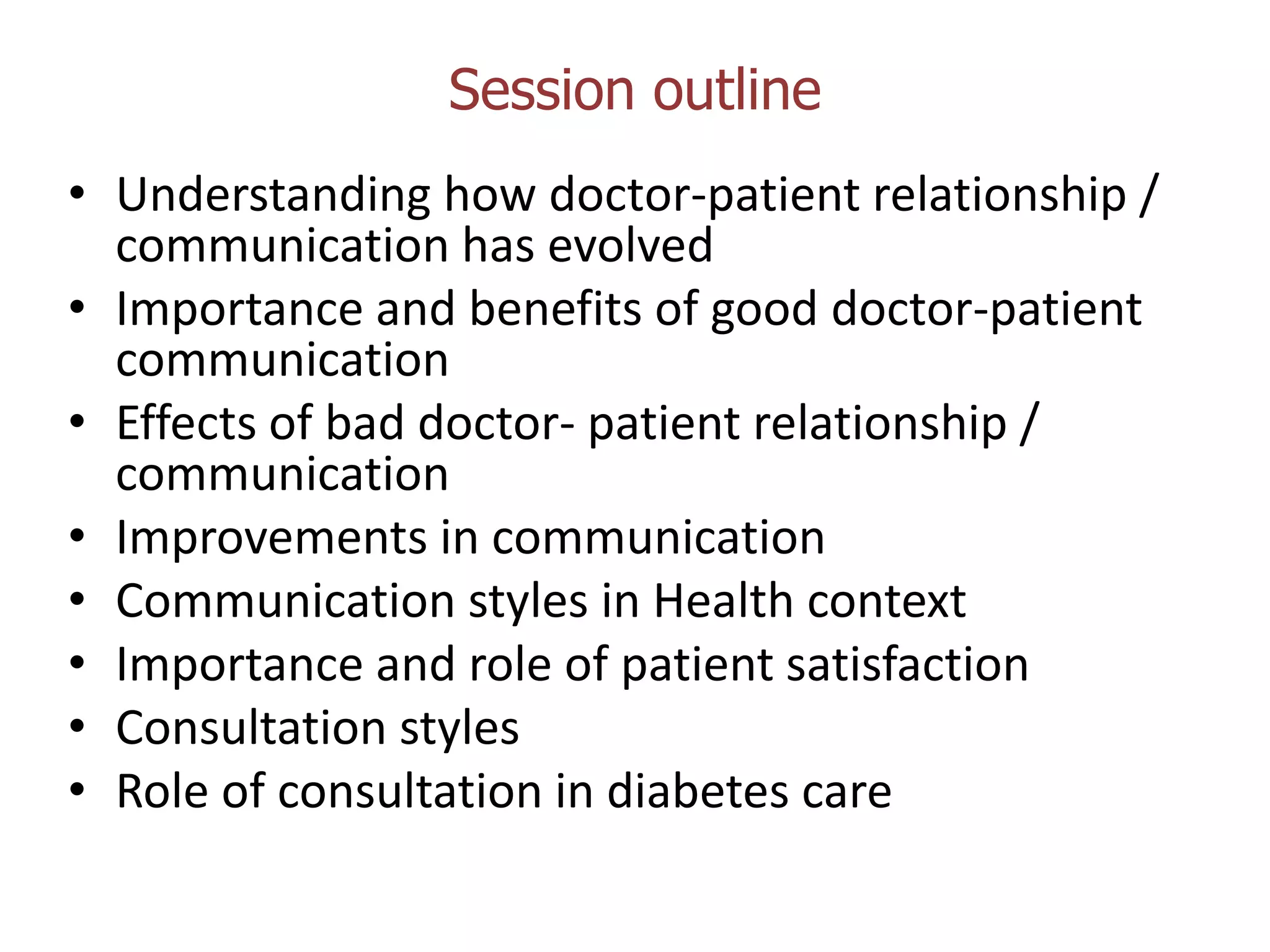

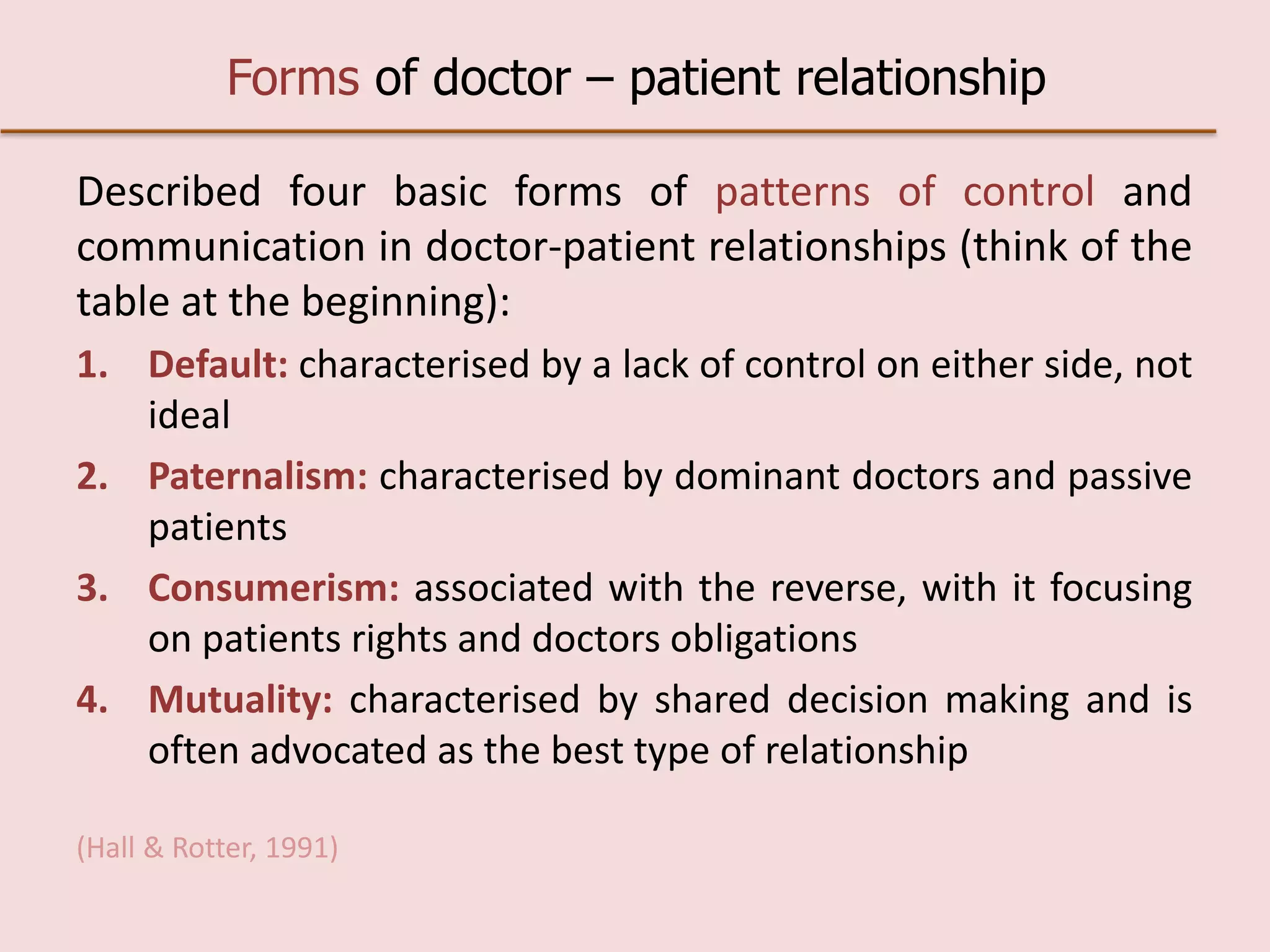


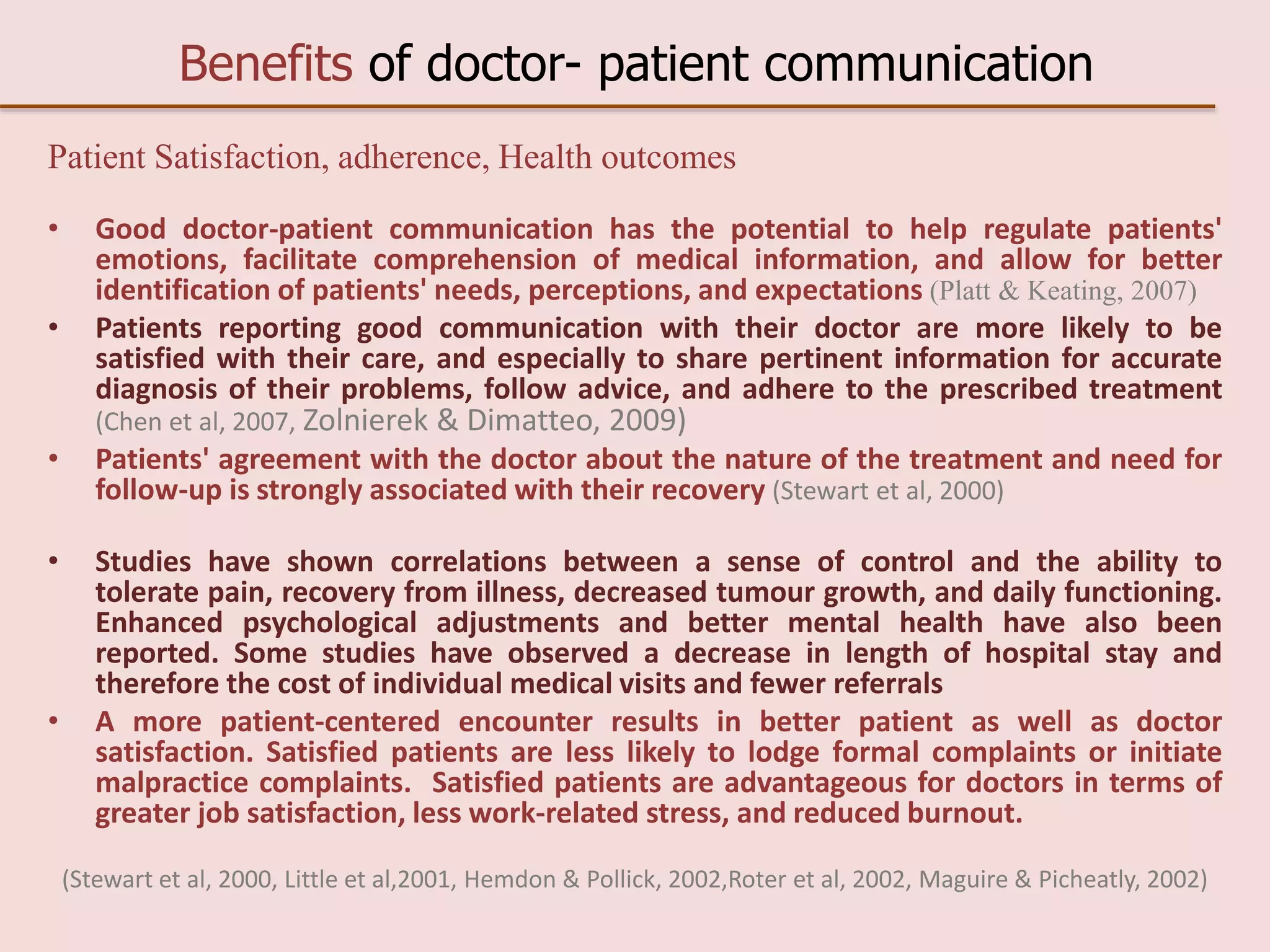


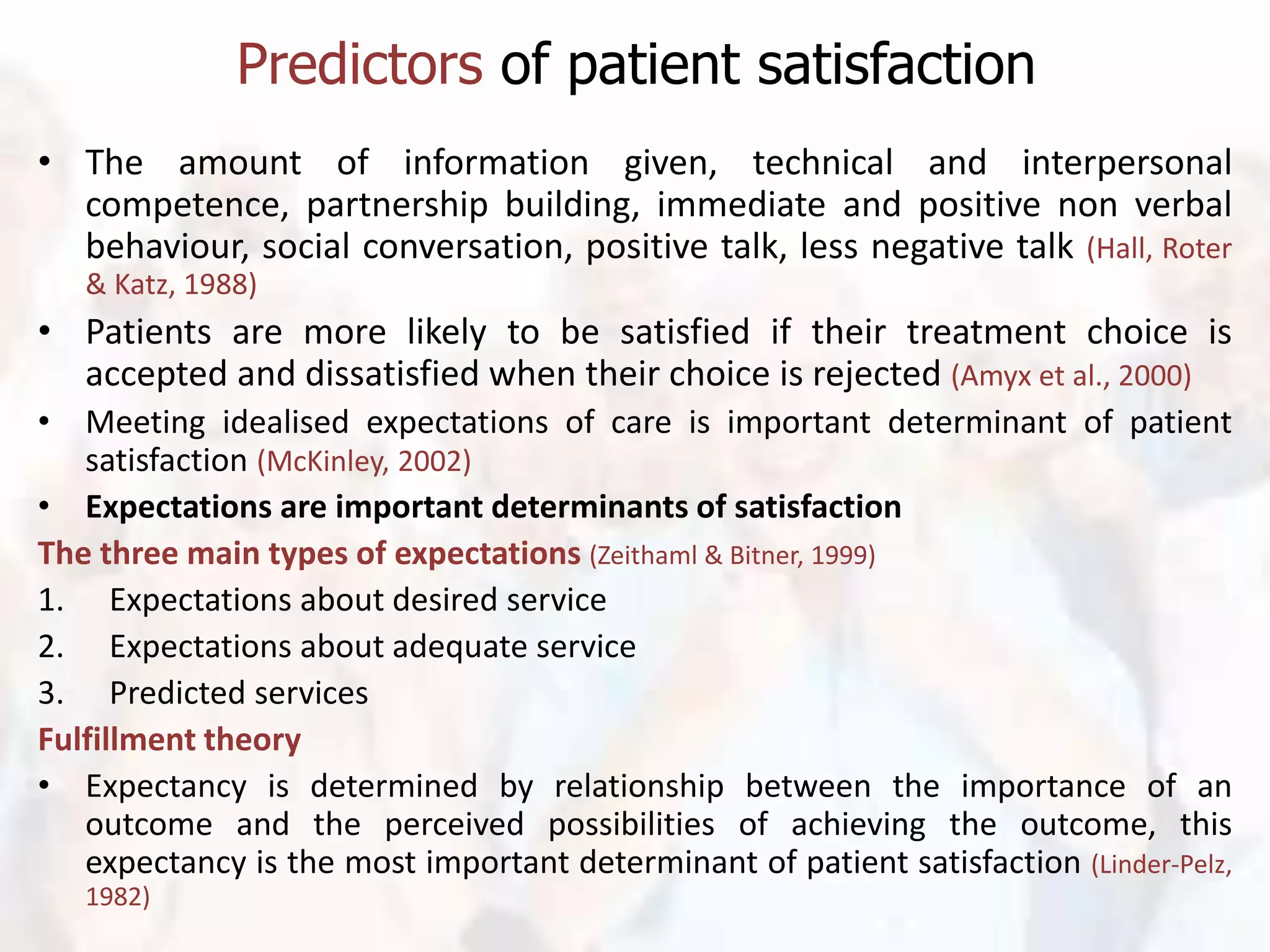




Doctor-patient communication has evolved from a paternalistic model to one emphasizing mutual participation. Effective communication is important for accurate diagnosis, treatment adherence and patient satisfaction. It requires listening skills, managing expectations, and tailoring information to individual patients. While doctors value diagnostic skills most, patients prioritize listening. Shared decision-making is preferred but preferences vary between patients. Qualitative research is needed to fully understand patient satisfaction.


