INTRODUCTION TO CLINICAL
COMMUNICATION SKILLS


       Dr RM Abraham
       Clinical skills
       NRMSM UKZN
CLINICAL COMMUNICATION SKILLS(CCS)
AIM:

   To promote the practice of effective communication
    within healthcare with patients, carers, collegues
    and other professionals.
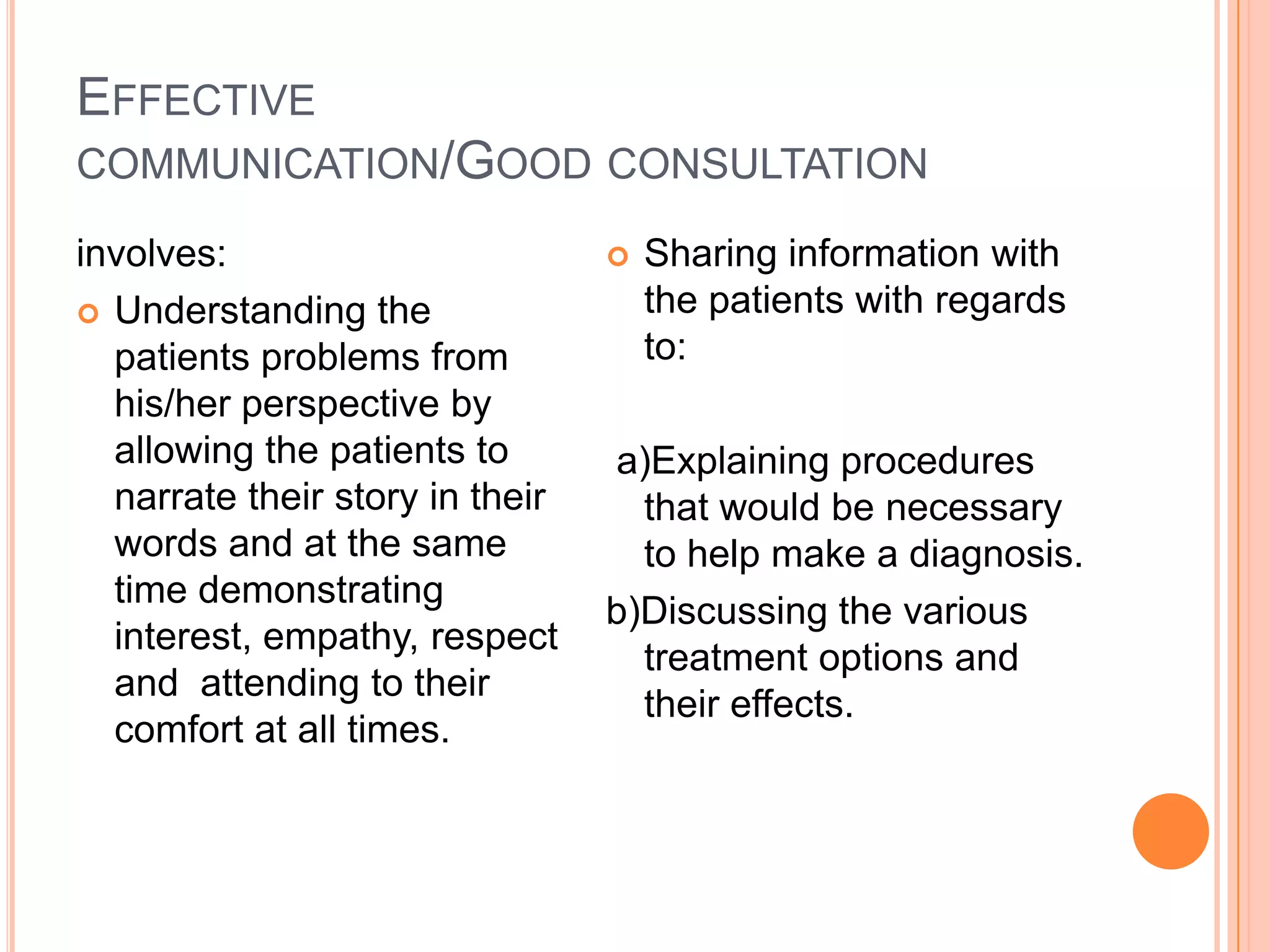
EFFECTIVE
COMMUNICATION/GOOD CONSULTATION

involves:                           Sharing information with
 Understanding the                  the patients with regards
  patients problems from             to:
  his/her perspective by
  allowing the patients to       a)Explaining procedures
  narrate their story in their     that would be necessary
  words and at the same            to help make a diagnosis.
  time demonstrating
                                 b)Discussing the various
  interest, empathy, respect
                                   treatment options and
  and attending to their
                                   their effects.
  comfort at all times.
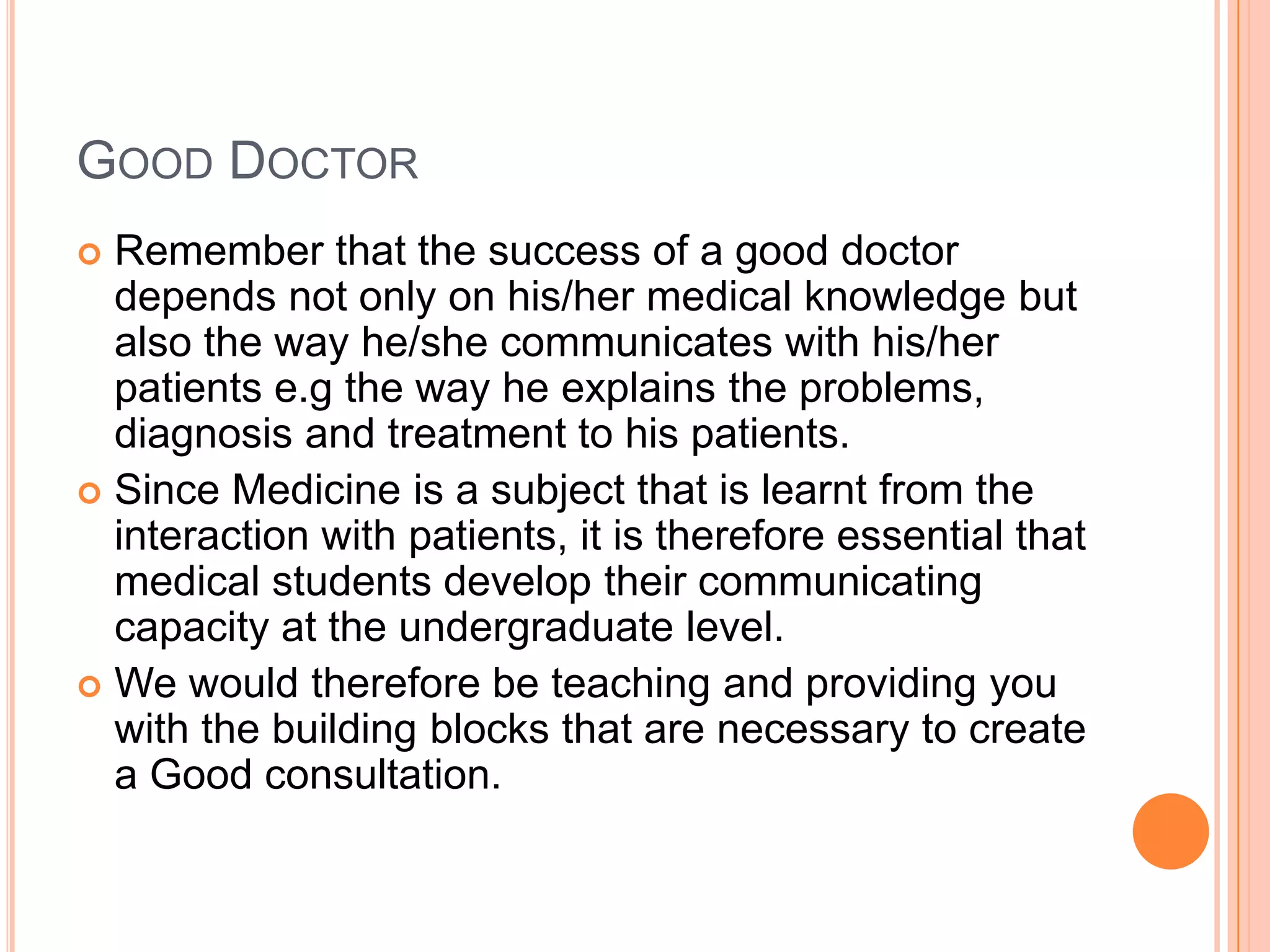
GOOD DOCTOR
 Remember that the success of a good doctor
  depends not only on his/her medical knowledge but
  also the way he/she communicates with his/her
  patients e.g the way he explains the problems,
  diagnosis and treatment to his patients.
 Since Medicine is a subject that is learnt from the
  interaction with patients, it is therefore essential that
  medical students develop their communicating
  capacity at the undergraduate level.
 We would therefore be teaching and providing you
  with the building blocks that are necessary to create
  a Good consultation.
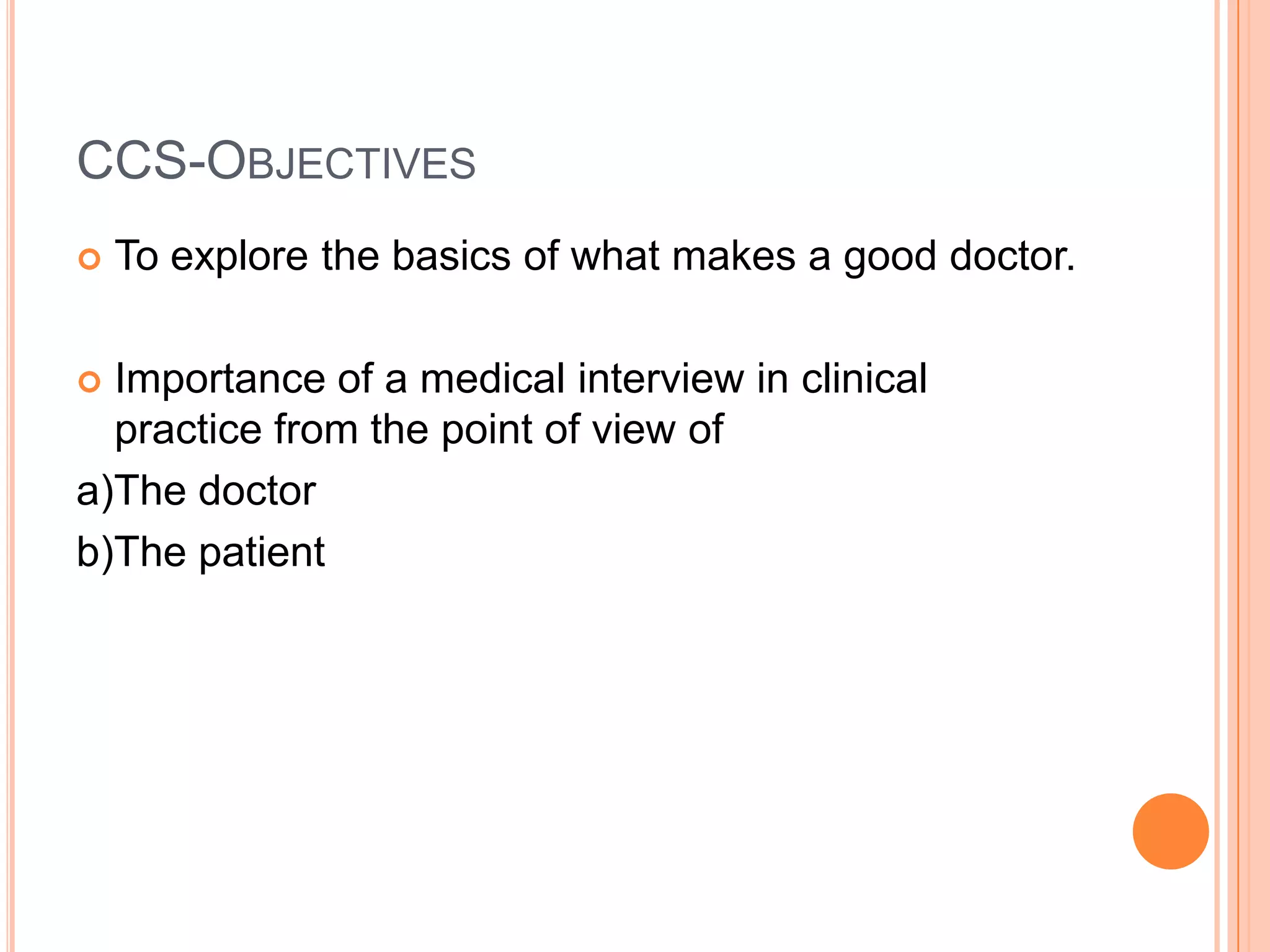
CCS-OBJECTIVES
   To explore the basics of what makes a good doctor.

 Importance of a medical interview in clinical
  practice from the point of view of
a)The doctor
b)The patient
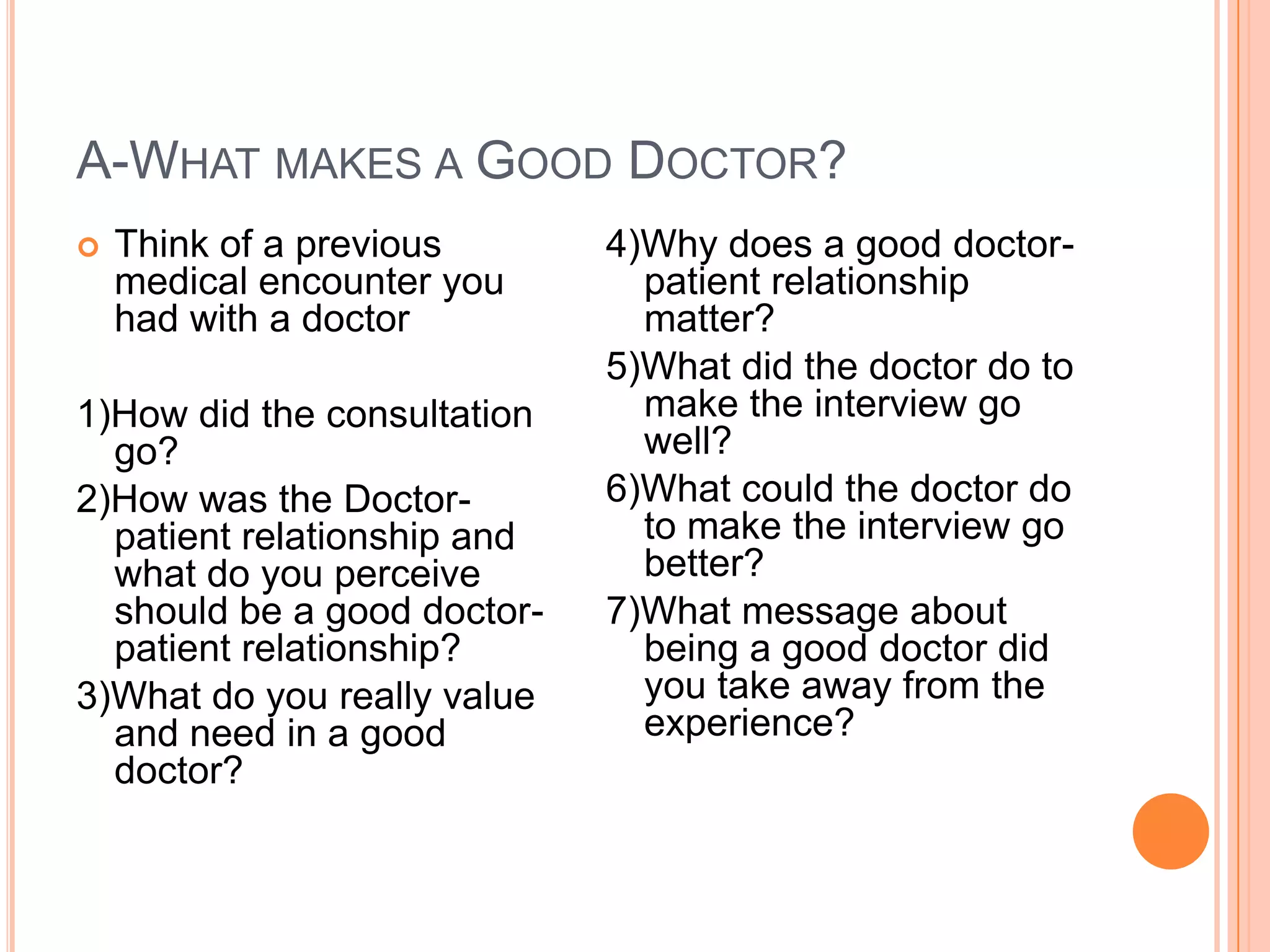
A-WHAT MAKES A GOOD DOCTOR?
   Think of a previous      4)Why does a good doctor-
    medical encounter you      patient relationship
    had with a doctor          matter?
                             5)What did the doctor do to
1)How did the consultation     make the interview go
  go?                          well?
2)How was the Doctor-        6)What could the doctor do
  patient relationship and     to make the interview go
  what do you perceive         better?
  should be a good doctor-   7)What message about
  patient relationship?        being a good doctor did
3)What do you really value     you take away from the
  and need in a good           experience?
  doctor?
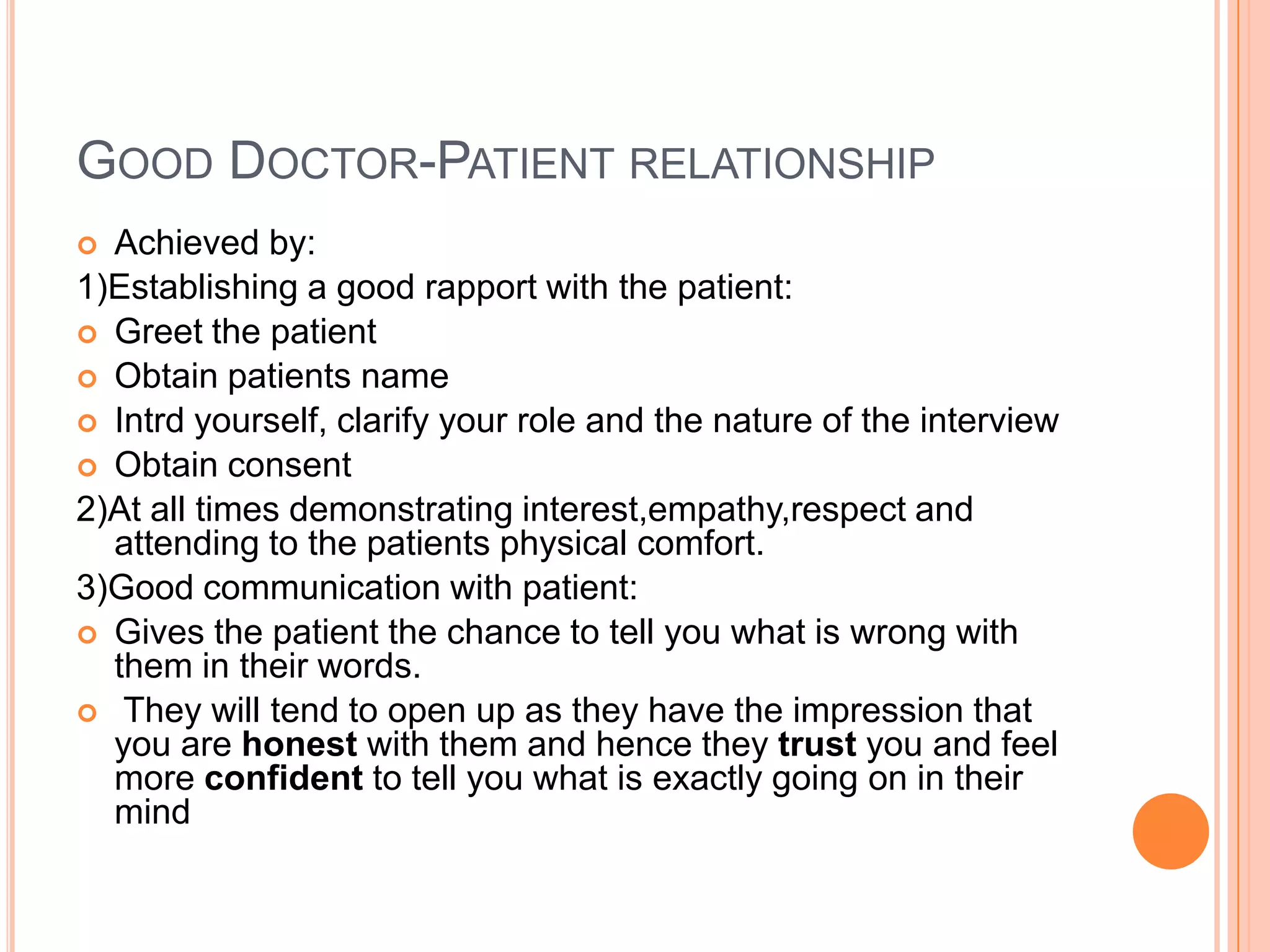
GOOD DOCTOR-PATIENT RELATIONSHIP
 Achieved by:
1)Establishing a good rapport with the patient:
 Greet the patient
 Obtain patients name
 Intrd yourself, clarify your role and the nature of the interview
 Obtain consent
2)At all times demonstrating interest,empathy,respect and
  attending to the patients physical comfort.
3)Good communication with patient:
 Gives the patient the chance to tell you what is wrong with
  them in their words.
 They will tend to open up as they have the impression that
  you are honest with them and hence they trust you and feel
  more confident to tell you what is exactly going on in their
  mind
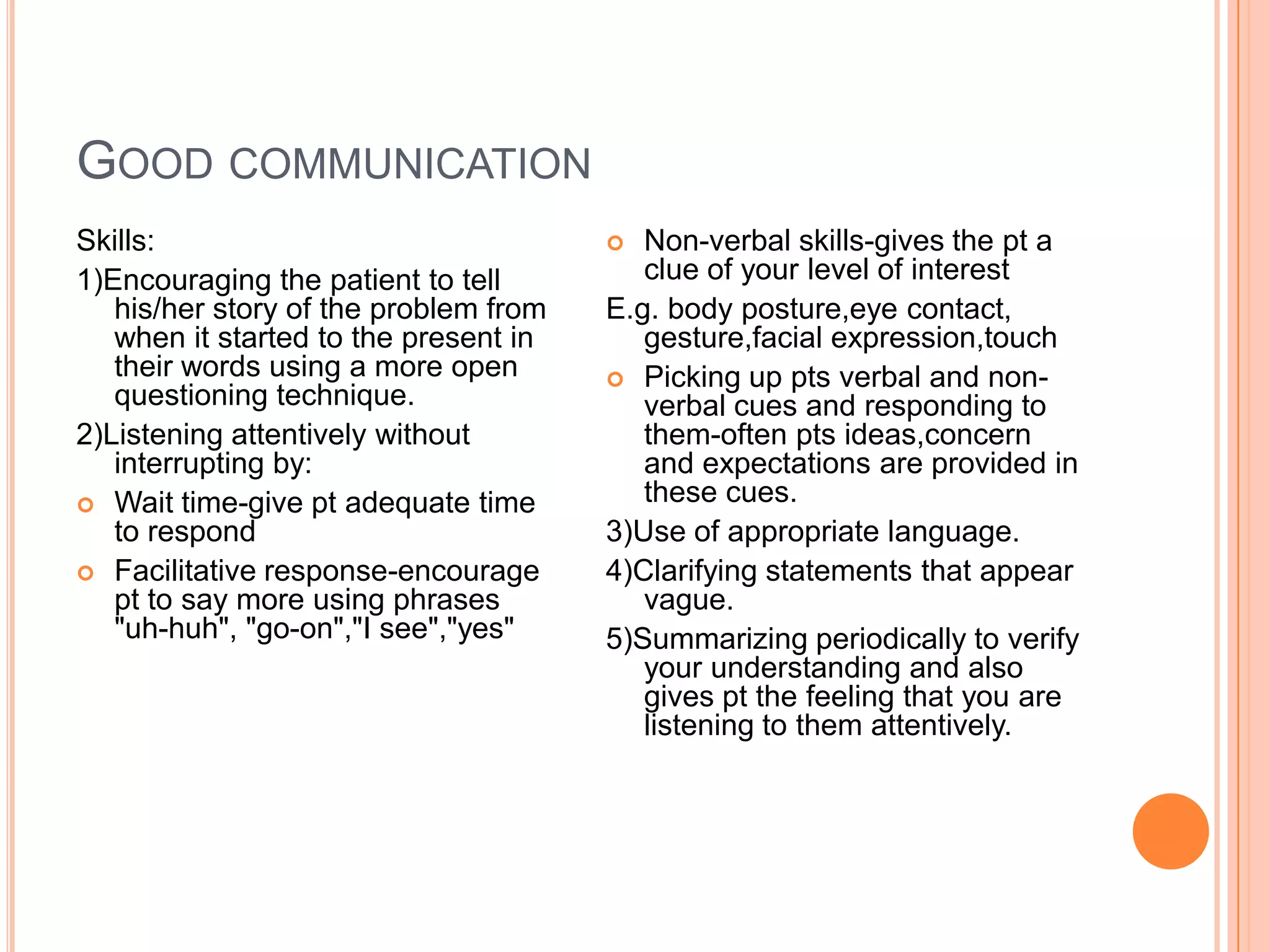
GOOD COMMUNICATION
Skills:                                  Non-verbal skills-gives the pt a
1)Encouraging the patient to tell         clue of your level of interest
   his/her story of the problem from   E.g. body posture,eye contact,
   when it started to the present in      gesture,facial expression,touch
   their words using a more open        Picking up pts verbal and non-
   questioning technique.                 verbal cues and responding to
2)Listening attentively without           them-often pts ideas,concern
   interrupting by:                       and expectations are provided in
 Wait time-give pt adequate time
                                          these cues.
   to respond                          3)Use of appropriate language.
 Facilitative response-encourage      4)Clarifying statements that appear
   pt to say more using phrases           vague.
   "uh-huh", "go-on","I see","yes"     5)Summarizing periodically to verify
                                          your understanding and also
                                          gives pt the feeling that you are
                                          listening to them attentively.
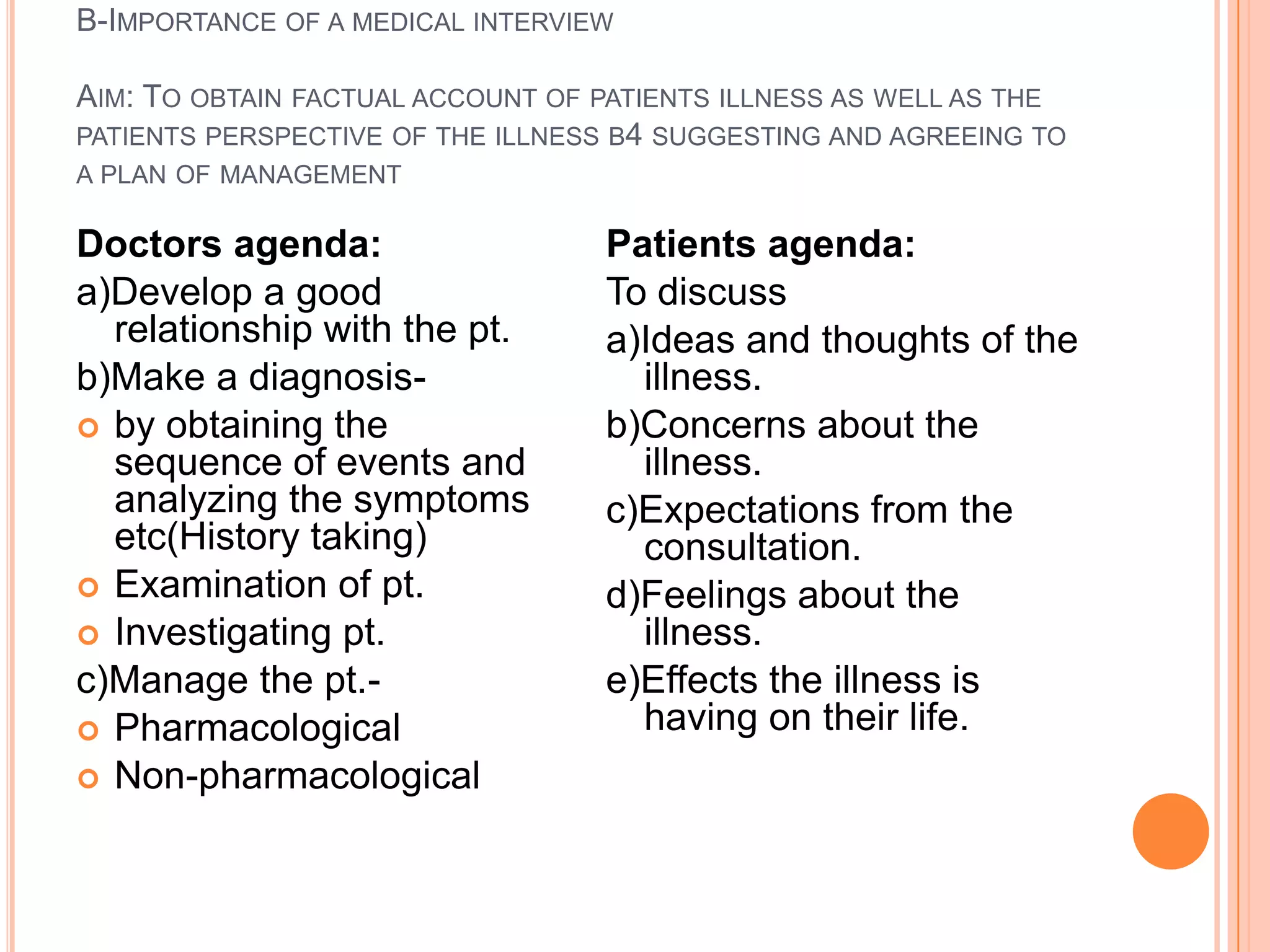
B-IMPORTANCE OF A MEDICAL INTERVIEW

AIM: TO OBTAIN FACTUAL ACCOUNT OF PATIENTS ILLNESS AS WELL AS THE
PATIENTS PERSPECTIVE OF THE ILLNESS B4 SUGGESTING AND AGREEING TO
A PLAN OF MANAGEMENT

Doctors agenda:                   Patients agenda:
a)Develop a good                  To discuss
  relationship with the pt.       a)Ideas and thoughts of the
b)Make a diagnosis-                 illness.
 by obtaining the                b)Concerns about the
  sequence of events and            illness.
  analyzing the symptoms          c)Expectations from the
  etc(History taking)               consultation.
 Examination of pt.              d)Feelings about the
 Investigating pt.                 illness.
c)Manage the pt.-                 e)Effects the illness is
 Pharmacological                   having on their life.
 Non-pharmacological
ANALYZING A CONSULTATION
 Watch a DVD clipping of a medical consultation to
  help explore the
a) Purpose
b) Difficulties
c) Strengths and
d) Weaknesses
From both the doctor's and patient's view point
THANK YOU

Introduction to clinical communication skills.pptx 2011

  • 1.
    INTRODUCTION TO CLINICAL COMMUNICATIONSKILLS Dr RM Abraham Clinical skills NRMSM UKZN
  • 2.
    CLINICAL COMMUNICATION SKILLS(CCS) AIM:  To promote the practice of effective communication within healthcare with patients, carers, collegues and other professionals.
  • 3.
    EFFECTIVE COMMUNICATION/GOOD CONSULTATION involves:  Sharing information with  Understanding the the patients with regards patients problems from to: his/her perspective by allowing the patients to a)Explaining procedures narrate their story in their that would be necessary words and at the same to help make a diagnosis. time demonstrating b)Discussing the various interest, empathy, respect treatment options and and attending to their their effects. comfort at all times.
  • 4.
    GOOD DOCTOR  Rememberthat the success of a good doctor depends not only on his/her medical knowledge but also the way he/she communicates with his/her patients e.g the way he explains the problems, diagnosis and treatment to his patients.  Since Medicine is a subject that is learnt from the interaction with patients, it is therefore essential that medical students develop their communicating capacity at the undergraduate level.  We would therefore be teaching and providing you with the building blocks that are necessary to create a Good consultation.
  • 5.
    CCS-OBJECTIVES  To explore the basics of what makes a good doctor.  Importance of a medical interview in clinical practice from the point of view of a)The doctor b)The patient
  • 6.
    A-WHAT MAKES AGOOD DOCTOR?  Think of a previous 4)Why does a good doctor- medical encounter you patient relationship had with a doctor matter? 5)What did the doctor do to 1)How did the consultation make the interview go go? well? 2)How was the Doctor- 6)What could the doctor do patient relationship and to make the interview go what do you perceive better? should be a good doctor- 7)What message about patient relationship? being a good doctor did 3)What do you really value you take away from the and need in a good experience? doctor?
  • 7.
    GOOD DOCTOR-PATIENT RELATIONSHIP Achieved by: 1)Establishing a good rapport with the patient:  Greet the patient  Obtain patients name  Intrd yourself, clarify your role and the nature of the interview  Obtain consent 2)At all times demonstrating interest,empathy,respect and attending to the patients physical comfort. 3)Good communication with patient:  Gives the patient the chance to tell you what is wrong with them in their words.  They will tend to open up as they have the impression that you are honest with them and hence they trust you and feel more confident to tell you what is exactly going on in their mind
  • 8.
    GOOD COMMUNICATION Skills:  Non-verbal skills-gives the pt a 1)Encouraging the patient to tell clue of your level of interest his/her story of the problem from E.g. body posture,eye contact, when it started to the present in gesture,facial expression,touch their words using a more open  Picking up pts verbal and non- questioning technique. verbal cues and responding to 2)Listening attentively without them-often pts ideas,concern interrupting by: and expectations are provided in  Wait time-give pt adequate time these cues. to respond 3)Use of appropriate language.  Facilitative response-encourage 4)Clarifying statements that appear pt to say more using phrases vague. "uh-huh", "go-on","I see","yes" 5)Summarizing periodically to verify your understanding and also gives pt the feeling that you are listening to them attentively.
  • 9.
    B-IMPORTANCE OF AMEDICAL INTERVIEW AIM: TO OBTAIN FACTUAL ACCOUNT OF PATIENTS ILLNESS AS WELL AS THE PATIENTS PERSPECTIVE OF THE ILLNESS B4 SUGGESTING AND AGREEING TO A PLAN OF MANAGEMENT Doctors agenda: Patients agenda: a)Develop a good To discuss relationship with the pt. a)Ideas and thoughts of the b)Make a diagnosis- illness.  by obtaining the b)Concerns about the sequence of events and illness. analyzing the symptoms c)Expectations from the etc(History taking) consultation.  Examination of pt. d)Feelings about the  Investigating pt. illness. c)Manage the pt.- e)Effects the illness is  Pharmacological having on their life.  Non-pharmacological
  • 10.
    ANALYZING A CONSULTATION Watch a DVD clipping of a medical consultation to help explore the a) Purpose b) Difficulties c) Strengths and d) Weaknesses From both the doctor's and patient's view point
  • 11.