ARIF
PHD Scholar
 What is Transfection?
 Transfection vs. Transformation
 Purpose of Transfection
 How it Works
 Experimental methods/processes of doing it.
 Strengths and weaknesses of each method
 Since the early 1980s, fruit flies, fish, sea urchins, frogs,
laboratory mice and farm animals, such as cows, pigs, and
sheep have been successfully produced.
 The ability to manipulate the genome of the whole animal and
the production of transgenic animals has influenced the
science dramatically in the last 15 years.
 The procedure for introducing exogenous donor DNA into a
recipient cell is called Transfection. ( Non-viral methods)
 Chromosomes are taken up inefficiently so that intact
chromosomes rarely survived the procedure. Instead the
recipient cell usually get a part of the DNA.
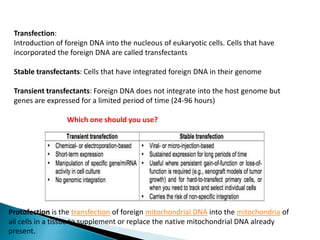
Transfection:
Introduction of foreign DNA into the nucleous of eukaryotic cells. Cells that have
incorporated the foreign DNA are called transfectants
Stable transfectants: Cells that have integrated foreign DNA in their genome
Transient transfectants: Foreign DNA does not integrate into the host genome but
genes are expressed for a limited period of time (24-96 hours)
Which one should you use?
Protofection is the transfection of foreign mitochondrial DNA into the mitochondria of
all cells in a tissue to supplement or replace the native mitochondrial DNA already
present.
 Transformation: genetically altering cells by changing
their growth characteristics from finite to infinite by
transporting in foreign genetic material.
 Transfection: the process of transporting genetic
material and/or macromolecules into eukaryotic cells
through typically non-viral methods.
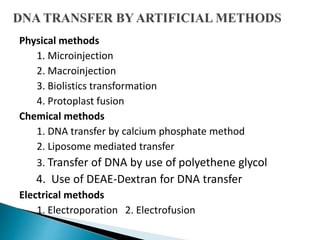
DNA transfer by natural methods
1. Conjugation
2. Bacterial transformation
3. Agrobacterium mediated transfer
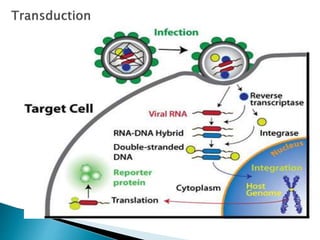
 Transduction
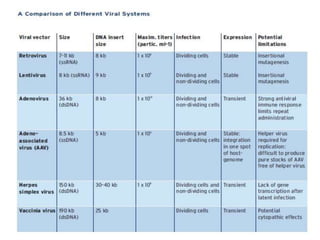
Viral vectors
 Bactofection: bacterial delivery systems
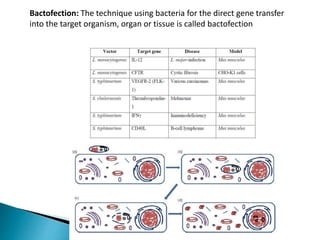
Physical methods
1. Microinjection
2. Macroinjection
3. Biolistics transformation
4. Protoplast fusion
Chemical methods
1. DNA transfer by calcium phosphate method
2. Liposome mediated transfer
3. Transfer of DNA by use of polyethene glycol
4. Use of DEAE-Dextran for DNA transfer
Electrical methods
1. Electroporation 2. Electrofusion
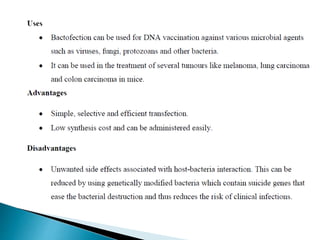
Bactofection: The technique using bacteria for the direct gene transfer
into the target organism, organ or tissue is called bactofection
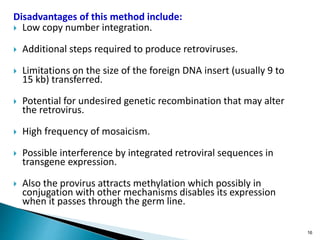
Disadvantages of this method include:
 Low copy number integration.
 Additional steps required to produce retroviruses.
 Limitations on the size of the foreign DNA insert (usually 9 to
15 kb) transferred.
 Potential for undesired genetic recombination that may alter
the retrovirus.
 High frequency of mosaicism.
 Possible interference by integrated retroviral sequences in
transgene expression.
 Also the provirus attracts methylation which possibly in
conjugation with other mechanisms disables its expression
when it passes through the germ line.
16
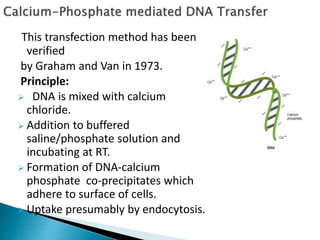
This transfection method has been
verified
by Graham and Van in 1973.
Principle:
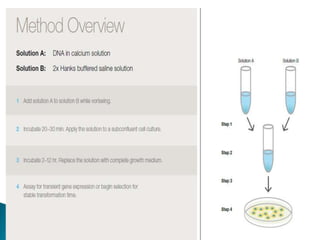
 DNA is mixed with calcium
chloride.
 Addition to buffered
saline/phosphate solution and
incubating at RT.
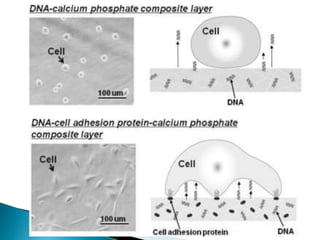
 Formation of DNA-calcium
phosphate co-precipitates which
adhere to surface of cells.
 Uptake presumably by endocytosis.
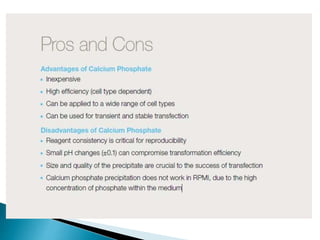
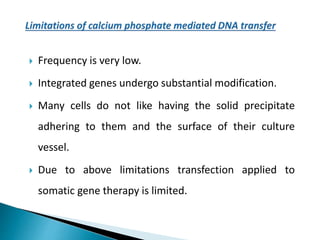
 Frequency is very low.
 Integrated genes undergo substantial modification.
 Many cells do not like having the solid precipitate
adhering to them and the surface of their culture
vessel.
 Due to above limitations transfection applied to
somatic gene therapy is limited.
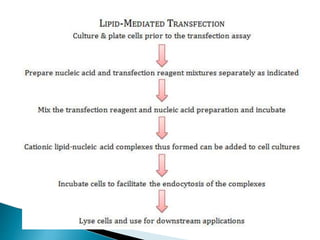
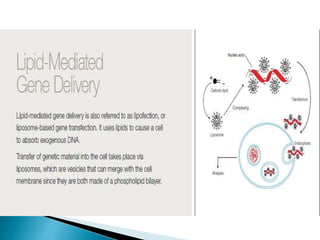
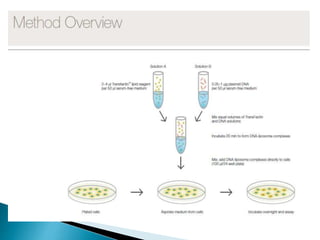
Principle (liposome mediated gene transfer):
 A cationic lipid is mixed with a neutral lipid/helper
lipid (e.g. DOPE), unilamellar liposome vesicles are
formed carrying a net positive charge.
 Nucleic acids adsorb to these vesicles/packed
structure.
 Ionic absorption to the cellular membrane.
 Uptake presumably by endocytosis.
 Neutral »helper« lipids such as DOPE allow entrapped
DNA to escape the endosomes by fusion of the
lipsome with the membrane.
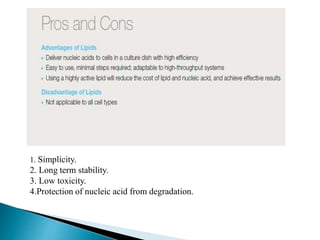
1. Simplicity.
2. Long term stability.
3. Low toxicity.
4.Protection of nucleic acid from degradation.
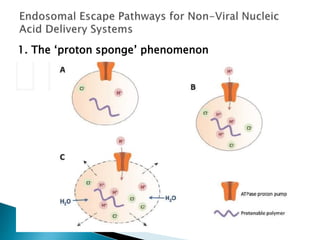
1. The ‘proton sponge’ phenomenon
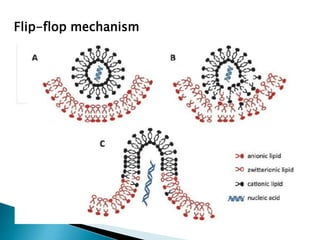
Flip-flop mechanism
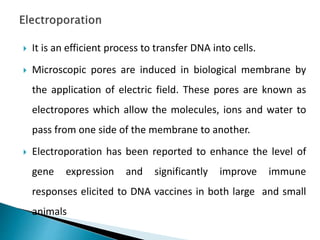
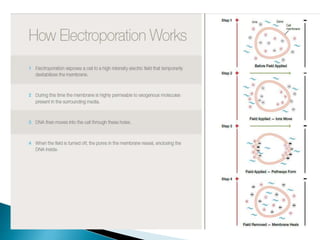
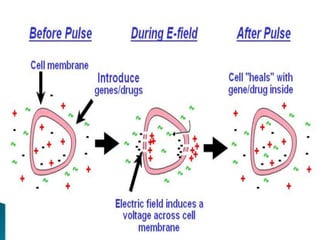
 It is an efficient process to transfer DNA into cells.
 Microscopic pores are induced in biological membrane by
the application of electric field. These pores are known as
electropores which allow the molecules, ions and water to
pass from one side of the membrane to another.
 Electroporation has been reported to enhance the level of
gene expression and significantly improve immune
responses elicited to DNA vaccines in both large and small
animals
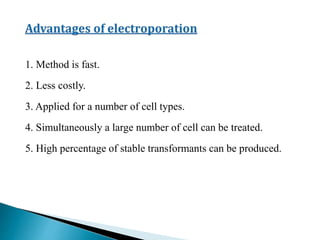
1. Method is fast.
2. Less costly.
3. Applied for a number of cell types.
4. Simultaneously a large number of cell can be treated.
5. High percentage of stable transformants can be produced.
Dna transfer
Dna transfer
Dna transfer

Dna transfer

  • 1.
  • 2.
     What isTransfection?  Transfection vs. Transformation  Purpose of Transfection  How it Works  Experimental methods/processes of doing it.  Strengths and weaknesses of each method
  • 3.
     Since theearly 1980s, fruit flies, fish, sea urchins, frogs, laboratory mice and farm animals, such as cows, pigs, and sheep have been successfully produced.  The ability to manipulate the genome of the whole animal and the production of transgenic animals has influenced the science dramatically in the last 15 years.  The procedure for introducing exogenous donor DNA into a recipient cell is called Transfection. ( Non-viral methods)  Chromosomes are taken up inefficiently so that intact chromosomes rarely survived the procedure. Instead the recipient cell usually get a part of the DNA.
  • 4.
    Transfection: Introduction of foreignDNA into the nucleous of eukaryotic cells. Cells that have incorporated the foreign DNA are called transfectants Stable transfectants: Cells that have integrated foreign DNA in their genome Transient transfectants: Foreign DNA does not integrate into the host genome but genes are expressed for a limited period of time (24-96 hours) Which one should you use? Protofection is the transfection of foreign mitochondrial DNA into the mitochondria of all cells in a tissue to supplement or replace the native mitochondrial DNA already present.
  • 9.
     Transformation: geneticallyaltering cells by changing their growth characteristics from finite to infinite by transporting in foreign genetic material.  Transfection: the process of transporting genetic material and/or macromolecules into eukaryotic cells through typically non-viral methods.
  • 10.
    DNA transfer bynatural methods 1. Conjugation 2. Bacterial transformation 3. Agrobacterium mediated transfer  Transduction Viral vectors  Bactofection: bacterial delivery systems
  • 11.
    Physical methods 1. Microinjection 2.Macroinjection 3. Biolistics transformation 4. Protoplast fusion Chemical methods 1. DNA transfer by calcium phosphate method 2. Liposome mediated transfer 3. Transfer of DNA by use of polyethene glycol 4. Use of DEAE-Dextran for DNA transfer Electrical methods 1. Electroporation 2. Electrofusion
  • 12.
    Bactofection: The techniqueusing bacteria for the direct gene transfer into the target organism, organ or tissue is called bactofection
  • 16.
    Disadvantages of thismethod include:  Low copy number integration.  Additional steps required to produce retroviruses.  Limitations on the size of the foreign DNA insert (usually 9 to 15 kb) transferred.  Potential for undesired genetic recombination that may alter the retrovirus.  High frequency of mosaicism.  Possible interference by integrated retroviral sequences in transgene expression.  Also the provirus attracts methylation which possibly in conjugation with other mechanisms disables its expression when it passes through the germ line. 16
  • 17.
    This transfection methodhas been verified by Graham and Van in 1973. Principle:  DNA is mixed with calcium chloride.  Addition to buffered saline/phosphate solution and incubating at RT.  Formation of DNA-calcium phosphate co-precipitates which adhere to surface of cells.  Uptake presumably by endocytosis.
  • 21.
     Frequency isvery low.  Integrated genes undergo substantial modification.  Many cells do not like having the solid precipitate adhering to them and the surface of their culture vessel.  Due to above limitations transfection applied to somatic gene therapy is limited.
  • 22.
    Principle (liposome mediatedgene transfer):  A cationic lipid is mixed with a neutral lipid/helper lipid (e.g. DOPE), unilamellar liposome vesicles are formed carrying a net positive charge.  Nucleic acids adsorb to these vesicles/packed structure.  Ionic absorption to the cellular membrane.  Uptake presumably by endocytosis.  Neutral »helper« lipids such as DOPE allow entrapped DNA to escape the endosomes by fusion of the lipsome with the membrane.
  • 26.
    1. Simplicity. 2. Longterm stability. 3. Low toxicity. 4.Protection of nucleic acid from degradation.
  • 27.
    1. The ‘protonsponge’ phenomenon
  • 28.
  • 29.
     It isan efficient process to transfer DNA into cells.  Microscopic pores are induced in biological membrane by the application of electric field. These pores are known as electropores which allow the molecules, ions and water to pass from one side of the membrane to another.  Electroporation has been reported to enhance the level of gene expression and significantly improve immune responses elicited to DNA vaccines in both large and small animals
  • 32.
    1. Method isfast. 2. Less costly. 3. Applied for a number of cell types. 4. Simultaneously a large number of cell can be treated. 5. High percentage of stable transformants can be produced.