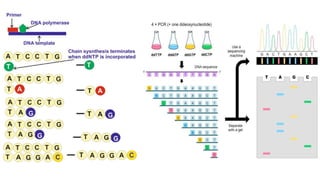
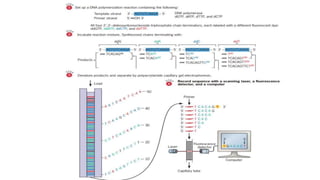
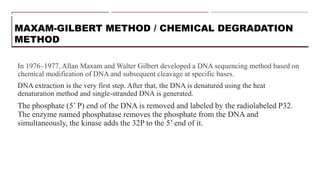
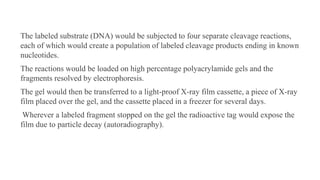
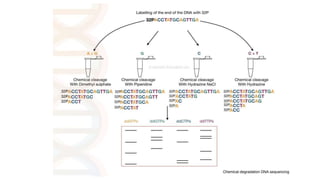
Sanger sequencing, also known as chain termination sequencing, was developed in 1977 and involves DNA polymerase extending a primer until a dideoxynucleotide is incorporated, terminating DNA synthesis. The resulting fragments of different lengths are separated by gel electrophoresis and read to determine the DNA sequence. Maxam-Gilbert sequencing uses chemical reactions that selectively modify bases followed by piperidine cleavage, generating labeled fragments that are resolved on gels to reveal the DNA sequence. Both methods were crucial for determining DNA sequences in the Human Genome Project.