DNA REPLICATION
Munaza
Roll No. CHE2032
CONTENTS
 Introduction
 Watson & Crick model
 Modes of Replication
 Meselson- Stahl experiment
 Enzymes involved in replication
 Steps of replication
 Difference in replication between prokaryotes and eukaryotes
DNA REPLICATION
Introduction:
 Double stranded DNA copied to two identical DNA molecules
 Occur at the rate of 1000 nucleotide per sec and 50 nucleotides per second in
mammals
 Polymerization occur from 5’ to 3’ direction only
 Replication is semi-conservative
 Vital for cell growth,reproduction and cell repair
 Base pairing rule maintained
 S phase of interphase in cell cycle
Watson-Crick model of DNA replication
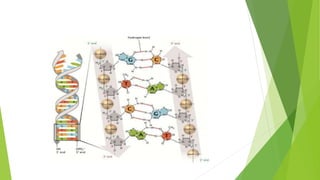
 James Watson and Francis crick 1953
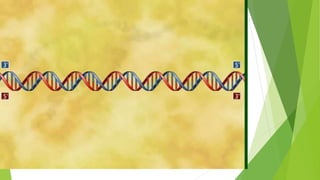
 DNA is double stranded Helical molecule
 Two sugar-phosphate back bone on outside
 Four types of bases i.e A,T,G,C
 Held together with H-bond A = T , G ≡ C
 Nobel prize in 1962
 Crystallographic evidence of helical structure
 Rosalind Franklin (1920-1958)
Modes of replication
 Many hypothesis explain replication
i) Conservative model
ii) Semi-conservative model
iii) Dispersive model
Conservative Replication
 Parental double helix remains conserved
 Duplex generate new DNA copy
 Entirely new material molecule
Semi-Conservative Replication
 Double stranded DNA unwinds
 Each acts as template for synthesis of new strand
 Resulting in two daughter DNA molecules
 One original strand and one new strand
Dispersive Replication
 Parental DNA is completely dispersed
 New DNA molecule is mixture of parentel and daughter DNA
 Material distributed randomly between two daughter molecules
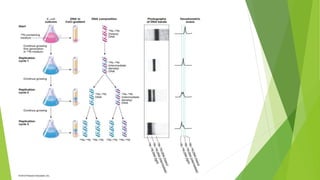
Meselson–Stahl experiment
 Matt Meselson and Franklin Stahl 1958
 Justification of models
 Semi-conservative replication of DNA
 E.Coli bacteria as model system
Enzymes Involved in DNA Replication
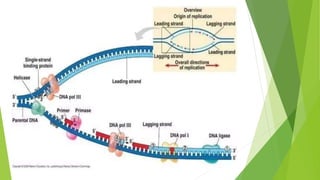
 Helicase (initiator protein):
Opens up double stranded DNA at replication fork
 Single-strand binding Protein(SSB):
Coat the DNA around replication fork
Prevents rewinding of DNA
 Topoisomerase(Gyrase):
Works at region ahead of replication fork
Prevents super coiling
Enzymes Involved in DNA Replication
 Primase:
Synthesis RNA Primers complimentary to DNA strand
 DNA polymerase I:
Removes and replaces RNA primer with DNA
Enzymes Involved in DNA Replication
 DNA polymerase III:
Extends RNA primer
Adding on to 3’ end
Makes bulk of new DNA
 DNA Ligase:
Seals the gaps between DNA fragments
Steps Of DNA Replication
 Replication Fork formation:
 Recognition of Ori (245 bp long A=T)
 Helicase enzyme unzip the double strand by breaking H-Bonds
 Replication fork and replication bubble formed
 SSB protein coats separated DNA strand to prevent rewinding
Steps Of DNA Replication
 Elongation:
 Primase ( kick starter) enzyme attached at first
 DNA polymerase attaches and creates new strand
 5’-3’ polymerization (add nucleotide on 3’ end )
 Polymerase add nucleotide molecules
 Leading strand ( 3’-5’) continuous
 Lagging strand (5’-3’) RNA Primer attached
 DNA polymerase attaches nucleotide and removes RNA primer
 Okazaki fragments formed,discontinous
 +
Steps Of DNA Replication
 Termination:
 DNA Ligase joins okazaki fragments
 Forms unified single strand
 expanding continues until no more template left
Prokaryotic
 DNA Replication in cytoplasm
 Single origin of replication
 DNA polymerase I,III
 Large okazaki fragment
Eukaryotic
 DNA Replication in nucleus
 Multiple origin
 DNA Polymerase a,B,Y
 Small okazaki fragment
DNA replication.pptx

DNA replication.pptx

  • 1.
  • 2.
    CONTENTS  Introduction  Watson& Crick model  Modes of Replication  Meselson- Stahl experiment  Enzymes involved in replication  Steps of replication  Difference in replication between prokaryotes and eukaryotes
  • 3.
    DNA REPLICATION Introduction:  Doublestranded DNA copied to two identical DNA molecules  Occur at the rate of 1000 nucleotide per sec and 50 nucleotides per second in mammals  Polymerization occur from 5’ to 3’ direction only  Replication is semi-conservative  Vital for cell growth,reproduction and cell repair  Base pairing rule maintained  S phase of interphase in cell cycle
  • 4.
    Watson-Crick model ofDNA replication  James Watson and Francis crick 1953  DNA is double stranded Helical molecule  Two sugar-phosphate back bone on outside  Four types of bases i.e A,T,G,C  Held together with H-bond A = T , G ≡ C  Nobel prize in 1962  Crystallographic evidence of helical structure  Rosalind Franklin (1920-1958)
  • 6.
    Modes of replication Many hypothesis explain replication i) Conservative model ii) Semi-conservative model iii) Dispersive model
  • 7.
    Conservative Replication  Parentaldouble helix remains conserved  Duplex generate new DNA copy  Entirely new material molecule Semi-Conservative Replication  Double stranded DNA unwinds  Each acts as template for synthesis of new strand  Resulting in two daughter DNA molecules  One original strand and one new strand
  • 8.
    Dispersive Replication  ParentalDNA is completely dispersed  New DNA molecule is mixture of parentel and daughter DNA  Material distributed randomly between two daughter molecules
  • 10.
    Meselson–Stahl experiment  MattMeselson and Franklin Stahl 1958  Justification of models  Semi-conservative replication of DNA  E.Coli bacteria as model system
  • 12.
    Enzymes Involved inDNA Replication  Helicase (initiator protein): Opens up double stranded DNA at replication fork  Single-strand binding Protein(SSB): Coat the DNA around replication fork Prevents rewinding of DNA  Topoisomerase(Gyrase): Works at region ahead of replication fork Prevents super coiling
  • 13.
    Enzymes Involved inDNA Replication  Primase: Synthesis RNA Primers complimentary to DNA strand  DNA polymerase I: Removes and replaces RNA primer with DNA
  • 14.
    Enzymes Involved inDNA Replication  DNA polymerase III: Extends RNA primer Adding on to 3’ end Makes bulk of new DNA  DNA Ligase: Seals the gaps between DNA fragments
  • 16.
    Steps Of DNAReplication  Replication Fork formation:  Recognition of Ori (245 bp long A=T)  Helicase enzyme unzip the double strand by breaking H-Bonds  Replication fork and replication bubble formed  SSB protein coats separated DNA strand to prevent rewinding
  • 18.
    Steps Of DNAReplication  Elongation:  Primase ( kick starter) enzyme attached at first  DNA polymerase attaches and creates new strand  5’-3’ polymerization (add nucleotide on 3’ end )  Polymerase add nucleotide molecules  Leading strand ( 3’-5’) continuous  Lagging strand (5’-3’) RNA Primer attached  DNA polymerase attaches nucleotide and removes RNA primer  Okazaki fragments formed,discontinous  +
  • 20.
    Steps Of DNAReplication  Termination:  DNA Ligase joins okazaki fragments  Forms unified single strand  expanding continues until no more template left
  • 21.
    Prokaryotic  DNA Replicationin cytoplasm  Single origin of replication  DNA polymerase I,III  Large okazaki fragment Eukaryotic  DNA Replication in nucleus  Multiple origin  DNA Polymerase a,B,Y  Small okazaki fragment