PLASMID VECTORS(pBR322 and pUC)
VIDYASHRI S.HATTIGOUDAR
II Year M. Sc., 3rd Semester
Centre for Applied Genetics
Department of Zoology
Bangalore University
GUIDE
Dr. SHALINI.M
Centre for Applied Genetics
Department of Zoology
Bangalore University
Introduction:
 DNA molecule used for carrying an exogenous DNA into a host organism and facilitates
stable integration and replicate autonomously in an appropriate host cell is termed as Vector.
 Molecular cloning involves series of sequential steps which includes restriction digestion
of DNA fragments both target DNA and vector, ligation of the target DNA with the vector
and introduction into a host organism for multiplication. Then the fragments resulted after
digestion with restriction enzymes areligated to other DNA molecules that serve as vectors.
In general, vectors should have following characteristics:
 Capable of replicating inside the host.
 Have compatible restriction site for insertion of DNA molecule (insert).
 Capable of autonomous replication inside the host (ori site).
 Smaller in size and able to incorporate larger insert size.
 Have a selectable marker for screening of recombinant organism.
Plasmids:

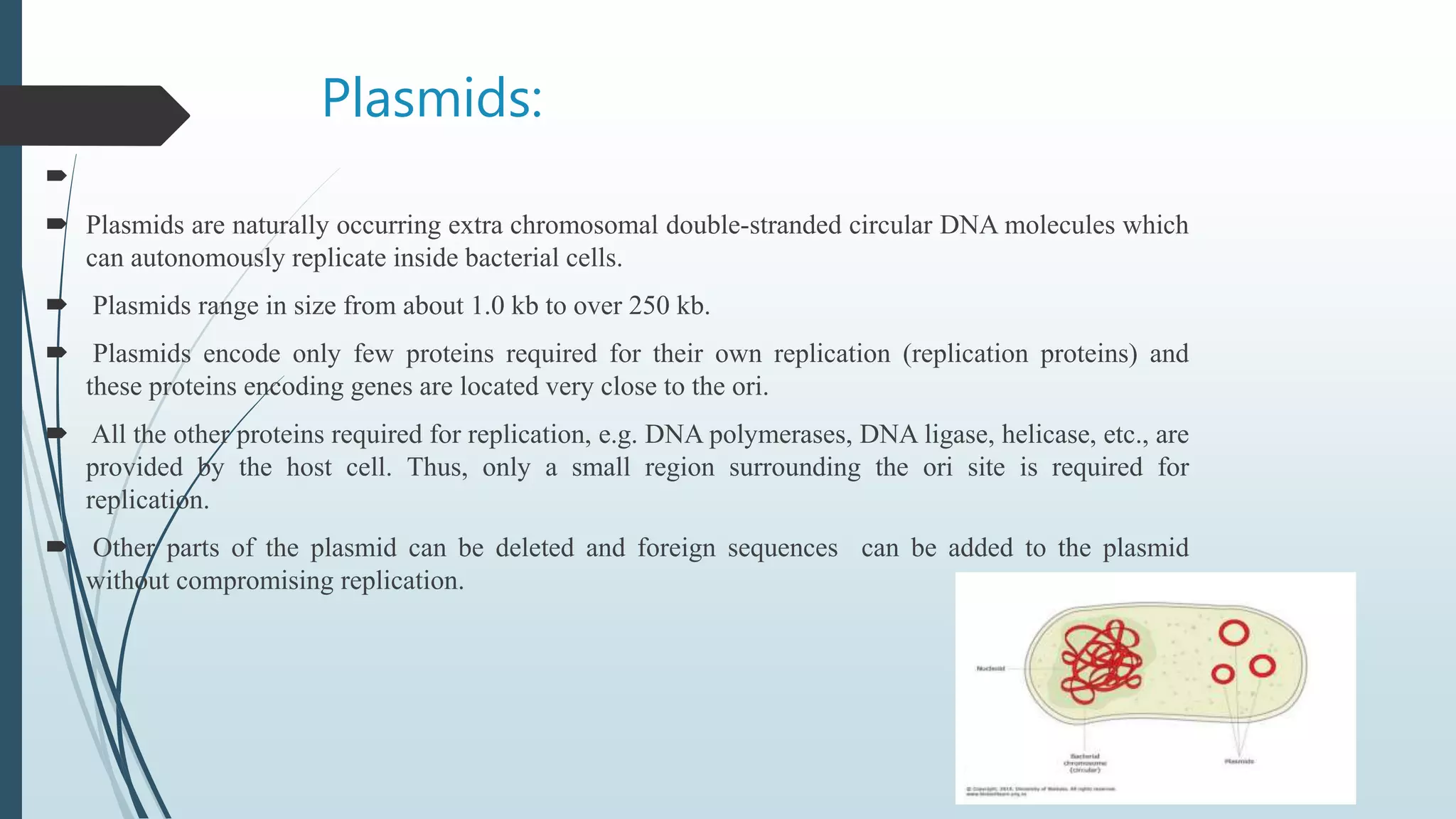
 Plasmids are naturally occurring extra chromosomal double-stranded circular DNA molecules which
can autonomously replicate inside bacterial cells.
 Plasmids range in size from about 1.0 kb to over 250 kb.
 Plasmids encode only few proteins required for their own replication (replication proteins) and
these proteins encoding genes are located very close to the ori.
 All the other proteins required for replication, e.g. DNA polymerases, DNA ligase, helicase, etc., are
provided by the host cell. Thus, only a small region surrounding the ori site is required for
replication.
 Other parts of the plasmid can be deleted and foreign sequences can be added to the plasmid
without compromising replication.
 The host range of a plasmid is determined by its ori region. Plasmids whose ori region is derived from plasmid Col E1 have a
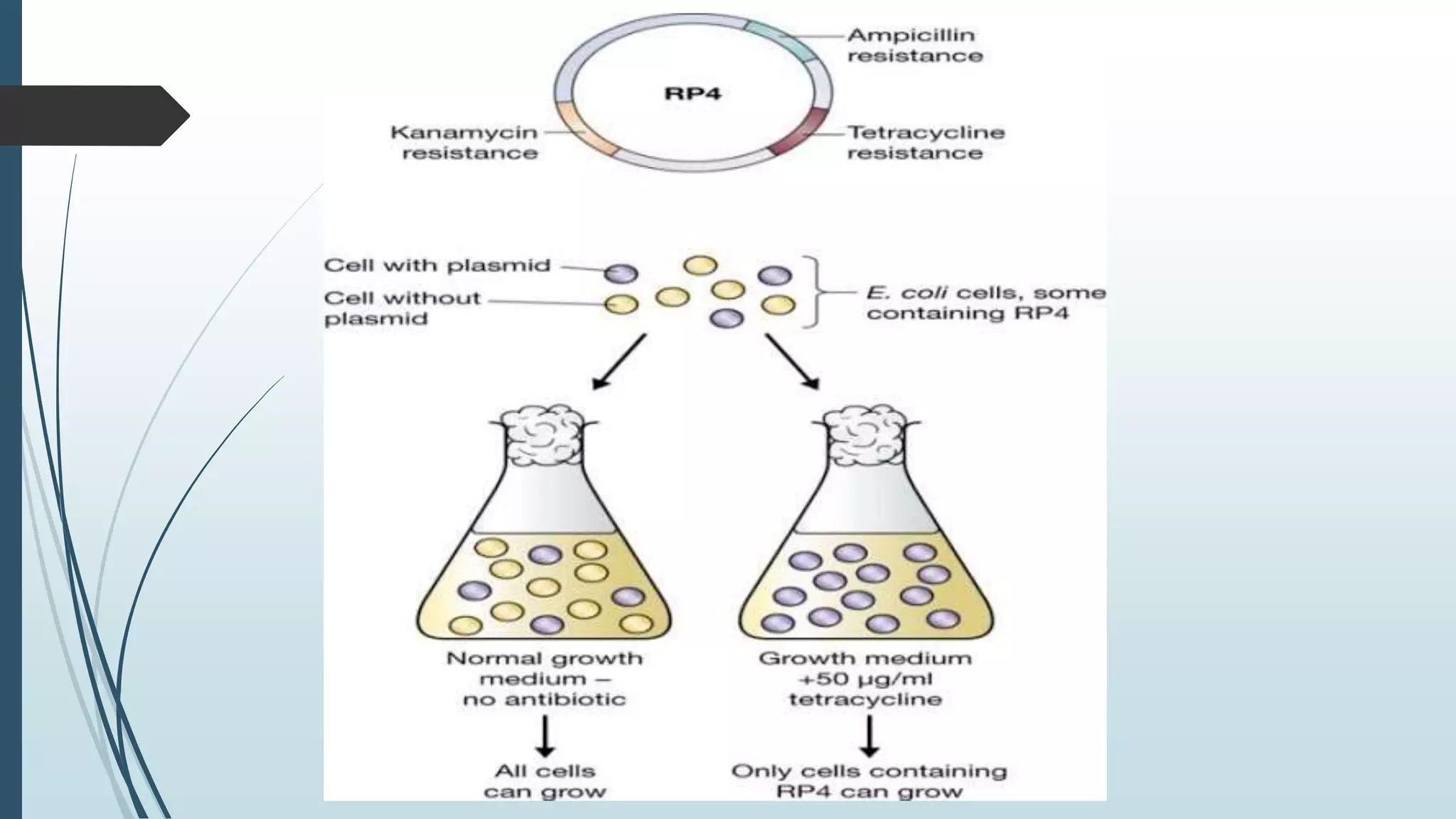
restricted host range. They only replicate in enteric bacteria, such as E. coli, Salmonella, etc. Plasmids of the RP4 type will replicate
in most gram negative bacteria, to which they are readily transmitted by conjugation. Plasmids like RSF1010 are not conjugative but
can be transformed into a wide range of gram -ve bacteria. Plasmids isolated from Staphylococcus aureus have a broad host range
and can replicate in many other gram-positive bacteria.
Some of the phenotypes which the naturally occurring plasmids confer on their host cells:
 Antibiotic resistance
 Antibiotic production
 Degradation of aromatic compounds
 Hemolysis production
 Sugar fermentation
 Enterotoxin production
 Heavy metal resistance
 Bacteriocin production
 Induction of plant tumors
 Hydrogen sulphide production
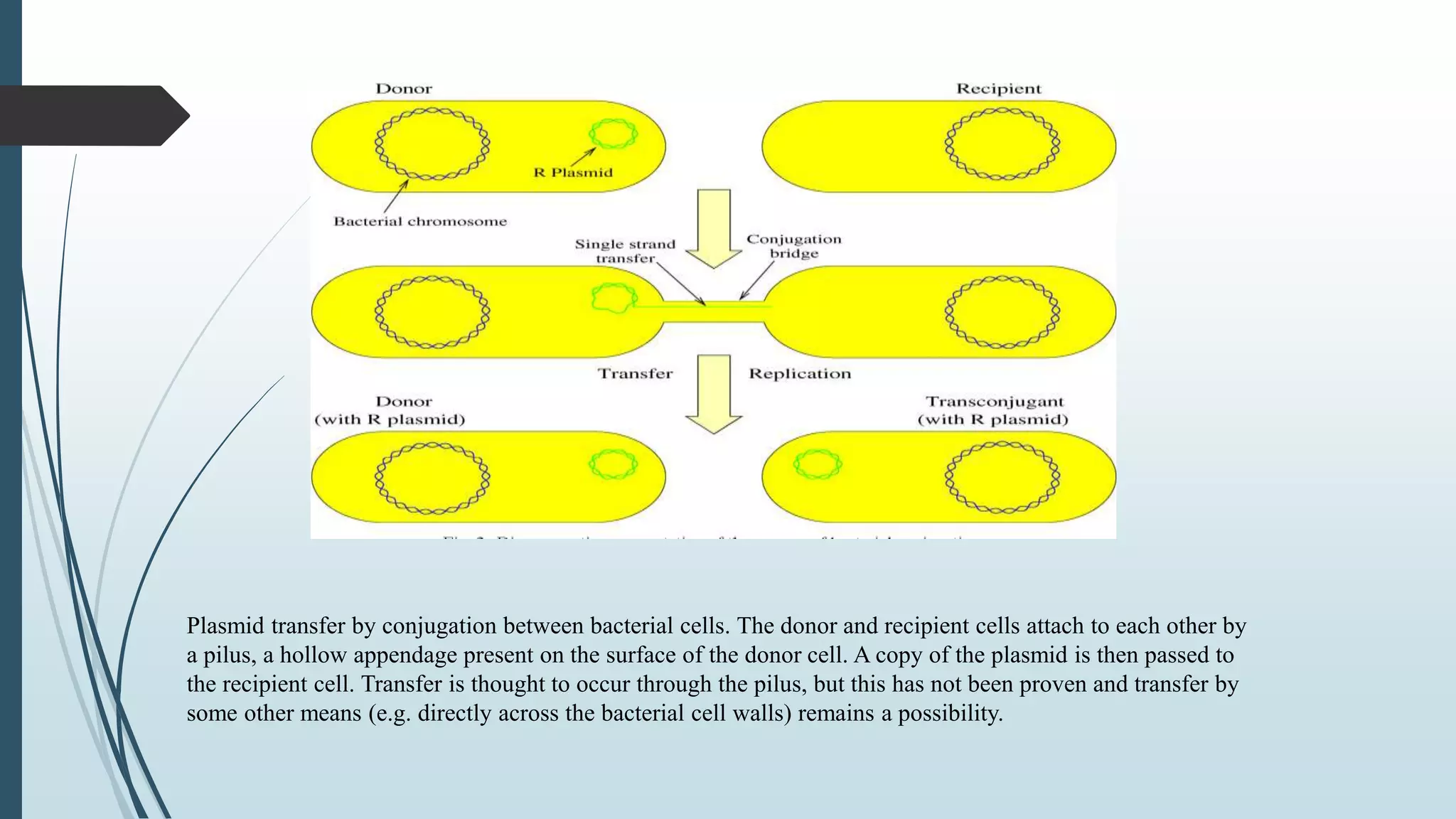
Plasmid transfer by conjugation between bacterial cells. The donor and recipient cells attach to each other by
a pilus, a hollow appendage present on the surface of the donor cell. A copy of the plasmid is then passed to
the recipient cell. Transfer is thought to occur through the pilus, but this has not been proven and transfer by
some other means (e.g. directly across the bacterial cell walls) remains a possibility.
 Most plasmids exist as double-stranded circular DNA molecules. However, the inter-conversion of
super coiled, relaxed covalently closed circular DNA and open circular DNA is possible.
 Not all plasmids exist as circular molecules. Linear plasmids have been found in a variety of bacteria,
e.g.Streptomyces sp. and Borrelia burgdorferi.
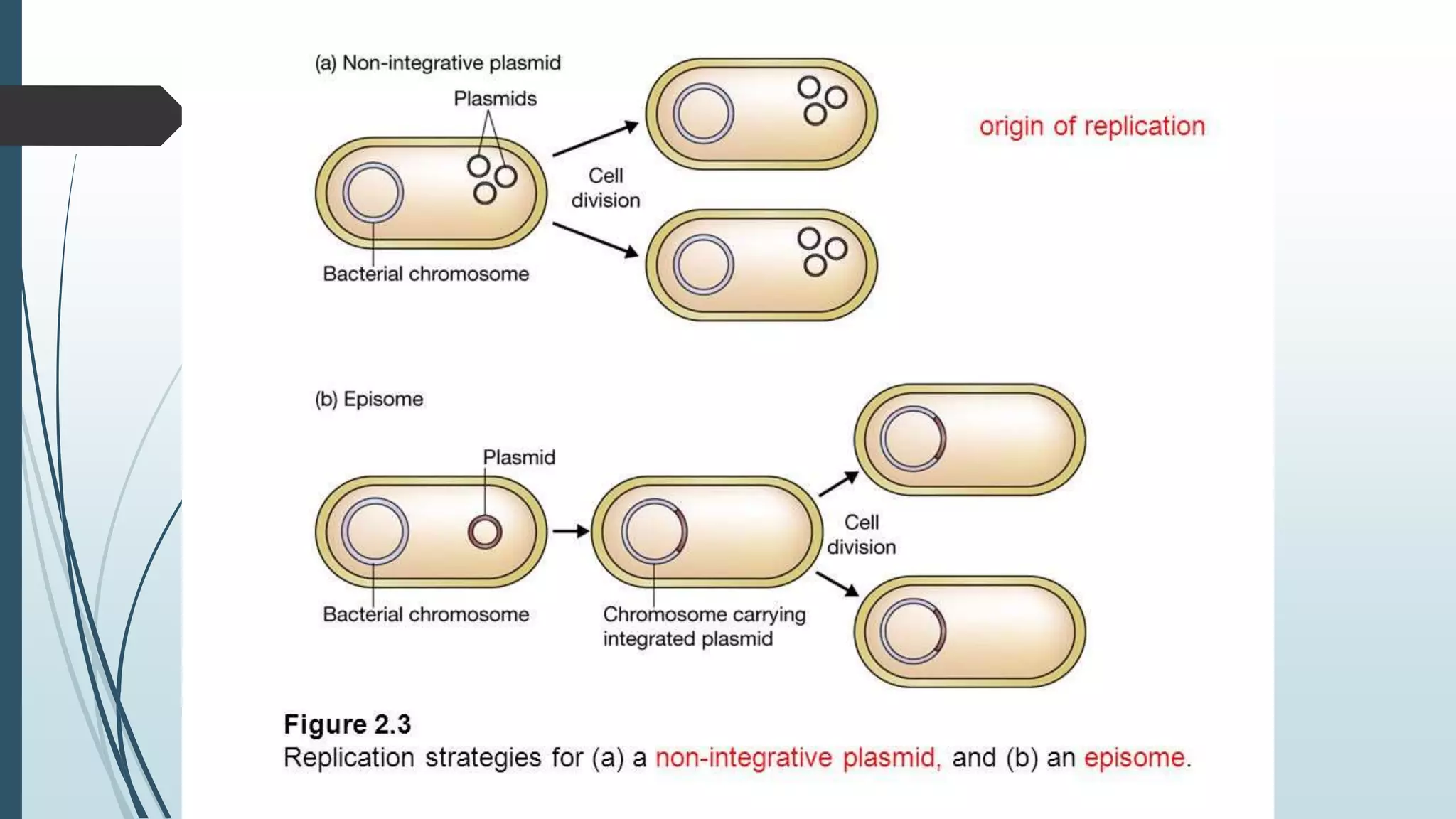
 However, few types of plasmids are also able to replicate by integrating into bacterial chromosomal
DNA;these are known as integrative plasmids or episomes. They are found mainly in prokaryotes but
some eukaryotes are also found to harbour them. In prokaryotes they are found in Escherichia coli,
Pseudomonas species, Agrobacterium species etc. In eukaryotes they are mainly found in
Saccharomyces cerevisiae.
Plasmid classification
 The plasmids are divided into 6 major classes as described below depending on the phenotype:
i) Resistance or R plasmids carry genes which give resistance to the bacteria from one or more chemical agents,
such as antibacterial agents. R plasmids are very important in clinical microbiology as they can have profound
consequences in the treatment of bacterial infections.
Eg: RP4 plasmid, which is commonly found in Pseudomonas and in many other bacteria.
ii) Fertility or F plasmids are conjugative plasmid found in F+ bacterium with higher frequency of conjugation.
F plasmid carries transfer gene (tra) and has the ability to form Conjugation Bridge (F pilus) with F- bacterium.
Eg: F plasmid of E. coli.
iii) Col plasmids have genes that code for colicins, proteins that kill other bacteria. Eg: ColE1 of E. coli.
iv) Degradative plasmids allow the host bacterium to metabolize unusual molecules such as toluene and
salicylic acid. Eg TOL of Pseudomonas putida
1. v) Virulence plasmids confer pathogenicity on the host bacterium. Eg: Ti plasmids of Agrobacterium
tumefaciens, which induce crown gall disease on dicotyledonous plants.
2. vi) Cryptic Plasmids do not have any apparent effect on the phenotype of the cell harboring them. They just
code for enzymes required for their replication and maintenance in the host cell.
3. Based on the origin or source of plasmids, they have been divided into two major classes: such as natural
and artificial.
4. i) Natural plasmids: They occur naturally in prokaryotes or eukaryotes. Example: ColE1.
5. ii) Artificial plasmids: They are constructed in-vitro by re-combining selected segments of two or more other
6. plasmids (natural or artificial). Example: pBR322.
Characteristics of ideal plasmid vectors
1. Size: plasmid must be small in size. The small is helpful for easy uptake of cDNA by host cells and for the isolation of plasmid
without damage. Ideal vector should be less than or equal to 10kb. The small size is
essential for easy introduction in cell by transformation, transduction and electroporation.
2. Copy number: the plasmid must be present in multiple copies.
3. Genetic markers: plasmid must have one or few genetic markers. These markers help us for the selection
of organism that has recombinant DNA
4. Origin of replication: the plasmid must have its own orogin of replication and regulatory genes for the
self-replication.
5. Unique restriction sites: the plasmid must have unique restriction sites common restriction enzymes in
use.
6. Multiple cloning sites: This property permits the insertion of gene of interest and plasmid re-
circularization.
7. Insertional inactivation: the plasmid must have unique sites for restriction enzymes in marker genes. This
will help us for the selection of recombination by insertional inactivation method.
8. Pathogenicity: the plasmid should not have any pathogenic property.
9. Should not be transferred by conjugation: This property of vector molecule prevents recombinant DNA to
escape to natural population of bacteria.
10. Selectable make gene: Vector molecules should have some detectable traits. These traits enable the
transformed cells to be identified among the non-transformed ones. eg. antibiotic resistance gene.
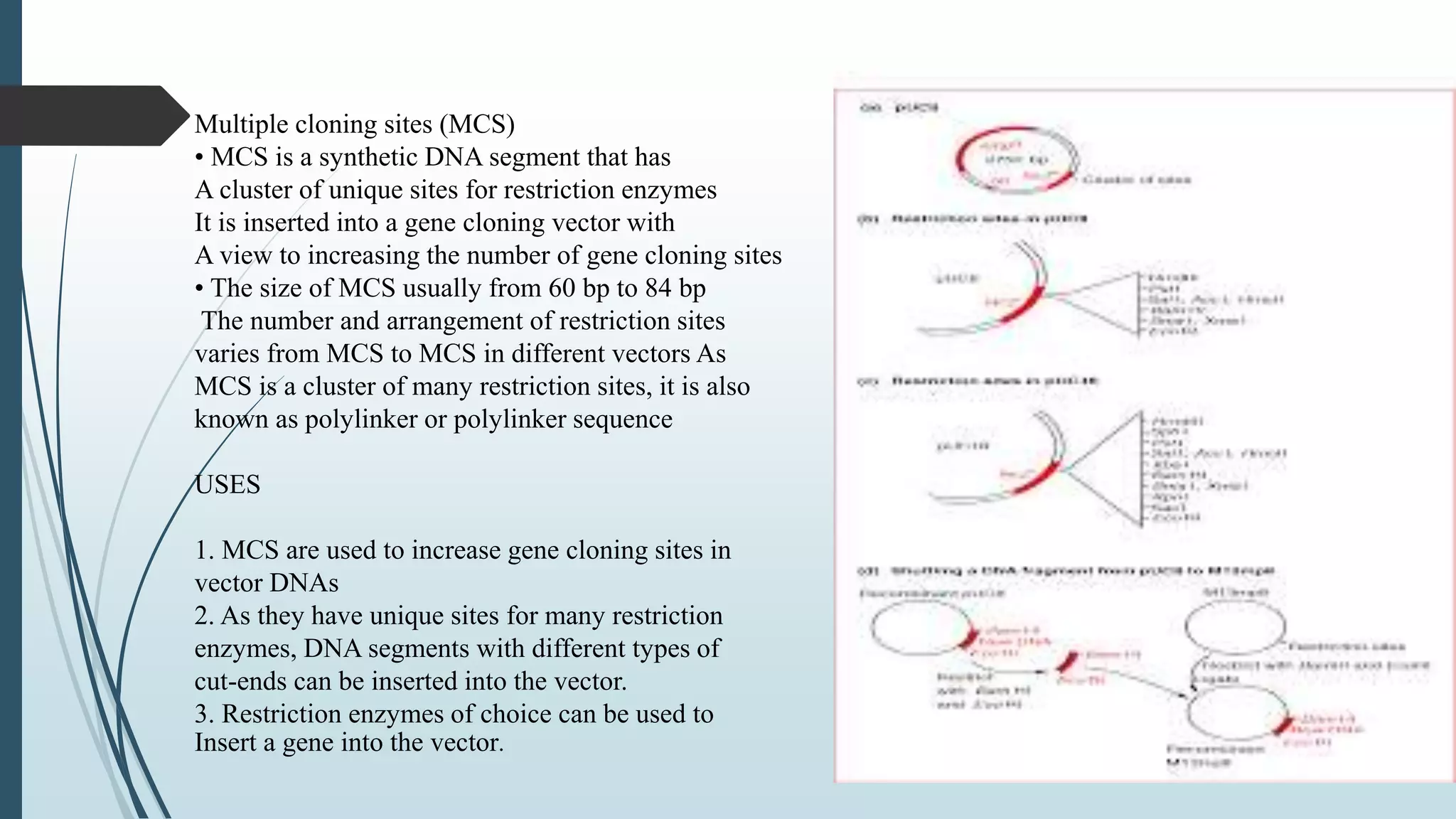
Multiple cloning sites (MCS)
• MCS is a synthetic DNA segment that has
A cluster of unique sites for restriction enzymes
It is inserted into a gene cloning vector with
A view to increasing the number of gene cloning sites
• The size of MCS usually from 60 bp to 84 bp
The number and arrangement of restriction sites
varies from MCS to MCS in different vectors As
MCS is a cluster of many restriction sites, it is also
known as polylinker or polylinker sequence
USES
1. MCS are used to increase gene cloning sites in
vector DNAs
2. As they have unique sites for many restriction
enzymes, DNA segments with different types of
cut-ends can be inserted into the vector.
3. Restriction enzymes of choice can be used to
Insert a gene into the vector.
Properties of good host
A good host has the following features:
1. Be easy to transform
2. Support the replication of recombinant DNA
3. Be free from elements that interfere with replication of recombinant DNA
4. Lack active restriction enzymes, e.g., E.coli K12 substrain HB 101.
5. Should not have methylases, since, these enzymes would methylate the replicated
recombinant DNA which, as a result, would become resistant to useful restriction enzymes.
6. Be deficient in normal recombinant function, so, that, the DNA insert is not altered by
recombination events.
 ARTIFICIAL PLASMIDS:
•
Naturally occurring plasmids has several limitations; for example, some are stringent and not relaxed (pSC101),
some has poor marker genes (ColE1), and some are too large (RSF2124). To overcome the limitations of natural
vectors, artificial plasmid are designed by combining different elements from diverse sources.
 Artificial plasmids vectors are classified into two broad types based on their use:
1. Cloning vector
2. Expression vector
 Apart from the following, there is another class of vectors known as shuttle vector. Shuttle vectors can be
propagated in two or more different host species (both in prokaryotes and eukaryotes). Hence, inserted DNA
can be manipulated and replicated in two different cellular systems.
 Cloning vectors are designed for efficient transfer of foreign DNA into the host. Expression vectors have
efficient machinery for cloning and expression of foreign gene in the host system.
 Selection of a vector depends upon various criteria decided by the experimental goal.
Cloning Vector:
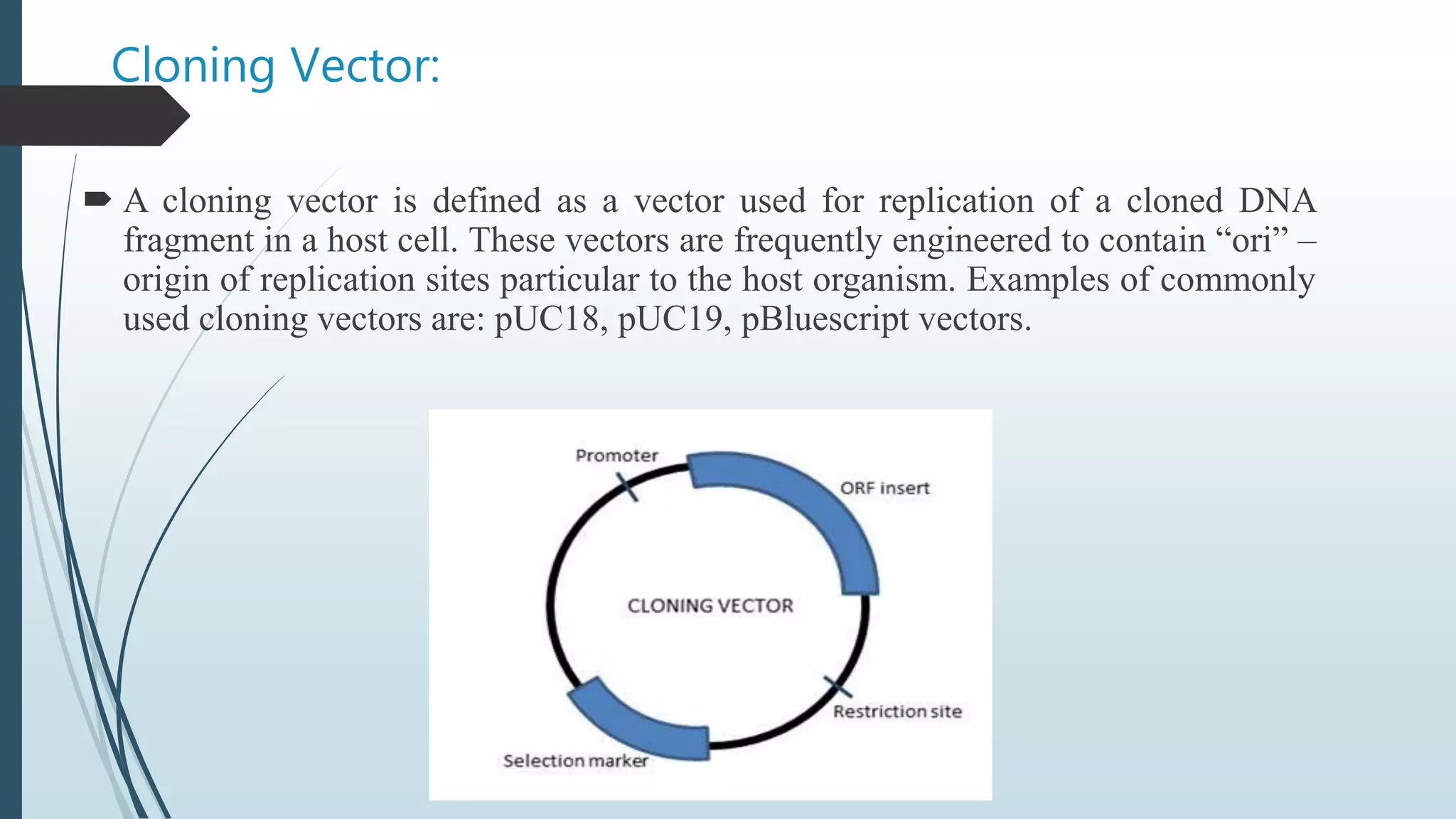
 A cloning vector is defined as a vector used for replication of a cloned DNA
fragment in a host cell. These vectors are frequently engineered to contain “ori” –
origin of replication sites particular to the host organism. Examples of commonly
used cloning vectors are: pUC18, pUC19, pBluescript vectors.
Types of Cloning Vectors:
 Cloning vectors extensively used in molecular cloning experiments can be considered
under following types: plasmid, phage vector and cosmid.
 Different vectors have different insert size and also vary in mode of replication inside
the host.
 Mammalian genes are usually too large (~100 kb), and thus suffer from restrictions in
complete inclusion, with the conventional cloning vectors, having limited insert size.
 Vectors engineered more recently, known as artificial chromosomes, have overcome
this problem by mimicking the properties of host cell chromosomes. They have much
larger insert size than other vectors.
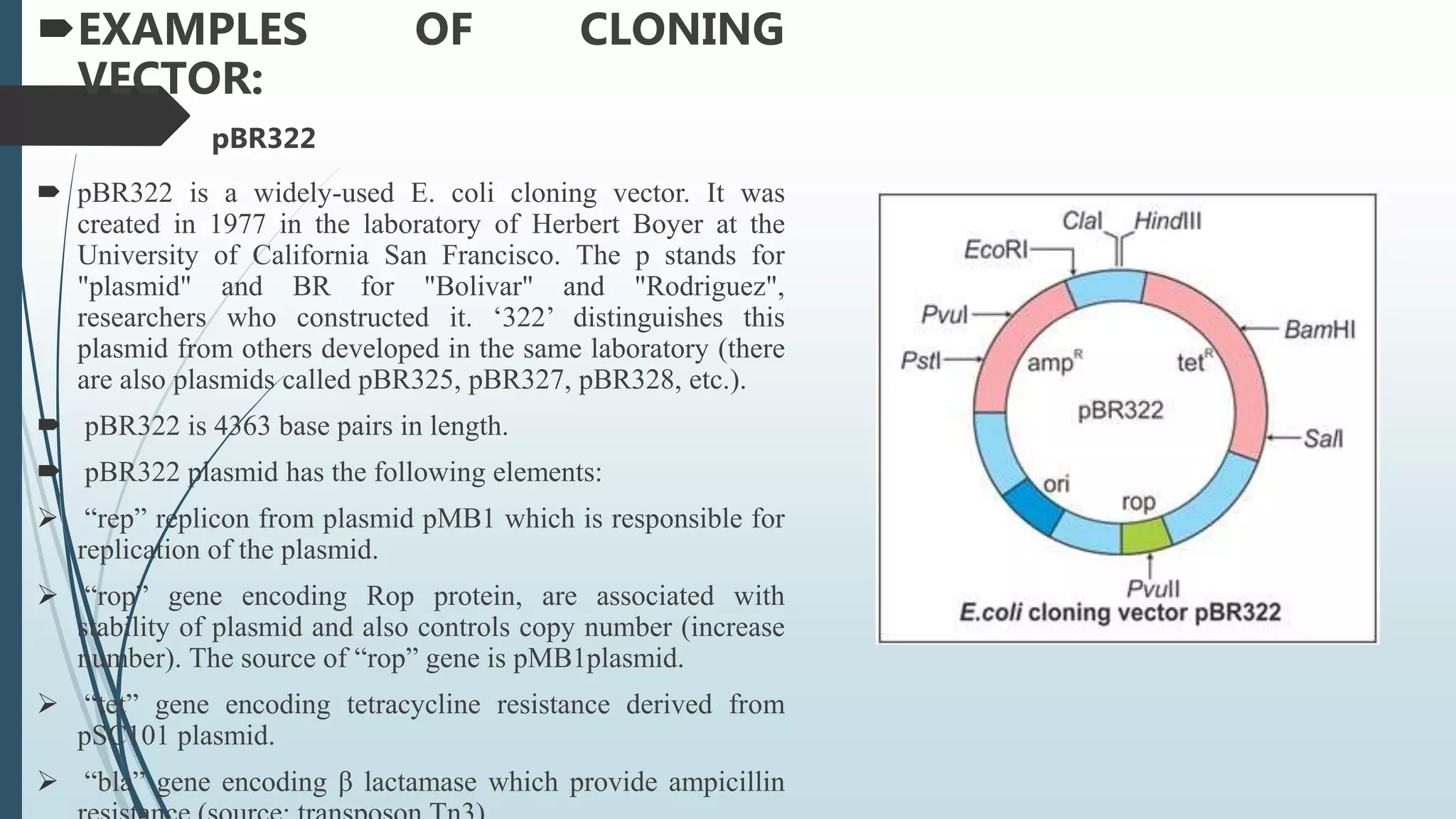
EXAMPLES OF CLONING
VECTOR:
pBR322
 pBR322 is a widely-used E. coli cloning vector. It was
created in 1977 in the laboratory of Herbert Boyer at the
University of California San Francisco. The p stands for
"plasmid" and BR for "Bolivar" and "Rodriguez",
researchers who constructed it. ‘322’ distinguishes this
plasmid from others developed in the same laboratory (there
are also plasmids called pBR325, pBR327, pBR328, etc.).
 pBR322 is 4363 base pairs in length.
 pBR322 plasmid has the following elements:
 “rep” replicon from plasmid pMB1 which is responsible for
replication of the plasmid.
 “rop” gene encoding Rop protein, are associated with
stability of plasmid and also controls copy number (increase
number). The source of “rop” gene is pMB1plasmid.
 “tet” gene encoding tetracycline resistance derived from
pSC101 plasmid.
 “bla” gene encoding β lactamase which provide ampicillin
Useful features of pBR322:
1) The first useful feature of pBR322 is its size. pBR322 is 4363 bp, which means that not only can the vector itself be purified with ease,
but so too can any recombinant DNA molecules constructed with it. Even with 6 kb of additional DNA, a recombinant pBR322 molecule
is still of a manageable size.
2) The second feature of pBR322 is that, it carries two sets of antibiotic resistance genes. Either ampicillin or tetracycline resistance can
be used as a selectable marker for cells containing the plasmid, and each marker gene contains unique restriction sites that can be used in
cloning experiments.
3) A third advantage of pBR322 is that it has a reasonably high copy number. Generally, there are about 15 molecules present in a
transformed E. coli cell, but this number can be increased up to between 1000 and 3000 by plasmid amplification in the presence of a
protein synthesis inhibitor such as chloramphenicol. An E. coli culture therefore provides a good yield of recombinant pBR322
molecules.
5) It has 528 restriction sites for 66 restriction enzymes. Among them 20 restriction
enzymes cut it at unique restriction sites. Tetracycline has 6 unique sites for 6
restriction enzymes. Ampicillin gene has 3 unique restriction site.
6) The sequences other than Tet and Amp genes, have unique sites for 1 restriction
enzymes. There is no restriction inactivation when gene is inserted into any one of
these sites.
pUC plasmids:
 pUC plasmids are small, high copy number plasmids of size 2686bp.
 This series of cloning vectors were developed by Messing and co-workers in the University of California. Thep in its
name stands for plasmid and UC represents the University of California.
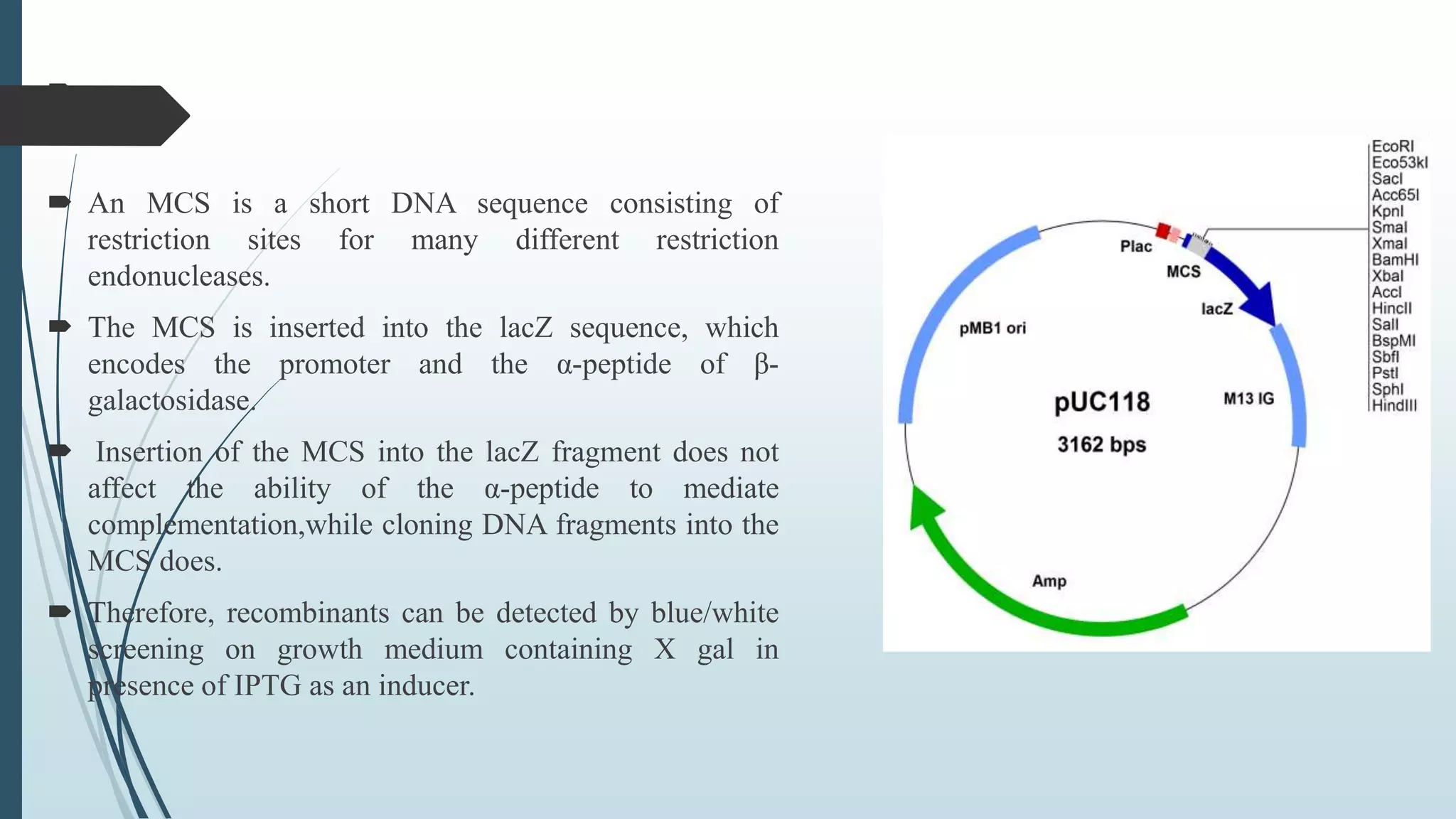
 pUC vectors contain a lacZ sequence and multiple cloning site (MCS) within lacZ. This helps in use of broad spectrum
of restriction endonucleases and permits rapid visual detection of an insert.
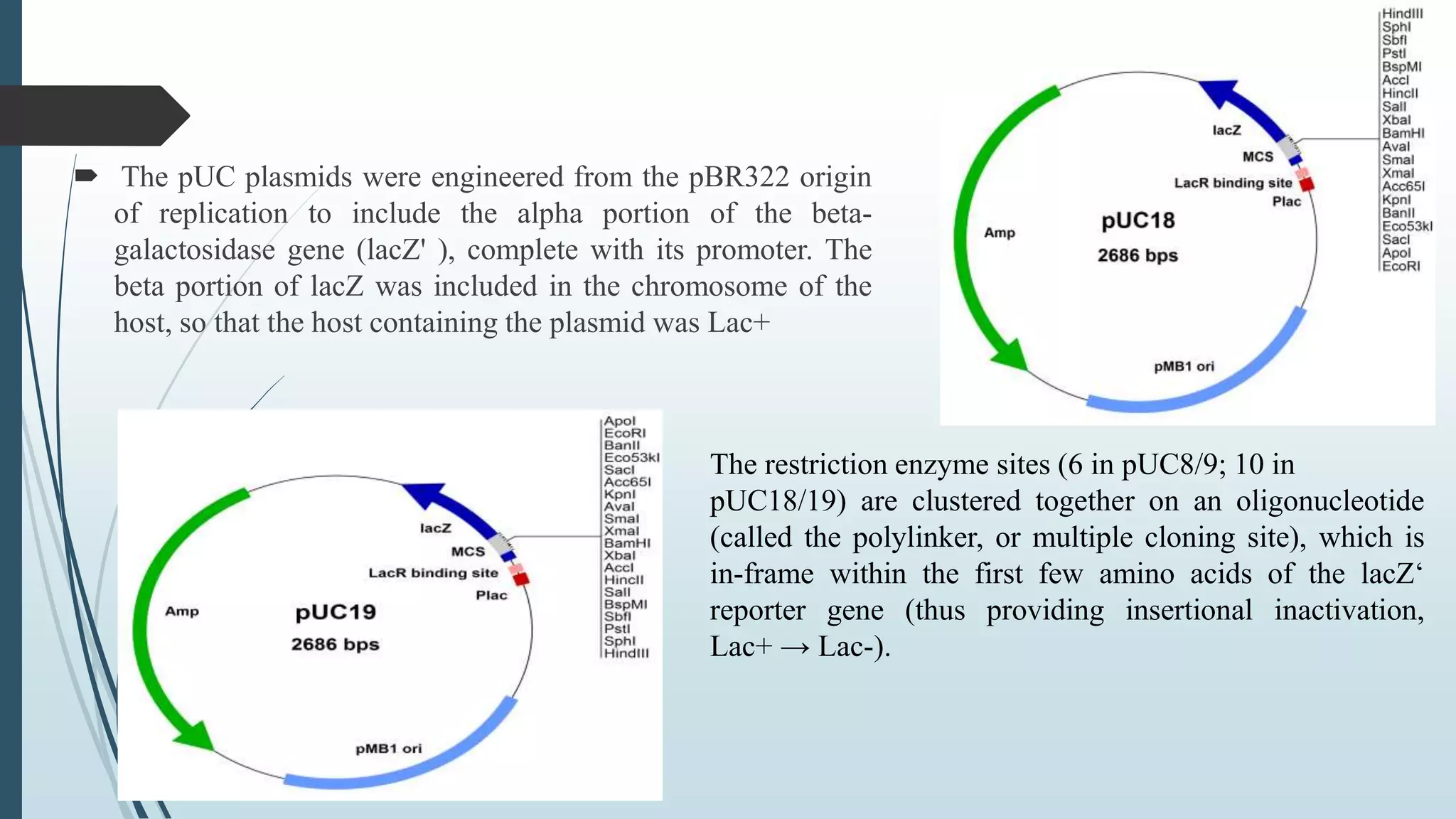
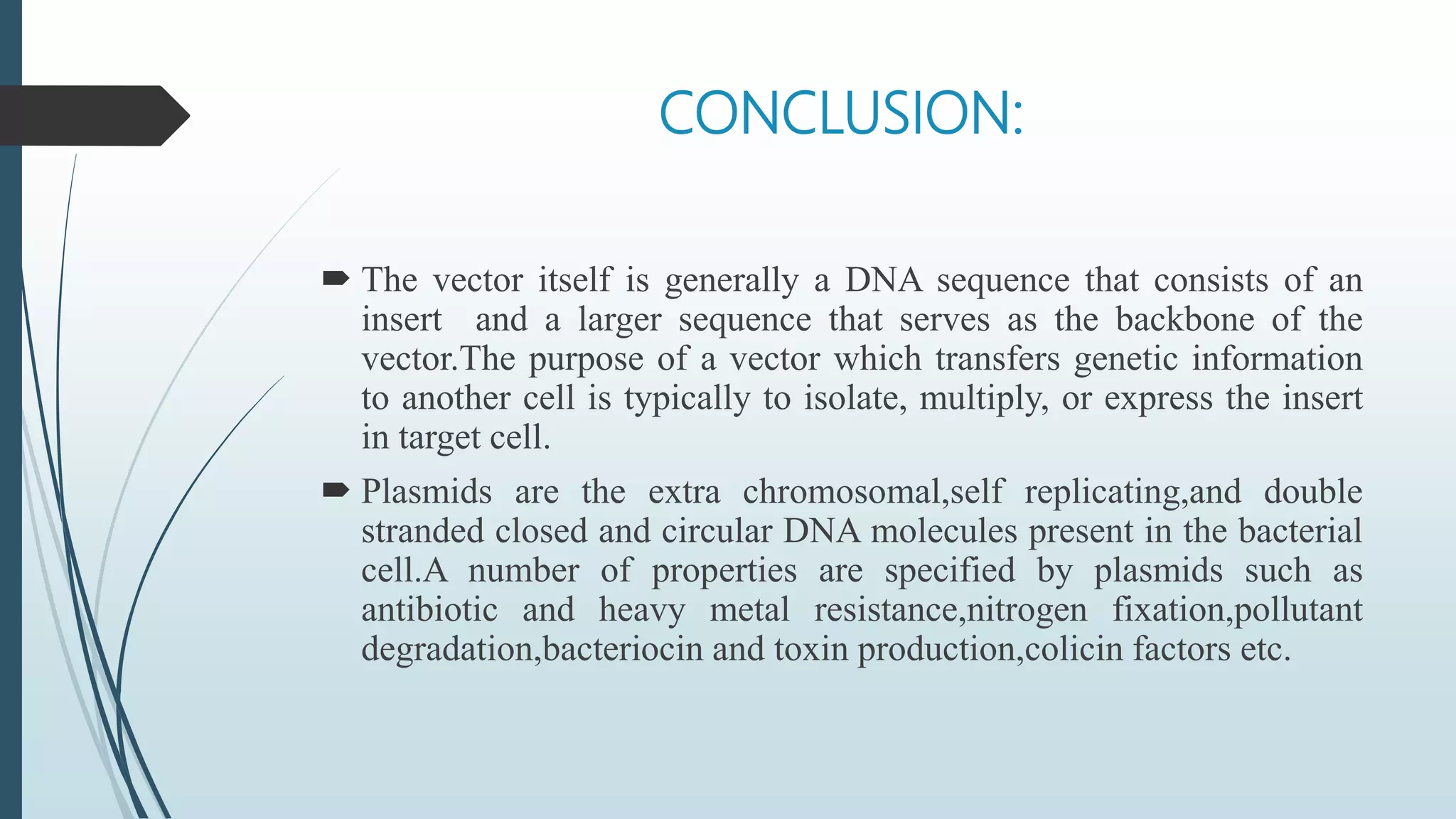
 pUC18 and pUC19 vectors are identical apart from the fact that the MCS is arranged in opposite orientation.
 pUC vectors consists of following elements:
 pMB1 “rep” replicon region derived from plasmid pBR322 with single point mutation (to increase copy number).
 “bla” gene encoding β lactamase which provide ampicillin resistance which is derived from pBR322. This site is
different from pBR322 by two point mutations.
 E.coli lac operon system.
 “rop” gene is removed from this vector which leads to an increase in copy number.

 An MCS is a short DNA sequence consisting of
restriction sites for many different restriction
endonucleases.
 The MCS is inserted into the lacZ sequence, which
encodes the promoter and the α-peptide of β-
galactosidase.
 Insertion of the MCS into the lacZ fragment does not
affect the ability of the α-peptide to mediate
complementation,while cloning DNA fragments into the
MCS does.
 Therefore, recombinants can be detected by blue/white
screening on growth medium containing X gal in
presence of IPTG as an inducer.
 The pUC plasmids were engineered from the pBR322 origin
of replication to include the alpha portion of the beta-
galactosidase gene (lacZ' ), complete with its promoter. The
beta portion of lacZ was included in the chromosome of the
host, so that the host containing the plasmid was Lac+
The restriction enzyme sites (6 in pUC8/9; 10 in
pUC18/19) are clustered together on an oligonucleotide
(called the polylinker, or multiple cloning site), which is
in-frame within the first few amino acids of the lacZ‘
reporter gene (thus providing insertional inactivation,
Lac+ → Lac-).
CONCLUSION:
 The vector itself is generally a DNA sequence that consists of an
insert and a larger sequence that serves as the backbone of the
vector.The purpose of a vector which transfers genetic information
to another cell is typically to isolate, multiply, or express the insert
in target cell.
 Plasmids are the extra chromosomal,self replicating,and double
stranded closed and circular DNA molecules present in the bacterial
cell.A number of properties are specified by plasmids such as
antibiotic and heavy metal resistance,nitrogen fixation,pollutant
degradation,bacteriocin and toxin production,colicin factors etc.
REFERENCES:
 Davies J.A. and Reznikoff, Butterworth-Heinemnn (1992) Milestones in
Biotechnology , classic papers on genetic engineering.
 Glick and Pasternak – Molecular biotechnology, Principles and application
of recombinant DNA.
 Kingsman , S.M and A.J. Kingsman (1998) Genetic Engineering : An
introduction to Gene analysis and exploitation in Eukaryotes, Blackwell
Scientific publications, Oxford.
PLASMIDS AND VECTORS

PLASMIDS AND VECTORS

  • 1.
    PLASMID VECTORS(pBR322 andpUC) VIDYASHRI S.HATTIGOUDAR II Year M. Sc., 3rd Semester Centre for Applied Genetics Department of Zoology Bangalore University GUIDE Dr. SHALINI.M Centre for Applied Genetics Department of Zoology Bangalore University
  • 2.
    Introduction:  DNA moleculeused for carrying an exogenous DNA into a host organism and facilitates stable integration and replicate autonomously in an appropriate host cell is termed as Vector.  Molecular cloning involves series of sequential steps which includes restriction digestion of DNA fragments both target DNA and vector, ligation of the target DNA with the vector and introduction into a host organism for multiplication. Then the fragments resulted after digestion with restriction enzymes areligated to other DNA molecules that serve as vectors. In general, vectors should have following characteristics:  Capable of replicating inside the host.  Have compatible restriction site for insertion of DNA molecule (insert).  Capable of autonomous replication inside the host (ori site).  Smaller in size and able to incorporate larger insert size.  Have a selectable marker for screening of recombinant organism.
  • 3.
    Plasmids:   Plasmids arenaturally occurring extra chromosomal double-stranded circular DNA molecules which can autonomously replicate inside bacterial cells.  Plasmids range in size from about 1.0 kb to over 250 kb.  Plasmids encode only few proteins required for their own replication (replication proteins) and these proteins encoding genes are located very close to the ori.  All the other proteins required for replication, e.g. DNA polymerases, DNA ligase, helicase, etc., are provided by the host cell. Thus, only a small region surrounding the ori site is required for replication.  Other parts of the plasmid can be deleted and foreign sequences can be added to the plasmid without compromising replication.
  • 4.
     The hostrange of a plasmid is determined by its ori region. Plasmids whose ori region is derived from plasmid Col E1 have a restricted host range. They only replicate in enteric bacteria, such as E. coli, Salmonella, etc. Plasmids of the RP4 type will replicate in most gram negative bacteria, to which they are readily transmitted by conjugation. Plasmids like RSF1010 are not conjugative but can be transformed into a wide range of gram -ve bacteria. Plasmids isolated from Staphylococcus aureus have a broad host range and can replicate in many other gram-positive bacteria. Some of the phenotypes which the naturally occurring plasmids confer on their host cells:  Antibiotic resistance  Antibiotic production  Degradation of aromatic compounds  Hemolysis production  Sugar fermentation  Enterotoxin production  Heavy metal resistance  Bacteriocin production  Induction of plant tumors  Hydrogen sulphide production
  • 5.
    Plasmid transfer byconjugation between bacterial cells. The donor and recipient cells attach to each other by a pilus, a hollow appendage present on the surface of the donor cell. A copy of the plasmid is then passed to the recipient cell. Transfer is thought to occur through the pilus, but this has not been proven and transfer by some other means (e.g. directly across the bacterial cell walls) remains a possibility.
  • 6.
     Most plasmidsexist as double-stranded circular DNA molecules. However, the inter-conversion of super coiled, relaxed covalently closed circular DNA and open circular DNA is possible.  Not all plasmids exist as circular molecules. Linear plasmids have been found in a variety of bacteria, e.g.Streptomyces sp. and Borrelia burgdorferi.  However, few types of plasmids are also able to replicate by integrating into bacterial chromosomal DNA;these are known as integrative plasmids or episomes. They are found mainly in prokaryotes but some eukaryotes are also found to harbour them. In prokaryotes they are found in Escherichia coli, Pseudomonas species, Agrobacterium species etc. In eukaryotes they are mainly found in Saccharomyces cerevisiae.
  • 8.
    Plasmid classification  Theplasmids are divided into 6 major classes as described below depending on the phenotype: i) Resistance or R plasmids carry genes which give resistance to the bacteria from one or more chemical agents, such as antibacterial agents. R plasmids are very important in clinical microbiology as they can have profound consequences in the treatment of bacterial infections. Eg: RP4 plasmid, which is commonly found in Pseudomonas and in many other bacteria. ii) Fertility or F plasmids are conjugative plasmid found in F+ bacterium with higher frequency of conjugation. F plasmid carries transfer gene (tra) and has the ability to form Conjugation Bridge (F pilus) with F- bacterium. Eg: F plasmid of E. coli. iii) Col plasmids have genes that code for colicins, proteins that kill other bacteria. Eg: ColE1 of E. coli. iv) Degradative plasmids allow the host bacterium to metabolize unusual molecules such as toluene and salicylic acid. Eg TOL of Pseudomonas putida
  • 9.
    1. v) Virulenceplasmids confer pathogenicity on the host bacterium. Eg: Ti plasmids of Agrobacterium tumefaciens, which induce crown gall disease on dicotyledonous plants. 2. vi) Cryptic Plasmids do not have any apparent effect on the phenotype of the cell harboring them. They just code for enzymes required for their replication and maintenance in the host cell. 3. Based on the origin or source of plasmids, they have been divided into two major classes: such as natural and artificial. 4. i) Natural plasmids: They occur naturally in prokaryotes or eukaryotes. Example: ColE1. 5. ii) Artificial plasmids: They are constructed in-vitro by re-combining selected segments of two or more other 6. plasmids (natural or artificial). Example: pBR322.
  • 11.
    Characteristics of idealplasmid vectors 1. Size: plasmid must be small in size. The small is helpful for easy uptake of cDNA by host cells and for the isolation of plasmid without damage. Ideal vector should be less than or equal to 10kb. The small size is essential for easy introduction in cell by transformation, transduction and electroporation. 2. Copy number: the plasmid must be present in multiple copies. 3. Genetic markers: plasmid must have one or few genetic markers. These markers help us for the selection of organism that has recombinant DNA 4. Origin of replication: the plasmid must have its own orogin of replication and regulatory genes for the self-replication. 5. Unique restriction sites: the plasmid must have unique restriction sites common restriction enzymes in use. 6. Multiple cloning sites: This property permits the insertion of gene of interest and plasmid re- circularization. 7. Insertional inactivation: the plasmid must have unique sites for restriction enzymes in marker genes. This will help us for the selection of recombination by insertional inactivation method. 8. Pathogenicity: the plasmid should not have any pathogenic property. 9. Should not be transferred by conjugation: This property of vector molecule prevents recombinant DNA to escape to natural population of bacteria. 10. Selectable make gene: Vector molecules should have some detectable traits. These traits enable the transformed cells to be identified among the non-transformed ones. eg. antibiotic resistance gene.
  • 12.
    Multiple cloning sites(MCS) • MCS is a synthetic DNA segment that has A cluster of unique sites for restriction enzymes It is inserted into a gene cloning vector with A view to increasing the number of gene cloning sites • The size of MCS usually from 60 bp to 84 bp The number and arrangement of restriction sites varies from MCS to MCS in different vectors As MCS is a cluster of many restriction sites, it is also known as polylinker or polylinker sequence USES 1. MCS are used to increase gene cloning sites in vector DNAs 2. As they have unique sites for many restriction enzymes, DNA segments with different types of cut-ends can be inserted into the vector. 3. Restriction enzymes of choice can be used to Insert a gene into the vector.
  • 13.
    Properties of goodhost A good host has the following features: 1. Be easy to transform 2. Support the replication of recombinant DNA 3. Be free from elements that interfere with replication of recombinant DNA 4. Lack active restriction enzymes, e.g., E.coli K12 substrain HB 101. 5. Should not have methylases, since, these enzymes would methylate the replicated recombinant DNA which, as a result, would become resistant to useful restriction enzymes. 6. Be deficient in normal recombinant function, so, that, the DNA insert is not altered by recombination events.
  • 14.
     ARTIFICIAL PLASMIDS: • Naturallyoccurring plasmids has several limitations; for example, some are stringent and not relaxed (pSC101), some has poor marker genes (ColE1), and some are too large (RSF2124). To overcome the limitations of natural vectors, artificial plasmid are designed by combining different elements from diverse sources.  Artificial plasmids vectors are classified into two broad types based on their use: 1. Cloning vector 2. Expression vector  Apart from the following, there is another class of vectors known as shuttle vector. Shuttle vectors can be propagated in two or more different host species (both in prokaryotes and eukaryotes). Hence, inserted DNA can be manipulated and replicated in two different cellular systems.  Cloning vectors are designed for efficient transfer of foreign DNA into the host. Expression vectors have efficient machinery for cloning and expression of foreign gene in the host system.  Selection of a vector depends upon various criteria decided by the experimental goal.
  • 15.
    Cloning Vector:  Acloning vector is defined as a vector used for replication of a cloned DNA fragment in a host cell. These vectors are frequently engineered to contain “ori” – origin of replication sites particular to the host organism. Examples of commonly used cloning vectors are: pUC18, pUC19, pBluescript vectors.
  • 16.
    Types of CloningVectors:  Cloning vectors extensively used in molecular cloning experiments can be considered under following types: plasmid, phage vector and cosmid.  Different vectors have different insert size and also vary in mode of replication inside the host.  Mammalian genes are usually too large (~100 kb), and thus suffer from restrictions in complete inclusion, with the conventional cloning vectors, having limited insert size.  Vectors engineered more recently, known as artificial chromosomes, have overcome this problem by mimicking the properties of host cell chromosomes. They have much larger insert size than other vectors.
  • 17.
    EXAMPLES OF CLONING VECTOR: pBR322 pBR322 is a widely-used E. coli cloning vector. It was created in 1977 in the laboratory of Herbert Boyer at the University of California San Francisco. The p stands for "plasmid" and BR for "Bolivar" and "Rodriguez", researchers who constructed it. ‘322’ distinguishes this plasmid from others developed in the same laboratory (there are also plasmids called pBR325, pBR327, pBR328, etc.).  pBR322 is 4363 base pairs in length.  pBR322 plasmid has the following elements:  “rep” replicon from plasmid pMB1 which is responsible for replication of the plasmid.  “rop” gene encoding Rop protein, are associated with stability of plasmid and also controls copy number (increase number). The source of “rop” gene is pMB1plasmid.  “tet” gene encoding tetracycline resistance derived from pSC101 plasmid.  “bla” gene encoding β lactamase which provide ampicillin
  • 18.
    Useful features ofpBR322: 1) The first useful feature of pBR322 is its size. pBR322 is 4363 bp, which means that not only can the vector itself be purified with ease, but so too can any recombinant DNA molecules constructed with it. Even with 6 kb of additional DNA, a recombinant pBR322 molecule is still of a manageable size. 2) The second feature of pBR322 is that, it carries two sets of antibiotic resistance genes. Either ampicillin or tetracycline resistance can be used as a selectable marker for cells containing the plasmid, and each marker gene contains unique restriction sites that can be used in cloning experiments. 3) A third advantage of pBR322 is that it has a reasonably high copy number. Generally, there are about 15 molecules present in a transformed E. coli cell, but this number can be increased up to between 1000 and 3000 by plasmid amplification in the presence of a protein synthesis inhibitor such as chloramphenicol. An E. coli culture therefore provides a good yield of recombinant pBR322 molecules.
  • 19.
    5) It has528 restriction sites for 66 restriction enzymes. Among them 20 restriction enzymes cut it at unique restriction sites. Tetracycline has 6 unique sites for 6 restriction enzymes. Ampicillin gene has 3 unique restriction site. 6) The sequences other than Tet and Amp genes, have unique sites for 1 restriction enzymes. There is no restriction inactivation when gene is inserted into any one of these sites.
  • 20.
    pUC plasmids:  pUCplasmids are small, high copy number plasmids of size 2686bp.  This series of cloning vectors were developed by Messing and co-workers in the University of California. Thep in its name stands for plasmid and UC represents the University of California.  pUC vectors contain a lacZ sequence and multiple cloning site (MCS) within lacZ. This helps in use of broad spectrum of restriction endonucleases and permits rapid visual detection of an insert.  pUC18 and pUC19 vectors are identical apart from the fact that the MCS is arranged in opposite orientation.  pUC vectors consists of following elements:  pMB1 “rep” replicon region derived from plasmid pBR322 with single point mutation (to increase copy number).  “bla” gene encoding β lactamase which provide ampicillin resistance which is derived from pBR322. This site is different from pBR322 by two point mutations.  E.coli lac operon system.  “rop” gene is removed from this vector which leads to an increase in copy number.
  • 21.
      An MCSis a short DNA sequence consisting of restriction sites for many different restriction endonucleases.  The MCS is inserted into the lacZ sequence, which encodes the promoter and the α-peptide of β- galactosidase.  Insertion of the MCS into the lacZ fragment does not affect the ability of the α-peptide to mediate complementation,while cloning DNA fragments into the MCS does.  Therefore, recombinants can be detected by blue/white screening on growth medium containing X gal in presence of IPTG as an inducer.
  • 22.
     The pUCplasmids were engineered from the pBR322 origin of replication to include the alpha portion of the beta- galactosidase gene (lacZ' ), complete with its promoter. The beta portion of lacZ was included in the chromosome of the host, so that the host containing the plasmid was Lac+ The restriction enzyme sites (6 in pUC8/9; 10 in pUC18/19) are clustered together on an oligonucleotide (called the polylinker, or multiple cloning site), which is in-frame within the first few amino acids of the lacZ‘ reporter gene (thus providing insertional inactivation, Lac+ → Lac-).
  • 23.
    CONCLUSION:  The vectoritself is generally a DNA sequence that consists of an insert and a larger sequence that serves as the backbone of the vector.The purpose of a vector which transfers genetic information to another cell is typically to isolate, multiply, or express the insert in target cell.  Plasmids are the extra chromosomal,self replicating,and double stranded closed and circular DNA molecules present in the bacterial cell.A number of properties are specified by plasmids such as antibiotic and heavy metal resistance,nitrogen fixation,pollutant degradation,bacteriocin and toxin production,colicin factors etc.
  • 24.
    REFERENCES:  Davies J.A.and Reznikoff, Butterworth-Heinemnn (1992) Milestones in Biotechnology , classic papers on genetic engineering.  Glick and Pasternak – Molecular biotechnology, Principles and application of recombinant DNA.  Kingsman , S.M and A.J. Kingsman (1998) Genetic Engineering : An introduction to Gene analysis and exploitation in Eukaryotes, Blackwell Scientific publications, Oxford.