DMARDS
Disease-modifying anti-rheumatic drugs
 decrease pain and inflammation, reduce or prevent joint
 damage, and preserve the structure and function of the joints
Previously RA – Pyramidal approach
Now it is reversed.
early use of DMARDs is recommended before radiologically
 damage develops.
Aim - aggressive approach is to limit inflammation and
 prevent joint damage and subsequent disability.
firm diagnosis of rheumatoid arthritis
predictors of poor outcome
Positive RA factor, high disability scores and early
 involvement of large joints
ACR-not to delay beyond 3 months
Rationale for DMARDs
NSAIDS – offer symptomatic relief.
No effect on cartilage or bone destruction.
Inflammation is maximal at an early stage.
If given early, DMARDs can stabilise joint function at a level
  which is near to normal, rather than preserving the joint in a
  state of disability
Traditional DMARDs
HCQ
Sulphasalazine
Methotrexate
Leflunomide
Azothioprine
Gold
Minocycline
Cyclosporin
Biologic response modifiers
Etanercept
Infliximab
Adalimumab
Rituximab
Abatcept
Choice
Empirical,
Based on a balance between toxicity,
 efficacy & prescriber's preference
METHOTREXATE
DMARD of choice.
MOA: Inhibition of [AICAR] aminoimidazolecarboxamide
 transformylase & thymidylate synthetase.
decrease the secretion of pro-inflammatory cytokines, such as
 TNF, while increasing the secretion of the inhibitory cytokine IL-
 10.
Decreases the rate of appearance of new erosions
Pharmacokinetics
Bioavailability -70%
Less active hydroxylated metabolite
Polyglutamated with in cells.
Serum T1/2 6-9 hrs
Excreted principally in urine.
Dosage
started at a dose of 7.5mg orally once weekly and this is
 increased slowly to a maximum of 20mg once weekly
fail to respond to oral therapy - intramuscular route
Indicated in RA, PA, JCA, polymyositis.
onset of action: about one month
Adverse Effects
Nausea and stomatitis
hepatic toxicity
pneumonitis
teratogenic to ova and sperm
Recommended- contraception is taken during therapy and
  that conception is avoided for at least six months after
  stopping methotrexate.
Interactions
co-prescription of NSAIDs has been shown to increase the
 toxicity
Conc increased by HCQ
GI & liver A/E, - reduced with leucovorin 24 hrs after each
 wkly dose or folic acid daily.
C/I in pregnancy
Monitoring

FBC: Baseline, then fortnightly for one month (or until dose
 stable) then monthly
RF:Baseline 
LFT:Baseline, then fortnightly for one month (or until dose
 stable) then monthly 
CXR:Baseline.
Hydroxychloroquine
Antimalarials
suppression of lysosomal enzymes and inhibition of IL-1
 release.
Suppression of T-cell lymphocyte response, leucocyte
 chemotaxis, trapping of free radicals.
Clinical response 6 to 12 weeks.
Pharmacokinetics
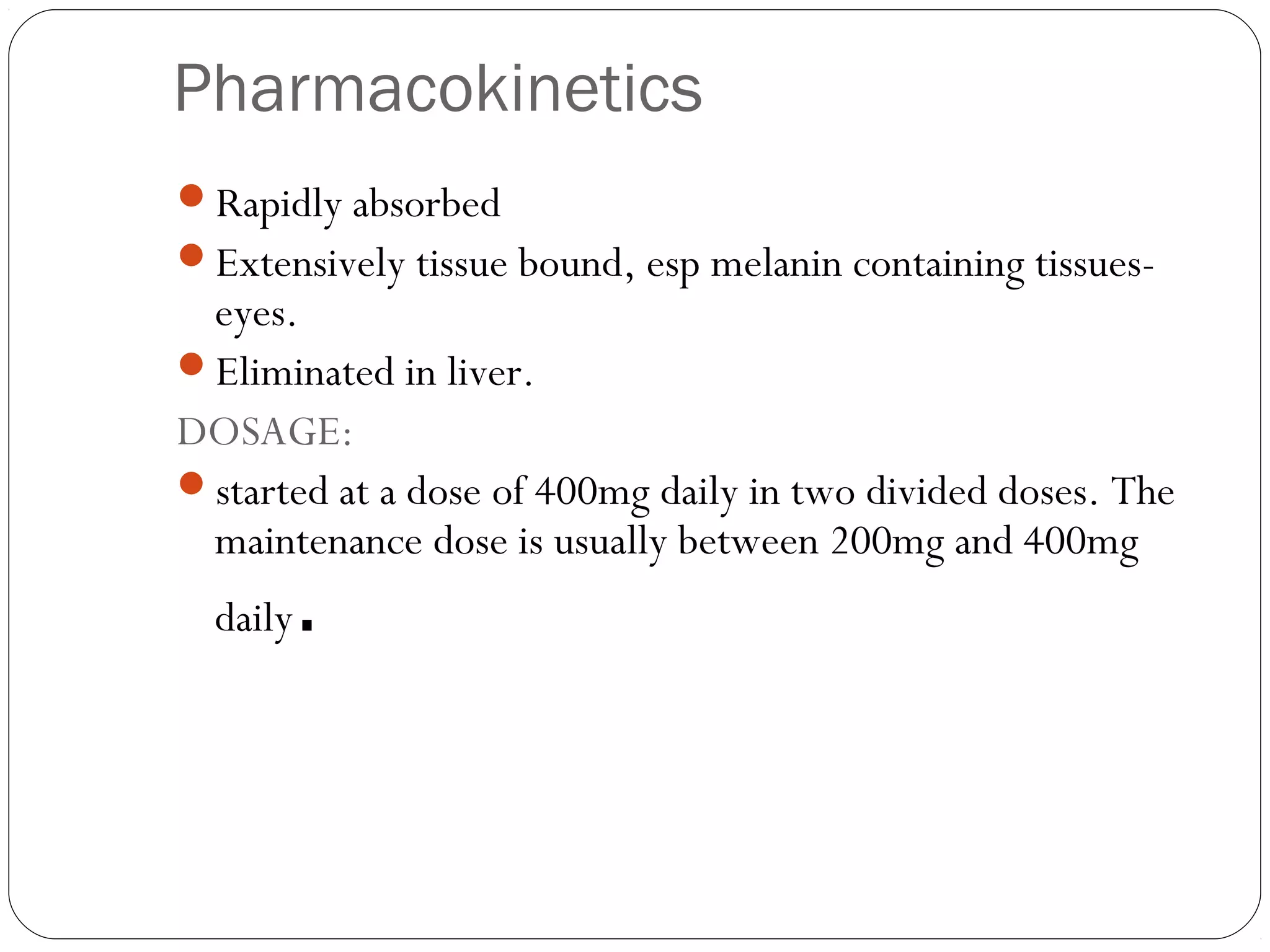
Rapidly absorbed
Extensively tissue bound, esp melanin containing tissues-
 eyes.
Eliminated in liver.
DOSAGE:
started at a dose of 400mg daily in two divided doses. The
 maintenance dose is usually between 200mg and 400mg
  daily   .
Indications
RA
Not very effective. [bone damage]
Restricted to patients with mild, non-erosive disease or to
 those in whom more powerful DMARD therapy is felt to be
 too risky
used in combination with other agents
Adverse Effects
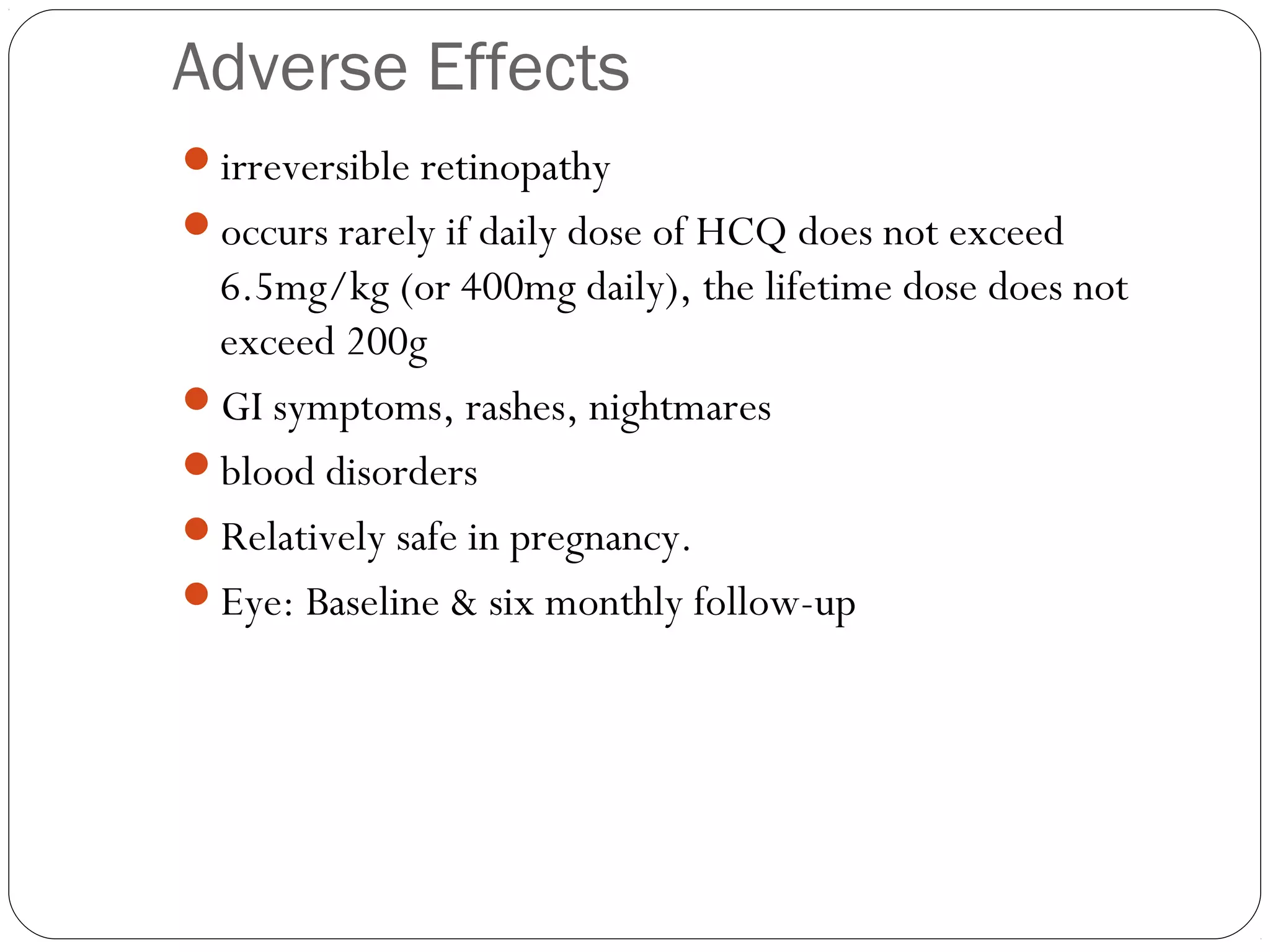
irreversible retinopathy
occurs rarely if daily dose of HCQ does not exceed
 6.5mg/kg (or 400mg daily), the lifetime dose does not
 exceed 200g
GI symptoms, rashes, nightmares
blood disorders
Relatively safe in pregnancy.
Eye: Baseline & six monthly follow-up
GOLD
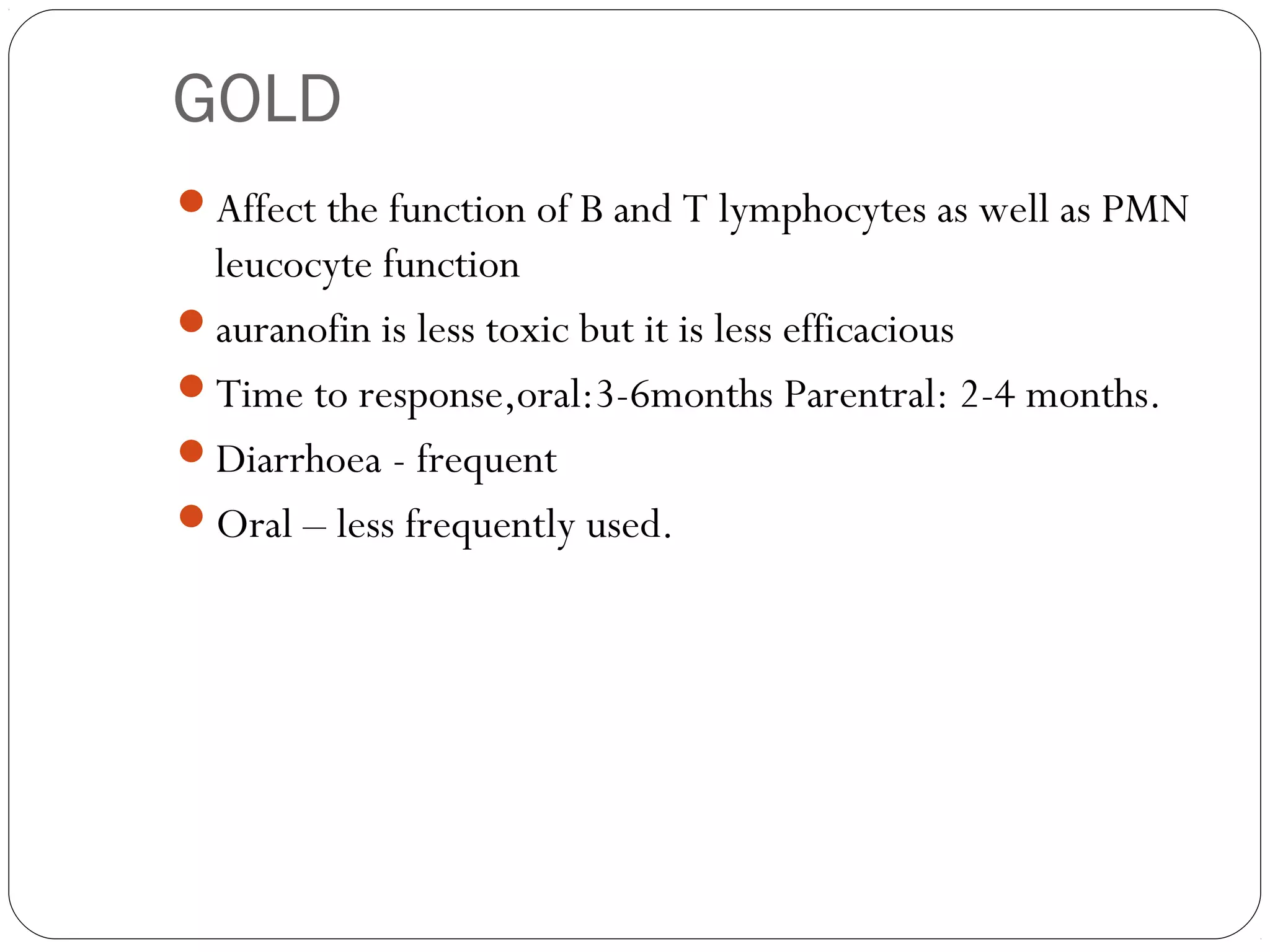
Affect the function of B and T lymphocytes as well as PMN
 leucocyte function
auranofin is less toxic but it is less efficacious
Time to response,oral:3-6months Parentral: 2-4 months.
Diarrhoea - frequent
Oral – less frequently used.
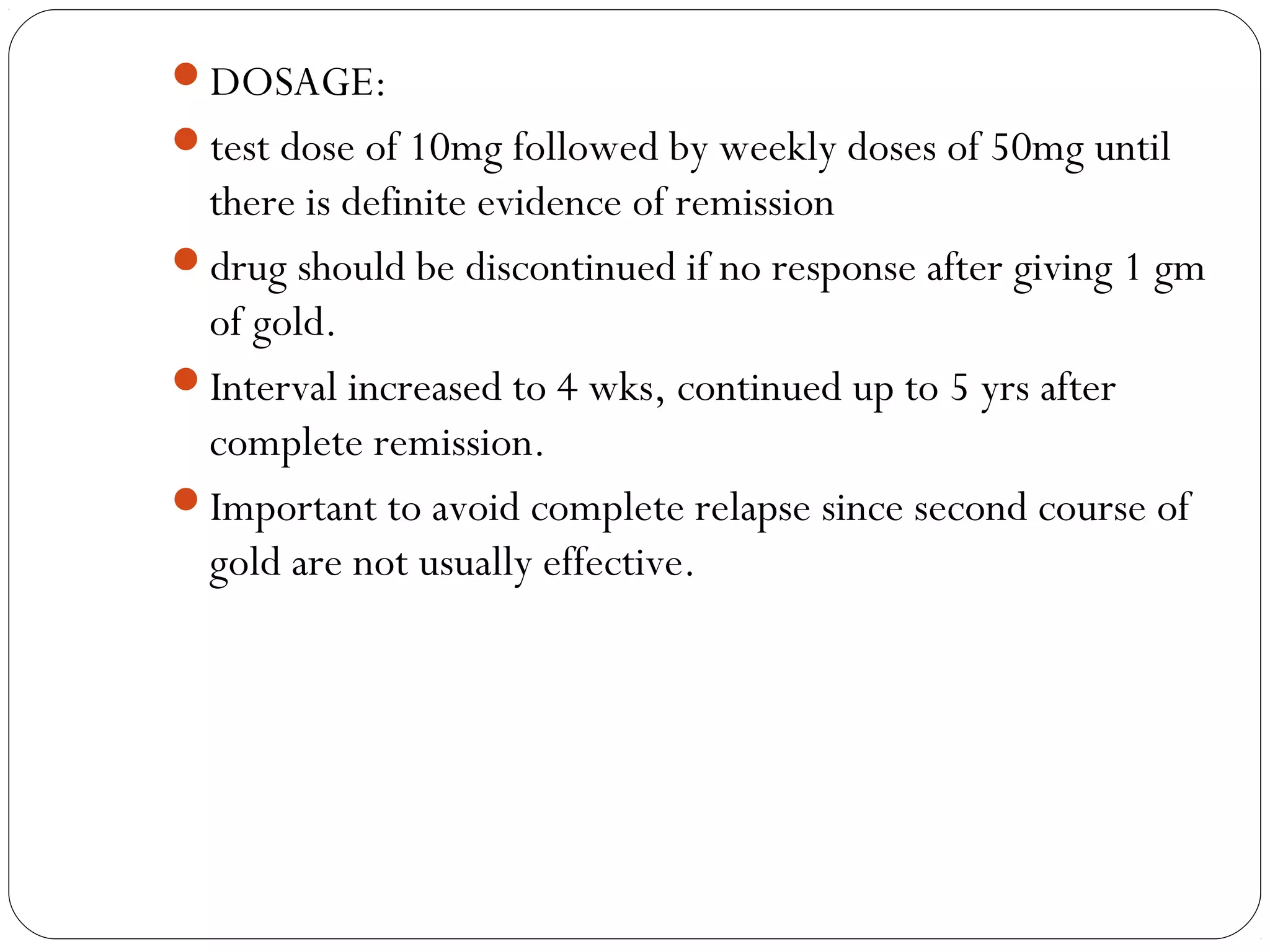
DOSAGE:
test dose of 10mg followed by weekly doses of 50mg until
 there is definite evidence of remission
drug should be discontinued if no response after giving 1 gm
 of gold.
Interval increased to 4 wks, continued up to 5 yrs after
 complete remission.
Important to avoid complete relapse since second course of
 gold are not usually effective.
Adverse Effects
Skin- eczematous reaction & M.U
Kidney- proteinuria
Blood: bone marrow suppression
 lungs and liver
limit the number of patients who can tolerate long-term
 parenteral gold
Parenteral gold is still a useful option in patients who cannot
 tolerate sulphasalazine or methotrexate
SULPHASALAZINE
anti-inflammatory (5aminosalicylic acid) and antibacterial
 (sulphapyridine) moieties
onset of action 6 and 12 weeks
IgA & IgM RA factors decreased.
Suppresion of T-cell response to concanavalin.
Only 10-20% is absorbed.
Indication
Reduces the rate of new jt damage in RA
JCA, AS & its associated uveitis.
Dosage:starting dose of 500mg daily. Increased by 500mg at
  weekly intervals to a maintenance dose of between 2g and 3g
  daily in divided doses.
Adverse Effects
GI intolerance
Haematological abnormalities – serious
reversible male infertility
Not teratogenic
FBC:Baseline, monthly for three months, then every three
 months 
RF:Baseline 
LFT:Baseline, monthly for three months, then every three
 months
PENCILLAMINE
chelator of divalent cations structurally similar to cysteine
impair antigen presentation, diminish globulin synthesis, to
 inhibit PMN leucocyte myeloperoxidase,
Rarely used today because of toxicity.
CYCLOSPORIN
Fungal peptide-impairs the function of B and T lymphocytes
 by suppressing the synthesis and release of IL-1 & IL-2
Started at a dose of 2.5mg/kg daily in two divided doses.
Increased gradually after six weeks to a maximum of 4mg/kg
 daily
Full response will take 12 wks.
Good efficiency
Less well tolerated because of hypertension and
 nephrotoxicity which are common and dose related.
used in patients with severe disease who failed on other
 treatments or unsuitable for other DMARDs
valuable when used together with methotrexate in patients
 with very active early disease.
AZATHIOPRINE
oral purine analogue
inhibits lymphocyte proliferation, by disrupting the
 incorporation of adenosine and guanine in DNA synthesis.
becomes biologically active after metabolism in the liver to
 6-thioinosinic acid and 6-thioguanylic acid.
renally excreted
dose of 1.5 to 2.5mg/kg daily in divided doses
efficacy comparable to that of gold but greater toxicity.
potential for lymphoproliferative cancers
Used for progressive disease which is refractory to other
  DMARDs of comparable potency or as a steroid-sparing
  agent
LEFLUNOMIDE
immunomodulatory DMARD
Rapid conversion in to active metabolite A77-1726,
 Isoxazole derivative.
Inhibit the dihydrooratate dehydrogenase  decrease in
 RNA synthesis & arrest the stimulated cells in G1 phase of
 cell growth.
Inhibit T cell proliferation & production of antibodies by B-
 cells.
Increases IL-10 receptor m RNA
Decreases IL-8 receptor type A m RNA
P.Kinetics: completely absorbed.
Enterohepatic circulation.
Indicated in RA for inhibition of bone damage.
diarrhoea
reversible alopecia, hypertension, dizziness
teratogenic in mammals and is therefore not recommended
 in women of childbearing age in the absence of reliable
 contraception
Liver function should be monitored
Dosage
Daily dose of 10-20 mg
Loading dose of 100 mg once weekly for 3 wks in addition to
 daily dose.
Complete effect takes 6-12 wks.
BIOLOGICALS – TNF-alpha blocking
agents
Cytokines –central role in immune response in RA.
TNF – alpha  heart of inflammatory process.
Two different approaches are available to decrease TNF
  activity
anti-TNF alpha antibodies which cross link with TNF
 receptor inhibit the endogenous cytokine
soluble TNF receptors – combining soluble TNF alpha.
Inhibit T –cell & macrophage function.
Avoid live vaccines
ADALIMUMAB
Recombinant human anti TNF monoclonal antibody.
Adm: subcutaneously,
T ½ 9-14 days
Dose: 40 mg once in 2 wks.
With Mtx it is action potentiated – 30% reduced clearance,
  decreased formation of antibodies.
Reduces the formation of new erosions.
Monotherapy or in combination.
Indicated: RA, AS, PA,JCA.
Adv effects: risk macrophage dependent infections.
Screening for latent TB to be done before therapy.
INFLIXIMAB
Chimeric monoclonal antibody [25% mouse, 75% human]
Binds with both soluble & membrane bound TNF
IV infusions 3-5 mg/kg every 8 wks.
Antichimeric AB – 62% pts
Concurrent MTx adm, reduces.
Recommended to give along with MTx
Can be given with other DMARDs.
UTI ,opportunistic infections.
ANA & DS DNA antibodies occur but frank SLE rare.
Infusion site reaction.
ETANERCEPT
Recombinant fusion protein consists of two soluble TNF P75
 receptor moieties linked to Fc portion of human IgG1.
Binds TNF & inhibits lymphotoxin alpha.
Adm: SC 25 mg twice wkly or 50 mg once wkly.
Peak conc 72 hrs after administration.
Used along with MTx
Incidence of inf is lower
Injection site reaction- 20-40%
Antibodies appear in 16% of Pts.
Newer biologicals
Rituximab –depletes B –cells by binding to cell surface
 marker CD-20.
Abatecept – inhibits co-stimulatory molecule.
Anakinra -recombinant form of the naturally occurring
 human IL-1 receptor antagonist.
Combination therapy
Complementry MOA
Non-overlapping pharmacokinetics
Non-overlapping toxicity.
With MTx back ground therapy, cyclosporin, HCQ, LFN,
 infliximab adalimumab, etanercept shows improves
 efficiency.
With auronofin, azothioprine, SS- no additional benefit.
Triple drug regimen: MTx, SS, HCQ.
Disadv: more toxicity [mostly not occurs]
C.T is becoming a rule for those not responding to
  monotherapy.
Perioperative medication
recommendations
NSAIDS: Discontinue 5 half-lives before surgery.
Aspirin: discontinue 7-10 days before surgery.
Corticosteroids:Perioperative use depends on level of
 potential surgical stress
MTx:Continue perioperatively for all procedures.
withholding 1 to 2 doses of MTx for patients with poorly
 controlled diabetes; the elderly; and those with liver, kidney,
 or lung disease
Leflunomide:Continue for minor procedures. Withhold 1-2
 days before moderate and intensive procedures and restart 1-
 2 weeks later.
Sulfasalazine, HCQ - Continue for all procedures
TNF antagonists:Continue for minor procedures. For
 moderate to intensive procedures, withhold etanercept for1
 week, and plan surgery for the end of the dosing interval for
 adalumimab and infliximab.
Restart 10-14 days Postoperatively.
IL-1 antagonist:Continue for minor procedures. Withhold 1-
 2 days before surgery and restart 10 days postoperatively for
 moderate to intensive procedures
Suggestions
More aggressive therapy
Early institution of DMARDs with in 3 months
Consider NSAIDS
Consider local or low dose systemic steroids as bridge
 therapy.
Maximization of MTx therapy.
Addition of TNF inhibitors for persistent activity.
THANK YOU

Dmards

  • 1.
  • 2.
    Disease-modifying anti-rheumatic drugs decrease pain and inflammation, reduce or prevent joint damage, and preserve the structure and function of the joints Previously RA – Pyramidal approach Now it is reversed. early use of DMARDs is recommended before radiologically damage develops.
  • 3.
    Aim - aggressiveapproach is to limit inflammation and prevent joint damage and subsequent disability. firm diagnosis of rheumatoid arthritis predictors of poor outcome Positive RA factor, high disability scores and early involvement of large joints ACR-not to delay beyond 3 months
  • 4.
    Rationale for DMARDs NSAIDS– offer symptomatic relief. No effect on cartilage or bone destruction. Inflammation is maximal at an early stage. If given early, DMARDs can stabilise joint function at a level which is near to normal, rather than preserving the joint in a state of disability
  • 5.
  • 6.
  • 7.
    Choice Empirical, Based on abalance between toxicity, efficacy & prescriber's preference
  • 8.
    METHOTREXATE DMARD of choice. MOA:Inhibition of [AICAR] aminoimidazolecarboxamide transformylase & thymidylate synthetase. decrease the secretion of pro-inflammatory cytokines, such as TNF, while increasing the secretion of the inhibitory cytokine IL- 10. Decreases the rate of appearance of new erosions
  • 9.
    Pharmacokinetics Bioavailability -70% Less activehydroxylated metabolite Polyglutamated with in cells. Serum T1/2 6-9 hrs Excreted principally in urine.
  • 10.
    Dosage started at adose of 7.5mg orally once weekly and this is increased slowly to a maximum of 20mg once weekly fail to respond to oral therapy - intramuscular route Indicated in RA, PA, JCA, polymyositis. onset of action: about one month
  • 11.
    Adverse Effects Nausea andstomatitis hepatic toxicity pneumonitis teratogenic to ova and sperm Recommended- contraception is taken during therapy and that conception is avoided for at least six months after stopping methotrexate.
  • 12.
    Interactions co-prescription of NSAIDshas been shown to increase the toxicity Conc increased by HCQ GI & liver A/E, - reduced with leucovorin 24 hrs after each wkly dose or folic acid daily. C/I in pregnancy
  • 13.
    Monitoring FBC: Baseline, thenfortnightly for one month (or until dose stable) then monthly RF:Baseline  LFT:Baseline, then fortnightly for one month (or until dose stable) then monthly  CXR:Baseline.
  • 14.
    Hydroxychloroquine Antimalarials suppression of lysosomalenzymes and inhibition of IL-1 release. Suppression of T-cell lymphocyte response, leucocyte chemotaxis, trapping of free radicals. Clinical response 6 to 12 weeks.
  • 15.
    Pharmacokinetics Rapidly absorbed Extensively tissuebound, esp melanin containing tissues- eyes. Eliminated in liver. DOSAGE: started at a dose of 400mg daily in two divided doses. The maintenance dose is usually between 200mg and 400mg daily .
  • 16.
    Indications RA Not very effective.[bone damage] Restricted to patients with mild, non-erosive disease or to those in whom more powerful DMARD therapy is felt to be too risky used in combination with other agents
  • 17.
    Adverse Effects irreversible retinopathy occursrarely if daily dose of HCQ does not exceed 6.5mg/kg (or 400mg daily), the lifetime dose does not exceed 200g GI symptoms, rashes, nightmares blood disorders Relatively safe in pregnancy. Eye: Baseline & six monthly follow-up
  • 18.
    GOLD Affect the functionof B and T lymphocytes as well as PMN leucocyte function auranofin is less toxic but it is less efficacious Time to response,oral:3-6months Parentral: 2-4 months. Diarrhoea - frequent Oral – less frequently used.
  • 19.
    DOSAGE: test dose of10mg followed by weekly doses of 50mg until there is definite evidence of remission drug should be discontinued if no response after giving 1 gm of gold. Interval increased to 4 wks, continued up to 5 yrs after complete remission. Important to avoid complete relapse since second course of gold are not usually effective.
  • 20.
    Adverse Effects Skin- eczematousreaction & M.U Kidney- proteinuria Blood: bone marrow suppression  lungs and liver limit the number of patients who can tolerate long-term parenteral gold Parenteral gold is still a useful option in patients who cannot tolerate sulphasalazine or methotrexate
  • 21.
    SULPHASALAZINE anti-inflammatory (5aminosalicylic acid)and antibacterial (sulphapyridine) moieties onset of action 6 and 12 weeks IgA & IgM RA factors decreased. Suppresion of T-cell response to concanavalin. Only 10-20% is absorbed.
  • 22.
    Indication Reduces the rateof new jt damage in RA JCA, AS & its associated uveitis. Dosage:starting dose of 500mg daily. Increased by 500mg at weekly intervals to a maintenance dose of between 2g and 3g daily in divided doses.
  • 23.
    Adverse Effects GI intolerance Haematologicalabnormalities – serious reversible male infertility Not teratogenic FBC:Baseline, monthly for three months, then every three months  RF:Baseline  LFT:Baseline, monthly for three months, then every three months
  • 24.
    PENCILLAMINE chelator of divalentcations structurally similar to cysteine impair antigen presentation, diminish globulin synthesis, to inhibit PMN leucocyte myeloperoxidase, Rarely used today because of toxicity.
  • 25.
    CYCLOSPORIN Fungal peptide-impairs thefunction of B and T lymphocytes by suppressing the synthesis and release of IL-1 & IL-2 Started at a dose of 2.5mg/kg daily in two divided doses. Increased gradually after six weeks to a maximum of 4mg/kg daily Full response will take 12 wks.
  • 26.
    Good efficiency Less welltolerated because of hypertension and nephrotoxicity which are common and dose related. used in patients with severe disease who failed on other treatments or unsuitable for other DMARDs valuable when used together with methotrexate in patients with very active early disease.
  • 27.
    AZATHIOPRINE oral purine analogue inhibitslymphocyte proliferation, by disrupting the incorporation of adenosine and guanine in DNA synthesis. becomes biologically active after metabolism in the liver to 6-thioinosinic acid and 6-thioguanylic acid. renally excreted
  • 28.
    dose of 1.5to 2.5mg/kg daily in divided doses efficacy comparable to that of gold but greater toxicity. potential for lymphoproliferative cancers Used for progressive disease which is refractory to other DMARDs of comparable potency or as a steroid-sparing agent
  • 29.
    LEFLUNOMIDE immunomodulatory DMARD Rapid conversionin to active metabolite A77-1726, Isoxazole derivative. Inhibit the dihydrooratate dehydrogenase  decrease in RNA synthesis & arrest the stimulated cells in G1 phase of cell growth. Inhibit T cell proliferation & production of antibodies by B- cells.
  • 30.
    Increases IL-10 receptorm RNA Decreases IL-8 receptor type A m RNA P.Kinetics: completely absorbed. Enterohepatic circulation. Indicated in RA for inhibition of bone damage.
  • 31.
    diarrhoea reversible alopecia, hypertension,dizziness teratogenic in mammals and is therefore not recommended in women of childbearing age in the absence of reliable contraception Liver function should be monitored
  • 32.
    Dosage Daily dose of10-20 mg Loading dose of 100 mg once weekly for 3 wks in addition to daily dose. Complete effect takes 6-12 wks.
  • 33.
    BIOLOGICALS – TNF-alphablocking agents Cytokines –central role in immune response in RA. TNF – alpha  heart of inflammatory process. Two different approaches are available to decrease TNF activity
  • 34.
    anti-TNF alpha antibodieswhich cross link with TNF receptor inhibit the endogenous cytokine soluble TNF receptors – combining soluble TNF alpha. Inhibit T –cell & macrophage function. Avoid live vaccines
  • 35.
    ADALIMUMAB Recombinant human antiTNF monoclonal antibody. Adm: subcutaneously, T ½ 9-14 days Dose: 40 mg once in 2 wks. With Mtx it is action potentiated – 30% reduced clearance, decreased formation of antibodies.
  • 36.
    Reduces the formationof new erosions. Monotherapy or in combination. Indicated: RA, AS, PA,JCA. Adv effects: risk macrophage dependent infections. Screening for latent TB to be done before therapy.
  • 37.
    INFLIXIMAB Chimeric monoclonal antibody[25% mouse, 75% human] Binds with both soluble & membrane bound TNF IV infusions 3-5 mg/kg every 8 wks. Antichimeric AB – 62% pts Concurrent MTx adm, reduces.
  • 38.
    Recommended to givealong with MTx Can be given with other DMARDs. UTI ,opportunistic infections. ANA & DS DNA antibodies occur but frank SLE rare. Infusion site reaction.
  • 39.
    ETANERCEPT Recombinant fusion proteinconsists of two soluble TNF P75 receptor moieties linked to Fc portion of human IgG1. Binds TNF & inhibits lymphotoxin alpha. Adm: SC 25 mg twice wkly or 50 mg once wkly. Peak conc 72 hrs after administration. Used along with MTx
  • 40.
    Incidence of infis lower Injection site reaction- 20-40% Antibodies appear in 16% of Pts.
  • 41.
    Newer biologicals Rituximab –depletesB –cells by binding to cell surface marker CD-20. Abatecept – inhibits co-stimulatory molecule. Anakinra -recombinant form of the naturally occurring human IL-1 receptor antagonist.
  • 42.
    Combination therapy Complementry MOA Non-overlappingpharmacokinetics Non-overlapping toxicity. With MTx back ground therapy, cyclosporin, HCQ, LFN, infliximab adalimumab, etanercept shows improves efficiency. With auronofin, azothioprine, SS- no additional benefit.
  • 43.
    Triple drug regimen:MTx, SS, HCQ. Disadv: more toxicity [mostly not occurs] C.T is becoming a rule for those not responding to monotherapy.
  • 44.
    Perioperative medication recommendations NSAIDS: Discontinue5 half-lives before surgery. Aspirin: discontinue 7-10 days before surgery. Corticosteroids:Perioperative use depends on level of potential surgical stress MTx:Continue perioperatively for all procedures.
  • 45.
    withholding 1 to2 doses of MTx for patients with poorly controlled diabetes; the elderly; and those with liver, kidney, or lung disease Leflunomide:Continue for minor procedures. Withhold 1-2 days before moderate and intensive procedures and restart 1- 2 weeks later. Sulfasalazine, HCQ - Continue for all procedures
  • 46.
    TNF antagonists:Continue forminor procedures. For moderate to intensive procedures, withhold etanercept for1 week, and plan surgery for the end of the dosing interval for adalumimab and infliximab. Restart 10-14 days Postoperatively. IL-1 antagonist:Continue for minor procedures. Withhold 1- 2 days before surgery and restart 10 days postoperatively for moderate to intensive procedures
  • 47.
    Suggestions More aggressive therapy Earlyinstitution of DMARDs with in 3 months Consider NSAIDS Consider local or low dose systemic steroids as bridge therapy. Maximization of MTx therapy. Addition of TNF inhibitors for persistent activity.
  • 48.