1. Growth
2. Reproduction
3. Metabolism
4. Cellular Organization
5. Consciousness
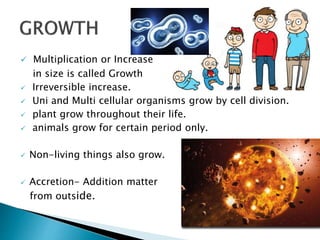
 Multiplication or Increase
in size is called Growth growth.
 Irreversible increase.
 Uni and Multi cellular organisms grow by cell division.
 plant grow throughout their life.
 animals grow for certain period only.
 Non-living things also grow.
 Accretion- Addition matter
from outside.
 Living organism produce new organisms
similar to themselves.
 Sexual – biparental
 Asexual – uniparentel
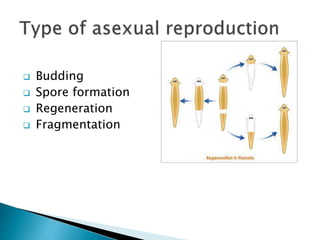
 Budding
 Spore formation
 Regeneration
 Fragmentation
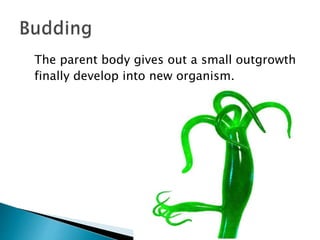
The parent body gives out a small outgrowth
finally develop into new organism.
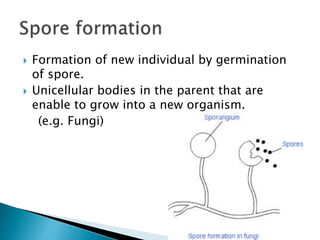
 Formation of new individual by germination
of spore.
 Unicellular bodies in the parent that are
enable to grow into a new organism.
(e.g. Fungi)
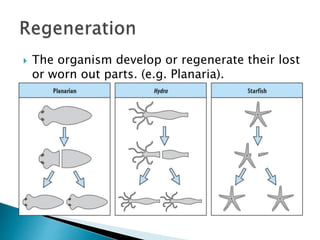
 The organism develop or regenerate their lost
or worn out parts. (e.g. Planaria).
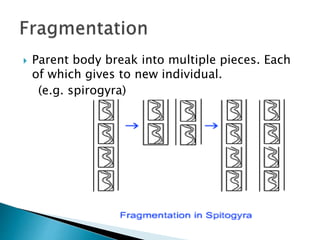
 Parent body break into multiple pieces. Each
of which gives to new individual.
(e.g. spirogyra)
 All living organism made up of chemicals.
 These chemicals change into some other
biomolecule is called chemical reaction.
 There are Two types of chemical reactions
anabolism and catabolism.
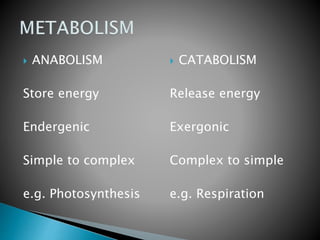
 ANABOLISM
Store energy
Endergenic
Simple to complex
e.g. Photosynthesis
 CATABOLISM
Release energy
Exergonic
Complex to simple
e.g. Respiration
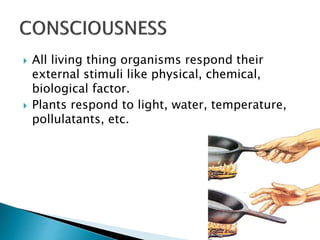
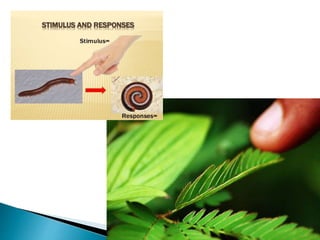
 All living thing organisms respond their
external stimuli like physical, chemical,
biological factor.
 Plants respond to light, water, temperature,
pollulatants, etc.
BIO DIERSITY
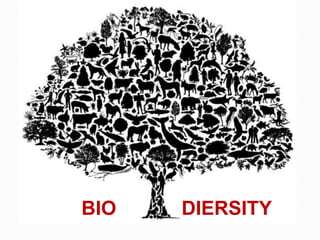
 Variety of animals and plants in the earth
differ in their habit, habitat, mode of nutrition
and physiology is refer to Biodiversity.
 Living organism on the earth now b/w
5 - 30 million.
 Known and described range of species b/w
1.7 – 1.8 million.
 Classification of living organism into different
taxa based on their characteristics.
Basics of taxonomy:
1.characterisation
2.identification
3.classification
4.Nomenclature
 Comparing similarities and dissimilarities
with already known organism.
NOMENCLATURE
 Providing distinct and proper Name to the
organism
 Plants and animals in our area know by their
local names.
 Cannot used by biologists.
 Incorrect meaning.
e.g jellyfish, silverfish, cuttlefish, starfish.
No relationship with true fishes.
 Single plant known by several names
 Single name use two or more plants.
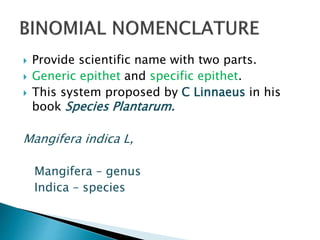
 Provide scientific name with two parts.
 Generic epithet and specific epithet.
 This system proposed by C Linnaeus in his
book Species Plantarum.
Mangifera indica L,
Mangifera – genus
Indica – species
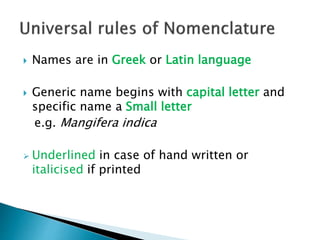
 Names are in Greek or Latin language
 Generic name begins with capital letter and
specific name a Small letter
e.g. Mangifera indica
 Underlined in case of hand written or
italicised if printed
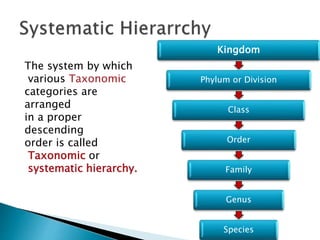
Kingdom
Phylum or Division
Class
Order
Family
Genus
Species
The system by which
various Taxonomic
categories are
arranged
in a proper
descending
order is called
Taxonomic or
systematic hierarchy.
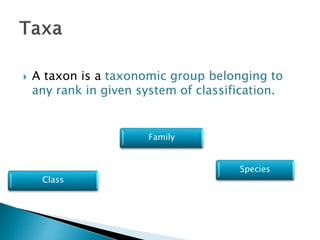
 A taxon is a taxonomic group belonging to
any rank in given system of classification.
Class
Family
Species
 Basic unit of classification
 Group of closely resemble organisims which
are capable of producing with each other to
produce offspring.
 e.g felis catus, Panthera Leo
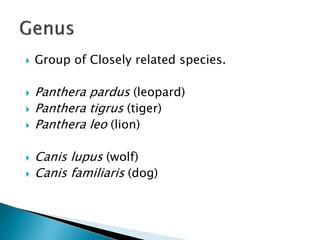
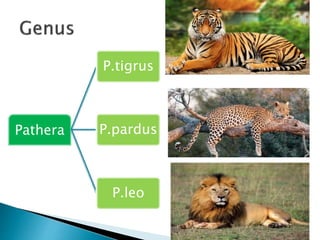
 Group of Closely related species.
 Panthera pardus (leopard)
 Panthera tigrus (tiger)
 Panthera leo (lion)
 Canis lupus (wolf)
 Canis familiaris (dog)
Pathera
P.tigrus
P.pardus
P.leo
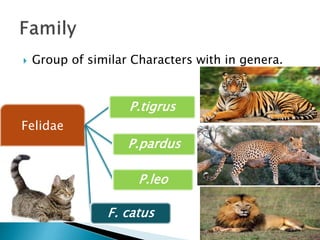
 Group of similar Characters with in genera.
Felidae
P.tigrus
P.pardus
P.leo
F. catus
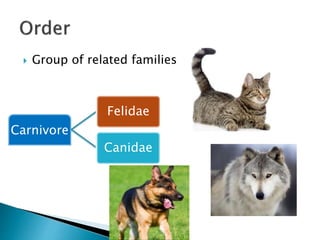
 Group of related families
Carnivore
Felidae
Canidae
Mammalia
Carnivora
Primates
 Group of related classes in animals
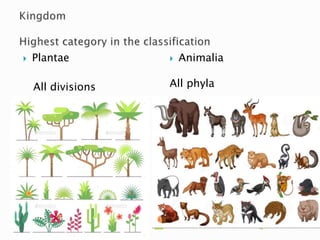
Division
 Group of related classes in plants
 Plantae
All divisions
 Animalia
All phyla
 Collection of specimens of plants and animal
species
 Procedure & technique to store and preserve
the information as well as the specimens.
1.Herbarium
2.Botanical garden
3.Museum
4.Zoological park
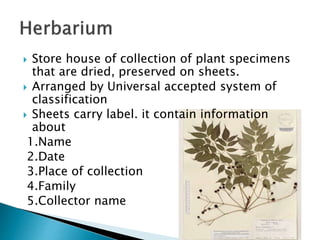
 Store house of collection of plant specimens
that are dried, preserved on sheets.
 Arranged by Universal accepted system of
classification
 Sheets carry label. it contain information
about
1.Name
2.Date
3.Place of collection
4.Family
5.Collector name
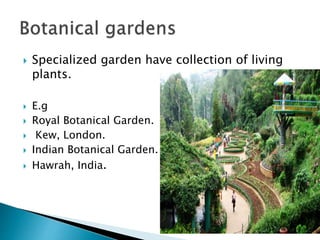
 Specialized garden have collection of living
plants.
 E.g
 Royal Botanical Garden.
 Kew, London.
 Indian Botanical Garden.
 Hawrah, India.
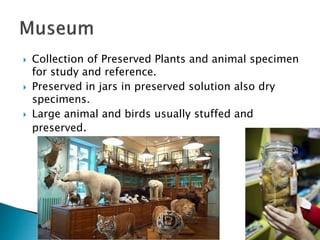
 Collection of Preserved Plants and animal specimen
for study and reference.
 Preserved in jars in preserved solution also dry
specimens.
 Large animal and birds usually stuffed and
preserved.
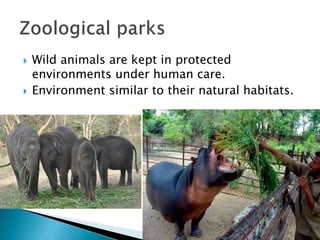
 Wild animals are kept in protected
environments under human care.
 Environment similar to their natural habitats.
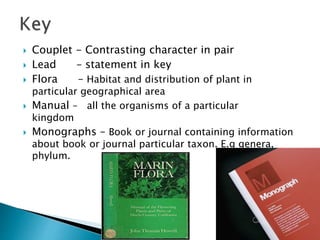
 Couplet - Contrasting character in pair
 Lead – statement in key
 Flora – Habitat and distribution of plant in
particular geographical area
 Manual – all the organisms of a particular
kingdom
 Monographs – Book or journal containing information
about book or journal particular taxon. E.g genera,
phylum.

Diversity in living world

  • 2.
    1. Growth 2. Reproduction 3.Metabolism 4. Cellular Organization 5. Consciousness
  • 3.
     Multiplication orIncrease in size is called Growth growth.  Irreversible increase.  Uni and Multi cellular organisms grow by cell division.  plant grow throughout their life.  animals grow for certain period only.  Non-living things also grow.  Accretion- Addition matter from outside.
  • 4.
     Living organismproduce new organisms similar to themselves.  Sexual – biparental  Asexual – uniparentel
  • 5.
     Budding  Sporeformation  Regeneration  Fragmentation
  • 6.
    The parent bodygives out a small outgrowth finally develop into new organism.
  • 7.
     Formation ofnew individual by germination of spore.  Unicellular bodies in the parent that are enable to grow into a new organism. (e.g. Fungi)
  • 8.
     The organismdevelop or regenerate their lost or worn out parts. (e.g. Planaria).
  • 9.
     Parent bodybreak into multiple pieces. Each of which gives to new individual. (e.g. spirogyra)
  • 10.
     All livingorganism made up of chemicals.  These chemicals change into some other biomolecule is called chemical reaction.  There are Two types of chemical reactions anabolism and catabolism.
  • 11.
     ANABOLISM Store energy Endergenic Simpleto complex e.g. Photosynthesis  CATABOLISM Release energy Exergonic Complex to simple e.g. Respiration
  • 12.
     All livingthing organisms respond their external stimuli like physical, chemical, biological factor.  Plants respond to light, water, temperature, pollulatants, etc.
  • 14.
  • 15.
     Variety ofanimals and plants in the earth differ in their habit, habitat, mode of nutrition and physiology is refer to Biodiversity.  Living organism on the earth now b/w 5 - 30 million.  Known and described range of species b/w 1.7 – 1.8 million.
  • 16.
     Classification ofliving organism into different taxa based on their characteristics. Basics of taxonomy: 1.characterisation 2.identification 3.classification 4.Nomenclature
  • 17.
     Comparing similaritiesand dissimilarities with already known organism. NOMENCLATURE  Providing distinct and proper Name to the organism
  • 18.
     Plants andanimals in our area know by their local names.  Cannot used by biologists.  Incorrect meaning. e.g jellyfish, silverfish, cuttlefish, starfish. No relationship with true fishes.  Single plant known by several names  Single name use two or more plants.
  • 19.
     Provide scientificname with two parts.  Generic epithet and specific epithet.  This system proposed by C Linnaeus in his book Species Plantarum. Mangifera indica L, Mangifera – genus Indica – species
  • 20.
     Names arein Greek or Latin language  Generic name begins with capital letter and specific name a Small letter e.g. Mangifera indica  Underlined in case of hand written or italicised if printed
  • 21.
    Kingdom Phylum or Division Class Order Family Genus Species Thesystem by which various Taxonomic categories are arranged in a proper descending order is called Taxonomic or systematic hierarchy.
  • 22.
     A taxonis a taxonomic group belonging to any rank in given system of classification. Class Family Species
  • 23.
     Basic unitof classification  Group of closely resemble organisims which are capable of producing with each other to produce offspring.  e.g felis catus, Panthera Leo
  • 24.
     Group ofClosely related species.  Panthera pardus (leopard)  Panthera tigrus (tiger)  Panthera leo (lion)  Canis lupus (wolf)  Canis familiaris (dog)
  • 25.
  • 26.
     Group ofsimilar Characters with in genera. Felidae P.tigrus P.pardus P.leo F. catus
  • 27.
     Group ofrelated families Carnivore Felidae Canidae
  • 28.
  • 29.
     Group ofrelated classes in animals Division  Group of related classes in plants
  • 30.
  • 31.
     Collection ofspecimens of plants and animal species  Procedure & technique to store and preserve the information as well as the specimens. 1.Herbarium 2.Botanical garden 3.Museum 4.Zoological park
  • 32.
     Store houseof collection of plant specimens that are dried, preserved on sheets.  Arranged by Universal accepted system of classification  Sheets carry label. it contain information about 1.Name 2.Date 3.Place of collection 4.Family 5.Collector name
  • 33.
     Specialized gardenhave collection of living plants.  E.g  Royal Botanical Garden.  Kew, London.  Indian Botanical Garden.  Hawrah, India.
  • 34.
     Collection ofPreserved Plants and animal specimen for study and reference.  Preserved in jars in preserved solution also dry specimens.  Large animal and birds usually stuffed and preserved.
  • 35.
     Wild animalsare kept in protected environments under human care.  Environment similar to their natural habitats.
  • 36.
     Couplet -Contrasting character in pair  Lead – statement in key  Flora – Habitat and distribution of plant in particular geographical area  Manual – all the organisms of a particular kingdom  Monographs – Book or journal containing information about book or journal particular taxon. E.g genera, phylum.